This site is supported by our readers. We may earn a commission, at no cost to you, if you purchase through links.
Your summer garden can go from lush to limp in a single afternoon when temperatures spike above 95°F, triggering cellular damage that slashes yields by up to 20 percent in many crops. Heat waves don’t just make plants wilt temporarily—they reduce pollen viability, accelerate senescence, and shift carbon allocation away from the fruits and vegetables you’re counting on.
The difference between watching your tomatoes shrivel and harvesting abundant produce comes down to proactive heat management strategies you implement before the thermometer climbs. By understanding how plants respond to thermal stress at the physiological level, you can deploy targeted interventions—from strategic irrigation timing to soil amendments that hold moisture—that keep your garden productive even when conditions turn brutal.
Table Of Contents
- Key Takeaways
- Recognizing Signs of Heat Stress
- Strategic Watering for Summer Survival
- Enhancing Soil to Retain Moisture
- Providing Shade and Physical Barriers
- Choosing and Caring for Heat-Tolerant Plants
- Frequently Asked Questions (FAQs)
- How to protect a garden in extreme heat?
- Should I water my garden every day in 100 degree weather?
- How do I protect my garden from extreme heat?
- What temperature is too hot for garden plants?
- How to protect your garden from extreme heat?
- How to keep plants alive in 100 degree weather?
- What temperature is too hot for a garden?
- How do container gardens differ in heat protection?
- When to harvest during extreme heat waves?
- Can companion planting reduce heat stress?
- Conclusion
Key Takeaways
- Heat waves reduce crop yields by 8-20% through cellular damage that cuts pollen viability by 10-30% and accelerates senescence, making proactive heat management essential before temperatures spike above 95°F.
- Strategic watering between 4-9 am combined with drip irrigation systems cuts evaporation by up to 60% while deep watering techniques promote root development 6-8 inches deep, creating drought-resilient plants that outperform surface-watered counterparts.
- Applying 2-4 inch mulch layers lowers root zone temperatures by 5-10°C and prevents soil compaction, while incorporating compost and biochar amendments improves water retention by raising organic matter 1-3% to create moisture-holding microaggregates.
- Shade cloth blocking 30-50% of sunlight reduces leaf temperatures by 10-20°F, and companion planting with heat-tolerant varieties creates protective canopies that lower surrounding temperatures by 3-5°F without requiring additional infrastructure.
Recognizing Signs of Heat Stress
Your plants will tell you when they’re struggling with heat, but you need to know what to look for before minor stress becomes permanent damage. Heat waves trigger a cascade of physiological responses that affect everything from daily water uptake to seasonal fruit production, with some crops showing distress within hours while others decline gradually over days.
Understanding what your garden needs in extreme temperatures helps you catch early warning signs before your plants reach their breaking point.
By identifying which plants in your garden are most vulnerable and recognizing early warning signs, you can intervene before heat stress compromises your entire growing season.
Common Symptoms in Summer Garden Plants
You’ll spot leaf scorch first—brown edges and translucent patches signal heat damage as stomata close to limit plant dehydration.
Wilting during midday heat, yellowing margins, and curled foliage reveal your plants’ heat stress management strategies, while severe cases show stunted growth and root decline.
Necrotic spots, bleached surfaces, and soil crusting around stressed crops indicate a heat wave is testing your garden’s drought tolerance and pushing survival mechanisms to their limits.
For guidance on identifying additional plant issues, check out these early disease detection tips.
How Heat Waves Affect Growth and Yield
Heat waves trigger cellular damage that cuts pollen viability by 10 to 30 percent, while extreme heat shifts carbon allocation away from fruit and grain development, reducing yield by 8 to 20 percent.
Crop sensitivity varies—cereals drop yields sharply above 30 to 35°C during flowering, and elevated soil temperature accelerates senescence, limiting photosynthetic duration by up to 20 percent and challenging plant resilience throughout your garden.
Learn more about the broader effects of extreme temperatures on agriculture.
Identifying Vulnerable Crops and Areas
Now that you’ve seen how yields fall, you need to know which areas face the most risk. Map your garden by sun exposure and soil type—south-facing beds and shallow soils dry fastest during heat waves.
Target your heat wave mitigation techniques where they matter most:
- Tomatoes in full sun show blossom end rot when moisture swings during fruit set
- Leafy greens bolt within five days above 95°F
- Cucurbits suffer sunburn on exposed fruit in unshaded afternoon heat
- Beans cut pod fill during high-temperature flowering
Garden zoning by crop assessment and soil analysis directs your drought management efforts effectively.
Strategic Watering for Summer Survival
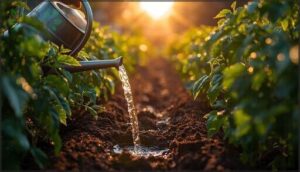
Water is your garden’s lifeline during a heat wave, but timing and technique matter more than volume. Early morning application reduces evaporation by up to 60 percent while allowing roots to absorb moisture before temperatures peak.
Pair deep watering with straw mulch for summer water conservation to maintain soil moisture and keep root zones consistently cool.
Here’s how to water strategically when the mercury climbs.
Optimal Watering Times and Frequency
You want to irrigate between 4 am and 9 am, when cooler temperatures minimize evaporation and boost soil saturation while reducing foliar disease risk. During extreme heat waves, evening moisture applications after 6 pm can supplement morning hydration.
Drip irrigation systems deliver water directly to root zones with up to 60 percent less waste than overhead methods, making irrigation management substantially more efficient.
Deep Watering Versus Surface Watering
Deep watering techniques encourage root development by delivering moisture to the subsurface zone where feeder roots actively absorb nutrients, while surface watering often evaporates before achieving meaningful soil saturation. By applying water slowly through soaker hoses or drip irrigation, you promote water penetration six to eight inches deep, creating sturdy root systems that improve drought resilience and moisture retention during sustained heat stress.
- Deep watering promotes vertical root growth into cooler, more stable soil layers
- Surface irrigation wastes 40 to 60 percent of applied water through evaporation
- Slow application through drip irrigation ensures uniform soil saturation without runoff
- Root development increases exponentially when moisture reaches eight to twelve inches deep
- Deep watering techniques reduce irrigation frequency while improving plant stress tolerance
Efficient Irrigation Systems for Hot Weather
By installing drip irrigation paired with smart controllers, you cut evaporation by up to 30 percent compared to overhead sprinklers, delivering moisture directly to root zones where plants need it most.
Soaker hoses and irrigation timers automate watering techniques, while soil sensors adjust schedules in real time, ensuring water conservation methods protect your garden without constant supervision during prolonged heat waves.
Monitoring Soil Moisture and Adjusting Schedules
Checking moisture levels regularly transforms guesswork into precision, allowing you to schedule irrigation timing exactly when root zones approach their refill point instead of wasting water or risking plant stress.
- Install soil sensors at 6 to 18 inches deep to capture real-time moisture levels and trigger watering deeply only when necessary.
- Adjust schedules by combining sensor data with weather forecasts for smarter water conservation methods.
- Calibrate equipment after heavy rain to maintain accuracy in soil health management.
Enhancing Soil to Retain Moisture

Your soil’s ability to hold water determines whether your plants thrive or merely survive when temperatures climb. By improving soil structure and adding protective layers, you create a reservoir that sustains roots even during extended dry spells.
Soil that holds water well means the difference between plants that thrive and those that merely survive extreme heat
The following strategies will help you fortify your soil against moisture loss and maintain ideal growing conditions throughout the hottest months.
Best Mulching Materials for Heat Protection
Your choice of mulch can make or break soil insulation during a heat wave. Bark mulch reduces soil temperature by forming a cooling layer that decomposes slowly, while straw mulch cools quickly but requires seasonal reapplication.
Wood chips offer dense, wind-resistant coverage that minimizes heat stress and boosts organic matter as they break down, delivering excellent moisture retention at three inches deep.
Applying Mulch for Maximum Effectiveness
You’ll get the best mulch performance by laying a two to four inch layer across beds, extending coverage to the drip line of trees while keeping material two to three inches from stems to prevent rot.
Moisten soil lightly before mulching so the organic materials settle and seal moisture effectively, then level the surface to avoid water pooling during heat waves.
Incorporating Organic Amendments for Water Retention
Compost benefits extend beyond nutrients by raising soil organic matter one to three percent, which creates microaggregates that hold moisture during summer stress.
You’ll see game-changing water retention when you blend biochar at three percent by weight with finished compost, as this combination improves soil structure and dampens rapid drying after irrigation while supporting beneficial microbial activity throughout your beds.
Preventing Soil Overheating and Compaction
Beyond amending soil, you must guard against compaction and overheating by maintaining a two- to four-inch mulch layer, which lowers root zone temperatures by five to ten degrees Celsius and preserves soil structure for root aeration.
Limit foot traffic when beds are wet to prevent compression of pore space, ensuring soil moisture monitoring guides your timing for cultivation and supporting long-term soil conservation.
Providing Shade and Physical Barriers
When the sun beats down relentlessly on your summer garden, strategic shade and physical barriers become essential tools for protecting vulnerable plants from heat damage. You can reduce leaf temperatures by 10 to 20°F and minimize water loss by installing temporary structures, utilizing natural windbreaks, and creating protective microclimates around sensitive crops.
The following methods provide effective protection while maintaining airflow and supporting healthy plant physiology during extreme heat.
Installing Shade Cloths and Temporary Covers
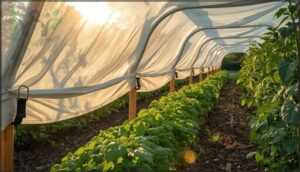
Shade cloth materials range from 30 to 90 percent light reduction, and you’ll want to select based on your plants’ tolerance while ensuring UV-stabilized fabric resists degradation through multiple seasons.
Secure temporary covers using clips, zip ties, or bungee cords at 2 to 3 foot intervals, maintaining slight sag to reduce wind pressure, and position panels to shade during peak afternoon sun hours.
Creating Natural Windbreaks and Shelters

While shade cloth offers flexibility, living windbreaks deliver long-term shelterbelt creation and microclimate management. You’ll want a three-layer design—low shrubs, mid-height trees, and tall evergreens—to achieve 50 to 60 percent wind permeability, which reduces desiccating gusts while preventing soil erosion.
Position these natural barriers perpendicular to prevailing winds, maintaining a 6 to 10 meter setback from beds to avoid unwanted shading during the growing season.
Grouping and Relocating Containers for Protection
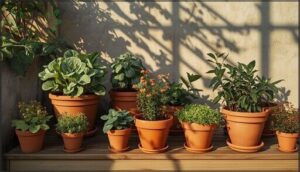
Container placement transforms your pots into living heat shields through thermal buffering and shade creation. By clustering containers in non-touching groups, you’ll drop radiant heat by 20 percent while central units act as wind protection for outliers.
Relocate heat-sensitive container plants to east-facing zones during peak afternoons, elevating bases 2 inches to boost airflow—a key tactic for container gardening success during heat wave preparation.
Managing Pruning and Airflow During Heat
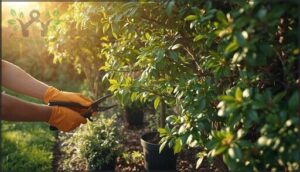
Airflow management through strategic pruning keeps your plants breathing freely while deflecting heat damage. By thinning dense canopies 20 percent at a time during cooler mornings, you’ll prevent fungal buildup without shocking stressed vegetation—a key factor for heat stress prevention.
- Remove inward-crossing limbs to open circulation pathways through congested centers
- Sterilize bypass pruners between cuts to block pathogen spread during summer pruning
- Thin top-third clusters on shrubs for enhanced garden ventilation and light penetration
- Space container stems wider to boost air exchange and reduce moisture trapping
Choosing and Caring for Heat-Tolerant Plants

Your plant selection strategy determines how well your garden weathers extreme temperatures, and choosing varieties with built-in heat tolerance reduces the constant struggle to keep everything alive.
You’ll also need to adjust your care routines when the mercury climbs, because even resilient plants can’t thrive if you’re still following spring’s playbook.
Here’s how to match the right plants to your conditions and fine-tune your approach when summer heat peaks.
Selecting Drought-Resistant and Resilient Varieties
Your crop selection can be a transformative choice when temperatures soar, as heat-tolerant plants with deep root systems access underground moisture beyond 1 meter while drought-resistant varieties maintain 70 to 90 percent of standard yields despite limited irrigation.
Climate-resilient gardening relies on genetic breeding for water efficiency, reducing water use per unit of yield by 20 to 50 percent through improved stomatal regulation and osmotic adjustment mechanisms.
Companion Planting for Mutual Shade
Strategic companion planting creates protective shade canopies by layering tall heat tolerant plants alongside vulnerable crops, lowering leaf temperatures by several degrees through guild planting arrangements. Vertical gardening with trellised pole beans or cucumbers forms cooling walls that shield lettuce from afternoon sun, while shade timing through west-side placement blocks peak heat stress.
These microclimate creation techniques reduce water loss and extend harvest windows without requiring shade cloth or additional mulching materials.
Adapting Plant Care During Extreme Heat
When summer heat pushes your garden past 90°F, you’ll need to hold off on fertilizing and pruning, since plants enter a mini-dormancy mode and can’t absorb nutrients effectively during heat stress.
These plant heat survival strategies support thermal tolerance:
- Water deeply every 2–3 days before 9 am for heat resilience
- Apply 3-inch organic mulch layers for soil cooling and water conservation
- Skip pruning sunburned foliage, as damaged leaves shield interior growth
Plant acclimation improves summer heat survival without added heatwave protection structures.
Planning Garden Layout for Microclimate Benefits
Mapping your garden’s microclimates lets you position crops where they’ll thrive instead of just survive. By zoning sun exposure, windbreak design, and thermal mass placement, you’ll create pockets of cooler, sheltered growing space that buffer heat extremes naturally.
| Microclimate Factor | Hot Zone Strategy | Cool Zone Strategy |
|---|---|---|
| Soil Temperature | Reflective ground covers, dense groundcovers | Dark mulches, raised beds |
| Wind Exposure | Hedges for shelter, portable screens | Open layout for airflow |
| Water Needs | Drought-tolerant species, micro-catchments | Moisture-loving crops, drip irrigation |
| Sun Intensity | Heat-loving crops near walls | Cool-tolerant plants in shade |
This garden design and planning approach fosters climate resilience through strategic plant selection and care that works with your site’s natural conditions.
Frequently Asked Questions (FAQs)
How to protect a garden in extreme heat?
You’ll shield your garden through strategic water conservation, applying mulch 2 to 4 inches thick for soil cooling, installing shade structures, selecting heat-tolerant plants, and using anti-transpirant sprays to minimize moisture loss during extreme temperatures.
Should I water my garden every day in 100 degree weather?
Daily watering during 100-degree heat stress creates shallow roots and wastes water. Instead, you’ll build heat resilience by watering deeply every two to three days, targeting the root zone while monitoring soil moisture levels.
How do I protect my garden from extreme heat?
You’ll need a multi-pronged approach combining watering deeply at dawn, installing 30-50% shade cloth during heat waves, applying 2-4 inches of mulch for soil cooling, and selecting drought-resistant plants adapted for climate adaptation and heat resilience.
What temperature is too hot for garden plants?
Plant hardiness and temperature limits vary, but most garden plants show heat stress when daytime highs exceed 85°F to 90°F, with leaf scorch appearing above 95°F to 100°F during summer heat.
How to protect your garden from extreme heat?
Your garden thrives when you combine early morning watering with 2 to 3 inches of organic mulch, install shade cloth blocking 30 to 50 percent of sunlight, and select drought-resistant plants for lasting heat resilience.
How to keep plants alive in 100 degree weather?
When triple-digit temperatures scorch your landscape, water deeply every two to three days and apply thermal shields like shade cloth.
Choose heat-tolerant plants and maintain soil cooling through organic mulch layers.
What temperature is too hot for a garden?
Daytime highs above 90°F for several consecutive days trigger heat stress in most crops, while soil surface temperatures exceeding 95°F reduce root function and moisture uptake, even in heat-tolerant plants.
How do container gardens differ in heat protection?
Pots are like magnets for heat, pulling in radiant energy from all sides and baking roots faster than ground beds. Container gardening demands shade fabric, thermal mass barriers, and microclimate management, while container plants need frequent watering to combat soil cooling challenges and heat stress.
When to harvest during extreme heat waves?
You’ll want to harvest fruit before 70°F, ideally at dawn when sugars peak and heat stress is minimal.
Then, cool produce immediately to slow respiration and preserve shelf life during heat waves.
Can companion planting reduce heat stress?
Yes, companion planting works—pairing heat-tolerant plants creates mutual shading and microclimate creation that lowers soil temperature by 3 to 5 degrees Fahrenheit.
Companion planning strategically places drought-resistant plants alongside heat stress–vulnerable crops for enhanced plant protection.
Conclusion
Heat stress won’t just slow your garden—it can obliterate months of effort in a few scorching days. By protecting your summer garden from heat through targeted watering schedules, moisture-retentive mulches, strategic shade deployment, and cultivar selection based on thermal tolerance, you’re fundamentally engineering a microclimate that defies the ambient conditions.
These interventions don’t require expensive infrastructure, just deliberate timing and consistent implementation that transforms vulnerable plantings into resilient production systems capable of thriving when neighboring gardens fail.