This site is supported by our readers. We may earn a commission, at no cost to you, if you purchase through links.
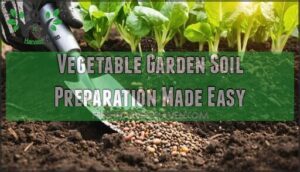 Vegetable garden soil preparation starts with clearing weeds and debris from your beds.
Test your soil’s pH – most vegetables thrive between 6.0 and 7.0. Add compost or well-aged manure to boost nutrients and improve soil structure.
Loosen the earth 8-12 inches deep using a spade or tiller, breaking up compacted areas so roots can spread easily. Mix in organic fertilizer rich in nitrogen, phosphorus, and potassium.
Create level planting surfaces and establish clear pathways between rows. Think of this process as building a five-star hotel for your plants – the better the foundation, the happier your vegetables will be. The secret lies in timing and technique, making it crucial to get it right for a successful harvest, with happy vegetables being the ultimate goal, by following these steps to create an ideal environment.
Table Of Contents
- Key Takeaways
- Clearing Garden Beds for Vegetable Gardening
- Assessing and Adjusting Soil PH
- Soil Amendment and Fertilization
- Preparing Soil Texture and Structure
- Finalizing Garden Bed Preparation
- Frequently Asked Questions (FAQs)
- How do you prepare soil for a vegetable garden?
- How do I prepare my garden for planting?
- How do you prepare a vegetable garden?
- How do you make a good soil mix for vegetables?
- How do you grow vegetables in a garden?
- Why is soil preparation important for a vegetable garden?
- What are the best soil amendments for vegetable gardens?
- What is best to put on soil before planting?
- How to prepare the ground for a vegetable garden?
- What is the best soil mixture for a vegetable garden?
- Conclusion
Key Takeaways
- Start with a clean foundation – You’ll need to clear all weeds, debris, and diseased plant material from your garden beds before doing anything else, as this prevents future problems and gives your vegetables the best chance to thrive.
- Test and adjust your soil’s pH – Most vegetables grow best in slightly acidic to neutral soil between 6.0-7.0, so you’ll want to test your soil and add lime or sulfur as needed to hit that sweet spot.
- Build nutrient-rich soil structure – You’ll create the perfect growing environment by adding 2-3 inches of compost or aged manure and digging 8-12 inches deep to loosen compacted soil and improve drainage.
- Finish with proper surface preparation – You’ll need to level and rake your soil smooth, then add mulch and create clear pathways between rows to prevent compaction and maintain optimal growing conditions throughout the season.
Clearing Garden Beds for Vegetable Gardening
You’re starting to prepare your vegetable garden, and clearing the garden beds is the first step.
You’ll need to remove weeds, debris, and old plant material to create a clean slate for your new garden.
This process will help you get started on the right foot.
Removing Weeds and Debris
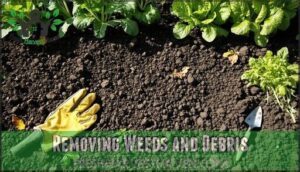
Let’s get started with garden bed clearing! You’ll want to remove all weeds and debris. This is key for successful soil preparation. Clear the entire bed to prevent weeds from reappearing during the growing season.
A great way to improve soil and yields is by vegetable gardening in raised beds.
- The agony of watching your seedlings struggle.
The heartbreak of harvesting nothing but disappointment from your once-promising garden beds.
- The frustration of constant weeding.
- The disappointment of a meager harvest.
- The embarrassment of an unkempt garden.
- The sheer wasted time and effort.
Proper garden soil clearing prevents future headaches!
Handling Perennial Weeds
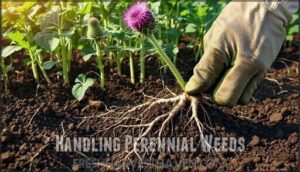
You’ll tackle perennial weeds with deep root removal.
Handle weeds to guarantee a healthy vegetable garden soil preparation.
| Weed Identification | Organic Control |
|---|---|
| Dandelion | Mulching |
| Thistle | Soil Solarization |
| Clover | Preventative Measures |
Effective control may require a specific weed killer.
Disposing of Diseased Plant Material
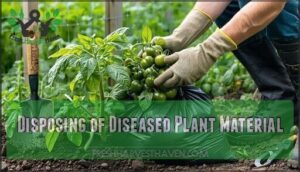
When disposing of diseased plant material, prioritize safe disposal to prevent disease prevention in your vegetable garden soil.
Identify diseases, then remove and discard the material to avoid composting concerns and contamination of garden soil preparation areas, reducing weeds and debris for healthy soil preparation tips, which helps in healthy soil preparation.
Clearing Old Plant Material
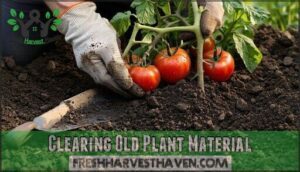
You’re clearing old plant material to prevent disease and pests.
Remove debris, weeds, and dead plants to prepare your garden bed.
This step is essential for soil preparation and disease prevention, setting your vegetable garden up for success with proper mulch removal and seasonal timing.
Assessing and Adjusting Soil PH
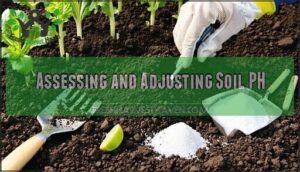
You’re now ready to assess and adjust your soil’s pH, a vital step in preparing your vegetable garden.
You’ll learn how to determine the ideal pH range for your vegetables and make necessary adjustments to create a thriving environment for your plants, which is a crucial step to ensure the ideal conditions.
Ideal PH Range for Vegetables
Now that the garden bed is clear, let’s talk soil pH. It’s more important than you think! Most vegetables prefer slightly acidic to neutral soil.
- Ideal soil pH vegetables: 6.0 to 7.0.
- Soil testing frequency: Spring is best.
- Vegetable pH chart: Consult it!
- Specific needs: Potatoes like it more acidic.
Soil pH impacts soil nutrients vegetables uptake. A vegetable garden soil test is key. To achieve accurate readings, consider using a reliable pH meter. Regional variations can affect your soil pH.
Adjusting PH Levels
You’re adjusting pH levels for your vegetable garden.
Testing soil pH helps determine if lime or sulfur amendments are needed. Acid-loving plants thrive in lower pH, while others tolerate alkaline conditions, so find the right soil pH balance for your vegetables to promote healthy growth and health.
Adding organic matter boosts fertility and helps balance soil pH, which is crucial for vegetable garden success and overall soil fertility.
Soil Amendment and Fertilization
You’re now ready to amend and fertilize your soil, which is a vital step in preparing your vegetable garden.
By adding compost, organic matter, and the right fertilizers, you’ll create a nutrient-rich environment that will help your vegetables grow and thrive.
Adding Compost and Organic Matter

You’re enriching your vegetable garden soil by adding compost and organic matter, which improves soil structure and fertility, supporting healthy plant growth through decomposition, a key part of soil preparation, utilizing various compost benefits and organic matter types.
This process is essential, as soil composition matters for plant health.
Using Organic Fertilizers
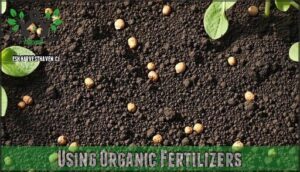
While synthetic fertilizers offer quick fixes, organic fertilizers build lasting soil fertility through the soil food web.
You’ll find compost, manure, and bone meal release nutrients gradually as microbes break them down.
These soil amendments provide environmental benefits by reducing chemical runoff and supporting beneficial organisms, which can enhance soil quality over time through the enhance soil quality process.
Apply organic fertilizer types in early spring for the best long-term effects on your garden’s health and to support the soil food web.
Primary Nutrients for Vegetable Growth
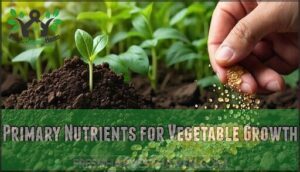
After choosing your organic fertilizer, you’ll want to understand the big three nutrients your vegetables crave.
Nitrogen sources like aged manure boost leafy growth, while phosphorus benefits root development and fruiting.
Potassium impact shows in stronger stems and disease resistance.
Watch for nutrient deficiencies – yellowing leaves often signal nitrogen shortage.
Proper fertilizer application maintains soil nutrient balance for thriving crops.
Preparing Soil Texture and Structure
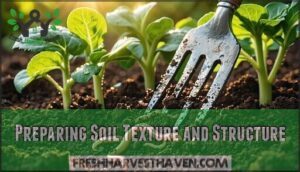
You’ll need to loosen your soil to the right depth and improve its texture to create the perfect growing environment for your vegetables.
Proper soil structure guarantees your plants’ roots can spread easily, water drains well, and air reaches the root zone where it’s needed most, which is crucial for the perfect growing environment.
Loosening Soil to Ideal Depth
Your vegetables need room to breathe underground, so loosen soil to 8-12 inches deep for proper root development.
Use a shovel, garden fork, or rototiller to break up compacted layers.
This soil preparation creates better soil structure and aeration, allowing roots to spread freely.
Double digging works well for root crops like carrots, though it’s labor-intensive but worth the effort.
Improving Drainage and Aeration
Poor soil drainage turns your garden into a swamp that suffocates roots.
Break up soil compaction by avoiding tilling wet conditions, which creates concrete-like hardpan.
Instead, use gentle soil aeration techniques like double digging to improve water retention without waterlogging.
Consider raised beds for natural soil drainage enhancement, allowing better root development and healthier vegetables.
Creating a Loamy Soil Mix
When your soil composition isn’t quite right, don’t panic—you can fix it.
Amending clay soil with compost and coarse sand improves drainage balance, while amending sand requires organic matter like aged manure to retain moisture.
The sweet spot is loamy soil: equal parts sand, clay, and silt, which gives roots room to breathe while holding nutrients your vegetables crave.
Finalizing Garden Bed Preparation
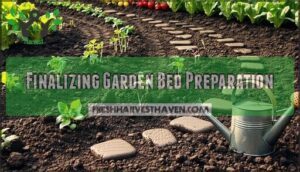
You’re nearly ready to plant after completing the hard work of clearing, amending, and improving your soil structure.
Now you’ll finish preparing your garden bed by leveling the surface, creating proper drainage for root crops, and adding final touches like mulch and pathways.
Double Digging for Root Crops
Root crops like carrots and parsnips need deep, loose soil to develop properly.
Deep, loose soil is the secret to straight, abundant root vegetables that practically grow themselves.
Double digging creates the perfect foundation by breaking through hardpan layers and improving drainage. This labor-intensive technique maximizes root development through enhanced soil aeration and structure improvement.
Adding organic matter annually will help maintain soil fertility.
Here’s your double digging approach:
- Remove topsoil – Dig out 8-10 inches with a sharp spade
- Loosen subsoil – Break up hardpan using a garden fork
- Mix organic matter – Blend compost into loosened layers
Leveling and Raking The Soil
After all your hard work tilling and amending, it’s time to create that picture-perfect planting surface.
Use a steel bow rake to level the soil, breaking up any clumps that formed during preparation.
Different rake types serve specific purposes—bow rakes excel at soil leveling techniques while leaf rakes won’t cut it.
Smooth, even garden soil preparation steps prevent water pooling and guarantee consistent planting depth throughout your beds, ensuring a well-prepared garden with proper care.
Applying Mulch and Creating Footpaths
Several mulch benefits make this final step worthwhile for your vegetable garden soil preparation.
Apply a two-inch layer around plants to achieve weed suppression and water retention while regulating soil temperature.
Create defined footpaths using path materials like wood chips or straw between beds.
This prevents soil compaction, maintains soil moisture, and keeps weeds from invading your prepared growing areas, which is crucial for soil temperature regulation and overall water retention.
Frequently Asked Questions (FAQs)
How do you prepare soil for a vegetable garden?
Clear weeds and debris first, then test your soil’s pH. Add 2-3 inches of compost or aged manure, dig 8-12 inches deep, and rake level for ideal planting conditions.
How do I prepare my garden for planting?
Like Sarah’s backyard transformation from weedy wasteland to thriving tomato patch, you’ll start by clearing debris and weeds completely.
Test your soil’s pH, add compost, then till everything together for ideal growing conditions.
How do you prepare a vegetable garden?
Start by removing weeds, rocks, and debris from your chosen sunny spot.
Test soil pH, then dig 8-12 inches deep.
Mix in 2-4 inches of compost or aged manure, rake level, and you’re ready to plant.
How do you make a good soil mix for vegetables?
Mix equal parts compost, aged manure, and quality topsoil for your vegetable garden’s foundation.
You’ll want to add some perlite or coarse sand to improve drainage and guarantee your plants’ roots can breathe properly.
How do you grow vegetables in a garden?
Choose a sunny spot with 6+ hours of daily sunlight.
Prepare nutrient-rich, well-draining soil by adding compost.
Plant seeds or seedlings according to spacing requirements.
Water consistently, mulch around plants, and harvest when vegetables reach maturity.
Why is soil preparation important for a vegetable garden?
Proper soil preparation creates the foundation your vegetables need to thrive.
You’ll guarantee good drainage, balanced nutrients, and loose texture that lets roots spread easily, leading to healthier plants and bigger harvests, with healthier plants being the ultimate goal.
What are the best soil amendments for vegetable gardens?
Healthy soil contains roughly 25% air space for root growth.
You’ll want compost, aged manure, and bone meal as your garden’s foundation.
These amendments boost nutrients, improve drainage, and create the perfect environment for thriving vegetables.
What is best to put on soil before planting?
Add 2-3 inches of compost or aged manure to your garden bed before planting.
Work it into the top 6-8 inches of soil, then level with a rake for ideal growing conditions.
How to prepare the ground for a vegetable garden?
Surprisingly, 90% of gardening failures stem from poor soil prep.
Start by clearing weeds and debris, then dig 12 inches deep.
Mix in compost, test pH levels, and rake smooth for ideal growing conditions.
What is the best soil mixture for a vegetable garden?
You’ll want equal parts loamy soil with good drainage.
Mix in 2-3 inches of compost or aged manure, maintaining a pH between 0-0.
This creates the perfect foundation for healthy vegetable growth.
Conclusion
Remarkably, the difference between struggling plants and thriving harvests often comes down to proper vegetable garden soil preparation.
You’ve now learned the essential steps to create nutrient-rich, well-structured soil that supports healthy growth.
Remember to test your pH levels, add organic matter, and confirm proper drainage.
With these techniques mastered, you’re ready to transform any garden space into a productive vegetable paradise.
Your plants will reward your careful preparation with abundant, delicious harvests throughout the growing season.
- https://www.almanac.com/content/preparing-soil-planting
- https://www.familyhandyman.com/garden/how-to-prep-soil-for-a-vegetable-garden/view-all/
- https://www.hgtv.com/outdoors/flowers-and-plants/vegetables/5-frequent-questions-about-yard-prep-for-growing-vegetables
- https://extension.usu.edu/yardandgarden/research/gardening-in-clay-soils
- https://blog.bccresearch.com/organic-fertilizers-industry