This site is supported by our readers. We may earn a commission, at no cost to you, if you purchase through links.
Your first garden doesn’t need to be perfect start—it just needs to start. Most beginners overthink the process, imagining they need sprawling plots, expensive equipment, or some secret green thumb gene.
The truth? A sunny patch of ground, decent soil, and a handful of resilient vegetables will get you harvesting fresh produce faster than you’d expect. Radishes pop up in less than a month, lettuce practically grows itself, and tomatoes reward minimal effort with armfuls of fruit.
The real challenge isn’t complexity—it’s knowing which key steps actually matter. Get your location right, prep your soil properly, and choose vegetables that forgive rookie mistakes, and you’ll be pulling carrots and snipping herbs while your neighbors are still browsing seed catalogs.
Table Of Contents
- Key Takeaways
- Choose The Right Location for Your Vegetable Garden
- Plan Your Garden Size and Layout
- Prepare Your Soil for Planting Success
- Select and Plant Beginner-Friendly Vegetables
- Maintain Your Garden Throughout The Season
- Frequently Asked Questions (FAQs)
- How to start a vegetable garden?
- What makes a good vegetable garden?
- What is the easiest vegetable garden for beginners?
- Is vegetable gardening for beginners a good idea?
- Is vegetable gardening a good hobby for beginners?
- How do I choose the right vegetables for my Garden?
- What is the easiest vegetable to grow for beginners?
- What is the most common mistake of first time gardeners?
- How should I arrange my vegetables in my garden?
- Which vegetables should not be planted next to each other?
- Conclusion
Key Takeaways
- Start small with a 4-by-6-foot garden in a spot that gets 6-8 hours of direct sunlight daily, choosing beginner-friendly vegetables like radishes, lettuce, and tomatoes that forgive mistakes and produce quick results.
- Proper soil preparation—adding 2-3 inches of compost, ensuring good drainage, and testing pH levels between 6.0-7.0—creates the foundation that makes everything else easier throughout the growing season.
- Consistent maintenance matters more than perfection: water deeply once or twice weekly, mulch with 2-3 inches of organic material to retain moisture and suppress weeds, and scout for pests before problems spiral out of control.
- The biggest rookie mistake is overcomplicating things—skip the sprawling plots and expensive equipment, focus on location, soil prep, and crop selection, then just show up consistently and trust the process.
Choose The Right Location for Your Vegetable Garden
Your garden’s location can make or break your harvest—it’s that critical. Think of it as picking real estate for your plants, where sunlight, water flow, and shelter all play starring roles.
Planning ahead with fall gardening strategies helps you maximize that prime real estate through multiple seasons.
Let’s walk through the key factors you’ll need to scout before you break ground.
Sunlight Requirements for Healthy Vegetables
Without full sun—at least six hours of direct light daily—your vegetables will struggle to produce the vigorous harvests you’re after. Photosynthesis rates drop in shade, weakening plants and delaying fruiting.
Here’s what different crops need for sunlight requirements in home gardening:
- Tomatoes and peppers: 6–8 hours for heavy yields and flavor
- Leafy greens: 4–6 hours; they tolerate partial shade
- Root crops: 6 hours for sweetness and size
- Cucumbers and beans: 6–8 hours for rapid growth
Soil Drainage and Quality Assessment
Sunlight alone won’t save your garden if water pools around your plants. Drainage is how fast water leaves the root zone—well-drained garden soil drains within a few days, giving roots the oxygen they need.
Test it by digging a hole, filling it with water, and watching how quickly it empties. Poor water infiltration signals compaction or heavy clay that needs amending for healthy soil preparation.
Knowing the signs of soil health and structure can help gardeners improve drainage and support thriving plants.
Wind Protection and Microclimate Considerations
Strong gusts can stress seedlings and steal moisture faster than you think. Windbreak design matters—placing a fence, hedge, or row of taller plants cuts wind speeds by 40 to 60 percent, creating a calmer microclimate that’s 2 to 5 degrees warmer on chilly nights. Sheltered gardening zones retain soil moisture longer and protect tender transplants.
Key steps for airflow management and climate moderation:
- Map prevailing winds to place barriers on exposed edges
- Use staggered rows or angled corners to soften blunt gusts
- Monitor three seasonal days for microclimate evaluation and temperature shifts
- Balance shelter with gentle airflow to prevent fungal buildup
Thoughtful garden planning and design transform a blustery plot into a haven where vegetables thrive with less stress and water. For more on how, see expert advice on evaluating your garden environment.
Accessibility for Watering and Maintenance
Garden design should include easy access to water—you’ll visit beds daily during peak season. A drip system benefits your schedule by automating irrigation, while raised bed access stays simpler with wide 18 to 24 inch paths.
For beginners, easy spring vegetables like lettuce and radishes thrive in raised beds with consistent moisture from drip irrigation.
Soaker hoses snaking along edges deliver moisture without stepping on soil. Keep a handheld spraying nozzle near your raised garden bed. Plan your watering plan around comfort, not compromise.
Plan Your Garden Size and Layout
You’ve found the perfect sunny spot—now it’s time to sketch out your garden’s footprint.
The good news? You don’t need acreage to grow serious food.
Whether you’re working with a backyard corner, a driveway strip, or just a balcony, here’s how to map out a garden that fits your space and won’t overwhelm your weekends.
Starting Small: Recommended Dimensions for Beginners
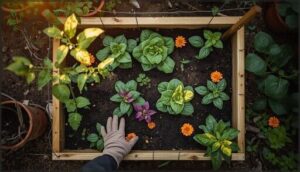
Think big dreams, but start with tiny plots—that’s the paradox that makes beginner tips actually work.
A 4-by-6-foot starter bed gives you 24 square feet of garden size ideal conditions. You can reach every plant without stepping on soil, protect it easily from pests, and grow 6 to 10 varieties.
Small scale doesn’t mean small harvests; it means you’ll actually finish what you start.
Raised Beds Vs. In-Ground Gardens
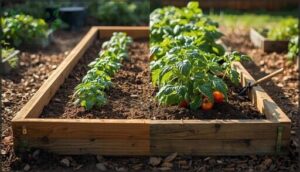
Between raised beds and in-ground gardens, your choice reshapes soil quality and drainage systems forever. Raised beds warm up one to two weeks earlier in spring, giving you control over garden soil composition and bed materials.
For vegetable gardening beginners, raised beds deliver space efficiency and garden aesthetics with less backache. In-ground plots cost less upfront but demand heavier weeding.
Container Gardening for Limited Spaces
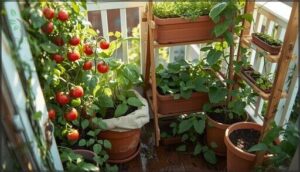
With balconies and patios, you can grow tomatoes in five-gallon pots and leafy greens in fabric grow bags. Container gardening techniques liberate small-space growers through vertical gardening setups and self-watering planters.
Choose containers at least twelve inches deep, fill them with potting mix blended with twenty to thirty percent compost, and watch cucumbers climb trellises. Container selection transforms tiny footprints into organic gardening victories!
Organizing Plants by Height and Sun Needs
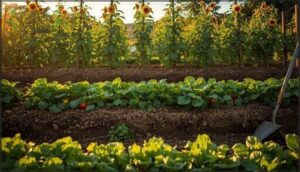
Your garden design transforms when you stack crops like nature intended. Layered planting starts with sunflowers and pole beans creating a four-foot backdrop, then tomatoes filling the middle zone, and finally lettuce hugging the front edge—all while shade management keeps everyone happy.
Here’s your vertical gardening blueprint:
- Tall crops (4+ feet) go north to avoid casting shadows
- Medium plants (2-3 feet) occupy the center row for balanced sunlight requirements
- Short vegetables (under 1 foot) line the accessible front
- Trellises support climbers, freeing precious ground space
- Height gradients of 6, 18, and 30 inches enhance airflow
This garden plan turns chaos into controlled abundance!
Prepare Your Soil for Planting Success
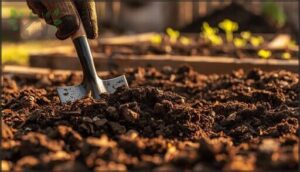
Think of soil as the foundation of your entire garden—get it right, and your plants will practically grow themselves.
Treat soil as your garden’s foundation—get it right, and your plants will practically grow themselves
You don’t need a chemistry degree to prep your beds, but a few key steps will make all the difference between scraggly plants and a thriving harvest.
Let’s break down exactly how to build soil that sets your vegetables up for success.
Adding Compost and Organic Matter
Your garden soil craves a feast, and compost delivers it. Work a 2 to 3 inch layer into the top 6 to 8 inches before planting—it’s the foundation of organic gardening success. This simple soil amendment boosts nutrient cycling, feeds beneficial microbes, and transforms tired earth into a thriving ecosystem.
| Material Type | Best Use | Key Benefit |
|---|---|---|
| Finished compost | Pre-planting soil prep | Stable organic matter retention |
| Aged animal manure | Long-term fertility | Nutrient-rich amendments |
| Leaf mold | Clay soil improvement | Enhanced aeration over time |
| Seaweed/kelp | Micronutrient boost | Mineral-rich soil preparation |
Ensuring Proper Drainage and Structure
Waterlogged roots spell disaster, but you can dodge that fate. Add a 2 to 4 inch layer of gravel drainage beneath your raised beds—this drainage system prevents water table issues and garden erosion.
Slice soil with a garden fork 6 to 8 inches deep to boost soil aeration and combat soil compaction. Your garden soil will drain well when properly prepared.
Adjusting PH Levels for Vegetables
Once you’ve tackled drainage, soil testing reveals your pH truth. Most veggies want 6.0 to 7.0 for nutrient uptake.
Too acidic? Lime application raises pH gradually over 2 to 6 months. Too alkaline? Sulfur treatment lowers it slowly.
Check water quality too—rainwater helps acidify naturally. Soil health depends on pH balancing, so test before planting and adjust thoughtfully for gardening success.
Select and Plant Beginner-Friendly Vegetables
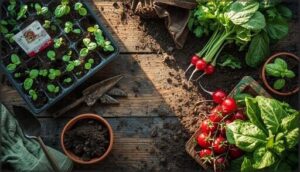
You’ve got the soil ready—now comes the fun part. Choosing the right vegetables and getting them in the ground properly sets the stage for a thriving garden all season long.
Let’s walk through how to pick plants that’ll actually grow, start them the smart way, and give them the space they need to flourish.
Easy-to-Grow Vegetables for First-Time Gardeners
You’re taking control of your harvest, and seed selection matters. Start with radishes—they’ll reward you in just 25 days. Lettuce and Swiss chard follow close behind at 25 to 60 days, perfect for beginner gardening guide success.
Bush beans need full sun but deliver pods in 50 to 60 days. Carrots sprout reliably in 7 to 14 days. These vegetable gardening tips guarantee early wins while you’re starting a vegetable garden.
Choosing Vegetables Your Family Will Eat
Your family favorites should drive your vegetable selection—snap beans harvested at 4 to 6 inches stay crisp for 4 to 7 days, while bell peppers ripen to sweet red or yellow for maximum crunch.
Snack-friendly cherry tomatoes and cucumber slices boost kids’ participation. These vegetable gardening tips turn meal planning into liberation: you’re growing food your household actually craves, not just what grows easily.
Starting From Seeds Vs. Transplants
Once you’ve picked your vegetables, decide between seeds and transplants. Seeds offer cost savings and wider variety—think heirloom tomatoes not sold at nurseries.
Transplants give you 1 to 4 weeks faster harvests and stronger starts, perfect for short growing seasons. Warm-season crops like peppers thrive as transplants, while carrots and beans prefer direct seed starting in your garden soil.
Proper Spacing and Planting Depth
With your vegetable garden plan ready, follow seed depth guidelines on packets—tiny lettuce seeds need light coverage, while beans go 1 inch deep.
Plant spacing tips matter too: crowd tomatoes and you’ll invite disease. Leave 18 to 24 inches between transplants for air circulation.
Root crops demand loose soil 8 to 12 inches down to prevent stunted carrots.
Maintain Your Garden Throughout The Season
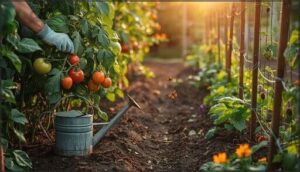
Getting your vegetables in the ground is just the beginning—now the real work starts. Your plants need consistent care to grow strong, fight off problems, and produce that beautiful harvest you’re dreaming about.
Let’s walk through the essential maintenance tasks that’ll keep your garden thriving all season long.
Watering Schedules and Techniques
Your plants crave consistency, not chaos. Water deeply once or twice weekly during cool spells—more often when heat strikes—to moisten the top 6 to 8 inches of soil.
Morning irrigation systems like drip irrigation or sprinkler systems promote water conservation while minimizing disease risk. Check soil moisture with your finger or a meter, aiming for that sweet spot of 40 to 60 percent capacity for ideal water management.
Mulching to Retain Moisture and Suppress Weeds
After watering, lock in that moisture with a 2 to 3 inch layer of organic mulch—shredded leaves, straw, or compost work beautifully.
This moisture retention powerhouse cuts evaporation by up to 70 percent on scorching days while blocking sunlight from weed seeds, slashing germination by 90 percent.
Keep mulch materials a couple inches away from stems to prevent rot and unwanted pests.
Fertilizing for Optimal Plant Growth
Think of fertilizer as your garden’s power bar—it fuels growth when soil alone can’t keep up.
Feed vegetables when they’re actively growing, using organic matter or targeted synthetic blends to deliver nitrogen for lush leaves, phosphorus for strong roots, and potassium for vibrant fruit.
Test your soil pH first; it controls nutrient availability and tells you exactly which soil amendments your plot craves.
Managing Common Pests and Diseases
Pests and diseases don’t have to wreck your hard work—you’ve got options beyond dousing everything in chemicals. Use Integrated Pest Management to combine Organic Methods like Crop Rotation, Biological Solutions (release lady beetles for aphids), and targeted Disease Prevention tactics.
Scout weekly for yellowing leaves or holes, sanitize tools between cuts, and space plants for airflow—you’ll stop most problems before they spiral.
Harvesting at Peak Ripeness
Your tomatoes glow deep red, and that glossy pepper practically begs to be picked—those are your ripeness signals telling you it’s time.
Harvesting homegrown vegetables at peak flavor enhancement means watching for full color, firm-yet-yielding texture, and that sweet aroma near the stem.
Proper harvest timing locks in nutrient preservation and fruit quality, rewarding your vegetable garden maintenance with crisp, sweet excellence. Harvesting and learning from gardening techniques and advice makes every bite worth it.
Frequently Asked Questions (FAQs)
How to start a vegetable garden?
Start by scouting your yard like a pioneer—find a sunlit spot with 6 to 8 hours of direct light daily, test your soil, and sketch a simple garden plan matching your climate zone.
What makes a good vegetable garden?
A good vegetable garden balances six to eight hours of direct sunlight, well-drained loamy soil, and easy access for watering.
Your garden plan should group crops by similar needs while allowing room for crop rotation.
What is the easiest vegetable garden for beginners?
You’ll hear people claim that massive veggie plots are pure freedom—but actually?
A 4-by-6 raised bed, simple soil prep, and eight radish-to-tomato beginner crops deliver real control without overwhelming chaos.
Is vegetable gardening for beginners a good idea?
Absolutely—it’s one of the smartest moves you can make. You’ll slash vegetable costs, reclaim control over what’s on your plate, and discover garden rewards that extend far beyond fresh produce.
Urban farming works, too.
Is vegetable gardening a good hobby for beginners?
Like alchemy turning soil to food, vegetable gardening rewards beginners with fresh produce, garden therapy, and hobby rewards.
Urban farming delivers beginner gardening guide wins—lower stress, physical activity, and real control over what you eat.
How do I choose the right vegetables for my Garden?
Your garden climate and what your family will eat should guide plant selection. Choose 6 to 8 vegetable varieties that mature quickly, suit your region, and offer diversity in crop families.
What is the easiest vegetable to grow for beginners?
Picture crisp radishes pulling free from dark soil just three weeks after planting. That’s gardening for beginners made real!
Radishes win every time—germinating in days, thriving without fuss, ready for harvest lightning-fast.
What is the most common mistake of first time gardeners?
The biggest stumble? Poor planning and inadequate research before you dig in.
First-timers often skip site selection, underestimate maintenance time, and lack a planting calendar—setting up unrealistic expectations without sufficient budgeting or preparation.
How should I arrange my vegetables in my garden?
Imagine sunlight painting rows of greens, each plant thriving in its zone.
Place tall crops behind shorter ones using garden mapping principles, group companions together through spatial planning, and rotate families seasonally—your vegetable pairing creates living garden design.
Which vegetables should not be planted next to each other?
Certain plant conflicts matter more than companion planting myths suggest. Keep tomatoes away from dill, which stunts fruit set. Separate carrots and dill too—roots suffer.
Onions inhibit beans, while corn and cucumbers compete fiercely for light.
Conclusion
Your garden won’t grow itself, but it won’t sabotage you either. Vegetable gardening for beginners is like learning to ride a bike—a few wobbly starts, then suddenly you’re cruising.
You’ve got the location scouted, soil prepped, and seeds ready. Now just show up consistently, water when needed, and trust the process.
That first ripe tomato you pluck from your own plant? That’s not beginner’s luck. That’s what happens when you stop overthinking and start growing.