This site is supported by our readers. We may earn a commission, at no cost to you, if you purchase through links.
A balcony, a patio, or even a sunny windowsill can feed you more than you’d expect. Some of the most productive gardens in the world measure just a few square feet—urban growers regularly pull hundreds of tomatoes, handfuls of fresh herbs, and crisp salad greens from containers no bigger than a laundry basket.
The trick isn’t space. It’s knowing which plants actually thrive when things get tight. The best vegetables for small gardens share a few key traits: compact growth habits, fast maturity, and the kind of generous yields that make every inch count.
From cherry tomatoes and dwarf peppers to quick-sprouting radishes and cut-and-come-again greens, your small garden holds more potential than you think.
Table Of Contents
- Key Takeaways
- Best Vegetables for Small Gardens
- Leafy Greens for Tight Spaces
- Container-Friendly Root Vegetables
- Compact Herbs and Edible Accents
- Small-Garden Growing Tips
- Frequently Asked Questions (FAQs)
- What vegetables can you grow in a small vegetable garden?
- What are small vegetable garden ideas?
- How to grow vegetables in small spaces?
- What vegetables can be grown vertically?
- What vegetables can you grow in your home?
- Should you include a vegetable garden in your small garden ideas?
- What vegetables for a small garden?
- What is the best size vegetable garden for a beginner?
- What vegetables can grow in 4 inches of soil?
- How to maximize a small vegetable garden?
- Conclusion
Key Takeaways
- Cherry tomatoes, dwarf peppers, bush beans, and cut-and-come-again greens like kale and lettuce are your best bets for small spaces because they grow compactly, mature fast, and keep producing all season.
- Going vertical with a trellis turns cucumbers, peas, and zucchini into serious space-savers, freeing up ground room while actually improving fruit quality and reducing diseases.
- Root vegetables like radishes, Nantes carrots, and beets grow just fine in containers as long as you match the pot depth to the crop — radishes need 8 inches, carrots and beets need at least 12.
- Succession planting every two to three weeks, paired with smart watering, proper drainage, and a regular fertilizer routine, is what keeps a small container garden producing steadily instead of going quiet after one harvest.
Best Vegetables for Small Gardens
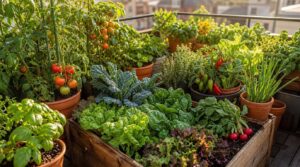
A small garden doesn’t mean you have to settle for less. The right vegetables can give you a surprisingly big harvest from just a few pots or a tiny raised bed.
With the right picks and a bit of planning, you can maximize your vegetable yield in small garden spaces far beyond what most people expect.
A few pots or a tiny raised bed can deliver a surprisingly big harvest when you choose the right vegetables
Here are the best picks to start with.
Cherry and Patio Tomatoes
Cherry tomatoes are one of the best bets for small space gardening — and a variety like Patio Choice Red Cherry Tomato proves you don’t need a big yard to grow real food. Its determinate bush habit keeps plants to about 18 inches, so no towering cage design is needed. Each fruit hits roughly ½-ounce fruit weight with a mild, sweet flavor.
Here’s what makes them work so well in container gardening:
- Pruning techniques stay minimal — just remove a few small suckers to keep airflow open
- Pick fruits when fully colored and slightly soft for peak flavor applications like salads or roasting
- Follow storage tips: keep them at room temperature, with stems on, and wash right before eating
- Plants ripen in about 65 days from transplant
- A single compact bush can set over 200 cherry tomatoes per season
It thrives with full sun exposure and moist, well‑drained soil, making it ideal for container setups.
Dwarf and Mini Bell Peppers
Dwarf bell peppers pull the same weight as tomatoes in small space gardening. Miniature bell peppers like Mini Red Bell or Jingle Bell stay 12–24 inches tall — perfect for container gardening. Their fruit sweetness rivals larger varieties, and harvest storage is easy: one week refrigerated.
Seed starting indoors gives you a head start on season extension, and companion planting with herbs keeps compact vegetable varieties thriving.
Bush Beans and Compact Peas
Bush beans and compact peas are two of the best compact vegetable varieties for small space gardening. Both thrive with soil pH management around 6.0–7.0, consistent moisture timing during pod set, routine pest scouting, and crop rotation each season.
Bush beans require no staking, reach harvest readiness in 50–60 days, and keep producing with regular picking.
Peas prefer cooler soil conditions.
Both plants benefit from soil pH between 6.0 and 7.0, consistent moisture during pod development, routine pest monitoring, and seasonal crop rotation.
Trellised Cucumbers
Cucumbers are natural climbers — give them a trellis, and they’ll reward you with cleaner, straighter fruit and far fewer disease headaches. For small-space gardening, vertical support methods for vine crops like these are a real space-saver.
- Trellis Materials like galvanized steel or garden netting hold up well through the season
- Growth Pruning of side shoots keeps energy focused on fruit production
- Plant Spacing of 12–18 inches along the trellis improves airflow and disease reduction
Elevated cucumbers dry faster after rain, which cuts down on powdery mildew. Fruit cleanliness is a bonus too — no dirt, less washing.
Vertical Zucchini
Most gardeners assume zucchini needs sprawling room — but vertical gardening for small areas proves otherwise. Train your plant up a 6–8 foot trellis design using soft ties every 6–12 inches.
This space-efficient crop, one of the best high-yield vegetables for tight spots, thrives with consistent watering, monthly fertilizer timing, and a rich soil mix.
Harvest every 2–4 days to keep production going strong.
Strawberries in Pots and Baskets
Strawberries are a sweet win for balcony gardening and container gardens alike. For variety selection, try Albion or Chandler — both fruit reliably in pots at least 12 inches wide. Use a light, well-drained soil recipe with a pH of 5.5–6.5.
Trim runners for better fruiting results, and give plants a nutrient boost every two weeks during fruiting. Small space gardening doesn’t get sweeter.
Leafy Greens for Tight Spaces
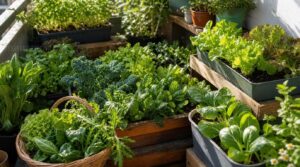
Leafy greens are some of the easiest crops to grow when space is tight. Most of them don’t need deep pots, handle partial shade better than other vegetables, and you can harvest them over and over.
Here are the best ones to start with.
Loose-Leaf Lettuce
Loose-leaf lettuce is practically built for small space gardening. Varieties like Heirloom Cutting Blend Lettuce, Mini Romaine Blend, and Tennis Ball Lettuce offer gorgeous leaf color varieties — from bright green to deep bronze.
Sow during cold season sowing windows, practice cut-and-come-again greens harvesting, and focus on microclimate placement in partial shade for bolting management.
Skip seed saving — fresh seeds perform best.
Spinach for Partial Shade
Spinach is one of the most forgiving leafy greens you can grow in a shady corner. Shade-tolerant varieties like Bloomsdale and Corvair handle 4–6 hours of sun daily without much fuss. These cool-season crops thrive in small space gardening setups.
To ensure success, maintain consistent soil moisture, apply mulch for temperature control, and use light-cloth shading during warm afternoons.
Monitor for bolting when temperatures rise, as this signals the plant’s transition to seed production.
Fast-Growing Arugula
Arugula is one of the fastest leafy greens you can grow in small space gardens — baby leaves are ready in just 21 to 28 days. For variety selection, try Astro for quick harvests.
Maintain steady soil moisture to avoid bitterness, and keep seed spacing at 2 to 4 inches. Practice succession planting every 10 to 14 days to ensure continuous harvests.
Shade helps with bolting prevention when temperatures climb, extending the growing season in warmer conditions.
Cut-and-Come-Again Kale
Kale might just be the hardest-working plant in your small garden. It’s a true cut-and-come-again green — harvest outer leaves every one to two weeks and it just keeps going. Here’s how to get the most from it:
- Shallow leaf trimming at the stem base protects regrowth buds
- Airflow spacing of 12–18 inches reduces disease pressure
- Mulch moisture retention cuts watering needs between harvests
- Frost-enhanced flavor makes late-season leaves sweeter and more tender
- Nutrient-packed harvest delivers vitamins A, C, and K continuously
Swiss Chard in Containers
Swiss or Rainbow Chard brings bold color and generous harvests to any small garden. Use a 5-gallon pot with rich, well-drained soil mix, and feed every two to four weeks with a balanced fertilizer routine.
Watch for aphids and wipe leaves clean early.
| Care Factor | Recommendation |
|---|---|
| Temperature Control | 60–70°F; afternoon shade in heat |
| Leaf Harvesting | Outer leaves first; repeat weekly |
Succession Planting for Continuous Harvests
Once your chard is settled in, think about what comes next. Maturity staggering and relay planting keep your small garden producing all season.
Sow lettuce or spinach every two to three weeks—that’s variety scheduling working for you.
Seasonal sequencing and harvest overlap mean you’re never waiting long for fresh leaves.
It’s the simplest way to maximize garden space with succession planting for continuous leaf harvesting.
Container-Friendly Root Vegetables
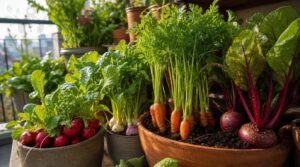
Most people assume root vegetables need a big garden plot, but that’s not really true. Carrots, beets, radishes, and a few others grow just fine in containers when you give them the right depth and soil.
Here’s a look at the best options and what each one needs to thrive in a pot.
Nantes and Short Carrots
Think root crops can’t fit a small garden? Nantes carrots prove otherwise. Their compact root size and moisture tolerance make them ideal for pots. Rapid maturity — around 70–75 days — means a reliable seasonal harvest window.
Top picks for containers:
- Nantes carrots – sweet, tender, 6–8 inches
- Mini Adelaide Hybrid Carrot – stout, uniform roots
- Short varieties – culinary versatility from salads to roasting
Radishes for Quick Harvests
If carrots test your patience, radishes are the reward. These fast-growing vegetables go from seed to harvest in just 25–30 days.
Variety selection matters — Cherry Belle and Red Globe stay compact and crisp.
Thinning techniques keep roots uniform; mulch benefits moisture retention.
Sow with proper seed spacing guidelines every two weeks, and refrigerated storage extends your haul.
Temperature scheduling around 50–65°F keeps flavor sharp.
Beets for Roots and Greens
Beets give you two crops in one pot — sweet roots and nutritious greens.
Beet root sweetness peaks when you harvest roots at 1.5–3 inches wide, around 55 days after sowing.
- Beet greens nutrition rivals spinach in iron, plus vitamins A and K
- Beet soil requirements: loose, well-drained mix with consistent moisture
- Beet storage techniques: trim greens first, refrigerate roots up to two weeks
Turnips in Deep Pots
Few root vegetables reward small-garden effort as generously as turnips. Plant them in a pot at least 8–12 inches deep with pH-optimized mix (6.0–6.8), slow-release fertilizer, and well-drained soil, and they’ll deliver both roots and greens.
| Factor | Requirement | Tip |
|---|---|---|
| Pot Depth | 8–12 inches | Facilitates taproot growth |
| Spacing | 3–4 inches apart | Prevents crowding |
| Sunlight | 6+ hours daily | Ensures uniform bulbing |
Seasonal sowing calendar planning, companion greens pairing, and soil moisture management keep your container gardening productive all season.
Kohlrabi for Cool Seasons
Cool weather is kohlrabi’s sweet spot — and light frosts actually boost its flavor through frost-enhanced flavor development. Aim for an ideal pH range of 6.0–7.5 and consistent moisture for rapid bulb growth.
- Harvest bulbs at 2–3 inches for best texture
- Bolting prevention means keeping temperatures below 75°F
- Pairs well with kale and cabbage as cool-season crops
- Aids leafy greens production for year-round supply
- Try compact vegetable varieties for tight containers
Proper Pot Depth and Spacing
Getting the depth right makes or breaks your root harvest. For carrots and beets, ideal container depth is around 12 inches, while radishes manage well in 8 inches.
Root zone volume determines how freely roots expand, so do not crowd them—follow seed spacing guidelines of 3–4 inches apart.
Well-drained soil and proper drainage in containers keep rot away and support leafy greens production for year-round supply.
Compact Herbs and Edible Accents
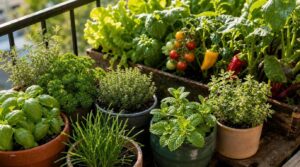
Herbs might be the easiest win in a small garden. They don’t need much space, and most of them actually prefer containers.
Here are the best compact herbs to grow alongside your vegetables.
Basil for Sunny Containers
Basil is truly one of the easiest wins in container and balcony garden design.
To thrive, it requires 6–8 hours of sunlight exposure daily and should be planted in a 12-inch container with good soil drainage.
Maintain a consistent fertilizer schedule: apply a balanced liquid feed every four weeks.
Most importantly, pruning and pinching off flower tips preserves flavorful leaves longer.
Chives in Small Pots
Chives are one of the most rewarding herbs in container and balcony garden design. A 6–8 inch pot with good drainage accommodates them perfectly.
For flavor enhancement, snip leaves regularly — it keeps growth dense and fresh.
They pair well with tomatoes for natural pest prevention.
Plant in spring for best seasonal timing, and they’ll reward you year-round.
Thyme for Dry, Sunny Spots
Just like chives, thyme thrives in a sunny spot — but it takes things a step further by thriving where other herbs struggle.
- Sun Hours: Give it at least six hours of direct sunlight daily.
- Soil Mix: Use well-drained soil or add perlite for drainage.
- Drought Tolerance: Water only when the top inch feels dry.
- Pruning Schedule: Trim after flowering to keep growth bushy.
Variety choices like lemon or French thyme make herb gardening in limited space genuinely rewarding.
Mint in Confined Containers
Thyme tolerates drought well, but mint thrives in moisture and spreads rapidly, making container gardening techniques essential for controlling its growth in small spaces.
For optimal mint cultivation, provide a solo pot at least 8 inches deep and position it near a south-facing window for adequate light when growing indoors.
| Mint Care Factor | What to Do |
|---|---|
| Pot Size | 8+ inches deep, solo pot |
| Balanced Fertilization | Light feed every 4–6 weeks |
| Harvest Timing | Top third of stems only |
| Air Circulation | Space pots apart; avoid crowding |
| Division Schedule | Divide every 6–12 months |
Herb gardening in limited spaces remains manageable when mint is confined—and boundaries are clearly established.
Oregano for Low-Maintenance Harvests
Once mint is settled, oregano practically takes care of itself. This perennial herb asks for very little—full sun, light watering once weekly, and free-draining soil.
Here’s why oregano earns its spot in herb gardening in limited spaces:
- A compact bush variety fits snugly in window boxes
- Slow runner spread stays manageable in container gardening techniques for small gardens
- Aromatic leaf storage extends your harvest through winter
- Companion plant pairing with basil attracts pollinators naturally
Mixing Herbs With Vegetables
Oregano isn’t just a solo act — it shines brightest when grown alongside vegetables. That’s the real magic of companion herb planting. Tuck basil near tomatoes for natural flavor pairing, or grow chives beside lettuce to keep aphids away.
Fresh herb timing matters too: snip just before meals for peak aroma. These strategies for cultivating herbs in mixed vegetable beds transform your container gardening techniques for small gardens into a working kitchen garden.
Small-Garden Growing Tips
Growing great food in a small space comes down to a few smart habits.
The right techniques can make even the tiniest plot or balcony feel surprisingly productive.
Here are the growing tips that will help you get the most out of every inch you’ve got.
Choose High-Yield Compact Varieties
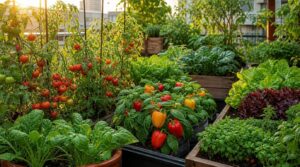
Choosing compact vegetable varieties is honestly one of the smartest moves you can make in a small garden. The right dwarf vegetable varieties do more work in less space.
Look for these traits when choosing high-yield vegetables for limited space:
- Heat-Resilient Hybrids with Improved Fruit Set that hold production past 90°F
- Low-Volume Root Zones suited to container depths under 24 inches
- Minimal Pruning needs and space-efficient planting habits for leafy greens production for year-round supply
Yield-Focused Selection pays off fast.
Use Vertical Supports for Vines
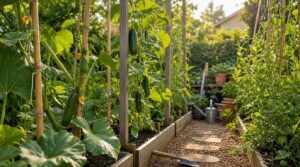
Going vertical instantly reclaims ground space. A well-placed vertical trellis lets climbing plants like cucumbers and peas grow upward instead of outward. Matching your trellis materials and post placement to the crop’s weight, keeping wire tension firm but not cutting, and checking support maintenance each season.
| Vine | Support Height | Weight Balancing Tip |
|---|---|---|
| Cucumbers | 6–8 ft | Double-tiered wire |
| Peas | 4–6 ft | Bamboo stakes |
| Zucchini | 5–6 ft | Alternate fruiting sides |
Plan Square-Foot Garden Layouts
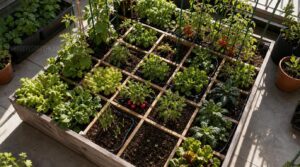
Think of your garden bed as a simple grid. Divide it into 1-foot squares, then assign each block a crop based on Companion Pairings, Sunlight Exposure Map, and Seasonal Block Rotation.
A Harvest Timing Grid keeps fast crops cycling through empty squares. Map your Irrigation Line Layout once, and your garden layout planning for small patios and decks practically runs itself.
This approach enables high-density planting, leafy greens production for year-round supply, and vertical gardening—all while maintaining efficiency.
Improve Drainage in Containers
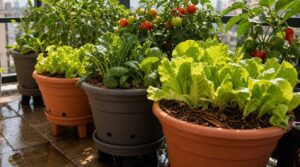
Poor drainage is the silent killer of container gardens. Ensure your pots have Multiple Drainage Holes and a Tapered Pot Shape to maintain water flow. Use a Light Potting Mix enriched with perlite to keep roots oxygenated, and place containers on Elevated Stands to allow excess water to escape freely.
Smart water management in container planting begins with proactive strategies:
- Apply a Top Mulch Layer to regulate soil moisture.
- Prioritize well-drained soil mixes; avoid dense garden soil entirely.
- Master managing water and drainage in container gardens before issues arise.
Manage Sunlight and Shade
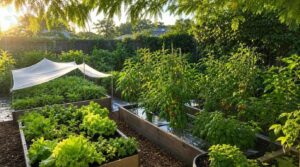
Light is everything in a small garden — get it wrong and even the best soil won’t save you.
Start with Morning Sun Positioning by placing heat-loving crops in south-facing spots, and use East‑Facing Beds for cool-season crops like lettuce and arugula, which thrive in gentler early light.
Drape Shade Cloth Usage with 30–50% light reduction over sensitive greens during hot weeks, and lay down Reflective Mulch to bounce light into shadier corners.
Perform Seasonal Pruning of overhanging branches each late winter to open up more sky.
Water and Fertilize Potted Crops
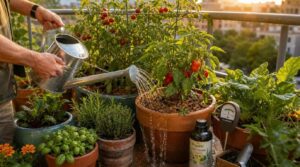
Potted crops are thirsty and hungry—they can’t pull nutrients from the ground like in-ground beds. Master the Deep Watering Technique: water thoroughly until it drains out the bottom. A Moisture Meter reading eliminates guesswork, ensuring precise hydration.
Apply organic fertilizer, such as liquid fish emulsion, every two to four weeks, adhering to Balanced NPK Ratios. Follow a monthly Fertilizer Flush Schedule to prevent salt buildup and maintain soil health.
Add mulch for evaporation control, conserving moisture and regulating soil temperature. This simple step reduces watering frequency and protects roots.
Replant Fast Crops Every Few Weeks
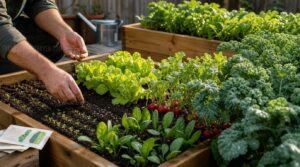
Once your watering routine is solid, maintain momentum with smart replanting. Sow lettuce and radishes on two-week intervals using biweekly sowing, ensuring you’re always days away from a quick harvest. This approach eliminates garden gaps through staggered cycles and rapid seed cycling.
To sustain nonstop production in small spaces, adopt succession planting for spinach every three weeks. Pair this with cut-and-come-again greens like kale, leveraging fast crop rotation to maximize yields.
Frequently Asked Questions (FAQs)
What vegetables can you grow in a small vegetable garden?
Don’t judge a garden by its size.
You can grow vegetables suitable for small gardens like cherry tomatoes, lettuce, radishes, and herbs using compact variety selection and space-efficient crops that thrive even in pots.
What are small vegetable garden ideas?
Small garden ideas include DIY raised beds, vertical gardening, companion planting, and portable window boxes.
Try containers, rainwater harvesting, seed saving, and space-efficient planting to maximize every inch. Opt for plants with a compact growth habit for efficient use of space.
How to grow vegetables in small spaces?
Growing vegetables in a small garden starts with choosing compact vegetable varieties, using vertical gardening, and improving soil mixes.
smart space-efficient planting turns even a tiny spot into a productive, rewarding harvest.
What vegetables can be grown vertically?
Pole beans, cucumbers, tomatoes, and runner beans all climb naturally.
Use trellis construction or cable support systems to guide them upward and keep fruit off the ground, saving valuable space below.
What vegetables can you grow in your home?
You can grow leafy greens, herbs, compact vegetable varieties, and window microgreens indoors using LED grow lighting or sunny windowsills.
This approach makes container gardening for urban dwellers practical, fresh, and rewarding year-round.
Should you include a vegetable garden in your small garden ideas?
Like tucking a thriving pantry into a tiny corner, a vegetable garden rewards every inch.
Yes — space efficiency, cost savings, and real health benefits make container gardening for urban dwellers one of the smartest small garden ideas you can try.
What vegetables for a small garden?
Lettuce, radishes, cherry tomatoes, and dwarf peppers are smart picks. These compact vegetable varieties for limited spaces grow fast, yield well, and fit neatly into pots, raised beds, or any tight corner you’ve got.
What is the best size vegetable garden for a beginner?
A 10×10-foot plot is the sweet spot for a beginner garden area.
It’s a minimal plot footprint that’s easy to manage, keeps raised bed dimensions simple, and still gives you a real harvest.
What vegetables can grow in 4 inches of soil?
Shallow radicchio, green onion, spinach, and lettuce all thrive in just 4 inches of soil. Radishes mature fast too. Even microgreens in microgreen trays need almost no depth at all.
How to maximize a small vegetable garden?
Grow more in less space through smart irrigation, vertical gardening techniques, companion planting, succession sowing, and mulch management.
Focus on soil health, seasonal rotation, space-efficient planting, and choosing compact vegetable varieties for leafy greens production year-round.
Conclusion
Small spaces have a way of growing on you—and so does the confidence that comes with your first real harvest. The best vegetables for small gardens aren’t just practical choices; they’re proof that limits can push creativity in the right direction.
Start with one container, one crop, one sunny corner. Water consistently, feed regularly, and pay attention. Your garden will quietly surprise you with how much it gives back.
- https://www.almanac.com/mini-vegetable-ideas-small-garden-spaces
- https://www.homesandgardens.com/gardens/space-saving-ways-to-grow-vegetables-at-home
- https://www.motherearthnews.com/organic-gardening/small-space-survival-garden-zbcz2004/
- https://theurbanharvest.com/blogs/blog/3-clever-ways-to-grow-more-in-a-small-space
- https://gardeninminutes.com/blogs/easy-growing/plant-spacing-chart-square-foot-gardening?srsltid=AfmBOoot3vPuXlXQ28Lw4bwTYc7YTcw2nziI2tNM2uePS0hvx9yjmGRg