This site is supported by our readers. We may earn a commission, at no cost to you, if you purchase through links.
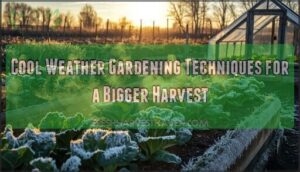
Most gardeners pack it in when the first frost warning hits. That’s exactly when the real growing season begins.
Cool-season crops like kale, leeks, and spinach don’t just tolerate cold—they convert it into better flavor, converting starches to sugars below 40°F in a process that no summer harvest can replicate.
The timing is critical. Miss your frost window by two weeks and you’re either scrambling to protect tender seedlings or watching mature crops bolt before you get a single harvest.
Master the rhythm of cool‑weather gardening techniques for harvest, and you’ll pull food from your beds ten months out of twelve.
Table Of Contents
- Key Takeaways
- Planning Your Cool Weather Garden
- Choosing The Best Cool-Season Crops
- Preparing Soil and Garden Beds
- Planting and Succession Strategies
- Protecting Crops From Frost and Pests
- Harvesting, Storing, and Preserving Vegetables
- Frequently Asked Questions (FAQs)
- How to grow crops in cold weather?
- What crops can you plant in October?
- How does frost affect different vegetable nutrient content?
- Can you grow cool-season crops indoors successfully?
- What companion plants work best in fall gardens?
- How do you revive winter-damaged cool-season vegetables?
- Which cool-weather crops regrow from kitchen scraps?
- Can cool weather crops grow in containers indoors?
- How does soil pH affect cool season vegetables?
- Which cool weather crops pair well together?
- Conclusion
Key Takeaways
- crops like kale, spinach, and parsnips actually taste better below 40°F as starches convert to sugars.
- Knowing your exact frost dates and yard microclimates lets you time plantings precisely, stretching your harvest up to ten months a year.
- Succession planting every two weeks, paired with the right direct-seed or transplant method, keeps your table stocked without gaps.
- Simple tools like row covers, straw mulch, and cold frames can extend your growing season well past the first freeze with minimal effort.
Planning Your Cool Weather Garden
A successful cool weather garden starts long before you ever put a seed in the ground.
From choosing frost-tolerant varieties to timing your first sow, cold climate herb gardening rewards anyone willing to plan a few steps ahead.
Knowing your frost dates, reading your yard’s light and temperature patterns, and laying out your beds thoughtfully can mean the difference between a trickle of greens and a real harvest.
Here’s what to sort out first.
Calculating First and Last Frost Dates
frost dates are the foundation of smart garden planning.
Use ZIP code calculators on sites like Almanac.com or the National Gardening Association to pull historical temperature trends for your area.
USDA zone charts give a solid starting point, but frost probability models add real precision — a 90% probability date means cool weather crops face almost zero frost risk after that point.
Accurate first and last frost dates help you schedule planting windows precisely.
Assessing Microclimates and Sun Exposure
Once you’ve pinpointed your frost dates, look around your yard — it tells its own climate story.
South-facing beds stay warmer and suit late-season cool crops, while east-facing spots offer gentler morning sun, perfect for leafy greens.
Check for frost pockets in low areas where cold air settles overnight.
Track sunlight at 9 am, noon, and 3 pm to map sun exposure accurately.
For the most accurate results, consider mid‑summer sun mapping when planning your garden.
Designing Beds for Maximum Yield
Now that you’ve mapped your sun and shade, it’s time to put that knowledge to work on paper.
Good Garden Planning and Design starts with four decisions:
- Bed Width Optimization — keep beds 4 feet wide so you reach the center without stepping in.
- North‑South Alignment — orient rows north to south for even light all day.
- Soil Depth Selection — go 12 inches for greens, 16–18 for roots.
- Intensive Square‑Foot and Vertical Trellis Integration — pack 9 spinach plants per square foot, then trellis peas northward to free ground space below.
Choosing The Best Cool-Season Crops
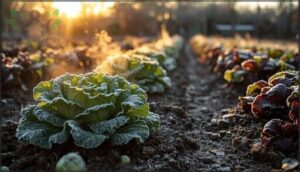
Not every vegetable can shrug off a frost and keep growing — but the right ones absolutely can.
Hardy varieties like kale and spinach thrive even better when planted in well-prepared spring garden soil built on that 40/40/20 blend of topsoil, compost, and sand.
Picking crops that match your season makes the difference between a struggling garden and one that keeps producing well past the first freeze.
Here’s a closer look at the best cool-season choices, from frost-hardy staples to fast growers and overwintering varieties.
Top Frost-Hardy Vegetables
Some cool weather crops don’t just survive frost — they get better because of it.
Siberian Kale holds strong down to 10°F, while Winterbor Brassica stays crisp through hard freezes. Frost‑Sweet Parsnip turns sweeter mid‑winter after several frosts. Overwintering Leek tolerates temps down to -10°F with mulch. Cold‑Hardy Brussels sprouts actually taste nuttier after a freeze.
Frost doesn’t just spare these vegetables — it makes them sweeter, nuttier, and better
Row covers, cold frames, and season extension tools keep these crops productive longer.
Fast-Growing Greens and Roots
A handful of cool season crops can go from seed to plate in under six weeks. Leafy greens like arugula and spinach hit baby‑leaf stage around 30 to 45 days with soil temperature monitoring keeping germination on track.
Try intercropping radishes between slower root vegetables — Cherry Belle matures in just 22 days. Disease‑resistant varieties, smart companion planting, and consistent fertilizer regimes push every microgreen tray further.
Overwintering and Late-Harvest Varieties
Some crops don’t just survive winter — they thrive in it. Smart winter harvest planning starts with picking the right varieties:
- Kale varieties like Winterbor handles 0°F; Red Russian sweetens after frost.
- Leek selection matters — Blue Solaise survives hard freezes and tastes better cold.
- Mache greens need zero frost protection and mature in 8–10 weeks.
Brassica cold tolerance, root overwintering, and cold frames round out your season extension toolkit.
Preparing Soil and Garden Beds
Good soil is the foundation of every productive cool-weather garden.
Before you sow a single seed, a few simple prep steps can make a real difference in how well your crops establish and grow.
Here’s what to focus on when getting your beds ready.
Incorporating Compost and Organic Matter

Good soil is the engine behind every productive cool-weather bed.
Work 2–4 inches of compost into your top 6–8 inches before planting to improve soil structure, boost microbial activity, and kick off steady nutrient release right when cool season crops need it most.
| Compost Timing | Benefit |
|---|---|
| Fall (0.5–3 in.) | Organic matter breaks down over winter |
| Spring (2–4 weeks before planting) | Nutrients ready at root level |
Mulching Techniques for Temperature Control
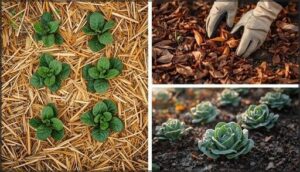
Mulching is your soil’s thermostat. A 2–4 inch straw mulch depth keeps soil 10–15°F cooler in summer, extending spinach and lettuce production noticeably.
For leaf mulch timing, apply shredded leaves in late fall before the ground freezes — they buffer soil temperature fluctuations within 5 degrees.
Always maintain stem clearance spacing of at least 1 inch to prevent rot.
Preparing Containers and Raised Beds
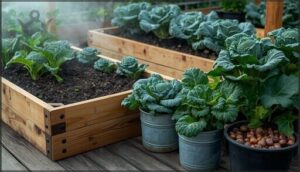
container and bed choices set the stage for everything else. For container gardens, match size to crop — leaf lettuce fits a 1‑gallon pot, while broccoli needs a full 5‑gallon.
soil mix ratios: 40% compost, 30% coir, 20% topsoil, 10% perlite works beautifully.
drainage enhancements matter too — drill half‑inch holes every 4 inches.
Cedar and galvanized metal offer the best bed material durability for raised bed gardens.
Planting and Succession Strategies
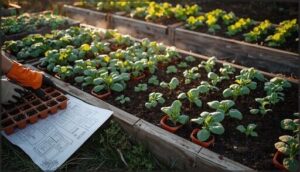
Getting plants in the ground at the right time makes all the difference with cool-weather crops. A smart planting decisions — like whether to direct seed or transplant, and how to stagger your sowings — can keep your garden producing for months.
Here’s what you need to know to plan it out.
Direct Seeding Vs. Transplanting
Picking the right planting method can make or break your cool‑weather crops. Direct seeding saves labor — just 1.9 hours per hectare versus over 200 hours for transplanting — and lets roots develop straight down without disruption. Transplanting, though, buys you time when soil is still cold.
- Direct seed: radishes, peas, carrots, spinach, arugula
- Transplant: broccoli, cabbage, kale for faster season extension
- Match method to soil temperature: seeds need 40–55 °F to germinate reliably
Scheduling for Continuous Harvest
Once you’ve nailed your planting method, succession planting keeps your table stocked all season. Sow leaf lettuce and spinach every two weeks — those consistent succession intervals mean you’re never stuck waiting.
Use frost planning to count back 45 days from your first frost for final sowings.
Relay cropping works beautifully here too: radishes finish fast, freeing space for a follow-up round of greens.
Regional Planting Timelines
Your local frost dates shape everything. Zone frost windows and latitude planting dates tell you exactly when to act — not roughly, but down to the week.
- Zone 3–4: Start peas late March under cover; radishes direct-seed mid-April
- Zone 5–6: Sow lettuce outdoors from March 1; kale transplants hit soil by May
- Zone 7–8: Lettuce goes in February; fall spinach plants mid-July
- Saxony/Falkenstein: Radishes start February in protected beds; spinach overwinters from September
Cool season crops work harder for you when you follow regional seed start timing and local climate calendars.
Protecting Crops From Frost and Pests
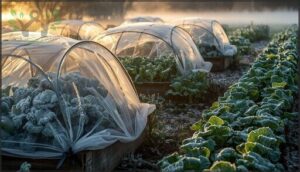
A late frost or a wave of pests can undo hard work in a single night. The good news is that a few simple tools can keep your crops safe and your harvest on track. Here are the best options for protecting your cool-weather garden.
Using Row Covers, Tunnels, and Cold Frames
Layering the right protection over your cool season crops is one of the smartest moves you can make. Row covers, tunnels, and cold frames each offer different levels of garden protection depending on weight selection and structural materials.
| Cover Type | Light Transmission |
|---|---|
| Lightweight row cover | 85% |
| Heavyweight row cover | 30–50% |
| Cold frame (polycarbonate) | ~90% |
Seasonal installation matters — set structures up before frost hits. For ventilation timing, prop cold frame lids open midday and close them by late afternoon to lock in warmth for your seasonal planting goals.
Organic Pest and Disease Management
Once your structures are up, turn attention to what’s crawling underneath them.
Companion planting pairs like onions near kale repel aphids naturally, while dill attracts beneficial insects — ladybugs alone eat 50 aphids daily.
Rotate cool weather crops every three seasons to break pest cycles. A compost tea drench and neem oil spray keep fungal pressure low without chemicals.
Mulching for Insulation and Moisture Retention
Think of mulching as giving your cool weather crops a warm coat before winter hits. For frost protection, straw beats leaf mulch on insulation — its air pockets keep soil 5 to 10 degrees warmer.
Aim for 4 inches depth for mulch depth guidelines. Apply after first frost to trap existing soil heat.
This simple move cuts watering needs by 50 percent while boosting soil health.
Harvesting, Storing, and Preserving Vegetables
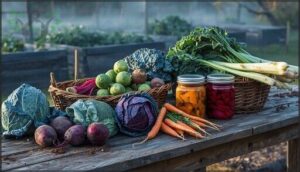
Getting the harvest right is just as important as everything that came before it.
How you pick, store, and preserve your vegetables can mean the difference between a week of fresh eating and months of home-grown flavor. Here’s what you need to know to make the most of every crop you’ve grown.
Best Techniques for Root and Leafy Crops
Timing your harvest right makes all the difference. Here’s how to do it well:
- Morning Harvest: Pick leafy greens early, before heat wilts them.
- Frost Sweetening: Let carrots and kale sit through a light frost — starches turn to sugar.
- Leafy Pruning: Cut outer kale leaves 2–3 inches above soil; leave the crown intact.
- Post-Harvest Cleaning: Shake soil from root crops immediately; trim carrot tops right away.
Short- and Long-Term Storage Methods
Storing your harvest well is just as important as growing it. Root cellar conditions — 32 to 40°F with 90 to 95 percent humidity — keep cool weather crops fresh for months.
Try sand storage for carrots and beets, layering roots between damp sand. Clamp pits work beautifully outdoors.
For freezer preservation, blanch greens first. Curing squash at 80 to 85°F adds months of shelf life.
Extending Harvest With Season Extenders
Season extenders can double your harvest window without much fuss. Layer your row covers strategically — each extra sheet adds 3 to 4°F of frost protection.
Then:
- low tunnels for cold frame insulation and hoop house ventilation
- Rotate cloches weekly using cloche rotation for succession planting
- Combine mulching with row cover layering for maximum frost protection
Smart low tunnel design keeps greens producing well past first frost.
Frequently Asked Questions (FAQs)
How to grow crops in cold weather?
Cold snaps and cool weather crops go hand in hand.
Use row covers for frost protection, check soil temperature before planting, and try succession planting every two weeks for steady harvests all season.
What crops can you plant in October?
October is prime time for fall gardening.
Plant garlic and onions, broad beans, kale for overwintering, mache greens, and winter carrots.
These cool weather vegetables and root crops establish strong roots before hard frost hits.
How does frost affect different vegetable nutrient content?
Frost actually boosts flavor and nutrition.
Kale and carrots trigger Sugar Accumulation, converting starches to sweetness. You also get a Vitamin C Boost, stronger Carotenoid Stability, though watch for Nitrate Fluctuations and Texture‑Nutrient Loss in damaged leaves.
Can you grow cool-season crops indoors successfully?
Yes, absolutely. With proper light scheduling, container depth, and temperature control, cool-season crops like lettuce and spinach thrive indoors year-round, giving you fresh harvests even when it’s freezing outside.
What companion plants work best in fall gardens?
Pair brassicas with onions or garlic to repel aphids and cabbage worms. Tuck dill or thyme nearby for extra pest control.
Kale shades spinach, while radishes fill gaps and build soil.
How do you revive winter-damaged cool-season vegetables?
Start with post‑frost watering to gently thaw the soil, then prune damaged foliage back to firm tissue.
A light fertilizer recovery feed helps cool weather vegetables bounce back faster than you’d expect.
Which cool-weather crops regrow from kitchen scraps?
Leafy scrap regrowth works surprisingly well with cool weather crops. Lettuce, kale, celery, and green onions all regrow from saved bases.
Root-top greens, brassica core sprouting, and allium base revival extend your harvest with almost zero effort.
Can cool weather crops grow in containers indoors?
Absolutely — container gardens work surprisingly well for cool weather crops.
Spinach, lettuce, and arugula thrive indoors with light requirements met by a bright south-facing window and temperature control kept between 60–75°F.
How does soil pH affect cool season vegetables?
soil pH controls nutrient availability for cool season crops. Aim for 0–8. Outside that range, root development suffers, iron chlorosis appears, and clubroot risk rises.
quick soil test guides pH adjustment methods.
Which cool weather crops pair well together?
Cool weather crops thrive through smart pairing.
Brassica-leafy pairings, root-allium allies, pea-nitrogen partners, radish-fillers, and herb-flower allies all boost yields.
Good companion planting and crop rotation keep cool season crops healthy and productive.
Conclusion
The best time to plant a tree was twenty years ago — the second best time is now. That same logic drives every cool weather gardening technique for harvest worth knowing.
Don’t wait for perfect conditions. Start calculating your frost dates, pick your crops, and get seeds in the ground.
Each cold snap that sweetens your kale is proof that you’ve learned to work with nature, not against it. Your most productive garden season hasn’t happened yet.
- https://www.heirloomkitchengardens.com/post/spring-vegetable-garden-tasks-when-to-plant-cool-season-crops-zone-5ish-planting-guide
- https://squarefootgardening.org/2024/08/grow-cool-season-vegetables-garden/
- https://www.urbanharvest.org/frost-tolerance-of-vegetables/
- https://www.elmdirt.com/blogs/news/succession-planting-calendar
- https://extension.umd.edu/resource/row-covers