This site is supported by our readers. We may earn a commission, at no cost to you, if you purchase through links.
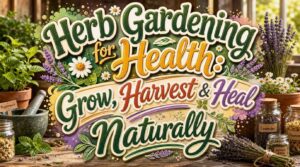
Something shifts when you grow your own medicine. A handful of chamomile blossoms steeped at bedtime, peppermint leaves crushed between your fingers before a meal, lavender dried and tucked into your evening routine—these aren’t folk superstitions.
They’re remedies backed by real plant chemistry, used for centuries and increasingly supported by clinical research.
Herb gardening for health gives you something most wellness trends don’t: a living pharmacy outside your door, grown by your own hands.
The five herbs ahead are practical starting points, each chosen for what they genuinely offer your body and how easily they take root in a home garden.
Table Of Contents
- Key Takeaways
- Best Herbs for Everyday Wellness
- Plan Your Healing Herb Garden
- Grow Healthier Herbs Organically
- Harvest Herbs for Maximum Potency
- Top 4 Herb Gardening Products
- Frequently Asked Questions (FAQs)
- Why should you create a medicinal herb garden?
- What is a medicinal herb garden?
- What are the best herb garden ideas?
- What is the value of a medicinal herb garden?
- What do 30 minutes of gardening do to your body?
- Can herb gardening reduce stress and anxiety levels?
- What are the physical health benefits of gardening?
- Are homegrown herbs safer than store-bought produce?
- How much time should I spend gardening weekly?
- Can children safely help with medicinal herb gardens?
- Conclusion
Key Takeaways
- Five herbs — chamomile, peppermint, lavender, echinacea, and ginger — each targets a specific health need, from sleep and digestion to stress, immunity, and warmth.
- Harvesting at bud stage, in mid-morning after dew dries, gives you the most potent oils and active compounds from every cutting.
- Matching your herbs to your climate zone and using containers for spreaders like mint keeps your garden manageable and your plants healthier from the start.
- Organic growing basics — six hours of sunlight, well-drained soil, natural pest control, and regular pruning — directly shape how medicinal your herbs actually are.
Best Herbs for Everyday Wellness
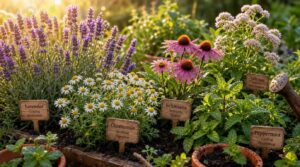
You don’t need a medicine cabinet full of supplements to feel your best — sometimes the answer is growing right outside your door.
A small collection of well‑chosen herbs can support everything from a good night’s sleep to a stronger immune system.
Growing even a few of these plants on your windowsill is easier than you’d think—check out this beginner’s guide to growing herbs at home to get started with the varieties that matter most.
Here are five everyday herbs worth making room for in your garden.
Chamomile for Restful Sleep
If you’ve ever struggled to wind down at night, chamomile might be your gentlest ally. This soft, daisy-like herb has been a trusted sleep aid for centuries, and science backs up what herbalists have long known.
- Contains apigenin, a flavonoid that calms the mind by activating the brain’s benzodiazepine receptors
- Brews into a soothing herbal tea in just a few minutes
- Easy to grow in any medicinal herb garden
- Promotes a steady chamomile bedtime routine when taken nightly
Steep dried flowers for five minutes before bed and let that warm cup become your body’s cue to rest. Clinical trials demonstrate it reduces sleep onset latency.
Peppermint for Digestion
While chamomile helps you sleep, peppermint steps in the next morning when your stomach needs settling.
Menthol in peppermint relaxes smooth muscle in your digestive tract, easing gas, bloating, and cramping. It’s especially useful for IBS symptom relief. Steep fresh or dried leaves in hot water for a simple digestive herbal tea.
Avoid it if you have reflux, as it may worsen heartburn.
Lavender for Stress Relief
When your nerves feel frayed, lavender aromatherapy is one of the simplest remedies your garden can offer. Its active compounds, linalool and linalyl acetate, gently support your nervous system, easing tension and lifting mood.
Try drying the flower tops and brewing a mild herbal tea, or diffuse the essential oil during your evening wind-down for quiet, natural stress relief.
Echinacea for Immune Support
Echinacea is a plant worth knowing well.
Its key compounds — alkylamides, cichoric acid, and polysaccharides — work together to support your immune system, especially during cold and flu season.
Growing it in your medicinal herb garden is straightforward, and harvesting the leaf, flower, and root gives you the full range of its natural benefits.
Ginger for Warming Remedies
Few therapeutic herbs warm the body quite like ginger — Zingiber officinale — a staple of herbal medicine for centuries. Its active compounds, gingerols and shogaols, create that familiar heat that eases chills and fortifies ginger circulation. Here’s how ginger helps:
- Ginger Tea soothes cold-related discomfort at first signs of illness.
- Warming Properties ease cold limbs and abdominal tightness.
- Cold Remedies with ginger loosen phlegm and encourage gentle sweating.
Plan Your Healing Herb Garden
A good herb garden starts with intention, not just seeds. Before you plant a single thing, it helps to think through a few basics that’ll make everything easier down the road. Here’s what to think about as you plan your healing space.
Spacing matters more than most beginners realize—check out this planting guide for drought-tolerant herbs to see how giving each plant room to breathe keeps your garden healthier from the start.
Match Herbs to Health Goals
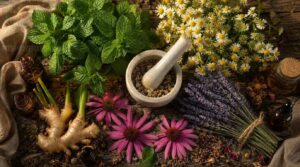
Think of your herb garden as a personal pharmacy. Every plant earns its place by serving a specific need.
Your herb garden is a personal pharmacy where every plant earns its place by healing
Digestive herb choices like peppermint belong near the kitchen, ready after meals. For sleep support, chamomile is your quiet evening companion.
Stress herb options like lavender ease tension, while echinacea supports immune support.
Ginger covers warming herb remedies when the cold creeps in.
Choose Climate-suited Varieties
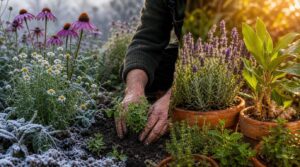
Where you live shapes what will thrive. Before you plant, check your USDA hardiness zone — it tells you which herbs can survive your winters reliably.
Chamomile and echinacea handle cooler zones well, while ginger and lavender prefer warmer, frost-light climates. In humid regions, choose varieties with natural disease resistance to avoid fungal problems.
A climate-matched herb simply grows stronger with less effort.
Use Containers for Spreaders
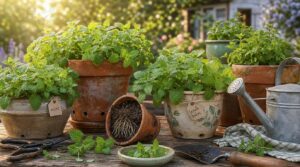
Some herbs simply won’t respect boundaries. Mint and lemon balm are generous growers, and without limits, they’ll crowd out everything nearby.
- Choose durable containers with drainage holes
- Use rich, well-amended quality potting soil
- Water deeply, not constantly
- Check roots seasonally and repot when crowded
- Clean containers between plantings to prevent disease
A simple pot keeps spreaders productive and contained.
Design Accessible Planting Zones
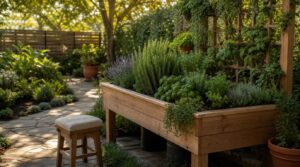
Your garden should work for you, not the other way around. Raised beds around 30 inches high let you tend plants comfortably, whether you’re standing or seated.
Keep wide, smooth pathways clear so movement stays easy.
Place your most-used herbs within arm’s reach, and add a vertical trellis at bed edges to expand what you can access without stretching.
Add Pollinator-friendly Flowers
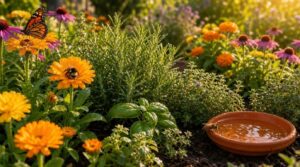
Pollinators are quiet partners in your herb garden, and welcoming them makes everything grow better. Tuck in open, flat blooms like marigolds or echinacea near your herbs — bees land easily on them.
Choose blue, purple, and yellow flowers to attract the most visitors.
A small shallow water dish nearby gives them a safe place to drink between visits.
Grow Healthier Herbs Organically
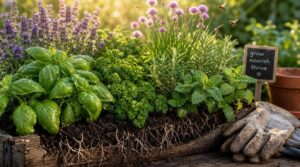
Growing herbs organically isn’t complicated, but a few basics make a real difference in how healthy and potent your plants turn out. Good soil, the right light, and simple pest control are what your garden really needs to thrive. Here’s what to focus on to keep your herbs growing strong and clean.
Provide Six Hours Sunlight
Most medicinal herbs thrive with six hours of direct sunlight daily — that’s the full sun threshold they need to produce strong, potent leaves. Before you plant, spend one day watching how shadows move across your space. Note where direct light lands and for how long. This simple shade mapping method saves a lot of guesswork.
Here’s what to keep in mind when placing herbs in your medicinal herb garden:
- South and west-facing spots tend to deliver the most intense afternoon light
- Sun-loving herbs like peppermint and lavender belong in your full sun zones
- Reflective walls or paving nearby can boost effective light on nearby plants
- Repositioning containers lets you follow the sun if your garden shifts seasonally
Once you’ve mapped your space, group plants by sun and water needs so every herb lands in its best spot. Consistent sunlight makes a real difference in flavor, fragrance, and healing strength — and that’s the whole point of organic gardening practices done right.
Maintain Well-drained Soil
Once you’ve found the right light for your herbs, the ground beneath them matters just as much. Well-drained soil is non-negotiable — roots sitting in soggy earth rot fast.
Do a simple percolation test: dig a six-inch hole, fill it with water, and watch. If it drains within an hour, you’re good. If not, it’s time to amend.
Balance Moisture by Herb
Not every herb drinks the same. Lemon balm loves moisture, so keep its soil consistently damp and rich.
Yarrow, on the other hand, thrives in drier ground and actually suffers when overwatered.
A good rule: water deeply when the top two inches feel dry, then let drainage do its job before watering again.
Prune for Stronger Growth
Once you’ve got watering sorted, pruning is the next habit worth building.
Pinch for branching regularly — just nip the growing tip above a leaf node, and the plant responds by pushing out two or more side shoots. That’s how rosemary and sage stay full instead of tall and leggy.
Cut just above nodes, keep your blades clean, and your herbs will keep giving.
Manage Pests Naturally
Pests find their way into every garden, but you don’t need harsh chemicals to keep them in check. Companion planting is your first line of defense — marigolds planted near your herbs can help reduce pest pressure, while nasturtiums lure aphids away from plants you care about. A little strategic placement goes a long way.
When something does show up, neem oil spray applied at the first sign of trouble disrupts feeding and reproduction before an infestation takes hold. Cover leaf undersides thoroughly, and apply in calm weather to protect any beneficial insects — ladybugs and lacewings are your allies out there. Sticky traps help you monitor flying pests like fungus gnats so you stay one step ahead.
Harvest Herbs for Maximum Potency
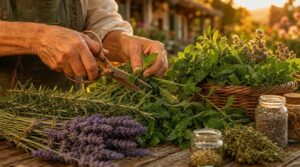
All that care you’ve put into growing your herbs comes down to this moment — the harvest. How and when you pick makes a real difference in how much goodness ends up in your cup or salve. Here’s what to know to get the most from every cutting.
Harvest After Dew Dries
Timing your harvest matters more than most gardeners realize. Harvest after dew dries — usually mid-morning — so your herbs aren’t dripping wet when you cut them.
Wet leaves invite mold during drying, which quietly ruins your herbal tea and medicine-making efforts. Dry foliage also helps retain volatile oils, keeping your herbs potent from garden to jar.
Pick Before Full Flowering
Watch your herbs closely as the season warms — bud stage is your window. Once buds appear but the blooms haven’t opened wide, that’s your cue for leaf harvest.
This timing gives you the best flavor retention and aroma peak, because active compounds are at their strongest before flowering pulls energy away from the leaves.
Dry in Dark Airflow
Once you’ve harvested at just the right moment, drying herbs correctly keeps all that goodness intact.
Airflow management is the real key here — moving air pulls moisture away from the leaves steadily, without any heat damage.
- Hang small bundles in a dark, ventilated space to protect volatile oils
- Keep bundles spaced apart so air reaches every surface
- Avoid kitchens where steam and smoke can settle on drying herbs
Store in Labeled Jars
Once your herbs are fully dry, sealed glass jars become their best home. Transfer each herb carefully, then apply a clear label showing the herb name, harvest date, batch reference, and a short use note like "tea" or "salve." This jar label design removes all guesswork and assists safe herb identification, especially when jars look alike on the shelf.
A simple rotation system keeps quality high — place newer jars behind older ones so you always reach for the earliest harvest first.
Make Teas, Salves, Tinctures
Your dried herbs are ready to work — now it’s time to put them to use. Three simple preparations cover most everyday needs:
- Herbal tea: steep ¼ cup dried herb in 4 cups boiling water for up to 30 minutes
- Tincture: combine 2 oz dried herb with 1 pint 80–100 proof alcohol, shake daily, strain after 6 weeks
- Salve: infuse herbs in oil for 2–4 weeks, then melt in 2 tablespoons beeswax per cup of oil
Top 4 Herb Gardening Products
The right tools can make your herb garden easier to manage and more productive from the start. A few well-chosen products go a long way toward healthier soil, stronger plants, and a better harvest. Here are four worth keeping on hand.
1. Leaves and Soul Indoor Herb Soil
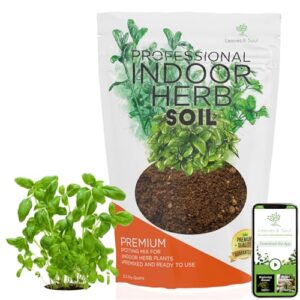
One product worth keeping on your shelf is Leaves and Soul Indoor Herb Soil. It’s a ready-to-use potting mix built around peat moss, coco coir, perlite, and dolomite — a blend that keeps roots oxygenated and well-drained without waterlogging. That matters especially for compact kitchen pots where soggy soil invites root rot fast.
It works well for basil, mint, rosemary, thyme, and parsley. At $13.99 for a resealable 2.2-quart bag, it’s a practical, beginner-friendly choice.
| Best For | Home cooks and beginners who want fresh herbs on the kitchen counter without fussing over soil mixes. |
|---|---|
| Origin | Made in USA |
| Plant Type | Culinary herbs |
| Odor Notes | Noticeable on opening |
| Indoor Use | Yes |
| Organic | Organic nutrients |
| Price | $13.99 |
| Additional Features |
|
- Perlite and coco coir keep roots breathing and drainage solid, so overwatering is much harder to do
- Works right out of the bag — no mixing, no guesswork
- The resealable bag keeps leftover soil fresh for next time
- At 2.2 quarts, one bag won’t go far if you’re planting more than a pot or two
- Some people notice a strong smell when they first open it, which isn’t great in a small kitchen
- It’s built for indoor containers, so results may vary if you try it outside or somewhere humid
2. Organic Peat-Free Garden Mulch
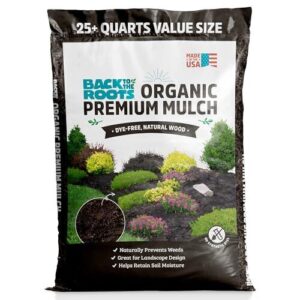
If your herbs are moving from indoor pots to raised beds or garden containers, peat-free mulch is worth adding to your routine. This organic blend is made from upcycled plant matter and wood fines, so it feeds your soil while keeping things sustainable. It retains moisture well, suppresses weeds, and nourishes the beneficial microbes your herbs depend on.
At $28.99 for 19.56 lb, it’s a reliable choice for outdoor chamomile, lavender, or echinacea beds.
| Best For | Gardeners growing herbs, vegetables, or flowers in pots, raised beds, or containers who want an organic, eco-friendly mulch that cuts down on watering. |
|---|---|
| Origin | Made in USA |
| Plant Type | Herbs & vegetables |
| Odor Notes | Mild organic scent |
| Indoor Use | Yes |
| Organic | 100% organic |
| Price | $28.99 |
| Additional Features |
|
- 100% organic and peat-free, made from upcycled materials — good for your garden and the planet
- Holds moisture well, so you’re not out there watering every other day
- Balances pH and feeds soil health with yucca extract, limestone, and gypsum
- At $28.99, it costs more than bulk mulch options you’d find at a local garden center
- No mention of color, which matters if you care about how your beds look
- Some bags arrive damaged, so check the packaging when it shows up
3. Organic Plant Magic All Purpose Fertilizer
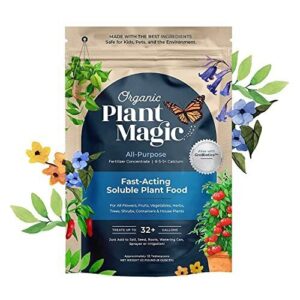
Once your soil and mulch are in place, your herbs still need steady nutrition to thrive. Organic Plant Magic All Purpose Fertilizer delivers that in a simple, concentrated powder. It contains 55+ trace minerals, amino acids, humic acids, kelp extract, and mycorrhizal GroBiotics to feed both your plants and your soil’s living ecosystem.
At just ½ teaspoon per gallon, a single 8 oz bag covers up to 1,000 sq ft — a little goes a long way.
| Best For | Gardeners who want one fertilizer that works everywhere — containers, beds, herbs, vegetables, or lawn — without juggling multiple products. |
|---|---|
| Origin | USA-sourced |
| Plant Type | Herbs & vegetables |
| Odor Notes | Strong when mixed |
| Indoor Use | Yes |
| Organic | Organic formula |
| Price | ~$20+ |
| Additional Features |
|
- Packed with 55 trace minerals, amino acids, kelp, and mycorrhizal GroBiotics that feed your plants and the soil beneath them
- Super concentrated — half a teaspoon per gallon means that little 8 oz bag stretches surprisingly far
- Works at every stage, from seeds to established plants, indoors or out
- Mixing it with water kicks up a strong smell, so using it inside can get uncomfortable fast
- It costs more than most conventional fertilizers, and the small bag size might leave you reordering sooner than expected
- The packaging doesn’t spell out different dosing for indoor vs. outdoor use, so you’ll have to figure that part out yourself
4. Organic Cold Pressed Neem Oil
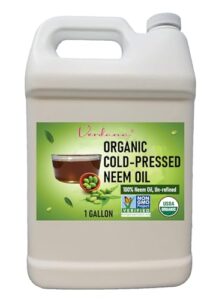
When pests show up in your herb garden, neem oil is one of the most dependable tools you can reach for. This cold-pressed, unrefined option comes in a full gallon, giving you plenty for the whole growing season.
It controls soft-bodied pests like whiteflies without harsh chemicals. Mix it with a drop of mild dish soap and water, then spray directly on foliage.
Just start with a small test patch — sensitive plants can react to too much.
| Best For | Home gardeners and small-scale growers who want a natural, chemical-free way to handle pests and also dabble in DIY skincare or hair care. |
|---|---|
| Origin | USA-distributed |
| Plant Type | Herbs & garden plants |
| Odor Notes | Strong earthy odor |
| Indoor Use | Yes |
| Organic | 100% pure/natural |
| Price | $72.90 |
| Additional Features |
|
- Pure and unrefined — no fillers, solvents, or heat processing, so you’re getting the real deal
- A full gallon goes a long way, making it great value for a whole growing season
- Pulls double duty as a garden pest control and a base for homemade lotions, shampoos, and balms
- The smell is strong and earthy — not everyone’s cup of tea, especially indoors
- You have to mix it carefully with soap to emulsify it properly, or it just sits on top and doesn’t work as well
- Too much on sensitive plants can backfire, so there’s a bit of a learning curve with dilution
Frequently Asked Questions (FAQs)
Why should you create a medicinal herb garden?
A medicinal herb garden puts fresh, homegrown remedies right at your fingertips. You control what goes into the soil, so there are no unknown chemicals. It’s a simple way to support your daily wellness naturally.
What is a medicinal herb garden?
A medicinal herb garden is a purposeful growing space where you cultivate plants chosen for their healing properties — think teas, tinctures, and salves made right from your backyard.
What are the best herb garden ideas?
The best herb garden ideas start with purpose and simplicity. Grow what you’ll actually use — chamomile for sleep, peppermint for digestion, lavender for calm. A small, intentional garden heals more than a large, neglected one.
What is the value of a medicinal herb garden?
A medicinal herb garden puts fresh, potent plants within arm’s reach whenever you need them — no store run, no guessing how old the dried leaves in that bottle really are.
What do 30 minutes of gardening do to your body?
Just 30 minutes of gardening burns up to 189 calories, raises your heart rate, and can drop cortisol levels noticeably. Your muscles, joints, and mood all respond — often faster than you’d expect.
Can herb gardening reduce stress and anxiety levels?
Yes, herb gardening can meaningfully reduce stress and anxiety. Time in green spaces, repetitive tasks like watering, and exposure to calming scents all work together to lower cortisol and lift your mood.
What are the physical health benefits of gardening?
Gardening is quiet, steady exercise that works your whole body. You’re bending, lifting, and walking without even thinking about it — and that movement adds up, burning up to 220 calories in just 30 minutes.
Are homegrown herbs safer than store-bought produce?
When you grow your own herbs, you control every input — the soil, the water, the pest management. There are no mystery residues, no long supply chains, and no guessing what’s been sprayed.
How much time should I spend gardening weekly?
Most gardeners do just fine with 1 to 2 hours weekly. Short sessions of 20 to 30 minutes a few times a week keep things manageable and let you stay on top of watering, weeding, and harvesting.
Can children safely help with medicinal herb gardens?
Children can absolutely help in a medicinal herb garden. Supervise every step, stick to safe herbs like chamomile and lavender, and always confirm plants are chemical-free before little hands get involved.
Conclusion
Every seed you plant is a choice, every harvest a small act of trust, and every cup of chamomile or ginger you brew is proof that healing can start at home. Herb gardening for health isn’t about precision, and every cup of chamomile or ginger you brew is proof that healing can start at home.
When your garden is the source and your kitchen is the apothecary, wellness stops being something you chase and becomes something you grow.
- https://chestnutherbs.com/the-top-ten-medicinal-herbs-for-the-garden
- https://mylittlegreengarden.com/5-benefits-of-growing-your-own-herbs
- https://www.coherentmarketinsights.com/industry-reports/medicinal-herbs-market
- https://pmc.ncbi.nlm.nih.gov/articles/PMC10084981
- https://insightcounselingcenter.com/the-mental-health-benefits-of-gardening