
This site is supported by our readers. We may earn a commission, at no cost to you, if you purchase through links.
Here’s something most gardeners get backwards: your best harvest of the year probably isn’t coming in July. It’s the one you plant while everyone else calls the season over. Frost doesn’t kill a garden—it sweetens carrots, crisps up kale, and clears out the bugs that plagued your tomatoes all summer.
The catch? Timing matters more here than any other season. Miss your window by two weeks and those beets never size up before the ground freezes.
That’s where fall vegetable garden tips actually earn their keep—not as generic advice, but as a real countdown clock. Grab your frost date, and let’s figure out exactly what goes in the ground, and when.
Table Of Contents
- Key Takeaways
- Plan Your Fall Planting Timeline
- Choose Cool-Season Vegetables
- Plant by USDA Zone
- Prepare Soil for Autumn Crops
- Direct Sow or Transplant Wisely
- Use Succession Planting for Harvests
- Protect Crops From Frost
- Manage Fall Pests and Diseases
- Water, Mulch, and Maintain Beds
- Top 5 Fall Garden Protection Products
- Frequently Asked Questions (FAQs)
- What should I do with my vegetable garden in the fall?
- What should I add to my vegetable garden soil in the fall?
- What should I do to my vegetable garden in the fall?
- What is the 3-hour gardening rule?
- What are three mistakes to avoid when gardening with raised beds?
- What do I do with my vegetable garden in the fall?
- When should I start my fall vegetable garden?
- What is the best vegetable to grow in the fall?
- How do I prepare my soil for a fall vegetable garden?
- Is September too late to plant fall vegetables?
- Conclusion
Key Takeaways
- Find your first frost date, then count backward using each crop’s days-to-maturity plus a 10–14 day buffer to set your fall planting timeline.
- Choose cool-season crops like kale, spinach, carrots, and beets, since cold temperatures actually convert their starches into sugars for sweeter flavor.
- Direct sow root crops like carrots and beets to avoid disturbing their taproots, while starting brassicas like broccoli indoors as transplants.
- Protect plants from frost using row covers, cold frames, or deep mulch, and use succession planting every 10–14 days to keep harvests coming continuously.
Plan Your Fall Planting Timeline

Fall planting isn’t something you eyeball and hope for the best. It’s really just simple math, once you know what numbers to plug in. Here’s exactly how to build your timeline, step by step.
Start by finding your first frost date, then work backward using each crop’s days-to-maturity with this fall vegetable planting calendar to pinpoint your ideal sowing window.
Find First Frost Date
Ever wonder why your neighbor’s garden survives a cold snap that wipes yours out? Timing.
Your first frost date comes from NOAA climate normals—just plug your ZIP code into a free frost date calculator.
You can use this frost date calculator to determine your specific gardening schedules.
- Find your hardiness zone
- Search "frost date calculator"
- Enter your ZIP code
- Check frost risk thresholds
- Adjust for microclimates (valleys, water, elevation)
That date becomes your planting calendar’s anchor.
Count Days to Maturity
Grab your seed packets and flip them over — that "days to maturity" number is your countdown clock. Count backward from your frost date to find your last safe planting day.
But here’s the catch: that number assumes ideal conditions. Fall’s cooler temps slow growth, so treat seed packet estimates as a starting point, not gospel, when building your planting calendar.
Add 10–14 Buffer Days
So once you’ve counted back from your first frost date, pad that number. Add 10 to 14 buffer days to your planting calendar — think of it as insurance against late heat, soggy soil, or a week you just couldn’t get outside.
Weather doesn’t follow spreadsheets, and this margin absorbs those hiccups without wrecking your whole seasonal planting window.
Start Transplants Early
Broccoli’s your best example here — start those transplants about 15 weeks before frost, since a 60-day maturity cycle needs seedlings already established, not seeds sown cold.
Growing your own indoors gives sturdier, cold-hardy seedlings ready to shrug off that first chilly transplant shock. This buffer strategy keeps your planting calendar realistic instead of hopeful.
Schedule Final Sowings
Once your transplants are in the ground, work backward from your first frost date to lock in final sowing cutoffs — shortest maturity crops go last. Try this order:
- Radishes and arugula: sow up to 3 weeks before frost
- Leaf lettuce and spinach: allow 4-5 weeks
- Root crops: need 8-12 weeks minimum
This backward calendar planning keeps your seasonal planting windows realistic, not wishful.
Choose Cool-Season Vegetables
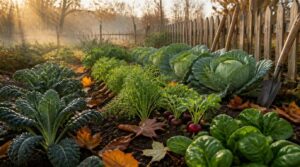
Now that your timeline’s set, it’s time to pick what actually goes in the ground. Not every vegetable loves cool weather, but the ones that do will surprise you with how sweet and tender they turn out. Here’s your lineup of fall garden all-stars, from quick-growing greens to crops that actually taste better after a frost.
Fast Radishes and Arugula
Want a crop that rewards impatience? Radishes deliver in 20 to 25 days, with that classic peppery bite. Arugula’s just as fast—14 to 21 days for baby leaves. Both love soil pH 6.0 to 6.8 and cool 40-68°F weather.
Tuck radishes between slower crops (great intercropping trick) and keep succession sowing every 7 to 14 days for nonstop harvests.
Leaf Lettuce and Spinach
Picture snipping fresh leaves for dinner, then watching new ones regrow days later — that’s cut-and-come-again harvesting, and it’s why lettuce and spinach earn garden space.
- Space lettuce 6-8 inches apart
- Sow spinach 2-4 inches apart
- Keep soil moisture consistent
- Mulch to prevent bolting
- Choose pest-resistant cultivars
Spinach packs more iron and folate per cup, making it the nutrient-density winner for fall gardens.
Kale and Collards
Cold turns kale sweeter, almost nutty — that’s chemistry, not magic.
| Green | Best Use |
|---|---|
| Kale | Chips, massaged salads |
| Collards | Braises, soups |
| Both | Sautéed with garlic |
| Kale | Freezes well blanched |
Kale’s loaded with vitamin K, collards bring more calcium. Harvest outer leaves continually; both keep production going through frost.
Carrots, Beets, Parsnips
Frost is a flavor booster underground, too — carrots, beets, and parsnips turn starches into sugar as temps drop.
Carrots pack beta carotene (hello, vitamin A); purple varieties hold extra antioxidant pigments. Beets deliver taproot nutrient density, especially folate. Parsnips get sweetest of all, roasted after frost.
Cure roots briefly, then store cold and humid — that combo keeps them crisp for months.
Tatsoi, Mizuna, Pak Choi
Ever notice how salad greens taste sleepier once summer heat fades? These three Asian greens fix that fast.
- Tatsoi’s spoon-shaped rosettes, mild and spinach-like
- Mizuna’s feathery, peppery leaves
- Pak choi’s crisp white ribs
- Baby leaves ready in just 21 days
All three are cold hardy greens, thriving with sesame, soy, garlic stir-fries — quick, nutrient-packed additions to any fall vegetable garden.
Plant by USDA Zone
Your zone number changes everything about when you should be planting. What works for a gardener in Minnesota will leave someone in Georgia way behind schedule, and vice versa. So let’s break it down by zone, plus how to line up your crops with your local frost date.
Zones 3–4: Late July
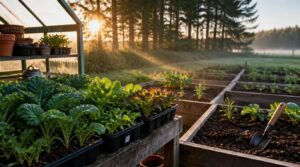
If you’re gardening in Zone 3 or 4, late July is your starting gun—no snoozing.
First frost often lands late September, so short-season crops matter most. Start kale, spinach, and lettuce transplants indoors now for a head start.
Track your microclimate’s frost history, since a sheltered yard might buy you extra weeks compared to open, windy plots.
Zones 5–6: August Planting
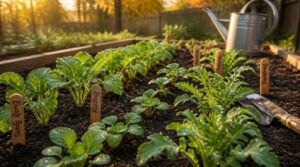
Give your garden a bit more breathing room here—August is prime sowing season for Zones 5-6. Your first frost usually hits mid-to-late October, so count backward using days-to-maturity, then tack on 10-14 buffer days for slower fall growth.
Sow bush beans by August 20, and get fast-maturing radishes, arugula, and Asian greens in the ground too. Check your yard’s microclimate—sheltered spots stretch your window further.
Zones 7–8: September Sowing
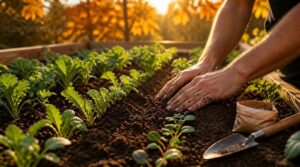
September’s your sowing month if you’re gardening in Zone 7 or 8. First frost usually lands late October to early November, so September sowing fits quick greens (60-90 days) and roots (90-120 days) nicely.
Check a local frost calendar—sheltered beds can push things back a week. Radishes, arugula, kale, and Asian greens all thrive here.
Zones 9–10: Fall Peak

Warm winters mean fall gardening never really stops in Zones 9-10 — you’re often sowing into December. But warm soil can stall germination, so water beds first to cool things down.
Watch for Autumn Microclimates: coastal fog belts and desert nights swing wildly.
Zone 10 timing favors late plantings for cool-season vegetables, since frost rarely arrives before January, if at all.
Match Crops to Frost
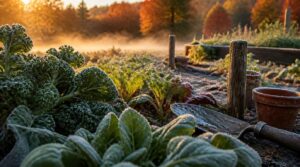
Once you know your first frost date, sort crops by how much cold they’ll actually take. Kale and spinach shrug off hard freezes — even sweetening up as sugar content rises.
Carrots and beets pause growth but bounce back in the temperature recovery window once soil warms.
Skip frost pockets in low spots, and pick hardy varieties suited to your zone’s real risk.
Prepare Soil for Autumn Crops
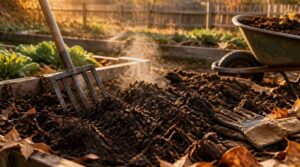
Before you plant a single seed, your soil needs a little cleanup and love. Think of it as clearing the table before you cook a good meal—everything works better when you start fresh. Here’s exactly what that prep work looks like, step by step.
Remove Summer Crop Residue
Your tomato vines and squash leaves aren’t just garden clutter—they’re hiding spots for next year’s pests and disease. Clear debris within 1 to 2 weeks of harvest, working dry soil to dodge compaction.
Trash diseased material; only compost what reaches full heat. Leave a thin 1-to-2-inch mulch layer behind for erosion control and organic matter balance.
Pull Weeds Before Planting
Grab weeds while your soil’s still moist from that recent rain—roots slide out clean instead of snapping off and resprouting. Hand hoeing works great for shallow-rooted patches, while stubborn perennials need their whole crown traced and lifted out.
- Pull weeds several days before planting
- Target root fragment removal thoroughly
- Shake soil off, toss weeds far from beds
- Prevent weed seed disposal from reseeding your patch
Add Finished Compost
Spread 2 to 3 inches of finished compost over your beds—it should smell earthy, not sour, with no chunky bits left. This boosts soil structure, feeds microbial activity, and releases nutrients slowly, right when fall crops need steady fuel.
Work it into the top 6 to 8 inches before planting for real soil fertility gains.
Loosen Topsoil Gently
Compost needs air to work its magic, so grab your fork and loosen the top 6 to 8 inches without flipping soil completely.
- Use light, sweeping motions, not deep stabbing
- Try a broadfork for gentle aeration
- Work small sections to avoid clods
- Loosen when soil’s moist, not soggy
- Stop if it feels crumbly, not powdery
This preserves soil structure integrity while preventing compaction.
Avoid Diseased Compost Material
One rotten leaf can undo a whole season of good soil work. Skip anything with spots, mold, or pest damage—those pathogens survive the pile and hitch a ride into next year’s beds.
| Skip This | Why | Do Instead |
|---|---|---|
| Diseased leaves | Spores persist | Trash it |
| Pesticide-treated waste | Residue transfers | Compost elsewhere |
| Meat, dairy | Attracts pests | Keep separate |
Keep your organic soil amendment genuinely healthy.
Direct Sow or Transplant Wisely
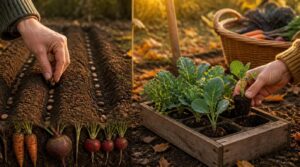
Not every seed wants to start life in a tray, and not every seedling can handle a rough move outdoors. Some crops do best going straight into the ground, while others need that early head start indoors before facing the elements. Here’s how to know which method fits which plant.
Direct Sow Root Crops
Skip the seed trays for carrots, beets, and radishes—these root crops hate having their taproots disturbed, so direct sow them right in the bed.
Loosen soil 8-12 inches deep, keep pH around 6.0-6.8, and space carrot seeds 1-2 inches apart in rows 12-18 inches apart.
Water consistently; uneven moisture forks those roots.
Transplant Broccoli and Cabbage
Broccoli and cabbage play by different rules than their root-crop neighbors. These coolweather brassicas actually want a head start indoors, then a move outside once seedlings show 4 to 6 true leaves.
Pick transplants with a healthy root ball—strong, white roots, nothing mushy. Set the crown at soil level, space plants 18 to 24 inches apart, and plant on an overcast afternoon to ease transplant shock.
Prime Spinach Seeds
Spinach seeds can be stubborn germinators once fall temperatures dip, so give them a little help before sowing.
Hydropriming—soaking seeds in water for 6 to 12 hours—speeds germination to just 2 to 4 days.
Ascorbic acid (50 ppm) boosts seedling vigor, while mild salt priming or Vitamin B1 pretreatment can improve germination rates without stressing your fall crop.
Protect Tender Seedlings
Once those primed seeds sprout, they’re tender and vulnerable to cold snaps. Floating row covers trap 4 to 6 degrees of warmth while letting light through. For extra protection, cold frames raise temps 8 to 12 degrees—like a mini greenhouse.
Vent covers on sunny days to avoid overheating, and keep humidity moderate underneath to prevent fungal issues while easing transplant shock.
Avoid Taproot Disturbance
Cutting into a taproot is like snipping a plant’s lifeline—that main vertical root controls water and nutrient uptake, and damage causes real stress.
Cutting a taproot is like snipping a plant’s lifeline, damaging its control over water and nutrients
For root vegetable cultivation, always direct sow carrots, beets, and radishes instead of transplanting.
Minimizing root stress means loose, well-draining soil and gentle handling.
Maintaining root integrity now means fewer setbacks later, reducing transplant shock and keeping your harvest on schedule.
Use Succession Planting for Harvests
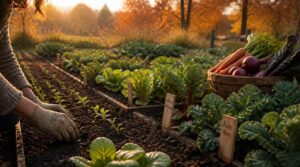
So one big harvest at once isn’t really the goal here—steady, staggered harvests are. That means planting in small batches instead of all at once, so your garden keeps producing for weeks instead of days. Here’s how to keep that rhythm going.
Sow Every 10–14 Days
Ever wonder how farmers markets have the same greens every single week? Succession planting is the trick. Sow a new round every 10 to 14 days, matching weekly consumption rather than one giant harvest.
This creates staggered germination windows, so your fall vegetable garden keeps producing without gaps. If frost threatens early, tighten your planting calendar with sowing interval adjustments.
Stagger Leafy Greens
Greens are the forgiving crop here—crowd them a little and they’ll still perform. Stagger spinach every 14 days for steady baby leaf pulls, and rotate in loose leaf lettuce, kale, arugula, and mustard greens on similar cycles.
Give each sowing its own few inches so plant crowding doesn’t invite disease. The payoff? A continuous harvest instead of one big flush, then nothing.
Repeat Quick Root Crops
Radishes and turnips are your fast-turnover champions—many finish in just 20 to 45 days. Direct sow these coolseason vegetables every 10-14 days for continuous roots. Keep soil pH between 6.0-6.8 to prevent cracking. Try these rapid maturity picks:
- Radishes (25-30 days)
- Baby carrots (40-50 days)
- Early beets (40-50 days)
- Quick turnips (25-45 days)
Track Harvest Windows
Grab a notebook and jot down when each crop hits perfect ripeness timing—that window between "ready" and "past its prime" varies wildly by crop.
Weather impact variables matter too: an early frost or warm spell shifts things fast. Match daystomaturity against your first frost date, factor crop storage life, and you’ll manage labor needs and crop yields without scrambling each week.
Replant Empty Rows Fast
An empty row is wasted real estate—refill it before weeds move in. Speed comes down to efficient bed reshaping, quick seedling clearance, and temporary spacing markers so you’re not re-measuring each time.
- Clear debris fast
- Reshape into furrows
- Set markers
- Direct sow or transplant
- Mulch for moisture conservation
Time weed control 48 hours before irrigation, and your fall vegetable garden stays productive, row after row.
Protect Crops From Frost
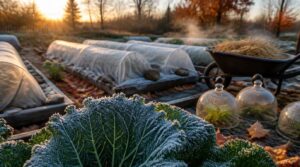
That first cold snap always shows up before you’re ready for it, so having a plan matters more than panicking after the fact.
The good news is you don’t need anything fancy to buy your plants a few extra weeks of growing time.
Here are the go-to methods that’ll keep your fall crops warm and happy when temperatures start dropping.
Use Floating Row Covers
Drape a row cover over your beds and you’re buying real insurance against early frost. The fabric traps warmth, offering temperature buffering of a few degrees on clear nights, while still letting 70-90% light transmission through.
| Benefit | How It Works | Result |
|---|---|---|
| Frost protection | Traps warm air | Fewer losses |
| Pest exclusion | Blocks insects | Cleaner greens |
| Season extension | Extends window | Longer harvest |
Proper anchoring with soil or staples keeps gaps shut.
Add Cold Frames
Cold frames take that protection further. Building one’s simple: four boards, corner braces, and an old window sash for glazing—lets sunlight in while trapping heat 8-12 degrees warmer inside.
Site it facing south, on level ground, for best microclimate control. Vent the lid on sunny days so seedlings don’t cook. Clean glazing and check hinges each season for longevity.
Mulch Root Crops Deeply
Root crops need a different trick than covers—straw mulch works best here. Pile 4-6 inches around carrots, beets, and parsnips, keeping it off the crowns to prevent rot.
This buffers soil temperature swings, locks in moisture 2-3 days longer, and suppresses weeds. Watch for slugs hiding underneath; keep mulch shallow near stems to deter them while still protecting roots from fall’s cold snaps.
Cover Before Cold Nights
Timing is everything here: get covers on before temps dip below 34°F, ideally on a calm, clear evening. Row covers create a microclimate that traps ground heat, while cold frames add even more buffer—5 to 15°F warmer overnight.
Tender herbs and lettuce especially benefit from early, breathable fabric that blocks wind without trapping moisture.
Vent on Warm Days
Sunny mornings can trick you—those covers trap heat fast, and by noon your greens are cooking. Strategic ventilation timing matters: prop up row covers or crack cold frames once temps climb past 50°F.
This mimics cross ventilation benefits, preventing stuffy microclimates. Think of it like greenhouse airflow management—brief, energy efficient venting beats leaving gaps open all day, which invites humidity problems and undoes your frost protection work overnight.
Manage Fall Pests and Diseases
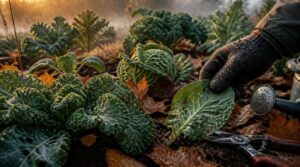
Fall pests don’t just disappear once the weather cools down—some of them actually get busier. The good news is that a little vigilance goes a long way toward keeping your beds healthy through the season. Here’s what you need to watch for and do to keep problems from spreading.
Watch Cabbage Worms
Green caterpillars chewing lace into your broccoli overnight? That’s classic cabbage worm damage. Check leaf undersides for pale eggs and skeletonized patches—brassicas like Brussels sprouts are prime targets.
Try this:
- Scout leaf undersides weekly
- Hand-pick larvae and eggs
- Encourage parasitic wasps
- Watch for frass trails
Eggs hatch in days, so early manual removal beats a full-blown infestation every time.
Remove Infected Leaves
Spot a leaf spot? Snip it right away—early removal stops pathogen spread before it jumps to healthy tissue. Sterilize shears with alcohol between cuts, water at soil level (not foliage), and log the date and location.
| Action | Why It Matters |
|---|---|
| Remove spotted leaves | Curbs spread |
| Sterilize tools | Prevents cross-contamination |
| Avoid overhead watering | Limits moisture |
| Log outbreaks | Tracks patterns |
Trash Diseased Plants
Once you’ve snipped that diseased tissue, don’t toss it in the compost bin—that’s basically mailing pathogens an invitation to your whole garden. Bag it and trash it, or check if your city’s yard waste program accepts infected plant matter.
Sanitize your shears again afterward, and rinse gloves before touching healthy plants. Simple habit, big payoff for pathogen containment.
Rotate Brassica Plantings
Here’s the thing about brassicas: plant kale or broccoli in the same bed year after year, and you’re basically running a buffet for clubroot and cabbage worms.
Break that cycle with crop family coding—tag beds so you know what grew where.
Rotate with legumes for nitrogen balancing, then give beds a two-to-three-year rest before brassicas return.
Simple habit, healthier hardy crops.
Keep Beds Weed-free
Weeds don’t take a fall break—they’ll happily crowd out your kale if you let them.
- Pull weeds while small (stale seedbed prep helps here)
- Add 2-3 inches of organic mulch to block light
- Hand-weed or hoe weekly, roots and all
- Plant crops close together for natural shade cover
Dense planting and mulch do double duty: fewer weeds, healthier soil, less work for you.
Water, Mulch, and Maintain Beds
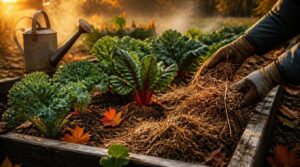
Fall gardens don’t need constant fussing, but they do need a little attention to stay healthy through the cooler weeks ahead. Watering, mulching, and basic cleanup all shift as temperatures drop, and getting the timing right makes a real difference. Here’s what to focus on to keep your beds in good shape all season.
Check Topsoil Moisture
How do you know if your soil’s actually ready for seeds, not just looking damp on top? Grab a trowel and check 4–6 inches down — that’s root zone depth for most greens. Aim for 60–70% field capacity, moist like a wrung sponge.
| Tool | Best For |
|---|---|
| Tensiometer | Precise suction readings |
| Gypsum block | Simple, budget-friendly checks |
Daily checks boost germination success during establishment.
Water Less Than Summer
Once that trowel test says you’re at field capacity, ease off the hose. Cooler days mean evapotranspiration drops roughly 15%, and deeper summer root systems already cut daily needs by about 20%.
Water once weekly, 1–1.5 inches, in the morning to limit evaporation. A soil moisture probe and rain barrels help you fine-tune without guesswork.
Apply Straw Mulch
Once you’ve watered, lock that moisture in. Spread 2 to 3 inches of straw mulch over root crop beds — it cuts evaporation by up to 70%, smothers weeds, and keeps stems dry to prevent rot. Keep straw an inch from crowns.
As it breaks down, it feeds soil organic matter, building real soil health for spring.
Rake Leaves Into Beds
Straw’s not your only free mulch. Those falling leaves? Leave the leaves on beds instead of bagging them — shred lightly first for faster breakdown.
- Insulates perennial roots through hard freezes
- Feeds beneficial insects a winter home
- Cycles nutrients back into soil naturally
- Builds organic matter without buying a thing
A 2-4 inch layer protects soil structure all season, no extra cost.
Clean Tools Before Storage
Give your trowels and pruners a good wipe-down before they hit the shed for winter. Caked-on soil holds moisture, which invites rust — so scrub with soapy water, dry completely, then rub a light coat of oil on metal surfaces.
Rust prevention matters as much as any other fall garden task. Organize hand tools on a rack, blades sheathed, ready for spring.
Top 5 Fall Garden Protection Products
So you know the tricks now, but you still need the right gear to pull them off. A good cover or spray can mean the difference between a frozen bed and one that keeps producing into December. Here are five products worth having on hand this season.
1. Monterey BT Concentrate Insecticide
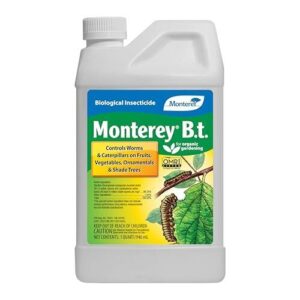
Cabbage worms munching your kale before you get a bite? That’s where Bacillus thuringiensis (Bt) earns its keep. This liquid concentrate targets caterpillar pests like loopers and hornworms, working best when larvae are young and still small.
Mix it into any backpack or hose-end sprayer, and you’re covered through harvest day—it’s OMRI listed for organic gardens and won’t harm birds or earthworms. Just remember, it only works on caterpillars, not beetles or squash bugs.
| Best For | Home gardeners and organic growers looking to protect vegetables and trees from caterpillar pests like corn ear worms, bagworms, and tent caterpillars. |
|---|---|
| Gardening Use | Pest Control |
| Material | Bacterial Concentrate |
| Reusable | Yes |
| Breathable Design | N/A – Liquid Spray |
| Outdoor Suitability | Garden & Orchard |
| Application Method | Sprayer Application |
| Additional Features |
|
- Effectively controls corn ear worms, bagworms, and tent caterpillars when applied early
- Easy to mix and apply using standard sprayers
- Helps prevent worm damage during critical corn silking and pre-harvest stages
- May not fully handle high-density squash beetle infestations
- Requires precise, thorough coverage to work effectively
- Some consumers report inconsistent fill levels in the bottle
2. Agfabric Plant Frost Protection Cover
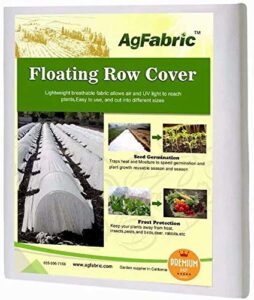
Think of this cover as a lightweight blanket for your beds. Made from UV-stabilized spun polypropylene, it’s breathable enough for air and moisture to pass through, yet still traps warmth where your plants need it.
At 10 x 50 feet, one roll stretches across several rows. It buys you 3°F to 8°F of frost protection, with 30–50% light transmittance so photosynthesis keeps going underneath. The built-in drawstring makes securing it around plant crowns quick—no fumbling with clips in the cold.
| Best For | Home gardeners and small-scale growers who want to extend their growing season and shield fruit trees, vegetables, shrubs, and potted flowers from frost, wind, and pests. |
|---|---|
| Gardening Use | Frost Protection |
| Material | Spun Polypropylene |
| Reusable | Yes |
| Breathable Design | Air & Moisture Permeable |
| Outdoor Suitability | Beds & Rows |
| Application Method | Drape & Secure |
| Additional Features |
|
- Breathable polypropylene fabric lets air, light, and moisture through while still trapping heat for frost protection
- Generous 10 x 50 foot size covers multiple rows or beds in one piece
- Drawstring design makes it quick to secure around plants without extra clips or ties
- Lightweight fabric can snag or tear if it catches on sharp edges during setup
- Needs a sturdy support frame to hold up under heavy snow
- Only offers moderate frost protection (3°F–8°F), so it may not be enough in extreme cold
3. Agribon Floating Row Cover
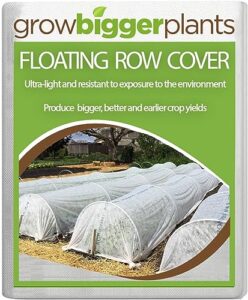
This is the workhorse of frost covers, and the AG-19 model earns its reputation honestly. It’s UV-stabilized polypropylene with double-bonded seams, so it holds up season after season instead of shredding after one windy night.
You get up to 4°F of frost protection and 85% light transmission—better than most competitors. The porous fabric lets air and water through while still keeping cabbage moths off your brassicas. Just weight the edges with boards; strong wind is its only real weakness.
| Best For | Gardeners who want a durable, reusable row cover to protect frost-sensitive crops like tomatoes, peppers, and melons through multiple growing seasons. |
|---|---|
| Gardening Use | Frost Protection |
| Material | Polypropylene Fabric |
| Reusable | Yes |
| Breathable Design | Air & Water Permeable |
| Outdoor Suitability | Multi-Season Beds |
| Application Method | Drape & Weight |
| Additional Features |
|
- UV-stabilized polypropylene with double-bonded seams holds up season after season instead of tearing
- Delivers up to 4°F of frost protection along with an 85% light transmission rate
- Porous fabric lets air and water through while still blocking insects, birds, and cabbage moths
- Vulnerable to damage in strong winds unless edges are properly weighted with boards
- Lightweight material can tear if pinned down or rubbed against sharp edges
- Some users report inconsistent water penetration during heavy rain
4. Easy Gardener Frost Protection Blanket
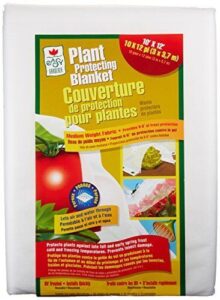
Sometimes lighter is better. This non-woven fabric skips the rigid feel of row cover and drapes like cloth, so it hugs oddly shaped shrubs and potted plants without gaps. You get 4 to 8°F of protection, plenty for a light frost, and it’s reusable if you rinse off dirt and air-dry it before folding away.
It won’t hold up to hard freezes, but for quick-cover nights, it’s fast, forgiving, and easy to cut down to size.
| Best For | Gardeners who want a lightweight, reusable cover to shield shrubs, bushes, and potted plants from light frost, wind, and rain during the fall growing season. |
|---|---|
| Gardening Use | Frost Protection |
| Material | Non-Woven Fabric |
| Reusable | Yes |
| Breathable Design | Air & Rain Permeable |
| Outdoor Suitability | Shrubs & Pots |
| Application Method | Drape & Stake |
| Additional Features |
|
- Lightweight, cloth-like fabric drapes easily over oddly shaped plants without gaps
- Reusable for multiple seasons and simple to cut to custom sizes
- Lets sunlight and some rainfall through while still blocking pests and cold
- Only offers 6 to 8 degrees of frost protection, not suited for hard or prolonged freezes
- May need extra stakes or weights to keep it from blowing away in wind
- Fabric can tear if too much pressure is applied through the stakes
5. Cotton Craft Large Burlap Race Sacks

Not every "protection" product guards against cold — this one guards against boredom. Made from 100% natural jute, these sacks are double-stitched and breathable, sized generously at 24" x 39" for kids and adults alike.
Beyond field-day races, they’re handy in the garden for storing dry goods or shielding tender plants from wind. Just air them out first; jute has a distinct, earthy smell. Spot clean only, and skip the washer.
| Best For | Families, teachers, and event planners looking for durable, natural-material sacks for field-day races, garden storage, or rustic organizing around the home. |
|---|---|
| Gardening Use | Plant Protection |
| Material | Natural Jute |
| Reusable | Yes |
| Breathable Design | Breathable Weave |
| Outdoor Suitability | Outdoor Recreation |
| Application Method | Fill & Use |
| Additional Features |
|
- 100% natural jute construction that’s breathable, sturdy, and built for repeated use
- Versatile for outdoor games, gardening, and household storage
- Meets US Child Safety Standards (ASTM F963 and CPSIA) with a non-toxic material
- Natural jute scent requires airing out before use
- Seams may open under extreme stress
- Not suitable for children under 3 years old
Frequently Asked Questions (FAQs)
What should I do with my vegetable garden in the fall?
Channel your inner Victory Garden farmer: find your first frost date, then work backward.
Clear summer debris, refresh soil with compost, and sow cool-season crops like kale or spinach — timing everything so harvest lands before that first frosty morning arrives.
What should I add to my vegetable garden soil in the fall?
Work in 2 to 3 inches of finished compost, plus aged manure for slow-release nitrogen. Top-dress with worm castings, toss in shredded leaves for structure, and skip fresh manure—it’ll burn tender seedlings before they get going.
What should I do to my vegetable garden in the fall?
Most gardeners lose 30% of potential fall harvest by planting too late. Beat your first frost date by scheduling transplants, clearing summer debris, enriching soil with compost, and sowing frost-tolerant crops like kale and carrots for a thriving autumn garden.
What is the 3-hour gardening rule?
Simply put, it’s skipping outdoor chores from 11 am to 2 pm, when sun and heat peak. This protects you from exhaustion and dehydration, while sparing plants from wilting—so save weeding or planting for cooler morning or evening hours instead.
What are three mistakes to avoid when gardening with raised beds?
An ounce of prevention beats a pound of cure: skip unfinished topsoil, don’t overcrowd plants, and never overwater. Add compost generously, space crops properly, and use soaker hoses instead of overhead sprinklers to keep roots healthy and disease-free.
What do I do with my vegetable garden in the fall?
Clear summer debris, refresh soil with compost, then plant cool-season crops like kale and carrots. Protect seedlings with row covers, water less than summer, and mulch roots deeply. Keep succession sowing every 10–14 days for continuous harvests.
When should I start my fall vegetable garden?
The moment your first frost date reveals itself is like striking gold — start counting backward immediately. Subtract each crop’s maturity days, tack on a 10–14 day buffer for sluggish autumn growth, and you’ve got your true planting window.
What is the best vegetable to grow in the fall?
Kale wins for most gardeners—it gets sweeter after frost, keeps producing for weeks, and shrugs off cold that would kill other greens. Beets and carrots come close, storing well underground while flavor improves in cool nights.
How do I prepare my soil for a fall vegetable garden?
Dirt’s the word: test pH first (aim 0 to 8), then work in 2 to 4 inches of aged compost. Pull weeds and residue, loosen topsoil to 6-8 inches gently, and mulch after—your roots will thank you.
Is September too late to plant fall vegetables?
Not at all — September works great for radishes, lettuce, and arugula, which mature in just 25 to 40 days. Zones 7 and 8 especially favor this timing, so grab those quick-growing seeds and get sowing.
Conclusion
A million frosty mornings couldn’t stop a well-timed carrot patch from turning out sweeter than candy. That’s the quiet magic behind solid fall vegetable garden tips: they turn dying light into your richest harvest yet.
Mark your frost date, count backward, and get seeds in before that window shuts. Your future self, pulling frost-kissed kale in November, will thank you.
The garden isn’t ending—it’s just getting started.
- https://awaytogarden.com/what-to-plant-now-for-a-fall-vegetable-garden
- https://extension.okstate.edu/fact-sheets/fall-gardening
- https://agrilifeextension.tamu.edu/browse/featured-solutions/gardening-landscaping/fall-vegetable-gardening-guide-for-texas
- https://www.farmersalmanac.com/calendar/gardening
- https://enchantedgardensrichmond.com/planting-guide/fall-planting-guide