This site is supported by our readers. We may earn a commission, at no cost to you, if you purchase through links.
A single 4×8-foot raised bed can produce enough salad greens to feed a family of four through summer—and that’s with minimal effort once you get it going.
More people are growing their own food now than at any point in recent decades, partly out of necessity, partly out of the quiet satisfaction that comes from eating something you planted yourself.
The good news is you don’t need a sprawling yard or years of experience.
Whether you’re working with a sunny balcony, a narrow side yard, or a full backyard, these home vegetable gardening ideas will help you make the most of whatever space you’ve got.
Table Of Contents
- Key Takeaways
- Creative Vegetable Garden Layout Ideas
- Space-Saving Solutions for Small Gardens
- Companion Planting and Succession Strategies
- Water-Efficient and Sustainable Gardening Tips
- Best Vegetables for Home Gardens
- Frequently Asked Questions (FAQs)
- What is the 70/30 rule in gardening?
- What is the best way to layout a vegetable garden?
- What is the 80 20 rule in gardening?
- What is the 3-hour gardening rule?
- What are the four common mistakes landscapers make when planting?
- What vegetables can you plant in October?
- What is the most common mistake of first time gardeners?
- What vegetables should not be planted together?
- What is the easiest vegetable to grow?
- What adds the most value to a garden?
- Conclusion
Key Takeaways
- Raised beds and smart layouts make gardening easier, more productive, and accessible for everyone, no matter your space.
- Vertical planters, hanging baskets, and modular containers help you grow lots of food even on balconies or in small yards.
- Companion planting and staggered sowing keep your harvests steady, boost soil health, and attract pollinators all season.
- Water-saving methods like drip irrigation, mulching, and drought-tolerant crops let you garden sustainably through dry spells.
Creative Vegetable Garden Layout Ideas
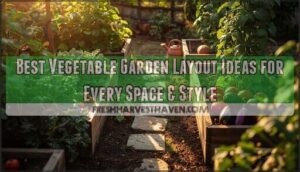
The way you arrange your garden makes a bigger difference than most people realize.
Good layout decisions—like sun exposure, spacing, and soil placement—are covered well in this beginner’s guide to starting a vegetable garden that walks you through the key choices before you dig your first row.
A good layout can save you time, cut down on weeding, and make the whole space feel more enjoyable to work in.
Here are a few design ideas worth considering, from raised beds to color‑coordinated rows.
Raised Bed Designs for Easy Access
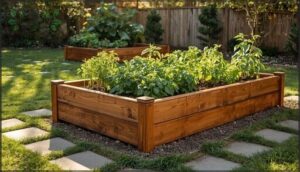
Building a raised bed garden around how you actually move makes all the difference.
For wheelchair access, keep beds 3 feet wide and 24–36 inches tall — that meets ADA height standards and gives you real wheelchair clearance underneath.
Dual depth zones, shallow in front and deeper in back, handle herbs and tomatoes without straining.
Leave 4-foot pathways between beds for easy navigation.
Using pressure-treated wood durability ensures the bed lasts longer.
Square Foot Gardening for Maximum Yield
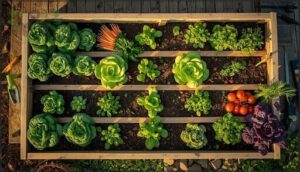
Square foot gardening takes your raised bed garden from guesswork to a real system. Divide beds into one-foot squares using wood lath or old Venetian blinds — grid spacing precision makes small space gardening surprisingly productive.
Fill each square with Mel’s Mix soil, then follow simple plant counts: 16 carrots, 4 lettuce heads, or 1 tomato per square.
Succession square planting keeps harvests rolling all season.
The blend offers an optimal nutrient balance for thriving plants.
Potager and Kitchen Garden Styles
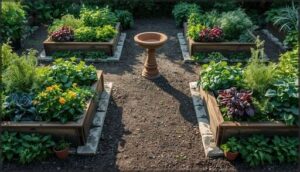
A potager garden takes the grid logic of square foot garden planning and turns it into something almost artistic.
Four raised beds arranged around a focal point, separated by formal gravel paths, give your yard real structure.
Mix vegetables, herbs, and flowers together — edible borders of chives or curly parsley look great while pulling double duty.
Herb containment matters too, since mint will quietly take over everything.
Fenced and Color-Coordinated Gardens
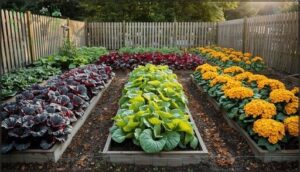
fenced garden does two things at once — it keeps critters out and makes the whole space look intentional.
Deer fences need to be 6 to 8 feet high, while rabbit barriers work best with chicken wire buried 6 inches deep.
Inside, try color block beds using rainbow plant borders like Ruby Red chard and purple kale for a vegetable garden layout that is honestly pretty stunning.
Space-Saving Solutions for Small Gardens
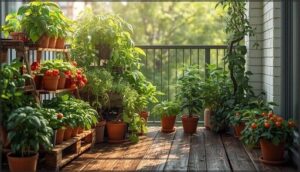
A small yard — or even just a balcony — doesn’t mean you have to think small. The trick is growing up, not out, and making every inch count.
Here are some of the best ways to do exactly that.
Vertical Planters and Trellises
vertical gardening as borrowing space from the sky.
A panel trellis design along a fence gives pole beans room to climb, tripling your yield over bush varieties.
Obelisk placement in a raised bed corner holds peas or squash beautifully.
A-frame benefits include better airflow, which keeps disease down in your small space garden.
Vertical airflow management really does make a difference.
Hanging Baskets and Wall Gardens
Hanging pots and wall gardens are a great small space gardening trick, especially for balconies with tricky microclimate management challenges. Hanging pots and wall gardens. Wire baskets lined with coco fiber — at least 14 inches wide — work well as DIY basket materials for lettuce or trailing cherry tomatoes. coco fiber
Felt pocket panels double your vertical garden surface on any fence, and rotating seasonal plant rotation keeps those pollinator attractors blooming all season. vertical garden surface
Balcony and Patio Container Ideas
Turning your balcony into a productive garden starts with smart material pairings — lightweight plastic or fabric grow bags keep weight low while giving roots room to breathe.
Rail-mounted boxes slot neatly over most railings for an instant edible ribbon of herbs or lettuce.
Modular stackers add vertical garden layers without eating floor space.
Match container colors to your furniture for natural color cohesion, and swap crops each season for easy seasonal rotation.
Repurposed Ladders and Tiered Shelves
An old ladder might be the smartest thing gathering dust in your garage. A simple Modular Ladder Design transforms any corner into a working Ladder Garden — no raised beds required.
- Drill drainage holes for Ladder Drainage Hacks that prevent root rot.
- Use untreated ash wood for durable Tiered Shelf Materials.
- Angle south‑facing for Shelf Light Optimization.
- Rotate crops seasonally with easy Ladder Plant Rotation.
- Fits Small Space Living, Container Gardening, and Vertical Gardening beautifully.
Companion Planting and Succession Strategies
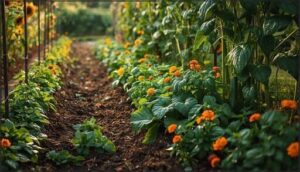
Planting smart matters just as much as planting often.
A few classic combinations and simple timing tricks can keep your garden productive from early spring well into fall.
Here are some of the best companion planting and succession strategies worth trying.
Three Sisters and Classic Companion Combos
The Corn‑Bean‑Squash trio is companion planting at its best — three crops that genuinely help each other. Beans handle nitrogen fixation, corn stands tall for climbing support, and squash does the shade suppression work low to the ground. Great soil health synergy, all in one planting.
Corn, beans, and squash thrive together — each one supporting the others in perfect synergy
Smart garden planning like this makes sustainable gardening and urban gardening much easier in any space.
| Companion Combo | Key Benefit |
|---|---|
| Corn + Beans | Nitrogen boost for soil |
| Squash + Corn | Weed shade suppression |
| Tomatoes + Basil | Pest deterrence |
| Carrots + Onions | Root fly protection |
| Beans + Squash | Moisture retention |
Interplanting Flowers With Vegetables
workhorses in a vegetable garden
Flowers aren’t just pretty — they’re workhorses in a vegetable garden.
pest-deterring blooms
French marigolds act as pest-deterring blooms near tomatoes and peppers, while nasturtiums lure aphids away from kale.
beneficial insect habitat
For beneficial insect habitat, tuck alyssum between rows to feed hoverflies all season.
Aesthetic edible flowers
Aesthetic edible flowers like calendula double as salad garnishes.
sustainable gardening
It’s sustainable gardening and smart garden design rolled into one.
Staggered Planting for Continuous Harvests
Smart timing intervals make the difference between one big harvest and greens on your plate all season. Sow lettuce or radishes every two weeks — that’s your seedling stagger working quietly in the background.
It’s one of the best vegetable gardening tips for garden planning and design. Yield tracking shows smaller, repeated plantings waste far less than one large sowing.
Pollinator-Friendly Plant Pairings
Timing your harvests is only half the job — who pollinates your crops matters just as much.
Pair tomatoes with blooming basil for Basil‑Tomato Bees drawn by continuous nectar.
Marigold‑Cucumber Attractors and Zinnia‑Squash Lures bring steady pollinator traffic all summer.
A Sunflower‑Bean Magnet along the fence pulls bees across your whole plot.
Try Phacelia‑Leafy Nectar strips for hoverflies — great for Organic Gardening and Sustainable Gardening Practices in one move.
Water-Efficient and Sustainable Gardening Tips
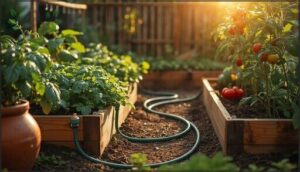
Watering smart is just as important as planting smart. A few simple changes can stretch every drop while keeping your garden productive through dry spells.
Here are some practical ways to garden with water in mind.
Drip Irrigation and Self-Watering Containers
Watering smarter — not harder — is one of the best things you can do for your garden. Drip systems cut water use by 40 to 50 percent, thanks to precise emitter placement strategies that deliver moisture straight to roots. Self-watering containers with DIY wicking systems do the same for patios.
- Pressure compensation techniques keep flow even on slopes
- Reservoir capacity planning provides tomatoes for days without refilling
- Soil moisture sensors take the guesswork out completely
Rain Gardens and Rainwater Harvesting
Rain gardens take water efficiency a step further. Dig a shallow depression — about 6 to 9 inches deep — and fill it with a soil mix of 60 percent sand, 20 percent soil, and 20 percent compost.
That porous blend drains standing water within 24 to 72 hours.
A simple filtration system on your downspout captures roof runoff, while overflow management through berm design keeps everything flowing where it belongs.
Great for sustainable living and permaculture-minded gardeners, plant selection like asparagus or broad beans manages the wet-dry cycles beautifully.
Drought-Resistant Vegetable Choices
Some vegetables just don’t need much water to thrive — and that’s great news for eco-friendly gardening. Try these low-water champions:
- Okra varieties like Clemson Spineless, handle fierce heat and keep producing pods
- Heat-tolerant squash fruits in about 50 days, with minimal irrigation
- Deep-rooted legumes like cowpeas tap moisture far below the surface
- Quick-maturing chili peppers flower even in dry spells
- Low-water leafy greens like drought-tolerant kale stay productive with modest watering
Mulching and Moisture-Retaining Techniques
Mulching is one of the best things you can do for soil conservation and water conservation in your vegetable garden.
Spread organic mulch types like straw or shredded leaves about 5 to 7 centimeters deep — that’s your sweet spot for mulch depth guidelines. Keep it 3 to 5 centimeters away from stems.
For real mulch-drip synergy, lay drip lines underneath so moisture stays right where roots need it.
Best Vegetables for Home Gardens
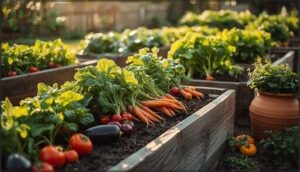
Picking the right vegetables makes all the difference, especially when you’re just getting started. Some plants are naturally forgiving, while others produce so much that even a small plot feels worth every bit of effort.
Here are the best ones to grow at home, no matter how much space you have.
Top Picks for Beginners
Start with fast-growing greens like loose-leaf lettuce — you’ll be harvesting in about 30 days. Easy root crops like radishes mature even faster, giving you that satisfying seed-to-table moment in under a month.
For container gardening ideas and small space gardening tips, try cold-tolerant lettuce in raised beds or container-friendly tomatoes on your patio. Low-maintenance herbs like basil round out any beginner’s vegetable gardening setup beautifully.
High-Yield and Fast-Growing Crops
Some crops practically sprint to your table. Arugula and quick leafy greens are ready in about 18 days, while radish succession plantings keep your vegetable garden producing all season. Bush bean rotation extends your harvest for months with minimal effort.
- Fast root harvest: Radishes mature in 30 days
- Bush beans: Successive sowings every 2–3 weeks
- Leaf lettuce: Regrows after cutting in 2–3 weeks
Ideal Vegetables for Containers
Container gardening tips start with picking the right plants.
Dwarf tomatoes thrive in a 5‑gallon pot, while bush beans fit three plants in a 2‑gallon container.
Mini peppers and compact eggplant do great in 5‑gallon pots too.
Short carrots, like Short n Sweet, need only 1–2 gallons.
Small space gardening ideas and urban gardening ideas really shine when your container garden matches each plant’s roots.
Herbs and Leafy Greens for Every Space
Leafy greens and herbs are some of the best small space gardening ideas you’ll find. Shade tolerant herbs like thyme and chives thrive in 4–6 inch pots, while cut-and-come-again lettuce and leafy greens keep producing for months.
succession salad planting every 10–14 days for steady harvests. Compact herb varieties in nutrient-rich containers make urban gardening ideas practical and rewarding for any balcony or windowsill.
Frequently Asked Questions (FAQs)
What is the 70/30 rule in gardening?
The 70/30 rule balances structural plants with filler plants — 70 percent perennials for lasting form, 30 percent annuals for color. It’s a simple framework that keeps your garden looking great with less work.
What is the best way to layout a vegetable garden?
Start with sunlight orientation — run rows north to south.
Raised beds work great for soil depth planning.
A simple vegetable garden layout with 4-foot-wide beds and clear pathway widths keeps everything easy to reach.
What is the 80 20 rule in gardening?
The 80/20 rule means roughly 20 percent of your efforts — like soil quality, efficient watering, and harvest-focused planning — drive about 80 percent of your vegetable gardening results.
What is the 3-hour gardening rule?
Like a built-in alarm clock for your body, the 3-hour gardening rule means skipping outdoor work from 11 a.m. to 2 p.m., when UV avoidance timing matters most and midday heat risk peaks sharply.
What are the four common mistakes landscapers make when planting?
Four common mistakes landscapers make are incorrect planting depth, poor soil preparation, overcrowding plants, and wrong site selection. Bad watering practices round out the list as a close fifth.
What vegetables can you plant in October?
When the garden goes quiet in fall, it’s not done yet.
Cool‑season greens like spinach and lettuce, root crops such as garlic and carrots, brassica varieties, hardy herbs, and legume overwintering crops like broad beans all thrive with an October start.
What is the most common mistake of first time gardeners?
Overcrowding plants tops the list. Poor soil preparation, inadequate sunlight, incorrect watering, and wrong planting timing follow close behind.
Most first-time gardeners learn these lessons the hard way — but you don’t have to.
What vegetables should not be planted together?
Some plant neighbors cause more harm than help.
Nightshade clash hits hard when tomatoes and potatoes share beds, spreading blight fast. Allium interference slows beans, while fennel suppression quietly stunts almost everything nearby.
What is the easiest vegetable to grow?
Radishes win, hands down.
With seed germination speed of just 3–5 days and harvest simplicity at 3–4 weeks, they’re perfect for beginner vegetable gardening.
Low nutrient requirements and strong pest resistance make garden care easy.
What adds the most value to a garden?
Raised beds brilliantly blend soil health, aesthetic appeal, and marketability boost into one smart garden design choice — improving soil quality, enabling companion planting, supporting biodiversity, and extending your seasonal garden layout effortlessly.
Conclusion
Every great garden starts as a small act of belief—a seed pressed into soil, a container wedged onto a sunny ledge.
Your space doesn’t have to be large to be productive. These home vegetable gardening ideas prove that thoughtful planning matters far more than square footage.
Start with one bed, one pot, or one wall planter. Tend it well, and before long, you’ll be feeding people you love with food you grew yourself.
- https://lovelygreens.com/container-vegetable-gardening/
- https://harvesttotable.com/pot-and-container-sizes-for-growing-vegetable-crops/
- https://sandiegoseedcompany.com/container-garden/vegetable-container-size-chart/
- https://northerngardener.org/growing-vegetables-in-containers/
- https://gardenbetty.com/plant-spacing/