This site is supported by our readers. We may earn a commission, at no cost to you, if you purchase through links.
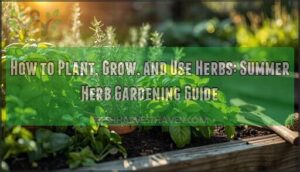
A windowsill basil plant that collapses by August isn’t a gardening failure—it’s a sign nobody told you what summer herbs actually need.
Heat, drought, humidity, hungry insects—the warm months test every plant you put in the ground.
But the right herbs don’t just survive those conditions; they thrive in them, rewarding you with more flavor than anything shrink‑wrapped at the grocery store ever could.
Growing your own means fresh rosemary for grilled chicken, mint for cold drinks, parsley that keeps coming back no matter how often you cut it.
This summer herb gardening guide walks you through everything—from choosing the right varieties to harvesting them at peak flavor.
Table Of Contents
- Key Takeaways
- Choosing The Best Summer Herbs
- Planning Your Summer Herb Garden
- Soil, Sunlight, and Watering Essentials
- Planting and Propagation Methods
- Summer Herb Care and Maintenance
- Harvesting and Preserving Summer Herbs
- Top Herb Gardening Books for Summer
- Frequently Asked Questions (FAQs)
- What herbs are good for summer gardens?
- Can I start an herb garden in the summer?
- What is the best layout for an herb garden?
- What month should you start an herb garden?
- When should I start herb seeds indoors?
- How do I prevent herbs from going dormant?
- Can I grow herbs from grocery store cuttings?
- What herbs attract beneficial insects to gardens?
- How often should I rotate herb plantings?
- Which summer herbs are safe for pets?
- Conclusion
Key Takeaways
- Heat-loving herbs like rosemary, thyme, and basil don’t just survive summer—they thrive in it, giving you richer flavor than anything from a grocery store.
- A little smart planning—matching herbs to the right sunlight, soil, and watering routine—means less troubleshooting and more time actually cooking with what you grow.
- Companion planting pulls double duty: the right herb pairings naturally repel pests, attract beneficial insects, and even deepen the flavor of nearby vegetables.
- Harvest in the morning, pinch flower buds early, and preserve soft herbs in olive oil freezer cubes to lock in peak flavor long after the season ends.
Choosing The Best Summer Herbs
Not every herb is cut out for summer — and that’s actually good news for you.
Some herbs actually thrive in pots, and knowing which ones before you dig in makes all the difference — this guide to best herbs for container gardening is a great place to start.
A little upfront planning means you’ll spend less time troubleshooting and more time cooking.
Here are the best herbs to get started with, no matter your experience level.
Easy-to-Grow Herbs for Beginners
Starting your summer herb garden doesn’t have to feel overwhelming. Basil, mint, chives, and parsley are some of the easiest to grow herbs that forgive small mistakes and bounce back fast — perfect for herb gardening for beginners. Good herb plant care starts simple:
- Keep mint in its own pot using a quality container soil mix
- Snip leaves often for a steady seasonal harvest calendar
- Choose pest-resistant varieties like thyme and oregano for low-fuss wins
Remember that mint family herbs can spread aggressively, so container growing is recommended.
Herbs for Hot Weather Success
Once you’ve got the easy growers thriving, it’s time to think about heat. Your summer herb garden really shines when you lean on heat‑tolerant varieties like rosemary, thyme, and basil — they love full sun and handle temperatures above 30°C beautifully.
Use mulch heat mitigation to keep roots cool, water‑conserving irrigation like drip systems to cut waste, and shade‑climate strategies for basil during peak afternoon heat.
Use Plantura Organic Herb Compost for best results in full‑sun conditions.
Culinary and Medicinal Herb Varieties
Once your heat lovers are settled, you can shape a Herb Garden that balances Culinary Herbs and Medicinal Herbs.
Basil, mint, lemon balm, parsley, and sage offer rich Flavor Pairings, Therapeutic Uses, and distinct Nutrient Profiles.
Think pesto, mojitos, thinker’s tea, and gentle Traditional Remedies for digestion, mood, and breath.
Let Aroma Chemistry guide Herb Recipes and Herb Gardening Tips.
Planning Your Summer Herb Garden
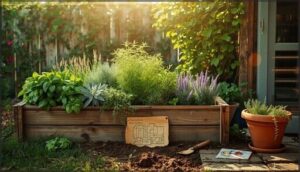
Before you buy plants, it helps to picture where your summer herbs will actually live in your yard or on your porch. A bit of planning now will help you match each herb to the right spot, whether that’s a raised bed, a border, or a simple pot by the door.
In the next part, you’ll see your main options for how to set up these herb spaces.
Selecting Garden Beds Vs. Containers
Think of your Herb Garden as a choice between fields and pots.
Garden beds offer larger Soil volume, deeper Root depth, and lower Maintenance frequency for Outdoor Herb Gardens when Growing Summer Herbs.
Containers shine for Mobility and Microclimate control, ideal for balconies and Easy to Grow Herbs.
Both work for smart Herb Planting in small spaces and sunny yards.
Companion Planting With Herbs
Companion planting turns your herb garden into a thriving ecosystem. A few smart pairings do more than you’d expect:
- Pest Repellent Pairings: Basil near tomatoes fights whiteflies; rosemary shields brassicas from cabbage butterflies.
- Beneficial Insect Attractors: Dill and borage pull in ladybugs and hoverflies that hunt aphids.
- Flavor Boosting Companions: Sage near carrots and peppers genuinely deepens their flavor.
These companion planting strategies make herb gardening work smarter, not harder.
Designing for Sunlight and Space
Mapping your sun path before planting saves you from costly mistakes. Sun‑hungry herbs like basil and rosemary belong in south‑facing beds, and east‑west orientation spreads light evenly.
Vertical trellis placement along walls frees up ground space, while shade‑tolerant borders of parsley or mint fill darker edges. Container spacing grid keeps every pot in full view of the sun.
| Garden Spot | Best Herbs | Light Type |
|---|---|---|
| South-facing bed | Basil, Oregano, Rosemary | Full sun (8+ hrs) |
| East-facing edge | Parsley, Cilantro, Chives | Morning sun (3–6 hrs) |
| Vertical trellis | Mint, Oregano | Tracked sunlight |
| Shaded border | Parsley, Mint, Chives | Partial shade |
Soil, Sunlight, and Watering Essentials
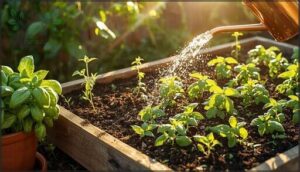
Healthy herbs start with the right foundation: soil, sunlight, and water working together.
In this section, you’ll see what each one needs to keep your plants strong all summer. Use the simple guidelines below to match your garden conditions to the herbs you want to grow.
Ideal Soil Types and PH for Herbs
Strong roots start in the right mix for herbs. Use Soil Preparation and pH Adjustment Tips as Plant Care. Let these Gardening Tips guide your Herb Garden choices:
- Choose a Loamy Soil Mix with good Soil Drainage and healthy Organic Matter Ratio.
- Try a Sandy Mediterranean Blend where summers are dry.
- Improve heavy beds with Clay Soil Amendments before planting.
Sunlight Needs for Popular Summer Herbs
Sunlight is the secret ingredient your herb garden can’t skip.
Full sun varieties like basil, rosemary, and thyme show strong Afternoon Heat Tolerance and thrive with 6–8 hours daily.
For Partial Sun vs Full Sun decisions, cilantro and parsley do better with Morning Sun Preference — around 4–6 hours.
Shade Tolerant Varieties like mint handle 2–4 hours well.
Container Light Requirements follow the same rules, so position pots accordingly.
Proper Watering and Mulching Techniques
Water is the lifeblood of your summer herb garden — but how you give it matters just as much as how much. Deep watering two to three times a week beats daily sprinkling every time.
Water your herbs deeply two to three times a week — how you water matters as much as how much
- Drip irrigation keeps roots happy without soaking leaves
- Bottom watering works great for container herbs
- Mulch depth of 2 inches locks in moisture and cools soil
Good mulch placement and soil drainage make garden maintenance simple all season long.
Planting and Propagation Methods
Getting herbs into the ground — or into a pot — starts with one simple choice: how do you want to grow them?
You’ve got few solid options, and each one suits a different situation, budget, or timeline.
Here’s a look at the three main paths most gardeners take.
Starting Herbs From Seeds, Starts, or Cuttings
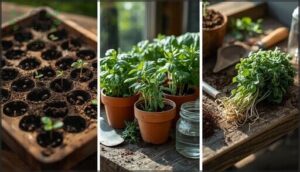
Picture seeds, starts, and cuttings as three paths for starting an herb garden. For summer planting herbs, match seasonal timing with warm soil for ideal seed germination timing, then pick herb propagation methods that fit your routine and herb care goals.
| Option | Focus |
|---|---|
| Seeds | Starter kit selection, Propagation success rates boost. |
| Starts | Herb Garden Maintenance easy. |
| Cuttings | Cutting rooting hormone. |
Transplanting Herbs Outdoors
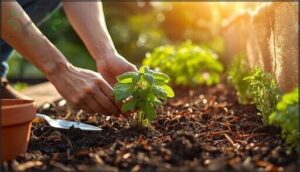
Once your seedlings are ready, hardening off is your first real step in outdoor gardening. Spend 7–10 days gradually moving them outside to avoid transplant shock. Then:
- Match root ball depth to the nursery pot level.
- Apply mulch timing right after planting herbs.
- Provide wind protection for the first few days.
Consistent herb garden maintenance keeps your summer garden thriving.
Tips for Growing Herbs Indoors in Summer
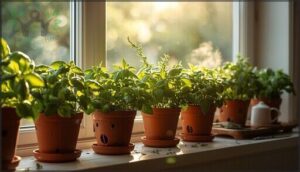
Growing herbs indoors during summer is easier than you’d think. Place containers near south-facing windows for ideal light positioning, and make sure every pot has container drainage holes to prevent soggy roots.
Basil loves 21–27°C warmth, while mint tolerates east-facing sills.
Group pots together for natural humidity control, rotate every few days, and your indoor herbs will stay happy all season.
Summer Herb Care and Maintenance
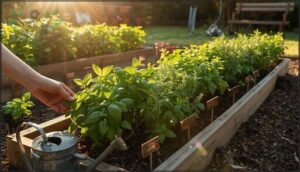
Once your herbs are in the ground, the real work begins — and it’s simpler than you might think.
A little consistent attention goes a long way toward keeping your plants lush, productive, and pest‑free all summer long.
Here’s what you need to focus on.
Fertilizing for Healthy Growth
Feeding your herbs the right way makes all the difference.
For most summer herbs, a balanced fertilizer with nutrient ratios like 5-5-5 works well.
Organic amendments — compost, fish emulsion, or worm castings — are great slow-release options that build healthy soil over time.
Fertilizer timing matters too: feed every four to six weeks, and always water in granules to prevent root burn.
Pruning, Pinching, and Flower Bud Removal
Beyond fertilizing, pruning herbs keeps them bushy and productive all season.
Timing pruning right matters — snip basil and mint every one to two weeks once they hit four to six inches tall.
Use the node pinching technique: cut just above a leaf pair.
Flower bud management is simple too — remove buds as they appear to keep leaves flavorful and fresh.
Managing Pests and Common Problems
Even the healthiest herb garden runs into trouble sometimes. Aphids cluster on new growth — a strong water jet or aphid spray takes care of them fast.
Mildew prevention, space plants well and improve airflow.
Slug barriers like diatomaceous earth protect tender leaves at soil level.
Soil sterilization stops seedling rot before it starts.
Invite beneficial insects to tackle common herb pests naturally — it’s sustainable gardening at its best.
Harvesting and Preserving Summer Herbs
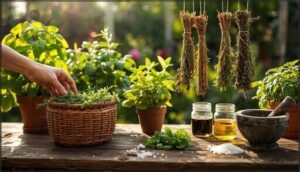
care you’ve put into your herbs this summer? pays off the moment you start harvesting.
pick, store, and use your herbs makes a real difference in flavor and freshness, so here’s what you need to know.
Best Harvesting Techniques for Flavor
Chasing Flavorful Herbs? Simple Herb Harvesting Techniques make cuts count.
- When Harvesting Herbs, follow Morning Harvest Timing after dew dries.
- Use Leaf‑Node Cutting on tips, not woody stems.
- Bud Pinching keeps plants leafy and delays flavor loss.
- Prioritize Sharp Scissors Use for clean cuts, never tearing.
- Move stems to Cool Shade Storage, supporting Herb Preservation Methods and Culinary Herb Uses.
Drying, Freezing, and Storing Herbs
Preserving your harvest starts with knowing which method fits each herb.
Air Drying Tips work best for woody herbs like rosemary and thyme — just hang small bundles in a warm, airy spot for 7–14 days. Adjust Dehydrator Settings to 95–115°F for faster results.
For soft herbs, Freezer Cube Prep in olive oil locks in freshness. Choose glass for Container Material Choice to support long‑term Shelf Life Management.
Using Fresh Herbs in Summer Recipes
Fresh herbs turn everyday meals into something special.
Toss summer herb salads with basil, mint, or parsley as the star — not just a garnish.
When grilling with herbs, lay rosemary sprigs under fish for smoky depth.
Stir herb butter sauces into pasta or drizzle over grilled corn.
For herb‑infused drinks, muddle mint into lemonade.
Even dessert garnish herbs like lavender make simple dishes memorable.
Top Herb Gardening Books for Summer
The right book can take your herb garden from guesswork to confidence. Whether you’re just starting out or looking to go deeper into medicinal uses and growing techniques, there’s something on this list for you.
Here are three books worth keeping on your shelf.
1. Rosemary Gladstar Medicinal Herbs Guide
Looking for one clear guide to start your herb journey this summer? Rosemary Gladstar’s Medicinal Herbs: A Beginner’s Guide walks you through 33 common healing plants, from basil and chamomile to lavender and thyme.
You learn how to grow, harvest, and store them, then turn them into simple teas, salves, and syrups.
The step‑by‑step recipes and photos make each remedy feel doable, so you can build a small home apothecary right from your garden, all summer long for your family.
| Best For | Beginners and home herbalists who want a friendly, hands-on guide to growing common herbs and turning them into simple remedies for everyday health. |
|---|---|
| Primary focus | Beginner herbal remedies |
| Growing guidance | Basics of growing herbs |
| Herb preparations | Harvesting and preparing remedies |
| Recipes included | Herbal remedy recipes |
| Skill level | Beginner-friendly |
| Language | English |
| Additional Features |
|
- Easy, approachable tone with step-by-step instructions that make herbal remedies feel doable, even if you’re brand new.
- Covers the full process from growing and harvesting to storing and using herbs, with practical recipes for teas, salves, and syrups.
- Encourages you to build a small home apothecary and engage more directly with natural health and wellness.
- Focuses on 33 plants, so it’s not a complete herbal encyclopedia for advanced or very specific needs.
- Some recipes may call for ingredients or herbs that aren’t easy to find in all regions.
- Occasional mentions of fantasy or superstition may feel distracting if you prefer a strictly clinical or scientific approach.
2. Herbal Apothecary Medicinal Herbs Guide
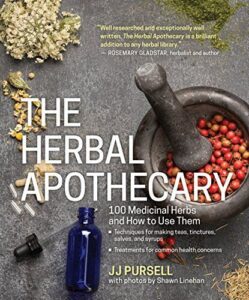
Want a deeper dive into plant-based healing? The Herbal Apothecary by JJ Pursell profiles 100 medicinal herbs, covering everything from Latin names to which plant parts you actually use and why.
It’s organized by condition—think colds, anxiety, and muscle strain—so you can quickly find what you need.
Step‑by‑step instructions walk you through teas, tinctures, salves, and compresses.
Each entry includes safety notes and dosing guidance, making it a trustworthy reference whether you’re brand new or already comfortable in the herb garden.
| Best For | Anyone who wants a solid, practical guide to herbal medicine—whether you’re just starting out or already know your way around a herb garden. |
|---|---|
| Primary focus | Comprehensive medicinal herbs |
| Growing guidance | Cultivation for 100 herbs |
| Herb preparations | Teas, tinctures, salves |
| Recipes included | Health concern recipes |
| Skill level | Beginner and experienced |
| Language | English |
| Additional Features |
|
- Covers 100 herbs with real, usable info on identification, uses, and how to grow them
- Organized by condition, so finding help for anxiety or a pulled muscle takes seconds
- Walks you through making teas, tinctures, salves, and more with clear step-by-step instructions
- Doesn’t cover every herb out there, so you may hit gaps with less common plants
- Plant descriptions and location info can feel a bit thin if you’re trying to forage in the wild
- Not the right pick if you’re looking for deep scientific research—it leans more practical than academic
3. Best Little Herb Gardening Book
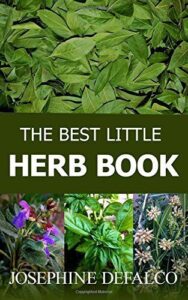
After exploring medicinal guides, you may want a small, friendly starting point for everyday herb use. The Best Little Herb Book by Josephine DeFalco focuses on helping you grow a simple, organic kitchen herb garden, then carry those flavors straight into your meals.
You get step‑by‑step basics, ideas for a quiet, fragrant yard space, plus easy recipes tested in the author’s own kitchen. It’s brief at 132 pages, so experienced gardeners may wish for more detail and more technical depth.
| Best For | New gardeners who want a simple, beginner-friendly guide to growing and cooking with fresh herbs at home. |
|---|---|
| Primary focus | Culinary herb gardening |
| Growing guidance | Step-by-step growing guide |
| Herb preparations | Preserving and using herbs |
| Recipes included | Culinary herb recipes |
| Skill level | New gardeners |
| Language | English |
| Additional Features |
|
- Covers the full cycle — growing, preserving, and even seed-saving to share with others
- Includes real, easy recipes so your herbs actually make it to the dinner table
- Short and approachable at 132 pages, perfect if you’re just getting started
- Doesn’t go deep on a wide variety of herbs, so your options feel limited
- Experienced gardeners will likely find it too basic for their needs
- Some readers felt the overall content was just too thin for the price
Frequently Asked Questions (FAQs)
What herbs are good for summer gardens?
For hot summer gardens, grow basil, Mediterranean oregano, rosemary, thyme, sage, mint, lemon balm, lemongrass, lavender, marjoram, and summer savory.
They handle strong sun, warm soil, and periods of drought, yet still produce flavorful leaves.
Can I start an herb garden in the summer?
Think of herbs like summer students; once nights stay above 50°F, you can enroll them anytime, planting basil, parsley, mint, rosemary, and thyme for quick harvests, often within four weeks for fast‑growing annuals after planting.
What is the best layout for an herb garden?
The best herb garden layout gives plants sun, space, and access.
Place tall herbs like rosemary at the back or center, shorter at front, keep paths 45–60 centimeters wide, and group herbs by water needs.
What month should you start an herb garden?
Across temperate climates, most gardeners start herbs between March and May.
As a rule, begin outdoors month after your last frost, starting herbs like parsley earlier and tender basil and oregano closer to May.
When should I start herb seeds indoors?
Start most herb seeds indoors 4–8 weeks before your last spring frost.
Slow perennials like rosemary, oregano, sage, and thyme need 8–12 weeks.
In much of Germany, that means sowing from February through early April.
How do I prevent herbs from going dormant?
When Maria’s basil stalled in a heatwave, she kept it active by giving morning water, adding mulch, using 30% shade cloth, moving pots to afternoon shade, feeding lightly with compost, and pinching flower buds often.
Can I grow herbs from grocery store cuttings?
You can root many grocery store herbs in water, especially basil and mint, if stems are fresh and have nodes.
Trim to 3–6 inches, strip lower leaves, keep leaves above water, and change water often.
What herbs attract beneficial insects to gardens?
At least five common kitchen herbs double as insect helpers in your garden.
Plant dill, fennel, cilantro, and parsley for ladybugs, lacewings, hoverflies, and parasitic wasps that hunt aphids and caterpillars. Add yarrow and mint.
How often should I rotate herb plantings?
For annual herbs like basil and cilantro, rotate them every year. Perennials like rosemary and thyme can stay put for several years, though revitalizing their soil annually keeps them thriving.
Which summer herbs are safe for pets?
Basil, thyme, rosemary, and parsley are generally safe for dogs and cats in small amounts. Avoid pennyroyal and garlic chives entirely — they’re toxic to pets.
Conclusion
neglected pot of basil wilts by mid-July. well-tended herb garden feeds you all season long. That contrast is everything.
summer herb gardening guide isn’t just about keeping plants alive—it’s about growing something you’ll actually use and share.
Snip rosemary before dinner. Muddle mint into a cold drink. Hand parsley to a neighbor.
When you know what your herbs need, they give back far more than flavor.
- https://gardenersdeptford.org.uk/blog/master-the-basics-of-herb-gardening-soil-sunlight-and-care/
- https://diyherbgardener.com/ultimate-guide-to-herb-gardening/
- https://gardeningsoul.com/10-herbs-and-veggies-that-grow-well-in-the-summer-heat/
- https://gardenersbayswater.org.uk/blog/herb-gardening-tips-for-every-season/
- https://www.gardenary.com/blog/20-heat-tolerant-herbs-fruits-veggies-and-flowers-to-grow-in-the-summer