This site is supported by our readers. We may earn a commission, at no cost to you, if you purchase through links.
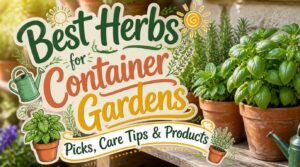
Snap off a basil leaf from a plant grown in a dim corner, and you’ll taste why sunlight matters more than soil. Herbs don’t forgive lazy placement the way lettuce or spinach will. Their flavor lives in tiny oil glands that only fill up when the sun really works for it.
That’s the secret most container gardeners miss: pot size, drainage, and light exposure decide whether your thyme tastes like a Mediterranean hillside or like damp cardboard. Get those variables right, though, and a single windowsill or patio corner turns into a fragrant, productive herb garden.
Here’s how to pick the best herbs for container garden success, keep them thriving, and know exactly which varieties earn a spot in your pots.
Table Of Contents
- Key Takeaways
- Best Herbs for Container Gardens
- What Makes Herbs Pot-Friendly
- Container Herb Care Essentials
- Top 5 Container Herb Products
- Frequently Asked Questions (FAQs)
- What herbs cannot be planted together in pots?
- Which herbs grow best together in a container?
- What herbs are good to grow in small pots?
- Which herbs grow well in container gardens?
- What herbs should only be planted in pots?
- What herbs can I put together in a container?
- What herbs not to plant together in pots?
- Which herb is the king of all herbs?
- What herbs are good for container gardens?
- What herbs go well together in a container?
- Conclusion
Key Takeaways
- Herb flavor depends far more on sunlight than soil, since essential oil glands only fill up fully when herbs get 6-8 hours of direct sun.
- Well-draining potting mix and properly sized pots (with drainage holes, upsized 1-2 inches as roots grow) are essential to prevent root rot in container herbs.
- Compact, non-invasive herbs like basil, oregano, thyme, and rosemary thrive together in containers, while invasive spreaders like mint must be kept in their own solo pots.
- Regular harvesting (snipping just above leaf nodes) triggers bushier growth and keeps herbs producing continuously throughout the season.
Best Herbs for Container Gardens
You don’t need acres of garden to grow herbs that actually earn their keep. A few well-chosen pots on a sunny porch can hand you fresh flavor all season long. Here are five herbs that thrive in containers and reward you every time you snip a leaf.
If you’re mapping out what to plant when, this seasonal herb planting guide makes it easy to time your pots for the biggest harvest.
Basil for Sunny, Productive Pots
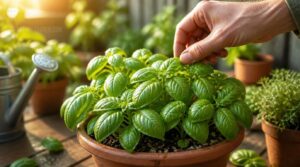
Give basil full sunlight and it rewards you with bushy, fragrant growth. Aim for 6-8 hours daily, morning sun especially, to avoid scorch and boost essential oil concentration.
- Pinch tips weekly
- Harvest often
- Remove flower buds to prevent bolting
- Use grow lights indoors
Well-drained potting soil keeps roots happy in this classic culinary herb. Using a well-draining potting mix helps prevent fatal root rot.
Greek Oregano for Compact Flavor
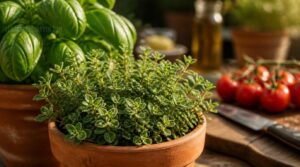
Once your basil pot is thriving, tuck a Greek oregano nearby for a punch of flavor in tiny footprint. This compact growth habit forms tight, low mounds perfect for container gardens.
Its carvacrol oil content delivers that peppery, piney bite chefs crave—especially in tomato dish pairings. For strongest essential oil intensity, choose authentic variety selection (true Origanum hirtum), and prune after flowering to keep leaves flush.
Thyme for Low-maintenance Containers
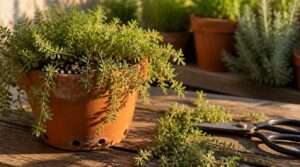
If oregano’s the punchy sidekick, thyme is the quiet friend who never asks for much. It craves six hours of direct sun for real flavor, but tolerates dry spells since it stores moisture in its leaves.
Keep it happy with:
- Well-draining mix to prevent root rot
- Six-to-eight-inch pots with drainage holes
- Frequent harvesting of new growth for bushier plants
Rosemary for Fragrant Patio Planters
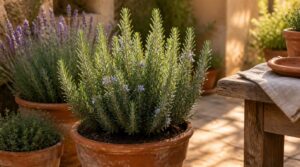
Now trade thyme’s quiet charm for something bolder: rosemary practically perfumes the whole patio. Give it 6-8 hours of sun and well-draining mix in a 12-inch pot, and those piney needles turn fragrant blooms into a Mediterranean pairing dream with lavender and thyme.
Pruning for bushiness keeps it compact—try Tuscan Blue or Arp for architectural flair in your container gardening setup.
Mint for Controlled Container Growing
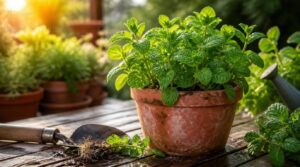
If you’ve ever let mint loose in a garden bed, you know it’s basically a landlord’s nightmare—those invasive roots creep everywhere. Containers solve this: a 12-inch pot stops rhizome spread cold.
Mint’s invasive roots creep like an unruly tenant, but a 12-inch pot stops the rhizome spread cold
Water when the top inch dries out, harvest mornings for peak flavor, and use root tip cuttings to multiply your patch without ever risking root expansion into neighboring plants.
For more on keeping your herb bed thriving year-round, check out this organic herb gardening tips and tricks guide, which covers watering schedules and propagation basics in depth.
What Makes Herbs Pot-Friendly
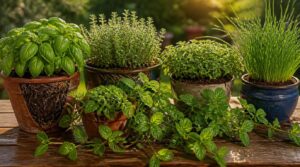
Not every herb wants to live in a pot, and that’s just plain botany, not bad luck. The friendly ones tend to share a few traits: tidy roots, modest size, and a knack for staying put instead of muscling their neighbors out.
Let’s look at what actually separates a happy container herb from one that’s secretly plotting an escape.
Compact Growth and Clumping Habits
Picture a tidy little dome of leaves instead of a sprawling mess — that’s what you want in a small pot. Herbs like oregano and chives form tight clumps from a central crown, sending up new shoots near the base rather than long runners.
Regular harvesting keeps this shape, encouraging density instead of leggy stretching, while full sun tightens growth even further.
Shallow or Manageable Root Systems
Roots here don’t dig deep — they spread wide, hugging the top 6 to 12 inches of soil like a cozy blanket. That’s lateral root spread in action, perfect for pots.
This shallow habit means efficient surface nutrient absorption, but it demands consistent topsoil moisture management and mulching benefits to prevent drying, plus airy mix to avoid root compaction.
Non-invasive Herbs for Small Spaces
Not every herb needs its own zip code to behave. Chive clumping habits stay neat and tidy, while cilantro’s shallow roots and delicate chervil suit snug pots beautifully.
Small space dill and dwarf chamomile varieties round things out nicely, making container gardening in tight urban gardening setups totally doable—no sprawling required, just smart, noninvasive herbs that thrive in container gardens.
Drought-tolerant Choices for Busy Gardeners
Some of us just don’t have time to babysit thirsty plants, and that’s fine—drought-resistant varieties exist for exactly that reason.
Thyme and rosemary shrug off missed watering schedules, thriving in lean, well-draining soil. They’re slow starters, sure, but patient gardeners get long-lasting, low-maintenance Mediterranean herbs.
Harvest often, and these heat-loving herbs reward busy schedules with steady flavor, not stress.
Herbs Best Kept in Separate Containers
Some herbs simply don’t play well with roommates. Preventing root competition means giving basil, parsley, dill, and cilantro their own pots—no shared soil, no shading, no stunted growth.
Managing invasive mint requires a solid barrier too; it’ll swallow neighbors whole otherwise.
Controlling dill height and optimizing cilantro moisture get easier solo. In container gardens, solitude isn’t lonely—it’s smart strategy for thriving herb varieties.
Container Herb Care Essentials
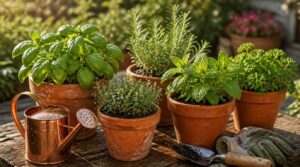
Picking pot-friendly herbs is only half the battle—now you’ve got to keep them happy. A few smart habits make all the difference between a thriving mini garden and a sad, leggy one. Here’s exactly what your herbs need to truly flourish in containers.
Choosing The Right Pot Size
Ever wondered why your thriving basil suddenly stalls? Nine times out of ten, it’s outgrown its home.
Choose pots 1 to 2 inches wider than the current one—small pots suit young herbs for months, but vigorous roots need 8-to-12-inch depth.
Watch for root circling through drainage holes; that’s your cue to up-pot before growth stunts completely.
Using Well-draining Potting Mix
Bigger pots mean nothing if roots sit in soggy garden soil. Skip that entirely and reach for real potting mix—it resists compaction and breathes.
Perlite creates air pockets; vermiculite holds moisture instead. Mix in compost or worm castings for organic matter balance, keeping texture gritty, not dense. That’s enhancing soil porosity the right way, ensuring ideal moisture retention without waterlogged roots.
Matching Sunlight to Herb Needs
Good soil means little if your basil sits in the shade craving sunshine. Match light to habit: full sunlight (6-8 hours) for basil and rosemary, partial shade for cilantro and mint. Watch for scorched edges or pale, leggy stems—your plants are talking.
Rotate pots seasonally, use reflective walls for microclimates, and you’ll get the best flavor while dodging leaf scorch entirely.
Watering Based on Moisture Preferences
Sunlight sets the stage, but water seals the deal. Basil craves evenly moist soil, while thyme and rosemary like the top inch drier between drinks.
- Basil: daily checks in summer heat
- Oregano: slightly drier, intermittent watering
- Mint: consistent moisture, shaded pots
Soil moisture sensors simplify this—shifting seasonally, mulching to lock in moisture, and watering the root zone directly keeps every herb thriving without guesswork.
Harvesting Often for Continuous Growth
Rarely does a plant reward you as generously as an herb that’s harvested often. Snip just above a leaf node pair each morning, once dew’s dried, and you’ll trigger two new shoots instead of one leggy stem.
Take about a third at a time, then feed lightly afterward. That rhythm fuels continuous harvest, keeps plants bushy, and turns container gardening into an endless, generous cycle.
Top 5 Container Herb Products
Now that you know what makes a great container herb, let’s talk about where to actually get one. Not every seed packet or nursery start is created equal, and a little guidance saves you from guesswork. Here are five picks worth adding to your cart.
1. Organic Genovese Basil Seeds
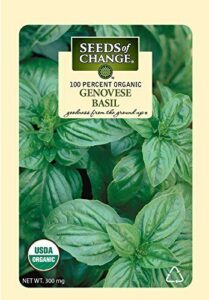
Want a pesto worth bragging about? Start with Seeds of Change Organic Genovese Basil. These certified organic, non-GMO seeds germinate in 6 to 10 days, given warmth around 70 to 75°F, and grow into 18-to-24-inch plants with big, glossy leaves built for sauces and salads.
The resealable, moisture-proof pouch keeps seeds viable up to five years. Slow to bolt and endlessly forgiving, this heirloom variety thrives in terra cotta pots, hanging planters, or garden beds—your call.
| Best For | Home cooks and gardeners who want fresh, homegrown basil for pesto, salads, and garnishes without relying on synthetic pesticides. |
|---|---|
| Brand | Seeds of Change |
| Herb Type | Basil |
| Sunlight Needs | Full sun |
| Container Suitability | Pots, planters, beds |
| Culinary Use | Pesto, salads, garnishes |
| Watering Needs | Moisture required |
| Additional Features |
|
- Certified organic and non-GMO for peace of mind in the kitchen
- Moisture-proof, resealable packaging keeps seeds viable for up to 5 years
- Slow-to-bolt habit means a longer harvest window before the plant flowers
- Requires consistent moisture and warm conditions (70–75°F) to germinate reliably
- Seed viability drops if the resealable seal isn’t kept tightly closed
- Takes some patience, since germination alone can take 6 to 10 days before growth even begins
2. Proven Winners Dolce Fresca Basil
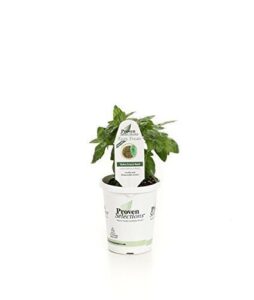
If tidiness is your goal, Dolce Fresca won’t let you down. This All-America Selections winner forms a dense, rounded mound instead of sprawling everywhere, staying compact between 12 and 24 inches tall.
Its sturdy stems shrug off repeated pruning, bouncing back fast with that classic sweet Genovese flavor pesto lovers crave. Fewer flower spikes mean more leaves, longer—perfect for window boxes or patio planters where neatness actually matters.
| Best For | Home cooks and gardeners who want a tidy, compact basil plant for pesto-making in small spaces like patios, containers, or window boxes. |
|---|---|
| Brand | Bonnie Plants |
| Herb Type | Basil |
| Sunlight Needs | Full sun (6+ hrs) |
| Container Suitability | Containers, raised beds |
| Culinary Use | Pesto sauce |
| Watering Needs | Well-drained soil |
| Additional Features |
|
- Compact, disease-resistant, and drought-tolerant with a neat growth habit that resists legginess
- Sweet, tender Genovese-style leaves perfect for pesto and both fresh or dried culinary use
- Grows faster than seed-started plants and arrives hand-picked in specialized packaging
- Needs full sun exposure of at least 6 hours a day to thrive
- Requires well-drained soil, so it may not suit every garden setup
- Compact size means limited yield compared to larger, sprawling basil varieties
3. Clovers Garden Hot Basil
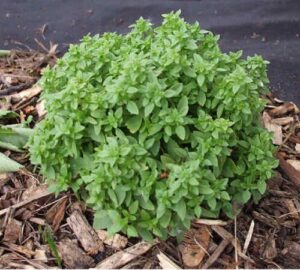
Craving a little kick in your kitchen? Clovers Garden Hot Basil brings peppery, clove-like heat to the classic basil profile, growing 12–18 inches tall in a bushy, sturdy form that resists flopping.
Pinch it regularly and you’ll get usable harvests within 4 to 6 weeks. It thrives in full sun and rich, well-draining soil, and its oils actually intensify with morning harvests—so snip early for maximum punch in pastas, pesto, and anything simmered low and slow.
| Best For | Home cooks and spice lovers who want a bold, peppery basil variety to elevate pastas, pesto, and slow-simmered dishes with real heat. |
|---|---|
| Brand | Clovers Garden |
| Herb Type | Basil |
| Sunlight Needs | Full to part sun |
| Container Suitability | Small gardens, containers |
| Culinary Use | Breads, stews, meats |
| Watering Needs | Regular, moist soil |
| Additional Features |
|
- Delivers a unique peppery, clove-like flavor that stands out from classic basil
- Sturdy, bushy growth habit resists flopping and stays tidy in the garden
- Fast to harvest, with usable leaves ready in just 4 to 6 weeks
- Requires full sun and rich, well-draining soil to thrive
- Needs regular pinching to encourage healthy, continued growth
- Best flavor depends on timing harvests for morning picking, which takes extra effort
4. Clovers Garden Greek Oregano Seeds
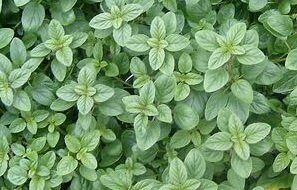
Origanum vulgare subsp. hirtum—that’s true Greek oregano, and it’s a different animal from the bland stuff in your spice rack. Clovers Garden’s seeds deliver that bold, slightly spicy punch that makes tomato sauce sing.
Give it 6+ hours of sun and well-draining soil in a 6-to-8-inch pot, and you’re set. Let the top inch dry between waterings, harvest right before flowering for peak oil content, and prune often. Companion-plant near thyme or basil to keep pests guessing.
| Best For | Home cooks and herb gardeners who want authentic, bold Greek oregano flavor for Mediterranean dishes rather than the milder store-bought variety. |
|---|---|
| Brand | Clovers Garden |
| Herb Type | Oregano |
| Sunlight Needs | Regular sunlight |
| Container Suitability | Home herb gardens |
| Culinary Use | Mediterranean seasoning |
| Watering Needs | Regular watering |
| Additional Features |
|
- True Greek oregano variety (Origanum vulgare subsp. hirtum) with a bold, spicy flavor
- Well-suited to container growing in a 6-to-8-inch pot
- Trusted Clovers Garden seed quality for reliable germination
- Needs specific conditions to germinate and thrive
- Requires consistent sunlight (6 hours) and careful watering
- Growth is tied to seasonal cycles, so timing your planting matters
5. Clovers Garden English Thyme
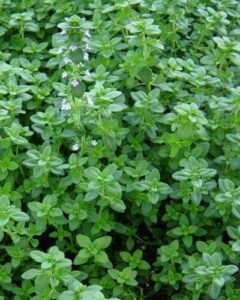
Every herb garden needs an anchor, and this is it. Clovers Garden’s English Thyme ships as live plants, forming compact, bushy mats with gray-green leaves carrying that classic piney-lemon scent.
Pot it in 6-to-8-inch containers with sharp drainage, give it full sun, and water only when the top inch dries out. Its drought tolerance forgives forgetful weeks. Snip leaves just before flowering for peak flavor in soups, poultry, and roasted veggies—thyme practically pairs itself with rosemary and garlic.
| Best For | This is best for home cooks and gardeners who want a low-fuss, fragrant herb on hand for everyday cooking. |
|---|---|
| Brand | Clovers Garden |
| Herb Type | Thyme |
| Sunlight Needs | Regular sunlight |
| Container Suitability | Planters, landscaping |
| Culinary Use | Culinary herb gardening |
| Watering Needs | Regular watering |
| Additional Features |
|
- Ships as a live, ready-to-grow plant with a classic piney-lemon aroma
- Drought-tolerant, so it forgives the occasional missed watering
- Versatile in the kitchen, pairing naturally with rosemary, garlic, poultry, and roasted veggies
- Needs specific sunlight and well-draining soil to really thrive
- Requires regular watering and upkeep to stay healthy
- Color and appearance can shift as the plant matures
Frequently Asked Questions (FAQs)
What herbs cannot be planted together in pots?
Some pots turn into turf wars overnight. Mint, fennel, and rue are the usual culprits—mint chokes out neighbors underground, fennel releases growth-inhibiting compounds, and rue stunts basil nearby. Sage and lavender clash too, thanks to mismatched moisture needs.
Which herbs grow best together in a container?
Basil and oregano make a natural duo, thriving on the same sun and water schedule. Thyme’s low spread pairs nicely with upright parsley, while rosemary and sage share dry, sunny preferences—proof that good companions simply want the same things.
What herbs are good to grow in small pots?
Even a windowsill can burst into a jungle of flavor! Basil, oregano, thyme, rosemary, and mint all thrive in 4–12 inch pots, rewarding tight spaces with fragrant, harvest-ready leaves in just weeks.
Which herbs grow well in container gardens?
Basil, oregano, thyme, rosemary, and mint all thrive in pots when given proper sun and drainage. Basil loves rich soil, thyme stays tidy in shallow containers, rosemary needs six hours of sun, and mint stays contained—if you keep it solo.
What herbs should only be planted in pots?
Mint and lemon balm turn into thugs the moment they touch open soil, sending rhizomes wherever they please. Keep them potted, always, and you’ll enjoy their flavor without ever battling a garden bed takeover later.
What herbs can I put together in a container?
Pair sun-lovers like basil, oregano and thyme—all thriving in full sun with similar watering needs.
Keep mint solo in its own pot.
Rosemary pairs well with thyme and sage, since all three enjoy sandy, well-drained soil and drought tolerance.
What herbs not to plant together in pots?
Picture two pots crammed together—mint’s runners strangling your basil within weeks.
Skip mixing mint with tender herbs, keep fennel isolated, and separate rue from basil. Their roots, scents, or chemical secretions clash, stunting growth and stealing flavor from gentler companions.
Which herb is the king of all herbs?
Basil wears the crown. Its name comes from the Greek "basileus," meaning king or royal, and that peppery-sweet aroma has earned it star status in kitchens from Rome to Mumbai for centuries.
What herbs are good for container gardens?
Good things really do come in small pots. Basil, oregano, thyme, rosemary, and mint all flourish in containers, rewarding sunny spots and well-draining soil with fragrant, flavorful leaves ready for snipping whenever your recipe calls.
What herbs go well together in a container?
Try rosemary with thyme for a sun-drenched, drought-tolerant duo, or let basil, parsley, and cilantro share rich, moist soil. Keep mint solo, paired only with pest-deterring chives, since its roots wander and crowd gentler neighbors.
Conclusion
A single pot of thyme can turn a bare balcony into a thousand-mile trip to a sunny hillside. That’s the quiet magic behind the best herbs for container garden success: right light, right roots, right rhythm.
You don’t need acres, just steady attention. Give basil sun, mint boundaries, and rosemary room to breathe, and your pots reward you all season. Snip often, taste often.
Your windowsill isn’t decoration anymore. It’s a fragrant kitchen, always ready.