This site is supported by our readers. We may earn a commission, at no cost to you, if you purchase through links.
A tomato plant can go from thriving to wilting in under an hour when temperatures spike past 90 °F—even with perfectly moist soil. Heat doesn’t just slow your garden down; it triggers a cascade of stress responses that compound fast.
Leaves curl inward, fruit develops pale scorched patches, and blossoms drop before they ever set.
Hot summer gardening challenges aren’t simply about keeping plants alive—they’re about outsmarting conditions that work against everything you’ve planted. The good news: a few targeted strategies around watering timing, mulch depth, and shade placement can keep your garden productive straight through the worst of summer.
Table Of Contents
- Key Takeaways
- Spot Heat Stress Early
- Water Smarter During Heat Waves
- Protect Soil With Mulch
- Add Shade and Cooling Strategies
- Prevent Summer Pests and Diseases
- Frequently Asked Questions (FAQs)
- Is summer the most difficult season for your garden?
- Is summer gardening a good idea?
- How do I Keep my Garden hot during the summer?
- Should you prepare your garden for the upcoming summer?
- Will hot weather affect my garden?
- Which plants are best for a summer garden?
- How hot is too hot for gardening?
- What is the gardening 3 year rule?
- How to garden in extreme heat?
- How to keep plants alive in 100 degree weather?
- Conclusion
Key Takeaways
- heat stress hits fast — wilting, blossom drop, and sunscald can set in within hours of temperatures crossing 90°F, so catching early signals like leaf curl or pale fruit patches is what keeps your harvest intact.
- Watering at dawn with drip irrigation delivers moisture deep into the root zone before evaporation takes over, and containers need checking again by midday since they lose moisture up to seven times faster than in‑ground beds.
- A 3–4‑inch mulch layer slashed soil evaporation by up to 70%, but placement matters — keep it a few inches clear of stems or you’re trading heat stress for crown rot.
- Shade cloth, tall companion crops like okra, and west‑side windbreaks work together to drop leaf temperatures and protect soil moisture, giving even heat‑sensitive plants a real shot at producing through the worst weeks of summer.
Spot Heat Stress Early

Heat stress doesn’t always announce itself dramatically — plants send quieter signals before things get serious. Knowing what to look for puts you ahead of the damage. Watch for these five warning signs in your garden.
Catching these cues early is exactly what protecting your summer garden from heat stress is all about — act before the damage does.
Wilting and Leaf Curl
When summer heat spikes above 90°F, temperature-induced wilting can hit within minutes — even when soil moisture is adequate. That’s stomatal closure at work: your plant shuts down water vapor exchange to survive, but leaf turgor drops fast. Wilting usually starts at the top and moves downward as root water uptake struggles to keep pace.
Watch for these three warning signs:
- Inward leaf cupping — especially on new growth, which curls tighter than mature leaves under heat stress
- Crispy brown margins — a sign water stress has moved past temporary wilting into leaf desiccation
- Stiff vine tips — stomatal closure causes stems to stiffen as the plant conserves what little moisture remains
The good news: the leaf recovery process kicks in once temperatures drop and consistent watering resumes. If you spot curl or droop by midday but leaves perk up by evening, that’s heat stress — not a root problem. Persistent wilt after sunset, though, means your soil moisture retention needs attention. A simple finger test two inches deep tells you more than any visual symptom. Shade cloth can buy struggling plants critical relief while you diagnose the real cause. Remember that overwatering leads to root rot, which also produces wilting symptoms.
Sunscald on Fruits
Leaf curl and wilting are easy to catch, but sunscald on fruit can sneak up fast. When direct sun and spiking heat overwhelm tissue tolerance, you’ll see white or pale yellow patches forming on exposed fruit surfaces — tomatoes, peppers, apples, and peaches are especially vulnerable. Those patches turn papery, then corky, and secondary rot often follows.
Sunscald diagnosis is straightforward: check the southwest-facing sides of fruit first, since that’s where afternoon sun hits hardest. Sparse canopy after heavy pruning is a common trigger. Use shade cloth or fruit protection nets during peak afternoon hours to cut sunlight intensity. For high-value crops, fruit bagging adds an extra buffer. Consistent soil moisture also helps — stressed roots can’t regulate surface temperatures effectively.
Heat-resistant varieties like ‘Heatmaster’ tomatoes tolerate intense sun better, making them worth the switch if sunscald is a recurring problem. For sunscald recovery, remove severely damaged fruit promptly to prevent mold spread, and store any salvageable pieces in cool, humid conditions.
Blossom Drop
Sunscald isn’t the only way heat quietly sabotages your harvest. Blossom drop hits just as hard — and earlier.
When daytime temps push past 85°F for several days running, pollen viability declines sharply, flowers abort, and your fruit set evaporates. High night temperatures above 70°F make it worse, since plants can’t recover between cycles.
Hormonal imbalance follows fast: abscisic acid and ethylene spike, signaling the plant to shed blooms as a survival response.
Inconsistent soil moisture levels exacerbate the problem — drought stress starves flowers of carbohydrates, while sudden overwatering shocks root function. Keep irrigation steady with drip irrigation, layer on mulch to buffer soil temperature, and check for nutrient deficiency, especially boron and calcium, which quietly undermine flower retention before you notice anything wrong.
Slow Growth Signs
Blossom drop steals your fruit before it forms — but slow growth is the quieter thief, draining your garden’s potential week by week.
When air temperatures climb past 86°F, most plants visibly stall. Watch for these four signs:
- Growth rate decline — stem elongation drops below 0.4 inches per week
- Leaf yellowing — older leaves lose color as nutrient uptake slows
- Root stunting signs — fewer lateral roots form, limiting water absorption
- Biomass reduction — overall plant mass can drop 30% during prolonged heat waves
Poor soil moisture levels compound every one of these. Consistent drip irrigation and mulching keep root zones stable enough to recover within a week.
When Plants Need Help
Not every plant in distress looks dramatic. Sometimes the signal is subtle — a slight limpness at noon, slowed new growth, or leaves that just look tired.
Even heat-loving plants signal stress quietly, so checking a summer vegetable gardening guide can help you catch problems before they escalate.
That’s your cue to act. Start with emergency watering at the root zone using drip irrigation, then layer on shade cloth and monitor daily until recovery shows.
Water Smarter During Heat Waves
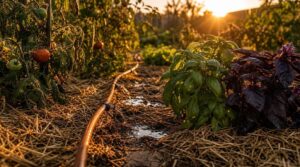
Watering during a heat wave isn’t just about keeping up—it’s about being strategic. The right timing, depth, and delivery method can mean the difference between plants that push through and ones that quietly give up. Here’s what actually moves the needle.
Strategic watering — not just more of it — is what keeps plants alive when heat peaks
Early Morning Watering
Timing is everything when summer heat peaks. Early morning watering — ideally finishing before 9 a.m. — gives plants time to absorb moisture before evaporation steals it away. Here’s why it works:
- Cooler temperatures slow evaporation, keeping more water in the root zone
- Plant turgor support improves as cells hydrate before midday stress hits
- Soil moisture distributes more evenly without heat driving rapid surface loss
- Irrigation efficiency rises when water infiltrates slowly rather than evaporating instantly
Deep Root Soaking
Surface watering during a heat wave is like filling a leaky bucket — most of it never reaches where roots actually live. Deep root soaking changes that by delivering moisture 6–8 inches down, right where it counts.
Use root zone emitters or soaker hoses placed away from stems, running them slowly over 15–60 minutes to let hydraulic conductivity do the work naturally.
Drip Irrigation Benefits
Drip irrigation systems cut surface evaporation by up to 50 percent compared to overhead sprinklers — a meaningful edge when every drop matters.
Root zone delivery keeps moisture exactly where roots need it, reducing stress without wetting foliage.
Low pressure operation also enhances fertigation, improving nutrient efficiency season‑long.
For irrigation scheduling flexibility and real water conservation, drip irrigation is ideal.
Container Watering Needs
Containers are heat’s biggest casualty in the garden. Container soil moisture drops 5–7 times faster than in‑ground beds — a 12‑inch pot in full sun can lose half its moisture in just 2–4 hours.
Water in the morning, then check again by early afternoon using a finger test. During heat waves, containers and hanging baskets often need watering twice daily.
Avoid Wet Foliage
Wet leaves are an open invitation for trouble. Evening water avoidance is non-negotiable — overnight moisture on foliage creates ideal conditions for powdery mildew and leaf spot.
Water in the morning, so leaves dry quickly. Use drip irrigation or low-trajectory sprinklers to keep foliage dry.
Mulch limits soil splash, and pruning for airflow helps canopy dry faster between waterings.
Protect Soil With Mulch
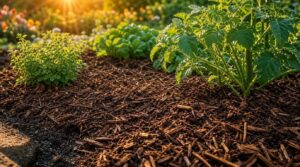
Mulch is one of the hardest-working tools in your summer garden — it keeps soil cooler, holds moisture in, and cuts down on weeds all at once. The right approach makes a real difference, though, so the details matter. Here’s what to know before you spread a single scoop.
Best Summer Mulches
Not all mulches pull equal weight in summer heat.
Wood chips are a top pick — they cut soil temperature and stretch the time between waterings by up to 50%.
Straw mulch suits vegetable beds well, reducing evaporation by 30–60% while letting water through easily.
Pine needles resist wind and last longer.
Shredded bark chips and leaf mulch round out your options beautifully.
Ideal Mulch Depth
Choosing the right mulch is only half the equation — depth is what makes it work. For most garden beds, a 2–3 inch layer balances moisture retention with healthy airflow.
Vegetable plots and flower beds benefit from pushing closer to 3–4 inches, especially during heat waves. That thickness can reduce soil evaporation by up to 70%.
Keep Mulch From Stems
Depth does the heavy lifting, but placement seals the deal. Keep a 2–4 inch stem gap between any organic mulch and your plant’s base — that clearance is your first defense against crown rot and fungal buildup. Mulch piled against stems traps moisture in exactly the wrong place, turning a protective layer into a rot risk.
Pull back material that creeps inward after rain, and do a quick monthly mulch inspection routine to catch early decay or discoloration at the root zone.
Improve Moisture Retention
Good placement keeps mulch from harming stems — but what you put under that mulch matters just as much. Blending compost soil mix into your beds before mulching creates a sponge-like layer that holds moisture longer.
Adding biochar water retention amendments and worm castings deepens that effect, improving soil structure so the root zone depth stays consistently hydrated even when surface heat peaks.
Suppress Heat-Loving Weeds
While your improved soil holds moisture beautifully, weeds are always ready to exploit any bare patch — especially in summer heat. Common weeds are well-adapted to drought conditions, meaning crabgrass, purslane, and oxalis thrive when your garden is stressed.
Here’s how to stay ahead:
- Weed seedling removal early — pull within 5–14 days of emergence, before roots anchor deep.
- Organic mulches at 2–4 inches cut germination rates by up to 60 percent.
- Solarization timing matters — cover bare beds with clear plastic for 4–6 peak-sun weeks.
- Groundcover planting fills open soil fast, leaving weeds nowhere to establish.
Thermal steam control works well on stubborn small patches without synthetic chemicals.
Add Shade and Cooling Strategies
Mulch covers the ground, but your plants also need relief from above. A few simple shading tricks can drop leaf temperatures fast and keep even the most heat-sensitive crops producing. Here’s what’s worth trying.
Using Shade Cloth
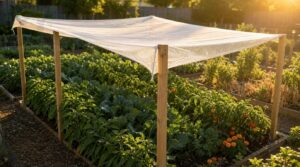
Shade cloth is one of the most effective tools you can install before a heat wave hits. 30–50% density cloth works well for most vegetables — it cuts light intensity enough to reduce leaf burn without starving your plants of photosynthesis.
Mount it 20–40 cm above the canopy, so air keeps moving underneath.
White or reflective cloth reflects more heat than black, which genuinely matters when temperatures push past 90°F.
Protecting Container Plants
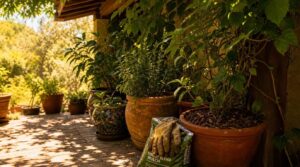
Container plants are on their own when heat spikes — no ground insulation, no buffer. Move pots to sheltered spots during the hottest afternoon hours, ideally under eaves or behind larger plants.
Terra cotta heats faster than plastic or glazed ceramic, so container material choice matters. A light layer of mulch on top helps with root zone insulation and slows moisture loss noticeably.
Natural Plant Shade

Your garden itself can be one of your best cooling tools. Mature tree canopies can drop leaf surface temperatures by 20–30% during peak sun — that’s meaningful relief for whatever grows beneath. Space broadleaf deciduous trees 15–25 feet apart and you get overlapping shade all summer, then open sunlight in winter when leaves drop.
Three plant-based shade solutions worth building into your layout:
- Climbing vines on trellises can cover 60–80% of a bed and reduce soil heat by up to 15°C once established.
- Dense shrub borders on the sunward edge block afternoon sun and keep root zones noticeably cooler.
- Tall heat-tolerant crops like okra or amaranth create natural microclimate cooling for shorter, sensitive neighbors planted beside them.
Layered planting — tall, mid-height, and low — builds a stepped shade profile that stabilizes soil moisture and extends your productive season by weeks.
Cooling Raised Beds
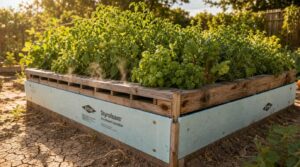
Raised beds absorb heat fast — metal and wood alike can turn into slow-roasters by midday. Wrapping your beds with insulated bed wraps using rigid foam or polyisocyanurate panels cuts that heat transfer dramatically.
Add an air gap between wall and insulation to reduce transfer by up to 15%, and seal joints with weather stripping to block warm afternoon air.
A simple ventilation opening at the top lets trapped heat escape before it reaches your roots.
Reducing Afternoon Sun
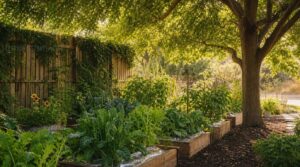
Afternoon sun is where gardens lose the battle. Deciduous trees with dense canopies block up to 60 percent of direct rays, dropping soil temperatures by 5–7°F.
Pair that with west-side windbreaks to cut heat-driving afternoon wind.
Reflective mulch and light-colored surfaces bounce radiant heat away from root zones, while strategic plant grouping creates mutual shade — simple, stackable protection that costs almost nothing.
Prevent Summer Pests and Diseases

Hot weather doesn’t just stress your plants — it rolls out the welcome mat for pests and disease too. Weakened plants attract more insects and are slower to fight back, so your timing and response strategy really matter. Here’s what to watch for and how to stay ahead of it.
Spider Mites and Aphids
When the heat climbs, spider mites and aphids don’t just show up — they multiply fast. Here’s what to watch for:
- Spider mite webbing on leaf undersides, paired with bronze stippling
- Sticky aphid honeydew residue attracting ants and sooty mold
- Distorted new growth from aphid feeding at tender shoots
Knock them back with insecticidal soaps or a strong water spray.
Heat-Stressed Plant Defense
A plant under heat stress is already fighting on multiple fronts. Its internal defenses — heat shock proteins, antioxidant enzymes, and proline accumulation — kick in automatically, but only up to a point.
Once those systems are overwhelmed, pests find the opening. Weakened plants also emit stress signals that actively attract insects.
ABA signaling triggers stomatal closure to conserve water, which helps short-term but slows recovery.
Organic Pest Controls
Once stress signals go out, pests arrive fast — so your response needs to match that speed.
Neem oil is your first line: it disrupts feeding and reproduction, cutting pest populations by up to 60 percent.
For caterpillars, Bacillus thuringiensis targets larvae precisely without harming beneficials.
Rotate active ingredients each application to prevent adaptation.
Disease-Safe Watering
Pests aren’t the only threat riding in on summer heat — fungal and bacterial diseases move fast once foliage stays wet. That’s why watering technique matters as much as timing. Always water at the base of plants, not overhead, keeping leaves dry and cutting blight pressure greatly.
Morning is the right window. Soil absorbs moisture efficiently, and any accidental leaf wetness dries quickly before temperatures peak.
Daily Garden Checks
Every great summer garden runs on a routine. A quick Daily Observation Log — just five minutes each morning — gives you a running record of change, so nothing sneaks past you.
Walk your beds and check for:
- Pest detection on leaf undersides, where mites and aphids hide first
- Early heat stress signals like curling or pale patches
- Shifts in color that flag a Nutrient Deficiency Check
Catch problems early, and you stay in control.
Frequently Asked Questions (FAQs)
Is summer the most difficult season for your garden?
Summer isn’t just hard — it’s the season that exposes every weakness in your garden. Heat stress, poor soil, and gaps in your watering schedule can quietly unravel months of careful work.
Is summer gardening a good idea?
Yes — summer gardening is absolutely worth it. Heat-tolerant varieties like okra, sweet potatoes, and ‘Heatmaster’ tomatoes thrive in the heat, delivering real harvests when managed well.
How do I Keep my Garden hot during the summer?
Keeping your garden thriving in extreme heat starts with heat-tolerant varieties like okra, amaranth, and ‘Heatmaster’ tomatoes — plants built to perform when temperatures climb past 90°F without flinching.
Should you prepare your garden for the upcoming summer?
Absolutely — getting ahead of extreme heat pays off. Setting up your garden irrigation, choosing heat tolerant plants, and timing mulch application before temperatures climb gives your garden a real fighting chance all season.
Will hot weather affect my garden?
Hot weather doesn’t just make gardening harder — it quietly reshapes everything below the surface. Plant heat stress, soil temperature management, and root zone cooling all become critical when a heat wave moves in.
Which plants are best for a summer garden?
Some plants just own summer. Heat-tolerant varieties like okra, sweet potatoes, and ‘Heatmaster’ tomatoes thrive above 90°F. Lantana and portulaca laugh at drought. Zinnias and salvias bloom nonstop in full sun.
How hot is too hot for gardening?
Once temperatures cross 90°F for several days, most vegetables start dropping blossoms and stalling growth. Heat-tolerant varieties like okra or ‘Heatmaster’ tomatoes are your best bet when a heat wave won’t quit.
What is the gardening 3 year rule?
The three-year rotation rule means you don’t plant the same crop family in the same bed more than once every three years. It protects soil health, controls pests, and keeps disease pressure low.
How to garden in extreme heat?
Extreme heat doesn’t have to mean a failing garden. With the right moves — drip irrigation, shade cloths, and heat-tolerant plant varieties — you can keep things growing strong all summer.
How to keep plants alive in 100 degree weather?
Keeping plants alive in 100°F heat comes down to three moves: watering wisely at dawn, layering mulch for root zone insulation, and deploying shade cloths to cut leaf temperatures fast.
Conclusion
Summer heat is a relentless opponent, but it’s one you can outmaneuver. The hot summer gardening challenges that flatten unprepared gardens don’t stand a chance when you’re watering at dawn, layering mulch properly, and blocking afternoon sun before it scorches your plants.
Spot stress early, respond fast, and stay consistent with your checks. Your garden won’t just survive the season—it’ll keep producing while others stall out in the heat.
- https://extension.umd.edu/resource/reducing-crop-heat-stress-urban-farms-ebr-2024-0720
- https://eos.com/blog/heat-stress-in-plants
- https://yardandgarden.extension.iastate.edu/how-to/managing-garden-extreme-heat
- https://straders.net/blog/the-heat-is-on-heat-stress-and-the-veggie-garden
- https://gardenbetty.com/surviving-a-heat-wave-6-hot-weather-watering-tips