
This site is supported by our readers. We may earn a commission, at no cost to you, if you purchase through links.
Tomato seeds have a way of sparking big dreams in small spaces. Even if your “garden” is a kitchen shelf, growing tomatoes from seed indoors lets you skip the bland supermarket stuff and create a flavor that’s unmistakably yours.
After all, there’s nothing like watching those tiny sprouts stretch toward the light—proof that you don’t need an acre to savor real tomatoes.
With a few clever tips and a bit of patience, you can turn a handful of seeds and a sunny window into your own homegrown adventure.
Table Of Contents
- Key Takeaways
- Choosing Tomato Varieties and Seeds
- Essential Supplies for Indoor Seed Starting
- When and How to Plant Tomato Seeds Indoors
- Caring for Tomato Seedlings Indoors
- Preparing Seedlings for Outdoor Transplant
- Frequently Asked Questions (FAQs)
- How long does it take tomato seeds to grow indoors?
- Why put baking soda around tomato plants?
- How to grow tomatoes from seeds for beginners?
- How many tomato seeds do you put in each hole?
- When should I start fertilizing tomato seedlings?
- How do I prevent common indoor tomato pests?
- What temperature range is ideal for mature plants?
- How often should I prune indoor tomato plants?
- Can I save seeds from homegrown tomatoes?
- How often should I fertilize tomato seedlings?
- Conclusion
Key Takeaways
- Choosing between heirloom and hybrid tomato seeds determines your flavor, disease resistance, and ability to save seeds for next season.
- A sterile seed-starting mix, proper containers, and strong, consistent light are crucial for healthy seedlings and high germination rates.
- Start seeds 6–8 weeks before the last frost, plant them about 1/4 inch deep, and use bottom watering for better root growth and less disease risk.
- After sprouting, give seedlings plenty of light, regular but careful watering, gentle fertilizing after true leaves appear, and gradually harden them off before moving outdoors.
Choosing Tomato Varieties and Seeds
Picking out tomato seeds can feel like a big decision, but it’s simpler than it seems. There are just a few things to keep in mind before you start planting.
Here’s what you’ll want to look at next.
Selecting Heirloom Vs. Hybrid Tomatoes
When you’re choosing tomato varieties, you’ll quickly bump into the “heirloom vs. hybrid” debate. Here’s a quick taste of what sets them apart:
- Heirloom tomatoes bring rich flavor profiles and exciting genetic diversity.
- Hybrid varieties excel in reliable yield comparison.
- Expect better disease resistance from hybrids.
- Heirlooms allow true seed saving.
- Both offer endless options for adventurous growers.
To learn more, consider that plant breeders select parent plants with desirable traits to produce hybrid tomatoes.
Considering Disease Resistance and Growth Habits
Once you’ve weighed heirloom varieties against hybrids, dive into the nitty-gritty of disease prevalence and plant habits. Seek seeds with resistance genes—they’re game-changers for preventing blight and wilt.
Growth comparison? Determinate tomatoes stop at four feet, while indeterminate types reach for the sky, boosting long-term yield. Understanding the difference between determinate and indeterminate varieties is key for planning your garden layout.
Smart seed selection means fewer headaches and more homegrown tomatoes.
Inspecting Seed Quality and Viability
Spotting the right tomato seeds for your project isn’t just luck—it’s science and a sharp eye. Before you plant, take time for:
- Visual Inspection for damage, cracks, or discoloration
- Simple Germination Testing—paper towel method works
- Checking stored seeds’ age and storage conditions
- Exploring sophisticated tricks: Tetrazolium Chloride and vigor assessments reveal deeper secrets about seed germination and seed health
Essential Supplies for Indoor Seed Starting

Before you get your tomato seeds started, you’ll want to have a few basics on hand. The right supplies make all the difference in giving young plants a healthy head start.
Here’s what you’ll need before you plant your very first seed.
Seed-Starting Containers and Trays
Ever tried finding the “Goldilocks” of seed-starting containers? Tomato seedlings want a container—not too small, not too big—just right for healthy roots. Aim for a seedling starter tray with cell size around 3 inches deep, drainage holes, and consider reusable options. Humidity domes boost germination, while biodegradable trays make transplanting smoother and earth-friendlier.
| Cell Size | Drainage Solutions | Reusable Options |
|---|---|---|
| 3-3.5″ depth | Built-in tray holes | Heavy-duty plastic |
| 72/128 cells/tray | Bottom water capture | Biodegradable paper |
| Medium cells | Raised aeration slots | Sterilized between uses |
| Spacious for roots | Sturdy bottom tray | Compostable fiber pots |
| Not overcrowded | Prevents waterlogging | Clean each season |
Choosing a Sterile Seed-Starting Mix
Seed-starting success often hinges on your choice of mix composition. A sterile seed-starting mix isn’t just about clean soil—it’s a shield against disease. Compared to garden soil, it can deliver up to 92% germination rates and curb seedling losses. For savvy growers, DIY blends offer a solid balance of disease prevention, soil moisture control, and smart economics.
- Lowers disease risk dramatically
- Boosts clean germination rates
- Lets you tailor economics and preparation methods
Lighting and Temperature Equipment
Light rules the roost when you’re starting tomatoes inside. LED efficiency puts more tomatoes on your plate—while saving on the electric bill. Heat mats with thermostat control spark brisk germination, and a well-set grow light or fluorescent shop light (full spectrum wins here) keeps seedlings sturdy. Nothing’s left to luck—measure light exposure and temperature for thriving, thrifty plants.
| Tool | Why It Matters |
|---|---|
| LED Grow Lights | High energy savings, best spectrum |
| Heat Mat w/ Thermostat | Even, reliable warmth |
| Fluorescent Shop Light | Adequate, but less efficient |
| Light Meter | Ensures correct exposure |
Labeling and Organizing Seeds
Chaos loves an unlabeled seed tray. Labeling best practices—think UV-proof markers and sturdy tags—save you from mystery tomatoes later. Write the variety, sow date, and source on every seed starting container.
Use digital seed logs or spreadsheets alongside physical labels for backup. Seed organization methods, like dividers or alphabetical order, set you up for accurate seed identification and smooth seed starting.
When and How to Plant Tomato Seeds Indoors
Getting your timing and technique right makes a big difference for healthy tomato seedlings. There are a few simple steps to keep in mind as you get started.
Here’s what you’ll want to know before you plant your seeds.
Timing Seed Starting Before Last Frost
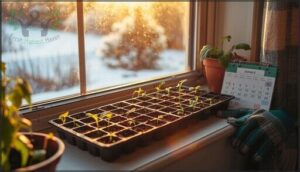
Think of timing your tomato seed starting like flipping a light switch—get it right, and growth takes off. Start seeds indoors 6–8 weeks before your last frost date, relying on frost date calculators for precise local data.
This seed starting window ensures your seedlings hit key developmental milestones, benefiting from ideal temperature guidelines for yield and health.
Planting Seeds at The Correct Depth
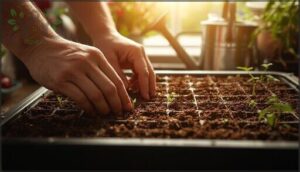
Ever notice how even a small detail changes everything? Planting tomato seeds at the best depth—about 1/4 inch—means striking a balance: enough moisture, warmth, and oxygen diffusion for steady germination. Tinker with media type and depth, and you’ll see effects on seed density and temperature.
Here’s how it plays out:
| Depth | Media Type | Germination Speed |
|---|---|---|
| 1/4 inch | Seed mix | Fast, reliable |
| Deeper (1”) | Dense soil | Slow, less even |
| Too shallow | Dry mix | Uneven, risky |
Bottom Watering and Moisture Control
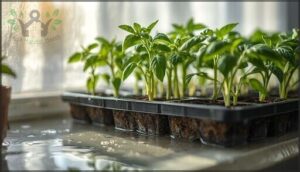
Want tomato seeds to leap into growth? Use bottom watering. Set seed trays in shallow water so roots drink just what they need.
This trick steadies soil moisture, encourages deeper root development, and slashes disease risk from soggy leaves.
Keep sessions short; monitor by squeezing for a drop. Proper watering frequency gives seedlings a golden start!
Creating Optimal Germination Conditions
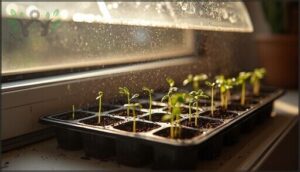
If your tomato seeds could wish for anything, it’s a comfy, safe microclimate. For quick, even seed germination, focus on the little things:
- Keep soil temperature steady at 75–82°F.
- Maintain humidity levels—aim for moist air but not a rainforest.
- Use a sterile seed starting mix for healthy sprouts.
Master these, and germination usually starts in 6–8 days!
Caring for Tomato Seedlings Indoors
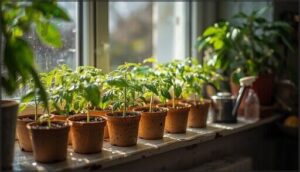
Once your tomato seeds have sprouted, it’s time to give those tiny seedlings a little extra attention. They’ll need the right care to grow up strong and healthy indoors. Here’s what you’ll want to keep an eye on next.
Providing Adequate Light and Temperature
As seedlings stretch toward the light, PPFD optimization ensures sturdy stems and strong roots. Place grow lights just 4 inches above for ideal light exposure, simulating longer photoperiod effects—12 to 20 hours boosts seedling vigor.
Keep soil temperature steady between 65–85°F. Watch for temperature fluctuations; swings can stunt growth.
Use blue-rich light spectrum for compact, healthy tomato seeds indoors.
Watering and Preventing Damping Off
A plain old watering can plant the seed of trouble—literally! Let soil moisture be like a wrung-out sponge, with watering frequency guided by touch, not guesswork.
Bottom watering wins over soggy collars, while thinking of sanitation practices as your shield against damping off disease.
Sometimes, a dash of hydrogen peroxide swoops in as your chemical intervention for safer seedling care against sneaky fungal diseases.
Thinning and Transplanting Seedlings
Careful thinning methods give each seedling room to thrive—snip extras at the soil line when they show their first true leaves. Spacing impacts vigor: you’ll notice thicker stems and stronger growth.
For transplant timing, aim for 40 days old with sturdy, green seedlings. Handle with care—hold leaves, not stems—to keep damage control top-of-mind and boost success.
Fertilizing and Promoting Strong Growth
With seedlings, getting the nutrient requirements just right is an act of balance. Start by using a water-soluble fertilizer at half strength once the second true leaf appears. Here’s how you feed for sturdy, not spindly, growth:
- Mind your NPK ratios.
- Pair light intensity with proper feeding.
- Avoid overfertilization risks in organic media.
Preparing Seedlings for Outdoor Transplant
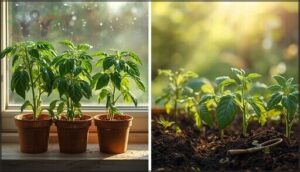
Getting your tomato seedlings ready for life outdoors is an important next step. You’ll want to make sure they’re prepared to handle all the changes that come with the great outdoors.
Let’s look at the key things you need to do before transplanting them outside.
Hardening Off Tomato Seedlings
Think your home-raised seedlings are ready to face the big, wild garden? Not so fast! Hardening off tomato plants means slowly exposing them to outdoor conditions—like training for a marathon.
Hardening off your tomato seedlings is like training them for the wild, preparing them step by step for outdoor life
This acclimation timing helps build stronger cuticles and ramps up lignin production, prepping them for environmental stressors.
You’ll dramatically cut transplant shock and boost your odds when transplanting tomato seedlings later.
Transplanting to Larger Pots or Garden Beds
After hardening off tomato plants, be sure your transplant timing aligns with warm soil—at least 60°F.
Set sturdy seedlings with 2–3 sets of true leaves into deep, compost-enriched soil. Bury up to two-thirds of the stem for strong root development.
Give each seedling plenty of space: 24–36 inches apart, or grab a roomy 10+ gallon container for each.
Supporting Continued Growth and Health
Ever watched tomato seedlings stretch like little yogis in the sun? Strong stems need smart Structural Support—stakes or cages keep your plants upright and stress-free.
Don’t forget regular watering techniques and balanced fertilizing tomato plants for vigorous growth. With good Nutritional Needs, plenty of light optimization, and steady air circulation, you’ll dodge disease and set the stage for healthy, fruitful plant care.
Frequently Asked Questions (FAQs)
How long does it take tomato seeds to grow indoors?
Here’s the real timeline: tomato seeds generally germinate indoors in 4–8 days if it’s warm. Seedlings reach the cotyledon stage around week one, show true leaves within two weeks, and are ready to transplant after hardening—about 6–8 weeks.
Why put baking soda around tomato plants?
Sprinkling baking soda around tomato plants tweaks soil pH, which can help with fungal control. It also discourages pests, curbs weeds, and, some gardeners say, might boost fruit sweetness and overall plant health with careful use.
How to grow tomatoes from seeds for beginners?
Starting tomato seeds is like opening a tiny treasure chest—Variety Selection matters! Avoid Beginner Mistakes with your seed starting, nail Germination Tips, keep an eye on Seedling Care, and remember, Transplant Timing is just as important.
How many tomato seeds do you put in each hole?
For each spot in your seed starting containers, place two tomato seeds per hole. This approach balances seed viability, germination rates, and resource efficiency.
If both sprout, thin seedlings for healthy growth—ensuring strong plants in every pot.
When should I start fertilizing tomato seedlings?
A tomato seedling’s fertilizer timing kicks in once it sports its first set of true leaves—usually two weeks after sprouting.
Go with diluted, water-soluble fertilizer to match early nutrient needs, avoiding fertilizer burn and encouraging sturdy growth.
How do I prevent common indoor tomato pests?
Quarantine newcomers before introducing them to your indoor gardening space. Monitor regularly—these steps make pest control second nature, keeping tomato plants thriving and pest infestations at bay.
Sterilize medium, use physical barriers like sticky traps, and apply biopesticides as needed.
What temperature range is ideal for mature plants?
For mature tomato plants, keep daytime temperatures between 70–82°F (21–27°C) and nighttime temperatures around 62–64°F (16–18°C). This sweet spot helps boost yield, flavor, and energy efficiency, especially when growing tomatoes indoors year-round.
How often should I prune indoor tomato plants?
Of course, left unchecked, tomato plants would claim your living room! Aim for weekly pruning—removing suckers and excess foliage—especially for indeterminate types.
Tuning pruning frequency and growth habit prevents chaos, keeps yield high, and controls plant vigor indoors.
Can I save seeds from homegrown tomatoes?
You absolutely can save seeds from homegrown tomatoes, but choose open pollinated or heirloom varieties for reliable results.
Quick fermentation boosts seed purity, limits disease risk, and keeps your seed saving legal and practical—even with hybrid varieties.
How often should I fertilize tomato seedlings?
It’s funny how a tiny tomato seedling can be so picky about food. Fertilizer should be applied weekly at half strength; watch for overfertilization symptoms and monitor seedling growth—keep nutrient solution EC low to meet changing nutrient requirements.
Conclusion
Growing tomatoes from seed indoors is like lighting a lantern in early spring—each seed a spark of possibility. Tend those flickers with care, patience, and a dash of curiosity.
As roots anchor and stems reach for the sun, you’ll see more than just plants: you’ll witness resilience in real time. Tomato by tomato, your windowsill becomes a living reminder that small beginnings can bring unexpected flavor to your table and satisfaction to your hands.