This site is supported by our readers. We may earn a commission, at no cost to you, if you purchase through links.
Bell peppers demand more precision than most gardeners realize. A single degree shift in soil temperature can delay germination by five days. Miss your transplant window by a week, and you’ll sacrifice 20 percent of your harvest.
These aren’t minor variables—they’re the difference between a thriving crop and a disappointing yield. Learning how to grow bell peppers successfully means understanding that peppers operate on strict biological timelines, from soil preparation through harvest.
The plants won’t tolerate waterlogged roots, and they refuse to set fruit when nighttime temperatures drop below 60 degrees Fahrenheit. But when you align your practices with their requirements—proper variety selection, ideal soil composition, and consistent care—you’ll produce peppers with exceptional flavor and extended storage life.
Table Of Contents
- Key Takeaways
- Choosing The Best Bell Pepper Varieties
- Planning Your Bell Pepper Growing Timeline
- Preparing Soil for Bell Pepper Success
- How to Start Bell Peppers From Seed
- Planting Bell Peppers Outdoors
- Essential Bell Pepper Care and Maintenance
- Managing Common Bell Pepper Pests and Diseases
- Harvesting and Storing Homegrown Bell Peppers
- Frequently Asked Questions (FAQs)
- What is the secret to growing bell peppers?
- Do bell peppers grow better in pots or ground?
- How long does it take to grow a bell pepper?
- How do you grow bell peppers for beginners?
- Do bell peppers grow better in pots or in the ground?
- What does Epsom salt do for pepper plants?
- Can bell peppers be grown indoors year-round?
- How long do bell pepper plants typically live?
- Are bell peppers safe for pets to eat?
- What companion plants grow well with bell peppers?
- Conclusion
Key Takeaways
- Bell peppers require strict soil temperatures between 75-85°F for germination and won’t set fruit when nighttime temperatures drop below 60°F, making precise timing and climate control critical for successful yields.
- Start seeds indoors 8-12 weeks before your last frost date, transplant only when soil reaches 60°F, and space plants 18-24 inches apart in well-drained soil with a pH between 6.0-6.8 for optimal root development.
- Consistent watering of 1-1.5 inches weekly through drip irrigation, combined with balanced fertilization every 4-6 weeks and 3 inches of organic mulch, prevents blossom drop and doubles harvest potential.
- Harvest peppers at full color maturity using clean shears to cut the stem rather than pulling, then store unwashed in the refrigerator for 1-2 weeks or blanch and freeze for up to 12 months of preservation.
Choosing The Best Bell Pepper Varieties
Not all bell peppers are created equal, and picking the right variety makes the difference between a mediocre harvest and a thriving crop.
If you grow your own tomatoes too, you can turn both into a simple homemade garden tomato sauce that really highlights the sweetness of quality peppers.
Your choice depends on factors like flavor preferences, regional climate, and whether you want tried-and-true genetics or modern disease resistance. Here’s what you need to know before selecting seeds or transplants.
Differences Between Pepper Colors
Color progression in bell peppers reveals distinct harvest stages of Capsicum annuum. Green peppers are harvested early with a sharp, grassy flavor profile, while yellow and orange varieties develop sweeter, fruitier notes as they mature. Red peppers represent full maturation with peak sugar content and nutrient density.
Understanding these flavor profiles and ripeness indicators helps you select pepper varieties that match your culinary needs and growing timeline.
- Green peppers contain higher chlorophyll and offer crisp texture for stir-fries
- Yellow varieties provide softer, fruitier aroma with increased carotenoids
- Orange peppers bridge sweetness levels between yellow and red stages
- Red peppers deliver highest vitamin C content and natural sugars
- Maturation process directly influences both flavor intensity and nutritional value
These variations echo the pepper color characteristics observed in other pepper species, which also signal differences in flavor and aroma.
Heirloom Vs. Hybrid Varieties
Beyond color, variety selection between heirloom and hybrid bell peppers shapes your growing experience. Heirloom varieties offer seed preservation advantages and diverse flavor profiles, from mild to intensely complex, with trait stability across generations.
Hybrids deliver uniform fruit size, improved disease resistance, and consistent sweetness, though seeds won’t reproduce reliably. Your choice depends on whether genetic diversity or predictable yields matter more for your garden.
Selecting Peppers for Your Climate
Your local climate dictates which bell peppers will thrive from seed starting through transplanting.
In short growing seasons, choose early maturing varieties that develop color within 60 to 75 days.
Hot climate zones require heat tolerance—look for thick-walled types that resist sunscald and maintain fruit set when nights stay above 70°F.
Match color selection to your region’s frost-free days for reliable harvests.
For further insight into adapting cultivation to cooler environments, consider reviewing these climate considerations for pepper growth.
Planning Your Bell Pepper Growing Timeline
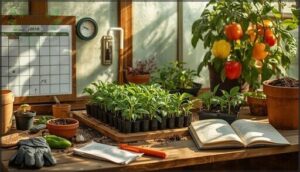
Timing is everything when you’re growing bell peppers from seed. You’ll need to work backward from your last frost date to determine when to start seeds indoors, when to transplant, and how long your growing season needs to be.
Let’s break down the key timeline milestones that’ll set you up for a successful harvest.
When to Start Seeds Indoors
Seed starting success depends on timing your indoor planting correctly. You’ll want to start bell pepper seeds 8 to 12 weeks before your last expected frost date. This timeline ensures seedlings develop strong roots and true leaves before transplanting outdoors when soil temperatures reach safe levels for growing bell peppers from seed.
Four Critical Seed Starting Guidelines:
- Warm-region growers: Start seeds 6 to 8 weeks before your average last frost date to avoid overgrown seedlings.
- Cool coastal areas: Begin germination 9 to 12 weeks early to compensate for slower outdoor warm-up.
- Short-season climates: Plan for 12 to 14 weeks of indoor growth before safe transplanting windows open.
- Germination tips: Maintain soil temperature between 78 to 85 degrees Fahrenheit for seed germination within 7 to 14 days.
Transplanting Dates by Region
Successful transplanting hinges on regional climate patterns and soil readiness. In Ashburn, Virginia, you’ll transplant seedlings outdoors in early May once soil temperature reaches 60°F.
Before planting, check that your trees are properly nourished by reviewing best practices for fertilizing fruit trees to avoid nutrient deficiencies during establishment.
Coastal California growers enjoy earlier transplants due to frost-free conditions, while Pacific Northwest gardeners wait until late May or early June. Soil temperature matters more than air temperature—warm soil accelerates root establishment and reduces transplant shock when growing bell peppers.
Growing Season Length and Maturity
Maturity rates directly depend on your region’s growing season length and daily temperatures. Most bell pepper varieties need 90 to 150 days from transplanting to harvest.
Your success hinges on understanding these factors when growing bell peppers:
- Soil temperature above 70°F accelerates fruit development and shortens time to maturity
- Night temperatures below 60°F slow ripening and cause blossom drop
- Photoperiod influence matters—peppers require 6–8 hours of direct sunlight daily
- Season length determines whether you’ll achieve multiple harvests per plant
Preparing Soil for Bell Pepper Success
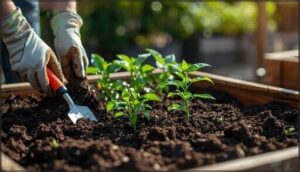
Bell peppers thrive in well-drained soil with the right pH balance. Before you plant, you’ll need to prepare your growing area to create the best possible foundation for healthy root development and fruit production.
Let’s look at the key soil factors that make or break your bell pepper harvest.
Ideal Soil Composition and PH
Bell peppers thrive in sandy loam soil with 40 to 45 percent sand for drainage and root penetration. Aim for soil pH levels between 6.0 and 6.8 to optimize nutrient balance and availability.
Incorporate organic matter at 3 to 5 percent to improve water retention and support soil health. Keep clay content under 20 percent to prevent waterlogging while maintaining essential nutrients for strong growth.
Amending Soil With Compost or Fertilizer
You’ll achieve strong pepper growth by integrating soil amendments before transplanting. Apply 1 to 3 inches of compost to boost organic matter and nutrient cycling while improving water retention.
Choose continuous-release fertilizer types at planting, then supplement during key growth stages. Compost benefits include enhanced soil structure and microbial activity, while balanced fertilization ensures steady nutrient availability throughout the season.
Raised Beds Vs. In-Ground Planting
Raised beds give you several advantages over in-ground planting for bell peppers. They control soil erosion, warm faster in spring, and offer excellent drainage systems that prevent root rot.
When planning your garden layout, consider these factors:
- Bed materials like cedar or composite resist decay for 5 to 7 years
- Root depth of 12 to 18 inches promotes healthy transplanting success
- Containers require more frequent fertilizer and watering than beds
How to Start Bell Peppers From Seed
Starting bell peppers from seed gives you control over variety selection and ensures strong, healthy plants from day one. The process requires attention to temperature, light, and timing to produce vigorous seedlings ready for your garden.
You’ll need to understand three key phases: choosing quality seeds, creating ideal germination conditions, and preparing young plants for outdoor life.
Seed Selection and Sourcing
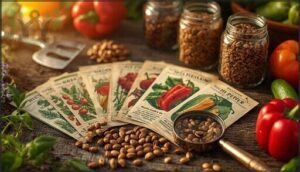
Start your seed selection by choosing certified sources with documented germination rates above 75%. You’ll find organic options at reputable seed companies and local cooperative exchanges.
Heirloom seeds preserve traditional cultivars, while hybrids offer disease resistance. Check seed packets for germination percentage, purity labels, and expiration dates. Store seeds in cool, dry conditions to maintain viability for seed starting success.
Germination Temperature and Light Requirements
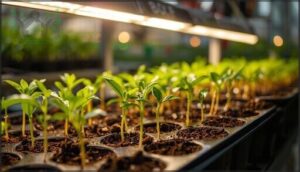
Once you’ve selected quality seeds, soil warming becomes your top priority for successful seed germination. Maintain soil temperature between 75 and 85 degrees Fahrenheit using a seedling heat mat—this range delivers the best germination rates.
After sprouts emerge, provide 12 to 16 hours of light daily at 1500 to 3000 lux intensity. Position lights 2 to 4 inches above seedlings to support compact plant growth and development.
Seedling Care and Hardening Off
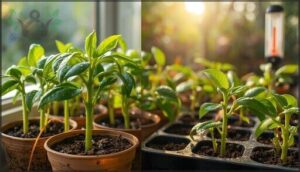
Your seedlings need consistent moisture and airflow once leaves appear. Water when the top inch of soil feels dry, maintaining 70 to 75 degrees Fahrenheit with proper seedling lighting.
Begin the hardening process when plants reach 6 to 8 true leaves—start with 2 hours outdoors daily, gradually increasing exposure over 7 to 14 days before transplanting into warmed garden soil.
Planting Bell Peppers Outdoors
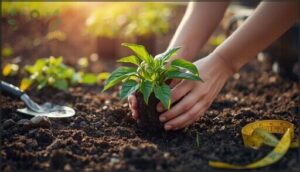
Once your seedlings have been hardened off and outdoor temperatures are stable, you’re ready to move them into the garden.
The success of your bell pepper plants depends on proper spacing, soil depth, and placement decisions made at planting time. Whether you’re working with garden beds or containers, these three factors will set the foundation for a productive growing season.
Spacing and Planting Depth
For healthy root development and air circulation, space your bell pepper seedlings 18 to 24 inches apart.
Set transplants 1/4 to 1/2 inch deeper than they sat in their pots, burying the stem up to one growth node if plants look lanky. This planting depth encourages strong roots while keeping leaves above soil to prevent rot.
Container Gardening Tips
Containers need at least 12 inches in diameter and 10 inches deep to support one bell pepper plant.
Use a well-draining soil mix enriched with compost, and position your pots where they’ll receive 6 to 8 hours of direct sun. Water deeply when the top inch feels dry, and apply a balanced fertilizer every two weeks.
Stake plants early to prevent toppling as fruit develops.
Companion Planting Strategies
Companion planting strategies boost bell peppers through pest deterrents, soil health improvements, and microclimate management. Plant basil nearby to repel thrips while improving flavor, or position beans to attract beneficial insects that control aphids.
Marigolds deter nematodes and beetles, while nasturtiums reduce whitefly pressure. These vegetable gardening techniques support nutrient cycling and create favorable growing conditions without chemical interventions.
Essential Bell Pepper Care and Maintenance
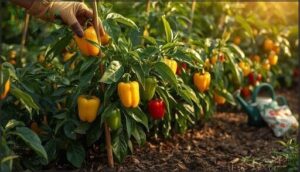
Once your bell peppers are in the ground, consistent care determines whether you’ll harvest a handful of peppers or baskets full of them. The right watering rhythm, fertilizer timing, and plant support can double your yield and prevent most common problems before they start.
Consistent watering, fertilizing, and staking after planting can double your bell pepper yield and prevent most problems before they start
Let’s cover the four essential maintenance tasks that keep your pepper plants thriving from transplant to final harvest.
Watering and Irrigation Best Practices
Water is the engine that drives pepper production—get it wrong and your plants suffer. Proper irrigation management keeps soil moisture steady while drip irrigation delivers water directly to roots with minimal waste.
Here’s your watering roadmap:
- Apply 1 to 1.5 inches weekly during peak heat, split into 2–3 sessions to maintain consistent soil moisture between 60 and 70 percent.
- Install drip lines with emitters spaced 12 to 18 inches apart to guarantee even water distribution across your pepper rows.
- Mulch with 2 to 4 inches of organic material after transplanting to reduce evaporation and moderate soil temperature fluctuations.
- Water early in the day at the plant base rather than overhead to minimize leaf diseases and allow foliage to dry before nightfall.
Use a soil moisture sensor in each bed to trigger irrigation when the top 6 inches drop below 40 percent. Adjust your watering schedule based on temperature and rainfall—deeper, less frequent irrigation encourages stronger root growth than shallow daily watering.
Fertilization Schedule and Methods
Balanced fertilizer with equal nitrogen, phosphorus, and potassium fuels early growth, then shift to higher phosphorus blends once fruit sets. Side dress each plant with 10 to 20 grams of granular fertilizer every four to six weeks during active growth.
| Fertilizer Types | Application Method |
|---|---|
| Slow-release granular | Mix into soil at planting; reapply every 4–6 weeks |
| Compost tea | Apply weekly as foliar spray or soil drench |
| Fish emulsion | Dilute to half strength; feed every 7–14 days in containers |
| Well-aged manure | Side dress 2–3 times per season for steady nutrient release |
Test soil pH annually—aim for 6.0 to 6.8—and supplement calcium if blossom end rot appears. Organic fertilizers like worm castings and kelp extracts support plant nutrition and fertilization without root burn. Water immediately after applying granular products to dissolve nutrients into the root zone.
Pruning and Supporting Plants
Pruning techniques and plant staking work together to enhance fruit support and redirect energy toward healthy plant growth and development. Remove lower leaves and ground-level stems to boost airflow, then install 4- to 6-foot stakes or tomato cages at planting.
Proper pepper care through stem training and trellis systems prevents fruit from touching soil, reducing disease risk while encouraging vigorous development.
- Pinch growing tips at 12 to 18 inches to encourage branching and more fruiting sites
- Tie stems loosely with soft fabric strips to prevent girdling as plants expand
- Sanitize pruning shears between cuts to avoid introducing pathogens during plant care and maintenance
Mulching for Moisture Retention
Mulch materials create a protective shield that cuts soil temperature by 5 to 10°C while locking in moisture levels between waterings. Apply 3 inches of straw, wood chips, or compost around your peppers for effective water conservation and organic matter enrichment.
| Mulch Type | Key Benefit |
|---|---|
| Straw | Breathable moisture retention |
| Wood chips | Gradual water release |
| Compost | Nutrient-rich reservoir |
Keep mulch several inches from stems to prevent rot during soil and irrigation management.
Managing Common Bell Pepper Pests and Diseases
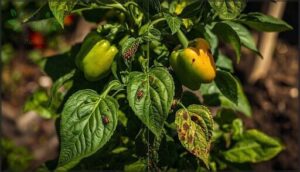
Bell pepper plants face threats from insects, fungal infections, and nutrient imbalances that can reduce your harvest or kill plants entirely.
You can prevent most problems with proper spacing, watering, and soil preparation. The following sections cover how to identify common issues and treat them before they spread through your garden.
Identifying and Treating Insect Pests
Scout your bell pepper plants weekly to catch insect infestations early. Common pepper pests and diseases like aphids, whiteflies, and thrips appear as curled leaves, sticky honeydew, or blossom scarring.
For effective pest management, use integrated management tactics: introduce beneficial insects, set sticky traps, and apply organic sprays like insecticidal soap or neem oil. Rotate crops yearly to disrupt pest life cycles.
Preventing and Managing Fungal Diseases
Fungal disease prevention starts with good cultural practices. Water at the base of plants in the morning so foliage dries quickly. Space peppers 18 inches apart to boost air circulation and reduce humidity. Apply mulch to minimize soil splash.
Rotate crops yearly and sanitize your tools between cuts. For biological controls and fungicide application, use Bacillus-based products or labeled sprays preventively when conditions favor fungal pressure.
Addressing Nutrient Deficiencies and Blossom End Rot
Blossom end rot signals calcium delivery problems, not soil deficiency. You’ll prevent it by keeping soil moisture consistent through drip irrigation or deep watering.
Here’s your nutrient management plan:
- Maintain soil pH between 6.2 and 6.8 for ideal nutrient uptake
- Apply calcium nitrate during early fruit set via fertigation
- Avoid excess nitrogen that diverts calcium from developing peppers
- Use mulch to stabilize moisture and support steady calcium movement
- Balance potassium and magnesium to prevent nutrient antagonism
Test soil annually and adjust fertilizer application accordingly.
Harvesting and Storing Homegrown Bell Peppers
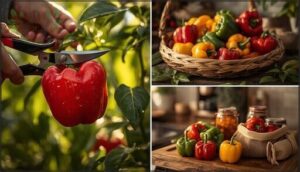
Knowing when and how to harvest bell peppers directly affects their flavor and shelf life. You’ll want to pick them at the right stage of ripeness and use proper cutting techniques to avoid damaging the plant.
The storage method you choose determines whether your peppers stay fresh for days or months.
Signs of Ripeness and Harvest Timing
You’ll spot ripeness through three clear maturation process markers: uniform color change from green to red, orange, or yellow; firm, glossy skin spanning 3 to 4 inches; and a sweet aroma near the stem.
Harvest timing varies by region—cool climates need 70 to 90 days post-transplant, while warmer zones reach peak fruit quality in 60 to 75 days.
Proper Harvesting Techniques
Once you’ve confirmed ripeness, use clean, sharp pruning shears or scissors to cut each pepper from the plant. Leave a short stem stub attached to the fruit to prevent rot at the attachment point. Don’t pull or twist peppers off—this tears plant tissue and invites disease.
Harvest every 7 to 14 days during peak production to encourage continued fruit set.
Short- and Long-Term Pepper Storage Methods
Refrigeration tips for your pepper harvest start with the crisper drawer. Store unwashed peppers in a breathable bag for 1 to 2 weeks of freshness. For freezer storage extending shelf life optimization up to 12 months, blanch peppers 2 to 3 minutes, then freeze in single layers. Harvesting and preserving peppers long-term also works through dehydration methods and pickling techniques using sterilized jars.
Short-term pepper storage options:
- Refrigerate whole peppers unwashed for maximum freshness
- Keep at room temperature 3 to 5 days in cool, dry areas
- Avoid washing before storage to prevent premature rot
Long-term preservation methods:
- Freeze blanched peppers in airtight bags after ice-water cooling
- Dehydrate uniform slices at 125 to 135°F for 6 to 12 hours
- Pickle using vinegar brine and process jars 10 to 15 minutes
Frequently Asked Questions (FAQs)
What is the secret to growing bell peppers?
The proof is in the planting: consistent soil temperature between 75-85°F, balanced nutrition with higher phosphorus and potassium, and steady watering prevent blossom drop while ensuring strong fruit set through proper climate control techniques.
Do bell peppers grow better in pots or ground?
Both methods work well, but containers offer microclimate control and easier water management, while ground planting provides deeper root depth and better soil nutrient availability.
Your choice depends on space and gardening goals.
How long does it take to grow a bell pepper?
Bell peppers take 70 to 90 days from transplant to harvest, with seed germination adding another 7 to 14 days. Climate factors and maturation rates vary, affecting your growing season timeline substantially.
How do you grow bell peppers for beginners?
Start seeds indoors 8 to 10 weeks before your last frost, transplant when nights stay above 50 degrees Fahrenheit, and water consistently while providing full sun for successful pepper care and maintenance.
Do bell peppers grow better in pots or in the ground?
A backyard gardener once doubled her pepper yield by switching from cramped 3-gallon pots to 5-gallon containers.
Both pots and ground work well when you match root depth, watering schedules, and soil quality to your setup.
What does Epsom salt do for pepper plants?
Epsom salt supplies magnesium, a vital nutrient for chlorophyll production and photosynthesis in pepper plants.
This soil amendment corrects magnesium deficiency, reducing leaf yellowing while supporting stronger stems and enhanced plant nutrition when applied as a foliar spray.
Can bell peppers be grown indoors year-round?
Yes, you can cultivate bell peppers indoors year-round with adequate container size, proper indoor lighting for 12-14 hours daily, artificial pollination methods, and stable soil temperature.
Greenhouse and indoor gardening extend your growing season indefinitely.
How long do bell pepper plants typically live?
Bell peppers live forever—almost. In reality, these warm-season annuals thrive for one growing season of 90 to 150 days in temperate zones, though tropical climates support perennial growth.
Are bell peppers safe for pets to eat?
In small amounts, plain peppers are generally safe for dogs and cats.
Remove seeds and stems to prevent choking. Watch for digestive upset and skip any seasonings that could harm your pet.
What companion plants grow well with bell peppers?
Companion planting pairs basil benefits—aphid repellence and pollinator attraction—with marigold effects against nematodes.
Onion synergy disrupts pest cycles, carrot interactions improve drainage, and bean enhancements fix nitrogen, enriching organic gardening and vegetable cultivation strategies for greenhouse gardening success.
Conclusion
Most gardeners overthink complexity and underthink consistency. Learning how to grow bell peppers isn’t about sophisticated techniques—it’s about executing simple steps at the right time.
Start seeds eight weeks before your last frost. Maintain soil temperatures above 70 degrees. Water deeply but infrequently. These aren’t secrets; they’re requirements your plants have been signaling all along.
Follow the biology, ignore the shortcuts, and your harvest will reflect the precision you applied from the beginning.