This site is supported by our readers. We may earn a commission, at no cost to you, if you purchase through links.
Most gardeners pack it in when the first cool snap hits. Containers get emptied, patios get abandoned, and the growing season officially ends—or so the thinking goes. But fall might be the best time you’re not using your containers.
Cooler air between 50–70°F actually stabilizes soil moisture, so you’re watering less while roots absorb nutrients more efficiently. Pest pressure drops. Morning dew does some of the work for you. And ornamental kale, mums, Swiss chard, pansies—they don’t just survive these conditions, they thrive in them.
Whether you’ve got a sprawling deck or a single balcony railing, fall container gardening opens up a season most people skip entirely.
Table Of Contents
- Key Takeaways
- Why Fall Container Gardening Works
- Best Plants for Fall Containers
- Design Beautiful Autumn Container Displays
- Planting Tips for Healthy Containers
- Fall Container Care Through Frost
- Top 7 Containers for Fall Gardening
- Frequently Asked Questions (FAQs)
- How to winterize a container garden?
- What to plant in containers for fall?
- What can I plant in pots in October?
- What to put in planters in August?
- What to grow in pots in the fall?
- What plants are good for pots in autumn?
- What potted plants are good in the fall?
- What plants are good for fall outdoor pots?
- How often to rotate container gardens?
- Can fall plants thrive in shade?
- Conclusion
Key Takeaways
- Fall container gardening isn’t summer’s leftovers — cooler temps between 50–70°F actually improve soil moisture, root absorption, and pest control, making autumn one of the most productive seasons to grow.
- Plants like mums, ornamental kale, pansies, Swiss chard, and trailing sedum don’t just survive fall conditions — they genuinely thrive in them, offering both color and edible harvests well into the cold months.
- Good container basics — proper drainage, quality potting mix, compost amendments, and planting six weeks before first frost — are what separate a container that lasts through November from one that fades by October.
- Protecting your display through frost comes down to a few consistent habits: water deeply, mulch 2–4 inches, deadhead every one to two weeks, and bring tender plants indoors once nights drop below 50–55°F.
Why Fall Container Gardening Works
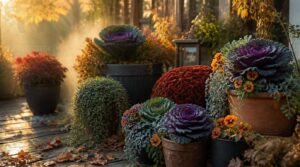
Fall container gardening isn’t just a consolation prize for summer’s end — it’s genuinely one of the most rewarding seasons to grow. Cooler temps, frost-tough plants, and small-space harvests all come together in ways that can surprise even experienced gardeners. Here’s what makes it work so well.
If you’re not sure where to start, this guide to best vegetables for fall harvest by growing zone takes the guesswork out of picking what to plant in your containers.
Fall container gardening isn’t summer’s consolation prize — it’s one of the most rewarding seasons to grow
Cooler Weather Advantages
Autumn quietly flips the script for container gardeners. When temperatures settle between 50 and 70°F, evaporation slows, soil stays moist longer, and morning dew chips in as a natural irrigator — meaning you’re watering less without sacrificing plant health. Cooler light also deepens foliage pigments, so bronze and burgundy tones in your cold tolerant plants genuinely pop.
Pest pressure drops, too. Many warm-season insects retreat, so your fall container garden stays cleaner with fewer interventions.
- Steadier soil moisture — cool temps reduce evaporation noticeably
- Richer leaf color — pigment intensity peaks in cooler light
- Fewer pests — tropical insects retreat as temperatures fall
- Better nutrient uptake — soil around 60°F promotes efficient root absorption
Small-space Harvests
Cooler conditions also create perfect growing weather for edible crops. Compact containers — even a 6-inch pot — can yield lettuce, radishes, or microgreens within weeks.
Try succession planting every two weeks so harvests keep coming.
A small trellis lets beans or peas climb vertically, freeing floor space.
Nasturtiums and calendula add edible color without taking up much real estate.
Use a cucumber and dill companion to deter beetles.
Seasonal Color Boosts
What you plant in fall becomes a whole different show once the season’s light takes over. Cooler temperatures intensify reds, oranges, and purples, making chrysanthemums and asters punch well above their weight. Overcast days soften contrasts into something almost painterly. Shorter days reduce green dominance in foliage, letting seasonal color genuinely lead.
- Autumn rains sustain soil moisture, extending bloom longevity
- Dusk light warms gold and amber tones dramatically
- Purple fountain grass deepens visually as temperatures drop
- Frost-free stretches delay leaf drop, keeping displays vibrant longer
Frost-tolerant Display Planning
Once your displays are riding that autumn color wave, the question becomes: how long you can actually keep them looking good once frost arrives. The answer depends on planning ahead.
Insulated-wall containers can buffer soil temperature by 6–8°F — a genuine lifeline for cold-sensitive roots. Pair those with south-facing placement on heat-absorbing pavers, and you’ve quietly built a warmer microclimate without a greenhouse in sight.
Best Plants for Fall Containers
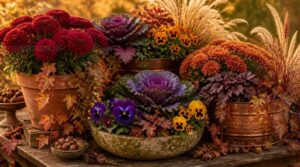
Choosing the right plants is what separates a fall container that turns heads from one that just sits there.
The good news is autumn gives you more options than most people expect — from hardy bloomers to edible greens and dramatic foliage. Here are the best plants to fill your fall containers with color, texture, and life.
Mums, Pansies, and Asters
If you’ve ever seen a fall porch come alive overnight, chances are mums, pansies, and asters did the heavy lifting. These three bring the whole season together:
- Mums offer dense, showy heads in yellows, deep reds, and purples
- Pansies tolerate light frost and tie warm and cool tones together
- Asters attract pollinators while blooming into late fall
Ornamental Kale and Cabbage
When the mums and asters start winding down, ornamental kale and cabbage step in and somehow look even better after a frost. That’s because cooler nights actually trigger the leaves to intensify their purples, pinks, and creams.
Their tight rosette structure adds architectural weight to any container arrangement — less flower, more presence.
Sedum and Trailing Fillers
Trailing sedums are the unsung heroes of fall containers. Sedum rupestre ‘Angelina’ spills bright chartreuse foliage over pot rims like a soft fringe, softening rigid edges without competing for attention. It’s drought tolerant once settled, so it won’t sulk if watering gets sporadic.
- Needlelike foliage that shimmers in autumn light
- Roots lightly at nodes, spreading without taking over
- Deepens in color under cold and dry conditions
- Pairs beautifully with dark mums or ornamental kale
Use trailing sedums as your spiller in the thriller-filler-spiller method — they do exactly what the name promises.
Swiss Chard and Spinach
Swiss chard and spinach pull double duty in fall containers — they look good and feed you. Both are cool-season crops that actually prefer the crisper air of autumn over summer heat, and spinach especially thrives when temperatures drop.
| Swiss Chard | Spinach | |
|---|---|---|
| Flavor | Earthy, mineral, slightly bitter stems | Mild, soft, subtly sweet |
| Texture | Fibrous stems, sturdy leaves | Tender, wilts quickly when cooked |
| Nutrition | Higher magnesium and potassium | Higher iron, folate, and vitamin A |
| Harvest | Cut outer leaves continuously | Baby leaves ready in weeks |
Plant both in rich, well-draining potting mix and harvest outer leaves regularly to keep them producing.
Pollinator-friendly Fall Blooms
When fall arrives, your garden doesn’t have to go quiet — pollinators are still working hard. Asters, goldenrod, and Rudbeckia keep nectar flowing well past summer’s end. Black-eyed Susans hold their deep-gold blooms until the first hard frost, giving bees and butterflies a reliable late-season stop.
- Choose tubular or composite flowers for broadest pollinator access
- Contrast purples, yellows, and pinks so insects spot blooms in low autumn light
- Group plants in dense nectar clusters to increase visits per container
Design Beautiful Autumn Container Displays
A well-designed fall container isn’t just a pot with a few plants dropped in — it’s a small scene that draws the eye and holds it. Knowing a few simple design principles makes the difference between a container that looks intentional and one that just looks busy. Here’s what to keep in mind as you put yours together.
Thriller, Filler, Spiller Method
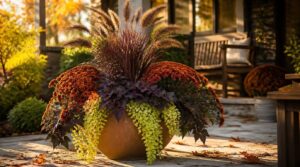
Think of it as the classic thriller, filler, spiller formula — one tall focal plant anchors the center, compact mid‑layer plants fill the volume around it, and trailing varieties cascade down the edges.
Together they create depth, movement, and a display that looks intentional rather than accidental.
Warm Fall Color Palettes
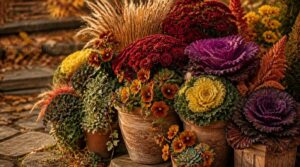
Color is where fall containers go from pleasant to memorable. Picture deep scarlet crimson accents anchoring a mum, ringed by mustard ochre tones in flowering kale — that’s an autumn color palette with real punch. Balance it with terracotta sage balance or a few neutral greens, and the whole arrangement breathes:
- Warm reds and burnt orange
- Golden yellows and soft ochre
- Sage and olive greens
Mixing Flowers and Foliage
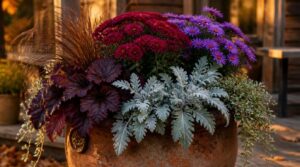
Foliage isn’t just background — it’s what makes your mixed container arrangements hold together visually. Pair broad, rounded leaves with upright flower spikes, or set silvery dusty miller behind burgundy mums. The contrast in leaf shape and texture is what gives fall planters that layered, intentional look rather than a crowded jumble.
| Foliage Type | Pairing Flower | Effect |
|---|---|---|
| Dusty miller (silver) | Deep red mums | Bright contrast |
| Heuchera ‘Caramel’ | Purple asters | Warm depth |
| Lamium (variegated green-white) | Golden rudbeckia | Color bridge |
Burgundy and bronze foliage intensifies orange and red blooms naturally, while cool greens keep the autumn color palette from feeling heavy.
Gourds and Pumpkin Accents
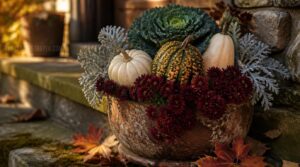
Once your flowers and foliage are set, tucking in a gourd or small pumpkin is the finishing move. Group them in threes — a mini pumpkin, a warty gourd, and something pale — near the container’s back edge for depth. Keep surfaces dry to prevent mold, and rotate them every few days.
- White pumpkins pop against dark green foliage
- Speckled gourds add pattern without crowding
- Odd-numbered clusters look naturally balanced
- Wipe surfaces clean with a soft damp cloth
Evergreen Winter Interest
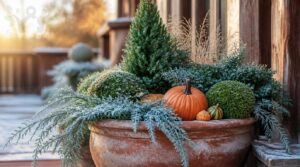
Pumpkins and gourds carry your display through November, but evergreen accents in fall quietly do the heavier lifting.
Dwarf conifers, spreading junipers, or a compact boxwood bring structural branch architecture that holds everything together once blooms fade — winter foliage textures keeping containers looking intentional, not abandoned, deep into the cold months.
Planting Tips for Healthy Containers
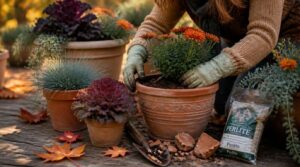
Getting your containers off to a strong start comes down to a few solid habits before you ever put a plant in the ground. The good news is none of it is complicated — just consistent. Here’s what to keep in mind as you set up your fall containers.
Choose Containers With Drainage
Every container needs at least one drainage hole — without it, water pools at the bottom and roots rot fast. For medium pots, holes between 1/4 and 1/2 inch work well. No holes? Drill them clean and smooth. A thin gravel layer inside, topped with landscape fabric, keeps soil from clogging the drainage path.
- Raise pots on feet for airflow beneath
- Add activated charcoal to the bottom layer to reduce odors
- Check holes periodically — roots and mineral buildup can block them
Use Quality Potting Mix
Bag potting mix matters more than most people expect. Unlike garden soil, a quality container soil mix stays light and airy — perlite or vermiculite keep it from compacting, so roots breathe easily.
Look for mixes with pH stability between 6.0 and 7.0 and weed-free, sterile ingredients. That clean start protects your fall display from day one.
Add Compost for Nutrients
Think of compost as slow-release insurance for your container plants. Blending up to one-third finished compost by volume into your potting mix feeds roots gradually — nitrogen, phosphorus, and potassium release in stages, so you won’t see sudden burning or growth spikes. It also boosts microbial life, which makes nutrients more available over time.
Choose horticultural-grade compost with low odor and stable texture.
Plant Before First Frost
Timing is everything here. Get your containers planted six weeks before your average first frost date — that window lets roots settle in before the cold arrives.
If you’re not sure of your local frost date, most cooperative extension services list it by zip code. A wall or south-facing fence can buy you several extra days.
Arrange Plants by Height
Put your tallest plant at the back, medium-height varieties in the middle, and low growers or trailers at the front. That simple layered sequence keeps every plant visible and lets light reach shorter companions.
Pennisetum ‘Rubrum’ at the rear, coneflowers mid-container, and Sedum ‘Angelina’ spilling over the edge — that’s your thriller, filler, and spiller working together.
Fall Container Care Through Frost
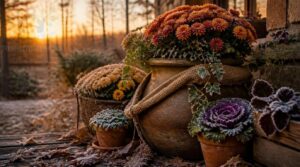
Once your containers are planted and looking great, the real test begins when temperatures start to drop. A little consistent care goes a long way toward keeping everything healthy from the first cool snap right through hard frost.
Here’s what to do to carry your fall display all the way to the finish line.
Water Deeply and Consistently
Fall containers dry out faster than you’d expect — smaller soil volumes lose moisture quickly, especially on windy autumn days.
Water deeply until it runs freely from the drainage holes, soaking 6 to 8 inches down. That encourages roots to reach rather than stay shallow.
Check 1–2 inches below the surface before watering again; if it’s damp, wait.
Mulch to Protect Roots
Once the roots are thoroughly soaked, a thin layer of mulch is your next line of defence.
Spread 2 to 4 inches of shredded bark or sphagnum moss across the soil surface. This buffers against rapid overnight temperature drops, locks in moisture between waterings, and helps prevent the freeze-thaw cycles that cause roots to heave loose from the potting mix.
Deadhead Fading Flowers
Once your mulch is down, don’t let fading flowers go unattended. Spent blooms quietly drain plant energy into seed production instead of pushing out fresh color.
Snip them off every 7 to 14 days with clean, sharp bypass pruners, cutting just above a healthy leaf or bud, and your mums, asters, and pansies will keep performing well into the colder weeks.
Move Tender Plants Indoors
When night temperatures start consistently dropping below 50 to 55°F, that’s your signal to act. Bring in tender plants like croton, coleus, and purple fountain grass before frost claims them.
Move them gradually — a few days of sheltered outdoor time first helps ease the shock of lower light and humidity indoors.
Refresh Soil Seasonally
Once your tender plants are tucked indoors, give outdoor containers fresh attention. Revitalizing soil restores nutrients roots have used all season.
- Add 2-4 inches of compost for microbial diversity
- Aerate gently with a hand fork
- Mix in worm castings or kelp meal
- Test pH, aim for 6.0-6.8
- Top containers with fresh potting mix
Healthy soil means stronger blooms through frost.
Top 7 Containers for Fall Gardening
The right container can make or break your fall display — it affects drainage, root health, and how well your plants survive a cold snap. From sleek corten steel cubes to classic ceramic pots, there’s a style to match any porch, patio, or windowsill.
Here are seven worth considering for your autumn garden setup.
1. Arcadia Garden Plastic Urn Planter
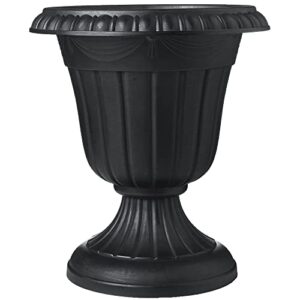
Picture a fluted pedestal urn standing guard by your front door — that’s the Arcadia look, basically.
Standing 16 inches tall with a roomy 13.5‑inch opening, it easily holds a mum-and-kale combo plus a trailing spiller.
The drill-ready body means you add drainage yourself; none come pre‑installed.
Being lightweight plastic, toss in a few rocks for wind stability; it breaks down for easy off‑season storage once frost ends the show.
| Best For | Gardeners and decorators who want an elegant, low-maintenance planter for entryways, patios, or seasonal displays without spending a lot. |
|---|---|
| Material | Plastic |
| Drainage | Drill-ready (none included) |
| Shape | Pedestal urn |
| Weight | Lightweight |
| Weather Resistant | Yes |
| Primary Setting | Entryway or patio |
| Additional Features |
|
- Classic fluted design adds a polished, decorative touch to any indoor or outdoor space
- Two-piece pedestal snaps together without tools and stores flat when not in use
- Wide 13.5″ opening gives you plenty of room to plant full, layered arrangements
- No drainage holes out of the box — you’ll need to drill them yourself before planting
- Lightweight build can tip in the wind unless you add rocks or sand for ballast
- Thin plastic construction may not feel as premium or durable as heavier alternatives
2. Crescent Garden Delano Planter Bowl
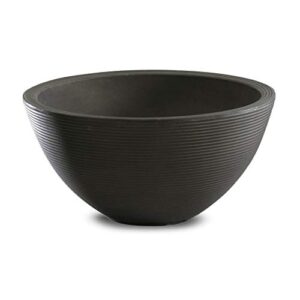
Where the Arcadia stands tall, the Crescent Garden Delano goes wide — a round, double-wall bowl that’s built for showing off sprawling displays. That double-wall construction isn’t just a design detail; it insulates roots against temperature swings, which matters once October nights start biting.
The pre-drilled drainage hole keeps roots healthy without any DIY drilling, and at roughly 3–4 pounds empty, you can reposition it across your patio without effort. At $110, it’s a serious planter — but a 10-year warranty backs that price.
| Best For | Gardeners who want a wide, statement-worthy planter for sprawling arrangements, container gardens, or decorative water features — especially in climates with hot summers or cold autumn nights. |
|---|---|
| Material | HDPE Plastic |
| Drainage | Pre-drilled hole |
| Shape | Round bowl |
| Weight | 3–4 lbs empty |
| Weather Resistant | Yes, UV-stabilized & frost-proof |
| Primary Setting | Patio or balcony |
| Additional Features |
|
- Double-wall construction insulates roots against temperature swings, keeping plants healthier through seasonal changes
- Lightweight HDPE build (around 3–4 lbs empty) makes repositioning on patios or balconies effortless
- UV-stabilized and frost-proof with a 10-year warranty, so it holds up outdoors without fading or cracking
- The drainage plug isn’t included, so you’ll need a separate purchase right out of the box
- No matching saucer in the box either — another add-on cost if you need one
- At $110, it’s priced at a premium over standard plastic planters, and it only comes in one size and finish
3. Arcadia Garden Plastic Window Box Planter
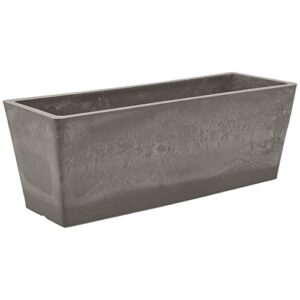
Window ledges, railings, narrow balcony shelves — the Arcadia Garden Plastic Window Box was built for exactly those spots where round pots just won’t fit. Its low, wide profile lets you line up pansies, trailing creeping Jenny, or ornamental kale shoulder to shoulder for a full, layered look.
Made from recycled plastic composite blended with stone powder and wood dust, it genuinely reads as cement — without the backbreaking weight. You’ll need to drill your own drainage holes, but that takes two minutes.
| Best For | Gardeners and renters who want a stylish, space-saving planter for window ledges, balconies, or narrow shelves without the weight of real concrete. |
|---|---|
| Material | Recycled Composite |
| Drainage | Drill-ready (none included) |
| Shape | Rectangular box |
| Weight | Lightweight |
| Weather Resistant | Yes, UV-stable |
| Primary Setting | Window ledge or railing |
| Additional Features |
|
- Looks convincingly like cement but weighs a fraction of the real thing, making it easy to move around or rearrange seasonally
- Made from recycled materials, so it’s a genuinely eco-friendly pick for sustainability-minded gardeners
- Leak-proof base protects surfaces indoors, and it holds up well outdoors thanks to UV-stable, weather-resistant construction
- No drainage holes out of the box — you’ll need to drill your own if you want them
- Surface scratches and finish variations come with the hand-crafted territory, which not everyone will love
- It’s not real concrete, so if you’re set on the genuine article, this one might feel like a substitute rather than the real thing
4. Veradek Corten Steel Cube Planter
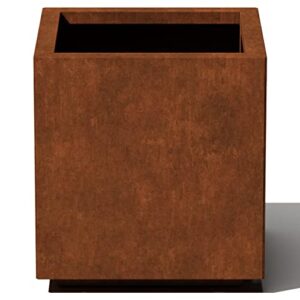
The Veradek Corten Steel Cube Planter is where function meets something you’d actually want to look at. That natural rust patina deepens into warm orange-red over time — a finish that honestly flatters fall plantings better than any paint could.
At 28 × 27 × 27 inches, it holds enough soil for grasses, shrubs, or layered seasonal arrangements. Built-in drainage holes, optional insulation inserts, and a temperature range of –20 °F to +120 °F mean your roots stay protected through whatever autumn throws at you.
| Best For | Gardeners and outdoor enthusiasts who want a durable, high-capacity planter that looks as good as it performs — especially those planting trees, shrubs, or bold seasonal arrangements in harsh climates. |
|---|---|
| Material | Corten Steel |
| Drainage | Built-in holes |
| Shape | Square cube |
| Weight | Heavy |
| Weather Resistant | Yes, –20°F to +120°F |
| Primary Setting | Garden or large patio |
| Additional Features |
|
- The corten steel develops a rich, natural rust patina over time, giving it a warm, organic look that only gets better with age
- Handles extreme temperatures (–20 °F to 120 °F) with optional insulation inserts to keep roots healthy year-round
- Generous 28 × 27 × 27 in volume easily accommodates large plants, shrubs, or layered garden arrangements
- Ships unassembled and is heavy, so you’ll likely need a second pair of hands (or equipment) to move and set it up
- Assembly involves tight corners and sharp edges, which can be tricky for anyone with limited dexterity
- No interior shelf means deep planting may require extra soil or filler material to hit the right planting depth
5. Arcadia Garden Classical Urn Planter
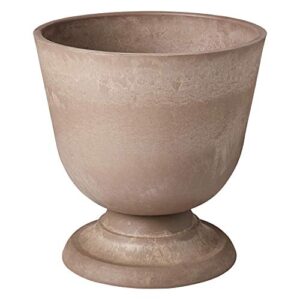
If you love the look of formal garden urns but not the backache of moving them, the Arcadia Classical Urn is worth a close look. Its fluted pedestal body and rounded base give you that timeless entryway aesthetic — without the weight of real stone. The taupe recycled composite (plastic, stone powder, and wood dust) holds up through rain and UV exposure season after season.
One heads-up: you’ll need to drill your own drainage hole before planting.
| Best For | Anyone who loves the classic look of stone garden urns but wants something lightweight, weather-tough, and eco-friendly for patios, decks, or garden beds. |
|---|---|
| Material | Recycled Composite |
| Drainage | Drill-ready (none included) |
| Shape | Pedestal urn |
| Weight | Lightweight |
| Weather Resistant | Yes, UV & weather-resistant |
| Primary Setting | Patio or garden bed |
| Additional Features |
|
- Made from recycled composite materials, so it’s a genuinely eco-friendly choice without sacrificing style
- Lightweight enough to move around easily, despite its solid, stone-like appearance
- Built to handle sun and rain season after season thanks to UV and weather-resistant construction
- No pre-drilled drainage hole — you’ll need to do that yourself before planting
- Only available in one size, which may not work for every plant or planting setup
- The pedestal design doesn’t suit every garden style or planting arrangement
6. EPFamily Ceramic Plant Pot
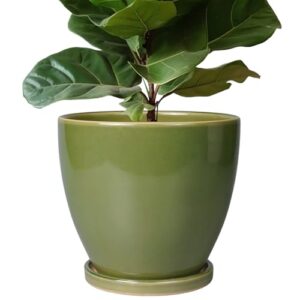
The EPFamily Ceramic Plant Pot brings something a bit different to the fall lineup — black-wood crack glaze that reads both vintage and modern at once. The 10×10×8.78-inch body is high-temperature fired ceramic, so it breathes well and drains efficiently through its built-in hole, with a matching saucer underneath to protect surfaces.
At that size, it’s a natural fit for mums, ornamental kale, or a compact sedum. Just don’t knock it off the ledge — ceramic doesn’t forgive falls.
| Best For | Plant lovers who want a stylish, functional pot that works for everything from succulents and orchids to bonsai — and doubles as a genuine décor piece in a home, office, or garden. |
|---|---|
| Material | Ceramic |
| Drainage | Built-in hole with saucer |
| Shape | Round pot |
| Weight | Heavy |
| Weather Resistant | Yes, outdoor-rated ceramic |
| Primary Setting | Indoor or outdoor |
| Additional Features |
|
- High-temperature fired ceramic allows roots to breathe, promoting healthier plant growth
- The black-wood crack glaze gives it a distinctive look that blends vintage character with modern style
- Comes with a matching saucer and built-in drainage hole, so surfaces stay protected and roots don’t sit in standing water
- Ceramic is heavy and fragile — moving it around is awkward, and a single drop can crack or shatter it
- The base size may be too small for larger plants, and overflow becomes a real concern if excess water isn’t managed quickly
- Plants aren’t included, so there’s an extra step (and cost) before it’s ready to display
7. Whitewashed Wooden Planter Box
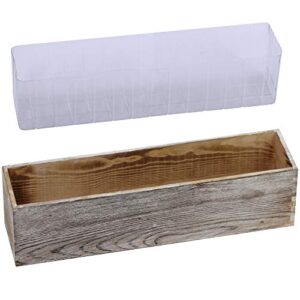
Ceramic has its charms, but wood brings warmth that no glaze can quite match. This whitewashed pine planter box — 17.3 inches long and finished in a distressed off-white — feels right at home tucked along a windowsill or styled as a centrepiece with trailing Sedum ‘Angelina’ and compact mums.
The removable plastic liner protects the wood from moisture, though it isn’t watertight, so go light on watering. No drainage holes means discipline matters here.
| Best For | Anyone who loves a rustic, handcrafted look and wants a versatile display piece for succulents, air plants, or candles — especially those decorating windowsills or putting together wedding and holiday centrepieces. |
|---|---|
| Material | Pine Wood |
| Drainage | No drainage holes |
| Shape | Rectangular box |
| Weight | Lightweight |
| Weather Resistant | Limited, moisture causes deterioration |
| Primary Setting | Windowsill or tabletop |
| Additional Features |
|
- The hand-painted distressed finish gives it a warm, lived-in charm that works beautifully in farmhouse or cottagecore spaces
- The removable plastic liner keeps moisture away from the wood, helping the box last longer
- Surprisingly versatile — works just as well holding candles or potpourri as it does small plants or flowers
- No drainage holes, so you’ll need to stay on top of watering to avoid water buildup
- The plastic liner isn’t fully waterproof and can leak if things get too wet
- The color may read lighter or more washed-out in person than it looks in product photos
Frequently Asked Questions (FAQs)
How to winterize a container garden?
Like tucking a garden to sleep, winterizing is simple: mulch 2–4 inches deep, move tender plants indoors before hard frost, wrap pots in bubble wrap, and make sure drainage holes stay clear.
What to plant in containers for fall?
Mums, pansies, ornamental kale, asters, sedum, Swiss chard, and spinach all thrive in fall containers. Cool-season favorites like pansies even shrug off light frost without missing a beat.
What can I plant in pots in October?
October pots handle more than you might expect. Pansies, mums, and ornamental kale thrive in the cold, and spinach or Swiss chard will keep producing right up until a hard freeze hits.
What to put in planters in August?
August is your changeover window. Start with ornamental kale and pansies for instant color, tuck in Swiss chard for harvest, and anchor the pot with a compact mum.
What to grow in pots in the fall?
Fall pots can hold cool-season greens like spinach, ready in 40–50 days, plus pansies, mums, and asters for color. Swiss chard and kale keep producing even as temperatures drop.
What plants are good for pots in autumn?
Chrysanthemums, pansies, and asters top the list for autumn pots. Ornamental kale, sedum, and Swiss chard round things out beautifully — colorful, cold-tolerant, and genuinely low-fuss.
What potted plants are good in the fall?
Autumn’s best pot stars? Think mums, pansies, and ornamental kale — cold-tough, colorful, and long-lasting. Sedum and Swiss chard earn their spot too, blending texture with edible appeal.
What plants are good for fall outdoor pots?
Mums, pansies, ornamental kale, sedums, and asters are top fall pot performers. Swiss chard adds edible color, while trailing plants like creeping Jenny fill gaps beautifully.
How often to rotate container gardens?
Give your containers a gentle turn every two to four weeks during peak growth. In slow fall conditions, stretching that to every three to six weeks keeps stress low and growth even.
Can fall plants thrive in shade?
Yes, fall plants can absolutely thrive in shade. Pansies, asters, and heuchera all perform beautifully in low light, offering rich color and texture without needing full sun.
Conclusion
Funny how the garden teaches you things right when you think it’s done talking. Fall container gardening isn’t a consolation prize for summer’s end—it’s a different conversation entirely, one with cooler rules and slower rhythms.
The mums don’t need your permission to bloom brilliantly. The Swiss chard doesn’t ask for warmth it doesn’t need.
You just have to show up when most gardeners walk away. That’s where the real growing happens.
- https://levelgreenlandscaping.com/blog/our-26-favorite-container-plants-for-fall-color-in-washington-dc
- https://dennis7dees.com/fall-container-garden-ideas
- https://www.almanac.com/best-vegetables-containers-late-summer-and-fall
- https://www.chicagobotanic.org/blog/how/tips-your-fall-container-gardens
- https://growingfruit.org/t/after-season-soil-utilization-in-container-gardening/57045