This site is supported by our readers. We may earn a commission, at no cost to you, if you purchase through links.
Most gardeners pack up and call it quits the moment temperatures drop. That’s leaving months of color, texture, and even fresh food on the table.
Fall is secretly the best season for container gardening—cooler air means less watering stress, fewer pests, and plants that actually thrive instead of struggle. Ornamental kale deepens to jewel tones after the first chill, mums explode in burnt orange and burgundy, and spinach turns sweeter with every frost.
Whether your space is a sprawling patio or a narrow apartment stoop, fall gardening in containers ideas can transform it into something your neighbors will stop and photograph.
Table Of Contents
- Key Takeaways
- Best Fall Container Garden Ideas
- Choose Hardy Fall Container Plants
- Design Eye-Catching Autumn Planters
- Fall Container Care Tips
- Top 3 Fall Garden Items
- Frequently Asked Questions (FAQs)
- What can you plant in a fall container garden?
- What are some ideas for a fall container garden?
- What can I put in a fall container?
- Should you plant a container garden in the fall?
- What is a good fall container thriller?
- What colors go well with a fall container garden?
- What to plant in containers for fall?
- What to put in pots for autumn?
- What is the most common mistake made with container plants?
- What are the three rules for planters?
- Conclusion
Key Takeaways
- Fall is actually the best time for container gardening — cooler air means less watering stress, fewer pests, and plants like kale and pansies that thrive instead of just surviving.
- The thriller–filler–spiller formula is your secret weapon: one tall focal plant, bushy mid-height fillers, and something trailing over the edge makes any pot look intentional and stunning.
- Cool-season edibles like spinach, kale, and radishes pull double duty in fall pots — they look great and feed you, with flavors that actually improve after a light frost.
- The biggest fall container mistake is skipping frost prep — raise pots off the ground, wrap them in burlap, and manage moisture carefully, because roots drown in frozen waterlogged soil long before they freeze.
Best Fall Container Garden Ideas
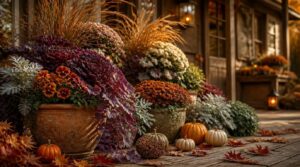
Fall containers can do so much more than just hold a few tired mums. With the right plant combos and a little creativity, your porch or patio can look stunning well into November. Here are five ideas to get you started.
If you’re not sure where to begin, this guide to best fall flowers for containers walks you through some standout choices that hold up beautifully as the season cools.
Harvest-themed Porch Pots
Nothing sets a fall porch apart like a harvest-themed container built to stop people mid-step. Start with a mounded centerpiece — tall ornamental kale or an ornamental grass works beautifully.
Tuck in orange mums, ornamental peppers, and mini pumpkins around the base. Add trailing ivy over the rim, then set everything in a weathered rustic basket for that perfect farmstand look.
Consider use hay bales for added height and texture.
Cool-season Edible Planters
Porch pots looking great? Now put them to work.
Cool-season edible planters turn your fall containers into a real harvest zone. Kale, spinach, and leaf lettuce all thrive in crisp autumn air. Spinach even sweetens after a light frost.
Use 12-inch deep pots, water every morning, and you’ll be snipping fresh greens well into early winter.
Pollinator-friendly Autumn Containers
Your edible planters are feeding you — now make them feed the bees too.
A pollinator-friendly autumn container is simpler than you’d think. Tuck in fall-blooming asters or colorful pansies alongside your greens. Add sedum or echinacea for late-season nectar. Layer glossy foliage underneath to create microhabitat for small insects. Set a bee watering station nearby, and you’re done.
Evergreen Focal-point Displays
Want something that looks stunning in October and January? That’s where evergreen focal-point displays shine.
Pair a slender dwarf conifer with broadleaf hollies for year-round structural anchors. Contrast needle-like textures against glossy foliage for visual depth.
Add evergreen silhouette lighting at the base, and your container becomes a showstopper long after other plants fade.
Mini Patio Vegetable Gardens
Even a tiny balcony can feed you this fall. Stack tiered planting levels to fit root crops below and greens above:
- Cherry tomatoes in 12-inch pots
- Baby kale and spinach for quick 40-day harvests
- Radishes ready in just 25 days
Add a vertical trellis for climbers, use self-watering pots, and tuck in mini pumpkins for edible charm.
Choose Hardy Fall Container Plants
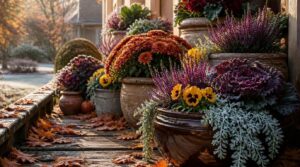
Not every plant can handle the mood swings of fall weather, but the right picks will thrive right through to frost. The good news is you’ve got more options than you might think. Here are the hardiest fall container plants worth your time and porch space.
Mums, Pansies, and Violas
Mums, pansies, and violas are the holy trinity of fall containers. Mums anchor the display with dense, rounded blooms on strong upright stems — perfect focal points in warm oranges, burgundy, or gold. Deadhead regularly to extend their season right up to frost.
For even more variety, check out fall garden seed starting tips to grow unique mum and pansy combinations from scratch.
Tuck frost-tolerant pansies around them as fillers, then let fragrant violas spill over edges for layered, continuous color.
Kale, Cabbage, and Spinach
Kale, cabbage, and spinach pull double duty — they look beautiful and feed you. Cool-season crops like these actually sweeten after a light frost.
Spinach loves partial shade, while kale and cabbage thrive with consistent moisture.
Watch for aphids and rotate crops to reduce pest pressure. Your fall container becomes a working kitchen garden.
Ornamental Grasses for Height
Ornamental grasses are the unsung heroes of fall container design. They add vertical height and movement that no flowering plant can quite match.
Here are five standouts to try:
- Karl Foerster reaches 4–6 feet and stays upright through frost
- Panicum virgatum brings burgundy-tinged foliage and sturdy clumps
- Pennisetum offers soft, feathery plumes perfect for smaller pots
- Variegated Miscanthus reflects light beautifully with cream-striped blades
- Muhlenbergia stays compact yet dramatic in tight spaces
Place taller grasses toward the back. Use heavy containers to prevent tipping—top-heavy grasses need a stable base. As temperatures drop, their winter seed heads catch the breeze, keeping your display lively long after blooms fade.
Dwarf Conifers for Structure
Dwarf conifers are the quiet anchors of fall container design. They deliver winter silhouette stability and cold hardiness while everything else fades.
| Conifer | Container Benefit |
|---|---|
| ‘Whipcord’ Cedar | Weeping needle texture; frost-tough |
| Ilex Sky Pencil | Slim column; year-round focal point |
| Blue Star Juniper | Dense blue needles; slow growth |
| Dwarf Alberta Spruce | Pyramid shape; zones 3–7 |
Slow growth means less replanting—ideal for busy container gardeners.
Trailing Vines and Spillers
Think of trailing vines as the finishing stroke on a fall container painting. Sweet potato vines, trailing ivy, and creeping Jenny spill beautifully over pot edges, softening hard lines.
Pinch stems back every two to three weeks to keep growth full, not leggy.
Their burgundy and copper tones echo the season perfectly.
Design Eye-Catching Autumn Planters
Designing a fall planter is really about making a few smart choices work together. The right combination of plants, colors, and accents can turn a plain pot into something people actually stop to look at. Here are the key design moves that make autumn containers truly stand out.
Thrillers, Fillers, and Spillers
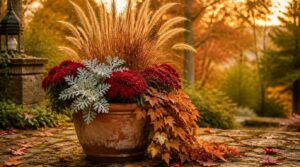
Every great fall container tells a story — and the thriller–filler–spiller trio is your plot structure.
Your visual anchor placement matters most: set one upright thriller, like ornamental grass, slightly off-center for depth. Pack bushy fillers around it at half its height.
Then let a trailing spiller tumble over the edge, softening everything beautifully.
Burgundy, Orange, and Gold
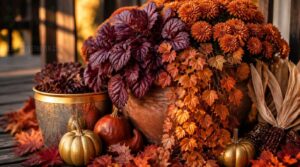
Once your thriller–filler–spiller structure is set, color does the heavy lifting. Go for burgundy, orange, and gold — autumn’s power trio.
Pair deep burgundy heuchera with bright orange mums for instant visual depth. Add metallic gold pot edging or a gold‑toned gourd to catch the light.
Warm autumn tones have never looked this good.
Pumpkins, Gourds, and Accents
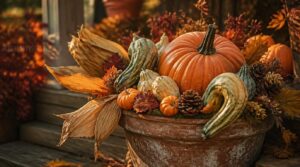
Color sets the mood, but texture and shape close the deal.
Tuck a smooth, ribbed orange pumpkin front and center as your focal point. Surround it with knobbly, necked gourds in white or green for contrast. Mini pumpkins stabilize beautifully in soil gaps. Add dried pinecones or corn husks to anchor the natural fall decorations without spending a cent.
Layered Textures and Foliage
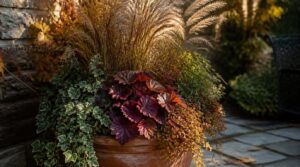
Shapes draw you in, but leaf texture contrast is what keeps the eye moving. Pair the matte softness of heuchera with glossy ivy, then let ornamental grasses rise behind both.
That vertical rhythm anchors everything. Tuck low cascading groundcovers along the edges for a natural spill.
Suddenly, your container feels layered — alive, not just assembled.
Full-sun Versus Partial Shade
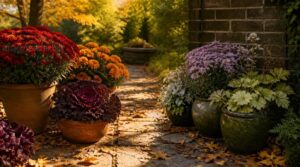
Where you set your pots changes everything.
Full sun means at least six hours of direct light daily — flowers get brighter, pigments pop, and soil dries fast, so morning watering becomes essential.
Partial shade softens things: colors go quieter, growth stretches taller.
Watch for microclimates near walls, where reflected heat can stress even sun-loving fall containers unexpectedly.
Fall Container Care Tips
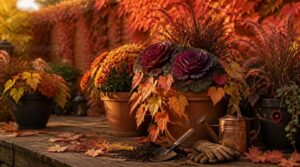
Getting your fall containers to last the season comes down to a few smart habits. The good news is none of them are complicated. Here’s what actually makes an impact.
Well-draining Potting Mix
Your potting soil is the foundation of everything. Get it wrong and even the toughest fall plants will struggle.
Aim for one-third compost, one-third perlite or pumice, and one-third coco coir. That blend nails the moisture retention balance while keeping drainage fast — water should clear the pot within 5–10 minutes.
Always choose sterile, certified mixes to keep disease out of your fall containers.
Slow-release Fall Fertilizer
Think of slow-release fertilizer as a drip coffee machine — steady, controlled, no sudden rush. A balanced 10-10-10 formula at planting time is all your fall containers need.
Polymer coatings deliver nutrients gradually over 6–12 weeks, preventing nitrogen leaching and fertilizer burn. Higher potassium reinforces cold hardiness, keeping roots strong as temperatures drop.
One application, done right, carries your plants through the season.
Morning Watering Schedule
Water in the morning — it’s one of those non-negotiable container gardening tips that pays off all season. Cool temperatures between dawn and mid-morning keep evaporation low and give leaves time to dry before nightfall, cutting your foliar disease risk greatly.
Always aim for deep root hydration. Water slowly until it drains freely within 30 minutes.
Frost Protection for Pots
A hard frost can crack your pots and kill roots overnight — but a little prep goes a long way.
- Raise pots on bricks to cut ground frost transfer
- Wrap containers in bubble wrap or burlap for insulation
- Use breathable frost cloth over plants on cold nights
- Place pots against a south-facing wall for warmth
- Keep drainage holes clear to prevent waterlogging
Overwintering Container Plants
Most container plants don’t die from cold — they die from wet, frozen roots. That’s why winter moisture management matters most.
Container plants rarely freeze to death — they drown in waterlogged, frozen roots
Move pots into an unheated garage or cold frame, keeping temperatures between 32 and 45°F. Water only when the top inch feels dry. Group containers together to create a warmer microclimate, and wrap them in burlap to lock in just enough heat.
Top 3 Fall Garden Items
A few simple additions can take your fall containers from good to great. These three items support pollinators, add wildflower color, and work beautifully alongside everything you’ve already planted. Here’s what’s worth picking up this season.
1. Bee Watering Station Feeder Set
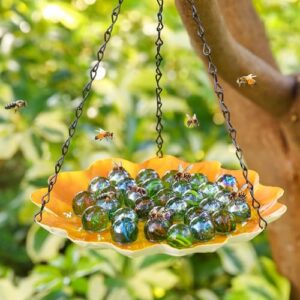
Every pollinator garden needs a reliable water source, and this bee watering station delivers exactly that. The flower-shaped iron feeder comes with 30 glass marbles that give bees and butterflies safe footing while they drink.
Just keep the water level below the marble tops — overfilling can drown them.
It hangs easily from any hook or railing, doubles as cheerful yellow décor, and weighs almost nothing.
| Best For | Gardeners and nature lovers who want to attract bees, butterflies, and other pollinators while adding a pop of color to their outdoor space. |
|---|---|
| Pollinator Type | Bees & butterflies |
| Setup Method | Hang on hook |
| Maintenance Level | High – frequent refills |
| Eco-Friendly | Natural materials |
| Outdoor Placement | Hooks, rails, fences |
| Product Form | Iron feeder |
| Additional Features |
|
- The 30 glass marbles give insects safe footing so they can drink without any risk of slipping
- Lightweight and easy to hang anywhere — hooks, railings, fences, no fuss
- Doubles as cute yellow garden décor, so it’s pulling double duty all season long
- Shallow bowl means you’ll probably be refilling it pretty often, especially on hot days
- Overfilling is a real risk — water has to stay below the marble tops or insects can drown
- Marbles need to be evenly spread out or the whole thing can tilt and lean
2. Monarch Butterfly Wildflower Seed Mix
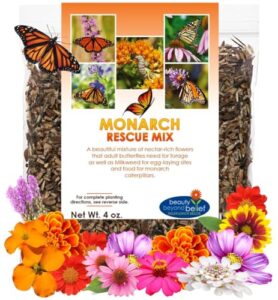
If you loved setting up that bee watering station, this next pick keeps the pollinator magic going. The Beauty Beyond Belief Monarch Wildflower Seed Mix is a 4.2 oz blend of open-pollinated, non-GMO annuals and perennials — no complicated setup required. Just scatter, lightly cover with soil, and water consistently.
One heads-up: it doesn’t include milkweed, so it attracts adult monarchs but won’t support caterpillars. Still, for fall nectar color? It genuinely delivers.
| Best For | Gardeners and nature lovers who want to support monarch butterflies and local pollinators with minimal effort — great as a gift or for community planting events too. |
|---|---|
| Pollinator Type | Monarchs & butterflies |
| Setup Method | Scatter & water |
| Maintenance Level | Moderate – consistent watering |
| Eco-Friendly | Non-GMO blend |
| Outdoor Placement | Beds & containers |
| Product Form | 4.2 oz seed mix |
| Additional Features |
|
- 100% pure, non-GMO seed blend of annuals and perennials — no sketchy additives
- Super easy to plant: just scatter, cover lightly, and water
- Brings real nectar color that draws in adult monarchs and other pollinators
- No milkweed in the mix, so it won’t support monarch caterpillars — adults only
- Seed viability can drop if it’s close to the expiration date
- Needs consistent moisture to thrive — dry spells may mean extra watering on your end
3. Wildflower Seeds Garden Mix Packet
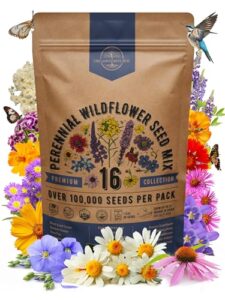
Want to round out your fall container setup? The Wildflower Seeds Garden Mix Packet is a solid closer.
Each packet holds around 100,000 non-GMO seeds across 16-plus perennial varieties, with a germination rate above 90%.
Scatter them in containers, keep the soil lightly moist, and let cool temperatures do the work.
They attract bees, butterflies, and birds well into autumn.
The resealable packet stays viable for up to 3 years — no waste, just options.
| Best For | Gardeners who want a low-effort way to add color, attract pollinators, and keep their outdoor or container gardens going season after season. |
|---|---|
| Pollinator Type | Bees, butterflies & birds |
| Setup Method | Scatter & water |
| Maintenance Level | Low-moderate watering |
| Eco-Friendly | Non-GMO, heirloom |
| Outdoor Placement | Beds, borders & containers |
| Product Form | 4 oz seed packet |
| Additional Features |
|
- Huge value — roughly 100,000 seeds across 16 perennial varieties in one resealable packet
- Non-GMO, heirloom seeds with a 90% germination rate, so most of what you plant actually grows
- Stays viable for up to 3 years, meaning you can use what you need and save the rest
- Bloom times vary a lot by species — some flowers can take weeks or even months to show up
- Results depend heavily on your climate, soil, and sunlight, so extreme conditions can hurt performance
- A handful of users have had germination issues, which may come down to planting technique or how the seeds were stored
Frequently Asked Questions (FAQs)
What can you plant in a fall container garden?
Fall containers are like a buffet of possibilities. You can grow hardy mums, pansies, kale, spinach, ornamental grasses, and dwarf conifers — even edibles like radishes and garlic thrive beautifully in autumn pots.
What are some ideas for a fall container garden?
Think harvest porch pots, cool-season edible planters, evergreen focal displays, or pollinator-friendly setups. Each style suits a different vibe — and all thrive when the air turns crisp.
What can I put in a fall container?
You can mix mums, pansies, and ornamental kale for color, add dwarf conifers for structure, and tuck in spinach or herbs for an edible twist. Keep drainage solid and you’re set.
Should you plant a container garden in the fall?
Absolutely — fall is prime time to plant containers. Cooler temps reduce stress on plants, and hardy picks like mums, kale, and pansies thrive beautifully right through the first frost.
What is a good fall container thriller?
Purple Fountain Grass is your go-to thriller. It shoots up with dramatic, feathery plumes and deep burgundy blades that scream autumn. Bold, tall, and eye-catching — it anchors any container instantly.
What colors go well with a fall container garden?
Fall colors shine brightest when you pair warm with cool tones. Deep burgundy foliage against bright orange pansies is a classic. Add golden coreopsis to lift the whole arrangement.
What to plant in containers for fall?
Plant kale, pansies, and mums — they love cool temps and look stunning together. Add spinach or lettuce for edible picks. Toss in ornamental grasses for height and texture.
What to put in pots for autumn?
Think of your pots as a mini seasonal stage. Go for rust mums, dark violas, kale, ornamental gourds, and trailing ivy to bring bold autumn color and texture right to your door.
What is the most common mistake made with container plants?
The most common mistake? No drainage holes. Roots sitting in waterlogged soil suffocate fast, and the plant wilts even when the soil feels wet. Always check your pot’s bottom before planting.
What are the three rules for planters?
Every great planter follows three simple rules: thriller, filler, and spiller. The thriller stands tall and grabs attention. Fillers add fullness around it. Spillers trail over the edge to finish the look.
Conclusion
Like a slow-burning campfire that only gets better as the night grows cool, your containers can reach their peak just as summer gardens fade away.
Fall gardening in containers ideas give you full creative control over color, texture, and fresh harvest—even in the smallest spaces.
Choose bold mums, frost-kissed kale, or trailing vines.
Protect your pots before hard freezes hit.
Then step back and let autumn do what it does best: make everything richer.
- https://www.blackgirlsgardeningincontainers.com/post/10-fall-vegetables-to-grow-in-containers
- https://shiplapandshells.com/9-fall-plants-perfect-for-container-gardens
- https://www.provenwinners.com/learn/container-gardening/container-gardening-fall
- https://www.almanac.com/best-vegetables-containers-late-summer-and-fall
- https://www.gardeningknowhow.com/special/containers/growing-potted-veggies-in-autumn.htm