
This site is supported by our readers. We may earn a commission, at no cost to you, if you purchase through links.

The last tomatoes of the season taste different when you know frost is coming. There’s a quiet urgency to those final harvests—pulling warm‑weather vegetables before the cold takes them, while kale and parsnips wait patiently in the ground, unbothered.
Most gardeners treat fall cleanup as a chore to rush through, but the choices you make now shape everything that emerges in spring.
A solid fall garden cleanup checklist doesn’t just tidy things up—it builds healthier soil, crowds out weeds before they seed, and gives your perennials the best possible start.
These five steps will carry your beds through winter with confidence.
Table Of Contents
- Key Takeaways
- Start With Frost Timing
- Clear Spent Garden Plants
- Prepare Beds for Winter
- Protect Perennials and Bulbs
- Winterize Tools and Equipment
- Frequently Asked Questions (FAQs)
- When should I start my fall garden cleanup?
- What gardening should be done in the fall?
- How do you clean up vegetable gardens in the fall?
- When should I do my fall cleanup?
- How to do a fall yard cleanup?
- How to clean up a vegetable garden at the end of season?
- What should I do before a fall cleanup?
- What to do during Fall Garden cleanup?
- What is a fall garden checklist?
- How do you clean a fall garden?
- Conclusion
Key Takeaways
- Knowing your first frost date and working backward two weeks gives you a realistic planning window for every fall garden task.
- Clearing spent plants, pulling weeds, and bagging diseased foliage now prevent pests and pathogens from quietly overwintering in your beds.
- Adding compost, planting cover crops, and mulching with shredded leaves before the ground freezes give your soil a head start on spring.
- Cleaning, oiling, and properly storing your tools and equipment in fall mean you won’t waste spring’s best planting days dealing with rust and repairs.
Start With Frost Timing
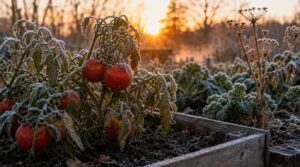
Frost timing is the backbone of every fall garden task you’ll tackle. Get it wrong, and you’re either scrambling to save tomatoes in the dark or jumping the gun on cleanup before plants are done. Here’s what to watch as the season shifts.
Knowing your first frost date is just the start—fall gardening in raised beds gives you a real edge when temperatures start dropping fast.
Check First Frost Date
Your frost date forecast is the single most useful tool you have heading into fall. For Falkenstein, Saxony, the regional frost window usually falls between late October and early November. Pull that date up from your local meteorological agency and mark it on your calendar — then work backward two weeks. That buffer is your real planning anchor.
The most German frost dates fall between November 11 and 20.
Harvest Tender Vegetables
Once your frost date is locked in, it’s time to harvest any remaining warm-weather vegetables before the first killing frost takes them overnight.
- Pick tomatoes at full color with slight softness
- Harvest cucumbers and peppers while skin stays firm
- Do morning harvest timing — early hours preserve flavor
- Use gentle picking techniques to avoid bruising
- move tender container plants back indoors promptly
Leave Cold-Hardy Crops
Not everything in the garden needs to come in before the cold hits. Some crops actually thrive once temperatures drop.
Kale, spinach, and mache handle hard frosts well — kale can survive down to -15°C with snow cover.
Leave root crops like carrots and parsnips in the ground too. They sweeten after cold exposure and store beautifully right where they grow.
Watch Night Temperatures
Knowing your cold-hardy crops can handle a freeze buys you time — but that doesn’t mean you stop watching the thermometer.
Night temperatures drop fast in fall, and the coldest point hits just before sunrise, not at midnight. A site reading 40°F at 11 PM can still dip below freezing by dawn on a clear, calm night.
Plan Tasks by Zone
Your garden isn’t one big zone — it’s several small ones. A south-facing bed warms faster and needs earlier cleanup than a shaded north corner.
Map your micro zones before diving in, and assign tasks by timing.
Cold-sensitive annuals go first; cold-hardy perennials can wait. That simple zone-specific timing saves wasted effort and keeps your fall garden checklist realistic.
Clear Spent Garden Plants
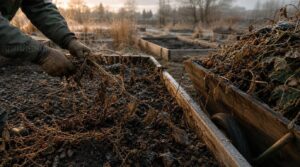
Once the frost has done its work, it’s time to clear the slate. A thorough cleanout now prevents pests and disease from overwintering in your beds. Here’s exactly what to tackle before the ground freezes.
While you’re clearing out the beds, it’s also the perfect moment to amend your soil for fall so it’s ready to hit the ground running come spring.
Remove Dead Annuals
Once frost blackens your annuals, don’t wait. Pull them within 5 to 7 days — roots and all. Here’s how to do it cleanly:
- Wear gloves and use pruners to cut stems at the base first
- Loosen soil by watering lightly the day before
- Extract the entire root to stop spring regrowth
- Rake the bed smooth after clearing all debris
Bag any diseased material separately — never compost it. Healthy annuals go straight to the compost bin. This simple garden debris removal step leaves your beds clean and winter-ready.
Pull Weeds Before Seeding
Weeds left in the ground don’t rest — they quietly rebuild root systems all winter.
Pull weeds before seeding on a dry, calm day to avoid compacting the soil. Use a garden fork to lift deep-rooted perennial weeds fully. Once cleared, rake the bed smooth to prepare a clean seedbed.
A light mulch layer right after helps suppress any fresh weed flush.
Compost Healthy Debris
Think of your compost pile as a slow cooker — toss in healthy debris, and it quietly transforms into rich, finished compost over months.
- Layer green clippings with dry leaves to hit a carbon-to-nitrogen ratio of 25–30:1
- Keep moisture like a wrung-out sponge — 40 to 60 percent for active microbes
- Turn every 3–7 days to sustain thermophilic temperatures between 54–65°C
- A varied feedstock boosts microbial diversity and nutrient cycling
- Finished compost improves water retention by 20–30 percent in loamy beds
Bag Diseased Foliage
Not everything in your fall cleanup belongs in the compost pile. Diseased foliage — anything showing leaf spots, rust pustules, or powdery growth — needs a different fate entirely. Toss it in the trash, not in your pile.
Double bagging locks pathogens in securely. Label each bag with the date and plant type, and check your local rules for garden waste disposal.
Save Open-Pollinated Seeds
Before tossing spent plants, check whether you’re holding next year’s garden in your hands. Open-pollinated varieties breed true — skip hybrids entirely. Pick seeds from your healthiest, most flavorful plants at full maturity: dry bean pods rattling inside, tomatoes fully softened.
- Ferment tomato seeds briefly, rinse, then dry on a screen
- Label each batch with variety, year, and isolation method
- Store in airtight containers in a cool, dark place around 35–40°F
That’s your seed bank creation sorted.
Prepare Beds for Winter
Once the beds are cleared, it’s time to give your soil a little TLC before the cold sets in. A few simple steps now can mean healthier, more productive beds come spring. Here’s what to do to get your garden ground winter-ready.
Add Compost Top Dressing
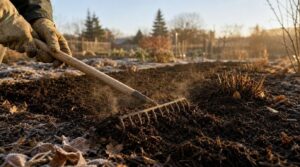
Spread a ½- to 1-inch layer of compost evenly across your cleared beds before the ground freezes. Use a lightweight rake to level it around plant crowns — never pile it against stems.
This top dressing slowly releases nitrogen, phosphorus, and potassium through fall and into spring. It also improves soil structure, feeds soil microbes, and reduces bare spots where weeds like to sneak in.
Test Garden Soil
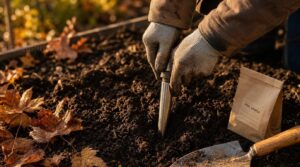
Once your compost is down, fall is the perfect time to run a soil test. Compost adds nutrients, but you won’t know what’s actually missing until you test.
Send a sample to your local Cooperative Extension office. They’ll check soil pH, nutrient levels, and organic matter — then tell you exactly what amendments to add before spring.
Plant Fall Cover Crops
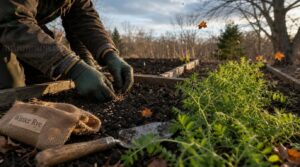
Now that your soil test is in, don’t leave those beds sitting bare all winter. Plant fall cover crops instead — they protect and feed your soil while you’re nowhere near the garden.
Winter rye and hairy vetch are solid choices. Rye establishes within 2–3 weeks, blocking weeds and holding soil in place. Vetch fixes nitrogen, potentially contributing up to 80 pounds per acre by spring.
Winter rye blocks weeds in weeks while vetch quietly banks nitrogen for spring
Sow 4–6 weeks before hard frost so plants root well before the ground freezes. Come spring, mow or till them under as green manure, and they’ll release nutrients right as your garden needs them most.
Mulch With Shredded Leaves
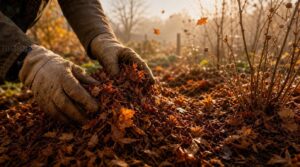
Those cover crops are doing the work underground — now it’s time to tuck everything else in, too.
Rake, shred, and mulch with leaves you’ve gathered from the yard.
A 2 to 3 inch layer of shredded leaves holds moisture, blocks weeds, and feeds soil as it breaks down.
Maple and birch leaves work best — they shred cleanly and won’t mat.
Add Aged Organic Matter
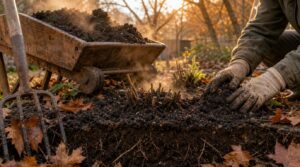
Think of aged organic matter as a long-term investment in your soil — not a quick fix, but a foundation that pays out for years.
- Organic matter incorporation improves soil structure and prevents compaction from winter rain.
- Nutrient release benefits include slow nitrogen delivery across multiple seasons.
- Microbial habitat enhancement builds disease-suppressing communities underground.
- Soil carbon boost protects against rapid carbon loss.
- Humus application timing matters — apply 2–3 inches before the ground freezes.
Protect Perennials and Bulbs
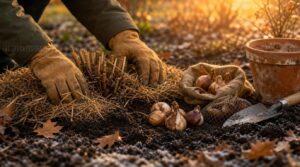
Your perennials and bulbs need a little prep before winter sets in — skip this step and you’ll be replanting come spring. A few targeted moves now will protect your root zones, keep your bulbs safe from freeze-thaw damage, and set everything up for a strong comeback. Here’s what to do before the cold takes hold.
Divide Crowded Perennials
Fall is the perfect window to divide your perennials before the ground freezes. Crowded roots compete for nutrients and weaken blooms over time.
Target dense clumpers like hostas, daylilies, and coneflowers. Each division needs 3–5 healthy shoots and good roots.
Sanitize your spade between cuts, then water thoroughly after replanting. Space new plants to their mature width so they can settle in without crowding.
Cut Back Dead Foliage
Trimming faded foliage is one of those fall tasks that pays double — it tidies the garden now and protects plants through winter. Once frost blackens the leaves, it’s time to act.
Here’s how to cut back dead foliage the right way:
- Cut at a slight angle, about 3–4 inches above the soil, so water runs off cleanly
- Sanitize tools with alcohol between plants to stop pathogens from spreading
- Bag diseased foliage — never compost it — to break the disease cycle
- Clear crown debris to improve airflow and reduce fungal risk heading into dormancy
Sharp shears make all the difference. Ragged cuts invite rot, so keep blades clean and precise.
Mulch Root Zones
Once the foliage is cut back, mulching is your next move — and it’s what separates plants that thrive in spring from ones that barely survive.
Spread 2–4 inches of shredded leaves right over the root zone. That depth hits the sweet spot: enough to insulate without starving roots of oxygen.
Plant Spring Bulbs
Fall is the perfect window to plant spring-flowering bulbs — the soil is still workable, but cool enough to prevent premature sprouting. Tuck tulips and daffodils in at three times their height, roughly 6–8 inches deep.
Cluster 3–5 bulbs per group for natural-looking drifts. Make sure your soil drains well and sits at a pH of 6.0–7.0.
Shield Sensitive Plants
Some plants simply can’t tough out a hard freeze on their own.
Position a low windbreak 2–3 feet from foliage to cut desiccation without blocking airflow.
When temps drop below 32°F, frost cloth application keeps tissue safe while letting light through.
A cloche setup can raise your microclimate 3–5°F during sudden cold snaps — small effort, big payoff.
Winterize Tools and Equipment
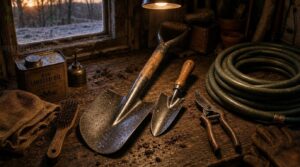
Your tools work hard all season, and they deserve a proper sendoff before winter. A little time spent now means you won’t be starting spring with rusty shovels or cracked hoses. Here’s exactly what to tackle before you lock up the shed.
Clean and Oil Tools
Neglected tools rust fast once cold, damp weather sets in. Before storing anything, wipe down each blade, tine, and hoe head with a dry cloth, then remove rust using fine steel wool or a short white-vinegar soak. Once dry, apply 3-IN-ONE Multi-Purpose Oil lightly over all bare metal. A thin film beats a heavy coat every time.
Wooden grips need a different touch. Don’t oil them — use linseed oil or a wood conditioner instead to keep them from drying out and cracking. Store tools dry, ideally hung in a shed where air circulates freely. Toss a silica gel pack in your toolbox to fight winter humidity.
Store Stakes and Trellises
Once your tools are clean and oiled, turn your attention to the framework holding everything else up. Gather stakes, trellises, and tomato cages before the ground freezes.
Scrub off soil and debris, then spray metal or wooden pieces with a 2:1 water-to-bleach solution to kill off disease pathogens. Let everything dry fully before bundling by type and storing upright in a dry shed.
Drain Hoses and Irrigation
With stakes and trellises sorted, shift your focus to water lines. Close the main irrigation valve first, then let gravity do the work — tilt hoses toward their lowest point and let water run out completely. Follow up with an air blower to clear stubborn residual moisture from drip lines and emitters. Flush lines with clean water beforehand to remove sediment buildup.
Coil hoses loosely and store them in a frost-free, shaded spot — UV exposure degrades rubber and vinyl over time. If your system has auto-drain valves, check that they’re functioning before the first hard freeze. Cap both hose ends to keep debris out all winter.
Empty Small-Engine Fuel
Water lines are done — now give the same attention to your mower and string trimmer. Drain fuel completely if either machine will sit unused for more than 30 days. Stale gasoline leaves varnish inside carburetors that’s genuinely frustrating to clean come spring.
- Disconnect the spark plug wire before draining anything
- Capture old fuel in a fuel-safe container
- Dispose of it following local recycling regulations
Clean Containers Before Storage
Storing containers the right way takes just a few minutes and saves you a moldy mess next spring.
Rinse with hot water first, then scrub every interior surface — corners included — using non-abrasive scrubbing and soapy water. Rinse thoroughly, then air dry completely before stacking.
Store with lids off to keep airflow moving and odors out.
Frequently Asked Questions (FAQs)
When should I start my fall garden cleanup?
Start your fall garden cleanup when nighttime temperatures first dip toward freezing. That’s your signal. Check your first frost date locally, then work backward to schedule tasks before winter sets in.
What gardening should be done in the fall?
Fall is nature’s quiet signal — a time to reset before winter locks the ground. Soil amendment, mulch, cover crops, and frost protection keep beds thriving. Your fall garden cleanup sets next season up for success.
How do you clean up vegetable gardens in the fall?
To clean up your vegetable garden in fall, harvest any remaining warm-weather vegetables before frost hits, pull spent plants, and remove weeds. Then add a fresh thick layer of mulch to protect the soil.
When should I do my fall cleanup?
Timing is everything. When nighttime temps drop below 40°F, that’s your cue to start. Most gardeners in temperate zones have a two-week harvest window before the first frost hits.
How to do a fall yard cleanup?
A proper fall yard cleanup works through five clear areas: frost timing, spent plants, bed prep, perennial care, and tool storage. Move through each one, and your garden will be ready to rest well.
How to clean up a vegetable garden at the end of season?
Once that last tomato’s off the vine, it’s time to reset. Harvest remaining warm-weather vegetables, clear detritus, amend soil, plant cover crops, and save seeds — your beds will thank you come spring.
What should I do before a fall cleanup?
Before anything else, walk your garden and take notes. Check plant health, soil moisture, and flag diseased foliage. Gather your protective covers and sharpen your tools. That quick assessment sets everything else up for success.
What to do during Fall Garden cleanup?
Fall garden cleanup means tackling what’s still alive, what’s dying, and what needs protecting — all before hard frost locks in. Clear debris, amend soil, and shield vulnerable plants now.
What is a fall garden checklist?
Think of it as your seasonal game plan — a structured list of fall gardening tasks that guides you through cleanup, soil prep, plant protection, and tool storage before winter arrives.
How do you clean a fall garden?
Cleaning a fall garden means removing dead annuals, clearing debris from beds, and disposing of diseased foliage properly. Rake, shred, and mulch leaves where you can. It’s simple, methodical work that sets next season up right.
Conclusion
Seasons shift, and so does your garden’s story. Every step in this fall garden cleanup checklist moves you closer to spring beds that practically burst with potential.
You’ve cleared, composted, mulched, and protected — quietly setting forces in motion beneath frozen ground. Come March, when the first shoots push through softened soil, you’ll recognize them for what they truly are: proof that what you do in fall determines what flourishes in spring.
- https://marrazzosgardencenter.com/2025/10/06/putting-the-garden-to-bed-fall-cleanup-checklist
- https://www.provenwinners.com/learn/fall/10-fall-gardening-tasks-make-your-garden-sing-next-spring
- https://www.almanac.com/10-fall-cleanup-tips-better-spring-garden
- https://gardenbetty.com/a-fall-garden-checklist-for-maximizing-the-season-and-winterizing-your-yard
- https://gardenforwildlife.com/blogs/learning-center/fall-garden-task-checklist