This site is supported by our readers. We may earn a commission, at no cost to you, if you purchase through links.
Most gardeners learn about sun damage the hard way—a crispy tomato here, a bleached hosta there, and the slow realization that summer sunlight isn’t always the gift it seems. Leaf temperatures can run 10 to 20 degrees hotter than the surrounding air on a cloudless July afternoon, quietly shutting down photosynthesis before you notice anything wrong.
Those translucent patches on your pepper leaves and the sunken white spots on ripening fruit aren’t random bad luck—they’re your plants signaling heat they can’t handle alone.
The good news is that a few smart choices around shading, watering, and plant selection can turn a brutal summer into a genuinely productive one.
Table Of Contents
- Key Takeaways
- Why Plants Need Sun Protection in Summer
- Best Methods for Shading Garden Plants
- Heat-Tolerant Plants That Thrive in Full Sun
- Essential Summer Plant Care Strategies
- Top Sun Protection Products for Garden Plants
- Frequently Asked Questions (FAQs)
- What plants can handle full sun and heat?
- How to create shade in a full sun garden?
- What is the 3-hour gardening rule?
- How do I protect my garden from extreme heat?
- How to shade your vegetable garden?
- What garden plants need the most sun?
- Are there any low-maintenance direct sunlight plants?
- When should I start protecting seedlings from sun?
- How do I know if my plants need shade?
- What plants recover quickly from sun damage?
- Conclusion
Key Takeaways
- Leaf temperatures can run 10–20°F hotter than the surrounding air, silently shutting down photosynthesis before you notice any visible damage.
- A shade cloth mounted 12–18 inches above your plants is one of the simplest, most effective ways to cut heat stress without starving your garden of light.
- Deep watering every 3–5 days to a depth of 12–18 inches, paired with a 2–4 inch mulch layer, can keep soil moisture 25–50% higher than bare ground on brutal summer days.
- Heat-tolerant plants like zinnias, sedum, and lavender thrive in full sun with minimal fuss, making smart plant selection your lowest-effort defense against summer heat damage.
Why Plants Need Sun Protection in Summer

Summer heat does more than make you sweat — it can quietly stress, scorch, and slow down even your toughest plants. Knowing the warning signs and understanding how sunlight affects your garden gives you the upper hand before real damage sets in.
Spotting trouble early is half the battle — this guide on protecting your summer garden from heat stress walks you through the most vulnerable plants and what to watch for.
Here’s what every gardener should watch for when temperatures start climbing.
Understanding Sunscald and Sunburn on Leaves and Fruit
When intense sun hits unprepared plants, the Leaf Sunscald Mechanism kicks in quickly — cell membranes break down, leaving pale, translucent patches that turn brown and papery.
Fruit Sunburn Symptoms follow a similar path: white spots that sink and corrugate as skin cells die.
Young leaves are especially vulnerable since their cuticles aren’t fully hardened. Shade cloth and row covers are your first line of defense.
Effects of High UV Index on Plant Health
UV rays don’t just scorch surfaces — they trigger DNA damage inside plant cells, disrupting Photosystem II and slowing photosynthesis fundamentally.
UV rays penetrate beyond the surface, damaging plant DNA and quietly dismantling photosynthesis from within
Your plants respond by ramping up Flavonoid Synthesis for protection, but that costs energy meant for growth.
Stomatal Closure and Hormonal Imbalance follow, leaving plants struggling even in full sun.
A simple shade cloth helps more than you’d think.
Heat Stress Indicators to Watch For
Heat stress doesn’t always announce itself loudly. Watch for Leaf Wilting that lingers even after sunset — that’s your first red flag. Stomatal Closure follows quickly, trapping heat inside leaf tissue.
- Chlorosis Signs: yellowing between veins signals nutrient and heat stress combined
- Leaf Temperature: leaves feel warmer than the surrounding air
- Fruit Sunburn: corky brown patches on sun-facing sides
- Sunburned foliage: crispy brown edges and scorched patches
- Leaf drop: sudden shedding means the plant can’t take up water fast enough
Balancing Sunlight Needs and Protection
Once you spot those stress signs, the fix isn’t blocking the sun entirely — your plants still need it. Morning Light Timing matters here: early sun is gentler, cooler by up to 15°F than the peak afternoon.
Pair that with Dappled Light Management using shade cloth or row covers for midday relief.
Sun shade tolerant plants, Leaf Wax Adaptation, Soil Microclimate Control through mulching for moisture retention, and Adjustable Shade Scheduling complete the balance.
Best Methods for Shading Garden Plants
Shading your garden Shading your garden doesn’t have to mean building anything complicated or expensive. A few smart options can drop soil and leaf temperatures dramatically, giving your plants real relief during the hottest weeks.
Pairing shade with the right plant choices—explored in this guide to summer garden water conservation strategies—can make a surprising difference in how well your garden handles intense heat.
Here’s what works best.
Using Shade Cloth Effectively

Shade cloth is one of the simplest tools you can add to your summer toolkit.
For Density Selection, a 40–50% cloth works well for most vegetables, while 60–70% suits shade-tolerant perennials.
Prioritize Ventilation Management by mounting it 12–18 inches above foliage.
Good Shade Cloth Placement, secure Attachment Hardware, and smart Seasonal Adjustment help ease heat stress all summer.
Setting Up Hoop Houses and Greenhouse Covers
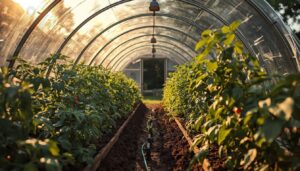
A hoop house does more than just shelter — it gives you real control over your growing environment all summer long.
- Frame Materials — Steel and aluminum resist corrosion and last 20–25 years
- Foundation Options — Ground pins or concrete footings keep structure stable
- Ventilation Automation — Automatic openers regulate temperature without daily fussing
- Cover Lifespan — Polycarbonate panels hold up 10–20 years
- Irrigation Integration — Built-in drip ports deliver precise moisture straight to roots
Utilizing Row Covers for Sun Protection

Row covers give you flexible, affordable sun protection for vegetables without a permanent structure.
Choose lightweight spunbonded polypropylene for Material Selection — it transmits 70–90% of sunlight while cutting heat stress.
Proper Installation Techniques mean securing edges and using hoops to keep fabric off foliage.
Ventilation Timing matters: lift covers during peak afternoon heat.
They also handle Pest Exclusion well, though Pollinator Management requires removal during bloom.
Medium‑weight fabric can add 7‑10 °F of warmth, providing effective frost protection.
Creating Natural Shade Barriers With Tall Plants

Nature’s own architecture can do serious work in your garden. Tall varieties like sunflowers and hollyhocks reach 6–8 feet in a single season, casting shade that cuts afternoon sun by up to 70 percent.
Staggered Row Architecture with Mixed Species Screens, spacing plants 18–24 inches apart, to build Seasonal Deciduous Barriers or Evergreen Living Screens that support summer heat mitigation and long-term heat stress management.
Heat-Tolerant Plants That Thrive in Full Sun

Not every plant needs babying through a brutal summer — some are practically built for it. If your garden gets hammered by full sun from morning to evening, the right plant choices make all the difference.
Here are the annuals, perennials, shrubs, and vines that don’t just survive the heat — they own it.
Top Sun-Loving Annuals for Summer Gardens
Some annuals are built for summer’s worst.
Zinnias, marigolds, and portulaca are true pollinator magnets, delivering colorful blooms from late spring right through frost.
They thrive with 6–8 hours of full sun and good soil drainage. Tips apply here — loose, well-draining beds prevent root rot fast.
Try succession planting every few weeks for nonstop color, and don’t overlook seed saving to extend your investment season after season.
Best Perennials for Hot, Sunny Climates
Perennials are the backbone of any sunny garden — plant them once and they reward you for years. These Drought-Resistant Perennials handle heat without drama, making them ideal for low-maintenance, drought tolerant landscaping.
- Coneflowers and black-eyed Susans: Pollinator-Attracting Perennials with Long-Bloom seasons through frost
- Lavender: fragrant, heat tolerant foliage in sandy, well-drained soil
- Sedum: succulent leaves, summer durability, minimal watering needed
- Colorful Foliage Perennials thriving as perennial plants for full sun in sunny gardens
Drought-Resistant Shrubs and Groundcovers for Sunny Spots
Shrubs and groundcovers take low-maintenance gardening to another level. Choices like lavender, rosemary, and sedum bring deep root systems that pull moisture from 2–6 feet down, while waxy leaf adaptations cut water loss on scorching days.
Salt-tolerant shrubs like oleander even work near coastal spots.
For xeriscape design and drought-tolerant landscaping, these plants practically take care of themselves.
Vining and Climbing Plants for Living Sun Screens
Vines take living screens to the next level. Fast-growing climbers like morning glory and scarlet runner bean reach 6–8 feet in one season with full sun and consistent moisture. For low maintenance gardens, pair pest-resistant vines such as euonymus with evergreen screen vines for year-round coverage.
- Wisteria filters up to 60% of harsh sunlight
- Heat tolerant trumpet vine thrives with minimal watering once established
- Smart trellis design tips increase coverage across uneven walls
Essential Summer Plant Care Strategies

Knowing which plants can handle the heat is only half the battle — how you care for them through summer makes all the difference. A few smart habits can keep even the most sun-stressed garden looking strong from June through September.
Here’s what actually works.
Deep Watering Techniques to Combat Heat Stress
When summer temps spike, deep watering becomes your plants’ best defense. Aim to soak the root zone 12 to 18 inches down every 3 to 5 days — that’s where root zone cooling actually happens.
Soaker hose placement along bed edges delivers slow, steady moisture without runoff. Pair smart irrigation scheduling with soil moisture monitoring to avoid both drought stress and overwatering.
Mulching for Soil Cooling and Moisture Retention
Once your watering routine is dialed in, mulch does the heavy lifting between sessions. A 2–4 inch layer of shredded bark or wood chips — your best Mulch Material Selection for hot climates — keeps soil moisture retention 25–50% higher than bare ground.
Light-colored mulches reflect heat, while darker ones warm soil.
Always pre-irrigate before applying, and keep mulch away from plant crowns.
Relocating and Grouping Potted Plants for Protection
Think of your container plants like a neighborhood — good Pot Placement Strategies and Microclimate Zoning make everyone thrive.
Group by Watering Cohort Grouping, keeping heat‑tolerant varieties on outer edges and sensitive ones sheltered inside.
Use a Windbreak Arrangement near hedges, add shade cloth overhead, and follow a simple Shade Rotation Schedule, moving pots weekly so no single plant bakes in full sun.
Monitoring and Adjusting Sun Protection Throughout Summer
Your plants will tell you when something’s off — you just need to know what to listen for.
Use Light Meter Readings at canopy level and Soil Moisture Checks daily to stay ahead of stress.
Log temperatures with Temperature Log Tracking, adjust Daily Shade Timing to cover peak afternoon heat, and watch for Plant Stress Alerts like curling leaves or bleached foliage.
Shift shade cloth, row covers, or shade sails as sun angles change through the season.
Top Sun Protection Products for Garden Plants
Knowing which products actually work makes all the difference when summer heat turns relentless.
The market has a few standout options worth having in your corner, from UV-resistant films to portable shade sails. Here’s a closer look at each one.
UV Resistant Greenhouse Plastic Film
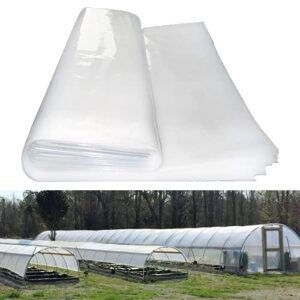
One of the most flexible options you’ll find is UV-resistant greenhouse plastic film. This 6-mil, 5-layer polyethylene sheeting lets roughly 90% of sunlight through while blocking up to 90% of harmful UV rays — so your crops get the light they need without the damage.
The anti-drip additive keeps moisture from pooling on foliage, which cuts down on disease risk.
Each 8×25-foot sheet is durable enough for grow tunnels, raised bed covers, or mini-greenhouses, with a 4-year performance guarantee backing it up.
- Lets in about 90% of sunlight, so plants get strong, consistent light for healthy growth.
- The anti-drip coating keeps moisture off leaves, which lowers the chance of disease or pest issues.
- Backed by a 4-year guarantee and UV-resistant materials, making it a solid choice for year-round use.
- At 6 mil, it’s thinner than heavy-duty alternatives and may tear under rough handling or harsh conditions.
- The film can look slightly hazy, so it’s not as crystal clear as other plastic options.
- Multi-sheet bundles come at a higher price point, which might sting a bit if you’re watching your budget.
Spectra Glass Polycarbonate Sheet
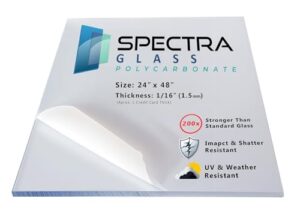
If you need something tougher than plastic film, Spectra Glass polycarbonate sheet is worth a serious look.
It’s over 200 times stronger than standard glass and 30 times tougher than regular plexiglass — yet lightweight enough to handle easily.
The double-sided UV coating keeps it from yellowing outdoors, and light passes through cleanly, making it ideal for cold frames, greenhouse panels, or protective covers.
At 47.8 × 23.8 inches and just $51.99, it’s easy to cut, drill, and shape for almost any setup.
- Incredibly tough — over 200x stronger than glass and 30x stronger than regular plexiglass, so it holds up where standard materials won’t.
- Double-sided UV coating keeps it clear outdoors long-term, no yellowing or clouding over time.
- Easy to cut, drill, and heat-form into custom shapes, making it flexible for all kinds of projects.
- Can’t be laser cut or engraved, so you’ll need a saw or drill on hand.
- Actual dimensions can vary slightly due to tolerance ranges, which matters if you need a precise fit.
- Not rated for fire-safety or structural load applications, so it won’t work everywhere glass does.
Shade Sails and Pop-Up Canopy Options
Shade sails and pop-up canopies give you flexible, fast sun protection without permanent structures. Shade sails use knitted polyethylene UV Fabric Types that block up to 95% of UV radiation while staying breathable.
Tensioning Systems with turnbuckles keep the fabric taut, while solid Anchor Point Design manages Wind Resistance Ratings up to 80–90 mph.
Pop-ups offer Quick-Setup Mechanisms — fully assembled in under five minutes.
Row Cover Weight Guide for Summer Use
Not all row covers are created equal — and picking the right weight changes everything for your plants in summer heat.
- Lightweight Covers — transmit 85%+ light, ideal for pest exclusion on leafy greens.
- Medium Weight Covers — offer 70–85% light transmission, balancing shade cloth-level protection for fruiting crops.
- Heavy Weight Covers — drop light transmission to 30–50%, shielding delicate seedlings from intense heat spikes.
Vent medium-to-heavy weight row covers on extreme days.
Frequently Asked Questions (FAQs)
What plants can handle full sun and heat?
Plenty of heat-tolerant plants love full sun.
Heat Resistant Succulents, Drought Adapted Grasses, Sun Tolerant Herbs, Fire Resistant Shrubs, Heat Optimized Vines, and heat-resistant foliage varieties all bring serious heat tolerance to sunny spots.
How to create shade in a full sun garden?
You don’t need a single structure to block the sun — strategic plant spacing, portable shade structures, shade cloth, row covers, and tall living screens all work together to build cool, partial shade exactly where your garden needs it.
What is the 3-hour gardening rule?
The 3-hour gardening rule means shading tender plants during the Solar Noon Window — roughly three hours around midday — for smart Midday Shade Timing and effective Tender Seedling Protection against peak heat stress.
How do I protect my garden from extreme heat?
Mulching for heat, reflective mulch, shade cloth, and soil moisture sensors give you real control.
Add windbreak installation, misting systems, waterwise planting, heat resistant foliage, soil amendment for heat, and smart plant orientation strategies.
How to shade your vegetable garden?
Hang a 40% shade cloth over hoops, leaving a 1–2 foot air gap above your crops.
DIY shade frames with adjustable shade systems let you shift coverage as seasonal shade timing changes daily.
What garden plants need the most sun?
Tomatoes, peppers, zinnias, and lavender are classic Sun-Intensive Crops and Bright-Exposure Flowers needing 6–8 hours of full sun daily.
Maximum Light Herbs, like basil and thyme, thrive in the same sunny border planting conditions.
Are there any low-maintenance direct sunlight plants?
Yes — drought‑tolerant annuals like zinnias, low‑maintenance succulents like sedum, sun‑loving herbs like thyme, groundcover grasses, and evergreen sun shrubs all thrive in full sun with minimal care once established.
When should I start protecting seedlings from sun?
Like a sunburn you don’t feel until evening, seedling damage sneaks up fast.
Start protecting young plants at emergence temperature cue — once daytime heat threshold hits 68°F for two consecutive days.
How do I know if my plants need shade?
Watch for leaf scorch, sunburn patches, stem heat, and soil dryness by midday. Growth slowdown signals heat stress.
Shade tolerant plants and shade cloth help manage sunlight intensity when shade tolerance is low.
What plants recover quickly from sun damage?
Succulents lead the pack for succulent rebound — their fleshy leaves rehydrate fast once water returns. Sage shows sage leaf renewal in 7–14 days.
Pelargoniums, tomatoes, and banana frond regrowth follow within a week or two.
Conclusion
As the ancient Greeks understood, a gentle balance between light and shade is important for growth. By embracing this wisdom, you can create a thriving summer garden.
Protect your plants from scorching sun with smart shading, watering, and plant selection.
With these strategies, you’ll enjoy a lush, productive oasis even on the hottest days. Your summer garden will flourish, thanks to your newfound expertise in summer garden sun protection for your plants.