
This site is supported by our readers. We may earn a commission, at no cost to you, if you purchase through links.
The window above the sink fogs up right around the time the first Honeycrisp hits the farmers’ market stand. Something about that overlap—cool glass, warm kitchen, the smell of cinnamon coming off a pan—makes autumn feel less like a season and more like a skill you get to practice.
Fall produce rewards attention. A squash picked heavy for its size, roasted at the right temperature, turns silky in a way a summer vegetable rarely achieves. A pinch of nutmeg smooths what sugar alone can’t.
These autumn harvest cooking tips are about building that kind of confidence—choosing ingredients at their peak, layering flavors with intention, and turning a week’s worth of roasted vegetables into meals that feel anything but routine.
Table Of Contents
- Key Takeaways
- Choose Peak Autumn Harvest Ingredients
- Build Cozy Fall Flavor Foundations
- Master Autumn Cooking Techniques
- Plan Harvest-Inspired Meals
- Store, Prep, and Use Leftovers
- Frequently Asked Questions (FAQs)
- What are some fall harvest foods?
- What is the most famous food in autumn?
- What to cook for dinner in autumn?
- What spices complement autumn harvest flavors best?
- How long do fresh fall vegetables stay good?
- Which cooking methods enhance seasonal produce nutrients?
- Can you substitute winter squash varieties interchangeably?
- What kitchen tools make fall prep easier?
- What spices work best with autumn vegetables?
- How long should I roast different root vegetables?
- Conclusion
Key Takeaways
- Choosing fall produce well starts with your hands — a heavy squash, a crisp stem, and tight florets tell you more than any label ever will.
- A small pinch of the right spice (nutmeg in a pumpkin sauce, cinnamon bloomed early in the pan) does more for a dish than doubling the amount of a wrong one.
- Roasting at high heat (425–450°F) on a dry, spaced-out pan is the single technique that unlocks the best of autumn vegetables — caramelized edges, deep flavor, no steaming.
- Batch-cooking roasted vegetables and grains once a week turns fall’s bounty into four days of meals with almost no extra effort.
Choose Peak Autumn Harvest Ingredients
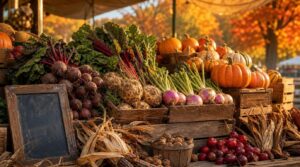
Fall is the best time to shop like you actually know what you’re doing at the farmers’ market. The key is knowing what to look for before you get there.
Brushing up on fall cool-season crops and harvest timing helps you spot peak-fresh produce the moment you walk through the gate.
Here’s what to keep your eye on this season.
Best Fall Fruits for Cooking and Baking
Fall gives you some of the table:
- Apple Variety Pairings: Honeycrisp and Braeburn hold their shape beautifully in pies and crisps at 375°F
- Pear Spice Blends: Bartlett pears become tender when roasted with cinnamon and vanilla in just 12–15 minutes
- Cranberries: Freeze them first — they keep their shape in muffins and apple cider breads
- Pomegranate Topping Hacks: Fold arils in last for jewel-bright color and fresh tartness
You can also enjoy a classic apple crisp recipe for a cozy, spiced dessert.
Selecting Squash, Pumpkins, and Root Vegetables
Beyond fruits, the right squash or root vegetable can make or break a dish. First, check the weight ratio—it should feel surprisingly heavy for its size. Press the rind gently; rind hardness matters because soft spots mean trouble.
Stem condition tells you a lot too—a dry, intact stem signals freshness. Clean root neck and consistent skin color confirm you’re choosing and storing fall produce at its peak.
Choosing Fresh Greens, Broccoli, and Brussels Sprouts
Greens, broccoli, and Brussels sprouts deserve the same careful eye you’d give squash. Leaf color should be vivid and uniform — any yellowing means it’s past its prime. When choosing and storing fall produce like these, a few quick checks go a long way:
- Stem Firmness: Snap-crisp stems signal freshness in both broccoli and sprouts
- Floret Tightness: Compact, dark-green heads mean peak flavor — loose or flowering florets don’t
- Moisture Control: Keep greens dry; store in a bag with perforations to allow airflow without wilting
- Leaf Color: Bright, unblemished leaves are your best guide for leafy greens and salads in fall
Think farm-fresh ingredient spotlight dishes like Broccoli Steaks with Spiced Tomato Jam or Skillet Chicken with Brussels Sprouts and Apples — they only shine with produce worth picking.
Cooking Apples Versus Fresh-eating Apples
Not every apple is the same. Cooking apples like Granny Smith hold their shape thanks to higher pectin content and acidity balance, giving your pies real texture retention. Fresh-eating varieties — crisp, sweet, and quick to brown — are better raw in salads.
Match your variety selection to the job, and your fall dishes will taste exactly as intended.
Using Nuts, Cranberries, and Seasonal Add-ins
Toasted walnuts, pecans, and pistachios aren’t just garnishes — they’re the backbone of your harvest season add-ins. Toss them into salads for a pistachio salad boost, or reduce cranberry juice into a cranberry glaze technique that coats roasted squash beautifully.
Fold in dried cranberries and pomegranate seeds for a cranberry pomegranate crunch, and don’t sleep on hazelnut chocolate pairings in your fall desserts.
Build Cozy Fall Flavor Foundations
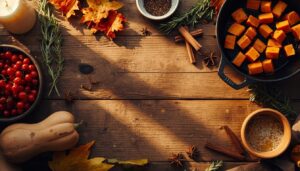
Good ingredients are only half the story — what you do with them is where the real magic starts.
Fall cooking has a flavor language all its own, built on warm spices, fresh herbs, and smart combinations that just work.
Here’s what you need to know to make every autumn dish taste like the season.
Warm Spices for Sweet and Savory Dishes
Warm spices are the heartbeat of autumn cooking. Each one pulls its weight differently.
Cinnamon, cardamom, and cloves each shine in their own way across easy autumn vegetarian recipes that let these flavors truly take center stage.
- Cinnamon Bloom — add it early so it fully opens in the pan, deepening both sweet fillings and savory braises.
- Nutmeg Creaminess — a small pinch smooths pumpkin sauces without bitterness.
- Ginger Heat and Clove Depth — ginger brightens; cloves anchor.
Together, these warm spice blends for fall cooking create Allspice Complexity in every dish.
Best Herbs for Autumn Harvest Cooking
Sage butter — made by frying fresh sage leaves until crisp — adds earthy depth to pasta, gnocchi, and roasted squash.
Thyme’s aroma finish brightens soups when stirred in last.
A rosemary oil infusion, kept refrigerated, makes weeknight roasting simple.
These autumn pantry staples and herbs are worth growing or preserving fresh before the first frost hits.
Balancing Sweet, Salty, and Savory Flavors
Balancing sweet and savory flavors is really just about knowing which lever to pull. Salt reveals hidden sweetness — that’s why a salted caramel glaze tastes richer than plain caramel. A citrus acidity boost cuts through heaviness, and umami depth addition rounds everything out.
- Add a squeeze of lemon to creamy squash soup
- Finish roasted carrots with sea salt and maple syrup
- Stir miso into autumn stews for savory grounding
- Layer texture contrast by topping smooth purées with crunchy pecans
These small moves shape your whole flavor profile.
Pairing Apples, Squash, Nuts, and Cheeses
Few fall pairings hit as naturally as apples, squash, and cheese together. Sharp cheddar complements creamy butternut squash, while brie softens the bright edge of sliced apples in dishes like Apple Walnut Salad or Brie and Cheddar Apple Kale Salad.
Pecans add crunch, as Textural Contrast Tips suggests, enhancing the seasonal harmony.
Build Seasonal Cheese Boards by integrating acorn squash, Apple‑Squash Harmony, and Cheese‑Nut Pairings as your Flavor Contrast Strategies.
Adding Color and Texture to Harvest Meals
Your eyes eat first — and autumn gives you a lot to work with. Roast Colorful Root Medleys of carrots and beets, where caramelization deepens their hues and crisps the edges.
Scatter Ruby Pomegranate Pops or dried cranberries for jewel-bright contrast, adding bursts of color and texture.
Finish with Crunchy Nut Toppings like pecans, Herb-Infused Drizzles, or Vibrant Garnish Ideas such as microgreens, ensuring your harvest dishes look as good as they taste.
Master Autumn Cooking Techniques
Fall cooking isn’t complicated — it just takes knowing which techniques actually work for this season’s ingredients. A few solid methods will carry you through everything from weeknight dinners to weekend feasts.
Here’s what you need in your fall cooking toolkit.
Roasting Vegetables for Caramelized Flavor
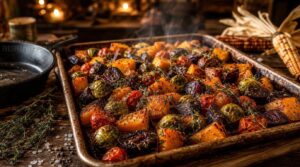
Roasting vegetables unlocks something magical in autumn harvest produce — the kind of deep, golden flavor you can’t fake.
Roasting autumn vegetables unlocks deep, golden flavor no other technique can replicate
Start with the Dry Surface Technique: pat everything dry before tossing. Use an Oil Light Toss, about one to two tablespoons per four cups. High‑Heat Roasting at 425–450°F drives caramelization fast.
Flip Mid‑Cook for even browning, then finish with a Balsamic Finish drizzle.
Simmering Soups, Stews, and Chilis

Where roasting brings out bold edges, simmering draws out quiet depth. Comfort soups and stews for fall are forgiving — start with a quick sauté of aromatics, then let everything settle into a gentle simmer.
Skim the foam early for a cleaner broth. Soak your beans overnight for even texture.
A splash of apple cider vinegar at the end brightens everything, serving as your acid finish. Top with toasted nuts for a crunchy garnish.
Braising Meats With Cider and Herbs
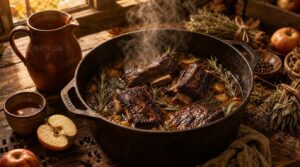
Braising is when autumn comfort food truly earns its name. Dry your meat well before searing—this process creates the rich base that everything else depends on. Pour in dry cider for a gentle acidic boost, then add rosemary and sage early to allow the herbs to infuse properly. Let the dish cook low and slow, building depth of flavor over time.
Baking Breads, Casseroles, and Desserts

From slow braises to the warm hum of an oven — baking brings its own kind of magic.
For yeast breads, keep your water between 105 and 110°F; that’s your yeast hydration sweet spot. Steam baking helps crusts form beautifully.
A golden topping of breadcrumbs and cheese transforms Butternut Squash Casserole, while layered custard and crumb structure make Pumpkin Bread and Apple Cider Donuts genuinely unforgettable, offering fall baking tips worth keeping.
Sheet-pan Cooking for Easy Fall Dinners
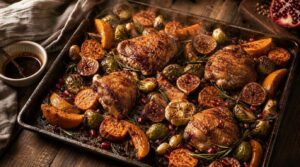
When one pan can do it all, fall dinners become a lot more manageable. A Harvest Sheet Pan Dinner is weeknight cooking at its best:
- Preheat pan strategy — a hot pan sears on contact
- Even spacing layout — keeps edges crisp, not steamed
- Quick glaze finishes — maple or balsamic, added last
- Multi-tiered sheet combos — roast proteins and autumn harvest produce simultaneously
One-pan cleanup hacks seal the deal.
Plan Harvest-Inspired Meals
Once you’ve got your techniques down, the fun part begins: putting it all together into meals worth gathering around. Fall gives you so much to work with, from hearty one-pot soups to festive holiday sides.
Here are some harvest-inspired meal ideas to get you started.
One-pot Soups for Cold Weather
When the cold creeps in, nothing warms a kitchen quite like a bubbling pot of soup. A solid Hearty Stock Base — simmered 30 minutes with bones, aromatics, and a splash of wine — sets everything up beautifully.
From there, it’s all about Spice Layering, Legume Protein Boost, and smart Time-Saving Prep for farm-to-table comfort.
| Soup Element | Best Choice | Why It Works |
|---|---|---|
| Base | Vegetable or bone broth | Builds deep, rich flavor |
| Protein | Red lentils or white beans | Creamy texture, quick-cooking |
| Spice | Cumin, cinnamon, smoked paprika | Warm, balanced depth |
| Greens | Kale stirred in last 5 min | Bright color, tender bite |
| Seasonal Garnishes | Parsley, lemon squeeze, yogurt swirl | Fresh lift and balance |
These warm soups for chilly evenings are your weeknight anchor — filling, nourishing, and endlessly flexible.
Sheet-pan Dinners With Seasonal Produce
A harvest sheet pan dinner might be the most honest meal fall has to offer. Everything roasts together at 425°F, and the oven does the work.
- Protein Pairings: Chicken thighs or sausage, spaced apart for browning
- Pan Layout Tips: Dense veg like squash first, greens added later
- Flavor Marinade: Olive oil, maple syrup, and a balsamic drizzle
- Seasonal Garnishes: Crumbled feta or toasted walnuts after roasting
- Batch Cooking Strategy: One bake, four days of meals
Vegetarian and Vegan Harvest Meals
You don’t need meat to make fall feel full.
Stuffed butternut squash with wild rice and cranberries is a showstopper, and legume stews with smoked paprika warm you right through.
Try mushroom casseroles, tofu roasts, or grain bowls drizzled with nut sauces — these plant-based recipes and harvest vegetable dishes prove that seasonal autumn cooking ideas can be deeply satisfying without a single compromise.
Gluten-free and Low-carb Fall Options
Fall cooking fits every table, including yours if you’re skipping gluten or cutting carbs. Seasonal autumn cooking ideas don’t need bread to feel complete.
Here are three gluten-free and low-carb fall options worth trying:
- Cauliflower rice pilaf tossed with sage and roasted squash
- Walnut crusted salmon with a sugar-free apple glaze
- Keto pumpkin desserts built on almond flour crusts
Holiday Side Dishes and Family-style Mains
When the table fills up, the right spread makes everyone feel at home. Crowd-Pleasing Proteins like herb-roasted chicken thighs or pork loin with apple cider pan sauce anchor family-style meals beautifully.
Round them out with holiday side dish ideas — balsamic Brussels sprouts, wild rice pilaf, roasted sweet potatoes with maple glaze.
Make-Ahead Sauces like mushroom or seasonal gravy keep family-style plating smooth and stress-free.
Non-alcoholic Autumn Drinks and Warm Beverages
After all that hearty food, a warm drink ties everything together. Your Apple Cider Mulled base — simmered with cloves and orange peel — works beautifully as a non-alcoholic festive drink.
Try these seasonal beverage pairings alongside dessert:
- Pumpkin Hot Chocolate swirled with pumpkin puree
- Ginger Tea Brew brightened with honey
- Hazelnut Milk Latte dusted with cinnamon
A Pumpkin Spice Latte or Citrus Mocktail Infusion rounds out your spread perfectly.
Store, Prep, and Use Leftovers
Getting the most out of autumn’s bounty doesn’t stop at the last bite. A little planning goes a long way toward keeping your produce fresh and turning extras into tomorrow’s best meal.
Here’s what you need to know.
Proper Storage for Apples and Winter Squash
Storing apples and winter squash well is simpler than you’d think—it just comes down to Temperature Zones, Humidity Control, and Ethylene Isolation.
For apples, store them in the fridge at 33–40°F with high humidity to maintain crispness. Isolate them from ethylene-producing greens to prevent premature spoilage.
Winter squash requires a cool, dry place at 50–55°F after undergoing a 10–14 day Curing Process. This step is crucial for enhancing flavor and longevity.
Always practice Stock Rotation to monitor for soft spots or damage early, ensuring optimal storage conditions.
| Factor | Apples | Winter Squash |
|---|---|---|
| How to store | Store in the fridge | Cool dry place |
| Temperature | 33–40°F | 50–55°F |
| Key tip | Ethylene Isolation from greens | Cure before storing |
Keeping Greens and Cruciferous Vegetables Fresh
Greens and cruciferous vegetables need just as much care as your squash and apples. The difference is mostly about Humidity Control and Ethylene Separation.
- Airflow Packaging — use perforated bags, never sealed ones
- Pre-washing Guidelines — rinse kale and cabbage only before use
- Leaf Shredding Storage — shred before refrigerating to reduce air exposure
- How to store — keep in a cool, dry place in the crisper
- How to pick — choose firm, bright heads without yellowing
Meal Prepping Roasted Vegetables and Grains
Once your greens are sorted, roasting and grilling Fall vegetables becomes your biggest weekly time-saver. Cut everything into uniform dice — about one inch — so it all cooks evenly. Toss with seasoned oil, roast at 425°F, and let it cool fully before storing.
Batch grain cooling works the same way. Pack everything into portion control jars for easy Harvest grain bowls all week. Crisp reheating in the oven keeps textures right.
Turning Leftovers Into Soups and Casseroles
Those roasted veggies and grains you prepped? They’re halfway to something wonderful. A good stock base pulls everything together fast — then simple flavor boosters like garlic, lemon juice, or a teaspoon of tomato paste do the heavy lifting.
Try these one-pot approaches:
- Soup thickening: Blend half the pot smooth, leave the rest chunky
- Casserole binding: Add eggs and cheese, layer with grains, bake at 375°F
- Portion freezing: Cool quickly, label, and freeze for up to three months
Freezing, Preserving, and Extending Harvest Produce
Blanching basics make all the difference — a quick one to three minutes in boiling water locks in color and nutrients before freezing. Portion freezing keeps things manageable, and vacuum sealing cuts down on freezer burn.
Always add labels with dates so nothing gets lost in the back. Practice ethylene separation too: apples stored near other produce speeds up spoilage.
Preserving produce with proper storage techniques genuinely extends your harvest bounty.
Frequently Asked Questions (FAQs)
What are some fall harvest foods?
Picture a farmers’ market in October — crates of Honeycrisp apples, winter squash, and root vegetables everywhere you look.
Fall harvest produce includes persimmon slices, chestnuts, maple-glazed carrots, sunchoke salads, dried apricots, and seasonal fall produce like pumpkins.
What is the most famous food in autumn?
Pumpkin takes the crown. Whether it’s pumpkin pie, pumpkin bread, or a swirl of pumpkin puree in your morning latte, this deep-orange gourd defines the season more than anything else.
What to cook for dinner in autumn?
Like a warm blanket on a cool night, autumn dinner practically cooks itself.
Try Cider-Glazed Chicken, Savory Stuffed Squash, Hearty Grain Bowls, or an Autumn Pasta Bake loaded with harvest vegetables — pure autumn comfort food recipes.
What spices complement autumn harvest flavors best?
Cinnamon leads the way, but don’t stop there. Layering nutmeg, cloves, and ginger builds real depth.
Rosemary and sage bridge sweet and savory beautifully, turning simple harvest dishes into something genuinely memorable.
How long do fresh fall vegetables stay good?
Fresh fall vegetables don’t all keep the same way. Root vegetables last weeks, greens fade fast. Know your shelf-life charts, watch for spoilage signs, and store each crop right.
Which cooking methods enhance seasonal produce nutrients?
Steaming greens locks in nutrients better than boiling.
A quick sauté helps your body absorb fat-soluble vitamins.
Microwaving vegetables when you’re short on time — it’s surprisingly effective at preserving what matters.
Can you substitute winter squash varieties interchangeably?
Yes, with a few easy tweaks. A weight-for-weight swap works well between dense varieties. Texture matching matters most — butternut suits purees, acorn squash holds stuffing better.
Adjust cooking time by five to ten minutes as needed.
What kitchen tools make fall prep easier?
A cast-iron skillet, mandoline slicer, digital kitchen scale, vacuum sealer, and spice grinder cover most of fall’s heavy lifting —
from sheet pan dinner recipes and one-pot soups to slow cooking and roasting vegetables.
What spices work best with autumn vegetables?
Cinnamon, smoked paprika boost, and ginger zest lift work beautifully here.
cardamom autumn aroma to squash soups, anise star infusion to braises, and a saffron harvest hint for warmth.
These spice blends create unforgettable seasonal flavor combinations.
How long should I roast different root vegetables?
Think of your oven as a slow clock — each root vegetable has its own rhythm. Carrots and parsnips finish around 25–35 minutes, potatoes need 30–40, while beets run 40–50 minutes at 425°F.
Conclusion
Autumn doesn’t ask you to cook perfectly—it asks you to cook attentively. These autumn harvest cooking tips aren’t a checklist to complete; they’re an invitation to slow down and notice what’s right in front of you.
A butternut squash begging to be roasted, a fridge of leftovers waiting to become tomorrow’s soup—these are moments to embrace.
When you start choosing ingredients with care and layering flavors with intention, the season stops feeling like something that happens to you and starts feeling like something you made.
- https://www.ice.edu/blog/healthy-root-vegetable-recipes
- https://jamiegeller.com/recipes/root-vegetables-12-fabulous-fall-recipes/
- https://elanaspantry.com/how-to-roast-butternut-squash/
- https://noemptychairs.me/2016/09/26/how-to-roast-winter-squash/
- https://catfishoutofwater.com/the-fundamentals-of-roasting-pumpkins-squash-other-gourds/