
This site is supported by our readers. We may earn a commission, at no cost to you, if you purchase through links.
Your fruit trees survived spring frosts, summer heat, and fall harvests—but winter poses a different kind of threat. While dormancy protects them from active growth damage, freezing temperatures attack from below and above, targeting vulnerable roots and bark that determine next season’s harvest. The difference between a thriving orchard and struggling trees often comes down to what happens in these quiet months.
Preparing fruit trees for winter isn’t about elaborate protection systems or expensive equipment. It’s about understanding where your trees are most vulnerable and addressing those weak points before the first hard freeze arrives. A few strategic actions now—mulching around roots, protecting trunks from sun scald, adjusting your watering schedule—create the foundation for vigorous spring growth and abundant fruit production.
Table Of Contents
- Key Takeaways
- Insulating Fruit Tree Roots for Winter
- Protecting Trunks and Bark From Damage
- Watering Strategies Before and During Winter
- Managing Pests and Diseases in Fall
- Pruning and Timing for Winter Hardiness
- Frequently Asked Questions (FAQs)
- Do I need to wrap my fruit trees for winter?
- What does baking soda do for fruit trees?
- What steps does a tree take to prepare for winter?
- Should fruit trees be pruned in the winter?
- How do I protect fruit buds from frost?
- What is the best way to overwinter potted fruit trees?
- Can I move young fruit trees indoors for winter?
- How do I prevent deer from eating fruit tree branches?
- Are there specific pests to watch for in winter?
- How do I protect fruit trees from heavy snow?
- Conclusion
Key Takeaways
- Mulching with 3-4 inches of organic material like wood chips creates thermal insulation that protects vulnerable feeder roots from freezing temperatures and prevents frost heaving when applied after dormancy begins but before the ground freezes solid.
- Painting trunks white with diluted latex paint or installing spiral guards prevents sun scald damage on the southwest side of trees, where winter sunlight warms bark during the day only to have cells freeze and die overnight, creating cracks that invite disease.
- Deep watering every two to three weeks through late fall builds nutrient storage and cold resistance, but you must stop several weeks before soil temperature drops below 55°F to prevent root-destroying ice crystal formation.
- Removing all fallen fruit, diseased wood, and fruit mummies in fall eliminates up to 90% of overwintering pests and fungal spores that would otherwise explode into major infestations come spring, making this cleanup your most cost-effective disease prevention strategy.
Insulating Fruit Tree Roots for Winter
Your fruit tree’s root system works hard all winter, and those delicate feeder roots are the first to suffer when temperatures drop. A good layer of mulch acts like a blanket, keeping roots insulated while locking in moisture and stabilizing soil temperature.
Here’s how to choose and apply the right materials to protect your trees through the coldest months.
Mulching for Root Protection

Mulch creates a thermal blanket over your fruit tree’s root system, moderating soil temperature swings that can damage delicate feeder roots. Apply a 3-4 inch layer after dormancy but before the ground freezes—this sweet spot retains warmth and moisture while preventing frost heaving.
Extend coverage to the drip line, where most roots concentrate. You’re fundamentally giving your tree’s underground network the insulation it needs to weather winter’s harshest conditions.
Proper mulching techniques, including using the right organic material sources, are vital for maintaining healthy fruit trees.
Best Mulch Materials to Use
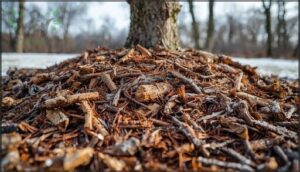
Organic options like wood chips and shredded bark offer your best winter insulation—they decompose slowly while providing stable root protection. For acid-loving trees like blueberries, pine needles naturally lower soil pH while maintaining soil temperature. Straw works in mild climates but requires frequent replenishment.
Aim for 3-6 inches of mulch depth, applied after several hard frosts to avoid delaying dormancy and compromising your tree’s cold hardiness. Using a thick layer of wood chips as mulch for trees can help retain moisture and suppress weeds.
Avoiding Growth-Stimulating Amendments
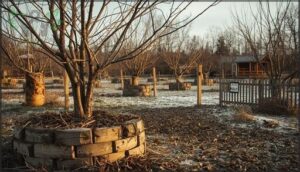
While wood chips protect roots, save compost and manure for spring—those rich amendments push tender new growth when your trees should be shutting down for winter. Stop fertilizing by early July to let trees naturally conserve nutrients and harden off. This simple timing shift dramatically improves cold tolerance.
- Excess nitrogen weakens tissues against freezing damage
- Late fertilization delays your tree’s natural dormancy signals
- Growth-stimulating amendments increase pest vulnerability during winter months
- Proper dormancy induction protects stored carbohydrates for spring
- Soil testing earlier in the season prevents unnecessary late amendments
Maintaining Soil Moisture and Temperature

Beyond choosing the right mulch, your primary goal is maintaining moisture levels and temperature regulation for effective root protection.
Moist soil conducts heat better than dry ground—water-filled pores transfer warmth to protect roots when temperatures drop below 18°F. This thermal advantage, combined with proper soil insulation through mulching, keeps your root zone stable and your winter hydration strategy on track.
Protecting Trunks and Bark From Damage
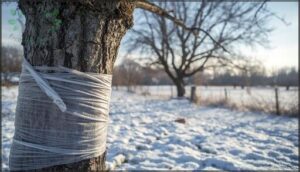
Your fruit tree’s trunk faces serious threats during winter—from sun scald that splits the bark to hungry wildlife looking for an easy meal.
Protecting this vulnerable layer isn’t complicated, but it does require the right approach and materials.
Let’s walk through four proven methods to shield your tree’s bark from winter damage.
Preventing Sun Scald and Cracking
Sun scald happens when winter sunlight warms your tree’s bark during the day, activating cells that freeze and die overnight—leaving cracks that invite pests and disease. The southwest side of trunks faces the greatest risk.
Protect your fruit trees with these proven winter protection strategies:
- Monitor thin-barked varieties like apples and stone fruits closely
- Apply trunk protection before temperature swings begin
- Focus on drought-stressed trees needing extra bark protection
Using White Latex Paint and Tree Guards
Painting the trunks white with a 50/50 mix of exterior latex paint and water protects against sunscald and boring beetles—apply it to the lower 24 to 36 inches for best results.
Tree guards made from 1/4 inch hardware cloth provide essential rodent protection when buried 1 to 4 inches deep and extending at least 18 inches high, offering complementary winter insulation that safeguards bark health throughout the season.
Installing Spiral Tree Trunk Protector Wraps
 View On Amazon
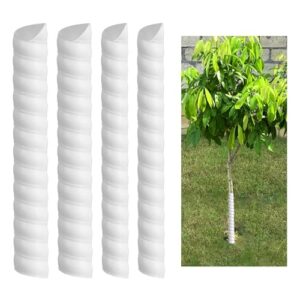
Spiral guards offer one of the most practical trunk protection methods for your winter preparation for apple trees. These spiral wraps install in seconds—just wrap them around the tree trunk from ground level up to the first branches, creating overlapping layers that expand with growth.
Install them in late October before the first hard freeze hits. The perforated design promotes airflow while delivering pest protection against rodents and mechanical damage.
Plan your guard removal timing for mid-April when nighttime temps consistently stay above freezing, preventing moisture buildup during the active growing season.
Best For: Homeowners and orchardists looking to protect young fruit trees from winter damage, rodents, and lawn equipment without spending much time or money on installation.
- Installs in seconds with a simple spiral wrap design that expands as your tree grows, eliminating the need for seasonal adjustments or replacement.
- Provides comprehensive protection against multiple threats including deer, rabbits, rodents, sunscald, and mechanical damage from mowers and trimmers.
- Made from durable, weather-resistant plastic that holds up through harsh winters and can be reused year after year, making it cost-effective for protecting multiple trees.
- Limited length means larger or taller trees may require multiple guards connected together to achieve adequate coverage.
- Must be removed each spring to prevent moisture buildup and pest harboring, adding an extra maintenance task to your seasonal routine.
- Some units arrive compressed from packaging and may fit too tight or too loose initially, requiring adjustment or replacement.
Guarding Against Wildlife and Pest Injury
Wildlife accounts for nearly $150 million in annual fruit crop damage—you can’t afford to skip this step.
Install tree guards extending at least 20 inches above ground and 1-4 inches below to create an effective pest barrier against rodents and deer.
Supplement physical barriers with animal repellents like hot pepper spray or predator urine on trunks and branches, applying these pest control methods consistently through winter.
Watering Strategies Before and During Winter

Watering your fruit trees properly in fall and winter isn’t just about quenching thirst—it’s about fortifying them against the cold months ahead. Well-hydrated trees store nutrients more effectively and resist winter damage better than their parched counterparts.
Here’s how to get your watering strategy right from fall through winter’s unpredictable conditions.
Timing Fall Watering for Nutrient Storage
Your trees store nutrients best when you keep them well-watered through late fall. Aim for deep watering every two to three weeks as temperatures drop. Stop only when the ground freezes, not before, since premature cutoffs stress trees and disrupt nutrient uptake strategies.
Proper fall water scheduling fosters root hydration techniques that build winter resilience factors, turning autumn maintenance into spring success for fruit tree maintenance and winterization.
Monitoring Soil Moisture Levels
You can’t manage what you don’t measure. Soil sensors track moisture levels at multiple depths, giving you real-time data to adjust irrigation scheduling and prevent drought stress.
This moisture tracking helps you maintain well-watered trees without overwatering—critical for soil health and moisture retention.
Modern IoT devices even map soil conditions across your orchard, turning guesswork into precision management that protects water tables and optimizes winter care.
Preventing Root Ice Formation
Once you’ve dialed in your soil moisture readings, timing your final watering becomes critical for freeze damage mitigation. Stop irrigating several weeks before soil temperature drops below 55°F—this prevents excess moisture from freezing into ice crystals that destroy fine feeder roots.
A 3-inch mulch application over properly watered soil insulates your root zone, maintaining stable temperatures and preventing the deadly cycle of freeze-thaw that causes root rot and long-term winter damage.
Adjusting Watering in Dry Winter Conditions
When cold weather brings extended dry spells, your winter irrigation strategy needs recalibration. Young trees need watering every few weeks without snow cover, while established trees require monitoring-based adjustments. For drought management and frost protection:
- Check soil moisture at 6-8 inch depth before watering
- Apply water at night to reduce evaporation losses
- Use drip irrigation or cycle-and-soak methods on frozen ground
- Maintain well-watered conditions without overwatering risks
- Adjust frequency based on soil type and water conservation needs
Managing Pests and Diseases in Fall
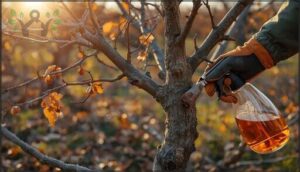
Fall is when you set the stage for a healthy spring, and managing pests and diseases now can save you from serious problems later.
Dormant insects, lingering disease spores, and overwintering larvae are all waiting for the right conditions to cause damage.
Here’s how to clear the threats before winter arrives.
Removing Fallen Leaves and Fruit
Your first defense against spring outbreaks starts now. Rake up fallen fruit and dead leaves before they harbor overwintering pests and fungal spores—studies show up to 90% of orchard pests survive in this debris.
Regular winter cleanup disrupts insect life cycles and slashes disease pressure for next season. Don’t compost infected material; remove it entirely to protect your trees.
Eliminating Fruit Mummies and Debris
Pay special attention to shriveled fruit still clinging to branches—these fruit mummies harbor millions of fungal spores and overwintering pests. If you find two or more per tree, act now.
Shake them loose after rain, then shred or burn them immediately. Don’t let them compost; destroying these pest reservoirs cuts next season’s disease pressure dramatically and reduces your need for chemical interventions.
Applying Organic Deterrents
Beyond cleanup, you’ll want to create a pest barrier using organic controls that disrupt insect life cycles. Winter Wash Applications—plant or fish oil-based sprays—destroy overwintering aphid eggs when applied after leaf drop.
Follow with dormant sprays containing lime sulfur or Neem Oil Spray for organic pest control against mites and fungal spores. OMRI-certified Essential Oil Insecticides target soft-bodied pests on contact, while Compost Tea Benefits include strengthening natural defenses through beneficial microbes, supporting your organic gardening pest management strategy.
Inspecting for Overwintering Pests and Diseases
Pest scouting during dormancy reveals hidden threats you’d otherwise miss. Use a hand lens to examine bark crevices for San Jose scale and mite eggs—they’re easy to overlook with the naked eye.
Check for aphid egg clusters on twigs and inspect any remaining mummified fruit for fungal spores.
This disease diagnosis step shapes your winter sanitation strategy and prevents spring insect infestation before it starts.
Pruning and Timing for Winter Hardiness
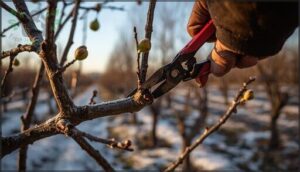
Timing your pruning work can mean the difference between a thriving tree and one that struggles through winter. You might be tempted to tidy up your fruit trees in fall, but this can actually set them back when cold weather arrives.
Let’s look at when to prune, what to remove, and how to protect those all-important flower buds from frost.
Why to Avoid Fall Pruning
Pruning in fall might seem efficient, but it’s a risky move that can undermine your winter protection for plants. Fall pruning creates wounds when trees haven’t reached full dormancy, leaving them vulnerable to cold damage risk.
Fresh cuts stimulate new growth that won’t harden off before frost hits, draining energy reserves your tree needs for survival. Instead of strengthening your tree, fall pruning techniques actually compromise its cold weather protection and wound healing capacity.
Pruning in Dormant or Early Spring
Timing your dormant pruning between late January and early March sets your tree up for success. You’ll want to prune before buds begin to swell, when diseases are dormant and wounds heal quickly as spring growth starts.
Use thinning cuts to open the canopy and heading cuts to control height—this improves fruit yield by boosting sunlight penetration and airflow through your tree’s structure.
Removing Damaged or Diseased Wood
Dead or diseased branches act as pathogen reservoirs, threatening your entire orchard. Cut at least 8 to 12 inches below visible infection points during late winter pruning, and disinfect your tools between cuts with diluted bleach.
Remove fire blight, black rot, and cankers before buds swell—this tree sanitation practice interrupts disease cycles and strengthens your pest and disease control strategy for the coming season.
Minimizing Frost Damage to Flower Buds
Frost can wipe out 90% of flower buds when temperatures hit 24°F, threatening your entire harvest. You can’t control the cold, but you can winterize strategically.
Frost can destroy 90% of flower buds at 24°F, but strategic winterization helps protect your harvest
Prune during dormancy to improve bud hardiness and air circulation—this boosts frost resilience. Plant in areas with good drainage to prevent cold air pockets, and keep soil moist for better heat retention.
These frost protection methods strengthen your fruit tree winter preparation efforts.
Frequently Asked Questions (FAQs)
Do I need to wrap my fruit trees for winter?
Most fruit trees don’t need wrapping—it’s like offering a coat to someone who doesn’t feel cold. Young trees with thin bark, however, benefit from trunk insulation techniques and tree guards for winter injury prevention.
What does baking soda do for fruit trees?
Baking soda acts as an organic fungicide by altering leaf surface pH to control powdery mildew and other fungal diseases.
It also repels pests like aphids and slugs while moderately adjusting soil pH for healthier fruit trees.
What steps does a tree take to prepare for winter?
Nature’s wisdom shines through: trees don’t need your help to survive winter. They enter dormancy, store nutrients in roots, produce antifreeze compounds, and adapt cells for protection—winterizing fruit trees simply aids these natural processes.
Should fruit trees be pruned in the winter?
Yes, but timing matters. Winter pruning promotes vigorous spring growth and improves tree structure, but you should wait until late winter or early spring when trees are fully dormant to minimize frost damage risks.
How do I protect fruit buds from frost?
When spring arrives two weeks early, your blossoms open—then overnight temperatures plummet to 24°F. Without protection, you’ll lose 90% of your crop.
Active frost protection using overhead sprinklers or wind machines safeguards vulnerable buds during critical bloom stages.
What is the best way to overwinter potted fruit trees?
Move potted fruit trees into unheated garages or cold frames where temperatures stay between 32–50°F.
Cluster containers together, wrap with insulation, and apply 2–6 inches of mulch to reduce root freezing risk.
Can I move young fruit trees indoors for winter?
Don’t treat your sapling like a hothouse orchid—temperate fruit trees need outdoor chill hour requirements for proper dormancy break.
Indoor climate control disrupts cold hardiness strategies essential for spring growth and fruit production.
How do I prevent deer from eating fruit tree branches?
Install tree guards or 8-foot fences as physical barriers for reliable fruit protection.
Combine these pest management tools with deer repellents and deterrents like predator urine spray to reduce browsing damage and prevent rodent damage effectively.
Are there specific pests to watch for in winter?
Yes, watch for overwintering insects like codling moth larvae hiding under bark and woolly aphids on branches. Rodents and rabbits threaten tree health by gnawing bark.
Winter pests damage buds and wood, affecting fruit quality.
How do I protect fruit trees from heavy snow?
Heavy snow acts as natural insulation for roots, but you’ll need to gently shake branches to prevent breakage from excessive snow load.
Tree support systems and proper pruning reduce winter damage risk markedly.
Conclusion
Winter doesn’t have to leave your orchard frozen in uncertainty. By preparing fruit trees for winter through root insulation, trunk protection, strategic watering, and pest management, you’re not just defending against cold—you’re setting the stage for explosive spring growth.
These dormant months determine whether your trees emerge weakened or vigorous. The work you complete now quietly compounds beneath the snow, transforming into the abundant harvest you’ll celebrate next fall.
- https://learn.orchardpeople.com/researching-fruit-trees-for-organic-growing-success
- https://extension.unh.edu/blog/2020/10/how-do-i-prepare-my-backyard-fruits-winter
- https://www.familyhandyman.com/list/do-these-8-things-to-your-fruit-trees-before-winter/
- https://www.homeorchardeducationcenter.org/
- http://mailto:info?subject=Sponsorship&cc=kathryn%40portlandfruit.org