This site is supported by our readers. We may earn a commission, at no cost to you, if you purchase through links.

Fungal pathogens destroy an estimated 20–25% of the world’s food crops each year—not through dramatic, sudden collapse, but through the slow, creeping damage most gardeners mistake for heat stress, nutrient deficiency, or poor watering habits. By the time powdery mildew coats your squash leaves white or root rot has turned your tomato roots to mush, the infection has already been progressing underground and on leaf surfaces for days.
Controlling fungal diseases effectively means learning to read those early signals before the damage compounds. What follows is a precise, field-tested roadmap—from identifying the first lesion to building a seasonal defense that keeps pathogens structurally outmatched.
Table Of Contents
- Key Takeaways
- Spot Fungal Disease Early
- Remove Infection Safely
- Prevent Fungus With Better Conditions
- Use Natural Fungal Controls
- Protect Crops Long Term
- Frequently Asked Questions (FAQs)
- How to control plant fungi?
- Can fungi be used to control plant pathogens?
- Can fungicides be used to control plant fungal infections?
- Which physical treatments are used for fungal control?
- What is the root cause of fungal infection?
- What are natural antifungal remedies?
- How to reduce fungal infection?
- How do fungal spores survive harsh winter conditions?
- Can indoor houseplants develop serious fungal infections?
- What weather patterns increase fungal disease outbreaks?
- Conclusion
Key Takeaways
- Fungal pathogens quietly destroy up to 25% of global food crops each year, and by the time visible symptoms appear, the infection has already been spreading for days — so catching early signals like water-soaked lesions, white coatings, or wilting is what keeps small problems from becoming full losses.
- Removing infected tissue, sealing debris in labeled bags, and sterilizing tools between every single cut are non-negotiable steps that stop you from spreading the very disease you’re trying to eliminate.
- Controlling the environment — proper plant spacing, soil-level watering, mulching, and crop rotation — denies fungi the humidity, splash dispersal, and persistent host substrate they depend on to establish and survive season to season.
- Layering natural biocontrols like Trichoderma, Bacillus subtilis sprays, and botanical compounds such as cinnamaldehyde or thymol into a rotating, timed treatment schedule builds a defense system that pathogens struggle to adapt to or overcome.
Spot Fungal Disease Early
Catching fungal disease early is the difference between a quick fix and losing an entire crop. Your plants are always sending signals — you just need to know what to look for. Here are the key signs to watch across your garden.
Once you spot trouble, acting fast is everything — get the details on treating blight on tomato plants before a few spots turn into a lost harvest.
Powdery Mildew Signs
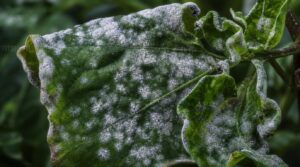
Powdery mildew announces itself with a white coating on leaf surfaces — small, circular patches that start at the edges and slowly consume the blade. Infected tissue often shows leaf curling and distortion, particularly on young growth. Dense canopies trap humidity, accelerating fungal spore spread.
Catch it early, and your fungal control options remain broad and manageable. To prevent fungal resistance, you should rotate active ingredients when applying fungicides.
Leaf Spots and Blights
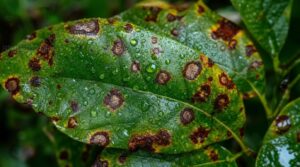
Unlike the uniform white coating of powdery mildew, leaf spots and blights present as discrete, discolored lesions — circular to irregular in shape — caused by pathogens like Alternaria, Cercospora, and Colletotrichum. Spots often start water-soaked, then darken with pale or tan centers.
Scout weekly; applying fungicides before lesions coalesce dramatically improves control outcomes.
Wilting and Root Rot
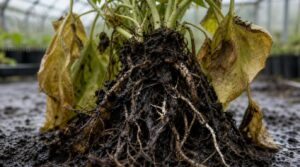
Wilting tells a different story than spotting. When roots lose function — whether from oxygen deprivation caused by overwatering, compaction-restricted growth, or pathogenic root rot fungi like Fusarium oxysporum — water uptake collapses progressively, starting from lower leaves upward. Pull a struggling plant; dark, mushy roots confirm fungal invasion.
Crop rotation and biocontrol agents like Trichoderma species help suppress soil-borne pathogens effectively.
Mold on Fruits
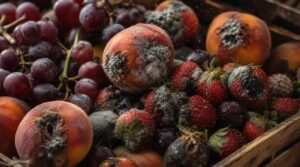
Fruit mold operates differently from the foliar diseases above — it strikes post-harvest and at the point of sale. Fuzzy gray or black patches on berries, peaches, or grapes signal active Botrytis, Penicillium, or Rhizopus colonization, usually originating at bruises or stem-end cracks where fungal spores gain entry through compromised skin.
Weekly Scouting Routine
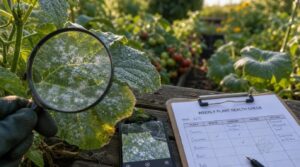
Consistency is your sharpest diagnostic tool. Schedule a fixed inspection day each week — same time, same path through the garden — so emerging symptoms don’t slip past you unnoticed.
Use a standardized observation form to log humidity, temperature, and plant development stage alongside each finding. Photograph symptomatic tissue from multiple angles, date-stamp every image, and flag any new signs within 24 hours to trigger your rapid response protocol before fungal pathogens establish further.
Remove Infection Safely
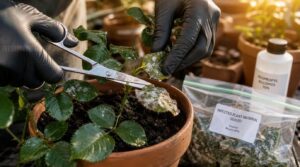
Once you’ve spotted the problem, acting fast is what separates a manageable setback from a full-blown outbreak. The good news is that safe removal doesn’t require fancy equipment—just a clear process and a few consistent habits. Here’s exactly what to do.
Prune Diseased Leaves
Pruning diseased leaves is one of the most immediate, high-impact steps you can take to stop fungal spread in its tracks. Always cut back to healthy green tissue, making clean angled cuts with sharp tools.
Prune during dry weather conditions to minimize moisture on fresh wounds, then apply a balanced fertilizer afterward to drive vigorous, resistant new growth.
Discard Infected Debris
Once you’ve pruned infected tissue, bag infected debris immediately — don’t set it aside and walk away. Every spore left exposed is a reinfection waiting to happen.
Following up with a weekly garlic spray is a smart next step — this natural powdery mildew treatment guide explains how a simple homemade blend can knock out remaining spores before they take hold again.
Use sturdy, sealed bags and label debris bags clearly so nothing gets mixed with healthy plant material. Remove bagged waste within 24 hours, well away from living plants and avoid outdoor composting entirely.
Sterilize Garden Tools
Your pruning shears are one of the most overlooked vectors in fungal disease spread.
Sterilize tools between every cut using a 1:9 bleach-to-water solution for 10 minutes, or wipe blades with 70% isopropyl alcohol, letting it air dry for at least two minutes. Hydrogen peroxide at 3% works just as well and is gentler on metal.
Avoid Composting Pathogens
The compost pile isn’t a safe disposal zone for diseased plant material — it’s a potential pathogen reservoir. Fungal pathogens like Fusarium oxysporum can survive unless your pile sustains thermophilic temperatures above 55°C consistently.
Monitor pile zones with a probe, and discard infected debris through municipal waste instead. Screen all feedstocks, wear protective gloves, and consider Trichoderma-enriched amendments to support biological control in finished compost.
Clean Containers and Stakes
Every pot and stake you reuse is a potential vector for reintroducing fungal pathogens into clean growing areas. Container sanitization and stake disinfection aren’t optional finishing steps — they’re core to breaking the disease cycle.
- Scrub pots with hot water, then soak in an approved sanitizing solution for full contact time
- Air-dry containers completely before refilling — moisture invites fungal colonization
- Replace or treat wooden stakes showing rot; use plastic or metal alternatives for easier sterilization
- Store cleaned containers in dry, covered spaces to prevent recontamination
- Keep a cleaning log to track sanitation dates and solutions used
Material choice matters: smooth-jointed, food-grade plastics and stainless steel resist degradation through repeated sanitizing cycles and leave nowhere for soil residues to hide.
Prevent Fungus With Better Conditions
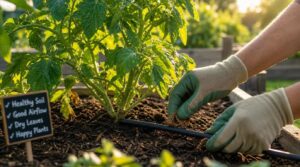
Fungal diseases don’t just appear out of nowhere — they thrive when conditions let them. A few smart adjustments to how you grow can quietly shut the door on most infections before they ever take hold. Here’s what actually has an impact.
Fungal diseases thrive when conditions allow them — fix the conditions, stop the disease
Space Plants Properly
Plant spacing is your first line of defense against fungal disease. When canopies overlap, moisture lingers and spores spread rapidly.
Space tomatoes 24–36 inches apart, leafy greens 6–12 inches, and beans 2–4 inches in rows. This root zone allocation ensures nutrients reach each plant while canopy airflow dries foliage quickly, denying fungi the humid conditions they need to establish.
Water at Soil Level
Spacing controls what surrounds your plants — but where water lands determines what survives on them. Overhead irrigation leaves foliage wet for hours, and wet leaves invite fungal colonization faster than almost any other factor.
- Drip lines deliver water directly to the root zone
- Soil infiltration rate stays balanced without surface saturation
- Capillary rise sustains deeper moisture without wetting leaves
- Drainage management prevents waterlogging and fungal buildup
Direct irrigation at soil level, not foliage.
Improve Air Circulation
Where water lands matters — and so does what moves through your canopy. Cross ventilation reduces particle concentration by up to 50 percent; combine it with strategic fan placement near crop rows to accelerate air exchange, lower leaf wetness, and support broader environmental management within your IPM framework.
| Method | Benefit | Use Case |
|---|---|---|
| Cross ventilation | Cuts humidity up to 50% | Rows with opposing openings |
| Oscillating fans | Moves air between zones | Row ends and doorways |
| Ceiling diffusers | Distributes air evenly | Enclosed growing spaces |
Natural ventilation and airflow optimization remain your most cost-effective moisture control tools.
Mulch to Reduce Splash
Airflow clears moisture overhead — but what happens at soil level is just as decisive. Splash-borne dispersal carries phytopathogenic fungi like Fusarium and Botrytis from infected soil directly onto stems and foliage.
A wood mulch barrier or straw mulch cushion, applied 2–3 inches deep and kept roughly one meter from stems, absorbs raindrop impact before spores ever get airborne.
Rotate Vulnerable Crops
Rotating vulnerable crops is one of the most cost-effective cultural and agronomic practices you can deploy for fungal pathogen management. When you remove a host plant from its previous bed for a full growing season, soil-borne pathogens like Fusarium oxysporum lose their preferred substrate and populations decline measurably.
Follow this rotation planning framework:
- Map every bed by crop family and plan at least three seasons ahead.
- Place high-risk crops — cucurbits, solanaceous plants — only after non-host inclusion breaks the disease cycle.
- Extend host break periods to four or more years wherever persistent pathogens have been confirmed.
- Insert legumes or brassicas as disease-suppressive soil builders between vulnerable rotations.
- Keep a written diary tracking crop rotation timing, observed symptoms, and yield changes each season.
This structured approach, central to integrated pest management, gradually starves pathogens of hosts, increases microbial diversity, and rebuilds soil pathogen disruption capacity naturally over successive seasons.
Use Natural Fungal Controls
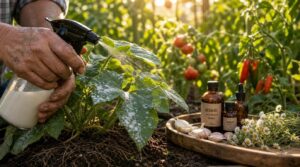
Nature has given you a surprisingly powerful toolkit for keeping fungal diseases in check. These options work with your soil and plants rather than against them, and most are easy to fit into your regular routine. Here’s what to reach for first.
Apply Compost Teas Carefully
Compost tea works like a living microbial consortium you brew and deploy — but only if you handle it right. Use only mature compost and chlorine-free water, keeping brew temperatures between 65 and 75°F with constant aeration.
For fungal disease control on edible crops, apply as a soil drench, not a foliar spray. Use the brew within 24 hours to preserve microbial viability.
Try Beneficial Trichoderma
Trichoderma colonization works the moment these microbial antagonists reach your roots — blocking phytopathogenic fungi through mycoparasitic activity, enzyme production, and induced plant resistance.
- Colonizes roots, suppressing Fusarium and Pythium
- Breaks down fungal cell walls enzymatically
- Releases broad-spectrum antimicrobial compounds
- Promotes root architecture via IAA secretion
- Enhances soil microbiome diversity for long-term biocontrol
Apply granules at transplanting for lasting fungal control.
Use Bacillus-based Sprays
Bacillus-based sprays deploy live microbial antagonists — primarily Bacillus subtilis and Bacillus amyloliquefaciens — that colonize leaf and fruit surfaces, producing antifungal lipopeptides such as iturins, fengycins, and surfactins to suppress powdery mildews and blights.
Timing your application at early disease warning stages, before infection establishes, maximizes efficacy. Alternating these biological control agents within your IPM integration strategy reduces fungal pathogen resistance risk effectively.
Choose Botanical Fungicides
Plant-derived fungicides don’t just mask disease — they disrupt it at the cellular level. Essential oil efficacy hinges on compounds like cinnamaldehyde and thymol penetrating fungal membranes, interfering with ergosterol synthesis.
A thyme-clove spray at 2–4% applied weekly reduces powdery mildew on tomatoes meaningfully. Garlic-cinnamon blends cut spore germination by up to 60%, while citrus limonene slows pathogen development on fruit surfaces.
Encourage Healthy Soil Microbes
Think of your soil as a living defense network — when it’s thriving, fungal pathogens struggle to gain a foothold.
Organic matter addition twice yearly feeds the microbial community directly. Pair this with mycorrhizal inoculation on new plantings, incorporate biochar amendments to expand microbial habitat, and rotate legumes to sustain nitrogen fixers and beneficial bacteria throughout the season.
Protect Crops Long Term

Long-term crop protection isn’t about one perfect spray or a single good season — it’s a system you build and improve over time. The strategies that actually hold up are the ones that work together, layer by layer, year after year. Here’s what that looks like in practice.
Plant Resistant Varieties
Choosing the right variety is half the battle. Disease resistance breeding delivers lines that stack race specific genes with durable resistance, keeping crops protected as pathogens evolve. Prioritize:
- Durable resistance — polygenic, season-stable protection
- Race specific genes — targets known local pathogen races
- Cross protective traits — defends against multiple fungi
- Gene pyramiding — stacked R genes for broader plant immunity
- Climate adapted lines — stable under heat or drought
Time Treatments Correctly
Stacking resistance genes buys you time — but only if your treatments land when they matter most. Ideal spray timing hinges on pathogen life cycles and environmental conditions. Apply fungicides at dawn or dusk on cool, moist mornings, when absorption peaks and evaporation is minimal. During active infection periods, maintain 7- to 14-day application intervals to cover the full pathogen cycle.
| Timing Factor | Best Practice |
|---|---|
| Time of day | Dawn or dusk application |
| Conditions | Cool, moist mornings |
| Preventive start | Before symptoms appear |
| Interval frequency | Every 7–14 days |
| Record keeping | Log each application date |
A preventive treatment schedule started before symptoms emerge consistently outperforms reactive spraying. Weather-based timing matters too — skip applications before heavy rain. Record keeping practices let you adjust your integrated pest management approach each season, turning past disease pressure data into smarter crop protection decisions.
Rotate Fungicide Types
Good timing gets fungicides into your crops at the right moment — but if you keep using the same product, pathogens adapt fast.
That’s why FRAC group rotation matters: cycle at least three distinct groups in sequence, spacing applications every 7 to 14 days, so no single mode of action faces repeated selection pressure.
Track Recurring Disease Patterns
Rotating fungicide groups breaks selection pressure — but knowing when and where disease strikes next is what truly keeps you ahead.
Recurring disease patterns don’t appear randomly; they follow measurable trajectories you can document by recording diagnosis sequences across individual plants, weekly intervals, and multiple seasons, using field monitoring protocols to separate genuine cycles from background noise.
Build Seasonal Prevention Plans
A seasonal prevention plan is your field’s first line of defense — built before disease pressure arrives, not after.
Map a Seasonal Planning Timeline around peak infection windows, aligning treatment schedules with planting, flowering, and harvest dates. Assign clear Stakeholder Role Assignments so every team member knows their scouting, spraying, or sanitation duties before the season begins.
Frequently Asked Questions (FAQs)
How to control plant fungi?
Fungi thrive in the very conditions you create to help your plants grow. Integrated pest management blends biocontrol, sanitation, and physical removal to interrupt that cycle before it takes hold.
Can fungi be used to control plant pathogens?
Yes — certain fungi actively suppress plant pathogens through mycorrhizal defense, enzyme production, and endophytic protection. Arbuscular mycorrhizal fungi strengthen roots, while Trichoderma delivers powerful biocontrol by parasitizing competing pathogens directly.
Can fungicides be used to control plant fungal infections?
Fungicides form a two-shield defense — systemic types penetrate plant tissue to track down infections, while contact types guard the leaf surface. Pairing them with botanical or microbial fungicides, then rotating modes of action, prevents resistance.
Which physical treatments are used for fungal control?
Physical treatments like heat treatment, UV disinfection, airflow control, and sanitation protocols work by disrupting fungal growth conditions directly — removing infected material, sterilizing surfaces, and eliminating the moisture fungi need to thrive.
What is the root cause of fungal infection?
Stress is the open door phytopathogenic fungi walk through. When moisture exceeds 60% and a plant’s defenses weaken, spores germinate fast — pathogen entry becomes almost inevitable.
What are natural antifungal remedies?
Natural antifungals include tea tree oil, oregano oil’s thymol and carvacrol, garlic, aloe vera gel, coconut oil fatty acids, and botanical compounds like cinnamaldehyde — all targeting fungal growth through plant-derived phenolic and volatile mechanisms.
How to reduce fungal infection?
Reducing fungal infection starts with breaking the cycle early — combining crop rotation, sanitation, and smart cultural practices like UV light treatment and hyperspectral monitoring keeps pathogens from gaining a foothold.
How do fungal spores survive harsh winter conditions?
Fungal spores endure winter through spore dormancy and desiccation resistance, accumulating trehalose to stabilize membranes while melanin shields against cold stress, ensuring rapid germination when warmth returns.
Can indoor houseplants develop serious fungal infections?
Yes — indoor houseplants absolutely can develop serious fungal infections. Poor air circulation, overwatering, and humidity above 60% create ideal conditions for phytopathogenic fungi like Botrytis and powdery mildew to establish and spread rapidly.
What weather patterns increase fungal disease outbreaks?
High humidity periods and extended leaf wetness are the biggest triggers — when relative humidity exceeds 90% overnight, fungal spores germinate rapidly. Temperature fluctuations and heavy rainfall events further accelerate outbreaks.
Conclusion
Fungi don’t announce themselves—they wait, patient and invisible, while most gardeners confidently assume the worst is still ahead. By the time you recognize the damage, the real battle was already fought weeks earlier in the soil and on those overlooked leaves.
Controlling fungal diseases, then, isn’t really about fighting back—it’s about denying pathogens the conditions they need before they settle in. Build that defense now, and your garden won’t give them a foothold.
- https://doi.org/10.2307/3870224
- https://pubmed.ncbi.nlm.nih.gov/12239359/
- https://scholar.google.com/scholar_lookup?journal=Plant%20Cell&title=Fungal%20Infection%20of%20Plants&author=W.%20Knogge&volume=8&publication_year=1996&pages=1711-1722&pmid=12239359&doi=10.2307/3870224&
- https://creativecommons.org/licenses/by-nc/4.0/
- https://realitypathing.com/how-do-natural-remedies-combat-fungal-conditions/