This site is supported by our readers. We may earn a commission, at no cost to you, if you purchase through links.
Most herb gardens fail quietly. The basil yellows, the rosemary drops needles, and the mint somehow survives everything while crowding out its neighbors. It’s not bad luck—it’s usually a handful of small, fixable mistakes.
Herbs are forgiving plants, but they have specific needs around light, water, and soil that make all the difference between a scraggly pot and a thriving kitchen garden. Nail the basics, and you’ll harvest fresh flavor all season long. Here’s what experienced growers know about keeping herbs healthy from soil to stem.
Table Of Contents
- Key Takeaways
- Choosing The Best Location for Herbs
- Selecting The Right Soil and Containers
- Essential Light and Temperature Needs
- Watering and Humidity Best Practices
- Fertilizing and Feeding Your Herbs
- Pruning, Harvesting, and Ongoing Care
- Preventing and Managing Herb Pests and Diseases
- Frequently Asked Questions (FAQs)
- How do I care for my herb garden?
- How do I Keep my herb garden alive and full of life?
- How do I Keep my herbs healthy?
- Why should you grow a herb garden?
- How do you take care of herb plants?
- What are common herb growing mistakes?
- Can herbs survive winter temperatures outdoors?
- Which herbs grow best together in containers?
- How do you propagate herbs from cuttings?
- What causes herbs to bolt or flower early?
- Conclusion
Key Takeaways
- Most herb failures come down to a few fixable mistakes — get your light (6–8 hours), water, and soil pH (6.0–7.0) right, and your herbs will thrive.
- Match your herbs to their needs: Mediterranean types like rosemary and thyme want full sun and dry spells, while mint and basil need more water and can handle some shade.
- Prune and harvest in the morning, cutting just above a leaf node and never taking more than one-third of the plant at once — this keeps growth full and flavor strong.
- Catch problems early by checking leaves regularly — yellow and soft means too much water, brown and crispy means too little, and sticky residue or webbing signals pests.
Choosing The Best Location for Herbs
Where you grow your herbs matters just as much as how you care for them. The right spot can mean the difference between a thriving plant and one that barely survives.
Before you plant a single seed, browsing some herb garden layout ideas can help you match each herb to the spot where it’ll actually thrive.
Here’s what to think about when picking your location.
Outdoor Vs. Indoor Herb Gardens
Whether you’re working with a backyard bed or a kitchen windowsill, your setup shapes everything. Outdoor gardening gives herbs room to thrive through seasonal adaptation, but indoor gardening offers climate control year-round. Container herbs suit tight spaces perfectly — hello, space optimization.
Think about herb hardiness, your local climate, and how often you’ll actually use your herb garden before committing to a layout.
Maximizing Sunlight Exposure
Location sets the tone — and sunlight is everything in herb plant care. South window placement wins for sun-lovers like basil and rosemary, delivering a solid 6–8 hours daily.
Smart herb care tips make a real difference:
- Use reflective surfaces to boost light by up to 50%
- Try pot rotation every few days for even growth
- Explore grow light options for dim spaces
- Track natural lighting with simple noon readings
Planning for Easy Access and Maintenance
Good sunlight gets you halfway there — smart bed layout and pathway design do the rest. Keep raised beds 3 to 4 feet wide so you can reach every plant without stepping on soil.
Group herbs by water needs to simplify herb garden maintenance. Clear paths improve garden navigation, and separating aggressive growers like mint makes daily herb plant care far less chaotic.
Selecting The Right Soil and Containers
The soil and container you choose can make or break your herb garden before it ever gets going. Get these two things right, and everything else becomes a lot easier.
Here’s what you need to know.
Ideal Potting Mix for Herbs
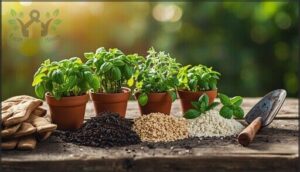
Your potting mix is the foundation of great herb plant care. Get it wrong, and nothing else matters. A loose, crumbly soil texture lets roots breathe and water move freely — key to strong growth.
Your potting mix is the foundation of herb plant care — get it wrong, and nothing else matters
Here’s a reliable potting mix recipe for most herbs:
- 2 parts compost — your main source of organic matter and plant nutrition
- 1 part perlite — a drainage additive that prevents soggy roots
- 1 part coco coir — holds moisture evenly without compacting
- Worm castings (optional) — boosts nutrient balance gently
- Target pH 6.0–7.0 — keeps nutrients available through smart soil management
Drainage and Pot Selection Tips
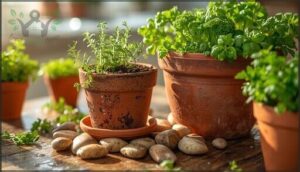
Even the best soil mix fails without proper drainage. For herb plant care, every pot needs at least one drainage hole — medium planters do better with two.
Good drainage matters even more under grow lights, since indoor setups can trap moisture — check out these sustainable herb gardening tips to keep your plants healthy from root to harvest.
Terracotta is your best friend for root health: it breathes, dries faster, and prevents water logging naturally.
Match pot size to your herb — compact thyme fits 6–8 inches; parsley needs 12. Smart soil management starts here.
Adjusting Soil PH for Different Herbs
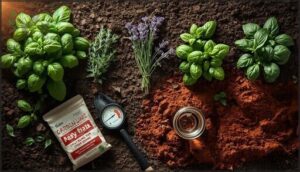
pH is the quiet variable that makes or breaks your herb garden care. Most herbs thrive between 6.0 and 7.0, but herb tolerance varies — basil prefers slightly acidic conditions around 5.5 to 6.5, while lavender wants 6.5 to 7.5.
Start with soil testing before you plant anything:
- Use a home kit at 6-inch depth
- Lime application raises low pH gradually — 2 lbs per 100 sq ft
- Retest every 6 months for stable soil quality
Essential Light and Temperature Needs
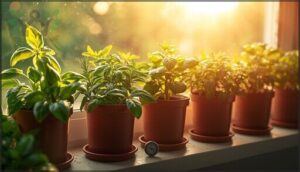
Light and temperature are two things herbs simply won’t compromise on. Get them right, and your plants will reward you with strong growth and rich flavor.
Here’s what you need to know about keeping your herbs happy from sunup to sundown.
Sunlight Requirements for Popular Herbs
Most herbs need 6 to 8 hours of daily sunlight to fuel herb photosynthesis and peak flavor. Mediterranean types like rosemary, thyme, and oregano thrive in full sun — their sunlight requirements are non-negotiable. Mint and parsley handle shade tolerance better, needing just 4 to 6 hours.
Skip this step in your herb garden care and leaf scorching, or weak growth, will follow.
Indoor Lighting Solutions
A sunny window isn’t always enough. When natural light falls short, LED grow lights are your best fix for growing herbs indoors. They cover the full light spectrum herbs need — blue for leafy growth, red for vigor.
- Choose full-spectrum LEDs for basil, mint, and cilantro
- Keep fixture placement about 1.5 feet above the canopy
- Run lights 14–16 hours daily to hit target levels
- Watch for pale leaves or leggy stems — classic signs you’re diagnosing issues early
Protecting Herbs From Temperature Extremes
Temperature swings can quietly wreck your herb garden before you notice. Good temperature control is the backbone of smart herb garden care.
For heat protection, drape 30–50% shade cloth over basil when afternoons push past 90°F — it can drop pot temperatures by 10–15°F.
For frost prevention and winterization tips, bring basil indoors once nights hit 50°F, and use 30gsm fleece for rosemary.
Watering and Humidity Best Practices
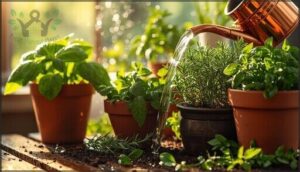
Watering herbs isn’t complicated, but getting it wrong is one of the fastest ways to lose a plant you’ve worked hard to grow. Too much or too little water throws everything off — and humidity plays a bigger role than most people expect.
Here’s what you need to know to keep your herbs happy.
How Often to Water Common Herbs
Watering schedules aren’t one-size-fits-all. Mediterranean herbs like rosemary and thyme need water about once a week — let the soil dry between sessions. Thirstier herbs like basil and mint need watering two or more times weekly.
For solid herb plant maintenance, skip the calendar and use the finger test: if the top inch of soil feels dry, it’s time.
Recognizing Overwatering and Underwatering
Even the best watering schedules can go sideways. Check leaf color signs first — yellow, soft leaves usually mean too much water, while brown, crispy edges signal thirst.
Wilting patterns tell a similar story: floppy stems in wet soil point to root health problems from overwatering.
Trust soil moisture over guesswork. Dry, crumbly mix pulling from pot edges? Your herb needs a drink.
Maintaining Proper Humidity Indoors
Humidity control is just as important as watering. Keep indoor climate between 40–60% relative humidity — too dry and leaf edges curl, too damp and mold moves in fast.
A hygrometer gives you real numbers, not guesswork. Try these moisture management wins:
- Group pots together to share humidity naturally
- Set containers on pebble trays with water underneath
- Run a small humidifier in winter when heating dries everything out
Good air circulation ties it all together.
Fertilizing and Feeding Your Herbs
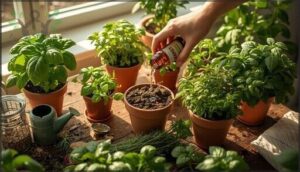
Your herbs are hungry, and getting the feeding part right makes a real difference. It’s not complicated, but a few key choices — like what you use, when you apply it, and how to keep things safe around pets — will set your garden up for success.
Here’s what you need to know.
Choosing Organic Fertilizers
Skip the synthetic stuff — your herbs don’t need it. Organic fertilizer types like worm castings, kelp meal, and fish emulsion feed plants gently without burning roots.
Worm casting uses go beyond basic nutrients; they boost microbial activity and improve water retention. Kelp meal advantages include trace minerals that sharpen essential oil production.
These natural soil amendments make herb plant care and maintenance genuinely sustainable.
Fertilizer Schedules for Peak Growth
Now that you’re using organic amendments, timing matters. Feed frequency shifts with growth stages—seedlings need diluted fertilizer after two sets of true leaves, while established herbs thrive on a 2–4 week schedule.
Adjust fertilizer ratios and soil pH levels for leafy or woody herbs. Nutrient cycling keeps plant care and nutrition steady, so growing herbs won’t stall.
Safe Practices for Pet-Friendly Herb Gardens
For pet owners, herb plant care means checking toxic plant lists before buying a single seed. Oregano, marjoram, and lavender can harm cats and dogs. Stick to basil, thyme, or cilantro in pet-roaming zones.
Use pet-friendly mulch like straw or wood chips — never cocoa shell. Natural pest deterrents like neem oil and garden barrier ideas keep both your herbs and your pets safe.
Pruning, Harvesting, and Ongoing Care
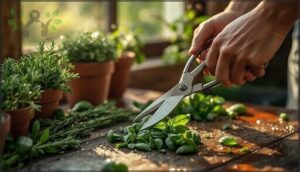
Pruning and harvesting aren’t just end-of-season tasks — they’re how you keep your herbs productive all year long. Done right, a few snips at the right time can mean the difference between a thriving plant and one that gives up on you.
Here’s what you need to know to keep things growing strong.
Pruning Methods to Encourage Growth
Pruning herbs isn’t just maintenance — it’s how you build a bushy, productive plant. Smart stem cutting and node removal redirect energy into new growth instead of wasted height.
Follow these herb pruning techniques:
- Pinch basil when it reaches 6–8 inches tall
- Cut just ¼ inch above a leaf node
- Use clean pruning tools to prevent disease
- Never remove more than one-third at once
- Repeat pinching every 1–2 weeks for bush formation
When and How to Harvest Herbs
Harvest timing makes all the difference. Cut herbs in the morning after dew dries — that’s when essential oils peak. For herb cutting, snip just above a leaf node and never remove more than one-third at once.
Leaf selection matters too: choose vibrant, firm leaves.
For harvest storage and freshness preservation, rinse, dry thoroughly, then refrigerate wrapped in a damp paper towel.
Preventing Bolting and Maintaining Flavor
Bolting is your herb’s way of giving up on you — but you can fight back. Heat stress is the main trigger, so shade cloth and consistent watering go a long way in caring for culinary herbs.
- Pinch flower buds early for leaf regrowth
- Time your harvest in cooler morning hours
- Choose bolt-resistant varieties for bolting prevention and flavor preservation
Preventing and Managing Herb Pests and Diseases
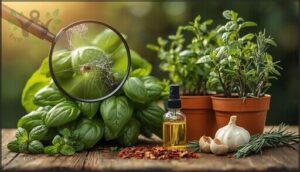
Even the healthiest herb garden can run into trouble—bugs show up, leaves spot, and suddenly your thriving basil looks sad. The good news is that most problems are easy to handle once you know what to look for. Here’s what you need to stay ahead of pests and disease.
Identifying Common Herb Pests
Tiny pests can quietly devastate your herb garden before you notice anything’s wrong. Regular pest inspection catches trouble early.
Aphids cluster on tender new growth, leaving sticky honeydew and curled leaves — aphid control starts with spotting them fast. Spider mite damage shows up as pale stippling, often with fine webbing.
Whitefly management and thrip prevention matter too, since both drain plant vitality without obvious chewing marks.
Natural and Organic Pest Solutions
Nature has its own pest control toolkit — and it works surprisingly well. Skip the harsh chemicals and reach for these instead:
- Neem oil uses include mixing 1 tsp neem oil with ¼ tsp castile soap in 470ml water and spraying at dusk
- Insecticidal soap coats and dehydrates aphids and spider mites on contact — rinse leaves after
- Diatomaceous earth dusted around soil targets crawling pests without harming your plants
- Companion planting strategies like growing mint or nasturtiums nearby naturally confuse and repel insects
- Organic pesticides fit seamlessly into integrated garden pest control methods — always start with the gentlest option first
Preventing Fungal and Bacterial Diseases
Pests aren’t your only threat. Fungal disease prevention starts with spacing — basil needs 12 inches between plants, rosemary even more. Water before 10 AM so leaves dry fast.
For bacterial infection control, wipe pruners with 70% isopropyl alcohol between cuts. Root rot management is simple: don’t overwater.
Choose disease-resistant varieties like ‘Prospera’ basil, and your herb garden care gets a whole lot easier.
Frequently Asked Questions (FAQs)
How do I care for my herb garden?
Good herb garden care comes down to sun, water, and soil quality.
Give herbs 6 hours of light, water when soil feels dry, and feed monthly for strong herb nutrition and plant hardiness.
How do I Keep my herb garden alive and full of life?
Keep your herb garden alive by mastering soil quality, watering herbs correctly, and staying on top of pest control.
With solid herb garden planning and consistent garden maintenance, your herbs will thrive year-round.
How do I Keep my herbs healthy?
Neglect just one thing — water, light, or soil — and your herbs collapse fast.
Solid herb plant care means nailing root care, leaf maintenance, and watering herbs consistently. That’s the whole game.
Why should you grow a herb garden?
Growing herbs means fresh flavor steps from your kitchen, a real nutrient boost in every meal, and mental wellness through daily gardening.
Your herb garden also delivers environmental benefits and endless creative expression with culinary herbs.
How do you take care of herb plants?
Herbs are like small, living compasses — they always point toward what they need.
Master soil quality, light, watering, and fertilizing, along with pest control and harvesting, and your herb plant care becomes second nature.
What are common herb growing mistakes?
The most common mistakes in growing herbs are overwatering risks, lighting errors, crowding issues, fertilizer mistakes, and pruning faults.
Fix these, and your herb gardening for beginners journey gets a whole lot easier.
Can herbs survive winter temperatures outdoors?
Some herbs are tougher than they look. With proper winter hardiness and frost protection, cold-climate favorites like mint, sage, thyme, and chives can overwinter outdoors — especially with a layer of insulating mulch.
Understanding cold hardy herbs is essential for their survival in harsh winters.
Which herbs grow best together in containers?
Mediterranean herbs like rosemary, thyme, sage, and oregano thrive together in container gardens — they share the same sun, soil, and low-water needs. Keep mint alone; it’ll crowd everything else out.
For ideal growth, consider using container gardening tips to examine the best herbs for your space.
How do you propagate herbs from cuttings?
Take a stem cutting just below a leaf node, strip the lower leaves, and place it in water or moist soil. Most herbs root in one to four weeks.
What causes herbs to bolt or flower early?
Heat Stress, inconsistent watering, long days, poor soil, and plant age all trigger early bolting. Your herbs flower fast when they sense danger — fix the root cause, and they’ll stay leafy longer.
Conclusion
Healthy herbs don’t happen by accident—they grow from the right soil, the right light, and the right habits repeated consistently. Every small choice you make shapes the plant in your pot.
Good herb plant care advice isn’t about flawlessness; it’s about paying attention. Trim when needed. Water with intention. Feed without overloading.
When you treat your herbs as living things with real needs, they’ll reward you with flavor all season long.
- https://planthardiness.ars.usda.gov/home
- https://gardenbetty.com/cold-hardy-herbs/
- https://www.gardeningknowhow.com/edible/herbs/hgen/herbs-that-survive-winter.htm
- https://foodgardening.mequoda.com/articles/herb-gardening-plant-hardiness-zones-in-the-united-states/
- https://www.scottsnurseryonline.com/blogs/scotts-nursery-blog/cold-hardy-herbs-to-grow-outside-this-winter