This site is supported by our readers. We may earn a commission, at no cost to you, if you purchase through links.
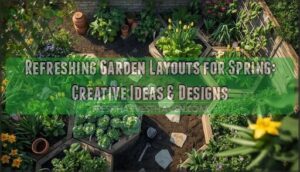
Winter’s grip finally loosens, and your garden sits there looking tired, stuck in last year’s layout. You’ve walked past those same predictable rows of plants enough times to know something needs to change—spring deserves better than a carbon copy of what came before.
Revitalizing garden layouts for spring isn’t about tearing everything down; it’s about reimagining your outdoor space with clever patterns, vertical solutions, and color schemes that wake up both your yard and your enthusiasm for getting your hands dirty. Geometric raised beds can transform flat, boring plots into architectural showpieces, while curved pathways invite exploration instead of just connecting point A to point B.
The right layout doesn’t just look superb—it makes planting, maintaining, and harvesting so much easier that you’ll actually want to spend time out there.
Table Of Contents
- Key Takeaways
- Creative Raised Bed Layouts for Spring
- Vertical and Small Space Garden Ideas
- Colorful Spring Planting Schemes
- Inviting Garden Pathways and Features
- Sustainable and Low-Maintenance Designs
- Frequently Asked Questions (FAQs)
- How to refresh garden beds for spring?
- What are some spring garden design ideas?
- How to create a beautiful Spring Garden?
- How important is a garden layout?
- How do I choose a garden layout?
- What is the best layout for a raised bed?
- What is the best garden layout for a small garden?
- How do I transition my garden layout from winter to spring?
- Can I combine spring bulbs with existing perennials successfully?
- How do I prepare my old garden layout for spring planting?
- Conclusion
Key Takeaways
- Raised beds with geometric patterns, multi-level tiers, and companion planting transform boring layouts into productive architectural features that make spring gardening easier and more visually exciting.
- Vertical gardening through living walls, trellises, and stacked containers maximizes small spaces by growing upward instead of outward, turning patios and balconies into high-yield edible landscapes.
- Curved pathways, water features, and dedicated relaxation nooks create inviting garden experiences that guide movement naturally while offering focal points and comfortable spaces to actually enjoy your outdoor area.
- Native plants, drought-tolerant species, and pollinator-friendly layouts cut maintenance time dramatically while building sustainable ecosystems that thrive on minimal intervention once established.
Creative Raised Bed Layouts for Spring
Raised beds aren’t just about getting your veggies off the ground—they’re your chance to break free from the boring rectangle rut and design something that actually makes you excited to garden. Whether you’re working with clean geometric lines, stacking beds for dramatic height, or pairing plants that help each other thrive, spring is the perfect time to rethink your layout.
A garden makeover for spring can transform your outdoor space by incorporating curved pathways, native plants, and creative hardscaping alongside those elevated beds.
Here are three fresh approaches that’ll transform your raised bed game and give your garden some serious personality.
Geometric Patterns and Shapes

Geometric landscaping transforms your spring garden layout into an eye-catching masterpiece. You can break free from boring beds by using bold, structured designs that reflect your adventurous spirit.
- Symmetrical grids create balanced 90-degree pathways with repeating square segments
- Circular patterns layer concentric rings around a central focal point for radiating depth
- Polygon tessellations fit hexagons or triangles together without gaps
- Lattice designs form crisscross diamond frameworks for climbing plants
- Diagonal grids rotate beds 45 degrees to add vigorous movement
Multi-Level Raised Beds
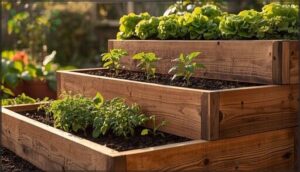
Stacking your raised garden beds into tiered garden systems lets you plant more variety without claiming extra ground. These multi-level irrigation setups stack frames 12 to 18 inches high, giving each crop zone its own drainage while you avoid backbreaking bends.
Cedar or composite raised bed materials resist rot, and soil layering with 60 percent topsoil to 40 percent compost keeps roots thriving across every level. For detailed guidance on materials, sizes, and layouts, check out these multi-level raised bed plans.
| Feature | Benefit |
|---|---|
| Independent drainage per tier | Prevents waterlogging in lower layers |
| 12–18 inch height | Reduces bending and strain |
| Cedar or composite frames | Resists rot and lasts seasons |
| 60/40 topsoil-compost mix | Optimizes root health across levels |
Companion Planting in Beds

Once you’ve built those tiered frames, pairing the right plants together turns garden layout into a living ecosystem. Companion planting boosts pest control and soil health naturally—basil next to tomatoes deters thrips while marigolds combat nematodes in your spring garden beds.
Pair peppers with onions and carrots with beans using these companion planting strategies for summer vegetables to maximize your harvest through the warm months.
Smart plant pairing strategies for nutrient cycling and stronger vegetable gardening:
- Beans fix nitrogen, feeding nearby leafy greens without fertilizer
- Deep-rooted carrots and shallow lettuce share space without competing
- Dill attracts hoverflies that devour aphids on broccoli
Rotate companion groups each season for long-term crop rotation benefits. For even more tips, consider learning about that maximize garden efficiency and resilience.
Vertical and Small Space Garden Ideas
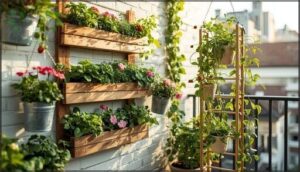
When you’re working with a tight footprint, going up instead of out is the secret weapon you need. Vertical setups and clever container arrangements let you pack serious growing power into balconies, patios, and postage-stamp yards without sacrificing beauty or bounty.
Here are three smart strategies to make the most of every inch of your small-space garden this spring.
Living Walls and Trellised Plants
When you’re ready to reclaim unused wall space, vertical gardening with living walls and trellis designs opens up a whole new dimension. Green wall systems use modular panels or felt-based setups paired with drip irrigation to keep climbing plants thriving year-round.
Wall-mounted planters and trained vines transform flat surfaces into stunning focal points, making space-saving gardening both practical and rebellious against the limits of small yards.
Compact Herb and Edible Gardens
Herb garden plans and edible landscaping come alive in tight quarters when you layer basil with tomatoes in raised beds—12 to 18 inches deep keeps roots happy and drainage sharp.
Compact gardening meets vertical harvest as trellised mint climbs 2 to 3 feet high, while container gardening and small space gardening tactics let you group chives along bed edges, blocking pests and adding bold flavor to every vertical garden corner.
Space-Saving Container Arrangements
Beyond flat container gardening, you can stack modular planters and create vertical gardens that turn cramped patios into productive space optimization zones—compact designs don’t sacrifice yield when you plan smart.
Here are some strategies to maximize your small space:
- Tall modular plant stands add two to three extra levels without widening your footprint, perfect for small space garden design and vertical gardening.
- Tiered shelves convert narrow corners into planting zones spaced 12 inches apart.
- Stackable seedling trays fit 4 to 6 layers in a 2 by 2 foot area.
- Wall mounted planters hold up to 24 pots in a 4 by 6 foot wall space.
- Under shelf hooks provide room for hanging baskets without crowding the floor, enhancing your garden layout planning and space-saving gardening strategy.
Colorful Spring Planting Schemes

Spring’s the perfect time to break free from bland garden beds and paint your yard with color. Whether you want bold pops of contrast or a soft, dreamy palette, the right planting scheme transforms your space from ordinary to unforgettable.
Here are three creative ways to bring serious color drama to your spring garden.
Spring Bulbs and Early Bloomers
Spring bulbs bring your garden to life when you need it most, especially with early bloomers like crocuses and daffodils pushing through in late winter.
These spring florals are garden renewal heroes, offering fresh color when everything else feels dull.
Plant them in fall at two to three times their height, and you’ll have a stunning spring garden that practically runs itself with minimal bulb care tips needed.
Color-Block and Monochrome Gardens
Color blocking creates visual punch by grouping plants in bold, single-hue sections that make your spring garden design unforgettable. Monochrome schemes using one color family—think all whites or greens in varied textures—bring calm sophistication to your garden layout.
Layer glossy leaves with fuzzy foliage and fine grasses to add depth, place focal points like sculptures at opposite ends, and you’ll build seasonal interest that keeps eyes moving through every corner.
Mixing Edibles With Ornamentals
You don’t have to choose between function and beauty—edible landscaping lets you weave lettuce, basil, and strawberries into ornamental flower borders for a garden layout that delivers seasonal harmony and fresh harvests.
Plant nasturtium around beans to repel aphids while their petals add edible color, position rainbow chard stems against purple perennials, and use companion planting to build a vibrant spring garden that looks stunning and tastes excellent.
Inviting Garden Pathways and Features

Your garden’s pathways and features shape how people move through and experience the space, turning a collection of plants into a destination worth exploring. Thoughtful design choices like curved paths, calming water elements, and cozy seating areas transform your yard from just functional to genuinely inviting.
Let’s look at three ways to create that welcoming atmosphere this spring.
Curved and Circular Path Layouts
Nothing transforms your outdoor space organization quite like curved path design that draws the eye forward and invites you to wander. These flowing landscape design features break free from rigid grids, creating spring garden layouts that feel organic and welcoming.
Here are five ways circular garden beds and soft edge landscaping reshape your space:
- Gentle arcs guide movement naturally, reducing sharp turns while improving accessibility for all visitors.
- Circular loops concentrate attention toward central focal points like benches or stunning plant displays.
- Radiating beds around a center circle create cohesive, symmetric planting schemes visible from multiple angles.
- Multi-level circles built in stepped tiers add dramatic height variation and solve drainage challenges on slopes.
- Navigation systems using curved sight lines disperse foot traffic smoothly, preventing crowding at entry points.
Curved garden pathways use gradual bends to soften borders between lawn and beds, making even irregularly shaped yards work beautifully. Stone or brick follows the arc to create rounded edging that avoids trip hazards, while the consistent path width maintains safe footing and a cohesive look throughout.
For maximum impact, plan your circular centered garden with a central planting bed or sculpture as a strong visual anchor, then let flagstone or gravel radiate outward. The center can stay open for a seating nook where you’ll enjoy seasonal color bursts from every direction—a superb way to make your spring garden layout feel both adventurous and thoughtfully organized.
Water Features and Focal Points
Your curved pathway can lead to something magical: water features and fountains that anchor your garden design and layout. A fountain measuring 2 to 4 feet tall becomes an instant centerpiece, while garden ponds ranging 6 to 12 feet wide support fish and aquatic plants.
Wall waterfalls mounted 3 to 6 feet high offer vertical gardening and space optimization, and fountain lighting with warm LEDs extends the focal magic into evening hours.
Relaxation Nooks and Outdoor Furniture
After your fountain sets the mood, it’s time to build a relaxation corner that actually invites you to linger. Outdoor seating anchored by weather-resistant frames in teak or powder-coated aluminum transforms garden design and layout into functional outdoor living spaces where you can unwind.
Smart outdoor furniture choices include:
- Quick-dry cushions with UV-rated fabrics that bounce back after rain
- Ergonomic loungers supporting lower back alignment during extended use
- Ambient lighting via solar lanterns and warm LED strings rated for 45 mph winds
- Low-maintenance materials like resin wicker that cleans with simple soap
Corner placements boost privacy while keeping your relaxation spaces bright, and cushion covers with hidden zippers make furniture maintenance a breeze. Outdoor decor in ocean tones and light neutrals reflects heat, while proximity to greenery enhances the sensory experience through natural scent and sound.
Sustainable and Low-Maintenance Designs

You don’t need to spend every weekend working in your garden to keep it looking beautiful. The best spring layouts work with nature instead of against it, choosing plants that practically take care of themselves once they’re established.
The best spring gardens work with nature, choosing plants that thrive on their own once established
Here are three smart design strategies that’ll give you more time to actually enjoy your outdoor space.
Native and Drought-Tolerant Plant Choices
Your region’s native species thrive with minimal fuss because they’ve already adapted to local soil and rainfall patterns. Planting drought-resistant natives—think wildflowers, grasses, and shrubs—lets you embrace water conservation and xeriscaping techniques that slash maintenance time. Below, you’ll find sustainable gardening options that practically run themselves once their deep root systems tap into natural moisture.
| Native Plant Type | Water Needs After Establishment | Key Benefit |
|---|---|---|
| Wildflowers | Low | Attracts pollinators, vibrant color |
| Native Grasses | Minimal | Erosion control, texture |
| Shrubs | Low to Moderate | Year-round structure, wildlife shelter |
| Groundcovers | Low | Weed suppression, soil protection |
| Perennials | Low to Moderate | Recurring blooms, habitat support |
Pollinator and Wildlife-Friendly Layouts
Beyond just saving water, you’re building actual ecosystems when you add pollinator gardens and wildlife habitats. Mix tubular flowers for hummingbirds with flat-topped asters for bees, then tuck in native plants as host species for butterflies.
Your bee-friendly layout should cluster blooms within 20 feet of each other, creating nectar highways that guide pollinators through your sustainable gardening space effortlessly.
Easy-Care Mulching and Composting Zones
A dedicated mulching zone transforms your garden maintenance and care into something you’ll actually want to do. Spread 2 to 4 inches of organic mulch around your spring gardening beds for excellent weed control and soil health—just keep it away from stems to prevent rot.
Pair this with a simple three-bin compost setup, and you’ve nailed sustainable gardening practices that practically run themselves.
Frequently Asked Questions (FAQs)
How to refresh garden beds for spring?
You might think soil is soil, but revitalizing beds starts with lifting compacted ground 8 to 12 inches deep, mixing in 2 to 3 inches of compost for better drainage and spring cleanup success.
What are some spring garden design ideas?
Spring garden ideas blend raised beds with geometric shapes, vertical trellises for climbing plants, and color-block schemes using bulbs like tulips.
Curved pathways, native plantings, and pollinator-friendly layouts create inviting, sustainable outdoor spaces.
How to create a beautiful Spring Garden?
Like a painter starting with a fresh canvas, you can transform your yard with smart garden planning that blends spring florals, seasonal themes, and blooming tips to craft a stunning spring garden layout brimming with vibrant energy.
How important is a garden layout?
A thoughtful garden layout shapes your space planning, plant health, and overall garden functionality. It boosts soil quality, defines your garden style, and transforms landscape design from chaotic to cohesive—making every square foot work beautifully.
How do I choose a garden layout?
Start your garden layout with a site assessment—measure sunlight, check drainage, and walk the space.
Then match your personal style to plant needs while keeping budget planning flexible enough for future growth.
What is the best layout for a raised bed?
The best raised bed design combines modular layouts with companion planting, geometric patterns, and multi-level tiers.
Build 4-foot-wide beds for accessibility, enhance soil with crop rotation, and integrate vertical gardens for maximum spring productivity.
What is the best garden layout for a small garden?
Vertical gardens paired with raised beds work best for small plots, because you’re maximizing every inch—walls and ground alike—while creating an urban gardening setup that feels expansive rather than cramped.
How do I transition my garden layout from winter to spring?
Like nature shaking off a long sleep, shifting your garden from winter to spring starts with seasonal cleanup—clearing winter debris, renewing soil with compost, and planning beds for garden rebirth through thoughtful spring gardening tips.
Can I combine spring bulbs with existing perennials successfully?
You can absolutely pair spring bulbs with perennials—just plant bulbs at two to three times their height, choose complementary colors, and stagger bloom times for continuous color and layered garden designs.
How do I prepare my old garden layout for spring planting?
Start with garden cleanup—sweep debris and diseased foliage to prevent pests. Then test soil pH, targeting 0 to 0, and work in 2 to 3 inches of compost for healthy spring growth.
Conclusion
Here’s the irony: most gardeners spend months dreaming about spring, then panic-plant the same tired layout they’ve complained about all winter.
Revitalizing garden layouts for spring doesn’t require a landscaping degree—just willingness to experiment with shapes, heights, and colors that actually excite you.
Your garden already survived the cold; now give it a design worth waking up for. Break the pattern, plant something unexpected, and watch your yard finally match your ambitions.