This site is supported by our readers. We may earn a commission, at no cost to you, if you purchase through links.
Most first-time gardeners don’t fail because they plant the wrong things—they fail because they skip the groundwork. A seed dropped into tired, compacted soil in a shady corner has almost no chance, no matter how carefully you water it. The good news? The gap between a disappointing patch and a thriving one usually comes down to a few hours of smart preparation before anything goes in the ground.
Spring garden preparation for beginners doesn’t require expertise or expensive equipment. It requires a clear sequence: the right spot, the right soil, the right timing. Follow that sequence, and your plants do most of the heavy lifting themselves.
Table Of Contents
- Key Takeaways
- Plan Your Spring Garden First
- Clean Beds After Winter
- Prepare Soil for Planting
- Ready Tools and Watering Systems
- Start Planting Spring Crops
- Frequently Asked Questions (FAQs)
- What are 5 ways to prepare a garden for spring planting?
- What are 5 essential garden chores to do before spring?
- When should I start preparing my garden for spring?
- Are You preparing your garden for spring?
- How do I get my Garden ready for spring?
- How do you prepare a garden before planting?
- How do I prepare my garden for the spring equinox?
- What common mistakes do beginner gardeners make?
- What is the 80 20 rule in gardening?
- What is the most common mistake of first time gardeners?
- Conclusion
Key Takeaways
- Most beginner garden failures come down to skipping soil prep and picking the wrong spot — not choosing the wrong seeds.
- Knowing your last frost date is the single most important piece of timing information you need before planting anything.
- Healthy soil is your biggest lever: test your pH, mix in 3–4 inches of compost, and loosen compaction before a single seed goes in.
- Simple companion planting — like marigolds next to tomatoes or peas near leafy greens — cuts pest pressure and feeds your soil without extra effort.
Plan Your Spring Garden First

Before you touch a single seed or shovel, it pays to spend a little time thinking through what you actually want from your garden. A few early decisions will shape everything that comes after — and honestly, they’re easier to make than you’d think. Here’s where to start.
If you’re just getting started, a solid beginner’s garden planting guide can help you map out those early choices before you ever pick up a trowel.
Choose Your Garden Type
Before you buy a single seed, it’s worth asking yourself: where and how do you actually want to grow?
Raised beds warm up faster in spring, drain well, and give you total control over your soil mix. Containers are perfect for patios or balconies — just make sure they have drainage holes and use proper potting mix, not garden soil. Short on ground space? Vertical wall planters let you grow herbs and small vegetables upward. In-ground beds blend right into your yard with less setup cost. Considering space constraints, a container garden offers mobility can be an excellent solution.
Pick a Sunny Location
Once you’ve settled on your garden type, the next question is: where exactly will it live?
Most vegetables need 6 to 8 hours of direct sun daily. A south or southwest-facing spot is usually your best bet.
- Full sun unlocks sweeter carrots and richer tomatoes
- Good air circulation keeps fungal disease from taking hold
- Avoid low spots where cold air collects — frost pockets are sneaky
- Easy water access means you’ll actually water consistently
Sketch a Simple Layout
Now you know where your garden will go — so let’s figure out what goes where.
A quick sketch saves you real headaches later. Keep it simple: grid pattern spacing of 2–4 meters between beds, with path widths of 45–60 cm so you can move comfortably. Stick to rectangles — they make vegetable garden planning and spacing so much easier.
Check Your Frost Dates
Your sketch is done — now let’s make sure your timing is right.
Your last frost date is the single most important number in spring gardening. Look it up using a frost date calculator online; just enter your ZIP code or town. Remember, local microclimates matter too — a south-facing wall or low-lying frost pocket can shift your safe planting window by a week or two.
Choose Beginner-friendly Crops
Picking the right crops is half the battle won before you even get your hands dirty.
Leafy greens like spinach and arugula are perfect starters — spinach is harvest-ready in just 37 days, arugula in three to four weeks. Radishes mature in 25 days, making them almost instant gratification. For herbs, basil and cilantro deliver usable leaves within a month.
Clean Beds After Winter
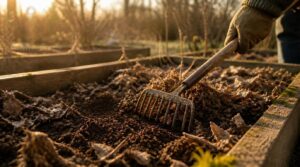
Winter leaves your garden beds looking a little rough, and that’s completely normal. Before you plant a single seed, you’ll want to clear things out and give your beds a fresh start. Here’s what to work through, step by step.
Once morning temperatures rise, peel back those frost covers to prevent overheating, and this seasonal garden watering and maintenance guide walks through getting the timing right.
Remove Weeds and Debris
Think of your beds as a blank canvas — but right now, they’re covered in last season’s mess. Start on a dry day so the soil is workable and weeds lift out cleanly. Here’s what to clear first:
- Fallen leaves and tangled mulch
- Sticks, litter, and plastic fragments
- Dead stems and spent foliage
- Early weed seedlings before they spread
Pull Roots by Hand
Once the surface debris is gone, it’s time to deal with what’s hiding below. Moist soil makes this much easier — roots slide out cleanly instead of snapping off.
Grab each weed firmly at the base, pull slowly and steadily, and you’ll lift the whole root mass. Clear away every fragment you pull, then lightly loosen the soil surface so regrowth has nowhere to hide.
Clear Diseased Plant Material
Diseased plant material is sneaky — it looks harmless but carries pathogens that can quietly reinfect your whole bed.
- Bag or seal infected stems, leaves, and roots immediately
- Never compost diseased tissue — pathogens survive and spread
- Wipe tools with 70% isopropyl alcohol between cuts
- Recheck beds two to three weeks later for returning symptoms
Refresh Paths and Borders
After a long winter, your garden paths and borders often look tired — sunken edges, scattered gravel, and weeds creeping in from the sides.
Start by resetting any loose edging stakes every 12 to 18 inches. Refill compacted gravel paths with fresh ¾-inch crushed stone.
Then tuck in low‑growing plants like creeping thyme along borders for a living, weed‑suppressing edge.
Protect Early Spring Growth
Even one unexpected frost can wipe out weeks of work overnight. That’s why frost protection matters the moment seedlings appear.
- Lay floating row covers to buffer temperatures by 2–5°F
- Install cold frames or tunnels for 3–7°F of extra warmth
- Apply 2–3 inches of mulch to insulate soil
Remove covers daily when temperatures climb above 45°F.
Prepare Soil for Planting
Good soil is the foundation everything else depends on. Before you put a single seed in the ground, it’s worth taking a few minutes to understand what your soil actually needs. Here’s how to get it ready.
Test Soil PH
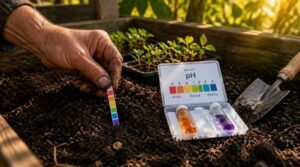
Think of a soil test as your garden’s report card — it tells you exactly where things stand before you start planting. Grab a home pH test kit or send a sample to your local extension office for soil analysis.
Target a pH between 6.0 and 7.0 for most vegetables.
If readings fall below 6.0, apply 5–10 lb of lime per 100 sq ft to correct it.
Add Compost or Amendments
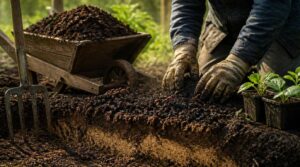
Now that you know your pH, it’s time to feed the soil itself. Compost is your best friend here — mix 3–4 inches into the top 6–12 inches of soil before planting.
It balances nutrients, improves structure, and fuels the microbes that keep roots healthy long-term. Apply it 2–3 weeks before planting so everything settles in nicely.
Loosen Compacted Soil Gently
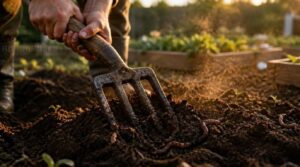
Compost feeds the soil — but if the ground beneath is packed tight, roots won’t go anywhere.
Grab a garden fork and push the tines 6–8 inches down, rocking gently back and forth. One pass per bed is enough. Overworking it breaks down the natural structure you’re trying to protect. After loosening, water slowly and evenly to wake up microbial activity.
Improve Clay or Sandy Soil

Not all soil plays fair. Clay holds water so well it suffocates roots, while sandy soil drains so fast nutrients wash right out before plants can use them.
For clay drainage, work in compost and gypsum — gypsum breaks up dense particles and improves aggregation. For sandy moisture retention, mix in aged compost or biochar, which locks in water and feeds soil microbes beautifully.
Apply Mulch After Planting
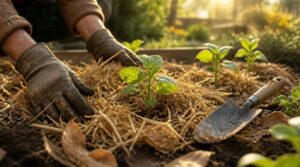
Mulch is your garden’s best defense once planting is done. Spread a 2 to 3 inch layer of shredded bark, straw, or composted leaves across your beds. Keep it a few inches back from stems to prevent rot.
- Mulch locks in soil moisture between waterings
- It suppresses weeds before they take hold
- Organic types slowly feed your soil as they break down
Ready Tools and Watering Systems
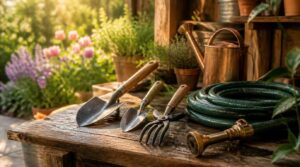
Before you put a single seed in the ground, it’s worth spending an hour getting your tools and watering setup in order. Think of it as setting yourself up to win — a sharp shovel and a working hose make every task that follows easier. Here’s what to check and prepare before planting day arrives.
Clean and Sterilize Tools
Your tools are only as trustworthy as how well you care for them.
Before anything else, wash off dirt and grease with mild soap and warm water, then rinse completely.
Mix a 10% bleach solution and soak metal tools for 30 minutes. For wooden grips, sanitizing wipes work well.
Dry everything fully — moisture is rust’s best friend.
Sharpen Pruners and Shovels
A dull blade does more harm than good — it tears stems instead of slicing cleanly.
- Keep your bevel angle between 15–25 degrees when sharpening pruners
- Deburr blade edges with a fine stone after filing for smooth cuts
- Tighten the pivot screw to keep alignment after sharpening
- Apply horticultural or camellia oil to prevent rust
Always wear gloves while sharpening.
Organize Essential Supplies
Think of your shed as a command center.
Clear, labeled bins grouped by task — seed starting, transplanting, pruning — mean you grab what you need without rummaging.
A rolling cart moves your kit straight to the garden.
Keep a simple restock checklist on the wall so nothing runs out mid-season.
Inspect Hoses and Irrigation
Before you water a single seed, run a quick irrigation system check from end to end.
Walk each hose and look for cracks, bulges, or stiff sections — that’s hose leak detection in its simplest form. Flush lines to clear debris, test each drip emitter’s flow, and use a pressure gauge for pressure gauge calibration. Don’t forget your backflow preventer safety check.
Set Up Rainwater Collection
A simple rain barrel can quietly transform your water conservation efforts all season long.
Pick a roof material free of tar or heavy metals — these leach into stored water.
Install gutter debris screens, then add a first flush diverter to dump that first dirty runoff.
Set your tank on a level, solid base and let gravity do the rest.
Start Planting Spring Crops
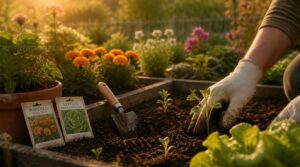
With your soil ready and tools sharp, it’s time for the best part — actually getting plants in the ground. Spring planting works best when you follow a simple order, from sowing seeds directly outdoors to setting up your first companion pairs. Here’s exactly how to do it, step by step.
Direct-sow Cool-season Vegetables
Once the soil hits around 45–65°F, cool-season crops are ready to go.
Sow peas 1–2 inches deep, spacing them 1 inch apart with rows 18–24 inches wide.
Lettuce goes in at just ⅛–¼ inch deep.
Succession sow every 10–14 days to keep harvests rolling.
Intercrop radishes alongside spinach — they share space beautifully and both thrive in cool, moist seedbeds.
Harden Off Indoor Seedlings
Your cool-season seeds are in the ground — now it’s time to prepare your indoor seedlings for the real world. Harden off gradually over 7–14 days before transplanting. Start with 2 hours outside in a sheltered, shaded spot, adding an hour daily. Bring them in if temperatures dip below 50°F or strong winds kick up.
Transplant After Last Frost
Your seedlings have survived hardening off — now comes the moment you’ve been waiting for.
Once nighttime temps stay above freezing for 7–10 consecutive days and soil hits 60°F, you’re clear to transplant.
Water seedlings thoroughly beforehand, set them at container depth, and firm the soil gently around each root ball to minimize transplant shock.
Space Plants Correctly
Now that your transplants are settled in, spacing is what separates a thriving bed from a tangled mess.
Tomatoes need 18–36 inches between plants; peppers want 12–18 inches. For tight spaces, square foot planting maximizes every inch.
Stagger rows to boost airflow and cut disease risk. Vertical growers like pole beans can sit 6–12 inches apart along a trellis.
Use Simple Companion Planting
Think of companion planting as your garden’s natural support network.
Marigolds beside tomatoes reduce soil nematodes over the season. Nasturtiums lure aphids away from lettuce. Peas quietly fix nitrogen in the soil, feeding nearby greens without a drop of fertilizer. Tuck basil between tomato plants — it fills gaps and deters pests.
Plant marigolds beside tomatoes, basil between peppers, and let peas quietly feed your whole garden for free
Small choices, big results.
Frequently Asked Questions (FAQs)
What are 5 ways to prepare a garden for spring planting?
Five steps make garden soil preparation simple: control weeds, prepare the soil, and check nutrient levels. Then apply mulch, maintain your tools, conserve water, and follow organic pest control to fit your seasonal planting schedule.
What are 5 essential garden chores to do before spring?
Five must-do chores: clear bed debris and weeds, test and amend garden soil preparation, sharpen and clean tools for garden tool maintenance, refresh mulch replacement, and check irrigation lines for water efficiency before sowing season starts.
When should I start preparing my garden for spring?
Start your garden planning 4 to 6 weeks before your last frost date, factoring in your microclimate. Lock in seed orders early in cold climates, clear winter debris, and stay flexible for late frost risks.
Are You preparing your garden for spring?
Like Maria did last March, sketching her backyard before touching a trowel—that’s the smart move. Run through a spring readiness checklist: assess your space, set garden goals, time plantings by frost dates, ready your tools.
How do I get my Garden ready for spring?
Getting your garden spring-ready takes just five steps: plan your layout, clear winter debris, prep your soil, sharpen your tools, and sow your first cool-season crops at the right time.
How do you prepare a garden before planting?
Before a single seed goes in, your garden needs a solid foundation. Clear debris, test your soil, fix its texture, and get your tools sharp and ready.
How do I prepare my garden for the spring equinox?
The spring equinox signals it’s time to act. Clear out winter debris, test your soil, and check your local frost dates — then you’ll know exactly when to get seeds in the ground.
What common mistakes do beginner gardeners make?
Most beginners skip soil testing, inviting nutrient imbalances, overwatering risks, and improper lighting. They misjudge planting depth, mix incompatible companions, and ignore weed control—items on every spring gardening checklist for garden maintenance and garden supplies.
What is the 80 20 rule in gardening?
The 80/20 rule means roughly 20 percent of your efforts — like prioritizing soil health and smart watering — drive about 80 percent of your garden’s results. Focus there first.
What is the most common mistake of first time gardeners?
The most common mistake? Random planting without a plan. First-timers skip frost dates, pick unfamiliar crops, and misjudge sun exposure — then wonder why nothing thrives. A little planning upfront saves a lot of disappointment.
Conclusion
Think of your garden as a conversation — the soil speaks first, and your plants respond. Every step you’ve taken in spring garden preparation for beginners has set that dialogue up for success.
You’ve chosen the right spot, fed the earth, timed your plantings, and shown up prepared.
That’s not luck — that’s the foundation real harvests grow from.
Keep showing up, stay curious, and the garden will keep answering.
- https://phsonline.org/for-gardeners/gardeners-blog/prepare-garden-soil-fall-for-spring-planting
- https://thedallasgarden.com/spring-planting-calendar-for-north-texas
- https://www.almanac.com/gardening/planting-calendar
- https://www.farmersalmanac.com/calendar/gardening
- https://reencle.co/blogs/news/how-to-prepare-vegetable-garden-spring