This site is supported by our readers. We may earn a commission, at no cost to you, if you purchase through links.
Snow on the ground doesn’t have to mean an empty herb bed. While most gardeners pack away their tools after the first hard frost, you can still walk outside and pinch fresh thyme, sage, or chives from a living winter patch.
Cold air, low sun do create real limits, but they also favor tough, aromatic plants that shrug off frost and keep flavoring your kitchen. With a little planning around shelter, drainage, and variety choice, herb gardening in cold climates turns from a struggle into a steady, year-round source of color, scent, and harvest.
Table Of Contents
- Key Takeaways
- Essential Cold-Hardy Herbs for Winter Gardens
- Planning and Designing a Cold Climate Herb Garden
- Winter Care and Protection Strategies for Herbs
- Top 5 Tools and Products for Cold Climate Herb Gardening
- Frequently Asked Questions (FAQs)
- What herbs grow best in cold weather?
- What is the mother of all herbs plant?
- Can an herb garden survive winter?
- Can I harvest herbs during winter months?
- How do I transition outdoor herbs indoors?
- What pests affect herbs in cold weather?
- Do herbs need fertilizer during winter dormancy?
- How often should I water herbs in winter?
- How do I start herbs from seed indoors?
- Which cold-hardy herbs grow well in shade?
- Conclusion
Key Takeaways
- Choose truly cold‑hardy herbs like thyme, sage, cold‑tolerant rosemary varieties, chives, oregano, parsley, dill, fennel, caraway, and comfrey so your garden keeps producing through freezing weather.
- Match each herb to your USDA zone and microclimates, using full sun, south‑facing walls, good airflow, and well‑drained soil with proper spacing so plants stay resilient instead of rotting or freezing out.
- Build winter protection in layers by fixing drainage first, then adding 3–6 inches of loose mulch, and using row covers, tunnels, or cold frames while timing pruning, watering, and fertilizing to avoid stressing semi‑dormant plants.
- Lean on containers and indoor spots with bright light, fast‑draining potting mix, and extra humidity, and use simple tools like cold frames, plant cloches, tunnel greenhouses, and hardy seed varieties to stretch your growing season well into winter.
Essential Cold-Hardy Herbs for Winter Gardens
Not every herb taps out when temperatures drop — some are practically built for the cold. Knowing which ones to grow makes the difference between a garden that disappears in October and one that keeps giving through February.
To plan a truly resilient winter herb bed, this guide to cold-hardy gardening in Zone 6 is gold.
Choose cold-built herbs and your garden thrives from October through February
Here are the cold-hardy herbs worth a spot in your winter garden.
Thyme – Versatile and Frost-Tolerant
Although it’s small, Thyme pulls a lot of weight in Winter Herb Gardening as one of the most reliable Frost Tolerant Herbs you can grow.
As Cold Hardy Herbs go, common and creeping types act like Perennial Herbs, staying evergreen in light snow and bouncing back once the soil thaws.
For success, focus on sun, drainage, and simple Mulch Strategies:
- Plant in full sun with gritty soil and neutral Soil pH.
- Avoid wet spots; use raised beds.
- Add airy mulch around crowns.
- Use Propagation Techniques from cuttings.
- Enjoy Culinary Applications and Pollinator Benefits.
Applying mulch around thyme helps insulate the roots during freezing temperatures.
Sage – Resilient Mediterranean Favorite
Once thyme is settled, you can lean on Sage as your woody anchor for Winter Herb Gardening.
As one of the most reliable Cold Hardy Herbs, common sage acts like the toughest of Perennial Herbs in USDA Hardiness Zones 4–9, shrugging off deep frost when soil drains well and Soil pH Preference stays near neutral.
Its earthy Flavor Profile, gentle Medicinal Uses, and value in Companion Planting all reward good Harvest Timing and light mulch around the crown each winter.
rosemary cold‑hardy varieties can survive temperatures as low as -10°F to -20°F with proper protection.
Rosemary – Hardy Evergreen for Cold Climates
Once sage is settled, Rosemary becomes your evergreen anchor, one of the Hardy Herbs you can count on for Winter Gardening. Treat it as a member of Evergreen Shrubs, especially in windy beds. For best cold performance, pick Cold Hardy Herbs such as the Arp Variety, reliable in sheltered Zone 6–7 gardens, and Madalene Hill, which tolerates around -10°F with protection.
Then focus on:
- Keeping Soil pH alkaline and roots in sharply drained soil
- Choosing Mulch Types that insulate without staying wet
- Maximizing Container Drainage and pruning lightly in late summer
Chives – Perennial Survivors
Chives (Allium schoenoprasum) are the backbone of Perennial Herb Gardening in cold climates—surviving down to -40°F with almost no fuss.
For Year Round Herb Gardening, plant them in well-drained soil, divide clumps every three to four years, and space plants four to six inches apart.
Their mild onion Flavor Profiles shine fresh or frozen, making Winter Herb Care genuinely rewarding.
Parsley, Dill, and Fennel – Biennial and Perennial Options
Once you understand their habits, Parsley, Dill, and Fennel become reliable Cold Hardy Herbs for Winter Gardening.
Focus on Seed timing in late fall, neutral Soil pH, and a Mulch depth of 2–4 inches to protect roots. Let Dill’s Self‑seeding cycles refill beds, use careful Harvest methods, and expect overwintered parsley to leaf heavily even in exposed zone 5 beds.
Caraway and Comfrey – Unique Cold-Tolerant Choices
When you want unusual workhorses for cold beds, Caraway and Comfrey deserve a closer look for Herb Gardening.
With Seed Timing and well‑drained soil, their Soil pH Preference sits near neutral, and both behave as reliable Cold Hardy Herbs.
Caraway offers aromatic Taproot Harvest and Companion Benefits, while deep‑rooted Comfrey shrugs off deep freezes, excels in Medicinal Applications, and anchors productive Winter Gardening beds.
Planning and Designing a Cold Climate Herb Garden
Once you know herbs can handle your winters, the next step is figuring out where and how to grow them.
A little upfront planning goes a long way toward keeping your garden productive even when temperatures drop.
Here are the key things to think through before you dig your first hole.
Assessing Your USDA Hardiness Zone
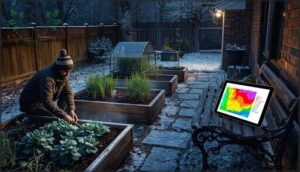
Think of USDA zones as a safety net, telling you how cold your garden gets on its worst night. Check Zone Map Tools, shaped by Historical Zone Shifts, then verify details with Local Extension Resources and Cold Climate Gardening Tips.
Use snapshot to guide these checks:
- Rate Cold Hardiness against your zone.
- Use Soil Temperature Monitoring each fall.
- Note Microclimate Adjustments near walls.
- Favor Cold Tolerant Herbs in beds.
- Adjust Growing Herbs Year‑round as records build.
Selecting The Best Garden Location

Start by choosing a spot that balances Sun Exposure, Wind Shelter, and Microclimate Suitability.
A south‑facing, leeward wall offers slightly warmer nights, while good Sunlight requirements for most Cold Hardy Plants mean close to Full Sun.
Prioritize Soil Drainage by avoiding low, soggy pockets and roof drip lines, and meet Soil Requirements with loose, WellDraining Soil near your door, proximity to house.
Designing Layout for Maximum Sun and Shelter
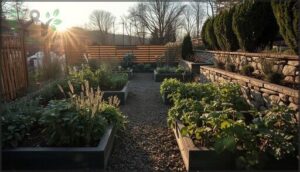
Your herb garden layout is a solar collection system — so design it like one. Run beds east to west for even full sun exposure all day, and place taller herbs like fennel on the north side so they don’t shade shorter winter herbs. Thermal mass walls of stone or brick along the south edge store daytime heat and release it overnight.
- Use east-west bed orientation to increase light across every plant
- Build thermal mass walls with stacked brick or stone along the south edge
- Apply windbreak placement on the prevailing wind side, using slatted fencing or dense shrubs
- Create sun trap geometry with a U-shaped layout opening south
- On slopes, try terrace slope design to prevent frost pockets and improve drainage
Matching Herb Varieties to Microclimates
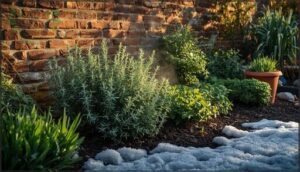
Microclimates are your secret weapon for Cold Hardy Herbs in seasonal gardening.
Tuck rosemary, sage, thyme, and oregano against South-facing walls with dark mulch for extra warmth and moisture buffering.
Use North-side shade for mint and chives, and practice careful Frost pocket placement and Wind shelter selection as core winter gardening tips, herb garden design, and herb companion planting essentials.
Calculating Plant Quantities and Spacing
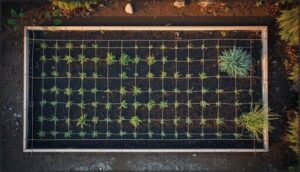
Once you’ve matched your herbs to the right microclimates, knowing how many plants to buy — and where to put them — saves you real money and frustration. Good spacing isn’t just tidy gardening; it’s your first defense against fungal rot and frost damage.
- Square Foot Method: Divide your bed into 12×12-inch sections; small cold tolerant herbs like thyme and chives fit 4–9 per square.
- Bed Area Formula: Multiply length × width, then apply your plants-per-square-foot rate for accurate totals.
- Spacing Ratio Guide: Woody hardy herbs like rosemary and sage need 18–24 inches; compact herbs need 6–8 inches.
- Plant Density Calculator: For 10 square feet at 8-inch spacing, expect roughly 22 small herbs.
- Mulch Buffer Calculation: Leave a 6–12-inch edge buffer so mulch and row covers protect border plants without crowding them.
Cold Hardy Herb Gardening rewards this kind of upfront planning — your herb garden planning and design work now means fewer losses when temperatures drop hard.
Winter Care and Protection Strategies for Herbs
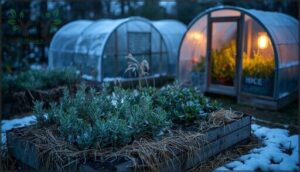
When winter settles in, your herbs don’t just need to be tough—they need the right protection around them.
With a few simple strategies, you can shield roots, soften wind and temperature swings, and keep plants productive far beyond the usual season.
Next, you’ll see the main options for preparing soil, adding insulation, and using different kinds of covers and enclosures to protect your herbs.
Soil Preparation and Drainage Improvement
Good drainage is everything for cold‑hardy herbs surviving winter.
Run a simple percolation test first — dig a hole, fill it with water, and watch how fast it drains. Slow drainage signals trouble.
Mix in grit amendments and compost to open up compacted soil, or build a mounded bed design to shed standing water naturally.
For containers, prop pots on feet to keep drainage holes clear.
Effective Mulching Techniques for Insulation
Once water drains well, insulation becomes the next defense in Winter Gardening.
Focus Mulch Material Selection on loose straw, shredded leaves, or bark.
A Straw Insulation Depth of 4–6 inches, held back from crowns, boosts frost tolerance and moisture retention strategies for cold hardy herbs.
In exposed spots, add Evergreen Bough Cover after good mulch timing to protect cold tolerant herbs for winter harvest.
Using Row Covers, Tunnels, and Cold Frames
After mulching, you can shelter Cold Tolerant Herbs and Cold Climate Plants, opening new Winter Gardening Ideas.
- Row covers with Cover Weight Selection shape light transmission effects and moisture management for beds.
- Low tunnels over cold tolerant herb varieties boost warmth while watching Ventilation Timing to prevent overheating.
- Cold frames with Seasonal Installation Schedule support growing herbs year‑round in sunlit corners.
Best Practices for Pruning and Maintenance
Pruning timing makes all the difference with cold hardy herbs. Stop heavy cuts 4–6 weeks before your first hard frost, then do light tip‑pinching through late summer to encourage dense regrowth.
Sanitize your shears between plants — dirty blades spread disease fast. Come early spring, remove dead wood from sage and thyme before new growth emerges.
Good herb garden maintenance now means stronger plants all season long.
Container Growing and Indoor Placement Tips
Lean into Container Herb Gardening when Growing Herbs in Cold Weather pushes your beds to their limits. For Indoor Herb Gardening, pair Soil Mix Selection with Light Positioning Strategies and Humidity Boost Techniques. Use a Seasonal Rotation Schedule for Year Round Gardening.
- Use a potting mix, not garden soil, and prioritize Drainage Hole Design so roots never sit in water.
- Set containers in south‑ or west‑facing windows, or hang LED grow lights 6–12 inches above foliage.
- Group pots on pebble‑and‑water trays to raise humidity while keeping the root zone moist and cold‑hardy.
- Rotate pots away from drafts and radiators.
Top 5 Tools and Products for Cold Climate Herb Gardening
Once you understand how cold-hardy herbs behave, the next step is choosing the right tools to back them up.
A few well-chosen products can make the difference between herbs that merely survive winter and plants that stay strong and usable for months longer.
Here are five practical options to help you protect, shelter, and keep your herb garden productive in cold weather.
1. The Year Round Vegetable Gardener
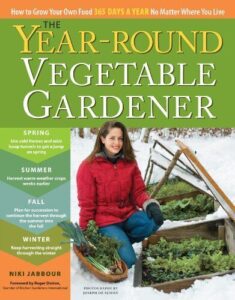
Niki Jabbour’s The Year Round Vegetable Gardener is one of those books you’ll keep returning to all winter long.
Published by Storey Publishing in 2011, this 256-page guide draws from her real Halifax garden — where frost can last from mid-October through mid-May — to show you exactly how cold‑climate growing works in practice.
She walks you through succession planting, backward planning from harvest dates, and layering cold frames with row covers to push your growing conditions one or two zones warmer.
For herb gardeners, her crop selection advice is especially useful: match the right cold‑tolerant varieties to your beds, and fresh harvests stay realistic even when snow covers the ground.
| Best For | Beginner to intermediate gardeners who want to grow vegetables year-round, especially those dealing with cold winters or short growing seasons. |
|---|---|
| Product type | Year-round gardening book |
| Primary purpose | Teach year-round food growing |
| Cold-climate role | Explains cold-frame and row-cover use for winter harvests |
| Target user | Beginner to intermediate gardeners |
| Herb focus | Advice on choosing cold-tolerant herb varieties |
| Key limitation | Less useful for very advanced growers |
| Additional Features |
|
- Covers the full calendar year, so you’re never left guessing what to do next in the garden
- Practical advice on cold frames, hoop houses, and succession planting makes extending your season actually doable
- Variety recommendations take the guesswork out of choosing what grows well in tougher climates
- Advanced gardeners who already know their way around a cold frame won’t find much new here
- The Nova Scotia focus means some planting timelines and variety picks need adjusting if you garden in a different region
- It won’t replace a more comprehensive reference if you’re looking to go deep on soil science, pest management, or advanced growing techniques
2. Portable Wooden Garden Greenhouse Frame
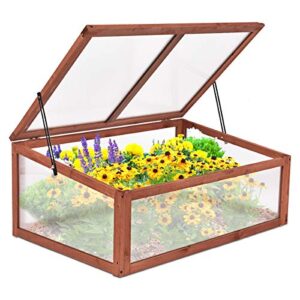
A portable wooden cold frame is one of the most practical investments you can make for a winter herb garden. This Chinese fir structure — measuring 39.5" x 25" x 15" and weighing under 10 pounds — gives you a real growing advantage without a permanent footprint.
Position it against a south-facing wall, and the polycarbonate lid catches low winter sun while keeping frost off your thyme, sage, and parsley. Crack the adjustable hinged top on warmer days to prevent heat buildup inside.
At just 9.7 pounds, you can easily reposition it as conditions change throughout the season.
| Best For | gardeners with small patios, balconies, or backyard corners who want an easy, non-permanent way to extend their growing season and protect herbs or seedlings from cold weather. |
|---|---|
| Product type | Portable wooden cold frame |
| Primary purpose | Protect herbs and seedlings |
| Cold-climate role | Extends season and prevents frost damage in small spaces |
| Target user | Gardeners with patios or small yards |
| Herb focus | Designed for thyme, sage, parsley and more |
| Key limitation | Needs anchoring and wood maintenance |
| Additional Features |
|
- Portable and lightweight (about 9.7 lbs), so you can move it around as sun and weather change.
- Solid Chinese fir wood frame with a foldable, hinged top for easy access and adjustable ventilation.
- Great for extending the growing season, hardening off seedlings, and adding a compact greenhouse to small spaces.
- Not sturdy enough for high winds or extreme weather unless you anchor or weigh it down.
- Wooden frame needs basic maintenance over time to prevent rot or weather damage.
- Some buyers report occasional shipping damage or defects, and assembly takes a bit of care to avoid stripping screws or cracking wood.
3. Protective Plant Growth Cloches Set
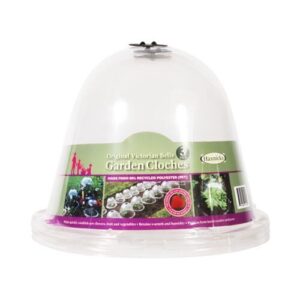
Think of these individual greenhouses as individual greenhouses, each standing guard over a single plant. The vacuum-formed APET domes — 13 inches wide and 10 inches tall — trap enough warmth to raise soil temperature by 5–10°F around your rosemary, sage, or thyme. That margin can mean the difference between a thriving plant and a frost casualty.
The adjustable top vents rotate to release excess heat on sunny days, so you don’t accidentally cook what you’re trying to protect. They’re reusable, nest compactly for storage, and work especially well during those unpredictable shoulder seasons when temperatures swing wildly.
For targeted, plant‑by‑plant protection, few tools are this simple and effective.
| Best For | Home gardeners who want simple, effective protection for individual herbs, flowers, or vegetables during unpredictable weather and shoulder seasons. |
|---|---|
| Product type | Individual plastic plant domes |
| Primary purpose | Shield single plants from frost |
| Cold-climate role | Raises soil temperature around individual plants |
| Target user | Home gardeners needing spot protection |
| Herb focus | Sized for rosemary, sage, thyme |
| Key limitation | Plastic and vents can be brittle |
| Additional Features |
|
- The dome shape maximizes light while the adjustable vents keep temps from getting too high on warm days
- Reusable and compact to store — a genuinely practical buy for repeat use season after season
- Works great as a mini-greenhouse for cuttings or young plants that need a little extra warmth to get established
- The plastic can get brittle in freezing temps, which is ironic for something meant to protect plants from cold
- Vent caps feel flimsy and need a gentle touch — not ideal if you’re in a hurry
- Some gardeners feel the price is a bit steep for how thin the plastic is
4. Portable Mini Greenhouse Tunnel Dome
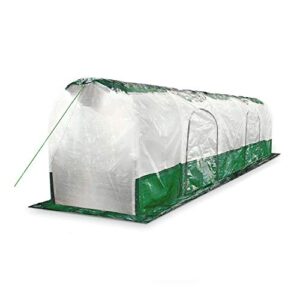
When individual cloches aren’t enough, this 118-inch stainless steel tunnel dome steps in to cover entire beds at once. It’s basically a walk-in cold frame without the construction headache — the PE cover goes on in under 30 minutes, and zippered side doors let you water or harvest without dismantling anything.
The transparent polyethylene film keeps soil temperatures noticeably warmer on cold nights, which matters most for borderline-hardy herbs like chives and thyme in zones 4 to 6. Ventilation is built in, so sunny afternoons won’t turn your tunnel into an oven.
At $50–$150 depending on frame quality, it’s one of the most practical seasonal investments for a serious cold-climate herb grower.
| Best For | Gardeners who want simple, all-season protection for a whole raised bed or row of herbs and veggies without building a permanent structure. |
|---|---|
| Product type | Stainless steel tunnel cover |
| Primary purpose | Protect entire beds from weather |
| Cold-climate role | Warms soil and shields borderline-hardy herbs |
| Target user | Serious cold-climate herb growers |
| Herb focus | Suited to rows and beds of herbs |
| Key limitation | Cover and zippers may wear or tear |
| Additional Features |
|
- Offers year-round protection from frost, wind, heat, heavy rain, and pests so you can stretch your growing season.
- Transparent, UV-stabilized PE cover with zippered side doors gives good light, airflow, and easy access for watering and harvesting.
- Lightweight, stainless-steel-supported tunnel design is easy to set up and fits well over raised beds or longer garden rows.
- PE cover and zippers can be flimsy, so heavy wind, rough handling, or frequent use may lead to rips or broken zips.
- May need extra stakes, weights, or reinforcement to stay stable in exposed or very windy spots.
- Side door openings can feel a bit tight, making it harder to reach plants at the center of the tunnel.
5. Greek Oregano Herb Seeds Packet
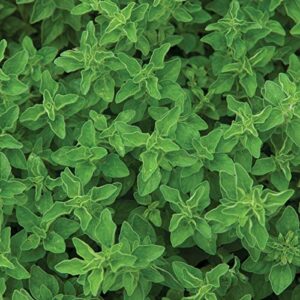
Once your beds are protected, you still need hardy genetics, and a Greek oregano seed packet is a smart place to start. Burpee’s GMO-free packet holds around 2,500 seeds, enough to fill containers and a small bed with 12‑inch plants spaced about a foot apart.
The label lists it as an annual for zones 1–11, yet Greek oregano usually behaves as a perennial in zones 5–10 when you give it full sun and sharp drainage.
Start seeds indoors 6 weeks before your last frost, sowing them on the soil surface; thin, aromatic clumps handle winter well under light mulch in cold climates.
| Best For | Home gardeners and cooks who love Italian and Mediterranean flavors and want a compact, full-sun oregano that works in containers or small beds across most growing zones. |
|---|---|
| Product type | Italian culinary herb seeds |
| Primary purpose | Provide herbs for cooking |
| Cold-climate role | Can be started after last frost in any zone |
| Target user | Home cooks and herb gardeners |
| Herb focus | Italian herb for many dishes |
| Key limitation | Germination and seed quality can vary |
| Additional Features |
|
- 2,500 GMO-free seeds per packet, giving you plenty to fill containers and a small bed with 12" plants.
- Versatile for Italian dishes, tomato sauces, pizza, fish, and salad dressings, adding rich flavor to many recipes.
- Can be grown in all zones 1–11 and started indoors or outdoors after frost, making it flexible for most climates.
- Growth can be slow and uneven if soil drainage or conditions aren’t ideal.
- Seeds may fail to germinate well if the packet isn’t stored and preserved properly.
- Packet size and seed quality may feel inconsistent compared to expectations, depending on the batch.
Frequently Asked Questions (FAQs)
What herbs grow best in cold weather?
Cold weather rewards hardy herbs like thyme, sage, oregano, rosemary, and chives, which shrug off deep freezes, while parsley, dill, and fennel handle light frosts, especially in well‑drained soil with winter mulch for root protection.
What is the mother of all herbs plant?
Gardeners usually know mother of all herbs as Plectranthus amboinicus, a tender perennial in the mint family with thick, aromatic leaves, used in folk medicine for coughs, congestion, indigestion, and in cooking as oregano‑like seasoning.
Can an herb garden survive winter?
Yes, your herb garden can survive winter if you grow hardy herbs like thyme, chives, sage, mint, and oregano, then add 3–6 inches of mulch and simple row covers or cold frames for protection outside.
Can I harvest herbs during winter months?
Like a cook raiding a winter pantry, you can still harvest herbs on mild days—snipping thyme, rosemary, chives, and sheltered parsley lightly—whenever foliage isn’t frozen solid and plants haven’t been stripped of more than one‑third.
How do I transition outdoor herbs indoors?
To move herbs indoors, choose plants like chives, thyme, oregano, mint, parsley, and rosemary, pot them in draining mix, acclimate in bright shade.
Then shift to a window, washing leaves and watering sparingly during feedings.
What pests affect herbs in cold weather?
Cold weather herbs outdoors often battle aphids, slugs, spider mites, fungus gnats, root maggots, which suck sap, chew foliage, or tunnel roots, especially under mulch, low-humidity indoor conditions, or waterlogged cold frames with poor drainage.
Do herbs need fertilizer during winter dormancy?
Feeding sleeping plants sounds kind, doesn’t it?
During winter dormancy, herb roots barely absorb nutrients, so fertilizer mostly adds stress and fragile growth; stop feeding by summer and resume diluted fertilizer with active spring growth.
How often should I water herbs in winter?
Check soil first: if the top 1–2 inches feel dry, water thoroughly, then let excess drain.
Indoors this is usually every 7–14 days; outdoor cold‑hardy herbs need water only after 10–14 dry days in winter.
How do I start herbs from seed indoors?
Think of a seed tray as a small nursery: fill it with moist, soil-less mix, sow seeds at the right depth, provide 14–16 hours of light, and keep soil between 65–75°F.
Which cold-hardy herbs grow well in shade?
Several hardy herbs actually prefer some shade: mint in damp, shady spots, chives with just 4–6 hours of sun.
lemon balm, parsley, and chervil in cool, partially shaded beds, all returning reliably in cold-climate gardens.
Conclusion
With the right hardy herbs, your garden can feel immortal, whispering green through months when everything else looks dead.
You now know which species endure, how to place them, and how to shield their roots from freezing swings.
Herb gardening in cold climates becomes less a gamble and more a quiet system you can trust.
Step outside, brush snow from a thyme sprig, and remember: you built this resilience, one small choice at a time.