This site is supported by our readers. We may earn a commission, at no cost to you, if you purchase through links.
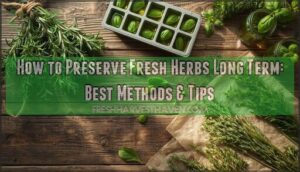
Your grocery store basil starts wilting the moment you get home, yet somehow your grandmother’s herb garden supplied her kitchen year-round. The difference? She knew how to lock in that just-picked freshness for months.
Preserving fresh herbs long term isn’t complicated—it just requires the right technique for each variety. Hardy herbs like rosemary thrive with air drying, while delicate basil needs the freezer to keep its vibrant flavor.
Once you match your method to your herb, you’ll stop watching expensive bunches turn to slime in your crisper drawer and start reaching for flavor bombs whenever you cook.
Table Of Contents
Key Takeaways
- Match your preservation method to the herb’s personality—hardy varieties like rosemary thrive with air drying, while delicate herbs like basil need freezing to lock in their flavor and prevent that dreaded crisper-drawer slime.
- Harvest your herbs in late morning after the dew dries when essential oils hit their peak, using sharp scissors to snip just above developing buds so you’re starting with maximum flavor potential.
- Flash freezing tender herbs at ultra-cold temps keeps leaf cells intact and preserves garden-fresh taste for 6-12 months, while properly dried hardy herbs stay potent in airtight containers for the same timeframe.
- Transform preserved herbs into ready-to-use flavor boosters like frozen pesto cubes, herb-infused salts, or compound butters that save you time on busy weeknights and prevent waste from expensive store-bought bunches.
Best Methods for Preserving Fresh Herbs Long Term
You don’t need fancy equipment or complicated techniques to keep your herbs flavorful for months. The secret is matching the right preservation method to each herb’s unique personality—hardy woody herbs thrive with one approach, while delicate leafy varieties need something completely different.
Let’s walk through the four most reliable methods that actually work in a real kitchen.
Air Drying for Hardy Herbs
Air drying transforms hardy herbs like rosemary, thyme, and oregano into concentrated flavor bombs! This classic preservation method locks in essential oils when done right. Here’s your roadmap to success:
- Bundle stems together and hang upside down in a dark, well-ventilated spot at 70-90°F
- Maintain proper airflow management around each bundle to prevent mold
- Check daily—leaves should crumble easily after 1-2 weeks
- Strip dried leaves and store in airtight containers away from light
Freezing Whole Leaves and Sprigs
While air drying works wonders for woody herbs, freezing whole leaves and sprigs is your best bet for tender varieties like basil and cilantro.
Flash freezing at ultra-cold temps (-40°C to -60°C) locks in flavor by keeping leaf cells intact—no blanching needed! Just lay leaves flat on a tray, freeze until solid, then transfer to airtight bags.
You’ll maintain garden-fresh taste for 6-12 months.
Making Herb Infusions (Oils, Vinegars, Butters)
Beyond freezing, herb infusions transform your harvest into flavor powerhouses that last months. Steep rosemary or thyme in vinegar for 2–6 weeks to create bold vinegar blends, or gently warm herbs in olive oil for aromatic infused oils—just refrigerate and use within 1–2 weeks to stay safe. Blend minced herbs into softened butter at 1–2 tablespoons per 100 grams for irresistible herb butters you’ll crave on everything!
- Vinegar infusions develop intense flavor profiles over 2–6 weeks at room temperature in glass bottles
- Herbal oils require dark, airtight storage and refrigeration to prevent spoilage within two weeks
- Butter recipes work beautifully with parsley, chives, or tarragon—roll into logs and freeze for months
- Pat herbs completely dry before infusing to minimize moisture that causes rapid deterioration
- Always discard any infusion showing off-odors or mold growth to protect your health
Creating Herbal Pesto and Salt Preserves
Pesto recipes and salt blends put your herbs to work in bold new ways! Blend basil, garlic, pine nuts, parmesan, and olive oil into pesto—then freeze in ice cube trays for 3–6 months of ready-to-go flavor. Layer rosemary or thyme with coarse sea salt at a 2:1 ratio to create herb-infused salt preserves that stay potent for 6–12 months in airtight jars.
| Method | Best Herbs | Shelf Life | Pro Tip |
|---|---|---|---|
| Pesto | Basil, parsley, cilantro | 3–6 months frozen | Omit cheese until serving |
| Salt preserves | Rosemary, thyme, oregano | 6–12 months | Use coarse salt for better moisture barrier |
| Herb butters | Chives, tarragon, dill | 2–3 months frozen | Roll into logs for easy slicing |
| Oil infusions | Garlic, basil, oregano | 1–2 weeks refrigerated | Gently heat, then strain and chill |
Harvesting Herbs for Maximum Freshness
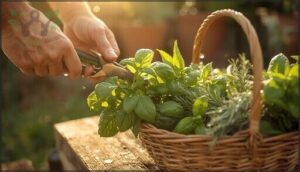
The moment you snip your herbs makes all the difference between okay flavor and wow-that’s-incredible flavor. You can’t just grab scissors whenever you feel like it—timing, technique, and a few smart moves will lock in those precious essential oils that make herbs worth growing in the first place.
Snipping herbs at the right moment with smart technique locks in precious essential oils that separate incredible flavor from merely okay
Let’s nail down exactly when and how to harvest so you’re starting with the freshest, most flavorful herbs possible.
Ideal Harvest Times and Techniques
Want to capture those essential oils at their peak? Harvest your culinary herbs in late morning after the dew dries—that’s when aromatic compounds hit their sweet spot. Snip leaves just above developing buds using clean, sharp scissors to encourage fresh growth.
Target your plant’s second or third growth stages for maximum flavor, and skip harvesting during scorching afternoon heat to prevent wilting.
Tools and Tips to Prevent Damage
Gentle cutting starts with stainless steel scissors or pruners—they’re game-changers for leaf protection. Sharp blades preserve cell structure and prevent bruising that can cost you up to 30% of those precious aromatic compounds!
Use breathable harvest baskets to control moisture during collection, and keep transport time under two hours. Quick handling equals better herb storage down the line.
How to Maintain Essential Oils During Harvest
Timing makes all the difference when you’re chasing those peak essential oils! Harvest your herbs in early morning when aromatic compounds are most concentrated—you’ll lock in maximum leaf productivity and flavor.
- Wait until full bloom or just after flowering for prime essential oil peaks
- Cut stems cleanly without crushing to prevent rapid oil loss
- Process herbs immediately to minimize oxygen exposure
- Skip pre-washing unless absolutely necessary for better oil preservation
Smart harvest timing transforms ordinary herb preservation into aromatherapy-grade quality!
Drying and Freezing Techniques Explained
You’ve got your fresh herbs in hand—now it’s time to lock in all that flavor for the long haul. Drying and freezing are your two powerhouse methods, and each one shines with different types of herbs.
Let’s break down exactly how to use both techniques so you can pick the perfect preservation method every time.
Step-by-Step Air Drying Process
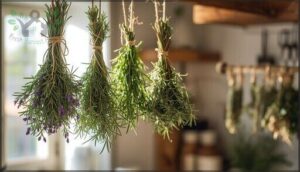
Air drying herbs is your gateway to long-term herb preservation! Start by bundling small herb bunches with string—loose enough for air circulation but secure for hanging. Choose a spot with drying racks or hooks away from sunlight.
You’re aiming for steady moisture control over 1-2 weeks. When stems snap cleanly, they’re ready for storage containers. Simple dehydrating magic!
Using Paper Bags and Proper Airflow
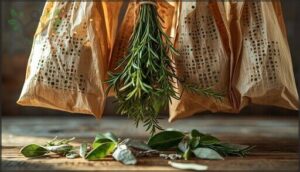
Paper bags transform your drying techniques into foolproof herb preservation! Punch small holes in the bags to boost airflow management while catching falling leaves.
Keep bundles loose inside—proper herb storage demands breathable containers that prevent mold without over-drying. Position bags in a 68–75°F space with gentle air circulation.
This preservation method balances moisture control beautifully, protecting your herbs’ color and aroma throughout the air-drying process.
Flash Freezing Tender Herbs
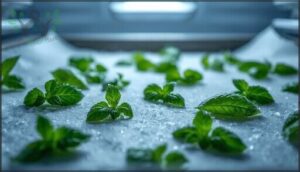
Flash freezing keeps tender herbs like cilantro and basil tasting garden-fresh for months! Spread clean, dry leaves on a parchment-lined tray—no clumping allowed. Your freezer’s rapid cooling minimizes ice crystals that damage cell walls, locking in aroma and color beautifully.
This freezing technique beats slow-freeze methods hands down for frozen herb quality. You’ll preserve those delicate flavors perfectly using proper herb blanching and freezer storage practices! To achieve the best results, it’s necessary to follow clear science writing guidelines.
Storing Herbs in Freezer Containers
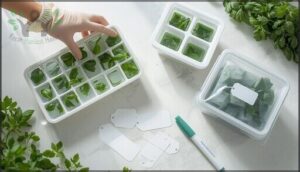
Once your herbs are flash frozen, transfer them quickly into airtight storage solutions like BPA-free freezer containers or silicone bags—this is where freezer burn prevention really matters! Label each container with the herb name and date for smart food preservation.
These container labeling and herb freezing methods keep your herb ice cubes garden-fresh for 6 to 12 months without losing flavor.
Creative Ways to Store and Use Preserved Herbs

You’ve dried your herbs, frozen your bundles, and now you’re staring at jars wondering what comes next. The real fun starts when you transform those preserved herbs into ready-to-use flavor boosters that’ll save you time on busy weeknights.
Let’s explore some clever storage tricks and creative uses that’ll make you feel like a kitchen wizard.
Herb Sachets for Culinary and Aromatic Uses
Picture little fabric pouches packed with dried herbs—your secret weapon for preserving herbs and keeping culinary arts aromatic. These sachets work through herb encapsulation, protecting volatile compounds from air exposure.
Use cotton or muslin as sachet materials for slow essential oil extraction. Mix dried lavender, rosemary, and thyme into aromatic blends.
Store your herb storage pouches in cool, dark spots, and they’ll release flavor near drying herbs for six months!
Infused Butters and Oils for Cooking
While sachets add subtle aroma, infused oils and herb-infused butters pack immediate flavor profiles into your culinary arts. Gently heat neutral oils with basil or thyme using proper infusion techniques, then strain and refrigerate—storage safety demands using infused oils within one week to prevent botulism.
Butter making with fresh herbs extends shelf life to one month when kept cold. These flavor bombs transform simple dishes instantly!
Herb Cubes and Purées for Easy Meals
Beyond infused butters, freezing herbs into cubes brings garden-fresh flavor straight to your frozen meals. Blend basil, cilantro, or parsley with a splash of olive oil—these herb pastes freeze beautifully in ice cube trays, preserving herbs for up to three months at −18°C. Label each batch with name and date for easy herb blending later!
- Drop frozen herb cubes directly into simmering soups without thawing
- Store purée methods flat in trays to optimize freezer storage space
- Create custom cube recipes combining complementary herbs for signature flavors
Organizing Preserved Herbs in The Kitchen
Clutter steals time you could spend cooking. Label every container with the herb name and date—clear labels cut waste by 35% and help you track shelf life management. Dedicate one cabinet or freezer bin as your herb headquarters for smarter kitchen organization.
Rotate older jars forward using first-in, first-out inventory tracking, and keep a simple checklist to prevent duplicate purchases and forgotten kitchen essentials.
Top 4 Products for Long-Term Herb Preservation
You’ve mastered the methods—now let’s talk about the tools that’ll make preservation easier. The right equipment saves you time and keeps your herbs fresher longer.
Here are four products worth adding to your kitchen arsenal.
1. Freshware Food Storage Containers
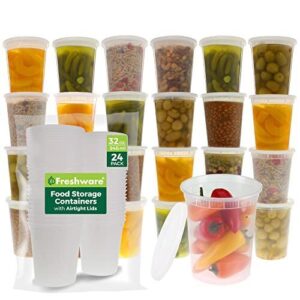
Your dried herbs and infusions deserve a proper home, and that’s where Freshware Food Storage Containers shine. These 24-count, 32-ounce containers check every box for herb preservation methods: airtight sealing locks in freshness preservation, BPA-free container materials guarantee food safety, and transparent lids let you track your herb stash at a glance.
The stackable design saves serious cabinet space—a win for kitchen organization! While some users note lid durability concerns with rough handling, hand-washing keeps these fresh herb storage champions going strong for the long haul.
- Airtight seals lock in flavor and aroma while preventing moisture from sneaking in—perfect for long-term herb storage
- Clear lids make it easy to see what you’ve got without opening every container, cutting down on waste
- Microwave, dishwasher, and freezer safe means you can reheat infusions, toss them in the wash, and freeze herb stocks without worry
- Some users reported lids cracking or breaking with heavy use or rough handling
- Hand-washing is recommended to keep lids from warping, which adds a bit of extra work
- Quality control issues pop up occasionally, with damaged containers showing up on arrival
2. Herb Decarboxylator Infuser Machine
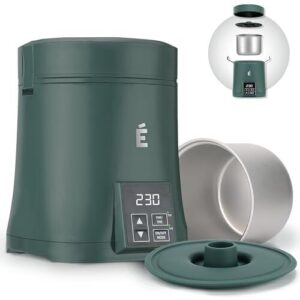
Looking for a two-in-one wonder? This $129.99 machine manages both the decarboxylation process and herb-infused oils in smart preset modes. You’ll activate compounds at precise temps—perfect for oil extraction and infusing herbs into butters.
The 2-ounce capacity manages small batches beautifully, and machine maintenance is a breeze with quick rinses. Just know that some units run 30-40°F cooler than set, so double-check your infusion techniques.
Minor quirk aside, it’s solid for home-scale herb preservation methods and serious flavor enhancement!
- Two preset modes handle both decarb and infusion automatically, so you don’t need separate equipment or constant monitoring.
- Easy cleanup with food-grade materials that rinse clean quickly after each use.
- Compact 2-ounce capacity is perfect for testing recipes or making small batches of oils and butters without waste.
- Temperature readings can run 30-40°F lower than displayed, requiring manual verification for best results.
- Not completely odor-free—opening the lid releases noticeable smell despite claims of odorless operation.
- Quality control issues mean some units arrive defective, and international users may need extra equipment like transformers.
3. COSORI Food Dehydrator Machine
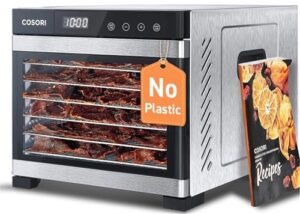
Want serious control over your herb drying game? The COSORI dehydrator ($129.99) gives you temperature control between 95°F and 165°F—essential for herb retention when you’re preserving basil, thyme, or oregano.
Six stainless steel trays handle bigger batches than oven drying or freezing herbs, and dehydration times run 4-8 hours depending on leaf thickness.
The digital panel tracks everything, and those dishwasher-safe trays beat messy food preservation techniques hands down. Storage solutions stay simple when your herbs hit that perfect crispy-dry finish!
- Digital temperature control (95°F–165°F) lets you dial in the perfect heat for delicate herbs without destroying their oils
- Six stainless steel trays give you 6.5 ft² of drying space—way more capacity than oven or air-drying methods
- Dishwasher-safe trays and quiet operation (under 48 dB) make the whole process cleaner and less annoying
- Plastic components can warp after first use according to some users
- Doesn’t fully power off automatically—you’ll need to unplug it manually when done
- Silicone sheets sold separately if you want to make fruit rolls or handle liquids
4. Herbal Medicine Encyclopedia Book

Understanding plant properties transforms your herbal preservation from kitchen hobby to serious herbalism practice.
The DK Herbal Medicine Encyclopedia ($35-$40, 352 pages) covers 560 herbs with their medicinal uses and natural remedies—perfect when you’re deciding which preservation methods suit each botanical guide entry.
You’ll find remedy lists for 150 ailments, detailed images for plant identification, and recipes that connect natural cures to your dried or frozen stash. It’s the reference that makes your preserved herbs actually useful for herbal remedies year-round!
- Covers 560 herbs with detailed medicinal properties and remedy recipes, so your preserved herbs become ingredients for treating nearly 150 specific ailments
- Combines modern scientific research with traditional uses, giving you evidence-based context for why certain preservation methods matter for different plants
- Includes identification images and practical self-help recipes that bridge the gap between storing herbs and actually using them for natural health remedies
- The comprehensive scope can feel overwhelming if you’re just starting with basic herb preservation and don’t need 560 plant profiles yet
- Doesn’t organize plants by region or native habitat, making it harder to prioritize which local herbs to preserve first
- Some pages feel crowded and certain plants lack images, which can frustrate you when trying to identify what you’ve dried or frozen
Frequently Asked Questions (FAQs)
Can you preserve herbs without losing nutritional value?
Yes—you can lock in most vitamins and minerals through smart preservation methods. Freezing herbs safeguards vitamin C and phytochemical protection best, while low-temperature drying conserves essential oils and ensures excellent mineral conservation.
How long do preserved herbs actually stay good?
Shelf life hinges on your preservation methods. Dried herbs hold potency for 6–12 months, while freezing herbs keeps them fresh for 8–12 months. Storage tips matter—cool, dark spots win every time.
Understanding the main topic and its subtopic branches can help in organizing information about herb preservation.
Which herbs dont preserve well using any method?
Delicate leaf herbs like basil, cilantro, mint, parsley, and dill struggle with preserving herbs—they lose volatile oils when freezing herbs or drying herbs, turning mushy, dark, or flavorless despite your best herbal preservation efforts.
Do dried herbs need refrigeration after opening containers?
No refrigeration needed! Store your dried herbs in airtight containers at cool, dark spots.
Moisture control and humidity management are key—keep them sealed tight, away from steam and light for maximum shelf life.
Can you mix different herbs in one container?
You can mix herbs in one container, but herb compatibility matters! Match moisture levels and flavor profiles, use breathable dividers for fresh herb storage, and check regularly for spoilage.
Conclusion
No more tossing wilted bunches that cost you eight bucks. Preserving fresh herbs long term means you’re finally running your kitchen like your grandmother did—stocked, smart, and ready for anything.
Match hardy varieties to air drying, delicate leaves to the freezer, and you’ll transform every harvest into months of vibrant flavor.
Your crisper drawer drama? Officially over. Now go raid that garden and lock in the good stuff.