This site is supported by our readers. We may earn a commission, at no cost to you, if you purchase through links.

Native Americans grew corn, beans, and squash together for centuries—not by accident, but because each plant made the others stronger. This principle still holds: pairing the right plants allows them to share nutrients, confuse pests, and shield each other from stress in ways no single crop can manage alone.
Companion planting works because plants communicate through soil chemistry, root signals, and airborne compounds. These interactions create mutually beneficial relationships, reducing the need for external inputs.
By selecting compatible neighbors, gardens operate more efficiently, requiring less fertilizer, fewer pest interventions, and yielding better harvests. Such strategic pairings harness natural synergies to optimize growth and resilience.
These time-tested combinations—from the classic "Three Sisters" trio to herb and flower pairings—offer a practical toolkit for cultivating thriving, low-maintenance gardens.
Table Of Contents
- Key Takeaways
- Best Companion Planting Combinations
- Corn, Beans, and Squash for The Three Sisters System
- Tomatoes With Basil for Pest Deterrence and Flavor Support
- Brassicas With Thyme, Sage, or Rosemary
- Eggplant With Radishes as Flea Beetle Trap Crops
- Broccoli With Sweet Alyssum for Aphid Control
- Cucumbers With Nasturtiums to Divert Pests
- Sweet Corn With Fava Beans for Nitrogen Support
- Tomatoes With Borage for Pollinators and Hornworm Deterrence
- Pest-Repelling Herb Pairings
- Basil Near Tomatoes to Confuse Thrips, Aphids, and Hornworms
- Rosemary Near Cabbage, Beans, and Carrots for Broad Pest Defense
- Thyme Near Kale, Broccoli, and Brussels Sprouts
- Sage With Rosemary for Stronger Brassica Protection
- Mint in Containers Near Cabbage or Tomatoes
- Spacing Herbs 12–18 Inches From Target Crops
- Avoiding Overcrowding That Weakens Pest-repelling Benefits
- Soil-Building Plant Partnerships
- Beans With Corn to Improve Nitrogen Availability
- Peas Before Heavy Feeders for Early Nitrogen Fixation
- Crimson Clover as Living Mulch Between Vegetable Rows
- Fava Beans With Sweet Corn for Improved Productivity
- Soybeans With Corn for Nitrogen and Weed Suppression
- Matching Companion Plants With Similar Soil PH Needs
- Rotating Legumes to Maintain Long-term Soil Fertility
- Flowers That Attract Beneficial Insects
- Sweet Alyssum for Hoverflies That Control Aphids
- Dill for Ladybugs, Lacewings, and Parasitic Wasps
- Fennel for Beneficial Insects, Planted Away From Vegetables
- Borage for Bees, Predatory Wasps, and Tomato Support
- French Marigolds for Root-knot Nematode Suppression
- Zinnias, Cosmos, and Black-eyed Susans Near Vegetable Rows
- Placing Insectary Flowers Within 10–20 Feet of Crops
- Top 6 Companion Planting Garden Aids
- Frequently Asked Questions (FAQs)
- What are good companion plant combinations?
- What grows together go together.?
- Can companion planting work in raised beds?
- How do I start companion planting as a beginner?
- Which companion plants thrive in shady gardens?
- Does companion planting work in containers or pots?
- How does weather affect companion planting success?
- Conclusion
Key Takeaways
- The Three Sisters system — corn, beans, and squash — is one of the most proven companion planting combinations, where each plant feeds, supports, or protects the others naturally.
- Aromatic herbs like basil, rosemary, and thyme work as chemical pest barriers by releasing oils that confuse and repel common garden insects before damage occurs.
- Legumes like beans, peas, and fava beans actively build soil fertility by fixing nitrogen from the air into the ground, which reduces your need for added fertilizer.
- Flowers like sweet alyssum, borage, and French marigolds do double duty — they attract beneficial pest-eating insects while suppressing harmful ones like nematodes and aphids.
Best Companion Planting Combinations
Some plant combinations just work better together — and once you see the results, you won’t want to garden any other way.
A good companion planting guide for vegetables takes the guesswork out of which pairings actually thrive side by side.
These pairings cover everything from pest control to soil health, and each one pulls its weight. Here are the best companion planting combinations worth adding to your garden this season.
Corn, Beans, and Squash for The Three Sisters System

The Three Sisters intercropping system has fed communities for centuries — and it still works. Plant corn first on mounded beds, then stagger your beans and squash over two weeks using this Three Sisters staggered planting schedule:
- Corn anchors the mound as a natural trellis
- Beans fix nitrogen through root system complementarity
- Squash shades soil, retaining moisture and suppressing weeds
Soil temperature of 60 °F is needed before planting to guarantee ideal germination.
Tomatoes With Basil for Pest Deterrence and Flavor Support

Basil and tomatoes are a classic companion planting pair — and for good reason. Basil’s linalool release masks tomato scent, cutting down on thrips, aphids, and hornworms. Staggered planting ensures basil is established as tomatoes fruit, boosting microclimate cooling and soil moisture sharing. Regular basil leaf harvest keeps airflow healthy between plants.
| Benefit | What Happens | Why It Matters |
|---|---|---|
| Pest deterrence | Linalool confuses pests’ navigation | Fewer hornworms and aphids |
| Microclimate cooling | Shared canopy lowers heat stress | Tomatoes set fruit better |
| Soil moisture sharing | Mulch retains water for both plants | Less frequent watering needed |
| Basil leaf harvest | Regular pruning improves airflow | Reduces fungal pressure |
| Companion planting benefits | Attracts bees, improves flavor | Bigger, tastier tomato yield |
Space your tomato and basil companions 12–18 inches apart for optimal herb and flower pairings, maximizing pest deterrence results.
Brassicas With Thyme, Sage, or Rosemary
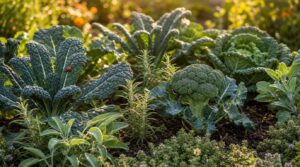
If aromatic herbs like thyme, sage, and rosemary play a similar role for your brassicas as basil does for tomatoes, their volatile oils confuse cabbage moths and flea beetles—making managing root zone competition worthwhile through smart spacing.
- Brassicas thyme pairings repel cabbage loopers and attract ladybugs
- Rosemary’s intense aroma deters flea beetles year-round
- Sage offers drought tolerance when paired with kale and broccoli
- Harvest overlap means fresh herbs while protecting crops
Space herb companion plants 12–18 inches apart, and rotate locations each season.
Eggplant With Radishes as Flea Beetle Trap Crops
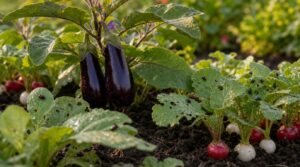
Herbs guard your brassicas well, but eggplants need a different strategy. Flea beetles love eggplant leaves—so give them something they love more: radishes. This is classic trap cropping at its best.
Timing synchronization matters here; sow radishes 2–4 weeks before transplanting eggplants. Choose quick-maturing radish variety selections, apply border placement strategies along bed edges, and monitor beetle activity regularly. Post-trap crop management means pulling damaged plants promptly for true organic pest control.
Broccoli With Sweet Alyssum for Aphid Control

Aphids can quietly devastate a broccoli crop before you even notice. That’s where sweet alyssum earns its place as one of the best flower companion plants around.
Follow these companion planting strategies for vegetable gardens:
- Alyssum Seeding Schedule – Start transplants early; use an ideal plant density of one plant per eight broccoli plants.
- Moisture Retention Strategies – Keep soil consistently moist to extend flowering duration and sustain beneficial insects.
- Transplant Timing Tips – Center-line placement maximizes natural aphid pest control.
Cucumbers With Nasturtiums to Divert Pests

Cucumbers and nasturtiums make a surprisingly effective team. Plant nasturtiums 12–18 inches from your cucumber rows—that’s your nasturtium spacing guideline sweet spot.
Their bright orange and red flowers pull cucumber beetles straight to them, acting as a trap crop so your vines stay clean.
Train climbing varieties for trellis co-growth, keep soil moisture management consistent, and you’ve got solid organic pest control through plant combinations working quietly all season.
Sweet Corn With Fava Beans for Nitrogen Support

Fava beans are one of the best companions for sweet corn. Through legume nitrogen fixation, their roots naturally enrich the soil, reducing fertilizer costs by up to 50%.
Timing strategies are critical: plant favas 2–4 weeks early to optimize biomass balance and nitrogen release.
Monitor soil temperature (55–70°F) to ensure nodule efficiency.
Carefully manage residue management to prevent decomposing material from shading young corn stalks.
Tomatoes With Borage for Pollinators and Hornworm Deterrence
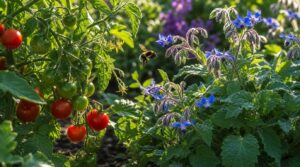
Borage is one of the best things you can plant next to tomatoes. Its bright blue flowers create a natural pollinator corridor, drawing bumblebees straight to your tomato clusters for better fruit set. It also deters hornworm moths from laying eggs nearby.
With mineral-mining roots improving soil and a self-seeding cycle ensuring an extended bloom window, borage delivers mulching heat relief while supporting natural pest control strategies season after season.
Pest-Repelling Herb Pairings
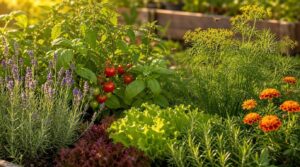
Herbs do more than flavor your food — the right ones can quietly guard your whole garden. Their natural oils and scents confuse and repel common pests before damage even starts.
Here are the best herb pairings to put to work in your beds.
Basil Near Tomatoes to Confuse Thrips, Aphids, and Hornworms
Basil is one of the best pest deterrent herbs you can grow next to tomatoes. Its essential oils—linalool and estragole—act as a chemical masking agent, making it harder for aphids, thrips, and hornworms to locate your plants.
For aromatic barrier density, space basil every 12–18 inches. Regular basil pruning boosts leaf potency as they age, while wind-enhanced diffusion spreads those oils further, attracting beneficial insects as well.
Rosemary Near Cabbage, Beans, and Carrots for Broad Pest Defense
Rosemary is one of the hardest-working pest deterrent herbs in any garden. Its rosemary’s scent barrier confuses insects through rosemary’s aphid-confusing effect on beans, rosemary’s fly-masking effect around carrots, and rosemary’s moth-deterring action near cabbage. Think of it as biological pest control you plant once and forget — a true rosemary perennial shield.
For best results, space it 18–24 inches from beans, carrots, and cabbage.
Thyme Near Kale, Broccoli, and Brussels Sprouts
Thyme serves as a dual-purpose companion for kale, broccoli, and Brussels sprouts. Its aromatic pest barrier naturally confuses cabbage moths, loopers, and flea beetles, while simultaneously attracting aphid-eating ladybugs (which consume 50+ aphids daily). Plant thyme 6–18 inches away from brassicas, as both thrive in full sun and share compatible drainage needs.
Harvest thyme leaves and scatter them over beds to enhance harvest usage and bolster soil health through beneficial microbial activity. This practice also reinforces thyme’s role as a density-filling companion and aromatic pest barrier.
Key benefits include:
- Repels cabbage moths and loopers naturally
- Attracts aphid-eating ladybugs
- Improves soil health through beneficial microbes
- Matches brassicas’ sunlight and drainage needs
- Works as both companion plant density filler and aromatic pest barrier
Sage With Rosemary for Stronger Brassica Protection
Thyme pulls in ladybugs, but pairing sage with rosemary takes Brassica protection further through volatile synergy — their overlapping scent compounds create a companion hedge that targets pests at multiple life stages. This multi‑stage deterrence shields broccoli and kale even as seedlings.
Space both herbs 12–18 inches out, mulch for moisture conservation, and prune regularly to keep those aromatic oils working hard.
Mint in Containers Near Cabbage or Tomatoes
Mint is a powerhouse pest repellent — but it spreads aggressively. Container companion planting techniques solve that problem neatly.
Use pots with proper drainage, at least 12 inches wide, to avoid root competition with your tomatoes or cabbage.
- Place containers 12–18 inches from crops
- Trim regularly to boost volatile oils
- Practice seasonal mint rotation each year
- Time your mint harvest before flowering for peak scent
Spacing Herbs 12–18 Inches From Target Crops
Once your mint is containerized, consider the spacing of every herb in your garden—spacing matters just as much as plant choice. Keep herb companion plants 12–18 inches from your crops to follow solid plant spacing guidelines.
This gap improves airflow, aids disease prevention, and reduces root competition. It also keeps irrigation access clean, suppresses weeds between rows, and allows beneficial insects to move freely.
Avoiding Overcrowding That Weakens Pest-repelling Benefits
Overcrowding quietly kills your herb companions’ pest-fighting power. When plants crowd each other, those natural oils stop spreading — and pests move right in.
Keep these plant spacing guidelines in mind:
- Maintain airflow gaps of 12–18 inches between clusters
- Use staggered planting for canopy height variation
- Practice seasonal thinning to restore VOC diffusion
- Orient rows to avoid dense blockages
- Apply intercropping as integrated pest management with companions
Soil-Building Plant Partnerships
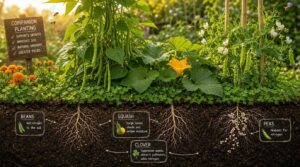
Healthy soil doesn’t happen by accident — the right plant partnerships actually build it for you. Legumes like beans, peas, and clover work underground to fix nitrogen and feed your heavy feeders season after season.
Here are the best soil-building combos worth adding to your garden.
Beans With Corn to Improve Nitrogen Availability
Beans are quite workhorses in your garden. Through nitrogen fixation by legumes, their root nodules — powered by Rhizobium inoculation — pull nitrogen straight from the air into the soil.
Intercropping legumes for soil nitrogen enhancement works best when nitrogen release timing aligns with corn’s early growth. Root zone complementarity, phosphorus balance, and moisture management keep both crops thriving — much like the classic Three Sisters partnership does.
Peas Before Heavy Feeders for Early Nitrogen Fixation
Early sowing puts peas to work before heavy feeders even hit the soil. Nitrogen fixation by legumes peaks at blooming, so intercropping legumes for soil nitrogen enhancement sets up corn or squash beautifully.
Use Rhizobium inoculation to boost nodule formation, then practice residue incorporation after harvest.
Smart variety selection and crop rotation complete the cycle — consistent nitrogen monitoring reveals exactly how rich the soil’s fertility has become.
Crimson Clover as Living Mulch Between Vegetable Rows
Crimson clover is one of the hardest-working cover crops you can grow between vegetable rows. It manages weed control efficiently by shading out germinating seeds, aids in living mulches for moisture conservation, and delivers nitrogen fixation from legumes straight to your soil.
Time your biomass termination methods right—mow or incorporate just before flowering—and you’ll increase the timing of nitrogen transfer while boosting soil microbiome enhancement and pollinator habitat benefits.
Fava Beans With Sweet Corn for Improved Productivity
Fava beans and sweet corn form a quiet powerhouse duo. Through nitrogen fixation by legumes, favas enrich root zone dynamics by feeding soil microbes that release nutrients your corn craves.
Timing synchronization matters—plant favas a few weeks early so nodules are active when corn growth peaks. This ensures real yield complementarity, with moisture conservation built right in.
Soybeans With Corn for Nitrogen and Weed Suppression
Soybeans pull double duty in the garden. Through nitrogen fixation by legumes, they boost soil nitrogen capture while their dense canopy suppresses weeds — a dual-crop canopy working around the clock.
Row spacing plays a crucial role here: tighter rows increase shade, limiting weed growth opportunities. This ecological benefit of intercropping also enhances water use synergy, allowing corn and soybeans to share resources for optimized yield partitioning.
Matching Companion Plants With Similar Soil PH Needs
Nitrogen fixation means little if your plants can’t absorb it. That’s where pH Compatibility comes in. Most companion pairs—beans, corn, basil, marigolds—share a pH overlap zone of 6.0 to 7.0, which keeps soil fertility strong and your soil microbiome active.
Use a Soil pH Chart with pH Pairing Guidelines before planting, and apply soil amendment strategies like lime or compost to fine-tune soil health.
Rotating Legumes to Maintain Long-term Soil Fertility
Think of legume rotation as leaving a nitrogen legacy in your soil. Every time you rotate beans, peas, or clover through your beds, you’re building organic matter buildup, encouraging root depth diversity, and triggering weed cycle disruption.
This symbiotic nitrogen fixation also fuels microbial enrichment deep in the rhizosphere. Crop rotation and companion planting synergy keeps your soil health improvement via intercropping working season after season.
Rotating legumes feeds the rhizosphere, builds organic matter, and keeps your soil richer every season
Flowers That Attract Beneficial Insects

Not all garden helpers come with roots — some arrive on wings. The right flowers act like a welcome sign for hoverflies, ladybugs, and predatory wasps that keep pest populations in check naturally.
Here are the best blooms to plant and where to put them.
Sweet Alyssum for Hoverflies That Control Aphids
Sweet alyssum is one of the hardest-working flowers you can add to your garden. Its tiny blooms offer continuous nectar from spring through autumn, drawing hoverflies right where you need them — near your crops.
- Nectar Timing & Seasonal Sowing: Plant early so hoverflies arrive before aphid populations spike
- Hoverfly Lifecycle: Larvae hatch near aphid colonies and consume dozens daily
- Plant Spacing: Space alyssum 8–12 inches apart for a solid nectar corridor
- Alyssum Varieties: Choose cool-season types to extend bloom during peak pest pressure
Dill for Ladybugs, Lacewings, and Parasitic Wasps
Dill pulls triple duty in your garden. When you let it flower, the nectar timing aligns perfectly with peak aphid season — drawing ladybugs, lacewings, and parasitic wasps right when you need them. Its aromatic volatiles also guide braconid wasps to target pests.
Let dill self-seed to build insectary corridors, and its dense foliage doubles as overwintering refuges for beneficial insects.
Fennel for Beneficial Insects, Planted Away From Vegetables
Fennel is a magnet for hoverflies and parasitic wasps, but its allelopathy and its impact on nearby crops earns it a reputation as "fennel and almost everything" — it doesn’t play well with vegetables. Keep your fennel distance at 6–8 feet, placed within a dedicated insectary border design.
Its 4–6 week bloom window creates reliable beneficial insect habitat, while feathery leaves offer significant microhabitat benefits.
Borage for Bees, Predatory Wasps, and Tomato Support
Borage pulls its weight in the garden like few other flowers can. Plant it 18–24 inches from your tomatoes, and you’ll draw bees, hoverflies, and predatory wasps that handle hornworms and aphids for you.
Its heat-tolerant blooms deliver nectar continuity all season, while self-seeding borage returns yearly.
It also functions as living mulch, suppressing weeds and offering a quiet soil microbiome boost beneath your tomato beds.
French Marigolds for Root-knot Nematode Suppression
French marigolds are one of the hardest-working flowers in companion planting. Their roots release exudates toxic to root-knot nematodes, suppressing populations by up to 90%.
For best results, plant them in early spring, spacing them 12–18 inches apart along bed borders. Prioritize Tagetes patula varieties for proven nematode suppression.
Varietal choice matters—and the soil microbial boost is a welcome bonus.
Zinnias, Cosmos, and Black-eyed Susans Near Vegetable Rows
Think of zinnias, cosmos, and black-eyed Susans as your garden’s welcoming committee for beneficial insects. Strategic color contrast planting along vegetable edges pulls in hoverflies, predatory wasps, and pollinators that actively suppress aphids and caterpillars.
Seasonal bloom staggering keeps nectar flowing from midsummer to frost. This approach ensures sustained support for pest-controlling allies throughout the growing season.
Use edge mulching techniques to retain moisture, and space plants 12–18 inches apart for healthy leaf canopy ventilation and root zone compatibility. These practices optimize plant health while maintaining habitat appeal for beneficial insects.
Placing Insectary Flowers Within 10–20 Feet of Crops
Distance matters more than most gardeners realize. Placing insectary flower patches 10–20 feet from your crops creates beneficial corridors that guide hoverflies, lacewings, and parasitic wasps directly into your vegetable rows.
Use strip spacing of 3–5 feet wide with edge hedgerows along field margins.
Bloom sequencing and nectar continuity keep beneficials active all season — a simple, powerful move in integrated pest management with companion plants.
Top 6 Companion Planting Garden Aids
Good companion planting doesn’t stop at what you grow — it also comes down to how you set things up. The right tools and planters can make your combinations easier to manage and more effective overall.
Six garden aids worth adding to your setup include essential items that enhance your gardening experience.
1. Common Sense Pest Control Book
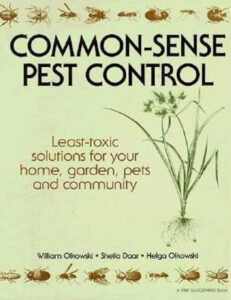
At 736 pages, Common Sense Pest Control is the kind of reference you reach for before anything else goes wrong. Published by Taunton Press, it offers a comprehensive guide to hundreds of low-toxicity methods for managing insects, rodents, and more.
The book employs an integrated pest management framework, prioritizing prevention over chemicals to ensure practical, detailed solutions. Its approach is designed to safeguard your garden, your family, and local pollinators, making it an essential resource for environmentally conscious gardeners.
Used copies are available for around $10, offering an affordable addition to any serious gardener’s library. This accessibility, combined with its focus on safety and sustainability, underscores its value as a go-to reference.
| Best For | Homeowners, gardeners, and pest-control pros who want practical, low-toxicity solutions without reaching for harsh chemicals. |
|---|---|
| Primary Use | Pest Control Reference |
| Price | $10.00 |
| Indoor Use | Yes |
| Outdoor Use | Yes |
| Eco-Friendly | Yes (low-toxicity focus) |
| Accessories Included | None |
| Additional Features |
|
- Covers a huge range of pests — insects, rodents, bats, wood-rot organisms, and more — all in one 736-page reference
- Focuses on prevention and integrated pest management, so you’re solving the root problem, not just spraying over it
- At around $10 for a used copy, it’s an incredibly affordable resource for the depth it offers
- Published in 1991, so some recommendations may be outdated or no longer compliant with current regulations
- Coverage of plant-specific and horticultural pests is limited, which could frustrate serious gardeners
- Used copies vary in condition, and there are no revised or updated editions available
2. Harris Food Grade Diatomaceous Earth Puffer Tip
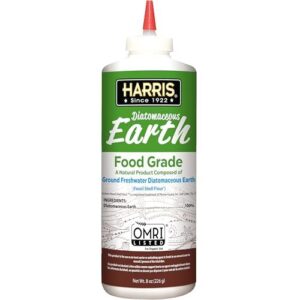
Once you’ve got your pest management knowledge sorted, you need something that actually delivers on the ground. Harris Food Grade Diatomaceous Earth does exactly that — it’s 100% chemical-free, OMRI-listed for organic gardens, and features a smart puffer-tip dispenser for precise application along plant bases, soil crevices, and stems.
At $9.99 for 8 oz, it’s an affordable way to create a physical barrier against beetles, ants, and crawling pests. Just wear a mask when applying — the fine powder irritates lungs easily.
| Best For | Home gardeners, organic farmers, and pet owners who want a chemical-free way to manage crawling pests indoors and in the garden. |
|---|---|
| Primary Use | Pest Control Powder |
| Price | $9.99 |
| Indoor Use | Yes |
| Outdoor Use | Yes |
| Eco-Friendly | Yes (OMRI-listed organic) |
| Accessories Included | Puffer-tip dispenser |
| Additional Features |
|
- 100% food-grade and OMRI-listed, so it’s safe to use around kids, pets, and even livestock
- The puffer-tip makes it easy to get into tight spots like baseboards, cracks, and soil crevices
- Doubles as a soil conditioner — improves aeration and moisture retention over time
- Fine powder is a lung irritant, so you’ll need a mask every time you apply it
- Gets wet? It stops working — outdoor use means you’ll be reapplying after rain
- The puffer tip can be tricky to control, and some bottles have arrived damaged
3. Kazeila 10 Inch White Ceramic Planter
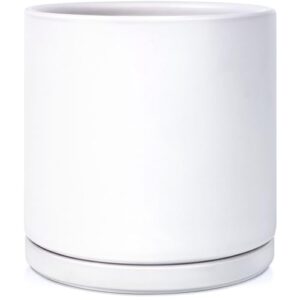
After handling pest control, your containers matter just as much. The Kazeila 10 Inch White Ceramic Planter is a solid pick for growing companion herbs like basil or sage indoors.
Crafted from refractory ceramic with a full-glaze finish, it’s easy to wipe clean and sturdy enough for daily use. The drainage hole and matching saucer effectively prevent root rot, ensuring healthy plant growth.
Its matte white design seamlessly fits any shelf or windowsill, blending into diverse decor styles.
The planter ships with mesh, a felt pad, and 500g of filler, providing everything needed to start planting immediately.
| Best For | Indoor gardeners who want a clean, minimal-looking planter that’s ready to use right out of the box—no extra supplies needed. |
|---|---|
| Primary Use | Plant Display |
| Price | Not specified |
| Indoor Use | Yes |
| Outdoor Use | Yes |
| Eco-Friendly | Neutral |
| Accessories Included | Saucer, stopper, mesh, felt pad, filler |
| Additional Features |
|
- Comes with everything you need to get started: mesh, felt pad, rubber stopper, and 500g of filler
- Drainage hole plus a matching saucer keeps roots healthy and surfaces dry
- Matte white finish is easy to clean and goes with just about any décor
- Heavy Styrofoam packaging creates a lot of mess and waste when unboxing
- Some pots arrive with minor scratches that need a quick clean before use
- The saucer is on the shallow side, so deep soaking isn’t really an option
4. Mkono Ivory Macrame Plant Hangers
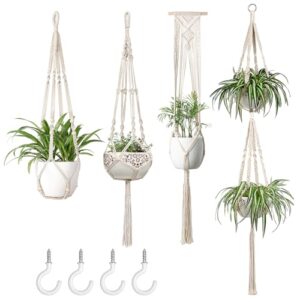
Once your herbs are potted, think about where they live. The Mkono Ivory Macrame Plant Hangers let you display companion plants vertically — freeing up bench space and keeping plants at the right height for airflow.
The set includes four cotton rope hangers in different lengths (35" to 55"), so you can stagger basil, mint, or sage near windows or doorways.
Wooden bead accents add a clean, natural look. At $19.99 for four, it’s a practical setup for any companion planting display.
| Best For | Home gardeners and plant lovers who want a boho-style way to display herbs or small potted plants without taking up counter or shelf space. |
|---|---|
| Primary Use | Plant Display |
| Price | $19.99 |
| Indoor Use | Yes |
| Outdoor Use | Yes |
| Eco-Friendly | Yes (natural cotton) |
| Accessories Included | 4 metal hooks |
| Additional Features |
|
- Four hangers at $19.99 is genuinely good value — you get a full display setup without spending much.
- Different lengths (35" to 55") let you stagger plants at varying heights, which looks great and helps with airflow.
- Works indoors or outdoors, so you can move things around depending on the season.
- Cotton rope isn’t weather-treated, so leaving these outside in a rainy or humid climate will wear them out faster.
- One hanger doesn’t have a top ring, which means you’ll need to rig your own hanging solution — a small but annoying inconsistency.
- The four designs don’t match each other, so if you want a uniform, cohesive look, you may need to buy extras of the same style.
5. Dvine Dev Terracotta Planter Pot
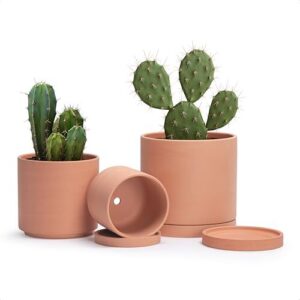
For potted companions like mint or sage, choosing the right container makes a real difference. The Dvine Dev Terracotta Planter Pot is a solid pick — its porous clay walls let roots breathe and help prevent overwatering, which is most important for drought-tolerant herbs.
It comes with a drainage hole, mesh screen, saucer, and felt pad, ensuring surfaces stay scratch-free. These features collectively address both plant health and practicality.
Available in three sizes (5.3", 6.5", and 8.3"), the planter fits neatly on any windowsill or desk, blending functionality with space efficiency.
| Best For | Indoor plant lovers who grow succulents, herbs, or other drought-tolerant plants and want a functional, good-looking pot that protects their shelves and furniture. |
|---|---|
| Primary Use | Plant Display |
| Price | Not specified |
| Indoor Use | Yes |
| Outdoor Use | Yes |
| Eco-Friendly | Yes (natural terracotta) |
| Accessories Included | Saucer, mesh screen, felt pad |
| Additional Features |
|
- Porous terracotta walls let roots breathe and help prevent overwatering — great for herbs like mint or sage
- Comes ready to use with a drainage hole, mesh screen, saucer, and felt pad all included
- Three size options (5.3", 6.5", 8.3") make it easy to find a fit for any windowsill, desk, or shelf
- Terracotta is fragile and can crack during shipping or if bumped during handling
- Heavier and more drying than plastic pots, so you’ll need to water more often and place it carefully
- Sold as single units, so building out a full collection adds up in cost pretty quickly
6. Bamworld Tall Four Tier Metal Plant Stand
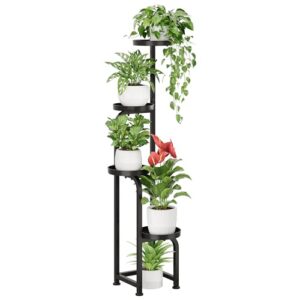
The Bamworld Tall Four Tier Metal Plant Stand maximizes vertical space without consuming square footage, making it ideal for balconies or patios. Standing 46 inches tall with a compact 8.8 × 8.8-inch footprint, it fits neatly into corners and accommodates several small-to-medium pots across four staggered shelves.
Its matte black powder-coated finish handles light outdoor exposure well. However, heavier pots should be placed on the lower tiers, as the top shelf may wobble when loaded near capacity.
| Best For | Anyone with a small balcony, patio corner, or tight indoor space who wants to display several plants vertically without taking up much floor room. |
|---|---|
| Primary Use | Plant Display |
| Price | $22.99 |
| Indoor Use | Yes |
| Outdoor Use | Yes |
| Eco-Friendly | Neutral |
| Accessories Included | All assembly hardware |
| Additional Features |
|
- Fits neatly into corners at just 8.8 × 8.8 inches — great for small spaces like balconies or bedrooms
- Perforated trays let excess water drain freely, which helps keep roots healthy
- Snaps together in about 10 minutes with no tools needed — easy for renters or seasonal swaps
- The top shelf can wobble when loaded near capacity, so heavy pots are better kept on lower tiers
- Not built for large or heavy planters — best suited for smaller, lightweight pots
- Some units have reported misaligned feet, which can make true leveling tricky on uneven floors
Frequently Asked Questions (FAQs)
What are good companion plant combinations?
The best gardens often look wild but aren’t. Pair corn, beans, and squash together — each one feeds or protects the others. Add basil near tomatoes and marigolds anywhere pests linger.
What grows together go together.?
Some plants are just better together. Corn, beans, and squash support each other naturally.
Basil shields tomatoes, and marigolds protect roots.
These pairings aren’t accidents — they’re time-tested teamwork straight from the garden.
Can companion planting work in raised beds?
Raised beds are practically made for companion planting. The contained space lets you pair crops strategically.
Examples include tucking basil between tomatoes or letting beans climb corn, maximizing every square inch.
How do I start companion planting as a beginner?
Start small — pick one pairing like tomatoes with basil or the Three Sisters. Focus on spacing and timing. Once you see results, add more combinations each season.
Which companion plants thrive in shady gardens?
Not every garden gets a prime sun-soaked spot — and that’s okay. Spinach, lettuce, kale, peas, radishes, cilantro, and parsley all thrive in shade, producing well with moist, organic-rich soil.
Does companion planting work in containers or pots?
Companion planting absolutely works in containers.
Pair tomatoes with basil, or lettuce with radishes — both thrive in pots. Just match their light, water needs and give roots enough room to grow.
How does weather affect companion planting success?
Weather shapes your garden like a silent partner — heat speeds up beneficial insects, drought weakens herb oils, and rain washes away fixed nitrogen.
Match companions to your local conditions for the best results. Match companions to your local conditions for the best results.
Conclusion
Imagine spending a fortune on pesticides while nature’s own solutions grow right beside your vegetables—quietly waiting to be noticed. Companion planting beneficial combinations aren’t a gardening trend; they’re a working system that’s fed communities for centuries. When you place the right plants together, they handle most of the hard work themselves.
Start with one pairing, watch what happens, and let your garden teach you what textbooks only hint at.