This site is supported by our readers. We may earn a commission, at no cost to you, if you purchase through links.
Your grandmother probably didn’t read a single study on botanical pest control—she just knew that flies stayed away from her basil and the mosquitoes never bothered her lavender patch. That kind of quiet, plant-based wisdom got passed down through kitchens and kitchen gardens for centuries, and it turns out the science backs it up.
Certain herbs release volatile compounds that genuinely confuse, repel, and redirect insects without a drop of pesticide. From countertop pots to sprawling vegetable beds, the right herbs that keep bugs away can do serious work—both in your home and across your garden.
Table Of Contents
- Key Takeaways
- Best Herbs That Keep Bugs Away
- Herbs for Vegetable Garden Pests
- Mosquito-Repelling Herbs for Patios
- Herbs That Deter Ants and Fleas
- Companion Planting With Repellent Herbs
- Beneficial Herbs That Attract Helpers
- How to Grow Bug-Repelling Herbs
- Frequently Asked Questions (FAQs)
- What plant keeps most bugs away?
- What is the hardest bug to get rid of in your house?
- Can herbs repel ticks on pets or clothing?
- Which herbs work best indoors against bugs?
- Do repellent herbs lose potency after flowering?
- Are these herbs safe around children and pets?
- How long before planted herbs start repelling insects?
- Conclusion
Key Takeaways
- Herbs like basil, lavender, mint, and rosemary release natural compounds that genuinely confuse and repel specific insects, making them practical, chemical‑free alternatives to synthetic pesticides.
- Strategic companion planting — pairing sage near carrots, thyme near brassicas, or oregano near cucumbers — protects your vegetables by disrupting how pests smell and locate their targets.
- Catnip stands out as the single broadest-spectrum repellent herb you can grow, deterring mosquitoes, fleas, ticks, and cockroaches through its active compound nepetalactone.
- Pruning herbs regularly just above a leaf node and harvesting in mid-morning before bloom keeps essential oil production at its peak, which is what actually does the pest-repelling work.
Best Herbs That Keep Bugs Away
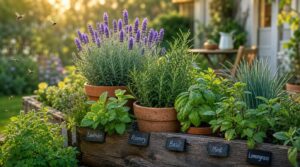
Some herbs do more than just smell good — they quietly tell bugs to go somewhere else. The good news is you don’t need sprays or traps to make that happen. Here are five herbs worth growing if you want fewer uninvited guests outside.
If you’re curious which plants pull double duty in the garden, this guide to herbs that repel garden pests breaks down exactly what each one targets.
Basil for Flies
If flies seem to find every corner of your kitchen, basil might be your answer. The plant naturally releases compounds like citronellal and linalool, which flies genuinely dislike.
Try placing fresh basil near entryways or food prep areas. You can also crush a few leaves to boost that scent plume, or mix crushed basil with water for a simple DIY basil oil spray.
Research shows that fresh basil reduces flies on kitchen countertops.
Lavender for Mosquitoes
Basil manages flies well, but for mosquitoes, lavender is your go-to herb. Its key compounds, linalool and linalyl acetate, actually disrupt how mosquitoes detect you, making you harder to find.
Studies show lavender essential oil can deliver 53 to 93 percent repellency, depending on concentration.
Plant it near seating areas, and those bugs start looking elsewhere.
Mint for Ants
Lavender repels mosquitoes beautifully, but if ants are your problem, mint is the herb to reach for.
Mint oil control works by disrupting ant scent trails — and without those trails, foraging ants simply get lost. Here’s what mint quietly does for you:
- Blocks ants from sniffing out food sources
- Creates a mint leaf barrier along entry points
- Advances chemical-free pest management
- Strengthens companion planting strategies naturally
Rosemary for Moths
Moths don’t get nearly as much attention as mosquitoes, but they can quietly damage crops and clothing. Rosemary’s terpene effect is your quiet defense here. Its volatile compounds — cineole, camphor, and limonene — confuse moths before they ever settle in, making moth egg reduction a real, practical result of simply growing it nearby.
Try rosemary border planting around your brassicas, or tuck a rosemary sachet into your wardrobe. A quick rosemary oil spray on storage areas adds another layer of protection.
Lemongrass for Mosquitoes
If mosquitoes are your biggest outdoor complaint, lemongrass belongs in your garden. Its secret weapon is citronellal, a compound that confuses mosquitoes by masking the human scents they track.
Applied as an oil, it can cut down landings for 30 to 120 minutes.
Plant it in sunny border spots, and reapply the oil after rain or wind for consistent protection.
Herbs for Vegetable Garden Pests

Your vegetable garden has enough to deal with without bugs joining the feast. The good news is that certain herbs, planted in the right spots, quietly push common pests away from your crops. Here are five that earn their place in any food garden.
Sage Near Carrots
Sage is one of the most underrated vegetable garden companion plants when protecting your carrots. Its strong aroma works as an aromatic barrier effect, making it harder for carrot flies to sniff out your crop. Here’s why it earns a spot beside your carrot rows:
- Carrot fly repellent: Sage’s scent disrupts the pest’s ability to locate carrot roots underground.
- Sage scent disruption: The volatile compounds confuse carrot flies before they ever reach the soil.
- Parasitic wasp attraction: Sage draws beneficial wasps that naturally prey on carrot pests.
- Shallow root benefits: Sage won’t compete with carrots for water or nutrients.
- Flexible placement: Grow it as a border or in small clumps for maximum coverage.
This kind of companion planting is simple, effective, and completely chemical-free — a smart move for natural pest deterrents in any vegetable bed.
Thyme Near Brassicas
Thyme is one of those quiet workhorses in the vegetable garden that rarely gets enough credit. Plant it as a living border around brassicas — broccoli, cabbage, kale — and it forms a natural essential oil barrier that makes cabbage moths think twice. Space plants about 15–20 cm apart for good airflow and steady scent coverage.
For the strongest pest-deterring effect, harvest your thyme using early-morning herb harvesting techniques when essential oils peak before the day’s heat sets in.
What makes thyme especially practical is its garden sun tolerance. It thrives in the same full-sun, well-drained conditions your brassicas prefer, so there’s no juggling different care routines. It’s also drought tolerant, which means less watering fuss overall.
When thyme flowers, it becomes a pollinator friendly magnet, drawing beneficial insects that help control soft-bodied pests nearby. For smaller spaces, a container planting option works just as well — tuck a pot at the bed’s edge and move it wherever protection is needed most. That’s companion planting made simple.
Chives Near Tomatoes
Chives might be the tomato’s best‑kept secret. Their sulfur compounds mask the scent of tomatoes, confusing aphids and other pests before they even get close.
Planted around the base, chives also act as living mulch, suppressing weeds and holding soil moisture.
When they flower, pollinators arrive — a welcome bonus for your whole garden bed.
Cilantro Near Potatoes
Cilantro is a quiet powerhouse in the potato bed. Its strong aroma confuses aphids and potato beetles, reducing how often they feed on your potato leaves. Plant it in small clumps around your patch to create a dispersed barrier pests can’t easily navigate around.
Here’s what cilantro brings to the table:
- Pest deterrence through essential oils that repel beetles and aphids
- Beneficial insects like hoverflies and ladybugs drawn to its blossoms
- Soil compatibility — both crops thrive in pH 6.0 to 7.0
- Harvest regularly to keep scent production strong all season
Harvest cilantro often and you’ll maintain that chemical-free pest barrier right through growing season.
Oregano Near Cucumbers
Oregano might just be the cucumber’s best friend in the garden. Its essential oils mask cucumber odors, confusing beetles and aphids before they even land. Plant it 12 to 18 inches away to give both plants room to breathe — better air circulation naturally reduces fungal pressure too.
| Benefit | How It Helps |
|---|---|
| Aphid repulsion | Strong scent disrupts pest navigation |
| Soil compatibility | Both thrive in well-drained, full-sun beds |
| Living mulch | Dense growth nourishes beneficial insects nearby |
Harvest oregano regularly to keep those protective oils flowing all season.
Mosquito-Repelling Herbs for Patios

Your patio can do more than just look good — it can actually work against mosquitoes. The right herbs, placed in the right spots, create a fragrant barrier that keeps the biting down and the enjoyment up. Here are five plants worth adding to your outdoor setup.
Lemon Balm Containers
Lemon balm is one of the easiest container herb growing choices for a mosquito-free patio. Choose a pot 12 to 18 inches wide with multiple drainage holes and fill it with a mix of 60 percent peat-based soil and 40 percent perlite.
That balance keeps roots healthy and helps the plant produce the citronellal-rich essential oils that naturally repel mosquitoes.
Catnip Border Plantings
If pots feel a bit confined, try running catnip along your patio edge instead. Catnip border plantings reach 12 to 18 inches tall and spread naturally over time, creating a soft, aromatic edge.
Its nepetalactone-rich foliage quietly deters mosquitoes, beetles, and flying insects — no sprays needed. Prune after flowering to keep growth tidy and the scent strong.
Lavender Seating Areas
Lavender takes a seating area from ordinary to genuinely peaceful.
Position a curved bench design around your lavender beds so the blooms stay close, and the lavender scent flow drifts naturally toward seated guests. Add weather-resistant cushions in soft gray tones, and a few solar lanterns for evenings.
The plants handle mosquito repellent duty — beautifully.
Rosemary Patio Pots
Rosemary brings more than good looks to a patio — it’s a quiet, chemical-free pest control workhorse.
- Choose a terracotta pot with drainage holes, around 12–14 inches wide
- Fill it with a sandy soil mix of potting soil, perlite, and coarse sand
- Place it where it gets six hours sun daily
- Prune after bloom to keep the scent strong
Deep watering, then letting the soil dry out, keeps roots healthy and the plant thriving.
Lemongrass Sunny Corners
Standing tall in a sunny patio corner, lemongrass is one of the most effective natural insect repellent herbs you can grow.
Its citronellal benefits come from compounds that actively deter host-seeking mosquitoes.
Grow it in a container clump for easy management — it thrives in full sun with rich, well-drained soil and reaches up to four feet tall.
Herbs That Deter Ants and Fleas
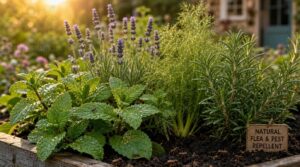
Mosquitoes aren’t the only bugs herbs can handle. Some plants work just as well against ants, fleas, cockroaches, and flies — often better than you’d expect. Here are a few worth growing if those pests are giving you trouble.
Pennyroyal for Fleas
Few herbs carry as much punch as pennyroyal — but that punch comes with a real warning label. Its volatile compounds can repel fleas effectively by masking the scents fleas use to find a host. Here’s how to use it wisely:
- Never apply pennyroyal oil directly to pets — it’s toxic to cats and dogs and can cause liver damage.
- Outdoor garden placement works best; grow it near entryways to deter fleas before they come inside.
- Wear gloves when handling dried plant material, as it can irritate skin and mucous membranes.
- Safer alternatives like peppermint or citronella offer similar natural flea control with gentler safety profiles.
If you have pets or young children at home, treat pennyroyal as a garden-only natural pest control option, not a topical one.
Catnip for Cockroaches
Most people don’t think of catnip as a pest control tool, but nepetalactone — the compound that makes cats go wild — also triggers strong cockroach avoidance behavior. Studies show it disrupts their movement and discourages them from entering treated zones.
Place dried catnip sachets along baseboards or corners, and refresh them every one to two weeks to keep the catnip vapor plume active.
Lavender for Flies
Flies hate the smell of lavender — and that works entirely in your favor. The plant’s essential oils, linalool and linalyl acetate, confuse flies’ ability to locate food sources, making it a reliable natural insect repellent.
Potted near windows or trash areas, lavender works quietly, offering chemical-free pest control without sprays or traps.
Basil by Doorways
Think of basil as a living doormat that bugs don’t want to cross. Placing a pot within two to three feet of your entryway creates a natural scent barrier — its eucalyptol‑rich leaf oils drift outward continuously; no crushing needed.
Keep it on the sunny side of the door, trim it regularly, and it stays potent all season long.
Companion Planting With Repellent Herbs

Companion planting is one of the simplest ways to put your herbs to work. Instead of growing them in isolation, you pair them strategically with vegetables, borders, and containers to create a natural pest barrier. Here are a few smart placements worth trying.
Herbs Beside Vegetables
Pairing herbs with vegetables is one of the smartest moves you can make as a gardener. These pairings work as a natural insect repellent system while quietly supporting companion planting benefits across your beds.
- Basil beside tomatoes disrupts fly activity through eucalyptol
- Sage near carrots confuses carrot fly with its pungent scent
- Chives next to tomatoes deter aphids and beetles naturally
- Cilantro near potatoes draws beneficial insects that tackle potato pests
- Oregano around cucumbers creates an aromatic barrier against cucumber beetles
Borders Around Raised Beds
Planting herbs along the edges of your raised beds takes that neighbor-pairing idea one step further.
A border of rosemary or lavender acts like a living fence, releasing repellent scent continuously. Pair that with stone or cedar wood edging — both hold soil firmly while complementing the herbs’ natural look — and your beds stay tidy, protected, and genuinely beautiful.
Containers Near Entryways
Moving from open beds to tighter spaces, entryway containers offer a smart way to combine natural insect repellents with everyday curb appeal. Choose weather-resistant containers with an elevated base design and a drainage tray installed beneath — this protects your walkway and keeps roots healthy. Compact pillar planters fit narrow entries perfectly, holding basil or lavender right where bugs enter.
- Place basil pots within three feet of your door to deter flies
- Tuck lavender on either side for a mosquito repellent welcome
- Add trailing mint in contained planters to block ant trails along steps
- Rotate lemongrass seasonally for fresh scent and seasonal color rotation
Annual Versus Perennial Herbs
Once your entryway containers are sorted, it’s worth thinking about which herbs will actually come back next year.
Annual herb cultivation — like basil, cilantro, and dill — means replanting each season.
Perennial herb care — think lavender, rosemary, and thyme — rewards patience: their root system development builds year after year, making them stronger and more fragrant with time.
Spacing for Airflow
Good spacing turns a crowded herb patch into a thriving one. Keep at least 12 inches between herbs and neighboring plants so air moves freely around every stem.
In garden beds, space plants 18 to 24 inches apart at their centers, staggering rows so no plant blocks another.
For containers on the patio, leave 2 feet between pots.
Beneficial Herbs That Attract Helpers

Not every garden visitor is a problem — some are exactly what you want. A few smart herb choices can bring in the good guys: ladybugs, lacewings, bees, and butterflies that work quietly to keep pest populations down. Here are the best herbs for rolling out the welcome mat.
Dill Attracts Ladybugs
Dill does more than flavor your kitchen — it quietly works as a pest control ally in the garden.
Its umbrella-shaped flowers give ladybugs a place to shelter and breed, while also supplying nectar that keeps adult ladybugs fed and nearby. That steady food source sustains ladybug survival throughout the season, so you always have hungry aphid hunters on patrol.
Fennel Attracts Lacewings
Fennel is one of those quiet overachievers in the garden.
Its feathery foliage and umbrella-shaped flower clusters give lacewings exactly what they need — nectar to feed on, shelter to rest in, and ideal egg-laying sites close to aphid colonies.
Plant fennel as a border herb, and you’ll naturally pull these delicate predators toward the spots that need chemical-free pest control most.
Borage Attracts Bees
Unlike most herbs that work by pushing pests away, borage pulls something valuable in — bees and beneficial insects that make your whole garden thrive.
- Star-shaped flowers give bees an easy landing platform
- Borage nectar rewards repeated pollinator visits all season
- Flower clusters bloom continuously from late spring into fall
- Companion benefits improve fruit set in nearby tomatoes and strawberries
Yarrow Attracts Butterflies
Yarrow is one of those quiet workhorses in the garden.
Its flat flower clusters act like tiny landing pads, giving butterflies a stable place to rest and feed. The shallow florets offer easy nectar accessibility, so even butterflies with short mouthparts can sip comfortably.
Plant yarrow in full sun, and it’ll bloom from spring through fall — plenty of time for extended butterfly perching spots all season.
Marigolds Support Pollinators
Marigolds do double duty in the garden — they’re not just pretty faces. While they push back against pests, they also roll out a welcome mat for beneficial insects. Here’s why they earn a permanent spot:
- Nectar Supply Boost keeps bees and butterflies fueled all season long.
- Bloom Cycle Extension bridges gaps between other flowering plants.
- Pollinator Habitat Creation promotes garden biodiversity right at the border.
How to Grow Bug-Repelling Herbs
Growing these herbs doesn’t have to be complicated. A few simple habits make the difference between plants that thrive and ones that barely survive. Here’s what to focus on to keep your bug-repelling herbs healthy and working hard.
Sun and Soil Needs
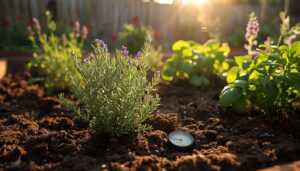
Most bug-repelling herbs are surprisingly low-maintenance — but they do have firm opinions about where they live. Full sun (at least six hours daily) is non-negotiable for basil, rosemary, and lemongrass. Lavender and thyme follow the same rule. Mint is more forgiving, tolerating partial shade while still doing its job.
Soil matters just as much. Aim for well-drained, loamy soil with a pH between 6.0 and 7.0.
Watering Without Overdoing

Getting the water right is where many herb growers stumble. Most bug-repelling herbs are drought-tolerant plants that prefer well-drained soil over constant moisture.
A simple finger test tells you everything — if the top two inches feel dry, it’s time to water. When you do water, go slow and deep using drip irrigation to encourage roots downward.
Pruning for Stronger Scent

Watering well sets your herbs up, but regular pruning is what really unlocks their scent.
When you cut just above a leaf node, the plant responds by pushing out fresh new growth packed with essential oils — and that’s exactly what keeps bugs at bay. Think of it as a gentle nudge that tells the plant to work harder.
Pruning just above a leaf node signals herbs to grow back stronger, flooding new shoots with the essential oils that keep bugs away
Containing Invasive Mint

Mint is one of the best herbal insect repellents you can grow — but it spreads fast. Here’s how to keep it in check:
- Bury a physical barrier 12–18 inches deep using metal edging or thick plastic
- Plant in containers with the rim sitting at soil level
- Inspect monthly and remove any runners breaking through
Stay consistent, and mint stays useful, not wild.
Harvesting for DIY Sprays

Once you’ve got mint under control, it’s time to put your herbs to work. The best moment to harvest for a herbal insect repellent spray is mid-morning, right after the dew dries. That’s when essential oils peak inside the leaves — especially just before the plant flowers.
| Herb | Best Harvest Time | Key Compound |
|---|---|---|
| Basil | Pre-flower, mid-morning | Eucalyptol |
| Lemon Balm | Just before bloom | Citronellal |
| Mint | Early morning | Menthol |
Snip only the top third, rinse quickly, and air dry in shade for 10–14 days. Then steep one tablespoon of dried herbs in boiling water, mix with witch hazel, and add 10–15 drops of herbal extracts or essential oils. Store your DIY spray in a dark bottle, and always patch-test before use.
Frequently Asked Questions (FAQs)
What plant keeps most bugs away?
Catnip is the single plant solution most gardeners overlook. Its compound nepetalactone repels mosquitoes, fleas, ticks, and cockroaches — making it a true broad-spectrum deterrent and perhaps the most effective all-purpose repellent you can grow.
What is the hardest bug to get rid of in your house?
Bed bugs are perhaps the hardest to eliminate. Their resistance to common insecticides, ability to hide in tiny cracks, and eggs that survive months make them a persistent nightmare requiring multiple treatment cycles.
Can herbs repel ticks on pets or clothing?
Yes, some herbs can help. Thyme and spearmint oils applied to clothing show measurable tick repellency in tests. For pets, stick to vet-approved products — plant-based options aren’t reliably safe or effective.
Which herbs work best indoors against bugs?
Basil, lavender, and mint work best indoors. Place basil near windows, lavender in bedrooms, and mint by pantry shelves to naturally block flies, mosquitoes, and ants without chemicals.
Do repellent herbs lose potency after flowering?
Most repellent herbs do lose potency after flowering. Essential oils peak at bloom, then decline as plants shift energy toward seed production. Harvest just before or during early bloom for the strongest insect-repelling effect.
Are these herbs safe around children and pets?
Most of these herbs are generally safe, but keep them out of reach. Pets and young children can react badly if they chew leaves in large amounts, so raised pots or barriers help.
How long before planted herbs start repelling insects?
The wait is actually part of the work. Most plants need 4 to 12 weeks before oils build enough to matter. Start early, and let scent development do the quiet, steady work for you.
Conclusion
Funny how we spent decades spraying synthetic chemicals everywhere, convinced nature needed our help to get it right. Turns out, your garden already had a plan.
The herbs that keep bugs away have been quietly doing their job long before the pesticide aisle existed.
Plant thoughtfully, prune regularly, and trust the volatile oils doing the heavy lifting.
Your grandmother didn’t need a label warning her about basil—and honestly, neither do you.
- https://pmc.ncbi.nlm.nih.gov/articles/PMC3059459
- https://extension.msstate.edu/blogs/extension-for-real-life/can-fragrant-plants-help-repel-insects
- https://www.watkinsnurseries.com/post/bug-repellent-plant-solutions-repel-unwanted-pests-from-your-yard-with-plants
- https://gardencenterohio.com/herbs-2/herbs-repel-bugs
- https://sunnyside-gardens.com/gardening-tip/bug-repellent-plants-for-a-pest-free-patio