This site is supported by our readers. We may earn a commission, at no cost to you, if you purchase through links.

A single cabbage white butterfly can lay up to 200 eggs across your brassicas in one season—and her caterpillars will strip a kale bed down to the ribs before you notice the damage. The frustrating part?
Most gardeners reach for sprays when the real defense was always a planting decision. Certain herbs, alliums, and flowers create a scent environment that confuses and repels these pests before they ever land.
Plants that repel cabbage worms work by masking the smell of your crop, luring moths onto sacrificial plants, or drawing in the wasps that destroy eggs on contact. Your garden can do most of this work on its own.
Table Of Contents
Key Takeaways
- Aromatic herbs like thyme, sage, rosemary, and hyssop mask brassica scents, making it harder for cabbage white butterflies to find and lay eggs on your crops.
- Trap crops like nasturtiums and mustard draw egg‑laying moths away from your brassicas — plant them 2–3 feet out, then pull and dispose of them once infested.
- Flowers like marigolds and borage don’t just confuse pests visually — they recruit parasitic wasps that destroy cabbage worm eggs before they hatch.
- Layering your layout matters: run herb borders around bed edges, tuck alliums between rows, and add a row cover during peak pressure for a defense system that works from multiple angles.
15 Plants That Repel Cabbage Worms

Some plants do more than look good next to your cabbage — they actively make it harder for moths to find and lay eggs on your crops. The right companions can mask scent, confuse pests, and pull in the beneficial insects that keep worm populations down.
Pairing nasturtiums as a trap crop with a fragrant herb border is one of the most effective combos — you can see exactly how it works in this guide to natural pest deterrent strategies for your vegetable garden.
Here are five of the best plants to grow alongside your brassicas.
Thyme and Sage
Both thyme and sage release strong aromatic compounds — thymol, carvacrol, thujone — that mask the scent of brassicas, making it harder for cabbage white butterflies to locate your plants.
Plant them as a low border around cabbage beds. They’re drought-tolerant, love full sun, and pull double duty as culinary herbs while quietly working as pest deterrent plants.
Rosemary and Hyssop
Rosemary and hyssop work the same way as thyme and sage — they flood the air with aromatic compounds that make it hard for cabbage white butterflies to zero in on your brassicas.
Rosemary’s aromatic defense comes from cineole, camphor, and alpha-pinene. Hyssop brings pinocamphone and its own cineole punch. Together, they’re reliable natural insect repellents that pull double duty as culinary herbs.
Here’s what makes them worth planting:
- Rosemary pest deterrent effect strengthens in full sun as essential oil concentration rises
- Hyssop companion planting near cabbage confuses moths with its camphor-like scent
- Both thrive in well-drained soil with minimal fuss
- Hyssop oil application — even from dried sachets — can deter cabbage worms passively
- Rosemary hyssop benefits stack when planted together along bed borders
Celery and Alliums
Aromatic herbs do a lot of the heavy lifting, but allium sulfur compounds bring a different kind of defense. Garlic, onions, chives, and leeks release volatile organosulfur compounds that actively repel cabbage worms and reduce egg-laying on nearby brassicas.
Garlic onion pairing near cabbage beds creates a pungent barrier moths find genuinely disorienting.
Add celery for celery pest deterrence through spatial variety and mild scent layering.
Borage and Chamomile
Alliums cover the sulfur side of pest defense. Borage and chamomile work differently — they pull beneficial insects in while quietly discouraging cabbage moths.
Borage nectar attracts long-tongued bees and predatory wasps that hunt cabbage worm eggs. Chamomile essential oils interfere with how moths locate brassicas. Plant both as a garden border around your beds for layered, natural protection.
Marigolds Near Brassicas
Marigolds might be the hardest-working companion plant in any brassica bed. Their scent barrier confuses cabbage white butterflies, making it harder for them to locate your kale, broccoli, or cabbage. They also pull in beneficial insects — parasitic wasps and predatory beetles — that target worm eggs before hatching. Their foliage also deters cutworms and slugs when used as trap crops, adding another layer of protection via marigold foliage pest deterrence.
- Use French marigolds (Tagetes patula) between rows for compact, continuous bloom
- Plant African marigolds as tall border plants around larger plots
- Mix varieties for broader scent coverage and more insect diversity
- Space plants 12–18 inches apart to maintain fragrance density
- Deadhead regularly to extend flowering through peak pest season
For border planting, run a double row around your brassica beds. Pair them with thyme or rosemary at bed edges for layered defense. Keep them watered during dry spells — a stressed marigold stops blooming and stops working.
Trap Crops That Protect Brassicas

Not every plant in your garden has to fight cabbage worms directly — some do a better job by drawing moths away from your brassicas altogether. Trap crops work like a decoy, pulling egg‑laying adults toward plants you’re willing to sacrifice.
Here are the best ones to use and how to place them.
Nasturtiums for Moth Diversion
Nasturtiums are one of the easiest trap crops you can plant. Cabbage moths find them hard to resist — their bright flowers and scent draw moths away before they ever reach your brassicas.
If moths do get through, a few homemade insecticide sprays for cabbage worms — like soapy water or diatomaceous earth — can handle the stragglers without reaching for harsh chemicals.
Plant nasturtiums 2–3 weeks early, about 12–18 inches apart along bed edges.
Once infested, pull and dispose of them quickly so pests don’t spill back over.
Mustard as Sacrifice Crop
Mustard pulls double duty in the garden. It lures cabbage moths away from your brassicas by releasing sulfur-based volatiles that moths find irresistible.
Sow it around your plot’s perimeter 2–3 weeks before transplanting brassicas. Once pests concentrate on it, cut and remove the plants.
Chopped mustard residue also improves soil organic matter — a quiet bonus for next season.
Removing Infested Trap Plants
Once a trap crop is loaded with pests, it’s done its job — now remove it fast. Pull the entire plant, roots and all, before worms spread to your brassicas.
Don’t compost it. Burn or bag it securely instead.
Rake the surrounding soil to collect fallen larvae. Clean your tools after. Note the date and spot for next season.
Placement Around Cabbage Beds
Where you put your trap crops matters as much as which ones you choose.
Place nasturtiums and mustard 1.5 to 3 feet from your cabbage bed’s outer edge — close enough to intercept moths in flight, but far enough to keep larvae off your main crop. Position them on the sunny, windward side so scent drifts toward incoming pests first.
How Repellent Plants Work

Repellent plants don’t just sit there looking pretty — they’re actively working to keep cabbage white butterflies away from your brassicas. They do this in a handful of specific ways, each one targeting a different part of the pest’s behavior. Here’s what’s actually happening when these plants pull their weight.
Repellent plants actively disrupt pest behavior — each one targeting a different weakness in the cabbage white butterfly’s hunt
Masking Brassica Scent
Think of aromatic companion plants as a living fog machine for your brassica bed. When herbs like thyme, sage, rosemary, and hyssop grow nearby, their terpenes and volatile oils blend into the air around your cabbage family plants, making it harder for cabbage worms to zero in on their target.
Here’s what that scent dilution does in practice:
- Aromatic herb blend from thyme, parsley, and oregano creates a mixed fragrance cloud that hides brassica emissions during peak pest activity
- Sulfur compound release from garlic and chives introduces allyl sulfides that linger on leaf surfaces, overriding host-specific cues
- Volatiles interaction between sage monoterpenes and brassica odors disrupts the olfactory signals cabbage moths rely on
- Olfactory disruption methods like interplanting alliums reduce egg-laying by making host plants harder to identify
This is herb companion planting at its most practical. Space plants close enough for their scents to overlap, but not so tight that airflow suffers. Consistent plant diversity keeps scent masking working all season long, giving beneficial insects room to move in while cabbage worms lose their map entirely.
Confusing Cabbage White Butterflies
Scent masking gives cabbage whites a harder time finding your plants — but visual confusion takes it a step further. Cabbage white butterflies navigate by sight as much as smell.
When nasturtiums and marigolds break up the solid green rows of your brassica bed, they disrupt the moth’s ability to lock onto a clean landing zone.
Attracting Parasitic Wasps
Beyond confusion, your garden can turn into a hiring station for natural predators. Parasitic wasps lay eggs inside cabbage worm larvae, stopping them from the inside out.
Plant dill, fennel, and yarrow nearby to draw them in. White and pale yellow blooms improve wasp visitation rates noticeably.
- Sweet alyssum offers rapid nectar pulses early in the season
- Yarrow and catmint bloom long enough to sustain wasp populations through summer
- Cosmos and marigolds invite wasps to actively patrol your brassica beds
Supporting Garden Biodiversity
Parasitic wasps are just one piece of a much larger puzzle. When you build native plant diversity into your garden, you’re creating a system where natural predators, pollinators, and soil life all support each other.
| Garden Element | Biodiversity Benefit | Example Plants |
|---|---|---|
| Native plant beds | Shelter specialized insects | Yarrow, coneflower |
| Wildflower mixes | Extend nectar season | Asters, beebalm |
| Layered plantings | Support wildlife corridors | Shrubs, groundcovers |
| Organic mulch | Boosts soil microbial support | Leaf litter, compost |
| Water features | Attracts amphibians, dragonflies | Sedge, rushes |
Reducing Egg Laying
When you layer biodiversity into your garden, something else kicks in too — fewer eggs ever get laid in the first place.
Thyme and sage release essential oils that mask brassica scent, making cabbage moths skip right over your plants. Together, they cut egg deposition noticeably, giving you a head start before any caterpillar hatches.
Companion Planting Layouts for Brassicas
Knowing which plants to grow is just half the battle — where you put them matters just as much. A smart layout keeps cabbage moths guessing and gives your brassicas a real layer of protection. Here are five companion planting arrangements worth trying in your garden.
Herb Borders Around Cabbage

Think of herb borders as a living fence—one that smells great and keeps pests guessing.
Planting thyme, sage, and rosemary along cabbage bed edges creates a scent barrier that masks brassica odors from cabbage worms.
Add yarrow at the corners to draw in parasitic wasps.
Keep soil loose during border soil preparation, mulch in early spring, and prune herbs seasonally so airflow stays strong.
Alliums Between Kale Rows

Tucking alliums between kale rows is one of the simplest organic pest control moves you can make. Garlic, onions, and chives emit sulfur compounds that mask kale’s natural scent, throwing off cabbage white butterflies before they ever lay eggs.
Space bulbs 6 to 8 inches apart so both crops breathe well and roots don’t compete.
Flowers Near Broccoli Beds

Flowers do more than look pretty around broccoli beds — they’re working overtime as organic pest control.
Here’s what to plant and why:
- Nasturtiums lure aphids away from broccoli while distracting egg-laying moths.
- Calendula deters pests and draws lady beetles that eat cabbage worms.
- Alyssum borders shelter parasitic wasps and hoverflies right where you need them.
Borage boosts pollinator activity and traps aphids. Cosmos pulls in beneficial insects that target worm populations directly.
Polyculture Planting Patterns

Random rows don’t cut it — polyculture planting patterns work best when you mix heights, functions, and timing deliberately.
Place tall dill or fennel to the north, brassicas in the middle, and low-growing thyme or marigolds along edges.
This layering captures more light and creates habitat complexity that confuses cabbage white butterflies and shelters beneficial insects year-round.
Spacing for Airflow

Good airflow is one of the simplest defenses you have against fungal disease and pest buildup.
Space companion plants 12 to 18 inches apart and keep 24 to 30 inches between rows.
Raise beds 6 to 8 inches off the ground and prune dense canopies to leave a 1 to 2 inch gap at leaf level for steady air exchange.
Top 6 Cabbage Worm Control Items
Companion plants do a lot of the heavy lifting, but sometimes you need a little backup. These six products work well alongside your planting strategy to stop cabbage worms before they get out of hand. Here’s what’s worth keeping in your garden toolkit.
1. Agfabric Frost Protection Row Cover
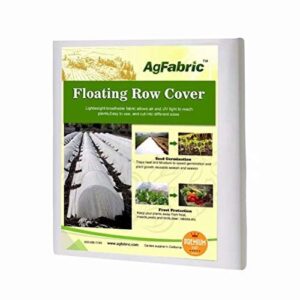
If cabbage moths are the problem, a physical barrier is your simplest solution. The Agfabric Frost Protection Row Cover (model RC0505025) is a 5 ft × 25 ft spun polypropylene fabric weighing just 0.55 oz/yd². It lets in 85% of sunlight while blocking adult moths from reaching your brassicas entirely.
Seal the edges with soil or pins. Check seams regularly so no gaps form. It also shields crops from frost down to -28°F.
| Best For | Gardeners who want an easy, reusable way to protect vegetables, seedlings, and fruit trees from frost, pests, and harsh weather throughout the growing season. |
|---|---|
| Primary Use | Crop protection cover |
| Pest Control | Physical barrier |
| Organic Friendly | Yes |
| Reusable | Yes |
| Indoor/Outdoor | Outdoor |
| Material | Spun polypropylene |
| Additional Features |
|
- Blocks cabbage moths and other insects completely — no chemicals needed
- Lets in 85% of sunlight while still trapping heat, so your plants don’t miss a beat
- Handles serious cold down to -28°F, giving you real frost protection, not just a light shield
- Thin fabric tears easily on sharp edges or in strong wind, so it needs careful handling
- Seams and edges need regular checking — any gap and pests find their way in
- Actual dimensions may run short of what’s advertised, so measure before you commit
2. Agfabric Garden Insect Netting
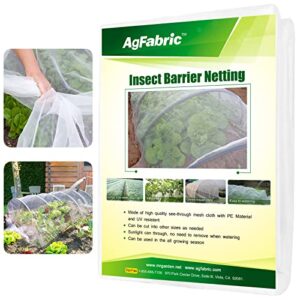
Row covers seal moths out completely, but they’re solid fabric. Sometimes you want something lighter and more open — that’s where the Agfabric Garden Insect Netting steps in.
This 20 ft × 16 ft PE mesh has 0.03-inch openings that block moths, aphids, and small beetles while letting rain and sunlight pass freely. It’s reusable for up to five seasons, easy to cut to size, and see-through so you can check your plants without lifting it.
| Best For | Gardeners who want lightweight, breathable pest protection for vegetables, berries, or fruit trees across multiple growing seasons. |
|---|---|
| Primary Use | Pest exclusion netting |
| Pest Control | Physical mesh barrier |
| Organic Friendly | Yes |
| Reusable | Yes |
| Indoor/Outdoor | Outdoor |
| Material | Polyethylene mesh |
| Additional Features |
|
- Tiny 0.03-inch mesh keeps out moths, aphids, and small beetles while still letting rain and sunlight through
- Lasts up to five seasons and can be cut to any size you need
- See-through design means you can check on your plants without ever lifting the net
- Doesn’t block much heat, so in hot climates you may still need extra shading
- Needs a frame or support system to stay off your plants — direct contact makes it easier for pests to chew through
- Cut edges can fray over time, and determined critters like squirrels can poke holes in it
3. Trichogramma Egg Release Cards
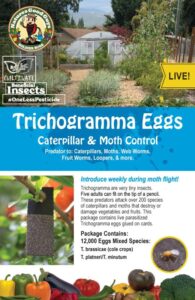
Netting keeps moths out physically — but what if you could turn their own eggs against them? Trichogramma egg release cards take a different approach: tiny parasitic wasps emerge from the cards and parasitize cabbage worm eggs before they ever hatch.
Each 3-card package holds roughly 10,000–12,000 viable eggs. Hang them near your brassicas at canopy height, and release weekly during moth season. Choose T. brassicae for cole crops specifically — species matching matters.
| Best For | Gardeners and farmers who want a chemical-free way to control moths and caterpillars across crops like tomatoes, brassicas, and ornamentals. |
|---|---|
| Primary Use | Biological pest control |
| Pest Control | Parasitic egg control |
| Organic Friendly | Yes |
| Reusable | No |
| Indoor/Outdoor | Outdoor |
| Material | Biological organisms |
| Additional Features |
|
- Targets over 150 moth and caterpillar species without any chemicals — great for organic setups
- Species-specific cards mean you can match the right wasp to your crop height and type
- Each package covers a solid area, and adults can run up to 30 generations a season
- Temperature-sensitive — if it’s too cold, the eggs may not hatch at all
- Heavy infestations usually need backup: traps, sanitation, and multiple rounds of release
- Picking the wrong species for your crop reduces effectiveness, so you have to do your homework first
4. Safer Brand Caterpillar Killer Concentrate
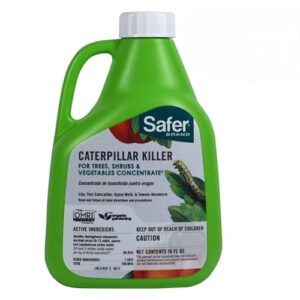
Parasitic wasps handle eggs — but once larvae are already feeding, you need something that stops them fast. Safer Brand Caterpillar Killer Concentrate uses Bacillus thuringiensis (Bt), a natural soil bacteria that kills caterpillars after they eat treated leaves. It’s OMRI listed, safe up to harvest day, and won’t harm birds or earthworms.
Mix 1 tablespoon per gallon, coat both leaf sides, and reapply every 7–10 days — or after rain. Apply late afternoon to slow sunlight breakdown.
| Best For | Home gardeners and organic farmers dealing with active caterpillar infestations on vegetables, fruits, or ornamentals. |
|---|---|
| Primary Use | Caterpillar spray treatment |
| Pest Control | Bt bacteria spray |
| Organic Friendly | OMRI Listed |
| Reusable | No |
| Indoor/Outdoor | Outdoor |
| Material | Liquid concentrate |
| Additional Features |
|
- OMRI listed and safe to use right up to harvest day — no waiting period needed
- Won’t touch beneficial critters like birds or earthworms, just the caterpillars eating your plants
- Works fast once larvae ingest it, cutting off feeding before they do more damage
- Sunlight breaks it down quickly, so timing and reapplication actually matter
- Rain washes it off — you’ll need to spray again after every storm or every week
- Only works on insects that eat the treated leaves; won’t do anything for other pest types
5. Chapin 2 Gallon Pump Sprayer
Bt spray only works if it reaches the leaves — and that means your sprayer matters.
The Chapin 2 Gallon Pump Sprayer makes coverage easy with its adjustable cone nozzle, switching between a direct stream and a wide spray to hit both leaf tops and undersides. The 34-inch flexible hose gives you reach without bending.
It’s lightweight, resists chemical degradation, and the wide funnel fill opening means fewer spills when mixing concentrates like Bt.
| Best For | Home gardeners and DIYers who need a simple, versatile sprayer for lawns, gardens, or indoor plants. |
|---|---|
| Primary Use | Liquid applicator sprayer |
| Pest Control | Delivery mechanism |
| Organic Friendly | Yes |
| Reusable | Yes |
| Indoor/Outdoor | Both |
| Material | Polypropylene |
| Additional Features |
|
- Spill-free refills and easy fluid level checks with the translucent funnel-top tank
- Adjustable cone nozzle lets you switch between stream and broad spray patterns
- Lightweight build with an ergonomic handle helps reduce hand fatigue
- No built-in pressure-relief valve; you have to release pressure manually
- Fine mist setting isn’t very precise and the nozzle can crack with heavy use
- Hose is stiff and can tip over the tank, plus there’s no carry strap
6. Plantonix Pure Neem Oil
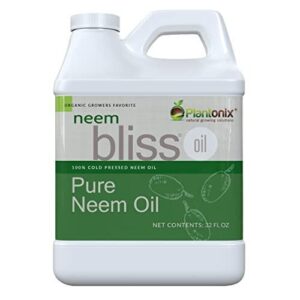
Neem oil is one of those old-school remedies that actually holds up. Plantonix Pure Neem Oil is 100% cold-pressed and sourced straight from neem seeds in India — no fillers, no additives.
Mix 1–2 teaspoons per quart of water with a drop of dish soap. Spray both sides of leaves in the early evening to avoid burn. Reapply every 7–14 days.
It repels adult moths and disrupts soft-bodied larvae on contact.
| Best For | Home gardeners and plant lovers who want a natural, chemical-free way to fight off pests like aphids and spider mites without reaching for synthetic sprays. |
|---|---|
| Primary Use | Organic pest oil |
| Pest Control | Neem oil pesticide |
| Organic Friendly | Yes |
| Reusable | Yes |
| Indoor/Outdoor | Both |
| Material | Cold-pressed neem oil |
| Additional Features |
|
- 100% pure, cold-pressed neem oil — no additives or mystery ingredients, just the real thing straight from India.
- Works as both a pest repellent and a plant health booster, helping with bloom production and overall vigor.
- Versatile enough to use on skin too, thanks to its natural anti-inflammatory and antioxidant properties.
- The smell is strong and spicy — it can hang around for hours, so indoor use might not be everyone’s favorite experience.
- It solidifies in cooler temps (around 60°F), so you’ll need to warm it up before you can use it.
- The bottle has no pour spout, which makes it messy — expect drips and residue on the sides after every use.
Frequently Asked Questions (FAQs)
Can cabbage worms develop resistance to repellent plants?
Yes, they can. Cabbage worms adapt over time by shifting feeding behavior and ignoring familiar repellent scents. Rotating your repellent plants each season helps prevent this and keeps your defenses working.
Do repellent plants work during all growing seasons?
Repellent plants work best in warm months when essential oils are strongest. Cooler temperatures reduce scent production, making them less effective. Don’t rely on them alone during early spring or late fall.
Conclusion
Think of your brassica bed as a neighborhood—right neighbors keep trouble from ever knocking.
Plants that repel cabbage worms don’t just add variety; they quietly shift the entire balance of your garden.
Thyme along the border, tuck alliums between rows, and let nasturtiums take the hit.
Add a row cover when pressure peaks.
Do this consistently, and the cabbage white butterfly will find your garden a very unwelcoming place to raise a family.
- https://www.gardenary.com/blog/the-best-companion-plants-for-cabbage-in-an-organic-kitchen-garden
- https://gardenculturemagazine.com/cabbage-worms
- https://myplantin.com/blog/cabbage-companion-plants
- https://journeywithjill.net/gardening/2019/02/26/companion-planting-pest-control
- https://kellogggarden.com/blog/gardening/how-to-get-rid-of-cabbage-worms