This site is supported by our readers. We may earn a commission, at no cost to you, if you purchase through links.
Walk through any nursery and you’ll find two fertilizer camps staring back at you from the shelf—bags of composted bone meal and kelp on one side, precisely labeled 10-10-10 synthetic blends on the other. The gap between them isn’t marketing; it’s chemistry, soil biology, and timing all rolled into one decision.
Choosing the wrong approach for your trees doesn’t just stall growth—it can quietly degrade the soil structure you depend on for the next decade.
Understanding how each type actually works at the root zone changes the way you read a fertilizer label. The organic vs synthetic fruit tree fertilizer debate has a real answer, and it depends almost entirely on what your soil and trees need right now.
Table Of Contents
- Key Takeaways
- Organic Vs Synthetic Fruit Tree Fertilizer
- What Organic Fertilizer Does
- What Synthetic Fertilizer Does
- Nutrient Release and Uptake Speed
- Soil Health and Root Growth
- Environmental Impact Comparison
- Cost, Yield, and Value
- Best Choice by Growing Situation
- Smart Fertilizing Buying Strategy
- Frequently Asked Questions (FAQs)
- Conclusion
Key Takeaways
- Organic fertilizers feed your soil’s microbial network first, building long-term structure and water retention that synthetic products simply can’t replicate over time.
- Synthetic fertilizers win when speed matters — a deficient tree can show visible recovery within 7 to 14 days, making them the right call for urgent mid-season corrections.
- Your growing situation — sandy soil, containers, citrus roots, or young trees — should drive the choice, since no single fertilizer type performs best across all conditions.
- The smartest strategy combines both: use organic inputs to build baseline soil fertility, then layer in targeted synthetic applications at bloom and fruit set for precision control.
Organic Vs Synthetic Fruit Tree Fertilizer
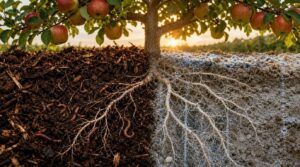
Choosing between organic and synthetic fertilizer for your fruit trees isn’t just a matter of preference — it shapes how your soil behaves, how your trees grow, and what you’re putting into the environment season after season. The right choice depends on your specific goals, your growing setup, and how hands-on you want your fertilizing routine to be. Here’s what to evaluate before you buy.
The same principles apply if you’re working in pots — cool-season container gardening fertilizer tips can help you dial in your approach when space and soil volume are limited.
Key Buyer Differences
Not every gardener reaches for the same bag. Organic buyer priorities center on soil health and environmental impact, while synthetic buyer goals lean toward speed and precision. Your choice often comes down to what you value most — a thriving living soil or a fast, measurable nutrient boost.
| Buyer Type | Primary Focus |
|---|---|
| Organic buyers | Soil health, certification labels |
| Synthetic buyers | Immediate nutrient availability |
| Budget-conscious | Fertilizer cost, nutrient cost analysis |
| Certification-minded | Organic-approved, third-party seals |
Best Use Cases
Knowing your buyer type helps, but the real decision happens when you match fertilizer to situation.
Organic fertilizers shine in backyard orchard applications where Citrus Soil Health and long-term soil biology matter most.
Synthetic fertilizers win when a Nutrient Gap Solution demands fast-release correction.
For Container Root Zones or Sandy Soil Improvement, slow-release organic inputs reduce leaching and support steady root development.
Garden Goals Comparison
Your garden goals are the compass that points you toward the right fertilizer. If crop yield optimization is the priority, synthetics deliver fast. If long-term soil savings matter more, organics build lasting fertility. Matching fertilizer choice to your specific goals — whether that’s yield vs cost, soil vs water, or nutrient vs sustainability — keeps every application purposeful.
| Goal | Organic | Synthetic |
|---|---|---|
| Long-term soil health | ✓ Best choice | ✗ Risk of degradation |
| Quick deficiency fix | ✗ Too slow | ✓ Best choice |
| Budget efficiency | ✓ Saves long-term | ✓ Lower upfront cost |
What Organic Fertilizer Does
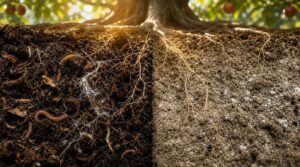
Organic fertilizer works differently than most people expect — it’s less about feeding your tree directly and more about building the system that does the feeding. The soil itself becomes the engine, and understanding what drives that process changes how you approach every application. Here’s what’s actually happening beneath the surface.
Natural Nutrient Sources
Organic fertilizers draw their strength from the living world around you. Rather than relying on chemical synthesis, they pull nutrients from materials that have always fed the soil. Four sources stand out for fruit trees:
- Compost and composted manure — broad-spectrum macro and micronutrients, plus a boost to soil organic matter
- Bone meal and blood meal — concentrated phosphorus and nitrogen with a naturally slow nutrient release rate
- Rock phosphate — a mineral-form phosphorus that stays available in the soil for extended periods
- Kelp meal — trace minerals, natural growth hormones, and measurable support for soil microbial life
Unlike synthetic fertilizers, these sources don’t flood roots with nutrients all at once. Green manure crops like clover work the same way — you grow them, till them back in, and let decomposition do the rest. That steady, layered approach is what makes organic fruit tree fertilizer so different from natural vs synthetic fertilizers: one feeds the soil first, the other skips straight to the plant. Research shows that unaltered watershed sites can contribute significant nitrate loads during late summer natural nitrate sources.
Microbe-Driven Release
Think of soil microbes as the engine behind every organic fertilizer application.
When you add compost or aged manure, resident bacteria and fungi begin enzyme secretion — releasing proteases, phosphatases, and cellulases that break complex compounds into plant-available forms through nutrient mineralization.
This microbial network doesn’t flood roots; it delivers nutrients gradually, matching your tree’s actual uptake demand throughout the growing season.
Soil Organic Matter
Every time you apply organic fertilizer, you’re also feeding the soil itself.
Soil organic matter builds through plant litter decomposition, microbial necromass accumulation, and mineral stabilization — where ferrihydrite and aluminum hydroxide surfaces bind carbon compounds for centuries.
These stable aggregates improve water retention and root health in ways synthetic fertilizers simply can’t replicate.
Common Organic Options
Several organic fertilizers earn their place in a serious fruit tree program. Blood meal nitrogen acts fast — usually 12 to 15 percent N — making it useful for early‑season green‑up. Bone meal phosphorus builds roots and promotes flowering. Seaweed delivers micronutrients and growth hormones.
Compost, dehydrated manures, and aged poultry manure round out a complete, soil‑building approach for citrus trees and beyond.
What Synthetic Fertilizer Does
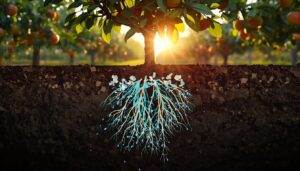
Synthetic fertilizers work fast, and that speed comes from how they’re built—water‑soluble compounds that skip the waiting game and get straight to your tree’s roots.
They also give you a level of control that organic options simply can’t match, from the exact nutrient ratios to the physical form you apply them in.
Here’s what that actually looks like in practice.
Fast Nutrient Availability
Synthetic fertilizers are built for speed. When moisture hits a fast-release fertilizer, dissolution happens within minutes to hours, pushing soluble nutrients straight into the soil solution where roots can access them almost immediately.
That rapid dissolution means you’re not waiting weeks — your fruit tree can respond within 7 to 14 days, showing greener leaves and stronger early growth.
Precise NPK Ratios
One of the clearest advantages synthetic fertilizers offer is NPK label reading made simple. That three-number code — say, 10-10-10 or 12-12-12 — tells you exactly what percentage of nitrogen, phosphorus, and potassium you’re delivering per application, so fertilizer dosage becomes a precise calculation rather than a guess.
Ratio matching to growth stage matters more than most growers realize:
- High nitrogen (N) drives leafy shoot growth during spring establishment
- High phosphorus (P) promotes root development and early blossom formation
- High potassium (K) improves fruit size, quality, and stress tolerance at harvest
- Balanced formulas like 10-10-10 sustain steady nutrition across multiple growth stages
That precision gives you genuine control over your tree’s nutritional trajectory.
Granules, Liquids, Spikes
Format matters as much as formula when choosing between granular fertilizer, water-soluble liquid feeds, and spikes.
Granule porosity determines how quickly water penetrates the binder and begins releasing nutrients — denser pellets dissolve slowly, giving you broader coverage when spread with a broadcast spreader for uniform distribution.
Liquid chelation keeps micronutrients mobile inside the plant, making foliar sprays ideal for rapid uptake.
Spikes deliver targeted spike release directly at the root zone.
Slow-Release Formulas
Spikes and liquids solve the "right now" problem, but what if your fruit tree needs steady feeding over months, not days?
Polymer coating technology wraps each granule in a semipermeable shell, letting water slowly draw nutrients outward. Release duration usually spans 3–9 months, and temperature effects mean warm soil accelerates delivery while cooler conditions slow it down — naturally syncing with your tree’s active growth.
Here’s why slow-release synthetic formulas earn their place in your fertilizer rotation:
- They reduce the risk of root burn by moderating nutrient flux in the root zone
- Nutrient synchronization aligns NPK delivery with key fruit development stages
- Moisture influence means your irrigation schedule actively shapes feeding intensity
- Fewer applications lower your labor costs without sacrificing consistency
- They bridge the gap between fast synthetic feeding and the gradual pace of organic fertilizers
No formula is perfect, but for fruit trees that need reliable, low-maintenance nutrition across an entire growing season, slow-release is hard to beat.
Nutrient Release and Uptake Speed
Timing matters more than most growers realize in the context of fertilizing fruit trees. The speed at which nutrients become available directly shapes how your tree responds—whether it pushes new growth right now or builds reserves over months.
Here’s how synthetic and organic fertilizers compare across the key timing factors you need to evaluate.
Quick Synthetic Feeding
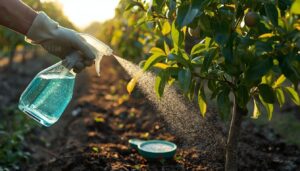
When a fruit tree shows signs of nutrient stress mid-season, you don’t always have time to wait. Immediate nutrient uptake is where synthetic fertilizers earn their place — delivering nitrogen, phosphorus, and potassium in water-soluble forms that roots can absorb within days.
| Application Method | Response Time |
|---|---|
| Foliar spray | 24–72 hours |
| Irrigation integration | 2–5 days |
| Top-dressed granules | 3–7 days |
| Variable rate application | Targeted, within days |
Foliar spray timing matters most during active growth flushes. Applying a diluted synthetic solution directly to leaves bypasses the root zone entirely, delivering a quick nutrient boost fast. Just watch your rates — fertilizer burn is a real risk if concentration exceeds label recommendations. Aligning applications with your tree’s phenology-based feeding windows keeps response strong and waste minimal.
Gradual Organic Release
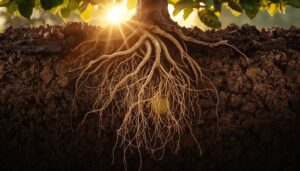
Unlike the rapid hit of a synthetic feed, organic fertilizers work through microbial breakdown — bacteria, fungi, and actinomycetes slowly mineralizing organic matter into plant-available nutrients over two to six weeks. This isn’t a flaw. It’s actually the mechanism that makes nutrient timing more forgiving for fruit trees, where steady uptake consistently outperforms sudden surges.
Here’s what that gradual process delivers:
- Organic matter build improves soil structure and water retention over multiple seasons
- Leaching reduction keeps nutrients in the root zone rather than washing through sandy profiles
- Decomposing manures and composts create a natural slow-release fertilizer effect aligned with growing conditions
- Warmer, moist soils accelerate mineralization, matching seasonal feeding patterns to peak tree demand
- Lower salt content in organic fertilizers reduces burn risk and maintains root integrity
The result is a nutrient release curve that tracks your tree’s actual needs rather than flooding the system at once. Think of it like a drip line versus a fire hose — same water, very different outcomes for the roots receiving it.
Seasonal Tree Needs
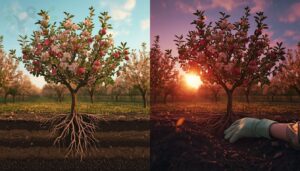
Fruit trees don’t have a single appetite — they shift their nutritional demands with the seasons, and your fertilizer timing needs to follow that rhythm.
Spring Nutrient Timing is your most critical window. As buds break and the BBCH growth stage advances from dormancy into active shoot development, trees pull heavily on nitrogen to fuel canopy expansion and early flower set. This is where synthetic fertilizers earn their keep — fast nutrient availability means you can deliver a precise nitrogen boost exactly when the tree needs it most.
By summer, the tree’s focus shifts from leaves to load. Summer Fruit Support calls for phosphorus and potassium to drive cell division, sugar development, and skin integrity. If you’ve been building organic matter in the soil through the previous season, your slow‑release organic fertilizers are quietly delivering here — microbial mineralization aligns naturally with the warmer, moist conditions of midsummer.
| Season | Feeding Priority |
|---|---|
| Spring | Nitrogen for shoot and bloom development |
| Summer | Potassium and phosphorus for fruit fill |
| Fall | Root-zone organic matter to build soil reserves |
| Winter | No active feeding; dormancy protection only |
Fall Root Prep shifts the strategy entirely. Applying a slow‑release organic amendment in autumn — compost, aged manure, or a balanced organic meal — gives soil microbes months to mineralize nutrients before spring demand peaks again. It’s a quiet investment that pays forward. Winter Dormancy Care means stepping back: no synthetic fertilizers, no forcing growth that cold temperatures can’t support anyway.
Seasonal application frequency depends on which path you’re following. Organic fertilizers may need only two to three applications annually when timed well, while synthetics supporting active growth phases may require monthly feeding through spring and summer.
Young Versus Mature Trees
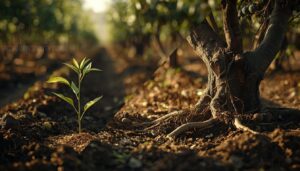
Young trees demand frequent, smaller doses of fruit tree fertilizer — their developing root systems can’t absorb large nutrient loads without leaching risk.
As trees mature, root networks deepen and mycorrhizal associations strengthen, so organic fertilizers align well with their steadier, slower nutrient uptake.
Synthetic fertilizers still help correct deficiencies fast, but mature trees reward patience more than young ones ever will.
Soil Health and Root Growth
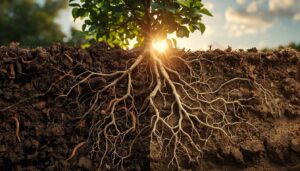
What you put into your soil matters just as much as what ends up in your fruit. Beyond feeding your trees, fertilizer choice quietly shapes the living ecosystem underground — affecting roots, microbes, and long-term soil stability in ways that compound over seasons.
Here’s what to examine across five key areas.
Microbial Activity
Think of your soil as a living system — one that organic fertilizers actively sustain. Soil microbiology responds directly to what you apply. Organic fertilizers feed microbial communities, which drive nutrient release through enzyme activity involving cellulases, proteases, and phosphatases.
Key factors controlling microbial activity in soil:
- Temperature effects — activity roughly doubles with every 10°C rise within a microbe’s ideal range
- pH influence — most beneficial soil microbes thrive near neutral pH; sharp drops suppress their metabolic pathways
- Moisture impact — both drought and waterlogging reduce microbial mobility and substrate diffusion
- Microbial diversity — diverse communities maintain functional redundancy, keeping nutrient cycling stable even under stress
Synthetic fertilizers, by contrast, can reduce this diversity over time, disrupting the biological engine your trees depend on.
Mycorrhizal Support
Mycorrhizal symbiosis gives your fruit trees something roots simply can’t achieve alone. The fungal hyphae extend far beyond root tips, performing hyphal foraging through soil pores too small for roots to access — increasing soil contact area by several hundred-fold. This dramatically improves phosphorus uptake, often by 20–50% in young trees under moderate phosphorus availability.
Organic fertilizers support these networks. Synthetic fertilizers, by contrast, can suppress mycorrhizal colonization, particularly when soluble phosphorus levels remain consistently high, reducing the tree’s incentive to maintain the symbiosis.
Beyond nutrients, mycorrhizal networks enable nutrient sharing between neighboring trees, stabilizing orchard vigor when individual trees face stress. They also prime pathogen resistance and improve drought tolerance by maintaining water potential during heat stress. The fungal partner invests heavily here — your tree allocates carbon to support colonization, and in return gains a resilient, far-reaching resource network that no synthetic product replicates.
Mycorrhizal networks share nutrients between trees, resist pathogens, and outlast anything a synthetic product can offer
Soil Structure Benefits
Soil structure is the invisible architecture beneath your trees — and organic fertilizers are its primary builders. Through aggregate formation, organic matter binds mineral particles into stable clumps that create a network of pore connectivity, channeling both air and water efficiently through the root zone.
- Water holding capacity improves considerably, buffering your trees through dry spells
- Erosion reduction follows naturally, as stable aggregates resist raindrop impact and surface runoff
- Carbon storage increases within protected aggregate interiors, extending organic matter residence time
Synthetic fertilizers don’t contribute here. Over time, organic inputs genuinely rebuild soil health from the ground up.
Salt Buildup Risks
Repeated synthetic fertilizer use quietly poisons the root zone through salt accumulation. Synthetic salts raise soil electrical conductivity, and once EC climbs beyond 2–4 dS/m, your trees practically experience drought — even in moist soil.
Soil EC monitoring and salt leaching via deliberate irrigation flushes help reverse this.
Organic fertilizers carry far lower salt loads, making them inherently safer for long-term root health.
PH Changes
pH quietly controls everything. Synthetic nitrogen — especially ammonium-based forms — gradually acidifies your soil, locking out calcium, magnesium, and phosphorus before you notice symptoms.
Organic fertilizers, by contrast, buffer pH more gently through decomposition.
Regular soil pH testing keeps you proactive; most fruit trees thrive between pH 6.0 and 6.5, where nutrient balance stays ideal.
Environmental Impact Comparison
What you put on your trees doesn’t just stay in your yard. Synthetic fertilizers carry real risks beyond the garden bed, from leaching into groundwater to contributing to carbon emissions during production. Here’s how each option stacks up across the environmental factors that matter most.
Nutrient Leaching
When water moves through the soil faster than roots can absorb it, nutrient leaching begins. Nitrate nitrogen is the biggest culprit — its nitrate mobility through sandy soils can reach groundwater within weeks.
Split application benefits reduce this risk greatly by aligning feeding with actual uptake, so nutrients don’t wash past the root zone before trees can use them.
Runoff and Algae Blooms
Leaching carries nutrients downward, but fertilizer runoff carries them sideways — straight into streams, lakes, and drainage ditches. Once phosphorus and nitrogen reach open water, algal bloom conditions can develop rapidly, choking out aquatic life and degrading water quality through oxygen depletion.
Planting buffer strips along property edges remains one of the simplest ways to intercept nutrients before they reach waterways.
Carbon Footprint
Runoff tells part of the story, but the carbon footprint of fertilizer starts long before it reaches your soil. Synthetic fertilizer production emissions alone are substantial — the Haber-Bosch process that manufactures nitrogen fertilizers is energy-intensive, burning significant volumes of natural gas. Organic fertilizers, by comparison, carry a lighter lifecycle carbon accounting burden overall.
| Factor | Synthetic | Organic |
|---|---|---|
| Production energy | High (fossil fuel-dependent) | Low |
| Greenhouse gas emissions | N₂O released post-application | Minimal |
| Soil carbon sequestration | Limited | Actively supported |
Groundwater Protection
Beyond carbon emissions, fertilizer choices have a direct hand in groundwater protection. Synthetic fertilizers, with their high solubility, move nitrogen and phosphorus rapidly through soil — and straight into aquifers. Monitoring networks and wellhead protection zones exist precisely because this kind of nitrogen leaching is so difficult to reverse once it’s underway.
| Factor | Synthetic | Organic |
|---|---|---|
| Leaching risk | High | Low |
| Groundwater standards risk | Elevated | Minimal |
| Contaminant source control | Requires management | Naturally lower |
Organic fertilizers release nutrients slowly, keeping phosphorus and nitrogen bound within microbial processes rather than flushing into water supplies.
Safer Application Practices
Applying fertilizer safely starts with knowing your rates. Soil testing before application tells you exactly what’s missing, so you’re not guessing — and not over-applying. Whether you choose organic vs synthetic fertilizer, match your rate to what the soil actually needs. Variable-rate application through precision agriculture tools puts nutrients where trees demand them, cutting waste and environmental risk considerably.
| Practice | Benefit |
|---|---|
| Soil testing | Prevents over-application |
| Variable-rate application | Reduces runoff risk |
| Calibrated spreader settings | Ensures even distribution |
| Timing applications correctly | Minimizes leaching potential |
| Buffering from water sources | Protects groundwater quality |
Cost, Yield, and Value
Price matters, but it’s rarely the whole story when you’re choosing a fertilizer for fruit trees. What you spend upfront doesn’t always reflect what you’ll gain — or lose — over a full growing season and beyond. Here’s how the two options actually stack up across five key cost and value factors.
Price Per Nutrient
Price per nutrient is the fairest way to compare synthetic and organic fertilizers.
A 10-10-10 synthetic blend delivers precise, concentrated NPK, so your cost per pound of actual nutrient stays low.
Organic options like bone meal or compost cost more upfront per nutrient unit, but their secondary micronutrient profile adds hidden value that standard NPK labels don’t reflect.
Application Volume Needed
One thing most gardeners underestimate is how much volume gap exists between organic and synthetic fertilizer application rates.
- Dosing per tree with synthetics is minimal — often ounces per season
- Organics require larger application volumes to deliver equivalent nutrients
- Container volume guidelines scale down for pot size
- Soil type adjustments increase rates on sandy, fast-draining ground
Seasonal split applications keep both types safer and more effective.
Short-Term Yield Response
Synthetic fertilizers can deliver a visible yield spike within 14 to 28 days, thanks to rapid nutrient uptake, once moisture activates the mineral salts. Early season fertilization with a balanced NPK fertilizer aligns that fast release with peak flowering pressure, converting more blossoms into fruit.
Organic inputs follow more slowly, generally reaching their short-term yield ceiling around weeks three or four.
Long-Term Soil Savings
Over time, organic fertilizer quietly builds something synthetic products can’t bottle: long-term soil fertility. Continuous organic matter inputs raise soil carbon by 0.2 to 0.8 Mg per hectare annually, improving aggregate stability, water retention, and microbial biomass — which means your trees spend less on expensive fixes later.
These soil savings compound:
- Reduced leaching keeps nutrients in the root zone longer
- Carbon sequestration improves drought resilience year after year
- Richer microbial communities lower how often you need to re-fertilize
Hidden Remediation Costs
What most gardeners don’t realize is that heavy synthetic fertilizer use can quietly accumulate hidden costs that go far beyond the bag price. Chemical runoff and soil degradation may trigger regulatory scrutiny, requiring permits and structural soil assessments that add 2–8% to remediation budgets — before you’ve even started fixing the problem.
| Hidden Cost | Typical Impact |
|---|---|
| Permit & inspection fees | 2–8% of remediation budget |
| Vapor intrusion assessments | $1,500–$6,000 per site |
| Long-term monitoring contracts | 3–7% of initial costs annually |
| Demolition and debris disposal | $1,000–$5,000 per project |
Eutrophication from runoff and groundwater contamination can escalate into multi-year compliance obligations, with annual reporting adding another 0.5–2% overhead. When you factor in long-term monitoring for soil and groundwater, organic fertilizing starts looking like the smarter financial decision — not just the greener one.
Best Choice by Growing Situation
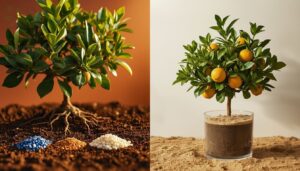
The right fertilizer isn’t universal — it depends heavily on where and how your trees are growing. Sandy soil, containers, and in-ground citrus each have different demands, and the wrong choice can cost you time, money, and tree health. Here’s how to match your fertilizer to your specific situation.
Backyard Fruit Trees
If you’re growing a backyard apple, pear, or peach, organic fertilizer is usually your strongest long-term ally. It builds soil structure, feeds microbial life, and releases nutrients gradually — matching how a tree actually feeds.
Pair that with consistent pruning to open the canopy, and your tree rewards you with better light penetration and stronger fruit set season after season.
Citrus Trees
Citrus trees demand a different approach than your backyard apple or pear. Because citrus root systems rely heavily on mycorrhizal fungi rather than root hairs for mineral uptake, anything that disrupts soil biology — like repeated synthetic salt applications — directly compromises nutrient absorption.
For a Meyer Lemon or Kishu Mandarin, organic fertilizer nourishes the microbial partnerships your tree depends on, while targeted synthetic NPK corrects acute deficiencies fast.
Container Fruit Trees
Container fruit trees bring a different set of rules. In a 15 to 25 gallon pot, you’re managing a closed root zone — nutrients don’t migrate far, and they accumulate fast.
Synthetic fertilizers applied monthly work well for quick uptake, but salt buildup is a real risk.
Organic slow-release options reduce that danger while steadily supporting root zone health.
Poor or Sandy Soil
Sandy soil is the container scenario’s polar opposite — instead of nutrients accumulating, they vanish. Rapid drainage and low nutrient retention mean both water and fertilizer flush straight through before roots can absorb them.
Organic amendments like compost build stable soil aggregates, slowing that loss while feeding the microbial communities that make nutrients available where your Meyer Lemon Tree actually needs them.
Quick Deficiency Correction
When a deficiency shows up fast, synthetic fast-release products are your best tool. A Magnesium Foliar Spray at 1–2 tablespoons per gallon restores leaf color within a week.
Iron Chelate Application corrects chlorosis in 5–14 days, while a Potassium Sulfate Drench or Calcium Soil Drench stabilizes margins and fruit tissue quickly.
For chronic zinc issues, a Zinc Trunk Injection achieves outcomes within weeks.
Smart Fertilizing Buying Strategy
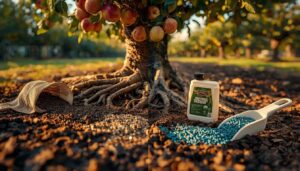
Buying fertilizer without a clear strategy usually means spending more than you need to and getting less than you hoped for. A few simple decisions — what your tree actually needs, what the label says, and how you plan to feed over time — make all the difference. Here’s what to look at before you buy.
Match Product to Need
Before you buy anything, ask yourself one question: what does your tree actually need right now? Match the urgency first.
A tree showing yellowing leaves needs a fast-acting synthetic to correct the deficiency quickly.
A healthy young tree establishing roots benefits more from an organic starter blend that promotes long-term soil biology without overwhelming tender root systems.
Compare NPK Labels
The three numbers on any fertilizer label — NPK ratio — tell you exactly what you’re buying. Nitrogen drives leafy growth, phosphorus promotes roots and flowering, and potassium builds overall vigor and fruit quality.
- Synthetic labels are precise: a 10-10-10 means exactly 10% of each nutrient by weight
- Organic labels vary — blood meal runs 13-1-0.6, bone meal closer to 3-15-0
- Elemental vs derived values can differ, so check whether phosphorus and potassium are listed as oxides or elemental percentages
That label percentage clarity matters because organic fertilizer efficiency depends on microbial breakdown, not just nutrient concentration on the bag.
Consider Integrated Feeding
Neither organic nor synthetic feeding alone gives fruit trees everything they need — but combining both can.
Integrated feeding pairs slow-release organic inputs with targeted synthetic applications, matching nutrient delivery to each growth phase. A soil test integration step tells you what’s actually missing before you spend a dollar.
| Strategy Element | Organic Role | Synthetic Role |
|---|---|---|
| Feed Timing Strategy | Build baseline soil fertility before spring | Deliver rapid nutrients at bloom and fruit set |
| Nutrient Balance Plan | Supply calcium, magnesium, and micronutrients | Correct specific NPK gaps with precision |
| Microbe Fertilizer Blend | Feed soil biology for long-term availability | Support short-term uptake without disrupting structure |
A variable rate feeding approach — lighter doses more frequently — reduces salt buildup while keeping your soil fertility management on track. That’s how sustainable agriculture works in practice: not one product winning, but the right product at the right time.
Osmocote Versus Espoma
Regarding slow-release fertilizer for fruit trees, Osmocote and Espoma represent two fundamentally different philosophies.
Osmocote relies on coating technology — a semi-permeable shell that controls nutrient diffusion over three to six months with no microbial dependency required.
Espoma, by contrast, feeds through organic matter breakdown, meaning soil temperature and biology drive your results.
Frequently Asked Questions (FAQs)
Can I fertilize fruit trees during winter dormancy?
Winter dormancy is basically your tree’s "do not disturb" mode. Nutrient uptake drops sharply, root activity slows, and most fertilizer just sits unused — or worse, builds salinity in the root zone before spring growth begins.
How does fruit tree age affect fertilizer needs?
A tree’s age shapes its nutrient priorities. Young trees need more nitrogen to build roots and canopy, while mature trees shift toward balanced NPK to support flowering and fruit quality.
Do fruit trees need fertilizer in their first year?
Most fruit trees don’t need fertilizer in their first year. Root establishment takes priority — proper watering, mulch, and healthy soil matter far more than feeding during this critical early stage.
Can over-fertilizing prevent fruit trees from producing?
Yes — too much fertilizer can absolutely shut down fruit production. Excess nitrogen pushes trees into vigorous leafy growth, starving flowering spurs of the resources needed to set fruit.
How does irrigation frequency affect fertilizer absorption?
Irrigation frequency directly controls how fast fertilizer reaches roots. Water dissolves nutrients and carries them into the root zone — too little moisture stalls uptake; too much leaches soluble nutrients away before plants absorb them.
Conclusion
The soil beneath your trees tells the story before the harvest ever does. Every application choice you make today—whether you’re reaching for bone meal or a 10-10-10 blend—shapes what that root zone looks like five seasons from now.
The organic vs synthetic fruit tree fertilizer decision isn’t about picking sides; it’s about reading your soil, matching your timing, and feeding with intention.
Get that right, and your trees will show you exactly what they needed all along.
- https://www.starkbros.com/growing-guide/article/fertilizing-organic-fruit-trees
- https://www.cropler.io/blog-posts/synthetic-vs-organic-fertilizers
- https://www.marthastewart.com/best-fertilizers-for-fruit-trees-11778658
- https://eos.com/blog/organic-vs-synthetic-fertilizers
- https://www.milorganite.com/lawn-care/organic-lawn-care/organic-vs-synthetic