This site is supported by our readers. We may earn a commission, at no cost to you, if you purchase through links.
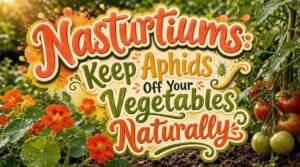
Aphids don’t stumble onto your tomatoes by accident—they navigate by scent, following volatile chemical signals drifting through the air. Nasturtiums release those same signals, louder and more irresistible than most vegetables can. Plant them close enough, and aphids choose nasturtiums every time, clustering on tender stems while your crops stay clean.
It’s not folklore. The plant’s high water content, thin leaf tissue, and glucosinolate chemistry make it a biological magnet for sap-sucking pests. Using nasturtiums to keep aphids off vegetables works because you’re redirecting a problem, not eliminating it—and that distinction changes everything about how you manage your garden.
Table Of Contents
Key Takeaways
- Nasturtiums don’t repel aphids — they bait them on purpose, acting as a decoy that pulls pests away from your vegetables before they ever get there.
- Plant them 18–24 inches from your crops, especially tomatoes and brassicas, and you can cut aphid pressure by up to 20 percent just through smart placement.
- Check the undersides of nasturtium leaves every two to three days — that’s where colonies hide and grow before they jump to your garden beds.
- Pair nasturtiums with ladybug-attracting plants like alyssum and dill, and skip broad-spectrum sprays so your natural cleanup crew stays alive and working.
Do Nasturtiums Keep Aphids Away?
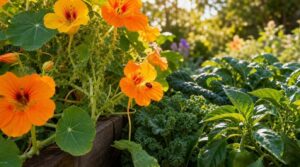
Nasturtiums don’t exactly shoo aphids away — they pull them in on purpose. It’s a classic bait-and-switch that keeps the pests off your vegetables and onto a plant you can manage. Here’s what you need to know before adding them to your garden.
If aphids are already wreaking havoc on your herbs, dealing with aphids on herb plants pairs perfectly with this strategy to keep your whole garden covered.
Repellent Versus Trap Crop
Nasturtiums don’t repel aphids — they pull them in on purpose. That’s the whole point. As a trap crop, nasturtium acts as a decoy plant, luring aphids away from your vegetables and concentrating them in one spot.
A push-pull system pairs this with repellent companions nearby, steering insects toward the trap and away from what matters. This approach is a key component of integrated pest management strategies.
Why Aphids Choose Nasturtiums
Aphids don’t land on nasturtiums by accident. Tender young leaves and stems offer easy access to sugary sap, making them an irresistible early-season target.
Add in the volatile chemical signals nasturtiums emit, and you’ve got a decoy plant that actively calls aphids in — pulling them toward trap cropping zones and away from your vegetables.
Best Vegetables to Protect
Your vegetables aren’t equally at risk. Tomatoes and cucumbers top the list — tomato protection improves by 20 percent when nasturtiums sit 18 to 24 inches away. Cucumbers near trellis lines also see fewer swarms.
Brassicas like kale and cabbage benefit with nasturtiums planted 1.5 to 2 feet back. Root crops and leafy greens gain solid coverage from border plantings too.
Realistic Pest Control Expectations
Knowing which crops to guard is just the start — managing your expectations matters just as much. Nasturtiums work through gradual decline, not overnight magic. Expect steady aphid reduction over 1 to 3 weeks with consistent effort.
Combine companion planting with regular monitoring every 2 to 3 days. That integrated approach keeps populations below the action threshold without relying on chemical sprays.
Why Aphids Target Nasturtiums
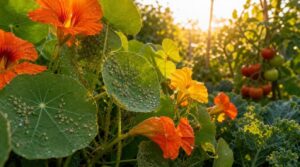
Aphids don’t stumble onto nasturtiums by accident — there’s a reason they show up there first. These plants put out a welcome mat that sap-sucking insects simply can’t resist. Here’s what makes nasturtiums so irresistible to them.
Tender Leaves and Stems
Young nasturtium tissue is basically a free buffet. Tender leaves and stems — just 0.5 to 1.5 millimeters thick — carry high water content and low fiber, making them easy for aphids to pierce. That soft, pliable growth also packs concentrated nutrients.
Check the undersides of nasturtium leaves first; that’s where colonies quietly establish before you notice any damage.
Sap-Sucking Pest Behavior
Once they land, aphids don’t just nibble — they drill. Phloem feeding lets them tap directly into a plant’s vascular system, draining sugars and transmitting viruses in a single probe. They excrete honeydew, which breeds sooty mold fast.
Females reproduce through parthenogenesis, skipping males entirely. One aphid becomes thousands quickly — making nasturtiums a smart trap crop before colonies jump to your vegetables.
One aphid becomes thousands fast — nasturtiums trap colonies before they ever reach your vegetables
Scent and Plant Chemistry
Nasturtium’s chemistry is the real bait. The plant releases volatile organic compounds — including trimethylamine and indole — that aphids detect from a distance.
Terpenoid emission adds layered green and fresh notes, while benzenoid compounds contribute sweet signals that sap-suckers find irresistible. Green leaf volatiles spike when leaves are stressed, amplifying the lure. Sulfur volatiles round out the blend, making nasturtiums chemically impossible for aphids to ignore.
Understanding this volatile chemistry can also inform how you handle your harvest—proper nasturtium harvesting techniques help preserve these same aromatic compounds that make the plant so irresistible to aphids.
Early Spring Aphid Activity
Spring catches most gardeners off guard. Once soil temperatures climb above 10°C, adult aphids wake up and start moving — and populations can double every three to five days.
Your nasturtiums act as a magnet before they reach your vegetables. Natural predators like ladybugs lag behind this early surge, so your trap crop buys critical time.
Best Nasturtiums for Aphid Control
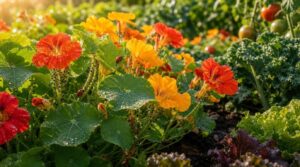
Not all nasturtiums pull their weight equally in the pest trap game. Some varieties draw far more aphids, bloom longer, and give you better coverage where it counts. Here are the ones worth growing.
Empress of India
If you want one variety that pulls aphids like a magnet, ‘Empress of India’ is your go-to trap crop. Its deep scarlet blooms and dark, velvety foliage pump out the chemical signals aphids can’t resist, drawing colonies away from your vegetables fast.
Here’s why it earns its place:
- Dense, tender leaves give aphids an easy target
- Rich glucosinolates make it far more palatable than nearby crops
- Compact bush habit keeps it manageable at bed edges
- Deep color contrasts help you spot infestations quickly
- Thrives in poor, unamended soil, which actually boosts pest attraction
Jewel of Africa
‘Jewel of Africa’ does double duty in your garden. While the name is best known for ethical gem sourcing and handmade jewelry craft, this trailing nasturtium variety earns equal praise as a trap crop powerhouse.
Its abundant foliage and flowers release strong chemical signals that pull aphids away from your vegetables, giving you natural, sustainable pest control without sprays.
Alaska Nasturtiums
‘Alaska’ brings something extra to the table. Its variegated foliage — cream-marbled leaves on a compact, mounded habit — does the same pest-drawing work as other trap crop varieties, but it looks good doing it. Aphids still flock to it. Edible flowers attract pollinators too.
It fits container gardening setups easily, making biological pest control and companion planting practical even in tight spaces.
Trailing Versus Bush Types
Trailing and bush nasturtiums both work as trap crops, but they behave differently in the garden. Your choice affects spacing, pruning, and pest control as much as aesthetics.
Here’s what separates them:
- Trailing vines spread 1–2 feet monthly and need 12–18 inches between plants
- Bush types stay compact at 6–12 inches tall and need only 8–12 inches of spacing
- Trailing forms expose more new growth to aphids along the entire vine length
- Bush nasturtiums show pest signs on outer leaves first, making monitoring easier
For containers, trailing types spill beautifully over edges. Bush varieties fit neatly into raised beds without sprawling.
Foliage and Flower Density
Density matters more than most gardeners expect. A well-filled nasturtium — measured by its leaf area index of 1.5 to 5.0 — intercepts more light, holds moisture better, and draws aphids in faster.
Peak bloom hits 20 to 50 flowers per plant, boosting pollinator traffic nearby. Dense canopies thin out by fall, so plant early.
Where to Plant Nasturtiums
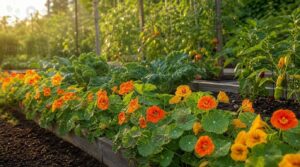
Placement is everything with nasturtiums — put them in the wrong spot and you’re just growing snacks for aphids with no payoff. The goal is to position them where they intercept pests before those pests reach your vegetables. Here’s where they do their best work.
Vegetable Bed Edges
Plant nasturtiums right along the edge of your vegetable beds. A clean border creates a first line of defense — attracting aphids before they ever reach your crops.
- Metal or stone edging keeps nasturtiums contained and beds tidy
- Space plants 18–24 inches from your vegetables
- Choose edging that won’t rot or shift
- Metal edging resists weed crossover effectively
- Living borders blend beauty with function
Near Brassicas and Beans
Brassicas and beans are aphid magnets. That’s exactly why nasturtiums belong right beside them.
Position nasturtiums 1–2 meters from brassicas and beans. Close enough to intercept aphids before they land on your kale or broccoli. Far enough to keep airflow clean.
| Crop | Nasturtium Distance | Key Benefit |
|---|---|---|
| Broccoli | 1–2 meters | Diverts aphid flight paths |
| Kale | 1–1.5 meters | Promotes hoverfly activity |
| Cabbage | 1–2 meters | Reduces aphid colonization |
| Bush beans | 1–2 meters | Boosts predator visitation |
| Broad beans | 1.5–2 meters | Intercepts early spring aphids |
Upwind placement matters most. Aphids drift on air currents, so nasturtiums placed upwind act as a trap crop, catching pests before they reach tender brassica leaves. Bright blooms arriving in late spring align perfectly with peak aphid pressure, drawing in ladybugs and hoverflies that clean up what’s left.
Safe Crop Spacing
Getting the spacing right is half the battle. Keep nasturtiums 18–24 inches from vegetables — close enough to intercept aphids, far enough to avoid shading your crops.
In containers, allow at least 6–8 inches between plants. In cool spring, stretch that to 18 inches. By midsummer, 12 inches works fine as ground cover fills in.
Perimeter Trap Planting
Think of nasturtiums as your garden’s first line of defense. Perimeter trap planting means ringing your entire vegetable bed with nasturtiums so aphids hit them before reaching your crops.
Keep the border one to two feet wide and establish it weeks before peak pest season. Denser plantings create a stronger pest sink, intercepting migrations early.
Upwind Garden Placement
Wind carries aphids right into your garden — so use that against them. Place nasturtiums upwind of your vegetables to intercept pests before they ever reach your crops.
Here’s why upwind placement works so well as a trap crop strategy:
- Aphids drift on air currents and land on the first attractive plant they find
- Nasturtiums’ strong scent pulls them in before they detect your vegetables
- Windbreak placement slows gusts, giving decoy plants time to intercept migrants
- You spot infestations earlier, right at the garden’s edge
Position your companion planting border at least 18 inches inside the upwind edge.
How to Manage Aphid Buildup
Nasturtiums do their job best when you stay a step ahead of the crowd they attract. A quick check every few days is all it takes to keep things from getting out of hand. Here’s how to manage the buildup before it becomes a real problem.
Check Leaf Undersides
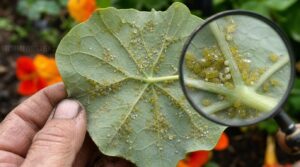
Flip a nasturtium leaf over. That’s where aphid colonies hide. Look for tiny white honeydew flecks, pearly egg clusters along veins, and sticky film. Run a finger gently across the underside to feel for live clusters. A 10x hand lens helps confirm small aphids you’d otherwise miss.
| What to Check | What You’ll Find | Why It Matters |
|---|---|---|
| Honeydew Detection | Sticky white flecks | Confirms active feeding |
| Egg Cluster Check | Pearly pear-shaped eggs | Signals incoming hatch |
| Leaf Symptom Signs | Curling, yellowing edges | Indicates sap loss damage |
| Physical Examination | Live clusters under veins | Reveals colony size fast |
| Monitoring Frequency | Every 2–3 days | Catches buildup early |
Monitor Every Few Days
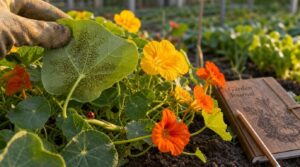
Consistent monitoring is what separates a working trap crop from a failed one. Set a Weekly Inspection Routine — but tighten it to every 48 hours during warm spells when colonies explode fast.
- Run Leaf Underside Checks on every nasturtium plant.
- Count clusters and track your Aphid Count Thresholds.
- Log Predator Activity Watch notes — ladybugs signal balance.
- Record Weather Impact Tracking to anticipate population surges.
Hit your action threshold before aphid colonies jump beds.
Hose Off Aphid Clusters
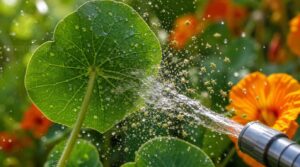
Once you’ve spotted a cluster, act fast. Hose aphids off nasturtium leaves using a focused jet nozzle — aim directly at leaf undersides where colonies pack tight.
Morning spraying works best. Aphids are sluggish, and leaves dry naturally before evening, cutting fungal risk.
Repeat every two to three days for two weeks until numbers drop by at least 80 percent.
Prune Infested Stems
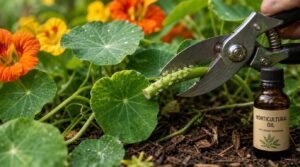
When hosing isn’t enough, pruning takes over. Cut infested nasturtium stems at least 2 inches below visible damage using sharp, angled pruners.
- Sanitize tools with 70% alcohol between each cut
- Make 45-degree angled cuts above healthy tissue
- Bag and trash removed stems — never compost them
- Apply horticultural oil to fresh cuts afterward
- Inspect neighboring stems within a few days
Remove Severe Infestations
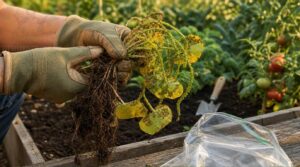
Sometimes pruning isn’t enough. When aphids on nasturtiums spiral out of control, remove infested plants entirely. Pull the whole plant, roots and all. Seal it in a bag and trash it — don’t compost it.
Clean garden debris nearby too. That leftover leaf litter hides eggs. A clean bed gives beneficial insects and organic treatments room to actually work.
Build a Balanced Pest Strategy
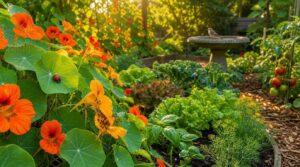
Nasturtiums do the heavy lifting, but they work best as part of a bigger picture. A few smart moves around your garden can turn a good setup into a great one. Here’s what to add to your strategy.
Attract Ladybugs and Hoverflies
Nasturtiums pull in more than just aphids — they draw the hunters too. Ladybugs consume 50–60 aphids daily, and they’ll stick around when nectar-rich flowers like alyssum and dill grow nearby. Pair those with your nasturtiums to build a nectar corridor that guides beneficials straight into your beds.
Hoverflies work the same way. Their larvae eat aphids; the adults need shallow flowers like calendula and fennel. Add ground cover and some leaf litter nearby for predator insect shelter, and you’ve got a self-sustaining cleanup crew.
Avoid Broad-Spectrum Sprays
Reach for selective chemicals first — not the heavy-hitters. Broad-spectrum sprays wipe out ladybugs, hoverflies, and parasitic wasps alongside aphids, destroying the predator preservation work your nasturtiums quietly support.
- Spot-treat infested stems only
- Use insecticidal soap or neem oil
- Protect soil health by avoiding systemic chemicals
- Choose biological controls over broad-spectrum options
Pair With Companion Plants
Pairing nasturtiums with the right plants turns your garden into a layered defense system. Basil beside nasturtiums draws aphid predators like wasps and lacewings. Plant dill nearby to support hoverflies. Add marigolds as a second trap crop.
Beans fix nitrogen, keeping soil strong. Carrots and onions diversify the habitat, spreading pest pressure thin across the bed.
Support Pollinators Naturally
Growing nasturtiums for aphid control does double duty — they pull pests away and pull pollinators in. Their open flowers give bees and hoverflies easy access to nectar.
Add native perennials like coneflower nearby for continuous bloom. A shallow water dish with pebbles keeps visitors coming back.
Skip broad-spectrum sprays. Protecting beneficial insects is how your trap crop strategy actually holds together.
Protect Garden-To-Table Harvests
All that work keeping aphids on your nasturtiums means nothing if your harvest picks up contamination along the way.
Harvest early in the morning, use clean tools, and rinse between plants. Add drip irrigation to keep foliage dry, and lay fine mesh row covers over vulnerable beds.
Your trap crop strategy protects the garden — good handling practices protect the table.
Frequently Asked Questions (FAQs)
Do nasturtiums keep aphids away?
Here’s the thing — nasturtiums don’t repel aphids. They lure aphids in. That’s the trap crop strategy at its best: bait the pest, protect the prize.
Can nasturtiums be grown successfully in containers?
Yes, nasturtiums thrive in containers. Use a 12-inch pot with drainage holes, lean potting mix, and 6 hours of sun daily. Water when the top inch dries out.
Do nasturtiums reseed themselves each year automatically?
Nasturtiums don’t always return automatically. In mild climates, seed pod development leaves viable seeds in the soil, producing volunteer seedlings each spring. In cold regions, frost ends the plant — but seeds often survive.
How long do nasturtium plants typically live?
Most nasturtiums live just one growing season. They’re annuals in most climates, dying after the first hard frost. In warmer zones 9–11, they can persist two to three years.
Are nasturtium flowers and leaves edible for humans?
Both the flowers and leaves are fully edible. They taste peppery, like watercress. Toss petals into salads, stuff blooms as appetizers, or pair them with citrus and soft cheese. Wash everything first.
Do nasturtiums attract aphids in indoor garden settings?
Aphids really do "bug in" when nasturtiums grow indoors. Warm indoor humidity, bright light, and limited airflow create ideal conditions for aphid colonies to thrive on these lush trap crop plants.
Conclusion
Like a decoy duck sitting perfectly still on open water, nasturtiums keeping aphids off vegetables works by giving pests something far more irresistible to land on. You’re not fighting nature—you’re using it against itself.
Plant them right at your bed edges. Check the undersides of leaves every few days. Pull infested stems before colonies can grow and spread.
Pair that with ladybugs and companion plants, and your garden quietly defends itself without much effort.