This site is supported by our readers. We may earn a commission, at no cost to you, if you purchase through links.
Most backyard orchardists water faithfully, prune carefully, and still wonder why their trees produce small, bitter, or sparse fruit. The answer is usually underground.
Fruit trees pull enormous energy from the soil—nitrogen to build leaves, phosphorus to push roots deeper, potassium to sweeten every piece of fruit hanging on the branch. Get that chemistry wrong and the whole system underperforms, no matter how attentive you are above ground.
Matching the right fruit tree fertilizers to your backyard orchard’s actual soil conditions, tree species, and growth stage is what separates a decent harvest from a genuinely good one.
Table Of Contents
Key Takeaways
- Soil chemistry — not surface care — drives fruit size and quality, so always test before you fertilize.
- Match your fertilizer’s NPK ratio to your specific tree type, since apples, pears, citrus, and stone fruits each have different nitrogen tolerances and feeding needs.
- Stop all nitrogen applications before June and water deeply after every feeding to prevent runoff and push nutrients into the root zone where feeder roots actually work.
- Pale leaves, short shoot growth, and rising pest pressure are early warning signs of either under- or over-fertilization, and a soil test is the fastest way to tell which one you’re dealing with.
What Fruit Trees Need Most
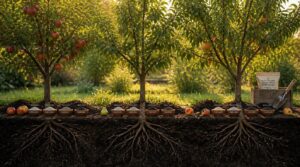
Fruit trees don’t ask for much, but they do ask for the right things. Get those basics wrong, and you’ll see it in the fruit before you ever figure out why. Here’s what your trees are actually counting on.
If you’re still figuring out which tree fits your space, this guide to fruit trees that are easiest for beginner growers is a solid place to start before you dig a single hole.
Nitrogen for Leafy Growth
Nitrogen is the engine behind every flush of green growth your fruit tree puts out. It makes up 1% to 5% of plant tissue and drives chlorophyll production, which powers photosynthesis.
Without enough of it, leaves stay pale and small. With the right amount, your canopy fills out fast and strong. A lack of this nutrient can cause stunted plant growth and reduced fruit size.
Phosphorus for Roots
Phosphorus plays a quieter role than nitrogen, but it’s doing serious work underground.
Root phosphorus uptake starts the moment a seedling establishes itself — root tips accumulate phosphorus to fuel cell division, and phosphorus root growth depends on how well your soil delivers it. Because soil mobility is low, roots must grow toward P pockets rather than waiting for nutrients to arrive.
Potassium for Fruit Quality
Roots set the foundation, but potassium drives the harvest.
- Improves fruit color by stimulating anthocyanin and pigment synthesis
- Boosts sugar transport through the phloem for sweeter, fuller flavor
- Strengthens postharvest firmness and extends shelf life
- Promotes uniform skin color and marketable appearance
- Enhances drought tolerance during fruit development
Low potassium means pale, soft, dull fruit. Don’t overlook it.
Calcium for Firm Fruit
Potassium gets fruit to the finish line — calcium keeps it there.
Calcium pectin crosslinks bind cell walls together at the molecular level, giving fruit mechanical firmness that holds through harvest and storage. Without adequate calcium, those bonds weaken, leading to splitting, bitter pit, and soft spots.
Calcium transport dynamics matter here: calcium travels through the xylem with the transpiration stream, so steady soil moisture and calcium soil availability directly control how much actually reaches developing fruit.
Magnesium for Photosynthesis
Think of magnesium as the engine inside every leaf. It sits at the center of the chlorophyll molecule, enabling your tree to capture sunlight and convert it into the sugars that feed developing fruit.
Without enough magnesium, chlorophyll breaks down, leaves turn yellow, and photosynthetic output drops — meaning less energy reaches the fruit.
Test Soil Before Fertilizing
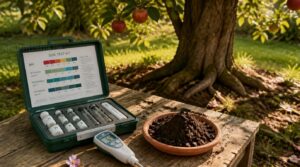
Before you reach for a fertilizer bag, the soil under your trees has a story to tell. A simple test reveals the pH and nutrient levels that actually drive feeding decisions. Here’s what to look at before you apply anything.
Check PH Levels
Before you spend a cent on fertilizer, check your soil pH levels. Most fruit trees grow best in a slightly acidic range of 6.0 to 6.8. Outside that window, nutrients lock up in the soil and never reach the roots — no matter how much you apply. A quick digital pH meter or soil pH test kit gives you the reading you need.
pH seasonal shifts happen, too. Winter rains can pull pH down; dry summers push it back up. That’s why one reading isn’t enough. If the result is too high, sulfur pH adjustment brings it down gradually. Too low? Lime pH correction raises it — just follow soil test recommendations to avoid overshooting your target.
Identify Nutrient Gaps
Once you know your soil pH, the next step is finding out what’s actually missing.
A soil nutrient analysis measures available nitrogen, phosphorus, potassium, calcium, and magnesium — giving you a clear picture before you guess. Pair that with leaf tissue testing during active growth, and you can confirm exactly which nutrients your trees are running short on.
Avoid Overfeeding Trees
More fertilizer doesn’t mean better results — it often means the opposite. Overfertilization causes salt buildup in the root zone, burning fine feeder roots and blocking water uptake. Excess nitrogen also lowers soil pH over time, which can lock out iron and zinc.
Slow-release products reduce these spikes. A simple soil test helps you feed precisely, not blindly.
Match Fertilizer to Soil
Your soil test results are the blueprint. They reveal not just pH but actual nutrient deficiency mapping — showing whether your tree lacks phosphorus, potassium, or key micronutrients like iron or zinc.
From there, fertilizer ratio selection becomes straightforward: nitrogen-heavy soils call for low-N blends, while depleted ground benefits from balanced organic amendments that rebuild soil composition steadily.
Retest Every Few Years
A soil test isn’t a one-time task — it’s part of an ongoing soil fertility management cycle. Nutrient levels shift noticeably over 2 to 4 years, so schedule retest interval planning around your tree’s growth stage:
- Recheck soil pH every 2 to 4 years
- Monitor for nutrient imbalance after major crop years
- Trigger early soil analysis if leaf color or shoot growth changes
Choose Fertilizer by Tree Type
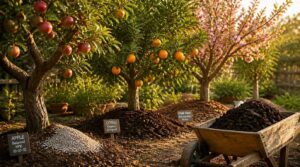
Not every fruit tree feeds the same way — what works for your apple won’t cut it for citrus or stone fruit. Getting the ratios right starts with knowing what each tree type actually needs. Here’s how to match your fertilizer to the tree you’re growing.
Apple Tree Feeding Needs
Apple trees are hungry feeders. A mature tree needs 0.4 to 0.8 pounds of actual nitrogen annually, scaled to trunk diameter, to push healthy shoot growth each spring.
Use a balanced 10-10-10 fertilizer at one pound per inch of trunk diameter. Too much nitrogen delays fruiting and weakens fruit clusters, so measure carefully.
Pear Tree Light Feeding
Pears are far more sensitive to overfeeding than apples. Where apples want a steady push, pears need a lighter touch — just 0.05 pounds of nitrogen per inch of trunk diameter annually.
- Split doses across two to three spring applications
- Wait until soil temperatures exceed 50°F before feeding
- Use mulch to support steady nutrient uptake between feedings
Stone Fruit Nutrition
Stone fruits — peaches, plums, cherries, and nectarines — have different feeding needs than pears or apples. After a strong harvest year, feed with one pound of calcium nitrate (15.5-0-0) or three pounds of a 5-3-4 organic blend annually.
| Nutrient | Role | Deficiency Sign |
|---|---|---|
| Nitrogen | Shoot vigor | Pale new leaves |
| Potassium | Fruit sweetness | Dull, soft flesh |
| Calcium | Cell wall strength | Fruit splitting |
Citrus Fertilizer Ratios
Citrus trees are heavier feeders than most stone fruits. They thrive with high nitrogen and potassium ratios — something like a 12-10-10 blend works well for mature trees.
Nitrogen drives canopy growth, while potassium promotes fruit size and juice quality. Too much nitrogen, though, and you’ll get lush leaves with disappointing fruit set.
Dwarf Tree Adjustments
Dwarf trees demand a lighter hand with fertilizer. Their smaller root zones, shaped by dwarfing rootstocks, absorb nutrients more efficiently — which means over-applying is an easy mistake.
Match your NPK ratio to a soil test first, then reduce the recommended rate by roughly a third. Organic fertilizers work well here because they release slowly, protecting sensitive roots from burn.
Top 5 Fruit Tree Fertilizers
Not every fertilizer is worth your money or your trees’ roots. These five options stand out for their nutrient profiles, reliability, and real-world results in backyard orchards. Here’s what made the cut.
1. FoxFarm Happy Frog Fruit and Flower Fertilizer
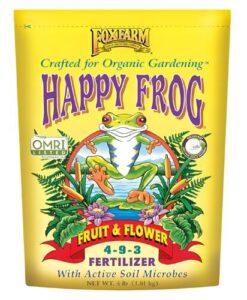
FoxFarm Happy Frog Fruit and Flower Fertilizer carries a 4-9-3 NPK ratio, making phosphorus the clear priority here. That high middle number directly promotes fruit set and flower development — exactly what a backyard orchard needs come spring. It’s derived from organic sources including bat guano and fish bone meal, and it’s OMRI listed for organic use.
What sets it apart is the added mycorrhizal fungi, which expand your tree’s root reach and improve nutrient uptake efficiency over time.
| Best For | Home gardeners and hobbyist orchardists who want an organic boost for flowering vegetables, fruit trees, and potted blooms. |
|---|---|
| Product Form | Granules |
| Package Weight | 4 lbs |
| NPK Ratio | Not Listed |
| Organic Status | OMRI Listed |
| Calcium Included | No |
| Primary Use | Flowering & fruiting plants |
| Additional Features |
|
- High phosphorus (4-9-3 NPK) directly supports bigger, more vibrant blooms and better fruit set
- Mycorrhizal fungi help roots pull in more water and nutrients over time — a long-game win
- OMRI listed, so it’s a clean choice if you’re growing organically
- Granular form means you’re out there hand-spreading it around the root zone every time
- Dialed in specifically for fruiting and flowering plants, so it won’t do much for leafy greens or general foliage
- At 4 pounds, it may go quickly if you’re working a larger garden or multiple trees
2. Espoma Organic Tree Tone Fertilizer for Trees
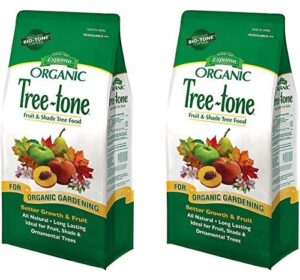
Espoma Tree-Tone brings a 6-3-2 NPK ratio with 5% calcium to the table — a well-rounded profile that promotes foliage, roots, and firm fruit in one application. That calcium content is worth noting: it directly strengthens cell walls and helps prevent splitting and bitter pit.
The slow-release granules, enriched with Bio-Tone beneficial microbes, feed your trees gradually rather than all at once, reducing the risk of burn while improving long-term nutrient uptake.
| Best For | Organic gardeners who want a slow-release, chemical-free fertilizer for shade, fruit, or ornamental trees. |
|---|---|
| Product Form | Granules |
| Package Weight | 8 lbs |
| NPK Ratio | 6-3-2 |
| Organic Status | USDA Approved |
| Calcium Included | Yes (5%) |
| Primary Use | Shade & fruit trees |
| Additional Features |
|
- The 6-3-2 NPK ratio plus 5% calcium gives trees a balanced diet that supports leafy growth, strong roots, and healthy fruit development.
- Bio-Tone microbes work in the soil over time, so you get steady feeding without the burn risk that comes with synthetic fertilizers.
- USDA-approved organic ingredients mean no sludges or synthetics — a clean option if you’re running an organic garden.
- The bags have a noticeable manure-like smell, which can be a bit much when you’re opening them up.
- It’s trees only — not much use if you also want to feed garden beds or lawn areas with the same product.
- At $21.69 for 8 lbs, the cost per pound runs higher than bulk fertilizers you’d find at big-box stores.
3. Down To Earth Organic Fruit Tree Fertilizer
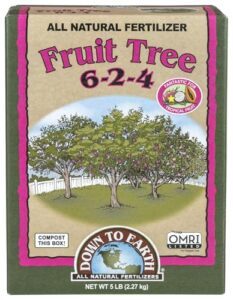
Down To Earth’s 6-2-4 NPK blend is built with fruit quality in mind. The higher potassium level promotes sugar development and firmer texture, while added calcium carbonate helps prevent bitter pit — a common headache for apple growers.
Ingredients like feather meal, kelp meal, and fish bone meal release nutrients slowly, feeding roots steadily without shocking the tree.
It’s OMRI listed for organic use and works across apples, pears, plums, citrus, and figs — one bag, many trees.
| Best For | Home orchard growers and backyard gardeners who want an organic, slow-release fertilizer that supports fruit quality across a wide range of trees and shrubs. |
|---|---|
| Product Form | Dry Powder |
| Package Weight | 5 lbs |
| NPK Ratio | 6-2-4 |
| Organic Status | OMRI Listed |
| Calcium Included | Yes |
| Primary Use | Fruit trees & shrubs |
| Additional Features |
|
- OMRI listed, so it’s certified safe for organic growing — no synthetic chemicals or harsh odors
- The 6-2-4 formula with added calcium targets fruit development specifically, not just leafy growth
- Works across a ton of fruit trees and shrubs, from apples and pears to figs and mangos
- Won’t dissolve in water, so you can’t use it as a liquid feed — soil application only
- Needs a good watering in after you apply it, which adds a step to your routine
- Has to be stored in a cool, dry spot or the nutrients can degrade over time
4. Nelson Citrus and Avocado Tree Fertilizer
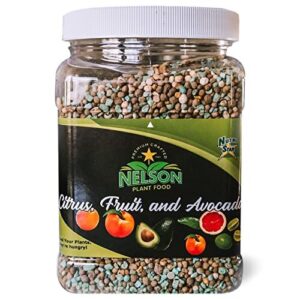
Nelson’s 12-10-10 NPK ratio makes it one of the stronger nitrogen-forward options on this list — a smart fit if you’re growing citrus or avocado and need consistent canopy growth alongside fruit development. The high potassium enhances fruit size and cold hardiness, which matters if your winters dip unexpectedly.
It also includes iron, magnesium, zinc, and manganese for complete nutrition.
Apply it every 30 days during the growing season and water it in thoroughly.
| Best For | Gardeners growing citrus, avocado, fruit, or nut trees who want a well-rounded granular fertilizer that supports both canopy growth and fruit development. |
|---|---|
| Product Form | Granular |
| Package Weight | 2 lbs |
| NPK Ratio | 12-10-10 |
| Organic Status | Not Certified |
| Calcium Included | Yes |
| Primary Use | Citrus, fruit & nut trees |
| Additional Features |
|
- Balanced 12-10-10 NPK with added calcium keeps trees structurally strong and well-fed
- Micronutrients like iron, magnesium, and zinc fill in the nutritional gaps most basic fertilizers miss
- High potassium helps fruit size up nicely and gives trees a better shot at surviving surprise cold snaps
- Granules need time to break down, so don’t expect an instant green-up after applying
- Monthly reapplication during the growing season adds up — easy to forget if you’re not tracking it
- Label text is reportedly hard to read, which gets annoying when you’re trying to check dosage instructions
5. Organic Fruit and Citrus Tree Fertilizer Spikes
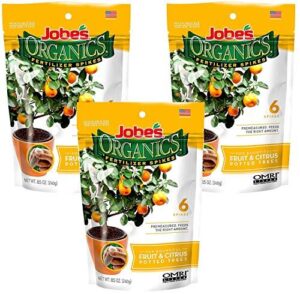
If you prefer a low-maintenance option, Jobe’s Organic Fruit and Citrus Spikes are worth a close look. Their 3-5-5 NPK ratio leans into root strength and fruit development over leafy growth — a sensible choice for container trees or established yard specimens that don’t need aggressive pushing. The slow-release formula feeds gradually, reducing runoff and keeping nutrient delivery steady.
Drive each spike 2 inches below the soil near the dripline, space them evenly, and water deeply.
| Best For | Indoor and container fruit or citrus tree growers who want a simple, organic, set-it-and-forget-it feeding routine. |
|---|---|
| Product Form | Spikes |
| Package Weight | 6 spikes |
| NPK Ratio | 3-5-5 |
| Organic Status | OMRI Listed |
| Calcium Included | No |
| Primary Use | Container & indoor fruit trees |
| Additional Features |
|
- Slow-release formula keeps nutrients flowing steadily without constant reapplication
- OMRI-listed organic and safe around kids and pets
- Pre-measured spikes cut down on guesswork and reduce runoff
- Only 6 spikes per package, which may not go far with multiple trees
- Spikes need to be fully buried or they’ll start to smell
- Placement matters — too close to the trunk and you risk damaging roots
Time Feedings for Better Harvests
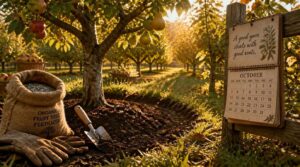
Timing your fertilizer applications makes a bigger difference than most backyard growers expect. Feed at the wrong moment and you’re either wasting nutrients or pushing growth your tree can’t handle. Here’s what the calendar should look like for better results.
Feed During Bud Swell
Bud swell is your window. When buds visibly enlarge, phosphorus peak application matters most — it drives ATP production and floral site development. Shift away from nitrogen-heavy blends and lean into a bloom-focused NPK ratio. Here’s what to prioritize:
- Boost phosphorus and potassium to support energy transfer and sugar movement
- Maintain calcium during swell to strengthen developing fruiting structures
- Keep a micronutrient balance plan — iron, zinc, and boron prevent subtle growth limits
- Sync feedings with soil moisture so roots actually absorb what you apply
Nutrient timing strategies and a current soil test keep your spring nutrition on target — especially with organic fertilizers that release slowly through this critical phase.
Fertilize Before June
Most fruit trees hit their peak nutrient demand well before summer. That’s why all primary feeding should wrap up before June 1 — roots are actively absorbing, soil moisture is cooperative, and your backyard orchard is primed for early nutrient release.
A balanced spring fertilizer with the right NPK ratio, timed alongside a current soil test, puts your trees exactly where they need to be.
Avoid Late Nitrogen
Once you’ve hit June, stop adding nitrogen. Late season timing matters more than most backyard orchard growers realize — nitrogen applied too late pushes soft, leafy shoots instead of supporting fruit development, and in colder climates, it delays dormancy, leaving trees vulnerable to winter damage. If your soil moisture is low, the risk of leaf scorch climbs even higher.
When in doubt, switch to a slow release option that meters nitrogen gradually rather than flooding the root zone at once.
Water After Feeding
Timing your water matters just as much as the fertilizer itself. After every feeding in your backyard orchard, water thoroughly along the drip line — not the trunk. This moves nutrients down into the root zone where feeder roots can actually use them.
Here’s what proper post feeding irrigation does:
- Dissolves granular fertilizers so roots absorb them faster
- Prevents fertilizer salts from burning surface roots
- Maintains the soil moisture levels that drive steady nutrient uptake
Check soil moisture first, though. If the ground is already wet, hold off — overwatering dilutes nutrients and reduces their effectiveness.
Adjust for Rainfall
Rain changes everything. If heavy rain is forecast or just passed, pause your fertilizer application — nutrients will leach straight through the root zone before your trees can use them. Leaching risk peaks when rainfall exceeds 25 mm within 24 hours on sandy soils.
Use a rainfall-adjusted schedule, check a soil moisture probe, and resume feeding once conditions stabilize.
Apply Fertilizer The Right Way
Knowing when to fertilize is only half the job — where and how you apply it matters just as much. Done wrong, you risk burning roots or wasting nutrients that never reach the tree. These five steps will help you get it right every time.
Spread Under The Dripline
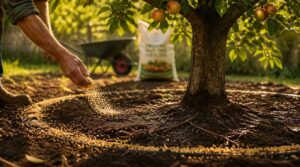
The dripline — the outer edge of your tree’s canopy — marks where active feeder roots concentrate. Broadcast granular fertilizer evenly across that zone.
Slow-release and organic fertilizers work especially well here, since steady moisture under the dripline moves nutrients down consistently. A uniform spread also promotes even fruit set across the whole canopy in your backyard orchard.
Keep Away From Trunks
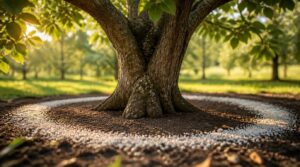
Keep fertilizer at least 18 inches from the trunk. That gap — your Trunk Buffer Zone — protects bark from chemical burn and prevents disease from entering through lesions.
Fertilizer Splash Guard matters too. After applying granular or slow-release products near the drip line, check the trunk for residue and rinse any off immediately. Bark tissue is more vulnerable than it looks.
Measure by Trunk Diameter
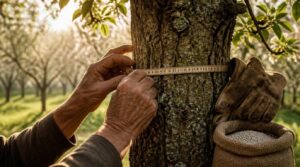
Trunk diameter is your fertilizer calculator. Wrap a diameter tape around the trunk at chest height — that’s your DBH measurement — then multiply by the rate your tree type requires. Apple trees get one pound per inch; pears need far less. For a backyard orchard with multi-stem trees, add each trunk’s diameter before calculating.
- Measure DBH in late winter before new growth starts
- Convert circumference to diameter by dividing by pi if you lack a calibrated tape
- Calculate your rate using species-specific guidelines, not guesswork
- Track diameter yearly to adjust fertilizer amounts as trees mature
- Log multi-stem diameters separately, then combine for total fertilizer dose
Use Mulch Afterward
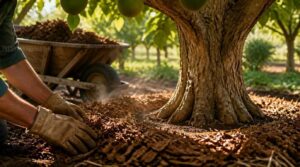
Once fertilizer is spread, mulch seals in your work. Lay 2 to 4 inches of organic material beneath the dripline, leaving a 2-inch gap from the trunk. Good mulch cuts evaporation by up to 70 percent and buffers soil temperature. Match your mulch material to your soil and climate for best results in any backyard orchard.
| Mulch Type | Primary Benefit | Reapply Frequency |
|---|---|---|
| Bark chips | Slow decomposition, 2–3 year lifespan | Every 2–3 years |
| Straw | Lightweight, inexpensive cover | Annually |
| Leaf mulch | Rapidly boosts organic matter | Annually |
| Compost-based | Feeds soil microbial activity | Annually |
| Aged wood chips | Strong moisture retention | Every 1–2 years |
Water Nutrients Downward
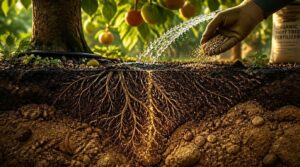
Water does the heavy lifting once fertilizer hits the ground. After spreading nutrients beneath the drip line, irrigate slowly and thoroughly to push them into the root zone. Here’s what shapes how well water moves nutrients downward:
- Sandy soil drains fast, raising the risk of nutrient leaching
- Soil structure and organic matter improve water retention
- Controlled-release fertilizers reduce loss during heavy rain
Spot Feeding Problems Early
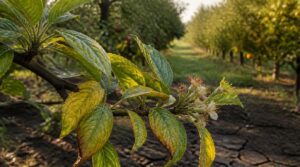
Your trees can’t tell you when something’s off, but they do leave clues. Learning to read those signs early means you can fix a problem before it costs you a harvest. Here are the five most common feeding problems to watch for.
Pale Leaves and Small Fruit
Pale leaves are one of the clearest signs your tree is running low on nitrogen. Yellowing starts on older leaves first, moving inward toward the midrib. Fruit size drops because there’s less leaf area driving photosynthesis.
| Symptom | Likely Cause |
|---|---|
| Yellow older leaves | Nitrogen deficiency |
| Small fruit | Low nitrogen or phosphorus |
| Thin, sparse leaves | Poor nutrient uptake |
| Slow overall growth | Imbalanced soil pH |
| Weak new growth | Low potassium |
A soil test pinpoints whether nitrogen, phosphorus, potassium, or pH is the real problem before you fertilize.
Short Annual Shoot Growth
Short annual shoot growth tells you the tree isn’t getting enough nutrients to push new wood. Healthy shoot elongation should reach 6 to 12 inches per year.
Consistently shorter growth — especially under good light intensity and warm spring temperatures — points to low nitrogen or a depleted root zone. A quick soil test confirms what’s actually missing before you feed.
Excessive Weak Shoots
Weak shoots are the flip side of that problem. While short growth signals underfeeding, excessive weak shoots often point to too much nitrogen — or other stressors like water stress, poor light, or root restriction.
| Cause | Effect |
|---|---|
| Nitrogen excess | Long, soft, unproductive shoots |
| Root restriction | Limited nutrient uptake, weak growth |
Dark Green Leafy Growth
Dark green, lush growth might look like your backyard orchard is thriving — but it can signal over-fertilization. When nitrogen levels run too high, leaves develop excessive chlorophyll concentration, appearing deep green while the tree shifts energy away from fruit and toward foliage.
- Leaf vein networks become overdeveloped, supporting rapid but unproductive shoot tissue
- Nutrient balance shifts, often reducing fruit set despite vigorous appearance
- High nitrogen disrupts vitamin K content and micronutrient ratios in leaf tissue
- Slow-release products and organic fertilizers with balanced NPK ratios help regulate growth vigor management
Increased Pest Pressure
Over-fertilizing doesn’t just weaken your tree — it rolls out a welcome mat for pests. Lush, nitrogen-fueled shoots are softer and easier for insects to colonize.
Worse, landscape simplification reduces natural enemy habitat, leaving fewer beneficial predators to push back. Combine that with climate-driven pest migration arriving earlier each season, and one feeding mistake can trigger an infestation fast.
One feeding mistake can strip your garden of natural defenses and invite pests in fast
Frequently Asked Questions (FAQs)
How does frost damage affect a trees feeding needs?
Frost hits at the worst time — just when your tree is gearing up for spring. Post frost nitrogen demand spikes as trees divert energy to regrowth, and nutrient uptake slows until soil warms.
Should young newly planted trees be fertilized differently?
Yes — newly planted trees need a gentler approach. Skip heavy fertilization the first season unless a soil test shows a clear deficiency. Focus on root establishment first, using light organic amendments or slow-release products.
Conclusion
The trees that demand the least intervention are usually the ones that received the most deliberate, early preparation.
Choosing the right fruit tree fertilizers for backyard orchards isn’t about feeding more—it’s about feeding smarter. Soil tests, species-specific ratios, and precise timing accomplish far more than any heavy application ever could. Get the chemistry right underground, and the harvest you want above takes care of itself.
That’s not gardening luck. That’s applied science at work.
- https://extension.unh.edu/resource/fertilizing-fruit-trees
- https://extension.oregonstate.edu/news/choosing-right-fertilizer-your-garden
- https://grow.ifa.coop/gardening/best-organic-fertilizer-for-urban-gardens
- https://www.starkbros.com/growing-guide/article/fertilizing-organic-fruit-trees
- https://sunset.com/garden/garden-basics/crash-course-fertilizers