This site is supported by our readers. We may earn a commission, at no cost to you, if you purchase through links.

Some gardeners spend a fortune on pesticides and still watch their plants struggle. Others grow thriving beds without spraying a thing—the difference often comes down to what’s planted alongside their vegetables.
Certain herbs release chemical compounds that confuse, repel, or outright drive away the pests that damage crops most.
Basil floods the air with linalool, an aphid deterrent. Rosemary masks the root scents that carrot flies track. Dill pulls in ladybugs and parasitic wasps that handle pest problems before you even notice them.
Knowing which herbs near vegetable companions work best turns your garden into a self-regulating system.
Table Of Contents
Key Takeaways
- Planting basil near tomatoes, dill near broccoli, and chives near carrots creates natural pest barriers that work better than most sprays.
- Herbs like dill, parsley, and calendula pull in ladybugs, hoverflies, and parasitic wasps that quietly handle aphids and caterpillars for you.
- Fennel, mint, and rue need careful placement — fennel suppresses nearly every neighbor, mint takes over fast, and rue can irritate skin or harm pets.
- Staggering bloom times from basil in spring through bee balm in fall keeps beneficial insects visiting your beds all season long.
Best Herbs Near Vegetable Companions
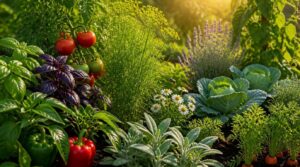
Some herb and vegetable pairings just work better than others, and knowing which ones to reach for saves you a lot of trial and error. A few smart combinations can cut down on pests, boost flavor, and keep your beds healthier all season long. Here are the best herbs to plant near your vegetables this year.
For a deeper look at which varieties thrive side by side, this guide to best herbs to grow together breaks down the most effective pairings for a productive garden.
Basil Near Tomatoes
Basil is one of the best friends your tomato plants can have. Plant it 12 to 18 inches away — close enough for the two to interact, but far enough to avoid root competition. Basil’s aromatic oils act as natural scent masking, confusing aphids and whiteflies before they settle. Prune it regularly to keep growth bushy and boost that protective fragrance.
The flavor synergy is real, too. Tomatoes grown beside basil often taste sweeter and smell more vibrant at harvest. Both plants love full sun and warm soil, so their care routines naturally align. Mulch around both to lock in moisture and stabilize the microclimate around your tomato roots during summer heat. Basil’s aromatic compounds also repels tomato hornworms, helping protect your crop.
Dill Near Broccoli
Tomatoes have basil — and broccoli has dill.
Plant dill between your broccoli rows to attract hoverflies and parasitic wasps that target aphids and diamondback moth larvae. Its aroma also confuses cabbage moths, cutting caterpillar damage. Dill improves airflow and reduces humidity, lowering fungal risk, and its foliage offers light afternoon shade to ease heat stress.
Oregano Near Leafy Greens
Where dill guards broccoli, oregano stands watch over lettuce and other leafy greens. Its strong oils form an aromatic pest barrier, keeping aphids away while drawing bees and hoverflies for beneficial insect attraction.
Space plants 12 to 18 inches apart for airflow, mulch for soil moisture conservation, and harvest leaves each morning for true vegetable-herb synergy in your organic garden.
Chives Near Carrots
Just as oregano shields your greens, chives (Allium schoenoprasum) guard your carrots. Their sulfur scent masking helps deter carrot flies before egg-laying starts.
Plant chives two to four weeks early, since timing matters as much as placement. Shallow roots mean true root system compatibility with deep carrot taproots. Keep soil evenly moist, and you’ll notice sweetening carrot flavor at harvest—real vegetable-herb synergy worth repeating each season.
Borage Near Squash
Squash flowers need bees, and borage delivers them in droves with its blue star-shaped blooms. This pollinator corridor boosts squash fruit set right when blossoms open.
Borage’s sprawling habit works as living mulch, holding moisture and feeding soil with calcium as it breaks down. Its scent also offers real pest deterrence, keeping squash bugs and cucumber beetles at bay.
Herbs That Repel Garden Pests
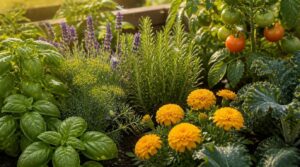
Some herbs do more than smell nice in the garden. They send pests packing before they ever reach your vegetables. Here are five that pull real weight against common troublemakers.
Basil for Aphids
Aphids hate basil, and they’ll skip a meal to prove it. The leaves release essential oils like linalool, which work as a natural repellent and scent barrier against these pests.
Basil also draws in lady beetles and lacewings, nature’s aphid hunters. Let a few plants flower, and you’ll boost predator visits even more. Tuck basil near tomatoes for solid, organic protection.
Mint for Flea Beetles
When flea beetles strike, mint fights back. Mint oil efficacy comes from menthol and pulegone, scrambling beetle senses fast.
- Repels flea beetles through scent barriers
- Beetle repellent timing: apply early spring
- Container growth methods limit spreading roots
- Essential oil application via diluted sprays
- Mint variety differences affect strength
This companion planting trick boosts vegetable-herb synergy as a trusted pest deterrent.
Rosemary for Carrot Flies
Carrot flies hunt by scent, and rosemary throws them off the trail. Its strong essential oil potency masks root volatiles, so females struggle to find carrots for egg laying.
Pairing rosemary with carrots is a classic move, and you’ll find more winning combinations like it in this guide to herbs that thrive together in a garden kit.
Keep rosemary one to two feet from carrot rows for the best scent masking. This companion planting trick peaks in late spring, cutting tunnel damage by up to 40 percent when you prune regularly to deter carrot flies.
Sage for Cabbage Moths
Cabbage moths fly by smell, and sage throws a wrench in their plan. Its sage scent masking confuses moths hunting brassicas, while essential oil deterrence from camphor and cineol keeps larvae away.
Space sage plants 18 to 24 inches apart near cabbage and kale. This natural scent barrier disrupts cabbage moth egg laying, making sage a smart pest deterrent in any companion planting vegetable pairing.
Rue Safety Cautions
Rue earns its place for repelling Japanese beetles and aphids, but it comes with real toxic ingestion dangers.
Wear gloves and eye protection, since skin irritation risks are no joke. Skip it entirely if you’re pregnant, as pregnancy safety concerns are well documented. Keep kids and elderly family members away too.
In companion planting, rue works best admired, not handled.
Herbs That Attract Beneficial Insects
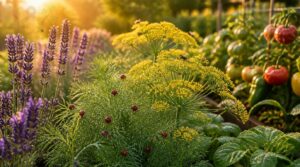
Not every garden helper comes with stingers or a scary reputation — some of the best ones are just looking for a good meal. The right herbs act like a standing invitation, pulling in ladybugs, hoverflies, bees, and other predators that quietly do the hard work for you. Here’s a look at which herbs bring them in.
Dill Attracts Ladybugs
Dill (Anethum graveolens) is one of the best plants for ladybugs in a companion garden. Its tiny yellow umbel flowers bloom in mid to late summer, right when pest pressure peaks.
Allow dill to flower instead of cutting it back early — those blooms deliver steady nectar that keeps ladybugs foraging nearby and laying eggs close to your crops.
Parsley Attracts Hoverflies
Ladybugs get a lot of attention, but hoverflies are quiet heroes worth knowing.
Parsley (Petroselinum crispum) pulls them in reliably once it flowers, offering nectar-rich umbels that adult hoverflies need to fuel up.
Then they lay eggs nearby — and the larvae that hatch go straight to work feeding on aphid colonies beside your vegetables.
Chamomile Attracts Bees
Hoverflies quietly handle aphids — bees handle something bigger: keeping your whole garden pollinated.
Chamomile is a bee magnet. Its white petals and bright yellow center are easy to spot from a distance, and the nectar it offers is sweet, abundant, and protein-rich. Plant it in full sun, well-drained soil close to vegetable borders, and bees will find it fast.
Calendula Supports Predators
Bees draw in pollinators — but calendula draws in the hunters.
Calendula nourishes predators like hoverflies, ladybirds, and parasitic wasps, all of which feed on or parasitize aphids and soft-bodied pests. Hoverfly larvae in particular consume aphids on nearby crops. That creates a natural pest suppression halo around your vegetable bed, reducing pest pressure without any sprays.
Calendula draws in nature’s hunters, creating a natural pest suppression halo that protects your vegetable bed without sprays
Bee Balm Boosts Pollination
Once mid-summer hits and other blooms fade, bee balm keeps the buffet open. Its red and purple flower heads work like beacons, guiding bees across your whole bed.
Short tubular florets hold high nectar volume, so pollinators linger and cross-pollinate nearby crops.
Plant it as a pollination corridor along your vegetable rows, and you’ll boost garden biodiversity while raising fruit set on self-sterile varieties.
Best Herbs for Tomatoes
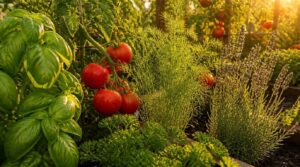
Tomatoes are the heart of most vegetable gardens, and the right herb neighbors can make them even better. Some herbs sweeten their flavor, some boost growth, and others fend off pests before they cause trouble. Here are five herbs that turn an ordinary tomato patch into a thriving one.
Basil Improves Flavor
Basil doesn’t just taste good next to tomatoes — it actively boosts tomato flavor at a chemical level. The linalool in fresh basil adds floral brightness, while eugenol brings a warm, clove-like depth. Together, they balance tomato acidity and make the whole dish taste fresher.
Here’s what basil brings to your tomato bed:
- Linalool lifts floral notes that mirror tomato’s natural sweetness
- Eugenol adds subtle warmth that rounds out savory flavor
- Fresh leaves preserve essential oils better than dried versions
- Tearing basil right before use maximizes aroma release
- The aromatic chemistry between both plants reduces perceived sourness
In a companion planting guide, this vegetable-herb synergy is one of the easiest wins you can get. Plant basil close, keep it fresh, and let the chemistry do the work.
Chives Support Vigor
Chives (Allium schoenoprasum) do quiet but meaningful work beside your tomatoes. Their sulfur compounds strengthen plant defenses, helping neighboring crops handle stress better.
Those same compounds also boost soil microbial activity, which fosters healthier root zones for both plants.
Chopped chive leaves decompose fast, recycling nitrogen and potassium straight back into the bed — easy, built-in organic gardening at its best.
Parsley Encourages Growth
Parsley (Petroselinum crispum) is a quiet powerhouse for your tomato bed. Its roots stimulate root zone activity, releasing organic acids that free up nutrients nearby plants can actually use.
- Foliage shades soil, boosting moisture retention and reducing weeds
- Decomposing leaves enrich microbial diversity and cycle nitrogen back into the bed
- Flowers draw hoverflies that patrol for pests
Plant it close and let it work.
Borage Deters Hornworms
Borage (Borago officinalis) is one of the best-kept secrets in tomato companion planting. Plant it within 1–2 meters of tomatoes and it starts pulling double duty fast.
| Borage Benefit | How It Helps Tomatoes |
|---|---|
| Repels hornworms | Plant volatiles deter feeding |
| Recruits parasitoid wasps | Target hornworm eggs and larvae |
| Attracts honeybees | Boosts fruit set and yield |
| Continuous nectar | Sustains beneficial insects longer |
| Self-seeds readily | Returns each season with minimal effort |
Its flowers draw parasitoid wasps that hunt hornworm eggs before damage starts. Meanwhile, borage’s leaf and flower compounds make hornworms uncomfortable enough to move on. Plant it early — timing with hornworm emergence cycles matters.
Bee Balm Attracts Pollinators
If you want more pollinators visiting your tomatoes, bee balm is your answer. Its tubular florets give bees and butterflies easy access to generous nectar, and the scent carries far on warm days.
Bee balm blooms across several weeks, keeping pollinator traffic steady right through peak tomato-flowering time — exactly when reliable visits matter most.
Herbs for Brassica Companions
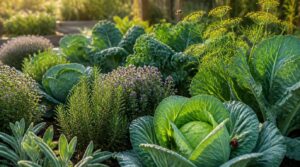
Brassicas like cabbage, kale, and collards are some of the most pest-prone crops in the garden, but the right herbs nearby can change that fast.
A few well-chosen companions confuse insects, attract predators, and keep your brassica bed a lot healthier all season.
Here are the top herb pairings worth knowing.
Rosemary Near Cabbage
If your cabbage patch keeps drawing moths, rosemary earns its spot along the border. Its strong scent works through scent masking, hiding cabbage from egg-laying pests and helping deter cabbage moths and worms.
Plant it on the edge for drainage and airflow. Use trimmed clippings as mulch underneath cabbage for moisture and added pest management benefits.
Sage Near Kale
Sage works the same border magic, but it’s built for kale. Salvia officinalis releases oils that deter cabbage moths while easing aphid and thrips pressure.
Plant it within a foot of kale, edge-side, for a snug sage microclimate. Bonus: harvested together, sage and kale build a warm, earthy flavor pairing straight from the bed to your skillet.
Mint in Containers
Kale loves a sturdy neighbor, but mint needs its own space. Mentha spp. spreads fast through underground runners, so container gardening keeps roots from invading your brassica bed.
Pick an 8-inch-wide, 8-inch-deep pot with drainage holes to prevent root rot. Water every 2–3 days, mulch lightly, and feed monthly. This pest-deterring herb still earns its spot near kale, just on its own terms.
Calendula Near Collards
Mint stays in its pot — and calendula earns its place right in the bed.
Plant calendula 12–18 inches from your collards, staggered along the border.
It recruits parasitic wasps, confuses aphids with scent, and boosts soil microbial diversity through root exudates.
Deadhead regularly for continuous blooms.
Bonus: harvest those bright petals to garnish your next collard dish.
Herbs to Plant Carefully
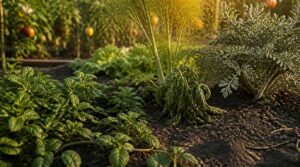
Not every herb belongs just anywhere in your garden. Some spread like wildfire, a few poison the soil for their neighbors, and one or two come with real safety concerns worth knowing before you plant. Here’s what to watch out for.
Fennel Grows Alone
Fennel is the lone wolf of the herb garden. It’s allelopathic, meaning its roots release chemicals that actively suppress the growth of nearly every plant nearby.
Keep it away from tomatoes, peppers, and most herbs.
Plant fennel in its own bed with well-drained sandy loam, pH 6.0–7.5, and plenty of space around the bulb base for proper development.
Mint Spreads Aggressively
Because Mentha spp. spreads aggressively once soil warms, give it firm boundaries from day one. Underground runners sprint outward, so watch for:
- Rhizome escapes through pot edges
- Seasonal growth spikes in early summer
- Root fragments resprouting after disturbance
- Varietal spread differences—spearmint outpaces peppermint
This plant aggressiveness demands real containment strategies, not just hopeful companion planting in your herb garden design.
Lemon Balm Containment
Lemon balm spreads aggressively, and this herbaceous perennial needs firm rules. Stolons management techniques start with a root barrier depth of twelve inches, sealed tight at every seam.
A gravel trench benefits the patch by blocking runners underground. Use container spacing tips, two feet apart, and pruning spread prevention keeps plant aggressiveness in check—sustainable home gardening skips garden edge planting.
Rosemary Needs Dry Soil
Rosemary likes to feel a little thirsty. This Mediterranean herb wants Mediterranean soil mimicry: gritty, fast-draining, low on richness. Mix in sand or gravel for real drainage amendment techniques, and check soil pH balance, aiming for 6.0 to 7.5.
Skip the heavy mulch and rich compost. Established plants read drought stress cues to build flavor. Containers need strong drainage holes, too—true container drainage solutions for this sun-loving, drought-tolerant herb.
Rue Toxicity Warning
Rue does repel Japanese beetles and aphids, but it comes with a serious catch. Toxic to humans and animals, it contains furanocoumarins that cause phototoxic skin reactions after sun exposure.
Ingestion can trigger vomiting, stomach pain, and organ stress.
Keep it away from children, pets, and edible beds.
Try rosemary or sage as safer pest-deterring alternatives.
Designing Herb-Vegetable Garden Beds
Putting your herb and vegetable beds together takes a little planning, but it’s mostly common sense once you know the basics.
A few simple decisions — where things go, what grows next to what, how often you harvest — make a real difference in how well everything thrives.
Here’s what to keep in mind as you start laying out your beds.
Match Sun and Water
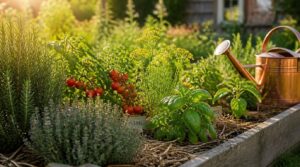
Sun is the starting point for every herb placement decision. Sun-loving herbs like rosemary, thyme, and basil need at least six hours of direct light daily.
More sun means faster soil drying, so water more frequently in hot, exposed beds. Lay mulch around the base of each plant to hold moisture and keep roots steady between waterings.
Use Containers Wisely
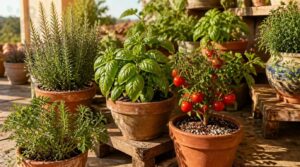
Containers give you something ground beds don’t — mobility. If mint is spreading toward your tomatoes or rosemary needs drier conditions, you just move the pot.
Use 12- to 16-inch containers for basil and parsley so roots have room to develop properly.
Add perlite to your potting mix and raise each pot a few inches to keep drainage and airflow working together.
Space Herbs Properly
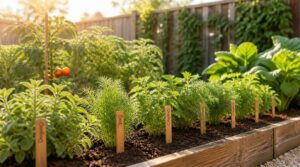
Moving pots around solves one problem, but spacing your in-ground herbs properly solves another. Preventing crowding keeps air moving and light reaching every plant.
- Give Mediterranean herbs like oregano 12–18 inches apart
- Space dill and cilantro 6–8 inches to avoid shading greens
- Use 8-inch spacing for small annuals, 12 for larger perennials
- Adjust seasonal spacing as plants fill in
Stagger Flowering Herbs
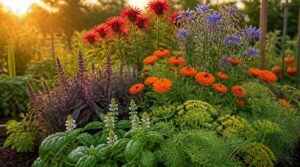
Spacing solved, now think about timing. Plant basil and dill for early blooms, sage and calendula for mid-season color, then bee balm or borage for fall.
This bloom time variety keeps nectar flowing for beneficial insects all season.
Deadhead spent flowers to spark regrowth, and use succession planting every few weeks. Layer heights so every bloom gets sun and visibility.
Harvest for Fresh Meals
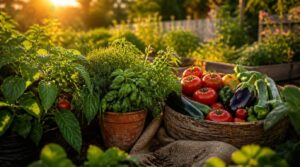
Once your blooms are staggered and your beds are humming, it’s time to eat well. Pick vegetables at peak ripeness — that’s when flavor and nutrition are highest.
Steam or sauté quickly to lock in vitamins. Snip fresh basil, dill, or chives right before serving.
Freeze extras in herb-oil ice cubes for easy weeknight meals later.
Frequently Asked Questions (FAQs)
Which herbs grow well next to each other?
Think of them as garden roommates with matching habits. The best plant partners share sunlight, soil, and moisture needs, with growth styles that complement rather than compete—real vegetable-herb synergy worth mapping on any companion planting chart.
What 6 herbs can be planted together?
Basil, chives, oregano, parsley, dill, and borage grow well together. They share similar sun and drainage needs, support each other’s growth, and keep pests moving along.
Can herbs improve soil health for vegetables?
Funny thing: dirt seems fine until it quietly fails your crops.
Yes, nitrogen fixing clover, deep rooting comfrey, and herb compost teas boost soil microbial diversity and nutrient cycling, proving real vegetable-herb synergy beyond pest control.
How often should companion herbs be watered?
Check soil moisture before reaching for the hose. Moisture-loving herbs need water twice weekly in heat; drought-tolerant herbs wait until soil dries inches down. Adjust seasonally, maintain container drainage, and guard against root rot in raised beds.
Do companion herbs work in raised beds?
Raised beds might just be the best thing that ever happened to companion planting. Better drainage, defined zones, and easy spacing make herb-vegetable pairings thrive with minimal effort.
Which herbs pair well with root vegetables?
Chives and carrots are a classic pairing. Chives boost carrot sweetness, while rosemary repels carrot flies nearby. Onions offer similar carrot protection, making them reliable companion crops for healthy root harvests.
Can herbs extend the vegetable growing season?
Yes, herbs can help extend your growing season. Low-growing herbs like thyme retain soil moisture and regulate microclimates, while late-blooming varieties attract pollinators well into fall, keeping vegetables productive longer.
Conclusion
A garden is never just soil and seeds—it’s a living conversation between plants. When you place herbs near vegetable companions with real intention, that conversation shifts clearly in your favor.
Pests lose their footing. Beneficial insects arrive uninvited. Flavors quietly deepen underground.
You don’t need to spray, fight, or guess anymore. You just need the right neighbors growing side by side. Start with one smart pairing this season, and watch your whole garden change.