This site is supported by our readers. We may earn a commission, at no cost to you, if you purchase through links.
Something ate your basil overnight, and the evidence points in three different directions. A ragged hole here, a glistening trail there, a cluster of pale specks you almost missed on the underside of a leaf. Most gardeners reach for the nearest spray bottle without stopping to read what their plants are actually telling them.
That instinct costs more than it saves. Broad-spectrum treatments wipe out the ladybugs and parasitic wasps doing quiet, essential work beside the damage—and the pest pressure often rebounds harder a week later.
Knowing the signs your garden needs organic pest treatment changes that cycle entirely. Each symptom points to a specific culprit, and each culprit has a targeted, ecology-safe response that works with your garden instead of against it.
Table Of Contents
- Leaf Damage That Signals Pests
- Distorted Growth and Sticky Residue
- Visible Pests Worth Treating Organically
- Garden Patterns That Confirm Infestation
- When Organic Treatment is Needed
- Frequently Asked Questions (FAQs)
- Why should you choose organic pest management?
- What are the principles of organic pest management?
- How does organic pest control work?
- What is organic pest management?
- How does crop rotation prevent future pest infestations?
- Are homemade organic sprays as effective as store-bought?
- How do weather conditions affect organic treatment timing?
- Conclusion
Leaf Damage That Signals Pests
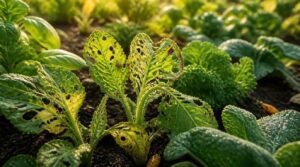
Your leaves are often the first place a pest problem makes itself known. The type of damage you’re seeing — whether it’s holes, missing tissue, or discolored edges — can point you straight to the culprit. Here are the key leaf damage signs worth paying attention to.
For a deeper look at what each pattern means, garden pest and disease identification signs can help you match the damage to a specific culprit.
Ragged Holes and Slime
When you spot ragged, irregular holes with torn, jagged edges on older leaves, slugs or snails are likely the culprits — feeding under cover of darkness.
- Silvery slime trails confirm overnight slug activity
- Holes cluster near midrib veins on older leaves
- Fresh slime smears easily and attracts other insects
- Damage worsens in cool, damp conditions
Inspect after dark to catch them.
Tiny Round Flea Beetle Holes
Unlike the ragged tears slugs leave behind, flea beetle damage is precise — tiny round holes, roughly 1 to 3 millimeters across, punched cleanly through leaf tissue. Brassica seedlings like kale, cabbage, and radish take the hardest early hits. Disturb the plant and adults leap away instantly.
Row covers and companion planting both reduce pressure before holes multiply into a shot hole pattern. You can also manage these pests by applying organic insecticides like neem or spinosad.
Skeletonized Leaf Tissue
When beetles or grasshoppers feed between leaf tissue, they strip away the soft mesophyll layer, leaving only the vascular framework — a ghostly lattice of veins. That intact venation pattern is your diagnostic clue. Lignin-rich veins resist insect feeding, which is exactly why they survive while everything else disappears.
Hand-pick visible beetles and introduce ground beetles as biological control.
Chewed Seedling Edges
Where skeletonized leaves betray feeding above ground, chewed seedling edges shift the crime scene to soil level. Cutworms — nocturnal caterpillars sheltering under mulch by day — sever tender stems near the base at dusk, leaving seedlings toppled by morning.
- Place smooth collar barriers around each stem
- Reduce mulch directly at the base
- Apply beneficial nematodes into moist soil
- Handpick cutworms during evening checks
- Use row covers for the first two weeks
Browning Leaf Margins
Brown margins don’t always mean pests. When leaf edges brown and crisp, the likely culprits are water stress, fertilizer salt buildup, or low humidity — not insects.
Wind accelerates transpiration, drying margins fast. Poor soil moisture retention worsens the effect even when soil feels damp.
Trim browned edges, water deeply, and leach pots regularly to flush accumulated salts.
For complete guidance on soil refresh and root care, growing fruit trees in containers walks you through the seasonal maintenance that keeps potted trees thriving.
Distorted Growth and Sticky Residue
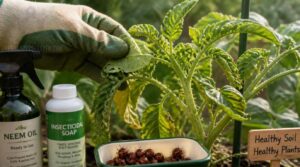
Not all pest damage shows up as holes or missing leaf tissue — sometimes the warning signs are subtler but just as serious. Distorted growth and sticky coatings are your plant’s way of telling you that sap-sucking insects have moved in. Here’s what to watch for.
Curled New Leaves
When new leaves curl inward like a taco, your plant is sending a distress signal. Underwatering or heat stress drops turgor pressure fast, while low humidity triggers stomatal closure.
Aphids and whiteflies feeding on fresh growth cause similar curling, often with sticky residue. Check for magnesium or calcium deficiency too — both distort emerging foliage before other symptoms appear.
Twisted Tender Shoots
Twisted shoots tell a more urgent story than curled leaves. When aphids, thrips, or mites latch onto emerging growth, sap flow is interrupted almost immediately, distorting the shoot before it can fully extend. Disrupted chlorophyll production leaves new tissue pale and weakened. Buds on these shoots often fail entirely.
Neem oil or insecticidal soap applied early stops the damage before photosynthetic capacity is permanently lost.
Sticky Honeydew Coating
That tacky film coating your leaves isn’t residue from rain — it’s honeydew, excreted by sap-sucking insects like aphids, whiteflies, and mealybugs as they gorge on plant sugars.
The glucose and fructose load attracts ants, which actively protect pest colonies. Left unchecked, honeydew blocks light absorption and triggers sooty mold. Insecticidal soap disrupts soft-bodied insects on contact — spray thoroughly and early.
Black Sooty Mold
Black sooty mold is the calling card of unchecked sap-suckers — a dark, powdery film that coats leaf surfaces and blocks photosynthesis progressively.
It won’t invade plant tissue, but thick coverage yellows leaves fast. Control the honeydew source first: target aphids, whiteflies, or scale with insecticidal soap or horticultural oil. Then wipe affected surfaces clean and improve airflow through careful pruning.
Stunted Plant Growth
Stunted growth rarely has just one cause. Scale, aphids, and mites quietly sap plant energy while root health decline from soil-borne pests compounds the damage — leaving plants visibly smaller and slower than they should be.
Nutrient deficiency signs like pale leaves often follow. Before reaching for any spray, confirm pests are involved; soil pH imbalance and irrigation error impact can mimic the same symptoms exactly.
Visible Pests Worth Treating Organically
Sometimes the clearest sign your garden is in trouble is the pests themselves — right there in plain sight. Knowing which ones actually warrant organic treatment helps you act with purpose rather than panic. Here are the five most common visible offenders worth addressing.
Aphid Clusters
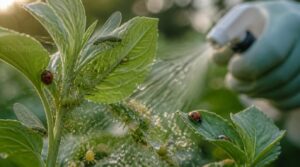
Aphids rarely travel alone. When you spot dense clusters of six or more on tender new growth, act quickly — they favor undersides of leaves, where humidity shields them from detection.
- Check brassicas and legumes first
- Look for curled, distorted young leaves
- Watch for sticky honeydew and sooty mold
- Blast small clusters off with water
- Apply insecticidal soap directly to soft-bodied insects on contact
Ladybugs and lacewings are your allies here.
Whiteflies Under Leaves
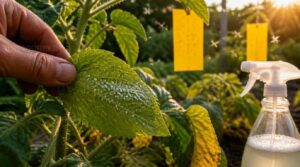
Flip a leaf and you might find what you missed from above. Whitefly nymph populations cling to the underside in pale, scale-like clusters along the veins — easy to overlook until the plant starts yellowing.
Disturb the plant and a cloud of adults rises instantly. At that point, yellow sticky traps and targeted insecticidal soaps applied directly to crawlers are your most effective organic response.
Caterpillars on Vegetables
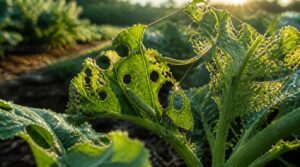
Unlike whiteflies, caterpillars leave unmistakable evidence — irregular holes and shredded leaf tissue visible from a distance.
- Imported cabbageworm — velvety green, faint yellow stripes, up to 1 inch
- Cabbage looper — light green, loops when moving across brassica leaves
- Diamondback moth larvae — small, green, produces protective webbing on leaves
- European corn borer — bores into stems, causing hidden internal damage
Bacillus thuringiensis (Bt) targets larvae precisely. Handpick larger ones; inspect leaf undersides for egg clusters weekly.
Slugs and Snails
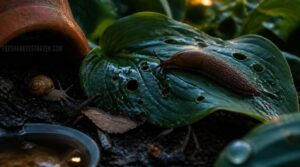
While caterpillars announce their presence boldly, slugs and snails prefer stealth — working after dark and leaving ragged holes and silvery mucus trails across leaf surfaces. These moisture-loving mollusks shelter under pots, dense mulch, and shaded corners throughout the day.
| Sign | Organic Response |
|---|---|
| Slime trails on leaves | Hand-remove at dusk |
| Seedlings chewed overnight | Apply diatomaceous earth barriers |
| Egg clusters in damp soil | Clear leaf litter and debris |
Beer traps and copper tape reduce populations efficiently. Encouraging ground beetles and hedgehogs strengthens your garden’s natural robustness long-term.
Beetles and Grasshoppers
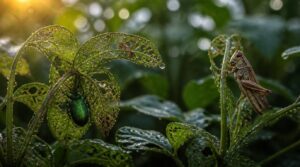
Both beetles and grasshoppers use strong chewing mandibles to skeletonize leaves, leaving intact veins behind. Grasshoppers can defoliate young shoots rapidly, while beetle larvae often cause the heaviest damage before reaching adulthood.
Hand-pick visible insects at dawn. Ground beetles prey on many garden pests naturally, so avoid broad-spectrum sprays that disrupt this beneficial predator balance.
Garden Patterns That Confirm Infestation
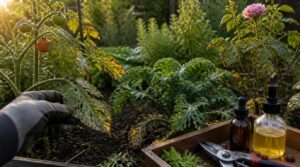
Single damage signs can be misleading, but patterns tell the real story. When you start noticing the same problems repeating across your garden week after week, that’s your clearest signal that something is actively established and multiplying. Watch for these five patterns that confirm a true infestation is underway.
Damage Spreads Weekly
Pest damage rarely stays put. Watch how symptoms radiate outward from a central infestation point, creating a widening circle across your beds each week. Edge plants usually show symptoms two to four days before interior plants follow.
Midweek pest pressure peaks, then eases slightly — but without intervention, each cycle compounds. Drier soil and close plant spacing accelerate that weekly progression noticeably.
Repeated Crop Attacks
Repeatedly, the same rows suffer sequential tissue damage as pests shift from leaves to stems and fruit, forming localized pest hotspots. These weather-driven cycles intensify during warm, humid spells, compounding into cumulative yield loss across the season.
Watch for hotspots returning to identical beds—that’s your cue organic intervention can’t wait.
Weak Plants Decline Fast
Stress compounds fast: weak plants wilt within days, not weeks, as compacted soil starves roots of oxygen. Nutrient gaps show almost overnight—pale leaves, browning edges—while pest outbreaks finish the job.
Recovery from shock rarely happens alone. That’s where Integrated Pest Management earns its keep, pairing organic pest management with natural deterrents to protect your garden’s strength before decline becomes collapse.
Pest Eggs Appear
Tiny, translucent clusters tucked beneath leaves are easy to miss — until the damage explodes. Egg color shifts from pale white to orange or pink signal hatching is imminent, giving you a narrow window to act.
Check leaf undersides weekly. Gentle hand removal of visible masses disrupts the insect lifecycle before a full pest outbreak takes hold.
Beneficial Insects Disappear
When ladybugs and lacewings vanish from your beds, pest pressure rises fast — their absence signals a serious breakdown in natural system balance.
Watch for these warning signs:
- No ladybugs visible on aphid colonies
- Absent parasitic wasps near caterpillars
- Fewer pollinators visiting flowers
- Ground beetles missing from soil
- Whitefly populations exploding unchecked
Habitat loss, pesticide drift, and climate stress all accelerate this decline.
When Organic Treatment is Needed

Knowing something is wrong in your garden is only half the battle—acting on it the right way matters just as much. Organic treatment works best when you follow a clear order of steps, starting with the least disruptive and building from there. Here’s how to move through that process effectively.
Identify The Pest First
Before reaching for any spray, know exactly what you’re dealing with. Misdiagnosis is costly — treating for aphids when you have a nutrient deficiency wastes time and harms beneficial insects.
Misdiagnosis is costly — always identify your pest before you spray
Check leaf undersides, stem bases, and soil surfaces, then photograph what you find. A pest diary noting damage patterns and life stages helps you time interventions when populations are most vulnerable.
Start With Hand Removal
Once you’ve named the pest, your hands are often the best first tool. Daily inspection routines let you catch populations before they multiply.
- Pick pests into soapy water disposal buckets to prevent escape
- Use tool sanitation methods — wipe with isopropyl alcohol between plants
- Protecting plant tissue means using gloves, never tearing leaves
Timing pest removal to early morning keeps beneficial insects undisturbed.
Use Row Covers Early
Manual removal works, but floating row covers add durability by blocking pests before they land.
Used early, they trap warmth and humidity, speed germination, and exclude flea beetles and aphids for weeks.
| Benefit | Mechanism | Result |
|---|---|---|
| Warmer microclimate | Traps heat & humidity | Faster, uniform growth |
| Physical barrier | Excludes pests 2-6 wks | Healthier seedlings |
Vent on hot days and remove before bloom for pollinators.
Choose Targeted Organic Sprays
Row covers handle the early defense, but when pests break through, targeted organic sprays become your next move.
Match the product to the pest: insecticidal soap disrupts soft-bodied aphids on contact, while Bt formulations target caterpillars specifically. Always read labels for concentration, timing, and coverage requirements. Apply during cooler hours to avoid leaf burn, and rotate active ingredients to prevent resistance from building.
Protect Pollinators and Predators
Every spray you apply affects more than your target pest. Bees, hoverflies, and ground beetles are working alongside you, and losing them tips the ecological balance against you.
Apply treatments at dusk, when pollinators are least active, and maintain pesticide buffer zones around flowering plants. Plant dill or alyssum nearby to sustain beneficial insects through the season.
Frequently Asked Questions (FAQs)
Why should you choose organic pest management?
Organic pest management protects soil biodiversity, reduces waterway runoff, and safeguards pollinator colony stability — all while lowering long-term costs. It’s sustainable agriculture in practice, keeping your garden, family, and local environment genuinely safe.
What are the principles of organic pest management?
Organic pest management centers on prevention, ecological balance, and targeted action only when needed — protecting soil health, supporting beneficial organisms, and using biological controls before reaching for any spray.
How does organic pest control work?
Like a fortress with living walls, organic pest control uses layered management strategies—natural predators, botanical sprays, and preventative cultural practices—to disrupt pests while keeping the environment balanced, protecting both your crops and essential garden allies.
What is organic pest management?
Organic pest management uses natural materials and methods to control pests, focusing on ecological balance and prevention. It relies on beneficial insects, biological controls, and practices that minimize harm to non-target organisms while meeting organic certification standards.
How does crop rotation prevent future pest infestations?
Crop rotation is a gentle reset for your soil, breaking pest cycles by disrupting host availability and enhancing soil microbes. This practice helps natural enemies, reduces pathogen buildup, and prevents pest resistance, creating sustainable agriculture and resilient gardens.
Are homemade organic sprays as effective as store-bought?
Homemade organic sprays can suppress soft-bodied pests, but store-bought botanical insecticides deliver consistent ingredient concentration, broader coverage, and reliable spray persistence.
DIY mixes cost less per application, yet commercial formulas guarantee safer, more targeted organic treatments for nontoxic gardening.
How do weather conditions affect organic treatment timing?
Weather shapes treatment timing: early morning is best for spray adherence, while cool temperatures extend efficacy.
High humidity boosts microbial control, but rain within 24 hours washes sprays off. Wind causes drift, undermining coverage and natural pest control.
Conclusion
Like a detective following footprints in dew, every symptom leads you closer to ecological balance. When you recognize the signs your garden needs organic pest treatment, you’re not just fighting pests—you’re protecting allies and restoring mutual balance.
The right response isn’t always a spray; sometimes it’s observation, hand removal, or a simple barrier. Your garden’s strength grows each time you act with intention. Listen closely, respond with care, and let nature’s quiet helpers work beside you.
- https://journeywithjill.net/gardening/2024/06/12/how-to-identify-whats-eating-your-plants
- https://rootsandrefuge.com/organic-garden-pest-control
- https://www.coghillfarm.com/my-guide-to-organic-pest-control-in-your-garden
- https://www.gardeners.com/blogs/insect-pest-control-articles/plant-pest-photo-gallery-5288
- https://www.gardenary.com/blog/organic-ways-to-treat-pests-in-a-vegetable-garden