This site is supported by our readers. We may earn a commission, at no cost to you, if you purchase through links.
I planted one purple coneflower five years ago. Just one. Now my backyard hosts monarchs, swallowtails, and skippers all summer long, and neighbors stop to ask what I’m doing differently.
Here’s the truth: butterflies aren’t picky about pretty. They’re picky about function. They need the right flower shapes, the right host plants for their caterpillars, and safe spots to bask and drink minerals.
So if you’re ready to turn your yard into a real butterfly haven (not just a pit stop), let’s get your garden working the way nature intended.
Table Of Contents
- Key Takeaways
- Best Flowers for Attracting Butterflies
- Essential Host Plants for Caterpillars
- Designing a Butterfly-Friendly Garden Layout
- Providing Water, Minerals, and Sun
- Maintaining a Safe Butterfly Habitat
- Seasonal Tips for Butterfly Attraction
- Top Butterfly Gardening Guides and Tools
- Frequently Asked Questions (FAQs)
- What can I put in my garden to attract butterflies?
- What time of year do you start a butterfly garden?
- Why aren’t butterflies coming to my garden?
- How do you get a butterfly to come to you?
- How long does it take to attract butterflies?
- What time of day are butterflies most active?
- Can container or balcony gardens attract butterflies too?
- Do butterfly gardens also attract bees and other pests?
- How do I identify which butterflies are visiting my garden?
- Conclusion
Key Takeaways
- Butterflies need host plants like milkweed, parsley, dill, fennel, and passionflower to lay eggs and feed caterpillars, not just pretty nectar flowers.
- A butterfly-friendly layout combines height tiers, dense clumps, and windbreaks while keeping bird feeders and busy paths far away from the garden.
- Providing water and minerals through puddling stations with sand, salt, and flat basking stones is just as important as flowers for keeping butterflies healthy.
- Skipping pesticides entirely and leaving leaf litter or brush piles undisturbed gives butterflies safe places to feed, overwinter, and complete their life cycle.
Best Flowers for Attracting Butterflies

Not every flower earns a spot in a butterfly garden. Some just do a better job than others at catching wings and filling bellies. Here’s what to look for when picking your blooms.
Choosing nectar-rich blooms does double duty, since many of the same flowers also work as natural pest control through companion planting, luring in helpful predatory insects.
Native North American Blooms
A handful of native flowers can turn a plain yard into a butterfly magnet. Try purple coneflower, blooming mid-summer into fall, or drought-tolerant natives like purple prairie clover.
Mix in woodland edge species like white wood aster, spring woodland blooms like bloodroot, and late-season nectar from New England aster.
This native wildflower diversity keeps your pollinator garden buzzing all season long! flat‑topped clusters support late‑season pollinators, offering steady nectar for butterflies.
Open, Shallow Corolla Types
Once your natives are in, think about flower shape too.
Open, shallow corollas give butterflies easy proboscis access—no digging required.
Their radial symmetry means landing works from any angle, and visible nectar guides point straight to the reward.
That’s efficient pollinator landing, plain and simple. Coneflowers and asters both fit this bill perfectly for your butterfly garden’s nectar source needs.
Bright Color Mass Plantings
Shape gets butterflies close, but color is what pulls them in from across the yard.
Plant in blocks of 6 to 12, repeating 3 to 5 warm hues like red, orange, and yellow.
Mix glossy and bronzy foliage for texture, and let a few airy stems sway above the mass for depth and movement.
Early, Mid, and Late Bloomers
So how do you avoid those sad nectar gaps? Stagger your bloom schedule.
Kick off with early risers, then let mid-season stars like coreopsis take over, and close with late bloomers such as coneflower or black-eyed susan. Pick cultivars bred for extended flowering.
Plan spring-to-frost, and your pollinator garden stays colorful nonstop!
Combining Annuals and Perennials
Think of annuals and perennials as teammates, not rivals.
Annuals fill succession planting gaps while your perennial garden establishes roots. Zinnias and annual wildflowers bloom fast, covering bare patches.
Match plants with shared soil requirements so care stays simple. Layer textures and repeat your color palette balance for a butterfly garden that thrives through seasonal bed revitalization, year after year.
Essential Host Plants for Caterpillars
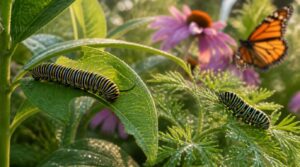
Pretty flowers get the butterflies to visit, but host plants are what keep them coming back. Without the right leaves for caterpillars to munch on, you’ll never see those butterflies stick around and lay eggs. Here are the must-have host plants every butterfly garden needs.
Milkweed for Monarchs
No monarch babies without it—milkweed is the only thing their caterpillars eat.
Stick with native species like common or swamp milkweed. They pack the right cardenolide compounds that make caterpillars taste awful to predators, and they match your local soil and climate way better than imports.
Skip tropical milkweed—it messes with migration timing.
Plant in sunny spots, well-drained soil, and watch those hungry caterpillars thrive!
Parsley, Dill, and Fennel
Herbs do double duty here—kitchen staples that double as swallowtail host plants!
- Parsley: flat or curly, great for sauces
- Dill: pairs with fish, bolts fast in heat
- Fennel: licorice-sweet bulbs, loves full sun
- Plant in succession for continuous leaves
- Harvest just before flowering for peak flavor
Let caterpillars nibble a few leaves—your larval host plants are working exactly as they should!
Passionflower Vines
Gulf fritillaries need passionflower—no ifs, ands, or buts.
| Feature | Detail |
|---|---|
| Growth | Vigorous, heat-tolerant vine |
| Bloom | Fragrant, intricate corona |
| Fruit | Edible maypops/passion fruit |
| Support | Trellis or container |
Give it a trellis, full sun, and watch it climb fast. Great in containers too, if space is tight!
Native Weeds and Wildflowers
Don’t overlook the "weeds" growing wild at your yard’s edge—they’re often quiet pollinator habitat heroes.
Many spread by wind-blown seed dispersal, building a mini wildflower meadow fast.
Their roots boost soil structure and add real drought hardiness.
And their broad ecological tolerance means they thrive in sun, shade, or rough soil, offering host plants, nectar, and natural pest control all in one scrappy package!
Three-species Host Plant Rule
Here’s a handy trick: never rely on just one host plant.
The three-species host plant rule pairs one primary host with two backups, buffering seasonal gaps and mitigating plant failure.
- Primary host (like milkweed)
- Secondary host for backup
- Supporting native species
This boosts larval diversity, enhances genetic population strength, and keeps species-specific host plants ready through every stage of the butterfly lifecycle.
Designing a Butterfly-Friendly Garden Layout
Once your plants are picked out, layout is where the magic really happens. It’s not just about what you grow, but how you arrange it all together. Here’s what to keep in mind as you map out your space.
Height Tiers for Visibility

Think of your garden like a stage — tall plants in back, short ones up front, nothing blocking the view.
Use vertical layering: ground covers, mid shrubs (3-4 ft), accent trees (6-8 ft).
Keep sightlines clear at pedestrian eye-level (5-6 ft) and accessibility height standards (3.5-4.5 ft), so every visitor enjoys your butterfly habitat comfortably.
Dense Clump Plantings
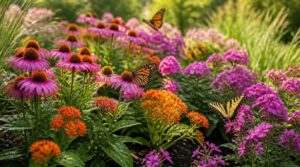
Once your tiers are set, group plants tightly instead of scattering singles.
Overlapping canopy density creates living mulch, shading soil and locking in moisture.
Use staggered offset spacing for natural airflow, not stiff rows.
This microhabitat regulates temperature and moisture while creating edge effect zones—more nectar, more shelter, more butterflies stopping by your pollinator-friendly landscape!
Replacing Turfgrass With Nectar Plants
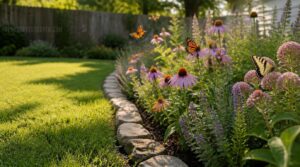
Ditch some lawn. Every patch of grass you convert to flowers becomes real butterfly habitat—and cuts mowing by 40-60%!
Nectar plants also slash irrigation needs by up to 30% versus thirsty turf.
Meadow-style plantings yield 40-70% more blooms, boost soil biodiversity, and turn a boring yard into a true pollinator-friendly landscape butterflies can’t resist.
Avoiding Bird Feeders and Traffic
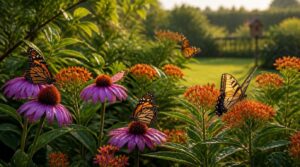
Keep bird feeders far from your butterfly zone. Birds see caterpillars as snacks, so distance protects your garden environment. Aim for at least 10 feet from high-traffic paths and 25 feet from driveways—this buffers noise and cuts vibration stress.
Skip busy roadsides, too. Quiet corners with shrub cover give butterflies safer flight paths and lower predator risk overall.
Planning for Sun and Windbreaks
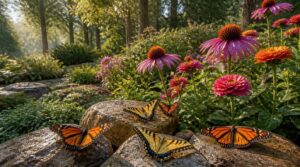
Sunbathing isn’t just for us—your butterflies need it too!
Pick a sunny location with six-plus hours of direct light daily.
For wind protection, plant windbreak placement perpendicular to prevailing winds, using species diversity and vertical layering (trees, shrubs, groundcover).
This creates a sheltered garden microclimate downwind, so butterflies can bask, feed, and fly without getting battered around.
Providing Water, Minerals, and Sun
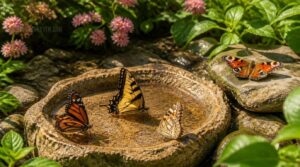
Flowers aren’t the only thing on a butterfly’s menu. They also need water, minerals, and warm spots to soak up the sun. Here’s how to set all that up in your own backyard.
Creating Puddling Stations
Puddles aren’t just for kids in rain boots — butterflies love them too!
Grab a shallow dish, mix soil and sand 2:1, and wet it into a moist patch. Add flat stones for safe landing perches and heat absorption.
Place your puddling station in full sun, refresh water every 1-3 days, and watch mineral intake happen right before your eyes.
Adding Salt for Minerals
Sprinkling a pinch of non-iodized sea salt into your puddling station turns plain mud into a mineral buffet.
Butterflies crave electrolytes just like we do after a workout. A little Celtic or Baja Gold sea salt adds:
- Magnesium for muscle strength
- Potassium for fluid balance
- Calcium for overall vitality
- Zinc for trace nutrition
- Balanced minerals for healthy flight
Flat Stones for Basking
Butterflies can’t fly cold. That’s why flat sunbathing rocks matter so much.
| Feature | Why It Helps | Quick Tip |
|---|---|---|
| Dark slate | Absorbs heat fast | Place in full sun |
| Rough texture | Better grip | Prevents slips |
| 5-20mm thick | Retains warmth | Balances safety |
Give them 4 to 6 hours of direct sun. Skip smooth edges—slight chamfers prevent injury.
Homemade Nectar Feeders
Want a DIY project that’s actually easy? Grab a small bottle, drill tiny holes, add a 4:1 water-to-sugar ratio, and you’re set!
Skip food coloring—it’s harmful. Rotate solution every 2-3 days in heat.
Place feeders near flowers, in sun, away from wind. Clean weekly with hot water. Your garden’s about to get busy!
Overripe Fruit Trays
Mushy bananas and squishy peaches? Butterflies think that’s a feast.
Cut fruit into chunks, set trays 2 feet high, in sun with a breeze for good fruit scent dispersion. Mix varieties—citrus, berries, stone fruit—for a stronger butterfly attractant.
Swap fruit every couple days. Managing mold growth keeps your fruit feeding station safe and pests away, so your garden stays a clean, reliable food source.
Maintaining a Safe Butterfly Habitat
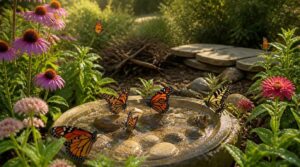
Attracting butterflies is only half the job. You’ve also got to keep your garden a safe place for them to actually stick around. Here’s what that looks like in real life.
Full Sun Exposure
Six-plus hours of direct light is non-negotiable for a thriving butterfly garden.
Southern exposures work best—do a quick shadow test at solar noon to confirm.
Choose drought tolerant varieties for your nectar plants, since heat intensifies water loss.
Reflective mulch and pale stones bounce extra warmth and sunlight onto blooms.
Watch for sun stress—wilting means it’s time to water, not panic!
Windbreak Strategies
So all that sunshine needs a little backup. Wind can undo your hard work fast, drying blooms and knocking butterflies off course.
Plant trees and shrubs as shelter, angled perpendicular to prevailing winds.
Mix conifers with deciduous rows for year-round wind turbulence control—dense enough to block gusts, porous enough (20-40%) to breathe. Good habitat restoration always starts with smart barriers!
Leaf Litter and Brush Piles
Now let’s talk mess. That pile of leaves you’ve been raking? Leave it.
Leaf litter is free habitat. It shelters overwintering insects, feeds soil nutrient cycling, and boosts microhabitat biodiversity.
Brush piles work the same magic—natural weed suppression, moisture retention, and cozy corners where overwintering butterflies tuck in for winter. Skip the cleanup. Nature’s already got a system going.
Eliminating Pesticides
Here’s the hard truth: pesticides don’t ask questions. They kill caterpillars right along with the pests.
Go pesticidefree. Skip neonicotinoids, neem oil, even Bt sprays—they contaminate nectar and host leaves alike.
Try integrated pest management instead: monitor pest thresholds, use physical barriers, attract beneficial insects. Your garden stays balanced, and butterflies stick around.
Overwintering Refuges
Tucking your garden in for winter matters more than you’d think.
Leave those leaf piles right where they fall. Butterflies overwinter as eggs, pupae, or adults using:
- Subnivean microclimates under snow
- Ground burrow survival spots
- Decaying wood humidity in old logs
- Tree bark fissures for shelter
Skip habitat fragmentation—messy corners beat manicured ones every time!
Seasonal Tips for Butterfly Attraction
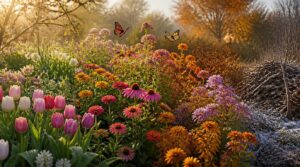
Butterflies don’t stick to one schedule, so your garden shouldn’t either. Every season brings a new job to do, from planting to prepping to just stepping back and letting nature work. Here’s what to focus on as the year rolls along.
Planting for Bloom Succession
Timing is everything. Overlap your bloom groups so something’s always open — snowdrops handing off to zinnias, zinnias handing off to asters.
Stagger sowings every few weeks for continuous nectar availability, and mix native plants with quick-blooming annuals to close bloom gaps fast.
Think of it as a relay race, not a solo sprint — every flower passes the baton to the next.
Spring and Fall Garden Prep
Fall prep sets up spring success. Test your soil pH (aim for 6.0–7.0), then spread 2-4 inches of compost over beds.
Clear spent plants, sharpen your tools, and toss in a cover crop like clover.
Mulch beds 2 inches deep before frost hits. Come spring, your native plants and nectar plants wake up ready — giving butterflies a strong head start!
Supporting Butterfly Life Cycles
Ever watch an egg become a butterfly? It’s wild, and your garden’s the stage.
Each stage needs different things. Caterpillars need caterpillar host plants for larval nutrition, while adults sip nectar.
Support specialist species with dedicated hosts.
Protect every life stage by skipping pesticides and keeping microhabitat diversity intact.
Native plant benefits run deep—they’ve evolved alongside local butterflies for generations!
Balancing Annuals and Perennials
Think of perennials as your garden’s bones and annuals as its wardrobe.
Perennials are a garden’s bones; annuals are its ever-changing wardrobe
Perennial structural anchors like coneflower and bee balm return yearly, offering steady nectar. Annuals fill seasonal color gaps between blooms.
- Pair drought-tolerant perennials with low-water annuals
- Mulch to ease maintenance labor
- Feed soil with compost yearly
This mix keeps continuous floral color flowing, native plants thriving, and your pollinator-friendly landscape buzzing all season long!
Top Butterfly Gardening Guides and Tools
So you’ve done the planting, the planning, and the puddle-making. Now let’s talk tools, because a few good resources can save you tons of trial and error. Here are some of my favorite guides and gear to keep your butterfly garden thriving.
1. Songbird Essentials Butterfly Feeder
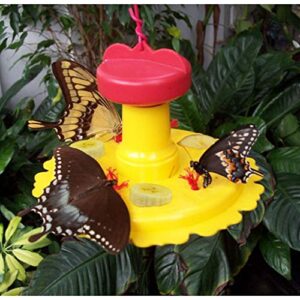
Songbird Essentials Butterfly Feeder (model SE78200) is a solid pick if you want a reliable feeding station without much fuss.
It holds 6 oz of nectar, plus fruit pieces on little spikes, and the yellow-and-red design mimics real blossoms to pull butterflies in.
The top panel pops open easily for cleaning and refills, and a 3/4 inch base opening lets you mount it on a pole.
Just know: bees and wasps love it too, so keep an eye out!
| Best For | Gardeners who want an eye-catching, easy-to-maintain feeding station to attract butterflies (and other pollinators) to their yard or window display. |
|---|---|
| Type | Feeder |
| Region Focus | North America |
| Target Audience | Home Gardeners |
| Plant Guidance | N/A |
| Visual Reference | Bright Coloration |
| Skill Level | Beginner |
| Additional Features |
|
- Bright yellow-and-red design mimics real blossoms, effectively drawing in butterflies
- Top panel opens easily for quick cleaning and refilling
- Versatile feeding options with both nectar and fruit pieces on secure spikes
- Small 6 oz capacity means frequent refills, especially in hot weather
- Attracts unwanted guests like bees, wasps, and ants, which can take over the feeder
- Plastic coloring may fade over time with extended sun exposure
2. Native Pollinator Guide for Gardens
Native Pollinator Guide for Gardens goes beyond feeders and looks at the whole picture.
It’s packed with identification keys for bees, butterflies, and moths, plus regional plant tables matched to bloom times.
You’ll also find instructions for building nesting habitats, which is great if you want bees sticking around too.
Heads up: it’s paperback only, and leans heavier on bees than butterflies.
Still, at 384 pages, it’s a solid reference for anyone building a full pollinator garden, not just a butterfly patch.
| Best For | Home gardeners, urban growers, and educators who want to build a full pollinator habitat rather than just attract butterflies. |
|---|---|
| Type | Book |
| Region Focus | North America |
| Target Audience | Home Gardeners |
| Plant Guidance | Plant Tables |
| Visual Reference | Photographs |
| Skill Level | All Levels |
| Additional Features |
|
- Detailed identification keys plus regional plant tables matched to bloom periods make it easy to plan a garden that supports pollinators year-round
- Step-by-step nesting habitat instructions help gardeners encourage bees to stay, not just visit
- High-resolution photos and a chapter on kid-friendly activities make it useful for classrooms and community groups too
- Only available in paperback, so there’s no hardbound option for durability
- Coverage leans heavily toward bees, with less depth on butterflies, moths, and other pollinators
- Published in 2011, so some plant and taxonomic info may be a bit dated, and the plant lists focus mainly on the US and Canada
3. Butterfly Garden Design Guide
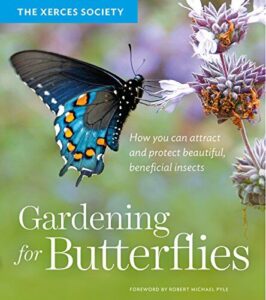
Butterfly Garden Design Guide is your go-to if you want the "why" behind the "what."
It walks you through height tiers, windbreaks, and sun exposure with real diagrams, not just plant lists.
So if you’re staring at a blank yard wondering where to even start, this one hands you a blueprint.
It’s lighter on identification but strong on layout strategy, making it a nice complement to plant-heavy references.
| Best For | Gardeners who already know which plants they want and now need help with the actual layout — thinking through height, wind, and sun placement to turn a blank yard into a working design. |
|---|---|
| Type | Book |
| Region Focus | North America |
| Target Audience | Home Gardeners |
| Plant Guidance | Plant Charts |
| Visual Reference | Photographs |
| Skill Level | Beginner to Advanced |
| Additional Features |
|
- Focuses on the "why" behind garden layout, not just a list of plants to buy
- Uses real diagrams to explain height tiers, windbreaks, and sun exposure
- Gives beginners a clear starting blueprint instead of a blank-yard guessing game
- Lighter on plant and species identification than dedicated reference guides
- Best used alongside a plant-heavy resource, not as a standalone reference
- Less useful if you’re still deciding which native species to plant in the first place
4. Complete Butterfly Gardening Identification Guide
Once your layout’s in place, you’ll want help naming what actually shows up.
That’s where a solid ID guide earns its keep. This one packs over 140 photos covering 63 common species, with life-cycle details, host plants, and range maps included.
You get step-by-step raising instructions too, plus sample garden plans. It’s older, so a few plant names may feel dated. But for matching wing patterns to real butterflies in your yard? Still a trustworthy field companion.
| Best For | Backyard gardeners, hobbyists, and educators in the U.S. and Canada who want to identify butterflies and raise them at home. |
|---|---|
| Type | Book |
| Region Focus | North America |
| Target Audience | Home Gardeners |
| Plant Guidance | Plant Lists |
| Visual Reference | Photographs |
| Skill Level | Beginner |
| Additional Features |
|
- Over 140 full-color photos covering 63 common North American species
- Includes host plant lists, sample garden plans, and step-by-step raising instructions
- Regional distribution maps and seasonal arrival/departure dates help with real-world identification
- Some plant names and taxonomy may be outdated due to the 1991 publication date
- Paperback binding may not hold up well with frequent outdoor use
- Limited value for readers outside the United States and Canada
Frequently Asked Questions (FAQs)
What can I put in my garden to attract butterflies?
Try milkweed for monarchs, plus dill and fennel for swallowtails. Add bright bloomers like zinnia and coneflower in dense clumps.
Toss in a shallow puddling dish with damp sand, and skip the pesticides entirely!
What time of year do you start a butterfly garden?
Timing’s like planting a garden clock: spring after the last frost kicks off blooms, while fall planting builds stronger roots for earlier spring nectar. Zones 8-10 allow near year-round starts; colder zones should wait till late spring.
Why aren’t butterflies coming to my garden?
Missing host plants, weak nectar variety, or too much shade could be the culprit. Skip pesticides too—even small amounts scare butterflies off. And check your layout: crowded or scattered plants make landing tricky!
How do you get a butterfly to come to you?
Stand still and wear bright colors! Butterflies notice bold reds, oranges, and purples.
Sit near nectar plants, stay calm, and skip perfume. Patience wins here, sometimes one lands right on your shoulder for a sweet surprise.
How long does it take to attract butterflies?
Good things come to those who plant.
Most gardens see first visitors within 2 to 6 weeks of blooms opening. Cooler climates may take 6 to 12 weeks. Sun, water, and pesticide-free beds all speed things up!
What time of day are butterflies most active?
Mid to late morning, roughly 9 am to noon, is your best window—that’s when sunlight warms their flight muscles just right.
Things often stay lively into early afternoon too, especially on breezy, warm days before the midday heat pushes some species into the shade.
Can container or balcony gardens attract butterflies too?
Who needs a backyard when a few pots will do? Yes! Group lantanas, zinnias, and pentas in lightweight, well-drained containers, add parsley or dill for caterpillars, and your balcony becomes a tiny butterfly runway.
Do butterfly gardens also attract bees and other pests?
Bright blooms and shallow flowers pull in bees too, especially bumblebees and solitary bees. Skipping pesticides invites some aphids, but that also brings lady beetles and parasitic wasps—nature’s own pest control, working for free.
How do I identify which butterflies are visiting my garden?
Watch for wing color and shape first — monarchs flash orange and black, painted ladies show pink-orange mottling. Then check flight style: skippers dart fast, sulfurs drift low and buoyant. Those clues together usually nail the species!
Conclusion
Funny thing—the same week I planted that lone coneflower, a neighbor mentioned she’d given up on her yard entirely. Now she’s got milkweed, dill, and a puddling station too.
That’s the real secret behind how to attract butterflies gardening success: one small choice ripples outward, season after season.
You don’t need acres or expertise. You need host plants, water, sun, and patience. Plant something today, and watch your garden become the meeting place monarchs remember.
- https://hort.extension.wisc.edu/articles/create-a-butterfly-garden
- https://www.birdsandblooms.com/gardening/top-10-plants-swallowtails
- https://conservingcarolina.org/butterfly-garden-wnc-upstate-sc
- https://news.maryland.gov/dnr/2024/06/02/gardening-without-pesticides-you-have-options
- https://houstonarboretum.org/butterfly-gardening-in-houston