This site is supported by our readers. We may earn a commission, at no cost to you, if you purchase through links.
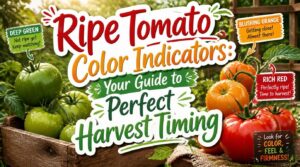
I’ve pulled tomatoes off the vine too early more times than I’d like to admit, and every one paid me back with a mealy bite and thin flavor. Color fools folks constantly, because a tomato can look "red enough" days before it’s truly ready. Ripening isn’t a switch, it’s a slow chemical handoff, chlorophyll fading out while lycopene builds in, and each stage leaves its own visual signature if you know where to look. Beefsteaks, cherries, and green-when-ripe varieties like Green Zebra don’t follow the same rulebook either.
Learning to read ripe tomato color indicators stage by stage, variety by variety, is what separates a good harvest from a great one.
Table Of Contents
- Key Takeaways
- How Tomato Colors Signal Ripeness
- Ripe Colors by Tomato Variety
- Check Ripeness Beyond Color
- Avoid Misreading Tomato Color
- Harvest at The Best Color Stage
- Frequently Asked Questions (FAQs)
- What are the colors of ripe tomatoes?
- How do I tell if my tomatoes are ripe?
- What color do tomatoes turn before red?
- What month do tomatoes usually ripen?
- What time of day is best for harvesting?
- Should ripe tomatoes be refrigerated after picking?
- Why does ethylene matter for tomato ripening?
- Whats the best way to detach a tomato?
- How should overripe tomatoes be used or discarded?
- Conclusion
Key Takeaways
- Color alone can trick you, so pair what you see with a gentle squeeze, a sniff near the stem, and how easily the fruit lets go of the vine before you decide it’s ready.
- Ripening moves through clear stages, from breaker to pink to full red, and each stage has its own visual cue if you know where to look.
- Not every tomato turns red when ripe, so learn your variety’s true color signal, whether that’s golden yellow, orange-red, or the translucent skin of green varieties like Green Zebra.
- If a frost or storm threatens, pick pale, mature-green tomatoes and let them finish ripening indoors in a paper bag with a ripe apple, since room temperature always beats the fridge for flavor.
How Tomato Colors Signal Ripeness
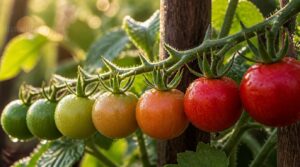
I watch color the way I watch the weather, close and constant, because a tomato tells you exactly where it stands if you know how to read it. Every fruit moves through a handful of distinct stages on its way to ripe, and each one gives you a different clue. Let’s walk through what your eyes should be catching at each step.
This guide to tomato ripening stages and harvesting techniques breaks down what to look for as fruit shifts from mottled green to that final, even blush of color.
Green to Breaker Stage
Before any color shows, run your fingers over the skin. That dulling from glossy to matte? Chlorophyll breakdown starting.
Watch the shoulders near the stem, pale patches appear first, classic uneven ripening shoulders. Fruit stays hard, barely giving near the blossom end, sugar’s still minimal. This green-to-breaker stage shift is your first real visual cue, not full color yet, just the beginning.
Breaker to Turning Stage
Once those pale patches deepen, you’re watching breaker color progression in real time, blush spreading from blossom end toward the shoulders. Warm days speed this along; temperature effects on carotenoid build-up are real.
Skin stays taut, though a quick firmness test still shows solid resistance. Uneven color’s normal here, don’t expect uniformity yet.
Pink to Light-red Stage
That blush keeps climbing until you’ve got 30 to 60 percent surface coloration, sugar accumulation and aroma development kicking in together. Skin still feels smooth, fruit gives slightly under a gentle squeeze.
This is where sunlight and warm temperatures really shape color intensity. I always remind myself: pink shoulders can still lag behind a redder blossom end, and that’s normal. The cerise hue seen in ripe tomatoes shares similarities with the vibrant Cerise color used in digital design, which has a hex code of DE3163 and is often paired with contrasting shades like Mint Green for visual balance. Cerise color definition provides insight into how such vivid reds are standardized across platforms.
Full Red Ripe Stage
By now you’re watching for 90 to 100 percent coverage, a consistent crimson with real gloss to it. Shoulders should show no green, blossom end no yellow.
Squeeze gently, you’ll feel moderate give. Sugars peak, acids mellow, and that uniform color tells you harvest timing has arrived. Twist the stem, it should release clean.
Lycopene and Color Intensity
Underneath that consistent crimson sits a pigment doing all the work: lycopene. This carotenoid carries eleven double bonds, which is why concentration drives dominant color so directly.
Heat induced color changes explain why sauces deepen further. Storage temperature influence and carotenoid interaction effects can dull that glossy sheen, so eat fresh tomatoes promptly rather than chilling them.
Ripe Colors by Tomato Variety
Not every tomato turns red when it’s ripe, and that trips up a lot of gardeners. I’ve learned that each variety has its own color signal, and knowing it saves you from picking too early or too late. Here’s what to look for, variety by variety.
Beefsteak’s Deep Glossy Red
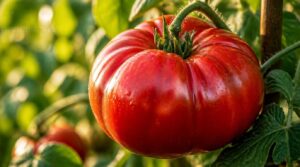
Big, meaty, and glossy—that’s a ripe Beefsteak. You’re looking for a deep red gloss across most of the shoulders and skin, smooth and shiny, not dull.
Give the fruit a gentle squeeze and check for signs your bell peppers are ready to pick, since similar ripeness cues apply when judging firmness against color.
That color tracks with lycopene density building inside. Sun exposure matters too; fruit shaded late in ripening often develops the richest, most even glossy sheen, which is your best visual cue for harvest timing.
Cherry’s Bright Even Red
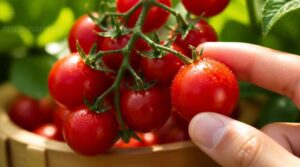
Ruby, not scarlet—that’s your cherry tomato at peak ripeness. Look for color uniformity stem to blossom end, no blotchy shoulders.
Ripeness checklist:
- Even color distribution across the whole fruit
- Vivid ruby skin, deep red flesh beneath
- Gentle yield test under light pressure
- Sweet fruit aroma near the stem
- Bright color holds well after picking
Yellow Pear’s Golden Color

Sunlight does the real work here. Yellow Pear fruits turn golden yellow gradually, pale to amber, with light golden skin speckles that don’t hurt taste. That signature pear shape golden holds even at full ripeness.
I always check for a faint tropical aroma golden at the stem, plus soil moisture impact on evenness. Post-harvest stability keeps that color days after picking.
Lemon Boy’s Green-free Hue
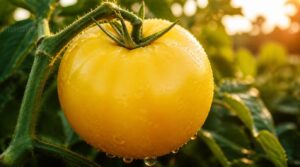
No green shoulders, no guessing. Lemon Boy tells you it’s ready with uniform yellow skin, creamy to pale orange, smooth and glossy. I check for a light citrus aroma profile near the stem, then give a gentle squeeze.
Color development runs faster than most yellow varieties, so don’t wait for deep gold, pale yellow with no green tint means harvest now.
Green Varieties’ Translucent Skin

Ever squeezed a "green" tomato and wondered if you’re too early? Trust the translucent skin anatomy—light passing through reveals amber undertones development beneath, not solid green.
Check for:
- Pearlescent sheen replacing dull skin
- Herbaceous aroma near the stem
- Slight give under gentle handling
- No lingering green shoulders
Green-when-ripe varieties skip glossy red entirely; translucence is your dominant, visual ripeness cue.
Check Ripeness Beyond Color
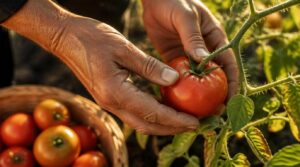
Color tells you a lot, but it won’t tell you everything. I’ve picked plenty of tomatoes that looked perfect and still weren’t ready. Here’s what your hands and nose can teach you that your eyes can’t.
Slightly Firm Texture
Squeeze gently. A ripe tomato pushes back with slight resistance, not mush. That’s your firmness test.
Press your thumb near the stem—the center texture should feel just a touch firmer than the rest. Skin elasticity matters too: it dimples, then bounces back. Good bite resistance and juice control mean less mess, more flavor, when you finally slice into it.
Sweet Earthy Aroma
Your nose knows, too. Put your face near the stem end and breathe in—ripe fruit gives off a sweet earthy aroma from volatile organic compounds building up as sugars peak. That scent blends terpenoids, benzenoids’ sweet notes, lactones’ creamy depth, and sulfur compound influence.
No smell yet? Give it a few more days on the vine.
Easy Stem Release
Once your nose confirms ripeness, check the stem. A gentle rocking twist should pop it free—no tugging. This Stem Twist Technique works best when fruit is warm, not fridge-cold, since cool temps toughen the pedicel.
Watch for:
- Clean snap, minimal green tissue
- Stem releasing with light pressure
- No fruit bruising during the pinch
Heavier Fruit Feel
Pick it up. A truly ripe tomato feels heavier than its size suggests, thanks to dense flesh and a thick pericarp packed tight around a full seed cavity. That heft often means higher sugar density, too.
I always remind myself: fruit weight tells you what your eyes can’t, even when dominant color looks spot-on.
Fruit weight reveals what color alone can never tell you about a tomato’s true ripeness
Mushiness Signals Overripeness
Once softening turns to true mushiness, you’ve waited too long. Pectin breakdown dissolves cell walls fast, and a firmness meter reading below 8 grams confirms it.
Press your thumb in: if the indentation persistence lasts past 5 seconds, or you spot locule separation inside, that tomato’s overripe.
An ethylene surge drives this, so use it soon or compost it.
Avoid Misreading Tomato Color

Even with all these signs to guide you, color can still trick you if you’re not careful. I’ve watched plenty of growers pick too early or trust the wrong cue, and it costs them flavor every time. Here are the mistakes I see most often, so you know exactly what to watch for.
Picking at First Color
That first blush of pink doesn’t mean go. Color Break Timing matters, since less than 10% coverage is just the breaker stage starting out.
I’ve found patience pays off: let fruit sit a few more days for better sugar levels.
Early Tomato Picking sacrifices flavor for looks, even though Post Harvest Ripening will still finish the color job.
Expecting Every Variety Red
Why wait for red that’s never coming? Variety-specific hue targets matter more than a single color rule.
- Beefsteak: deep glossy red
- Yellow Pear: golden yellow, always
- Lemon Boy: orange-red, no green shoulders
- Green Zebra: translucent skin, faint blush
- Cherry: bright, even red
Know your variety’s true ripe color before judging visual ripeness cues.
Ignoring Uneven Color Development
A tomato that’s red on one shoulder and green on the other isn’t ready, no matter what your color chart says. This patchy look mirrors uneven dye application in hair color—uneven exposure means uneven results. Trust visual cues, not just hue.
You need uniform color across the whole fruit, with no lingering green shoulders, before you trust visual ripeness cues fully.
Confusing Sunscald With Ripeness
Sun-damaged fruit can trick your eye into thinking it’s ripe. Sunscald shows up as a pale, papery patch with a yellow halo, sometimes blushing pink from heat stress. That’s a false ripeness sign, not real color development.
Don’t lean on your color chart alone here. Check for glossy, thin skin and texture that feels off compared to fruit with true, uniform color.
Overlooking Persistent Green Shoulders
Ever pick a tomato that looked done, only to slice into a hard green patch by the stem? That’s a green shoulder, a ripening disorder where excessive heat blocks chlorophyll breakdown. It’s genetic in many heirlooms, harmless to eat, but hurts consumer appeal.
- Check shoulders before harvest
- Note variety tendencies
- Shade exposed fruit
- Judge ripeness by feel
- Ripen indoors if needed
Harvest at The Best Color Stage
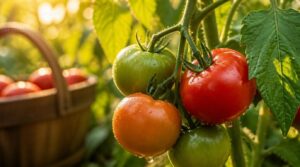
Once you know how to read color, timing your harvest becomes second nature. I’ve found the best results come from matching your picking habits to what the tomato is actually telling you, not just the calendar. Here are five habits that’ll help you get the timing right, every time.
Pick Breaker-stage Tomatoes Early
Once you spot that first blush near the blossom end, pick it. Breaker-stage harvest gives you ethylene ripening control, cuts pest losses, and widens your harvest window.
Fruit ripens indoors in 2-7 days at room temperature, no vine time needed. It’s an easy way to manage garden yield without sacrificing fruit maturity or flavor.
Harvest Fully Colored Fruit Promptly
Full color means full urgency. Once fruit shows over 90% final tomato color, peak ripeness hits fast, so pick that day if you can.
I harvest in late morning, after dew dries, for the best flavor and dry skin. Waiting invites cracking, bruising, or mush. Store picked fruit at room temperature, never the fridge, it kills flavor.
Check Green Varieties Manually
Green-when-ripe varieties like Green Zebra won’t turn red, so color alone lies to you. Rely on tactile testing instead.
- Stem detachment test: gentle twist releases clean
- Skin gloss assessment: check for slight translucence
- Squeeze softly for gentle give
Skip the size uniformity check here, it’s about feel, not looks. Trust your hands over your eyes.
Avoid Rain-soaked Harvesting
Feel and gloss matter more than color here, but weather still calls the shots. Harvest before storm systems arrive, don’t wait for wet fields.
Rain-soaked fruit cracks fast, splitting shoulders and inviting rot. I always check forecasts, then pick anything close, even if pale. Better a windowsill tomato than a lost one.
Let Pale Tomatoes Ripen Indoors
Once you’ve pulled pale, mature-green fruit off the vine, don’t panic, they’ll still ripen fine indoors.
Try the Paper Bag Method for an Ethylene Boost: bag them with a ripe apple, store around 65°F for Temperature Control.
- Check daily
- Remove ripe fruit
- Toss soft ones
- Keep dark
- Avoid windowsills
Room temperature beats the fridge every time.
Frequently Asked Questions (FAQs)
What are the colors of ripe tomatoes?
Think of tomato color like a stoplight running in reverse. Ripe fruit isn’t just red, it spans red stage, golden yellow, orange tomatoes, and green-when-ripe varieties, reflecting the wide heirloom color spectrum shaped by variety and growing conditions.
How do I tell if my tomatoes are ripe?
Combine color uniformity with a quick texture test: gentle give under pressure. Add the scent test, a stem twist that releases easily, and a weight test, heavier fruit means ripe, juicy tomatoes ready for picking.
What color do tomatoes turn before red?
Before red, tomatoes pass through a Yellow Green Phase, then a Breaker Yellow Tint near the stem, followed by the Pink Onset Phase. Some stay golden (Golden Pear Hue) or show a Green Ripe Indicator with green shoulders instead.
What month do tomatoes usually ripen?
Most gardens hit their August Ripening Window, though July Peak Harvest happens in warmer zones.
Regional Harvest Timing varies with climate ripening speed, early season varieties, and local weather, so your fruit maturity may shift a few weeks either way.
What time of day is best for harvesting?
I always tell folks the clock matters as much as the calendar. Your best harvest window is that first hour or two after sunrise, once dew dries, before midday heat softens fruit and stresses the vine.
Should ripe tomatoes be refrigerated after picking?
Yes, but only once they’re fully ripe. Chilling before that stops the ripening process cold. I let mine sit at room temperature until color and firmness peak, then refrigerate for short-term storage, up to five days.
Why does ethylene matter for tomato ripening?
This little hormone triggers ripening itself, breaking down chlorophyll, building carotenoids, softening cell walls, and switching on aroma compounds. It’s why color, sweetness, and that classic tomato smell all develop together, not separately.
Whats the best way to detach a tomato?
I keep my thumb on the shoulder and use the twist-and-pull method: gentle twist, slight upward pull, until the stem snaps clean at its natural separation layer, no tearing, no bruised fruit.
How should overripe tomatoes be used or discarded?
Soft but mold-free tomatoes work for sauces, jam, or roasting, or freeze for later cooking. If moldy, smelly, or slimy, skip trimming, just compost them instead, that’s the safer route for both your kitchen and garden pest prevention.
Conclusion
There’s one moment every grower waits for, that split second when a tomato stops promising and starts delivering. You won’t find it by staring at color alone. Trust the whole picture: firmness, aroma, weight, the way it lets go of the vine without a fight.
I’ve learned patience pays better than eagerness ever did. Master these ripe tomato color indicators, and every harvest becomes proof that watching closely beats guessing quickly, every single time.
- https://www.evergreenseeds.com/how-do-you-know-when-its-time-to-pick-jalapenos
- https://news.uga.edu/pick-tomatoes-at-breaker-stage/
- https://www.frontiersin.org/articles/10.3389/fpsyg.2014.00289/pdf
- https://pmc.ncbi.nlm.nih.gov/articles/PMC5775087/
- https://pender.ces.ncsu.edu/news/what-causes-tomatoes-to-crack/