This site is supported by our readers. We may earn a commission, at no cost to you, if you purchase through links.
One flea beetle can riddle a kale seedling with holes before you’ve finished your morning coffee. Cabbage moths, thrips, and carrot flies work just as fast, slipping into raised beds through gaps you’d never notice until the damage is done.
Mesh size makes the difference between a barrier that works and one that’s decorative. A 0.35mm weave stops aphids cold, while looser 0.8mm mesh still blocks cabbage fly without choking airflow your plants need to thrive.
The right insect netting covers for raised beds pair proper mesh tightness with hoops and fasteners that hold up through wind, sun, and seasonal storage. Nine standout options below show what separates a lasting barrier from netting that tears by midsummer.
Table Of Contents
- Key Takeaways
- Top 9 Insect Netting Covers for Raised Beds
- 1. Garden Netting Ultra Fine Mesh 10x33ft
- 2. Garden Mesh Netting Kit With Hoops
- 3. Garden Netting Kit with Hoops
- 4. Garden Netting Pest Barrier 4×10 ft
- 5. Sunwinx Garden Netting for Raised Beds
- 6. Garden Insect Netting 10x50ft PE Mesh
- 7. Fippy Garden Netting Kit 10x50ft
- 8. Garden Netting for Raised Beds
- 9. Miracle-Gro Organic Outdoor Potting Mix 16 Qt
- How to Choose Raised Bed Netting
- Best Hoops and Frames for Netting
- Installing and Accessing Raised Bed Covers
- Matching Netting to Garden Needs
- Frequently Asked Questions (FAQs)
- How to protect raised beds from insects?
- How to cover a raised bed with netting?
- What are the alternatives to insect netting?
- What is the best netting for garden insects?
- Can insect netting be used in winter?
- Does netting affect pollination of flowering vegetables?
- Can netting be washed and reused safely?
- Whats the difference between insect netting and shade cloth?
- Will netting protect against larger pests like rabbits?
- Conclusion
Key Takeaways
- Mesh size is the real deciding factor: tighter weaves (0.35-0.6mm) stop tiny pests like aphids and thrips, while looser mesh (0.7-0.8mm) still blocks cabbage fly and carrot fly without cutting off the airflow your plants need.
- Netting is only as good as what holds it up, so sturdy, rust-resistant frames like fiberglass hoops, PVC tunnels, or metal supports keep mesh from sagging onto leaves and inviting the pests it’s supposed to block.
- Sealing every edge matters just as much as picking the right mesh, since gaps from loose drawstrings, missing ground burial, or unanchored corners give crawling and flying insects an easy way back in.
- Choosing UV-stabilized material and storing it clean and dry each season stretches a cover’s life well beyond a single summer, making it a better long-term value than cheaper, untreated netting you’ll end up replacing every year.
Top 9 Insect Netting Covers for Raised Beds
Not every mesh cover works the same way once it hits your actual raised bed, and the differences show up fast in fit, durability, and ease of use.
You’ll find hoop kits, flat drapes, and heavier-duty options here, each suited to different bed sizes and pest pressures.
If you’re weighing durability against convenience, this guide on choosing sturdy garden bed covers breaks down which style holds up best to wind and pests.
Take a look at how these nine stack up against each other before picking the one that matches your garden.
1. Garden Netting Ultra Fine Mesh 10x33ft
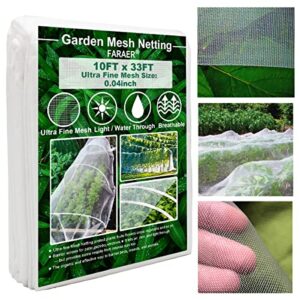
Once you’ve settled on protecting a full bed rather than a single row, this 10x33ft roll earns its spot at number one.
With 0.8mm x 1mm openings, it stops thrips and aphids cold while rain and sunlight still pass through. UV-stabilized polyethylene keeps it from turning brittle after one season in the sun.
At 0.79 lbs, it’s light enough to drape by hand and cut down for smaller beds without fraying edges.
| Best For | Gardeners looking to cover an entire raised bed, greenhouse, or orchard section who need long-lasting insect protection without blocking water or sunlight. |
|---|---|
| Dimensions | 10 ft x 33 ft |
| Material | Polyethylene (PE) |
| Main Use | Insect netting cover |
| Color | White |
| Reusable | Yes |
| Weight | 0.36 kg |
| Additional Features |
|
- Ultra-fine 0.8mm x 1mm mesh keeps out even tiny pests like thrips and aphids
- UV-stabilized polyethylene holds up season after season in direct sun
- Lightweight and easy to cut, drape, and secure to fit any bed size
- Thin material can tear easily, especially along freshly cut edges
- Needs regular re-securing in windy spots to stay in place
- Not sturdy enough for heavy-duty or permanent structural setups without extra support
2. Garden Mesh Netting Kit With Hoops
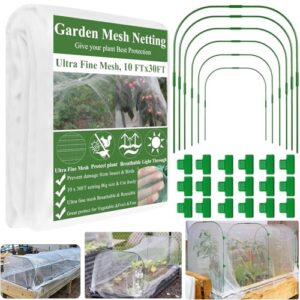
If a single roll of mesh sounds like too much cutting and fitting, this kit solves that with 36 fiberglass hoops built right in.
The hoops bend by hand and spring back into shape after wind gusts, so you’re not out there reshaping them every week.
Mesh openings run 0.8mm to 1.0mm, blocking most pests while letting light and air through. Connectors and clips keep everything snug against sagging, which matters more than it sounds once the wind picks up.
| Best For | Home gardeners who want to protect raised beds, vegetable patches, or fruit trees from insects, birds, and small animals without sealing off access for watering and harvesting. |
|---|---|
| Dimensions | 10 ft x 30 ft |
| Material | Polyethylene (PE) and steel |
| Main Use | Insect netting cover |
| Color | White |
| Reusable | Yes |
| Weight | 2.48 kg |
| Additional Features |
|
- Fine 0.8mm x 1mm mesh keeps out pests while still letting light and water through
- Adjustable hoops and clips make setup, watering, and harvesting easy without tearing everything down
- Reusable season after season for crops like strawberries, tomatoes, and lettuce
- Hoops and connectors can feel flimsy and may bend or snap if not handled carefully
- Netting can snag or tear in windy conditions or on rough terrain
- Limited number of connectors and tubes makes it hard to expand for larger or custom bed sizes
3. Garden Netting Kit with Hoops
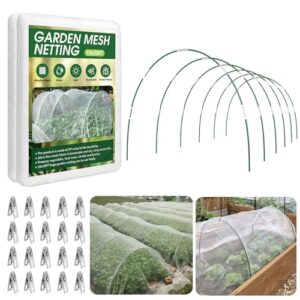
Where the last kit bundles hoops with the mesh, this one leans into scale: 30 connectors and 36 fiberglass hoops rated for 8-foot spans, built for gardeners running several beds at once.
Ground stakes anchor each hoop against wind, and clips hold the netting tight without pinching stems. Reuse is the real selling point here — fiberglass resists rust and fatigue across seasons, so you’re not rebuying frames every spring, just swapping netting when it finally wears through.
| Best For | Gardeners managing multiple raised beds who want a durable, reusable hoop system they can re-net season after season instead of replacing the whole setup. |
|---|---|
| Dimensions | 10 ft x 30 ft |
| Material | Polyethylene (PE) and fiberglass |
| Main Use | Insect netting cover |
| Color | White |
| Reusable | Yes |
| Weight | 2.26 kg |
| Additional Features |
|
- Fiberglass hoops resist rust and fatigue, so frames hold up across many seasons
- Ultra-fine 0.8mm x 1mm mesh keeps out insects, birds, and small animals while still letting light, air, and water through
- Generous kit size (36 hoops, 30 connectors, 20 clips) makes it easy to cover several beds or build custom tunnel lengths
- Netting is prone to fraying or tearing, especially if rodents chew through it or clips are misused
- Unfinished edge filaments may need trimming to prevent unraveling and reduce snagging risk for birds
- Some users find the netting itself doesn’t hold up well beyond a season or two in harsher conditions
4. Garden Netting Pest Barrier 4×10 ft
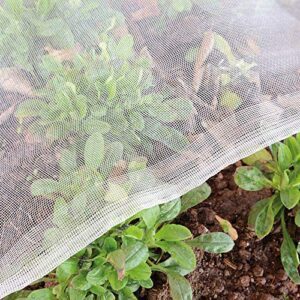
Scaling down from multi-bed hoop systems, this 4×10 ft barrier suits a single raised bed and nothing more. Tight selvedge edges resist unraveling, so you can trim it to fit odd bed shapes with plain scissors.
The 40-mesh HDPE fabric blocks aphids, carrot fly, and Japanese beetles while still letting water and light through. At just 50 grams, it’s easy to handle but needs securing in wind. No hoops included, and remove it during flowering if bees need access.
| Best For | Home gardeners looking to protect a single raised bed or small crop area from common pests like aphids, carrot fly, and Japanese beetles. |
|---|---|
| Dimensions | 10 ft x 30 ft |
| Material | Polyethylene (PE) and fiberglass |
| Main Use | Insect netting cover |
| Color | White |
| Reusable | Yes |
| Weight | 1.63 kg |
| Additional Features |
|
- Fine 40 mesh HDPE netting blocks insects while still letting air, water, and light through
- Tight selvedge edges resist unraveling and can be trimmed with scissors to fit odd shapes
- Lightweight at 50 grams, backed by a 3-year warranty
- Hoops or support frames aren’t included, so you’ll need your own setup
- Lightweight design means it can shift or blow around in windy conditions
- Must be removed during flowering if bee pollination is needed
5. Sunwinx Garden Netting for Raised Beds
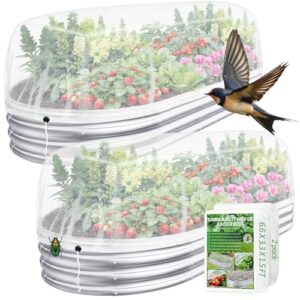
Fitting beds up to 4×8 feet in a single panel, Sunwinx cuts down on seams that weaker nets rely on. The fine PE mesh limits egg-laying pests while still letting rain through to the soil.
Before you buy, this beginner’s guide to sizing insect netting for garden beds walks through measuring your beds so the 4×8 panels fit without wasteful gaps.
It pairs with hoops or PVC frames, secured by clips, ties, or bungee cords when wind picks up. Pre-cut access slots let you harvest without pulling the whole cover. Dry it fully before storing to avoid mold, and expect several seasons of use with basic care.
| Best For | Home gardeners looking to protect raised beds, balconies, or small greenhouse plots from birds, insects, and small animals without blocking sunlight or rain. |
|---|---|
| Dimensions | 4 ft x 10 ft |
| Material | High Density Polyethylene (HDPE) |
| Main Use | Insect netting cover |
| Color | Silver |
| Reusable | Yes |
| Weight | 50 grams |
| Additional Features |
|
- Ultra-fine 0.04-inch mesh keeps out birds, insects, and small critters while still letting air, light, and rain through
- Adjustable dual drawstring toggles keep the cover snug and wind-resistant around beds
- Durable, UV-stabilized HDPE material is reusable and folds flat for easy storage between seasons
- No support frame included, so you’ll need extra stakes or hoops to keep it from sagging onto plants
- Sized for standard 6x3x1 ft raised beds, which may mean extra adjustments for oddly shaped or non-standard beds
- Can develop wrinkles from folding and may need a few days outside to relax and lay flat before use
6. Garden Insect Netting 10x50ft PE Mesh
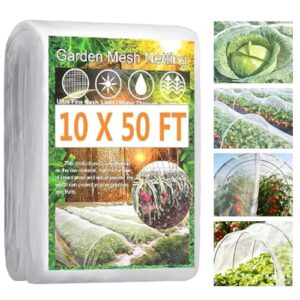
When bed length is your main headache, this 10×50 ft PE mesh solves it with one long continuous sheet instead of stitched-together patches. The 0.8mm by 1.0mm openings block aphids and thrips while still letting airflow and rain reach your soil.
HDPE construction with UV stabilizers holds up through a full growing season without turning brittle. At roughly a pound for the whole sheet, it’s light enough to drape solo, though pairing it with hoops keeps it off tender foliage.
| Best For | Gardeners with long raised beds or rows who want one continuous sheet of insect netting instead of dealing with multiple patched-together pieces. |
|---|---|
| Dimensions | 6.6 ft x 3.3 ft |
| Material | High Density Polyethylene (HDPE) |
| Main Use | Insect netting cover |
| Color | White |
| Reusable | Yes |
| Weight | Not specified |
| Additional Features |
|
- Fine 0.8mm mesh blocks aphids, thrips, birds, and small animals while still letting light, air, and water through
- Tear-resistant, weatherproof material that can be reused season after season
- Lightweight and easy to cut down to custom sizes for beds, greenhouses, or orchards
- Thin material can puncture or tear if it snags on sharp objects or gets hit by strong wind
- Needs to be properly staked or secured, or it can shift and develop holes over time
- Some buyers have reported uneven sizing or crooked cuts on arrival
7. Fippy Garden Netting Kit 10x50ft
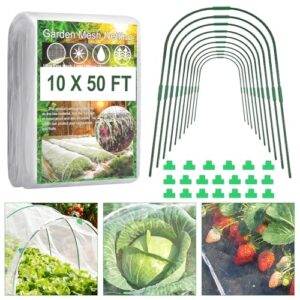
Full bed coverage matters most when you’re tired of stitching netting patches together, and this kit answers with one continuous 10x50ft sheet plus hoops built for the job. The ultra fine mesh deters small flying insects and burrowing pests alike while staying water permeable, so irrigation reaches roots evenly.
Assembly clocks in under 20 minutes, hoops resist bending in typical wind, and clips secure everything tight against gaps. UV-stabilized PE means it survives multiple seasons with proper storage.
| Best For | Gardeners looking to protect raised beds, vegetable patches, and fruit trees from insects, birds, and small animals with an affordable DIY tunnel setup. |
|---|---|
| Dimensions | 10 ft x 50 ft |
| Material | Polyethylene (PE) |
| Main Use | Insect netting cover |
| Color | White |
| Reusable | Yes |
| Weight | 8.8 ounces |
| Additional Features |
|
- Fine 0.8mm mesh blocks pests while still allowing airflow and sunlight through
- Includes steel-reinforced, rust-resistant hoops plus 20 clips for a complete kit
- Versatile enough for raised beds, orchards, greenhouses, and pasture screening
- Netting can sag over long rows and may need frequent readjusting in windy conditions
- Hoops can be tricky to assemble and may loosen in winds above 35 mph
- Netting material is fragile and may not hold up for multiple growing seasons
8. Garden Netting for Raised Beds
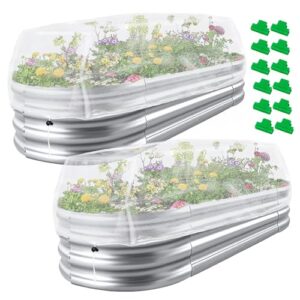
Two nets, one bag, and enough coverage for a pair of standard raised beds without any cutting or piecing together. Each piece measures 55.12 by 27.56 inches, built from UV-resistant HDPE mesh that shrugs off sun exposure season after season.
Drawstrings on both sides cinch the netting down, and 12 included clips handle anchoring on frames up to moderate thickness. Reviewers note the drawstring alone won’t seal every gap, so pairing it with soil or mulch along the perimeter closes that vulnerability.
| Best For | Home gardeners with a couple of standard raised beds who want a simple, no-cut way to keep birds, squirrels, rabbits, and insects off their vegetables, fruits, and flowers. |
|---|---|
| Dimensions | 10 ft x 50 ft |
| Material | Polyethylene (PE) and steel |
| Main Use | Insect netting cover |
| Color | White |
| Reusable | Yes |
| Weight | 2.88 kg |
| Additional Features |
|
- Fine 0.05in mesh blocks pests while still letting sunlight, air, and rain through
- UV-resistant HDPE mesh and a gentle fit protect delicate buds without added pressure
- Comes with adjustable drawstrings and 12 clips for extra anchoring on beds, planters, or greenhouses
- Drawstrings alone may leave small gaps where tiny pests can sneak in
- Included clips may be too small for larger tubs or thicker bed frames
- Lightweight mesh can tear if it catches on stakes, poles, or rough edges
9. Miracle-Gro Organic Outdoor Potting Mix 16 Qt
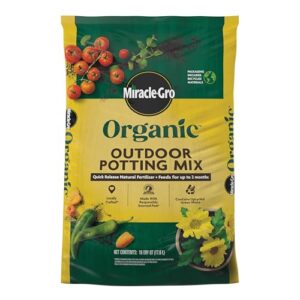
Every pest barrier is only as good as the soil underneath it, which is why this Miracle-Gro mix earns its spot on the list. The 16-quart bag fills one 12-inch container and includes quick-release fertilizer feeding plants for up to two months. OMRI listed and made from responsibly sourced peat, it suits vegetables, herbs, and flowers alike.
Pair it with your netting setup, and you’ve covered pests above and nutrition below—refresh it bi-annually to keep containers productive.
| Best For | container gardeners growing vegetables, herbs, flowers, annuals, or perennials in outdoor pots and raised beds. |
|---|---|
| Dimensions | 55.12 in x 27.56 in |
| Material | UV-resistant HDPE mesh |
| Main Use | Insect netting cover |
| Color | Not specified |
| Reusable | Yes |
| Weight | 0.34 kg |
| Additional Features |
|
- Quick-release fertilizer feeds plants for up to two months
- Made with 100% responsibly sourced peat and OMRI Listed for organic use
- Balances moisture retention with proper drainage for container growing
- May contain organic debris like twigs or bits of green waste
- Requires repotting twice a year to avoid soil compaction and nutrient loss
- Not suited for indoor use or seed starting without extra amendments
How to Choose Raised Bed Netting
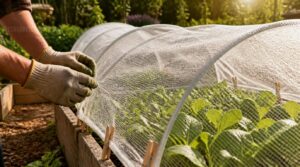
Picking the right netting isn’t just about grabbing the first roll you see at the garden center. Mesh size, material, and UV rating all affect how well your cover performs season after season. Here’s what to check before you buy.
Match Mesh Size to Pests
Pest size dictates mesh fineness, full stop. Aphid exclusion mesh sizes run 0.35–0.6mm, matching thrips blocking mesh and whitefly prevention mesh needs.
Brassica growers want cabbage fly mesh barrier protection near 0.8mm, while carrot fly mesh protection demands similar tightness.
Correct mesh size specification ensures reliable pest exclusion without choking airflow—your insect barrier should fit the bug, not just "seem fine" for general crop protection. For accurate pest exclusion, focus on aperture size in microns rather than mesh count alone aperture size in microns.
Compare Knitted and Woven Mesh
Once mesh fineness fits your target pest, fabric structure decides how that protection holds up.
Woven mesh uses interlaced wires for rigid, uniform pores and strong tear resistance along the grain.
Knitted mesh fabric stretches up to 20%, wrapping curved hoops easily, though pore sizes vary slightly and elongation can loosen fit over time.
Check UV Resistance Ratings
Fabric structure only tells half the story; sun exposure determines how long that mesh actually performs. Look for UV-stabilized netting with at least a 5 year UV resistance rating, since untreated polyethylene degrades within a single season.
Manufacturers boost UV degradation resistance through resin additives or coatings, so compare published ratings and certification standards before buying—cheap mesh rarely survives repeated summers intact.
Balance Airflow and Sunlight
Tighter weaves block more pests but choke off airflow, so aim for breathable mesh around 0.7-0.8mm rather than ultra-fine 0.6mm openings that cut circulation by roughly 25%.
- Prioritize sunlight transmission near 85-93%
- Choose netting with a slight crown for airflow
- Avoid overstretched mesh, which blocks extra light
- Look for ventilation panel design on hot days
- Check for stable microclimate performance
Measure Bed Coverage Correctly
Grab a flexible tape before buying anything. Lay netting flat over the bed, checking edge overhang of 2-4 inches beyond the frame for wind protection.
Confirm netting alignment at corners, test coverage tightness by pressing the center for sag, and verify size verification against bed dimensions.
Adjustable hoops and a drawstring allow a customizable fit on irregular beds.
Best Hoops and Frames for Netting
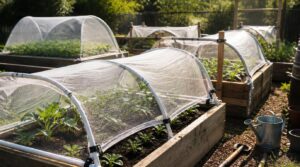
Netting only works as well as the structure holding it up, since sagging mesh invites the very pests you’re trying to keep out.
Sagging mesh invites the very pests it’s meant to keep out
The right hoop or frame keeps material off your plants, holds its shape through wind and rain, and adjusts as your crops grow taller.
Here’s how to match your support system to your bed size, crop height, and budget.
Fiberglass Hoops for Lightweight Covers
Why do so many raised bed growers switch to fiberglass? Rust-proof and flexible, these hoops resist splintering while bending without breaking during install. Key benefits:
- UV-stabilized coatings preserve strength
- Lightweight covers stay wind-resilient
- Curved arches shed rainwater
- 6-8 foot lengths fit standard beds
- Collapsible for off-season storage
That durability translates directly into reliable pest exclusion season after season.
PVC Tunnels for Standard Beds
Curved PVC hoops build a rigid tunnel over standard beds, spaced every 2 to 4 feet for structural stability against wind loads.
Clear film (10-16mm wall thickness) resists tearing better than a basic Garden Mesh Netting Kit alone.
Zippered end panels ease access, while pegged base anchoring holds firm—handy for 10×30 ft runs needing consistent coverage.
Metal Frames for Longer Beds
When beds stretch past 8 feet, fiberglass hoops can flex under wind load—metal frames won’t. Steel construction with reinforced corner brackets boosts structural stability across 10×30 ft coverage areas, while corrosion-resistant powder coating controls humid climates for years.
Weight capacity often reaches 1,000+ pounds, and pre-drilled holes ease assembly and fitment without specialty tools required.
Adjustable Supports for Tall Crops
Tomatoes don’t stay 12 inches tall for long.
Telescoping metal stakes stretch from 60 to 180 cm, with twist lock joints securing each stage and base plates preventing soil compaction. Height adjustment gaps at 5 cm intervals mean precise fits, not guesswork. Corrosion-resistant alloys outlast fiberglass hoops here, giving vining crops the structural stability a reusable garden cover demands season after season.
Prevent Mesh From Touching Foliage
Sagging mesh that grazes leaves invites pests right through the fabric, so mesh clearance height matters as much as mesh size.
Keep at least 6 inches between netting and your tallest foliage using:
- Fiberglass hoops for lightweight, adjustable hoops flexibility
- Proper frame spacing for structural stability
- Routine tension adjustment after rainfall
- Growth monitoring with weekly checks
- Firm edge anchoring for beginner-friendly setup
Installing and Accessing Raised Bed Covers
Buying the right netting means little if it isn’t installed correctly, since gaps and loose edges give pests an easy way back in.
Wind, watering, and daily harvesting all put your setup to the test, so a secure cover needs to hold firm without becoming a hassle to open.
Here’s what actually keeps your netting doing its job from planting day through harvest.
Seal Edges Against Crawling Pests
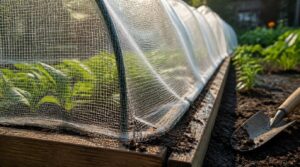
Crawling pests exploit even a half-inch gap. Ground contact seal matters more than mesh grade—bury edges 1-2 cm into soil, overlap panels 5-10 cm, and secure fasteners every 30 cm.
| Method | Function | Best For |
|---|---|---|
| Soil burial | Blocks crawlers | Loose beds |
| Overlap clips | Perimeter overlap | Multi-panel kits |
| Landscape fabric | Soil interface protection | Sandy soil |
Adjustable hoops help maintain tension.
Secure Covers Against Strong Winds
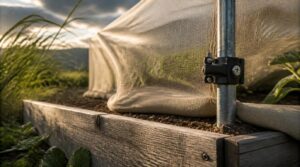
A gust can undo a perfect ground seal in seconds, so wind resistant fasteners at each corner matter as much as soil burial. Add sand-filled edge weights, keep tension even, and skip loose knitted mesh, which stretches 20% and funnels wind.
Pair UV-stabilized fabric with rigid, corrosion-resistant frames for a wind-resistant structure that prevents real wind damage.
Add Clips and Drawstrings
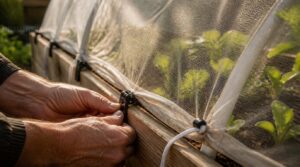
Weighted stakes only go so far, which is why clip placement spacing every 18 inches along the base gives netting real staying power. Match clip material to fabric type, PE or polyester, so fibers don’t tear.
Drawstring threading through hemmed channels, secured with quick tensioning, lets adjustable hoops flex without gaps forming.
Create Easy Harvesting Access
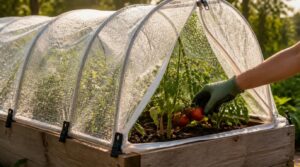
Clips and drawstrings hold netting tight, but you still need a way in without undoing all that work. An Access Door Design with a zipper entry system or roll-up flap solves this. Hinged panel access works too, sitting above ground to preserve your ground seal.
Look for kits offering easy assembly and adjustable hoops for easy harvesting access.
Avoid Overstretching Fine Mesh
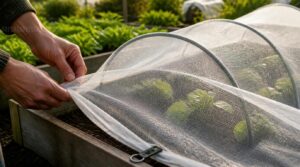
That access door only works long-term if the mesh around it stays put. Tension control matters most with ultra fine mesh, since tight weaves resist stretch less than open ones.
- Anchor hoops before pulling fabric taut
- Leave slack for wind load management
- Check corners after storms
- Re-tension rather than patching
Easy installation starts with restraint, not force.
Matching Netting to Garden Needs

Not every raised bed faces the same threats, so the right netting depends on what you’re actually growing and which pests keep showing up.
Your mesh choice, coverage style, and storage habits all shift depending on whether you’re fighting off thrips or just keeping cabbage moths away from broccoli.
Here’s how to match your netting to your garden’s real needs, season after season.
Ultra-fine Mesh for Tiny Insects
Whiteflies and aphids slip through most barriers, but a 0.25mm x 0.8mm ultra-fine mesh shuts that door while a knitted mesh fabric keeps airflow moving.
That precision matters most in tight beds where thrips and spider mites target seedlings. UV-stabilized polyethylene resists breakdown across seasons, so your fine mesh pest barrier keeps working without sacrificing the light transmission young plants need to thrive.
Standard Mesh for Flying Pests
When house flies and fruit flies are your main worry, standard mesh in the 1.0mm to 1.6mm range blocks adults while keeping real airflow moving.
That 18×16 weave count balances pest exclusion with ventilation, and woven fiberglass or polyester shrugs off tears. UV-stabilized coatings extend outdoor durability, fitting lightweight hoop frames without extra hardware.
Direct Draping Versus Netting Tunnels
Speed matters when pests appear fast: the Garden Netting Pest Barrier drapes flat in minutes, no hoops required. Tunnels take longer but reward you with better wind resistance and airflow.
Crawling pests exploit ground gaps, so edge sealing decides success either way. Fiberglass Hoops simplify frame storage between seasons, an easy assembly kit worth considering for raised bed gardening reliability.
Seasonal Reuse and Proper Storage
A season-ending net, rinsed and folded, will outlast one left crumpled in a shed corner. Remove soil, air dry completely, and check for tears before storage.
UV-stabilized netting still needs shade and a dry bin. Add labeling systems by bed and season, toss in a desiccant packet for moisture control, and rotation stays simple come spring.
Compare Cost and Long-term Value
The cheapest net isn’t always the best deal. Cost per square foot drops with larger rolls, but UV-stabilized, reusable mesh with strong wind resistance and pest exclusion efficiency lasts years longer.
Weigh initial investment vs lifespan: a durable cover, replaced rarely, beats a flimsy one bought three seasons running.
Frequently Asked Questions (FAQs)
How to protect raised beds from insects?
One gap in the corner undoes everything. Mesh fineness matched to your worst pest, sealed edges, and a sturdy frame keep crawling and flying insects out while sunlight and airflow still reach your crops.
How to cover a raised bed with netting?
Drape UV stabilized fabric over your hoops, pull taut for even mesh tension, then seal edges with soil or clips. Add a drawstring cover or access panel for harvesting, keeping netting off foliage throughout the growing season.
What are the alternatives to insect netting?
Fleece covers, row covers, and other physical barriers work well for crop protection. Pair them with cultural management, sacrificial crops, and IPM tools like pheromone traps for organic gardening that reduces pesticide use without sacrificing yield.
What is the best netting for garden insects?
Think of mesh like a bouncer checking IDs: too loose and pests slip in, too tight and airflow suffers. The best choice is UV-stabilized 7mm-8mm mesh, blocking thrips and aphids while keeping ventilation balanced.
Can insect netting be used in winter?
Yes, above freezing temperatures still bring active pests. Rigid hoops give snow load resistance and airflow, while sealed edges add pest overwintering control.
Reusable, UV-stabilized mesh doubles as a dependable frost barrier setup for winter crop protection.
Does netting affect pollination of flowering vegetables?
A closed door keeps out thieves but also friends bearing gifts. Mesh size under 1mm blocks bees too. Remove covers during bloom, or choose larger mesh, to protect airflow, sunlight, and fruit set.
Can netting be washed and reused safely?
Washed and stored properly, netting lasts through seasons of reuse. Hand wash with mild soap, air dry fully, and store in a breathable container; UV-stabilized fabric resists sun damage but check for tears before redeploying each year.
Whats the difference between insect netting and shade cloth?
Insect netting prioritizes fine mesh for pest exclusion with minimal shading, while shade cloth uses UV-stabilized weaves rated by shade percentage, focusing on light and heat control rather than blocking aphids, thrips, or whiteflies.
Will netting protect against larger pests like rabbits?
Rabbits can flatten a bed overnight like a freight train through lettuce. Standard mesh won’t stop them; you need rabbit mesh size under 1 inch, an underground barrier, and taut hoop support for real animal barrier protection.
Conclusion
A garden without protection is a buffet with the doors thrown wide open. Choosing among the best insect netting covers for raised beds isn’t about finding one perfect product; it’s about matching mesh size, frame strength, and storage habits to your own plot’s pressures.
Get the fit right, and pests hit an invisible wall. Your kale, your carrots, your harvest, they stay yours. That’s the whole point of the barrier.
- https://gardeningbeyond.com/best-net-for-planting/
- https://smartgardenguide.org/garden-netting-for-raised-beds/
- https://keengarden.com/garden-netting-for-raised-beds/
- https://www.duranet.com/en/the-effect-of-solar-radiation-on-plastic-nets-and-tarpaulins-2/
- https://www.dm-folien.com/en/products/netting/shade-nets