This site is supported by our readers. We may earn a commission, at no cost to you, if you purchase through links.
A single cabbage moth can lay over a hundred eggs on your brassicas in one afternoon, and you won’t spot a single one until the leaves turn to lace. That’s the moment most gardeners discover insect netting covers—usually too late for that crop, but just in time for the next one.
The good news: netting is one of the few pest controls that works without sprays, timing, or guesswork. Pick the right mesh, secure it properly, and pests simply can’t reach your plants.
Get the mesh size, frame, and installation wrong, though, and you’ll trap heat, block pollinators, or watch the whole thing collapse in a windstorm. Here’s how to get it right the first time.
Table Of Contents
- Key Takeaways
- Choose Mesh Size for Target Pests
- Measure Beds and Build Supports
- Install Insect Netting Step-by-Step
- Maintain Covers Through Every Season
- Top 6 Insect Cover Products Compared
- Frequently Asked Questions (FAQs)
- What are the alternatives to insect netting?
- What size mesh is best for insect netting?
- Does rain go through insect netting?
- How to attach insect netting?
- Does insect netting work against slugs or snails?
- Can netting be used on fruit trees too?
- Does netting protect plants during hailstorms or heavy rain?
- Can netting be left on year-round without removal?
- Conclusion
Key Takeaways
- Match your mesh size to your worst pest threat—0.6mm stops thrips, 1.0mm blocks root flies, 1.35mm handles moths, and 2.0mm keeps out bigger critters like rabbits and birds.
- Build sturdy PVC hoop frames with proper clearance for mature plants, then bury the netting edges 6-12 inches deep to stop pests from sneaking in underneath.
- Since fine mesh keeps bees out too, you’ll need to lift the netting during bloom time so squash, cucumbers, and other pollinator-dependent plants can still set fruit.
- Weekly checks for tears and gaps, along with end-of-season washing and dry, dark storage, will keep your netting working well for years instead of falling apart after one season.
Choose Mesh Size for Target Pests
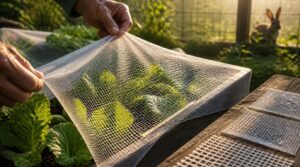
Not all mesh is created equal, and picking the wrong size is like locking your front door but leaving a window wide open. The hole dimensions decide exactly which pests get turned away and which slip right through. Here’s how the sizes break down, from the tiniest thrips to the toughest rabbit.
Choosing the wrong mesh size is like locking the front door while leaving a window wide open
0.6mm Mesh for Tiny Insects
Thrips and whiteflies are tiny enough to slip through screens that stop bigger bugs — 0.6mm micromesh is your answer. It blocks these pests while still letting 75-85% light transmission through.
If frost is also a concern for your seedlings, pairing that fine mesh with cold weather cloches for beginner gardeners can keep young plants protected through unpredictable spring temperature swings.
- Blocks thrips, whiteflies, no-see-ums
- Preserves airflow, limits humidity pockets
- UV-stabilized fabric resists sun damage
Expect minor airflow restriction and a slight microclimate temperature rise underneath.
For effective insect protection, understanding mesh size measurement systems is essential when selecting the right screen density. mesh size measurement systems
1.0mm Mesh for Root Flies
Bump the mesh up to 1.0mm and you’ve got a physical barrier against root flies — cabbage root fly, carrot rust fly, the underground egg-layers.
| Mesh | Blocks | Light |
|---|---|---|
| 0.6mm | Thrips | 80% |
| 1.0mm | Root flies | 85%+ |
| 1.35mm | Moths | — |
Bury edges 5cm deep; gaps invite trouble.
1.35mm Mesh for Moths
Cabbage moths and their kin need a finer barrier — that’s where 1.35mm mesh comes in, built for moth egg prevention on brassicas.
It still allows solid light transmission and airflow optimization, so plants won’t overheat. Choose UV-stabilized mesh for durability against sun breakdown. This size delivers strong pest exclusion effectiveness while keeping your insect netting breathable, outperforming any basic floating row cover.
2.0mm Mesh for Larger Pests
Grasshoppers, beetles, even nosy birds and rabbits — that’s the job for 2.0mm mesh, stepping up where finer netting isn’t needed.
- Blocks larger pests without smothering airflow
- Stainless steel or polymerized fiber resist weathering
- Woven, uniform openings keep pest exclusion efficiency consistent
- Edge sealing methods stop gaps pests exploit
- Works for multiple seasons with proper mesh durability
It’s the workhorse size for open beds facing bigger trouble.
Balance Airflow, Light, and Protection
Here’s the tradeoff nobody mentions upfront: finer mesh means better pest exclusion but weaker airflow management and light transmission.
| Mesh Size | Tradeoff |
|---|---|
| 0.6mm | Best pest block, least airflow |
| 1.35mm | Balanced protection |
| 2.0mm | Best airflow, least fine-pest control |
Choose UV stabilized mesh matching your worst pest threat, not the finest option available — your plants need that airflow-light balance too.
Measure Beds and Build Supports

Picking the right mesh is only half the job. Now you need a frame that holds it up properly, keeps it off your plants, and fits the bed you’ve actually got. Here’s how to measure, choose your support style, and get everything built to last.
If you’re growing squash or cucumbers, remember to pull the mesh back during their brief daily pollination window, or better yet, pair your frame with natural pest control methods that don’t block pollinators.
Calculate Netting Size and Allowance
Guessing your netting size wastes money and leaves gaps for pests. Measure length and width of each raised bed, then add allowance:
- 5% for calm, small beds
- 10% for irregular shapes or hoop-wrapped nets
- 10-15% in windy spots
- 5% for canopy growth
- Round up to the nearest foot
That overlap and tension allowance stops shortfalls before they start.
Choose Hoops or Floating Covers
Before you buy anything, decide: hoops or a floating row cover? Floating covers rest right on plants, quick to lay down but prone to chafing in wind.
A supported tunnel built on PVC pipe frames resists wind uplift, keeps foliage clear for garden bed access, and lasts longer—worth the extra setup time for durability.
Size Frames for Mature Plants
A frame sized too tight chokes your plants before pests even show up. Plan for mature canopy width plus 20-30% clearance—sprawling squash or cucumbers need 4-6 foot diameter hoops, while tomatoes and peppers want 5-6 feet of frame height for vertical growth.
Space frames to match mature plant spacing, and expect to adjust hoop height seasonally as growth accelerates.
Build Stable PVC Hoops
Wobbly hoops mean sagging netting, and sagging netting means pests find a way in. Use 1-inch schedule 40 PVC for main hoops, spaced every 3-4 feet, with 2-3 cross braces per 8-foot span.
Bury ends 6 inches deep or anchor with stakes. Cement PVC connectors for permanent joints; use snap clips if you’ll disassemble often. Preassemble flat first to check alignment.
Customize Irregular Garden Beds
Curved beds throw a wrench in standard PVC hoops, so bend flexible irrigation tubing to follow the contour instead. Mark the outline with a hose first, then measure garden bed dimensions at the widest points for netting allowance.
Use rot-resistant cedar edging where soil meets the supported tunnel, keep 18-inch paths for access, and rotate crops each season to protect soil health.
Install Insect Netting Step-by-Step
With your beds measured and hoops standing firm, it’s time for the main event. This is where careful hands make all the difference between a snug, pest-proof cover and a flappy mess that lets bugs waltz right in.
Here’s exactly how to cut, drape, and secure your netting so it stays put through wind, rain, and everything else the season throws at it.
Cut Netting Without Fraying
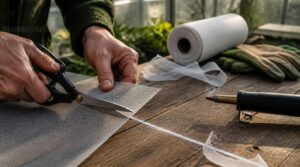
Cut slow and steady with sharp fabric scissors, following a marked chalk line, to keep edges crisp.
For UV-stabilized mesh or polypropylene, a hot knife seals as it cuts, fusing fibers instantly. No hot knife? Trim excess, then run a heated edge sealer along the line. Let it cool fully before handling—rushing invites fraying and re-melting.
Drape Netting Over Supports

With clean edges cut, lay netting over your garden hoops so it rests on top, draping evenly down each side—extend it slightly beyond hoops for secure edge sealing.
Guide it over curves gently, keeping frame tension balance even.
- Center netting fully
- Check overlap on ends
- Ease down each hoop
- Leave a liftable flap
Clip Netting Firmly in Place
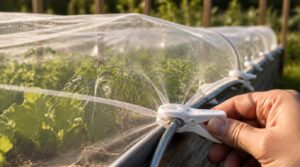
Once netting’s draped, grab your garden clips and start at the corners—this locks a taut perimeter before you tackle the sides.
Space clips every 15-20 inches, using smooth-jawed, weather-resistant clips that won’t snag UV-stabilized mesh.
Adjust tension as you go, and give it a quick wind resistance test—flutter means loose clips.
Seal Every Edge and Corner
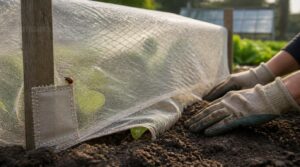
Clips hold the top taut, but bugs sneak in low.
Bury the bottom edge 6-12 inches deep, or run a soil burial method along stakes.
Add reinforced patches at corners, your weakest leak points, and leave one flap loose as an access point for weeding.
Reinforce Covers Against Wind
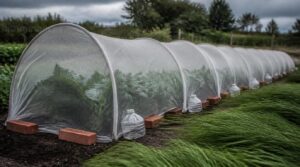
Gusts are the real enemy here, not bugs. Space hoops 1 to 1.2 meters apart, stake them firmly, and keep tops rounded so wind slides off instead of tearing mesh.
Add weighted side ballast—bricks, water jugs—along the soil burial method line.
Check garden staples and tension weekly; loosen slightly in calm spells, tighten before storms roll through.
Maintain Covers Through Every Season

Getting your netting installed is only half the job done. Keeping it working well through a whole growing season takes a bit of ongoing attention, from watching for gaps to knowing when to store it away. Here’s what you need to check and do along the way.
Manage Pollination Under Netting
Bees can’t visit blossoms through fine mesh, so squash and cucumbers may set no fruit at all without help. Lift the ends during bloom to open pollination windows, then reseal after visits. Watch flowers daily for pollen deposits, and coordinate with local beekeepers on timing.
Companion planting nearby draws pollinators closer once you open the covers.
Monitor Heat and Plant Growth
Rarely do beginners realize how fast a tunnel can turn into an oven. Track canopy temperature with an infrared read, aimed downward at leaves, and set heat stress alerts if readings climb 2-5°C above air temp.
Watch growth rate daily; slowed leaves signal poor airflow circulation, meaning it’s time to vent and restore microclimate control.
Check Tears and Pest Gaps
A single 2cm gap is all a flea beetle needs to move in.
Walk your tunnel weekly:
- Inspect edge tears near seams
- Check gap size at overlaps
- Examine fixation points and clips
- Evaluate light flow for hidden tears
- Review seasonal checks after storms
Keep a patch kit handy—thorough netting inspection now beats replanting later.
Clean and Repair Netting
End of season? Time to wash, not just fold and forget. Wash netting in mild soap and lukewarm water, rinse fully, then check for damage while it’s still wet—tears show up easier against light.
Patch small tears from the inside with matching mesh and a whip stitch. Grab your patch kit, dry completely before storage, and your UV-stabilized mesh will outlast the guesswork.
Store Covers Away From Sunlight
Sunlight is the enemy once mesh comes off the hoops. UV degradation breaks down fibers fast, so pick a cool dry place, avoid heat sources like garages near appliances, and skip clear bins.
Breathable storage bags beat sealed plastic for airflow. Label storage containers by size.
That small habit protects your long-term investment, keeps UV-stabilized mesh strong, and cuts waste reduction costs next season.
Top 6 Insect Cover Products Compared
Knowing the mesh math and hoop-building basics only gets you halfway there, you still need to pick actual products off the shelf.
Some covers excel at fine pest exclusion, others are built for heavy-duty fencing or flexible plant support, and the right pick depends on what you’re growing and where.
Here’s how six popular options stack up against each other.
1. Ultra Fine Garden Netting 10x33ft 2 Pack
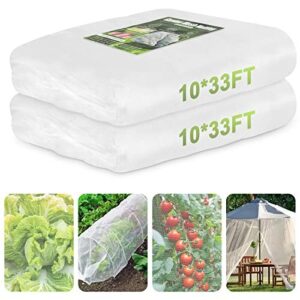
If you want one product that covers most bases, this is it.
The 1.0mm mesh blocks thrips, small moth larvae, and leafhoppers while still letting bees in when needed.
Two 10×33 foot rolls give you enough material for several beds, and the UV-stabilized polyethylene holds up across seasons without turning brittle.
Drape it over hoops, weigh the edges with stones, and you’ve got a breathable, see-through barrier that survives light snags better than flimsier fabrics.
| Best For | Home gardeners who want dependable, season-after-season protection for vegetables, fruits, and flowers without blocking light, air, or water. |
|---|---|
| Material | Polyethylene |
| Color | White |
| Weight | 1.08 kg |
| Reusable | Yes |
| Cuttable To Size | Yes |
| Primary Setting | Garden/greenhouse |
| Additional Features |
|
- Ultra-fine 0.04 inch mesh keeps out insects, birds, and small animals like rabbits and squirrels
- UV-stabilized polyethylene resists brittleness and holds up across multiple growing seasons
- Highly permeable design lets pollination and irrigation continue without removing the netting
- Fine mesh can block bees from reaching plants unless it’s lifted periodically
- May snag or tear if it rubs against rough surfaces like splintered wood
- Needs secure anchoring, or wind and animals can displace it or cause entanglement
2. Agfabric Floating Row Cover 7×50 Feet
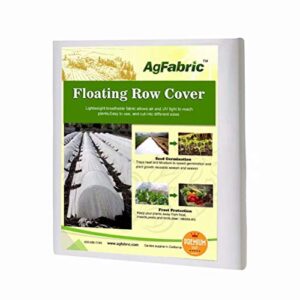
If frost worries you more than bugs, this is your fabric.
Agfabric’s row cover is spun polypropylene at 0.55 oz/yd², thin enough for 85% light transmission but tough enough to shield against 28°F frosts, wind, and hail.
Lay it straight over seedlings for quick protection, or drape it over hoops for tender plants that need breathing room.
Just watch for snags. That featherweight fabric tears easily on rough edges, so stake it down properly and store it out of direct sun between seasons.
| Best For | Gardeners who need reliable frost, wind, and pest protection to extend their growing season without blocking sunlight from reaching their plants. |
|---|---|
| Material | Polypropylene fabric |
| Color | White (natural) |
| Weight | 1.25 lbs |
| Reusable | Yes |
| Cuttable To Size | Yes |
| Primary Setting | Garden/greenhouse |
| Additional Features |
|
- Provides up to 28°F frost protection while still allowing 85% light transmission
- Lightweight and versatile enough to lay directly over plants or drape over hoops
- Lets air and moisture through, supporting faster germination and healthy growth
- Thin 0.55 oz fabric can tear easily if snagged on rough or sharp surfaces
- Needs to be secured with weights, soil, or staples to keep it from blowing away
- Less durable than heavier fabric options during extreme weather conditions
3. Vivosun Elastic Trellis Netting for Climbing Plants
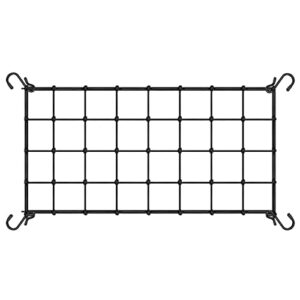
Not every cover job is about keeping bugs off leaves — sometimes it’s about holding the plant itself up.
Vivosun’s elastic netting uses 3.9-inch square mesh woven into stretchy fabric, so tomatoes, cucumbers, and peas climb without sagging. Four rustproof S-hooks anchor it to any frame, and the elastic lets you tighten tension as vines thicken.
Cut it to fit oddball beds, fold it flat after harvest, and it’s ready again next season.
| Best For | Home and greenhouse gardeners growing climbing plants like tomatoes, cucumbers, peas, and flowering vines who want a reusable, adjustable support system. |
|---|---|
| Material | Plastic/steel |
| Color | Black |
| Weight | 0.13 kg |
| Reusable | Yes |
| Cuttable To Size | Yes |
| Primary Setting | Indoor grow tent/garden |
| Additional Features |
|
- Elastic tension keeps heavy fruits and flowers supported without sagging
- Reusable and foldable for easy storage between growing seasons
- Rustproof stainless steel S-hooks make setup on frames or poles quick and secure
- Needs a sturdy structure to anchor to, or lightweight poles may get pulled inward
- Wide mesh openings aren’t ideal for small-leafed or delicate climbers
- Outdoor UV exposure can wear down the elastic material over time
4. CKVIHAV 1/2 Inch Schedule 40 PVC Pipe 17 Inch
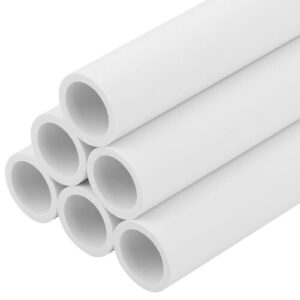
Trellis netting still needs something rigid behind it, and that’s where these pipes earn their keep.
Each 17-inch length has a 0.625-inch outer diameter and a nominal 1/2-inch bore, small enough for tight hoop bends over narrow beds. Schedule 40 construction keeps them rigid under load, and plain ends solvent-weld to standard fittings for leak-free joints. Rated to 140°F short-term, they shrug off summer sun without warping — a solid, boring workhorse for anyone tired of sagging bamboo stakes.
| Best For | DIY enthusiasts and gardeners looking for a lightweight, weather-resistant pipe for greenhouse frames, garden supports, furniture builds, and similar non-pressurized projects. |
|---|---|
| Material | PVC plastic |
| Color | White |
| Weight | 0.73 kg |
| Reusable | Yes |
| Cuttable To Size | Yes |
| Primary Setting | Greenhouse/garden structures |
| Additional Features |
|
- UV, impact, and corrosion resistant, so it holds up well both indoors and outdoors
- Smooth surface allows for clean cuts and secure solvent-welded connections
- Meets ASTM D2466 and D1784 standards and complies with NSF requirements
- Not rated for pressurized plumbing systems, even with the Schedule 40 rating
- Short 17-inch lengths may require extra joints on larger projects, adding potential leak points
- Higher price per inch compared to buying full 10-foot lengths and cutting them down
5. Feitore Deer Fence Netting 7x100ft
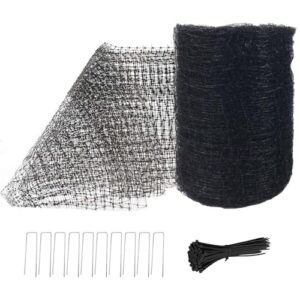
Deer aren’t the only pests raiding your garden — this roll experiences birds too, and at 7×100 feet, it covers serious ground.
The 3/4-inch polypropylene mesh won’t stop thrips or moths, but for larger animal pressure, it’s UV-stabilized, waterproof, and stays flexible over curved beds. Cut it with scissors, no fraying. It comes with nails and cable ties, drapes over hoops easily, and blends in — black netting practically disappears once installed. Reusable season after season, assuming raccoons don’t test its limits.
| Best For | Gardeners and homeowners who need an affordable, easy-to-install barrier to keep deer, birds, and similar animals away from fruit trees, berries, and vegetable gardens. |
|---|---|
| Material | Polypropylene |
| Color | Black |
| Weight | 0.78 kg |
| Reusable | Yes |
| Cuttable To Size | Yes |
| Primary Setting | Garden/orchard |
| Additional Features |
|
- Covers a large area (7×100 feet) and can be cut to custom sizes with scissors
- Nearly invisible once installed, so it won’t disrupt your landscape’s look
- Comes with nails and cable ties included, making setup straightforward
- Lightweight material may tear if raccoons, cats, or other aggressive animals test it
- Needs to be fastened securely, or it can sag or shift in windy conditions
- Not built for heavy-duty containment or high-impact animal barriers
6. Gardening Gift Plant Lover Blanket
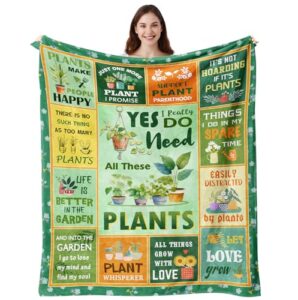
Not every item on this list keeps bugs out — this one’s just for you. The Gardening Gift Plant Lover Blanket is a 50×60 inch polyester throw with botanical prints, meant for couch naps after a day of hoop-bending and netting-stapling.
It’s machine washable and lightweight, though don’t expect heavy insulation. Wash before first use to shake out packaging creases. Honestly, after building tunnels all season, you’ve earned a blanket that celebrates the obsession instead of fighting pests.
| Best For | Gardeners, plant lovers, moms, and grandmas who want a cozy, funny throw blanket for relaxing on the couch, bed, or garden after a day outside. |
|---|---|
| Material | Polyester |
| Color | Green |
| Weight | Lightweight |
| Reusable | Yes (washable) |
| Cuttable To Size | No |
| Primary Setting | Garden/home |
| Additional Features |
|
- Soft, skin-friendly polyester that’s machine washable with cold water and gentle detergent
- Fun, vivid green design with plant motifs and funny quotes that plant lovers will appreciate
- Lightweight and versatile enough for year-round use on the sofa, bed, or garden
- Thin construction means it won’t provide much insulation in cold weather
- May arrive with temporary creases from vacuum sealing
- Needs to be washed before first use to remove wrinkles
Frequently Asked Questions (FAQs)
What are the alternatives to insect netting?
No mesh handy? Try floating row covers, fruit cages with welded mesh, or burlap toppers. Reflective mulches and companion planting also confuse pests behaviorally, while beneficial nematodes and crop rotation tackle soil-dwelling troublemakers without a single yard of fabric.
What size mesh is best for insect netting?
Honestly, there’s no single magic number that stops every bug on earth. Your best bet: 6mm to 0mm mesh experiences thrips, aphids, and root flies, while staying loose enough to keep airflow and light where your plants need them.
Does rain go through insect netting?
Yes, rain passes right through. Mesh between 97mm and 5mm lets water reach your soil while blocking pests. Light rain just dampens the surface; heavy downpours soak through since standard netting never fully blocks water flow.
How to attach insect netting?
Picture netting billowing loose in the wind, tearing at the seams. Stop that by clipping netting to hoops every 6-12 inches with zip ties, then burying edges 1-2 inches into soil for a pest-tight seal.
Does insect netting work against slugs or snails?
It works, provided you seal every edge tight to the soil. Fine mesh blocks their mouthparts, and a continuous barrier stops crawling entry—though it won’t kill them, just keeps them off your seedlings.
Can netting be used on fruit trees too?
Trees don’t read the rulebook that says netting is only for veggie beds. Build a frame clearing branches by 30cm, space hoops 5-5 meters apart, and drape netting for solid bird and insect protection.
Does netting protect plants during hailstorms or heavy rain?
Insect mesh isn’t rated for hail, but a taut, well-anchored cover still absorbs impact, protects foliage from bruising, and blocks wind-driven rain from shredding leaves—so it’s a decent backup shield, not a true hail net.
Can netting be left on year-round without removal?
Yes, but it’s not maintenance-free. UV-resistant netting can stay put multiple seasons if you inspect monthly, watch for sagging that traps moisture, and mind snow or wind load—otherwise you risk fungal disease and torn seals.
Conclusion
An ounce of prevention beats a pound of cure, and that’s the whole philosophy behind netting your beds.
Master insect netting covers for beginners, and you trade seasonal panic for quiet confidence: the right mesh, taut edges, and sturdy hoops do the job sprays never could.
Check your covers weekly, patch small tears before they become highways for pests, and your brassicas will grow lace-free, untouched, and entirely yours.