This site is supported by our readers. We may earn a commission, at no cost to you, if you purchase through links.

A watermelon plucked one day too early never sweetens up on the counter. Its sugars stop climbing the moment the vine lets go, no matter how long it sits in your kitchen. Pick a peach too soon, though, and it’ll still soften and perfume your whole house within days.
That difference trips up even seasoned gardeners. Knowing the signs fruit is ready to pick means reading color, firmness, smell, and stem tension together, not just eyeballing size. Master those cues and you’ll stop guessing, and start harvesting fruit at its true peak.
Table Of Contents
- Key Takeaways
- How to Tell Fruit is Ready
- Ripeness Signs by Fruit Type
- Which Fruits Ripen After Picking?
- How to Pick Fruit Properly
- Ripen and Store Picked Fruit
- Frequently Asked Questions (FAQs)
- How do you know when fruit is ready to pick?
- How do farmers know that the fruit is ready to be picked?
- What fruit will not ripen after being picked?
- Are fruits alive before being picked?
- Can you eat fruit picked too early?
- Why does fruit taste bland after picking?
- Does washing fruit before storage affect ripening?
- Can overripe fruit still be used safely?
- How long does picked fruit stay fresh?
- Conclusion
Key Takeaways
- Know whether your fruit is climacteric (like bananas, avocados, and tomatoes) or non-climacteric (like strawberries, citrus, and grapes), since only climacteric fruit keeps ripening after picking.
- Judge ripeness using multiple senses together—color, gentle firmness, sweet aroma, surprising weight, and easy stem release—rather than relying on any single cue.
- Handle fruit carefully after harvest by cradling it, sorting out damaged pieces right away, and avoiding stacking to prevent bruising and spoilage.
- Speed up ripening at home with room-temperature storage, a paper bag, or a ripe banana for extra ethylene, then refrigerate promptly once fruit peaks to extend freshness.
How to Tell Fruit is Ready
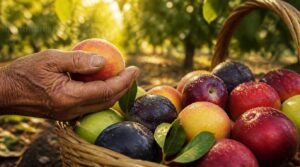
Knowing when to pick fruit takes more than a quick glance. Your senses of sight, touch, and smell all play a role in reading ripeness correctly. Here are the five key signs to check before you harvest.
If you want a deeper dive into each of these cues, this guide to identifying fruit ripeness before harvest breaks down what to look, feel, and smell for.
Mature Color and Full Size
Color tells the truth before your fingers ever touch the fruit. Ground color changes from green to the variety’s true hue, size stops climbing, and shape rounds out completely.
Check for:
- Deep red strawberries, no green tips
- Golden pear skin, not olive
- Uniform blush across the surface
- Diameter matching your harvest guide
Full size and color uniformity together confirm fruit maturity and proper harvest timing.
Peppers should be harvested when they show a firm texture when ripe.
Gentle Firmness and Texture
Your fingers know things your eyes can’t. Once color looks right, switch to a gentle squeeze technique: press near the stem with your thumb, feeling for yielding resistance balance rather than mush.
Your fingers know things your eyes can’t—a gentle squeeze near the stem reveals ripeness eyes alone would miss
Ripe fruit rebounds quickly. Underripe fruit resists completely. Texture softening should feel even, not soft-on-one-side, hard-on-the-other. Weight matters too — a heavy fruit signals dense, juicy flesh underneath.
Sweet, Fragrant Aroma
Your nose is the next test. Ripe fruit gives off a sweet perfume, produced by esters, terpenes, and lactones that intensify as sugars concentrate.
- Peaches smell like nectar
- Melons turn musky at the blossom end
- Citrus offers bright, sunny notes
- Berries release floral, fruity aroma
No scent means wait. Smell, touch, and weight together confirm true readiness.
Heavy, Juicy Feel
Weight matters as much as smell. Lift the fruit: ripe ones feel surprisingly heavy for their size, dense with water and soluble sugars packed into the flesh.
If you’re unsure how much heft to expect, this guide to judging fruit ripeness by weight and firmness breaks down the cues worth trusting.
That heaviness signals plump, juicy cells ready to rupture with a gentle squeeze. Even citrus, often overlooked, gets noticeably heavier as juice content peaks — a dense, satisfying clue hiding right in your palm.
Easy Stem Release
One quick test tells you everything: try the stem looseness test before you pick anything. Cup the fruit, apply the gentle twist method, and feel for minimal resistance release.
A dry stem base and clean break point mean stem detachment happens easily. If it resists, that’s stem slip telling you to wait — the fruit only releases easily from the branch once truly ripe.
Ripeness Signs by Fruit Type
Every fruit has its own way of telling you it’s ready. Apples signal differently than melons, and berries follow their own rules entirely. Here’s what to watch for, fruit by fruit.
Apples and Pears
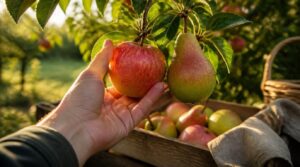
Apples and pears reveal ripeness through color shift, firmness, aroma, and stem release. Ripe apples yield slightly under gentle pressure; pears soften first at the neck.
- Sweet fragrance intensifies near peak ripeness
- A gentle twist should release the stem easily
- Weight matters—a heavy fruit signals juiciness
Both fruits store best around 1–4°C with high humidity.
Peaches, Plums, and Apricots
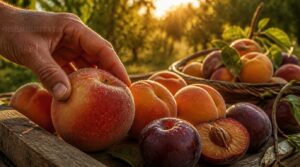
Stone fruits share a family resemblance in how they announce readiness. Color blush development drives the clearest signal—green giving way to gold, red, or purple.
The Pressure Yield Test matters most near the pit, where flesh softens first. Run an Aroma Intensity Check: sweet fragrance means peak ripeness. Stem release ease and a Sugar Weight Signal—heavier fruit—confirm it.
Berries and Grapes
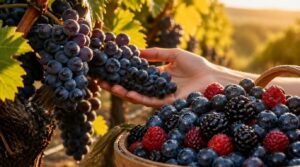
Small fruit, big signals. Blueberries turn deep blue-purple with a whitish bloom; grapes plump and hold firm to gentle squeezing.
- Blackberries and raspberries pull free easily, no tugging required
- Grape sugar peaks as clusters reach veraison
- Berries stay lower in sugar than ripe grapes
- Both bruise easily, so handle with care
Melons and Watermelons
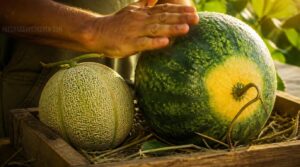
Thump a melon and listen: a hollow sound means it’s ready. Cantaloupes show rind color change from deep green to yellow-green, with raised netting and a stem that slips free. Check the blossom end for slight yield and a sweet aroma.
Watermelons reveal their field spot turning creamy yellow, tendrils browning, and surprising weight for their size.
Citrus Fruits
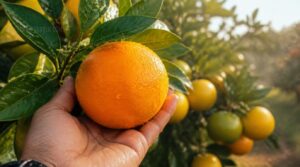
Citrus won’t budge on the branch, even dead ripe, so color is your best clue, not looseness. Watch for full orange, yellow, or green-to-gold shifts. Skin should look taut, not wrinkled.
Lift one: ripe fruit feels especially heavy for its size, dense with juice. A faint sweet aroma near the stem confirms readiness better than any tug test.
Which Fruits Ripen After Picking?
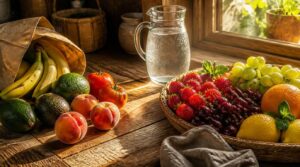
Not every fruit needs to hang on the plant until the last minute. Some keep ripening long after you’ve picked them, while others stop the moment you cut them loose. Here’s how to tell which category yours falls into.
Climacteric Fruit Behavior
Once picked, climacteric fruits keep working. An ethylene production surge triggers a respiratory burst peak, softening cell walls and shifting pigments. Three drivers matter most:
- Enzymatic biosynthesis control via ACC synthase and oxidase
- A self-feeding hormonal interaction network
- Strong postharvest responsiveness to storage conditions
This is why bananas, avocados, and tomatoes finish their ripening process off the plant, powered by ethylene gas.
Non-Climacteric Fruit Behavior
Strawberries, citrus, and grapes play by different rules. Nonclimacteric fruits skip the ethylene burst entirely, relying instead on abscisic acid and shifting auxin levels to guide ripening.
On-plant ripening happens gradually: color deepens, firmness eases, sugars accumulate, and aroma builds slowly. Once detached, these fruits stall. That’s why they need to reach peak quality before harvest, not after.
Picking Mature Versus Ripe
Knowing when a fruit turns from mature to truly ripe changes everything about harvest timing.
Mature indicators include full size, background color shift, and slight give under pressure.
Ripe signs add deep, uniform color, easy stem release, and strong aroma.
Sensory evaluation of all three cues together prevents picking too early or missing the window entirely.
Fruits Needing Vine Ripening
Some crops simply won’t compromise. Grapes, melons, and stone fruits rely on sugar accumulation on vine through ongoing sap transport, something no fruit bowl can replicate.
Cantaloupes announce readiness through stem detachment, slipping clean at full maturity. This vine-attached window drives real aroma development attached to the fruit, meaning early picks taste flat, thin, and forgettable.
How to Pick Fruit Properly
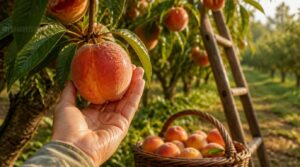
Spotting ripeness is only half the job; how you harvest matters just as much. The wrong grip or a careless tug can bruise fruit before it even reaches your kitchen. Here’s what to keep in mind once you’re ready to pick.
Choose The Best Harvest Time
Timing is everything. Pick on dry, cool mornings when temperatures are stable, firmness and sugars hold best.
Watch weather windows closely; rain or humidity beforehand raises spoilage risk.
Combine color change, aroma, and a quick weight test with stem detachment checks.
Coordinate labor and harvest scheduling around each block’s fruit maturity curve for peak flavor.
Twist, Lift, or Snip
Method matters as much as timing. Twist gently, no more than a quarter turn, for a clean break with no torn calyx. Lift upward, firm but brief, checking resistance first.
For thick or delicate stems, snip at an angle with sanitized bypass pruners. Match technique to fruit detachment ease and stem condition.
Prevent Bruising and Damage
Once fruit leaves the branch, every touch counts. Cradle each piece with both hands, never toss it into a bin.
Line crates with foam or palm fiber, sort by size so heavier fruit doesn’t crush softer specimens, and skip stacking altogether.
Padded gloves protect delicate skin at the stem end and suture line, where bruises hide deepest and show up days later.
Sort Damaged Fruit Immediately
One bad apple really does spoil the bunch. Cull damaged fruit within minutes, since punctures and bruises invite mold growth and bacterial spread to healthy neighbors.
This is Quality Control at its most basic: separate compromised fruit from sound lots right at harvest. Skipping this step during Fruit Inspection lets rot spread during transport, dragging down your entire yield’s marketability.
Ripen and Store Picked Fruit

Picking fruit at the right moment is only half the job, since what happens next determines whether it reaches its full flavor.
Some fruit needs a little help finishing the ripening process, while other fruit just needs proper storage to stay fresh.
Here’s how to get the timing and conditions right, from countertop to refrigerator.
Room-Temperature Ripening
Your kitchen counter is a ripening chamber. Room temperature (68–75°F) speeds up ethylene gas production, softening texture and deepening color in climacteric fruit like bananas and tomatoes.
Keep humidity moderate — too damp invites mold, too dry causes shriveling. Aroma intensifies as sugars concentrate. Check daily with a gentle weight test: ripe fruit feels heavier and yields slightly under thumb pressure.
Paper Bag Ripening Method
A paper bag works like a greenhouse for ethylene, trapping gas while still letting air exchange, unlike sealed plastic. Set fruit in a single layer to prevent bruising, and hold the bag near 70–75°F.
Check every 1–3 days, watching for overripening. Loose folds control ventilation without smothering the fruit inside.
Using Bananas for Ethylene
A ripe banana works even better than a paper bag alone, since its peel actively releases ethylene gas as it sweetens. Tuck one into the bag with your other fruit to boost ethylene exposure and speed things along.
Check daily. Higher concentration means faster softening, so pull fruit out once it reaches your target ripeness.
Refrigerating Fully Ripe Fruit
Once fruit hits peak ripeness, get it into the fridge fast — cold slows respiration and buys you extra days. Aim for 32 to 41°F, using breathable containers that hold humidity without trapping excess moisture.
Keep pieces in a single layer to prevent bruising, and separate ethylene-sensitive produce. Apples last weeks; berries and stone fruit only hold 3 to 7 days, so eat those sooner.
Preventing Mold and Spoilage
Cold storage buys time, but mold spreads fast if humidity climbs. Keep relative humidity under 60%, use breathable containers, and check daily for damp spots.
Wash only right before eating; pre-washing traps moisture. Discard bruised or cut skin promptly, isolate any moldy piece immediately, and sanitize surfaces. A quick inspection habit saves your whole batch.
Frequently Asked Questions (FAQs)
How do you know when fruit is ready to pick?
Your senses tell the story: color change, gentle firmness, and sweet aroma signal readiness. Check weight, too, since ripe fruit feels heavier. Finally, test stem detachment — it should release with a light twist.
How do farmers know that the fruit is ready to be picked?
Growers read the orchard like a well-worn recipe card. They rely on color shift cues, a firmness test at the stem end, aroma strength, easy stem release, and weight benchmarks matched to harvest timing for each variety.
What fruit will not ripen after being picked?
Non-climacteric fruits never sweeten off the plant. Strawberries, grapes, pineapple, bell peppers, and citrus are ethylene insensitive, needing vine-ripened harvest timing. Once picked, their sugar content is fixed, making harvest timing genuinely critical for flavor.
Are fruits alive before being picked?
Like a heart still beating before harvest, yes: fruit holds living plant cells, driven by hormonal signals, vascular transport, and steady respiration—sugar accumulation and cell expansion continuing right up until you pick it.
Can you eat fruit picked too early?
You can, but it’s rarely worth it. Early-picked fruit brings sour, starchy flavor, mealy texture, and digestive discomfort. Nutrients run lower, some toxins run higher, and flavor development stays incomplete—so let weight, stem release, and touch guide your timing.
Why does fruit taste bland after picking?
Once picked, respiration accelerates, burning through sugars while aroma compounds break down. Ethylene exposure shifts the sugar-acid balance, and chill injury or poor storage conditions further dulls volatile compounds, leaving fruit tasting flat instead of fully ripe.
Does washing fruit before storage affect ripening?
Yes. Water strips protective wax and creates moisture that speeds mold and alters ethylene interaction, disrupting even ripening. Wash fruit right before eating, not before storage—dry, unwashed produce holds firmness and freshness far longer in the fridge.
Can overripe fruit still be used safely?
Overripe disappointment isn’t always a death sentence. Without mold or sour smell, safe overripe fruit uses include smoothies, sauces, and baked goods—heat takes care of the rest.
Slime, off-odors, or fuzzy patches? Discard overripe fruit immediately; don’t gamble with spoilage prevention.
How long does picked fruit stay fresh?
Freshness depends on storage: 0 to 4°C with high humidity keeps most fruit good for 3 to 7 days, while apples, pears, and citrus can last several weeks refrigerated properly.
Conclusion
When a vine finally lets go, it’s whispering farewell in its own quiet way.
Reading the signs fruit is ready to pick turns guesswork into instinct: color deepens, stems release, aromas rise. You’ll feel it before you see it, a gentle give beneath your fingers, a sweetness on the breeze. Trust these cues, not the calendar.
Harvest with confidence, and every bite will taste like patience finally paid off.