
This site is supported by our readers. We may earn a commission, at no cost to you, if you purchase through links.

A ragged pruning cut doesn’t just look sloppy—it opens a wound that invites disease straight into the heartwood, and by the time you spot the canker, the branch (sometimes the whole limb) is already lost. Fruit trees forgive plenty of mistakes, but a dull or mismatched blade isn’t one of them. Sap gums up cheap steel, bark tears instead of parting clean, and your wrist pays the price after an hour in the orchard.
The right tool changes that entirely. Finding the best pruning shears for fruit trees means matching blade hardness, grip design, and cutting capacity to the actual wood you’re facing—whether that’s pencil-thin water sprouts or a stubborn two-inch limb.
Get that match right, and every cut heals clean.
Table Of Contents
- Key Takeaways
- 10 Best Fruit Tree Pruning Shears and Tools
- Kynup 8.6 Professional Pruning Shears
- 1. Stainless Steel Pruning Shears and Snips
- 2. GARTOL Cut & Hold Pole Pruner 4.2 FT
- 3. Stainless Steel Garden Shears 3 Piece Set
- 4. Bonide Garden Rich Pruning Sealer 16 oz
- 5. Glarks Grafting Pruner Tool Kit
- 6. Japanese Steel Pruning Shears Titanium Coated
- 7. German Steel Pruning Shears for Garden Use
- 8. Felco F-2 Classic Manual Hand Pruner
- 9. Corona BP 3180D Bypass Pruner Forged Steel
- How We Selected These Fruit Tree Pruners
- Compare Pruner Types for Fruit Trees
- Choose The Right Fruit Tree Shears
- Use and Maintain Pruning Shears Safely
- Frequently Asked Questions (FAQs)
- What is the best tool for pruning fruit trees?
- What are the common mistakes when pruning fruit trees?
- Is corona or Fiskars better?
- What is the 1/2/3 rule of pruning?
- When is the best time to prune fruit trees?
- Can pruning shears be used on other plants?
- How do I know when to replace my shears?
- Whats the difference between bypass and anvil pruners?
- How tight should pruning shears be tensioned?
- Conclusion
Key Takeaways
- Matching a pruner’s blade type, hardness, and cutting capacity to the actual branch you’re cutting matters more than any single "best" tool, since a mismatched blade tears bark and invites disease into the wood.
- Bypass shears (which slice like scissors) are best for live wood and clean healing cuts, while anvil types crush stems and pole pruners extend your reach for high branches without a ladder.
- Cutting near, but never into, the branch collar is critical, since that swollen ridge is living tissue that determines whether a tree heals cleanly or starts to decay.
- Keeping blades sharp, disinfected with alcohol between trees, and properly oiled and stored prevents disease spread and rust, extending your pruner’s life and protecting tree health season after season.
10 Best Fruit Tree Pruning Shears and Tools
A good orchard grows from good tools, and the right pair of shears turns a chore into something close to a ritual.
Keep your blades sharp and your grip steady, and consider these tips for gentle harvesting of delicate berries to protect the fruit while you work.
Whether you’re tending a single backyard apple tree or managing rows of stone fruit, your hands deserve gear built with the same care as the trees you’re shaping.
Here are ten pruning tools worth bringing into your grove.
Kynup 8.6 Professional Pruning Shears
When your orchard demands precision, the Kynup 8.6 Professional Pruning Shears deliver. SK5 stainless steel blades, heat-treated for lasting sharpness, glide through inch-thick branches with barely a whisper.
Ergonomic grip design eases wrist fatigue, while rust-resistant coating and a replaceable spring mechanism promise real longevity.
Pros: Sharp, durable, comfortable.
Cons: Not ideal for oversized limbs.
These shears are noted for their blade materials and construction, which contribute to their cutting performance and durability.
1. Stainless Steel Pruning Shears and Snips
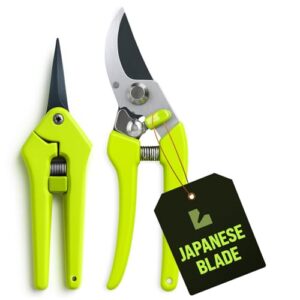
Where the Kynup grips thick limbs, this dual-tool set earns its keep on finer work. You get pruning shears paired with a precision snip, both in titanium-coated stainless steel that shrugs off rust in humid orchard air.
Each blade locks independently, so pockets and toolkits stay safe.
Pros: adaptable, rust-resistant, secure storage.
Cons: Snip needs frequent cleaning on sappy stems.
Best suited for deadheading, harvesting, and delicate indoor plant work rather than heavy limbs.
| Best For | Home gardeners, seniors, and those with arthritis who need a comfortable, precise tool for deadheading blooms, harvesting produce, and tending delicate indoor plants. |
|---|---|
| Blade Material | SK5 stainless steel |
| Handle Type | SoftGrip cushioned |
| Safety Lock | Thumb-activated |
| Cutting Capacity | 1 inch |
| Primary Use | General pruning |
| Ergonomic Design | Yes |
| Additional Features |
|
- Dual-tool versatility with titanium-coated stainless steel blades that resist rust and stay sharp
- Independent safety locks on both tools for secure, accident-free storage in pockets or toolkits
- Ergonomic non-slip handles reduce hand fatigue, ideal for extended use
- Not built for heavy-duty jobs like thick hedges or large tree limbs
- Snip requires frequent cleaning when used on sap-heavy stems
- Blades may bend if used on hard materials like fences or wire
2. GARTOL Cut & Hold Pole Pruner 4.2 FT
 View On Amazon
Some fruit hangs just past your fingertips, taunting you from the top of the canopy. That’s where this pole pruner earns its place in your kit.
The 4.2 ft aluminum pole and cut-and-hold mechanism let you snip and catch citrus or apples without a ladder wobbling beneath you. SK5 steel controls branches up to half an inch, with a 180° rotating head for awkward angles.
Pros: reach, safety, clean cuts.
Cons: fixed length, light-duty only.
| Best For | Home gardeners who need to harvest fruit or trim small branches from the ground without hauling out a ladder. |
|---|---|
| Blade Material | Stainless steel + titanium |
| Handle Type | Non-slip green |
| Safety Lock | Dual tool lock |
| Cutting Capacity | Small branches |
| Primary Use | Trimming/snipping |
| Ergonomic Design | Yes |
| Additional Features |
|
- Cut-and-hold mechanism catches fruit cleanly instead of letting it drop and bruise
- 4.2 ft reach with a 180° rotating handle makes awkward, overhead angles easy to manage
- Lightweight design (1.45 lbs) with an ergonomic grip keeps extended pruning sessions comfortable
- Fixed 4.2 ft length isn’t adjustable, so it won’t suit every height or reach need
- 1/2 inch max cut capacity means it can’t handle thicker branches or hardwood
- Handle lock can engage unexpectedly when used below waist level
3. Stainless Steel Garden Shears 3 Piece Set
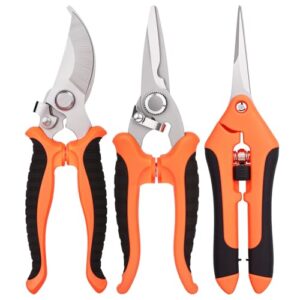
Back at ground level, sometimes what you need isn’t reach but variety, three tools instead of one.
This set pairs stainless steel blades with PP+TPR grips shaped for hours of deadheading, harvesting, and shaping without hand strain. The blades resist sap staining and rust in humid conditions, and each piece locks shut for safe storage.
Pros: adaptable, lightweight, rust-resistant.
Cons: light-duty only, locking mechanism can pinch bare skin.
| Best For | Gardeners who want a versatile, lightweight 3-piece shear set for everyday tasks like deadheading, pruning herbs, and light harvesting. |
|---|---|
| Blade Material | SK5 steel |
| Handle Type | Rubber grip |
| Safety Lock | Handle lock |
| Cutting Capacity | 0.5 inch |
| Primary Use | Pole harvesting |
| Ergonomic Design | Yes |
| Additional Features |
|
- Ergonomic PPTPR handles reduce hand fatigue during extended use
- Stainless steel blades resist sap buildup and rust in humid conditions
- Safety locking mechanism keeps blades secure when not in use
- Not suited for heavy-duty cutting of thick or woody branches
- Locking mechanism can pinch skin if hands aren’t positioned carefully
- Blades are very sharp and must be stored safely away from children
4. Bonide Garden Rich Pruning Sealer 16 oz
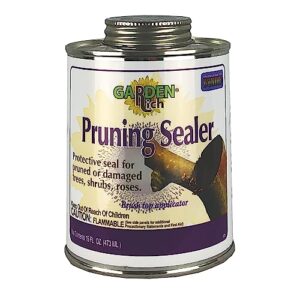
Every clean cut you make deserves a second act, and that’s where this sealer earns its keep.
Bonide’s petroleum asphalt formula brushes on straight from the 16 oz bottle, forming a breathable moisture barrier over pruning cuts and graft unions. It dries fast, stays flexible, and helps block sap loss and disease entry on wounds larger than half an inch.
Pros: easy brush-top application, doubles as container waterproofing.
Cons: petroleum-based, not ideal for organic orchards.
| Best For | gardeners and orchard owners who want to protect fresh pruning cuts, graft unions, and wooden planters from moisture and disease with a simple brush-on sealer. |
|---|---|
| Blade Material | Stainless steel |
| Handle Type | PP+TPR plastic |
| Safety Lock | Locking mechanism |
| Cutting Capacity | Light branches |
| Primary Use | Delicate pruning |
| Ergonomic Design | Yes |
| Additional Features |
|
- Integrated brush-top applicator makes precise, mess-free application easy
- Fast-drying, flexible formula creates a breathable barrier against sap loss and infection
- Doubles as a waterproof coating for wooden garden pots and tubs
- Petroleum-based formula isn’t suitable for organic gardening practices
- May need reapplication after heavy rain or in consistently wet climates
- Results can vary depending on tree species, cut size, and weather conditions
5. Glarks Grafting Pruner Tool Kit
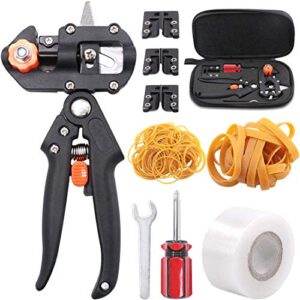
Propagation is where patience meets precision, and this kit hands you both. Inside the pouch: a grafting pruner with a 2.5-inch blade, a 3-inch grafting knife for clean cambium cuts, sealing wax, and marking tags to track each union.
The high carbon steel blades resist sap buildup, while riveted stainless grips stay balanced for whip-and-tongue work on apples, pears, and citrus.
Pros: complete propagation setup, contoured non-slip grips.
Cons: knife requires honing before first use.
| Best For | This kit is best for home orchardists and vineyard workers who want a fast, beginner-friendly way to graft fruit trees and vines like avocados, peaches, lemons, grapevines, and roses. |
|---|---|
| Blade Material | Petroleum asphalt coating |
| Handle Type | Brush applicator |
| Safety Lock | N/A |
| Cutting Capacity | N/A |
| Primary Use | Wound sealing |
| Ergonomic Design | N/A |
| Additional Features |
|
- Interchangeable Ω-cut, U-cut, and V-cut blades handle grafting diameters from 5–14mm with reported success rates above 90%
- Complete kit includes wrench, screwdriver, rubber bands, and biodegradable grafting tape for secure, moisture-resistant seals
- Saves roughly 40% time and effort compared to manual knife grafting, with a compact wallet case for easy storage
- Blades can become blunt or deform after about 10 cuts, especially on dry or old hardwood
- Not suited for excessively dry or aged hardwood, which can damage the tool
- The locking clip mechanism may wear out or break with regular use
6. Japanese Steel Pruning Shears Titanium Coated
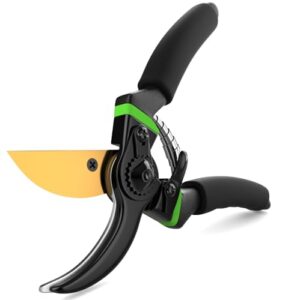
Sunlight catches these blades differently, throwing a cool glint that hints at what’s underneath: SK5 high carbon Japanese steel, honed for tough edge retention and coated in titanium to shrug off rust and sap.
That coating keeps things gliding, cutting green growth up to 0.8 inches with less drag on your wrist, and it means fewer stops for cleaning mid-season.
Pros: stays sharp for hundreds of cuts, resists corrosion in humid air.
Cons: narrower capacity than bypass-style pruners.
| Best For | Gardeners and plant lovers—especially those with arthritis or limited hand strength—who want precise, effortless trims on flowers, shrubs, and small branches. |
|---|---|
| Blade Material | 65 high-carbon steel |
| Handle Type | ABS plastic |
| Safety Lock | Locking clip |
| Cutting Capacity | 5-14mm graft |
| Primary Use | Grafting |
| Ergonomic Design | Yes |
| Additional Features |
|
- SK5 high carbon steel with titanium coating stays sharp and resists rust, sap, and corrosion
- Ergonomic, non-slip handles reduce hand fatigue, even for users with weaker grip strength
- Safety lock allows secure, one-handed operation for added convenience
- Cutting capacity tops out at 3/4 inch, narrower than bypass-style pruners
- Some users report hinge loosening or parts detaching after extended use
- Locking mechanism can occasionally stick or fail to disengage smoothly
7. German Steel Pruning Shears for Garden Use
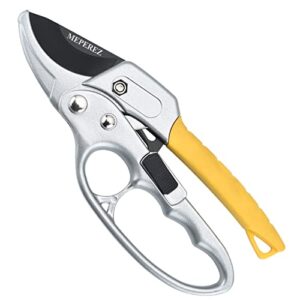
There’s an old-world confidence to German steel, the kind that comes from generations of blacksmiths perfecting the craft.
Forged from high-carbon alloy and hardened to 56–60 HRC, these blades hold their edge through thick, live wood, while titanium coatings shed rust and sap in equal measure.
Ergonomic grips and steel pivots ease hand fatigue during long afternoons in the orchard.
Pros: durable, replaceable parts extend its life.
Cons: needs regular sharpening to stay razor-sharp.
| Best For | These pruning shears are best for home gardeners—especially those with arthritis, carpal tunnel, or weaker hand strength—who need an easy, low-effort tool for light to medium pruning around roses, herbs, hedges, and indoor plants. |
|---|---|
| Blade Material | SK5 steel + titanium |
| Handle Type | Non-slip |
| Safety Lock | One-handed lock |
| Cutting Capacity | 0.75 inch |
| Primary Use | Flower trimming |
| Ergonomic Design | Yes |
| Additional Features |
|
- German-forged, high carbon steel blades with a wear-resistant coating stay sharp for the long haul
- Ratchet mechanism lets you cut branches up to 1 inch thick without straining your hand
- Ergonomic yellow handle with a safety lock makes for comfortable, secure handling
- Doesn’t open wide enough for very thick stems, which can mean awkward grip adjustments
- Handle may feel too small for people with larger hands, limiting comfort and control
- Blade action can loosen over time and may need sharpening early on for best performance
8. Felco F-2 Classic Manual Hand Pruner
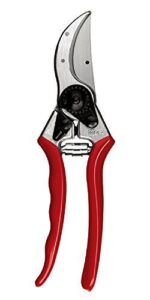
Some tools earn their reputation one orchard at a time, and the Felco F-2 has been doing just that for decades.
Its forged aluminum grips absorb shock while the hardened steel blade, complete with a sap groove, glides through green wood without gumming up.
The micro-metric adjustment lets you dial in tension as the edge wears, and every part—blade, bolt, spring—is replaceable.
Pros: excellent durability, true precision.
Cons: premium price tag.
| Best For | professional horticulturists and dedicated home gardeners who need a heavy-duty, precision pruner for regular use. |
|---|---|
| Blade Material | High carbon steel |
| Handle Type | Yellow ergonomic |
| Safety Lock | Safety lock |
| Cutting Capacity | 1 inch |
| Primary Use | Rose/hedge pruning |
| Ergonomic Design | Yes |
| Additional Features |
|
- Reinforced anvil blade riveted to a one-piece aluminum handle for heavy-duty durability
- Micro-metric adjustment mechanism allows precise, user-tailored cutting head settings
- Rubber shock absorbers and contoured grips reduce wrist strain and improve comfort during extended use
- Manual operation demands more physical effort than powered alternatives
- Aluminum construction may dent under extreme impact or misuse
- No specified rust-resistant coating, which may be a concern in wet conditions
9. Corona BP 3180D Bypass Pruner Forged Steel
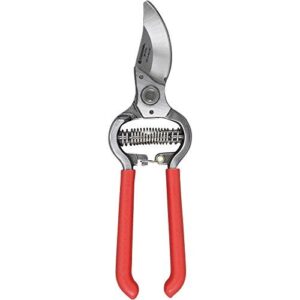
There’s something reassuring about a blade that shrugs off sap and rust alike, and the Corona BP 3180D delivers exactly that with its PTFE-coated forged steel, slicing through green wood while resisting the gummy buildup that plagues lesser tools.
The cushioned grips cut hand strain dramatically, and at 8.5 inches with a full 1-inch cutting capacity, it controls mature fruit tree limbs with ease.
Pros: affordable, frictionless cutting.
Cons: bulkier than lightweight competitors.
| Best For | Home gardeners and landscaping professionals who need a reliable bypass pruner for clean cuts on roses, shrubs, and small tree branches up to 1 inch in diameter. |
|---|---|
| Blade Material | Steel blade |
| Handle Type | Aluminum alloy |
| Safety Lock | N/A |
| Cutting Capacity | Adjustable |
| Primary Use | Heavy-duty pruning |
| Ergonomic Design | Yes |
| Additional Features |
|
- Forged steel blade with an integrated sap groove delivers clean, scissor-like cuts while resisting sticky buildup
- Ergonomic red non-slip handles reduce hand fatigue during extended pruning sessions
- Spring-loaded action and built-in safety lock make for smooth operation and secure storage
- Not suited for dry, woody, or dead wood over 1 inch in diameter
- Needs regular oiling and cleaning to prevent sap buildup and keep the action smooth
- Can feel bulky or heavy for users with smaller hands during prolonged use
How We Selected These Fruit Tree Pruners
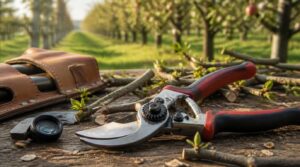
A good pair of shears earns its place in your kit through more than looks, it has to perform where it counts, season after season, cut after cut.
We put every pruner through the same real-world lens, judging blades, grips, and build quality the way your hands and your trees actually experience them.
Here’s exactly what we weighed before naming our top picks.
Clean Cutting Performance
A clean cut starts long before the blade touches bark, it starts with precision gardening tools built for edge alignment. We tested each pair for cutting angle control, pressure control, and wood fiber guidance across live shoots.
Sharp stainless steel pruning shears and ultra sharp Japanese steel pruning shears rose fastest, delivering blade sharpness retention that keeps every clean cutting technique consistent, cut after cut.
Blade Durability and Coatings
A sharp edge means little if it dulls by August. That’s why we weighed blade coatings heavily: titanium nitride and DLC blade performance for sap resistance, tungsten carbide tips guarding against chipping, ceramic edge hardening for mineral-laden bark.
Japanese steel and German steel blades, often SK5 steel with PVD multi-layer protection, delivered rust-resistant durability season after season.
Hand Comfort and Ergonomics
Blades matter little if your palm blisters by noon. That’s why ergonomic pruner design earned equal weight in our testing.
- Textured, non-slip grip zones
- Contoured handle shapes fitting hand curves
- Balanced weight distribution near the fulcrum
- Cushioned spring mechanisms softening rebound
- Insulated grips for temperature control
Shears with ovalized, ergonomic grips reduced palm pressure noticeably during marathon pruning sessions across our orchard rows.
Branch Capacity and Reach
A comfortable grip means little if the shears can’t handle the branch in front of you.
We tested cut capacity from delicate quarter-inch snips to gnarled one-inch limbs, checking pole pruners for stable reach on high growth too. Extra-long blade shears extended our range without wobble, while adjustable battery pruners proved their worth on thick, stubborn wood requiring extra power.
Overall Value and Maintenance
Because a good pruner should outlast the tree it trims, we weighed cost efficiency against real-world longevity, not sticker price alone.
- Replacement blades and springs available
- Warranty covers manufacturing defects
- Pivot screws easy to tighten
- Coatings resist sap and rust
- Grips hold up under seasons of use
Models with accessible replacement parts and honest warranties earned top marks, since maintenance ease beats buying new every year.
Compare Pruner Types for Fruit Trees
Every fruit tree tells you what tool it needs, if you know how to read its branches. A gnarled old apple asks for something different than a young peach whip full of soft, delicate shoots.
Here’s how the major pruner types stack up, so you can match the right one to the wood in front of you.
Bypass Shears for Live Wood
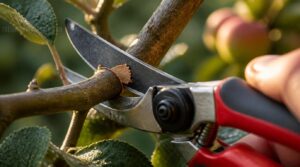
Think of two blades passing like scissors, not crushing like pliers—that’s the heart of bypass pruning shears.
On live wood up to half an inch, this action leaves clean, angled cuts that heal fast. Sap grooves keep resin from gumming the works.
Pair sharp stainless steel pruning shears with ergonomic grips, and every fruit tree pruning session feels easy.
Snips for Delicate Growth
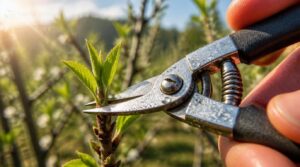
When new growth is tender enough to bruise under a heavy blade, snips become your best friend. Their slender micro tip blades deliver precise cutting on seedlings and soft shoots.
- Narrow jaws protect tender buds
- Spring-loaded action reduces hand strain
- Stainless steel resists sap and rust
An ergonomic handle keeps control steady during detailed, adaptable pruning work.
Pole Pruners for High Branches
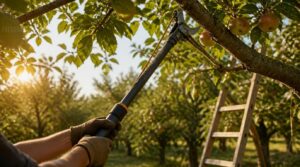
Some branches simply live out of reach. That’s where a long reach pole pruner earns its keep, stretching 4.2 feet to meet high growth safely.
The GARTOL Cut & Hold uses a rope-drive cutting head with adjustable handle accessibility, so you control tension without a ladder. Fiberglass poles resist conductivity, supporting highreach pruning safety every season.
Pros: extended reach, stable grip
Cons: less precision on delicate wood
Grafting Shears for Propagation
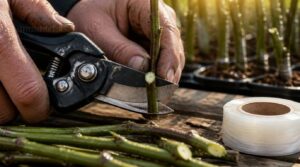
Propagation is where patience meets precision. Grafting pruning shears use matched V-cut or U-cut blades for clean, uniform scion cuts that fit tight against rootstock, reducing crushing and improving tissue contact.
A complete grafting kit, paired with grafting tape, rounds out this useful grafting set for nursery work on stems under 15mm.
Pros: precise cuts, propagation-ready
Cons: not built for thick branches
Sets for Varied Pruning Tasks
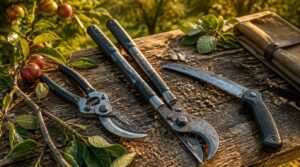
Why own one tool when three cover the whole orchard? A good three-piece set pairs bypass shears, loppers, and a folding saw, matching blade to branch from soft green growth to 1¼-inch wood. Ergonomic grips and forged, sap-resistant steel carry through each piece.
Pros: efficient task matching, one well-matched kit
Cons: bulkier to carry than single tools
Choose The Right Fruit Tree Shears
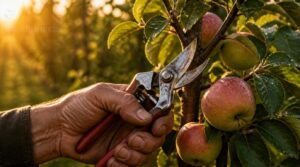
Owning the right pruners is only half the story, since fit matters just as much as function once you’re out in the orchard. Your hands, your climate, and the thickness of your branches all shape which shears will feel like a natural extension of your arm. Here’s what to weigh before you commit to a pair.
Match Capacity to Branch Size
A quick thumb-and-forefinger test on the branch tells you more than any spec sheet. Match cutting capacity to actual diameter: light growth under 1cm, medium wood to 2cm, heavy limbs to 3cm.
- Undersized capacity strains wrists
- Oversized bypass pruner crushes bark
- Blade gap dictates true max
- Lever ratio adds cutting power
- Mismatched tools invite disease entry
Compare Blade Materials
Steel choice shapes every cut you make. High-carbon steel blades sharpen fast and hold a wicked edge, though they’ll rust without care. Stainless steel shrugs off moisture but dulls sooner.
| Material | Best Trait |
|---|---|
| Carbon steel | excellent edge retention |
| Stainless steel | Corrosion resistance |
| Titanium-coated | Rust-resistant durability |
Japanese steel splits the difference beautifully, honed hard yet forgiving.
Prioritize Comfortable Handle Designs
Good steel means little if your hand cramps by the tenth cut.
Look for contoured grips that cradle your palm, with soft, textured coatings that stay sure even when wet with sap or morning dew. Adjustable sizing helps small and large hands alike find that natural, ergonomic hold, while dampened grips ease vibration through long pruning sessions.
Consider Rust and Sap Resistance
A comfortable grip won’t save a blade left wet in the sheath.
Stainless steel blades and titanium coatings resist rust and sap buildup even in humid climates, while smooth surface treatments keep resin from clinging mid-cut.
Wipe blades after every session, dry thoroughly, and oil the pivot. That habit alone adds years to any pruner’s working life.
Check Replacement Parts Availability
Before buying, ask yourself: what happens when a spring snaps mid-season?
Pruners with a replaceable blade system, like the Felco F-2, keep you cutting for decades.
Check the manufacturer’s parts compatibility guide, confirm stock status, and weigh OEM vs aftermarket options.
Good shipping lead times and fair return policy terms matter too—pair that with regular sharpening and blade disinfection.
Use and Maintain Pruning Shears Safely
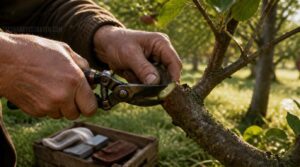
A sharp new pruner is only half the story, the way you use and care for it decides whether your trees heal clean or invite disease.
Good technique protects both your blades and your branch collars, while good storage keeps that edge ready for next season.
Here’s what separates a tool you’ll trust for years from one you’ll replace by spring.
Disinfect Blades Between Trees
Fire blight spreads on dirty blades, so wipe away sap, then swab edges with 70% isopropyl alcohol between every tree.
Bleach works but pits steel over time; alcohol dries fast without corroding your pruning shears for fruit trees.
Clean the pivot point too, then air-dry blades fully before moving on, preventing rust and keeping sap buildup from harboring pathogens.
Sharpen Cutting Edges Regularly
Run a thumbnail across the edge and feel for drag, not slide—that’s your cue. Progress through sharpening stones, coarse to fine, holding a consistent angle each pass. Strop away the burr, then test on a twig:
- Clean, single-motion slice
- No tearing fibers
- No snagging bark
Dull blades bruise fruit trees; sharp ones heal fast.
Avoid Damaging Branch Collars
That swollen ridge where branch meets trunk isn’t bark clutter—it’s living tissue. Branch collar preservation determines whether your fruit tree heals or invites decay.
The branch collar isn’t bark clutter, it’s living tissue that decides whether a tree heals or decays
Position your cut just outside this collar, angled slightly away from outward-facing buds. Never cut flush. Clean cuts healing depends on collar integrity; crush it, and you’ve opened a doorway for pathogens that no amount of sharpness afterward can undo.
Store Tools Clean and Dry
Rust never sleeps, and neither should your cleaning habits. Wipe blades dry the moment you’re done pruning, then swipe a light coat of oil across the edge before storage.
Hang shears in a ventilated cabinet, off concrete, with silica packs nearby—humidity control keeps corrosion-resistant coatings doing their job season after season.
Prepare Shears Before Pruning Season
Think of it as spring training for your shears. Before the first cut, wipe down blades, check for resin buildup, and disinfect with alcohol to stop pathogens from hitching a ride between trees.
Inspect pivot joints for looseness, then apply lubricant so ergonomic pruners open smoothly. A quick sharpness check now saves ragged cuts—and stressed branch collars—all season long.
Frequently Asked Questions (FAQs)
What is the best tool for pruning fruit trees?
A thousand orchard hours will teach you fast: a true bypass pruning shear with razor-sharp, sap-grooved steel and an ergonomic, shock-absorbing grip beats every other tool for clean, healthy cuts on live wood.
What are the common mistakes when pruning fruit trees?
Most orchard headaches trace back to five habits: poor timing, over-pruning past a third of the canopy, sloppy cuts near the branch collar, ignoring species-specific needs, and skipping tool disinfection between trees.
Is corona or Fiskars better?
It’s a pruning toss-up worth branching out on: Corona vs Fiskars comes down to feel. The Corona BP 3180D wins price-to-performance; the Fiskars PowerGear2 wins raw cutting power for stubborn, woody stems.
What is the 1/2/3 rule of pruning?
There’s no formal "1/2/3 rule" in arborist practice—what you want is the one third rule: never remove more than a third of the crown per season, protecting recovery and long-term fruiting vigor.
When is the best time to prune fruit trees?
Dormant, then dormant again: late winter pruning suits most trees, while stone fruit and humid climates favor summer touch-ups. Watch bud swell, sap flow, and frost forecasts before every cut.
Can pruning shears be used on other plants?
Absolutely — a quality bypass pruner controls roses, lilacs, and other ornamental shrubs beautifully. Use them on herbaceous perennials, flowering plants, non-fruit trees, and light propagation tasks; ergonomic pruner design and blade durability matter everywhere in the garden, not just the orchard.
How do I know when to replace my shears?
Watch for blade sharpness decline, rising cutting resistance, or handle looseness. Rust, pitting, and repeated micro-nicks signal real trouble.
If sharpening no longer helps, maintenance costs outweigh replacement, and a replaceable blade system can extend your shears’ working life first.
Whats the difference between bypass and anvil pruners?
Think scissors versus shears against a cutting board: bypass pruners slice past each other for clean cuts on live wood, while anvil types crush stems flat—key for fruit trees, where tissue healing depends entirely on blade mechanics.
How tight should pruning shears be tensioned?
Aim for blades that just kiss at full closure, no gap, no bind. Check blade alignment and spring tension after every sharpening, then fine-tune with a tension adjustment guide until your bypass pruner closes smoothly with minimal cutting force multiplication.
Conclusion
Picture your hand closing around cool steel, a clean cut whispering through wood instead of tearing it—that’s the difference a sharpened blade makes.
The best pruning shears for fruit trees aren’t just tools; they’re an extension of your judgment in the orchard. Choose wisely, sharpen often, and disinfect between trees.
Your reward isn’t just tidy branches. It’s healthier limbs, fuller harvests, and an orchard that thrives under hands that understand it. That’s mastery worth holding onto.
- https://lawnsguide.com/blog/top-pole-pruners-high-branch-pruning
- https://dengarden.com/gardening/pole-pruner
- https://www.gardenersworld.com/how-to/choose-tools/the-best-tools-for-pruning/
- https://content.ces.ncsu.edu/tools-to-make-the-cut
- https://thegardenersfriend.com/blogs/gardening-tips-tricks/types-of-pruning-shears