
This site is supported by our readers. We may earn a commission, at no cost to you, if you purchase through links.
You can’t build a house on a weak foundation—and you can’t grow healthy plants from seeds that germinate poorly or develop weak roots. The secret lies beneath the surface, in that critical first growing medium where your seeds either thrive or struggle.
Many gardeners assume any old potting soil will do, but seed starting demands something different—a specialized mix that balances moisture retention with drainage, provides aeration without compaction, and stays sterile enough to prevent damping-off disease.
Whether you’re starting tomatoes in February or sowing basil in spring, the best soil mix for seed starting determines whether you’ll transplant vigorous seedlings or nurse along spindly, underwhelming starts. You’ve got two solid paths forward: mixing your own blend from quality ingredients or selecting proven commercial products that deliver consistent results.
Table Of Contents
- Key Takeaways
- Key Qualities of a Seed Starting Mix
- Core Ingredients for Seed Starting Success
- DIY Seed Starting Mix Recipes and Tips
- Top 9 Best Soil Mixes for Seed Starting
- 1. Coconut Coir Seed Starting Pellets
- 2. Premier Sphagnum Peat Moss
- 3. GROWT Premium Coco Coir Medium
- 4. Espoma Organic Perlite Soil Amendment
- 5. Espoma Organic Vermiculite Soil Amendment
- 6. Dr Earth Natural Compost Mix
- 7. Jobes Organic Garden Lime Amendment
- 8. Wiggle Worm Organic Fertilizer Castings
- 9. Espoma Organic Kelp Meal Fertilizer
- Choosing and Using The Right Seed Mix
- Frequently Asked Questions (FAQs)
- What type of soil is best for seed germination?
- What is the best soil to sow seeds in?
- What medium is best for starting seeds?
- What potting mix to use for seeds?
- How long does homemade seed starting mix last?
- Can you reuse seed starting mix multiple times?
- Whats the ideal pH for seed starting mix?
- How do you sterilize homemade seed starting mix?
- When should you fertilize seedlings in starting mix?
- Can I start seeds directly in garden beds?
- Conclusion
Key Takeaways
- Successful seed starting depends on a specialized mix that balances moisture retention with drainage and aeration while remaining sterile to prevent damping-off disease—garden soil won’t cut it because it compacts easily and harbors pathogens that kill vulnerable seedlings.
- The core ingredients for DIY mixes include peat moss or coconut coir for water retention, perlite for drainage and oxygen flow, vermiculite for moisture stability, and light organic amendments like worm castings or kelp meal for gentle nutrition once true leaves emerge.
- Making your own seed starting mix costs 20-60 cents per quart compared to $2.50-5.00 for commercial options, and you can customize ratios for specific crops—lettuce needs lighter blends while sunflowers require more organic matter—though pre-made products offer consistency without the prep work.
- pH levels should stay between 5.5-6.5 for optimal nutrient uptake, sterilization prevents disease in reused mixes, and you shouldn’t fertilize until seedlings develop two sets of true leaves because earlier feeding overwhelms delicate roots.
Key Qualities of a Seed Starting Mix
Not all seed starting mixes are created equal—and choosing the wrong one can mean weak germination, leggy seedlings, or worse, disease that wipes out your entire tray.
That’s why we put together a breakdown of the best soil for starting seeds to help you pick a mix that actually supports healthy growth.
The wrong seed starting mix can doom your seedlings to weak germination, leggy growth, or disease that wipes out entire trays
The right mix does more than just hold a seed in place; it creates the precise conditions your seedlings need to push through, root down, and grow strong from day one. Let’s break down the four essential qualities you should look for in every seed starting mix.
Essential Characteristics for Germination
Seed viability and germination rates hinge on three non-negotiables: soil temperature, water balance, and oxygen levels. Your seed starting mix must deliver consistent moisture retention without waterlogging—seeds need both hydration to break dormancy and air pockets for root respiration.
Here’s what successful seed germination demands:
- Soil temperature between 65-75°F for most vegetables and flowers
- Evenly damp medium that prevents seed rot
- Adequate oxygen availability through airy, uncompacted structure
Importance of Texture, Drainage, and Aeration
The right seed texture, water drainage, and root aeration transform germination rates. A fine-textured soil mix holds moisture evenly around tiny roots, while coarse particles prevent surface crusting—maintaining oxygen levels for root respiration.
Proper soil structure balances moisture retention with drainage, so excess water exits quickly without waterlogging. This soil composition keeps roots oxygen-rich between waterings, preventing compaction that would otherwise suffocate emerging seedlings.
Role of Sterility in Disease Prevention
Beyond texture and drainage, sterile environments protect vulnerable seedlings from dampening-off disease and root rot. A clean seed starting mix limits bacteria and fungi that cause infection—think of sterile seed as your first line of defense in disease control.
Organic seed starter blends with low microbial loads prevent pathogen transmission during germination, when microbe management and sanitation methods matter most for healthy emergence.
Nutrient and PH Requirements for Seedlings
Once your mix is sterile, you’ll need to address seedling nutrition and pH balance—most young plants thrive between 5.5 and 6.5, where nutrient uptake and micronutrient roles peak.
Start with light organic gardening amendments like kelp or worm castings, then increase fertilizer timing gradually as true leaves emerge, ensuring your soil mix aids seed germination, moisture retention, and steady root development.
For best results, monitoring and adjusting fertilizer application rates based on how your seedlings respond is vital.
Core Ingredients for Seed Starting Success
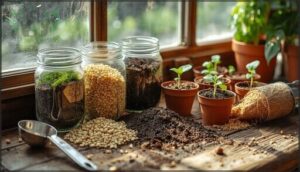
Building a successful seed starting mix comes down to choosing the right base materials—and understanding what each one brings to the table. You’ll want ingredients that balance moisture retention with proper drainage, all while staying light enough for delicate seedlings to push through.
Let’s break down the core components that make or break your germination rates, from traditional peat moss to modern coir alternatives.
Sphagnum Peat Moss Vs. Coconut Coir
You’ll face a fundamental choice when building your seed starting mix: sphagnum peat moss or coconut coir.
Peat moss benefits include exceptional water retention—holding 8 to 10 times its weight—making it ideal for seed germination, though its acidic pH (4.0-5.5) can bind nutrients.
Coir sustainability and near-neutral pH (5.5-6.5) offer environmental advantages, plus better soil sterility when properly processed for your organic seed starter.
Functions of Perlite and Vermiculite
Perlite benefits your seed starting soil with airy drainage—those rigid volcanic granules prevent compaction and speed up water movement through the mix—while vermiculite uses its layered flakes to cradle moisture, holding many times its weight for steady seed germination.
Together, they balance soil aeration and water retention, creating the ideal environment where roots breathe freely yet never dry out completely. For more details on their unique physical and chemical properties, see this explanation of perlite and vermiculite characteristics.
Benefits of Compost, Lime, and Organic Amendments
Vitality in your seed starting mix comes from compost benefits—boosting nutrient cycling and soil ecology with beneficial microbes—while lime applications stabilize pH for strong root growth.
Organic fertilizers like kelp meal or worm castings feed the soil food web, creating a resilient organic seed starter that fosters healthy germination without synthetic inputs, making organic gardening simpler and composting your best long-term investment.
Fertilizer Options for Healthy Seedlings
You’ll want balanced seedling fertilizers—think 3-1-2 ratios—diluted to quarter strength once true leaves appear, because nitrogen sources like fish emulsion or kelp deliver quick uptake without overwhelming delicate roots.
Phosphorus levels around 1-2 percent drive root establishment (bone meal works beautifully), while potassium benefits include vigor and disease resistance.
Organic fertilizers support natural plant nutrition and seed germination techniques, making organic gardening methods safer for young seedlings.
DIY Seed Starting Mix Recipes and Tips
Making your own seed starting mix isn’t complicated—you’ll save money and control exactly what goes into your growing medium.
The basic formula relies on just three or four ingredients, but you can tweak ratios and add amendments depending on what you’re growing. Let’s walk through the core recipe, customization options, proper preparation techniques, and how the costs actually stack up against store-bought alternatives.
Basic Homemade Seed Starting Mix Formula
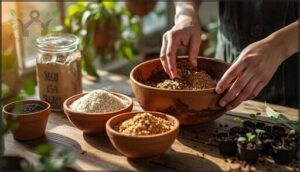
You don’t need fancy formulas to whip up a reliable DIY seedling mix—just combine two parts coconut coir or peat moss with one part perlite and one part vermiculite. This basic homemade recipe delivers the drainage, aeration, and moisture retention your seeds crave.
Add a handful of worm castings for starter nutrients, moisten until it holds together like a wrung-out sponge, and you’re ready to sow.
Customizing Mixes for Specific Seeds
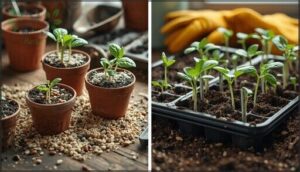
Not all seeds play by the same rules—lettuce and tomatoes love a lighter seed starting mix for quick germination rates, while sunflowers need moderate organic matter to fuel rapid root expansion.
Adjust your DIY seedling mix by tweaking water retention and nutrient levels: peppers prefer warmer, airier blends, and carrots demand ultra-fine texture for straight emergence and ideal soil pH contact.
Moistening and Preparing Your Mix
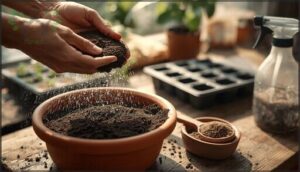
Once you’ve customized your seed starting mix, proper hydration transforms dry ingredients into a growth-ready medium—moisture levels directly affect seed germination and root development.
Aim for a water balance that feels like a wrung-out sponge when squeezed:
- Moisten the soil mix until it clumps lightly but crumbles apart easily
- Let it rest 15 to 30 minutes so components absorb evenly
- Test drainage by watching water flow through within 2 minutes
This soil preparation prevents waterlogged conditions while maintaining moisture retention.
Cost Comparison: DIY Vs. Store-bought
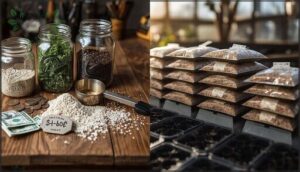
Budget planning matters when you’re starting dozens of trays. DIY seed starting mix costs roughly 20 to 60 cents per quart using bulk peat moss or coir, perlite, and compost—store-bought options run $2.50 to $5.00 per quart.
Here’s the price comparison breakdown:
| Factor | DIY Mix | Store-Bought Mix |
|---|---|---|
| Cost per quart | $0.20–$0.60 | $2.50–$5.00 |
| Prep time | 5–15 minutes per batch | Ready to use (saves 10–20 min) |
| Shelf life | Up to 1 year (dry storage) | 1–3 years (sealed packaging) |
| Customization | Full control over ingredients | Standardized blend |
| Consistency | Varies batch to batch | Uniform texture and pH |
Bulk purchases and seasonal sales drop DIY costs another 10 to 30 percent, making homemade mixes ideal for gardening on a budget when you’re filling multiple flats.
Top 9 Best Soil Mixes for Seed Starting
If you’d rather skip the mixing and measuring, there’s no shortage of quality pre-made options and individual ingredients you can grab off the shelf.
Whether you’re looking for ready-to-use pellets, bulk amendments like perlite or compost, or specialty fertilizers to boost your custom blend, these nine products cover the essentials. Here’s what’s worth adding to your seed-starting setup.
1. Coconut Coir Seed Starting Pellets
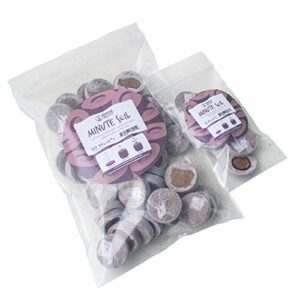
Compressed discs of recycled coconut husk fibers, these pellets expand to about 2 inches tall when you add water—forming a self-contained plug that holds moisture without waterlogging your seeds.
The biodegradable netting keeps the medium intact as roots develop, and the neutral pH (around 5.5 to 6.5) accommodates most vegetables and herbs. You’ll appreciate the quick hydration and reduced transplant shock, though some growers report the netting doesn’t always break down as advertised, so monitor root penetration carefully.
| Best For | Gardeners who want a mess-free way to start seeds and transplant seedlings without disturbing roots, especially if you’re growing vegetables or herbs in containers or hydroponic systems. |
|---|---|
| Primary Material | Coconut Coir |
| Weight | Not specified |
| Organic | Yes |
| Use Case | Seed starting |
| Package Size | 50 pellets |
| Brand | Not specified |
| Additional Features |
|
- Expands quickly when watered and holds up to 9x its weight in moisture, so seedlings stay hydrated without constant attention
- Netted design keeps the coir together during handling, making it easier to move young plants without damaging delicate roots
- Neutral pH and low salt content work well for most common plants, and the coconut coir base is a sustainable alternative to peat
- The netting doesn’t always biodegrade as expected, which can restrict root growth and cause transplant shock if you don’t remove it manually
- Pellets dry out faster than traditional soil mixes, so you’ll need to monitor moisture levels more closely
- Price increases have made these less affordable compared to other seed-starting options, which might not justify the convenience for budget-conscious gardeners
2. Premier Sphagnum Peat Moss
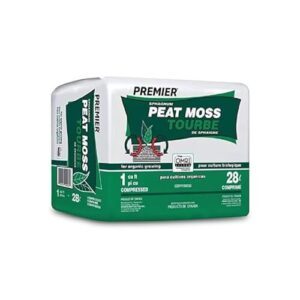
When you’re blending your own mix rather than working with ready-made pellets, Supreme Sphagnum Peat Moss gives you a fibrous base that holds water remarkably well—up to several times its dry weight—while keeping the medium light enough for delicate roots to push through.
Its slightly acidic pH (around 3.5 to 4.5) suits most seedlings, though you may want to buffer it with lime if you’re starting alkaline-loving crops. The 17-pound bale expands considerably once fluffed, stretching your budget further than pre-mixed alternatives.
| Best For | Gardeners who want to mix their own seed-starting blends and need a lightweight, water-retentive base that works well for cuttings, worm bins, and general garden use. |
|---|---|
| Primary Material | Peat Moss |
| Weight | 17 pounds |
| Organic | Natural |
| Use Case | Seed starting |
| Package Size | 17 pounds |
| Brand | Premier |
| Additional Features |
|
- Holds several times its weight in water, keeping seeds moist without waterlogging
- Expands significantly from the 17-pound bale, giving you more material for your money
- Light and fibrous texture makes it easy for delicate roots to grow through
- Acidic pH (3.5–4.5) may require lime buffering for certain crops
- Priced higher than some customers expect
- Limited availability of the natural resource could affect future pricing
3. GROWT Premium Coco Coir Medium
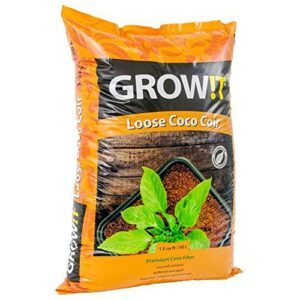
If you want a sustainable alternative to peat, GROW!T Premium Coco Coir Medium delivers buffered, pre-enriched fiber that’s ready to support seed germination without the soaking rituals many coir products demand. The calcium and magnesium amendments displace excess sodium, giving you a stable pH and low EC—critical when tender seedlings can’t tolerate salt stress.
Its airy texture balances drainage with moisture retention, so your trays won’t waterlog yet seeds stay evenly damp. You’ll find it works seamlessly in plug trays or mixed with perlite for even lighter custom blends.
| Best For | Growers seeking an eco-friendly, ready-to-use seedling medium that balances moisture and drainage without the prep work of traditional coir. |
|---|---|
| Primary Material | Coconut Coir |
| Weight | Not specified |
| Organic | 100% Natural |
| Use Case | Hydroponic growing |
| Package Size | Bag (size varies) |
| Brand | GROW!T |
| Additional Features |
|
- Pre-buffered with calcium and magnesium to prevent salt stress and maintain stable pH right out of the bag
- Excellent air-to-water ratio that prevents waterlogging while keeping seeds evenly moist
- No soaking or breaking required—just open and use in trays or custom mixes
- International shipping costs can be steep depending on your location
- Bag size may be larger than needed for small-scale hobbyists
- Requires supplemental fertilizers like Osmocote for best long-term results
4. Espoma Organic Perlite Soil Amendment
Perlite punches above its weight when you’re building seed starting mixes that refuse to compact. Espoma’s 100 percent pure, all-natural granules carve out critical air pockets in your root zone—drainage happens fast, oxygen reaches emerging radicles, and damping-off risk drops.
You’ll blend it at 20 to 50 percent of your total medium, pairing it with peat or coir for a lightweight base that holds just enough moisture without waterlogging. It’s inert and pH-neutral, so you control nutrition without surprise chemistry shifts.
| Best For | Gardeners building custom seed-starting or container mixes who need reliable drainage and aeration without altering soil pH. |
|---|---|
| Primary Material | Perlite |
| Weight | 3.49 pounds |
| Organic | Yes |
| Use Case | Soil amendment |
| Package Size | 1 cubic foot |
| Brand | Espoma |
| Additional Features |
|
- Pure perlite creates stable air pockets that prevent compaction and support healthy root development
- PH-neutral and inert formula lets you control nutrients without unexpected chemical interactions
- Works at flexible ratios (20–50%) with peat or coir to balance moisture retention and drainage
- Dusty material requires a mask during handling to avoid inhaling fine particles
- Lightweight granules float to the surface over time, requiring occasional mixing back into soil
- Non-resealable bag makes storage messier and less convenient than competing products
5. Espoma Organic Vermiculite Soil Amendment
Vermiculite flips perlite’s playbook—where coarse volcanic glass drains aggressively, this mineral holds moisture in folded layers and releases it as roots probe deeper.
You’ll mix Espoma’s all-natural product at 10 to 30 percent to stabilize hydration without drowning seedlings, a balance that prevents surface crusting and keeps germination conditions steady on hot afternoons.
It’s pH-neutral and inert, aerating compacted zones while supporting consistent moisture profiles across your trays—ideal when you’re juggling finicky varieties that demand both oxygen and reliable dampness.
| Best For | Gardeners who need to retain moisture in seed-starting mixes or containers without sacrificing drainage, especially for finicky plants that need steady hydration. |
|---|---|
| Primary Material | Vermiculite |
| Weight | 7 pounds |
| Organic | 100% Natural |
| Use Case | Soil amendment |
| Package Size | 1 cubic foot |
| Brand | Espoma |
| Additional Features |
|
- Holds water in its layers and releases it slowly, keeping soil moist longer between waterings
- PH-neutral and won’t mess with your soil chemistry, so it works for pretty much any plant
- Aerates compacted soil while improving water retention—a combo that’s hard to beat for container gardening
- Pricier than perlite or other vermiculite brands on the market
- Can be dusty right out of the bag, which is annoying on breezy days
- Quality isn’t always consistent—some batches are finer than expected or may contain debris
6. Dr Earth Natural Compost Mix
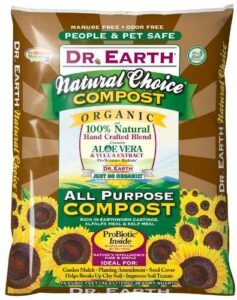
Dr Earth’s OMRI-listed compost brings mycorrhizal fungi and beneficial microbes to your seed trays, boosting nutrient uptake and suppressing soil-borne diseases before they cripple fragile seedlings.
The mix uses composted green waste, redwood sawdust, and a balanced fertilizer package—alfalfa meal, kelp, fishbone meal—that delivers slow-release nitrogen and phosphorus without spiking salt levels. You’ll appreciate the odor-free, manure-free formula when you’re working indoors, plus the added wetting agent ensures uniform moisture distribution across those tight starter cells.
| Best For | Gardeners who want a premium, all-natural compost that improves soil structure and provides balanced nutrients for everything from seedlings to established plants. |
|---|---|
| Primary Material | Compost |
| Weight | 35.7 pounds |
| Organic | 100% Natural |
| Use Case | All-purpose compost |
| Package Size | 1.5 cubic feet |
| Brand | Dr. Earth |
| Additional Features |
|
- Rich blend of earthworm castings, alfalfa meal, and kelp meal delivers slow-release nutrients without burning plants
- OMRI-listed formula includes beneficial microbes and mycorrhizal fungi that boost root health and disease resistance
- Odor-free and manure-free, making it ideal for indoor seed starting and raised bed gardening
- More expensive than basic compost options on the market
- Some bags may contain small rocks, pebbles, or twigs that need to be picked out
- Quality can vary between bags, with occasional inconsistencies in texture or ingredients
7. Jobes Organic Garden Lime Amendment
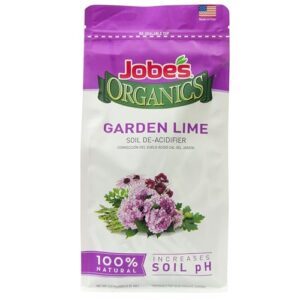
If your water runs alkaline or you’re starting acid-loving seedlings like blueberries, you won’t need lime—but for most vegetables that thrive between 6.0 and 7.0 pH, Jobe’s Organics Garden Lime prevents nutrient lockout before it starts.
This calcium carbonate granular amendment adjusts overly acidic mixes, strengthens cell walls, and improves fertilizer response across your trays. Apply it sparingly based on a soil test—over-liming locks out iron and manganese—and water thoroughly to activate the slow pH shift that unfolds over several weeks.
| Best For | Gardeners raising soil pH for vegetables and ornamentals that need neutral to slightly alkaline conditions, especially if soil tests confirm acidity below 6.0. |
|---|---|
| Primary Material | Lime Granules |
| Weight | 6 pounds |
| Organic | Yes (OMRI) |
| Use Case | pH adjustment |
| Package Size | 6 pounds |
| Brand | Jobe’s Organics |
| Additional Features |
|
- OMRI-listed organic calcium carbonate that corrects pH without synthetic chemicals, safe around kids and pets
- Granular form spreads easily and measures accurately, letting you dial in application rates based on soil-test results
- Strengthens plant cell walls and unlocks nutrient uptake that acidic soil blocks
- Takes 3–4 months to fully shift pH, so you need to plan ahead rather than expect instant results
- Some customers report packaging defects or inconsistent fill levels due to automated bagging
- Over-application locks out micronutrients like iron and manganese, requiring careful dosing and follow-up testing
8. Wiggle Worm Organic Fertilizer Castings
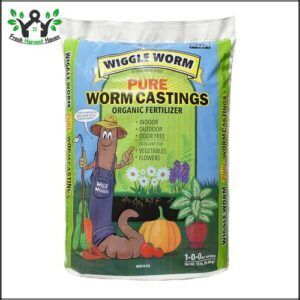
Earthworm castings act like a microbial insurance policy—each granule teams nutrient delivery with living biology that sustains seedlings through their most vulnerable weeks.
Wiggle Worm’s OMRI-listed castings deliver a gentle 1-0-0 nitrogen baseline, trace minerals, and beneficial microbes without the burn risk of concentrated fertilizers. Mix a half cup per gallon of your seed-starting blend or top-dress around transplants; the fine particles improve aeration and moisture retention while fostering the “living soil” environment that transforms fragile sprouts into vigorous transplants.
| Best For | Organic gardeners who want to build living soil and protect seedlings with gentle, biology-rich nutrition that won’t burn delicate roots. |
|---|---|
| Primary Material | Worm Castings |
| Weight | 15 pounds |
| Organic | Yes (OMRI) |
| Use Case | Fertilizer |
| Package Size | 15 pounds |
| Brand | Not specified |
| Additional Features |
|
- OMRI-listed pure castings deliver trace minerals and beneficial microbes without synthetic fertilizer burn
- Fine particles improve soil aeration and moisture retention for stronger root development
- Odorless and non-toxic formula works safely indoors and outdoors
- 15-pound bag may not cover large gardens without multiple purchases
- Results take time as microbes establish, not an instant-boost fertilizer
- Some users report a noticeable earthy smell despite “odorless” claims
9. Espoma Organic Kelp Meal Fertilizer
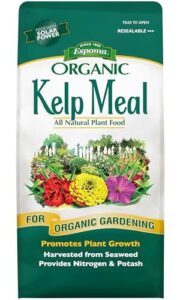
Cold Atlantic kelp brings a 1-0-2 nutrient boost (nitrogen and potassium, respectively) plus trace minerals and natural growth hormones that coax stronger roots from fragile seeds.
Espoma’s low-temperature processing preserves those biologically active compounds, so a tablespoon per gallon of your DIY blend—or a light top-dress around emerging seedlings—delivers slow-release feeding without the burn risk of synthetic options.
The ocean-harvested meal also energizes soil microbes, creating a symbiotic environment that turns cautious sprouts into transplant-ready plants.
| Best For | Organic gardeners who want to strengthen root development in seedlings, flowers, vegetables, and young transplants without risking fertilizer burn. |
|---|---|
| Primary Material | Kelp Meal |
| Weight | 1.91 kilograms |
| Organic | Yes |
| Use Case | Plant food |
| Package Size | 4 pounds |
| Brand | Espoma |
| Additional Features |
|
- Low-temperature processing keeps natural growth hormones intact, giving you slow-release nutrition that won’t shock delicate roots
- Works as both a fertilizer and soil conditioner, feeding your plants while boosting helpful microbes in the soil
- OMRI-listed for organic use and made in the USA from Atlantic seaweed, so you know exactly what you’re putting in your garden
- Strong ocean smell can be off-putting, especially when mixing or applying indoors
- Easy to overdo it since the concentrated formula means a little goes a long way—too much can actually harm plants
- Not a complete fertilizer on its own with its 1-0-2 ratio, so you’ll likely need to supplement with other nutrients for balanced feeding
Choosing and Using The Right Seed Mix
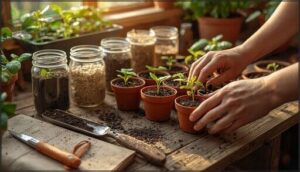
You’ve got your mix—or you’re about to make one—but choosing the right formula is only half the battle.
How you use it, what you look for on the label, and how you handle it after the growing season all shape your seedling success.
Let’s walk through the practical considerations that turn a good seed starting mix into great results.
Organic Vs. Synthetic Ingredients
When you’re choosing between organic and synthetic ingredients for your seed starting mix, you’re really deciding how much control you want over what touches your seedlings. Organic components—think coconut coir, natural fertilizers, and OMRI-listed amendments—support chemical-free, eco-friendly organic gardening from day one, while synthetics offer predictable performance but carry potential synthetic risks.
Here’s what sets them apart:
- Nutrient delivery: Organic seed starter blends release minerals slowly through microbial breakdown, whereas synthetic options provide immediately available nutrients that can quickly fuel germination.
- Certification standards: Organic benefits include third-party verification (eliminating GMOs and prohibited substances), while synthetic ingredients rely on manufacturing specs without certification requirements.
- Environmental impact: Natural fertilizers and soil mix recipes using organic materials focus on long-term soil health and biodiversity, whereas synthetic production emphasizes controlled efficiency.
- Customization potential: Organic ingredients let you tailor mixes to specific plant needs with amendments like compost or kelp, while synthetics offer batch-to-batch consistency that’s hard to replicate at home.
Moisture Retention and Watering Needs
Once you’ve settled on the right ingredients—organic or otherwise—you’ll need to dial in moisture levels for steady seed germination. A well-balanced seed starting mix mimics a wrung-out sponge: damp enough to support root expansion but never saturated to the point of suffocation. Aim for that sweet spot where the medium holds its shape when squeezed yet crumbles freely when disturbed.
Here’s how different components affect water balance and watering schedules:
| Ingredient | Moisture Retention | Drainage Speed |
|---|---|---|
| Coconut Coir | High, slow release | Moderate |
| Perlite | Low, aeration focus | Fast |
| Vermiculite | Very high | Slow |
| Peat Moss | High, capillary action | Moderate-slow |
| Compost | Moderate | Moderate |
Fine-textured blends trap more moisture near the seed zone, reducing your watering frequency but raising the risk of soil saturation and damping-off fungi. Coarser mixes with perlite drain faster, so you’ll check trays more often. For most seed starting soil, target a moisture level that keeps the surface just dry enough to discourage fungal spores while roots below stay evenly hydrated—think of it as controlled thirst rather than a flood.
Sustainability and Eco-friendly Choices
Your watering rhythm also shapes your environmental footprint. Swapping peat for coconut coir cuts habitat destruction in peat bogs, and reusing containers slashes landfill waste by up to 70 percent in home setups.
You can shrink your impact further with these sustainable gardening practices:
- Choose organic seed starter blends with renewable resources like coir and recycled perlite
- Source eco-friendly materials from local farmers markets to reduce transport emissions
- Harvest rainwater for irrigation and compost organic amendments on-site
- Select certified products that verify transparent, fair labor and minimal synthetic additives
Solar-powered greenhouses and LED grow lights trim energy use by 40 percent, proving that sustainable gardening and healthy seedlings aren’t mutually exclusive.
Storing and Reusing Seed Starting Mix
After each season, you can stretch your seed starting soil budget with smart reuse strategies. Bake moist coconut coir or peat-based soil mix at 180°F for 30 minutes to kill pathogens—a simple mix sterilization step that extends mix longevity.
Cool completely, then refresh with compost tea for moisture retention and seed storage readiness. Most blends last one to two cycles before moisture control and germination rates decline.
Frequently Asked Questions (FAQs)
What type of soil is best for seed germination?
Don’t get rooted in the wrong choice—seed starting mix is what you need, not garden soil.
This light, sterile blend of peat moss, coconut coir, and perlite boosts germination rates and seedling health.
What is the best soil to sow seeds in?
The best soil to sow seeds in is a sterile seed mix—combining coconut coir or peat with perlite—that balances moisture retention, aeration, and minimal nutrients to support gentle root development and prevent damping off.
What medium is best for starting seeds?
A sterile mix combining coconut coir or peat moss with perlite delivers exceptional germination rates and root development—light texture prevents compaction while balanced drainage and aeration protect seedling health during those critical first weeks.
What potting mix to use for seeds?
You want a light blend—coconut coir or peat moss mixed with perlite for drainage.
A quality mix ensures proper aeration and moisture retention without heavy garden soil that compacts seedlings.
How long does homemade seed starting mix last?
Your homemade seed starting mix can last up to twelve months—yes, a full year—if you store it in an airtight container in a cool, dark space, preserving soil quality and seedling success.
Can you reuse seed starting mix multiple times?
You can reuse seed starting mix once—maybe twice—but pathogen control becomes tricky.
Sterilize between cycles, add fresh coconut coir or perlite to restore drainage, and monitor seedling health closely since reuse risks damping-off diseases.
Whats the ideal pH for seed starting mix?
Most seed starting mixes perform best with pH levels between 8 and 2—slightly acidic soil acidity enhances nutrient uptake and seed germination rates, while lime adjustment buffers peat-based blends to maintain ideal pH balance.
How do you sterilize homemade seed starting mix?
You might think sterilization isn’t necessary, but oven methods (180-200°F for 30 minutes), microwave bursts, steam treatment, boiling water submersion, or diluted chemical sanitizing eliminate pathogens—protecting your seedlings from damping-off disease and soil-borne pests.
When should you fertilize seedlings in starting mix?
Wait until your seedlings develop two sets of true leaves—beyond the initial cotyledons—before introducing fertilizer timing into your routine.
At that stage, nutrient uptake accelerates, and diluted fertilizers support healthy growth stages without overwhelming delicate roots.
Can I start seeds directly in garden beds?
While seed starting mix offers control indoors, you can skip it entirely for direct sowing in garden beds—if soil temperature hits 55-65°F, drainage is solid, and you’re prepared for thinning fast-growing crops like radishes.
Conclusion
The smallest decisions often yield the biggest harvests—and choosing the best soil mix for seed starting proves exactly that.
Whether you blend your own recipe from peat moss, perlite, and compost or reach for a trusted commercial product, you’re setting the stage for vigorous growth from day one. Strong seedlings don’t happen by accident; they emerge from intentional choices made before you ever drop a seed into soil.