
This site is supported by our readers. We may earn a commission, at no cost to you, if you purchase through links.
Most gardeners pack away their tools the moment the first frost bites—and that’s exactly where they lose ground. Winter is when soil compaction builds unchecked, dormant roots need careful tending, and a well-timed cold-frame setup can mean harvesting greens through February.
The right tools don’t just survive freezing temperatures; they make working in them manageable. Frozen soil cracks cheap blades, icy grips become a safety hazard, and standard gloves leave your fingers numb after ten minutes.
Best winter gardening tools and equipment means knowing which materials hold up, which grip designs actually work with thick gloves, and which frost protection methods deliver real results.
Table Of Contents
- Key Takeaways
- Key Features to Prioritize
- Essential Winter Hand Tools
- Digging Spades for Winter Soil Work
- Garden Forks for Aeration and Soil Turning
- Hori-Hori Knives for Roots and Frozen Ground
- Hand Trowels for Planting and Harvesting
- Hand Cultivators for Compacted Winter Beds
- Pruning Shears for Clean Cold-season Cuts
- Loppers and Pruning Saws for Thicker Branches
- Shovels, Rakes, and Snow Tools for Cleanup
- Frost Protection and Season Extension
- Frost Covers and Plant Jackets
- Cloches for Individual Plant Protection
- Cold Frames for Overwintering Crops
- Greenhouses for Winter Growing Support
- Seedling Heat Mats for Indoor Starts
- Soil Thermometers for Temperature Monitoring
- Mulching Tools and Insulation Materials
- Row Covers and Hoop Tunnels for Extra Protection
- Top 9 Winter Gardening Products
- 1. Hyxanons Plant Frost Cover
- 2. Haxnicks Easy Fleece Plant Jacket
- 3. Vounot Plant Frost Protection Fleece
- 4. Garden Plant Cloche Dome Set
- 5. Cooljob Waterproof Gardening Gloves
- 6. Acdyion Thorn Proof Leather Gardening Gloves
- 7. Vivosun Seedling Heat Mat
- 8. AC Infinity Seedling Heat Mat
- 9. MCombo Wooden Greenhouse Cold Frame
- Tool Care and Winter Storage
- Frequently Asked Questions (FAQs)
- What is the gardening 3 year rule?
- What are the best garden tools?
- What tools do you need for professional garden maintenance?
- What is the most essential tool for beginner gardeners?
- What tools do you need to harvest a garden?
- What tools do you need to grow a vegetable garden?
- What tools do you use to rust a garden?
- What month do you start a winter garden?
- What is the most important tool every gardener should have?
- What do you plant in your garden in the winter?
- Conclusion
Key Takeaways
- Stainless steel handles wet winter conditions better than carbon steel because its chromium layer reforms after scratches, making it the smarter long-term choice despite the higher upfront cost.
- Cold frames, frost fleece, and seedling heat mats aren’t optional extras — they’re what keep your garden productive when temps drop and most gardeners have already given up.
- Ergonomic, glove-friendly grips aren’t just comfort features; in freezing conditions they directly affect your safety, grip strength, and how long you can actually work outside.
- Cleaning, drying, oiling, and storing your tools properly after each winter session isn’t busywork — it’s what separates gear that lasts a decade from gear that rusts out by spring.
Key Features to Prioritize

Not all garden tools hold up when temperatures drop and the ground turns hard. Winter gardening puts real demands on your gear, from frozen soil to wet, slippery conditions.
Choosing the right tools before the cold sets in is easier when you browse these frosty garden landscaping ideas built around what actually works in winter conditions.
what to look for before you buy.
Durability for Wet, Icy, and Frozen Conditions
Winter doesn’t forgive flimsy tools. Wet soil, ice, and repeated freeze-thaw cycles crack coatings, loosen joints, and invite rust fast. That’s why freeze-thaw resilience matters when choosing cold-resistant tools.
Look for weatherproof handholds with slip-resistant handholds, thermal insulated grips, and moisture-barrier seams that block meltwater.
Corrosion inhibitor coatings on metal parts add real protection. Waterproof gardening gloves, hard-wearing tools, and a sturdy wheelbarrow round out a dependable winter setup.
Applying a thin layer of oil before storage creates a moisture barrier.
Stainless Steel Vs. Carbon Steel Tool Materials
Once you’ve tackled durability, the next question is what your tools are actually made of — and that choice matters more in winter than any other season.
Stainless steel wins on corrosion resistance and low maintenance frequency. Carbon steel edges ahead on edge retention and raw strength. Here’s what shapes the decision:
- Corrosion resistance: Stainless steel’s chromium layer reforms after scratches, so wet winter soil won’t eat it alive.
- Edge retention: Carbon steel holds a sharper edge longer, making it better for hori-hori knives and hoes.
- Cost trade-offs: Carbon steel tools cost less upfront but need more oiling; stainless steel saves time but raises your budget.
Strength vs ductility also plays a role — carbon steel feels stiffer in digging tools, while stainless manages impact better. For cold-resistant tools that see constant moisture, stainless is the smarter long-term pick.
Ergonomic Grips for Cold-weather Comfort
Your Your grip matters more than you’d think when the cold sets in.
Ergonomic grips with Wrist Neutral Alignment reduce strain during repetitive digging. Soft-touch Materials lower the force you need to hold on to, while Texture Grip Patterns keep control through gloves.
| Feature | Winter Benefit |
|---|---|
| Glove-friendly Surface | Maintains grip in thick thermal gloves |
| Adjustable Handle Diameter | Fits varied hand sizes comfortably |
| Soft-touch Materials | Reduces contact stress on cold hands |
| Wrist Neutral Alignment | Lowers fatigue during extended use |
Waterproof and Insulated Gear Essentials
Once your hands are comfortable, the rest of your body needs the same attention. Wet clothes drain warmth fast, so layered outerwear with a moisture-wicking base and windproof shell is worth every penny.
Pair that with:
- Waterproof gloves or waterproof insulated gloves like the MaxiDry Zero for wet soil handling
- Thermal footwear such as Muck Boots with neoprene uppers for muddy beds
- Warm headgear and insulated aprons to hold core heat through long sessions
Safety Features for Slippery Winter Gardens
Icy paths are where most winter garden accidents actually happen. Anti-slip pathing, traction mats near entrances, and handrails installation on sloped walkways all reduce your risk before you even pick up a tool. Pair those with footwear traction boots, waterproof insulated gloves, and ergonomic bars with non-slip comfortable grips.
A snow shovel clears cold frames fast.
Good lighting visibility and winter garden safety go hand in hand.
Budget Planning for Winter Gardening Equipment
Start with budget allocation priorities before anything else — buy the tools you’ll use most, first.
Stainless steel costs more upfront, but the cost-benefit material choice favors it in wet conditions.
Look for tool set bundles to stretch your money further. Off-season purchasing strategies and seasonal discount timing, like late-fall clearance sales, can cut costs substantially on budget-friendly garden tools for winter.
Essential Winter Hand Tools
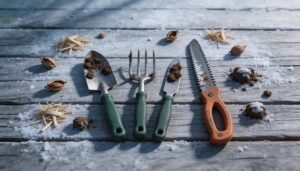
The right hand tools make cold-weather gardening less of a battle and more of a routine. Winter soil is unforgiving — dense, frozen in spots, and quick to punish the wrong tool choice.
Here’s what actually belongs in your kit when temperatures drop.
Digging Spades for Winter Soil Work
A good digging spade is the backbone of winter soil preparation. When you’re working in cold, heavy ground, the right tool makes all the difference.
Look for these five features:
- Blade Shape – pointed cuts through roots and tough clods
- Blade Edge – sharp stainless steel slices wet clay cleanly
- Foot Tread – wide treads protect your boots and add push power
- Handle Length – longer shafts reduce back strain during deep single digging
- Weight Balance – a well-balanced spade won’t tire your wrists after an hour
Stainless steel resists rust without much fuss. Carbon steel hits harder but needs drying after every use. Don’t skip ergonomic hand protection — cold fingers lose grip fast.
Garden Forks for Aeration and Soil Turning
garden fork does what a spade can’t — it opens compacted winter soil without cutting it apart. Four tines with the right fork angle improve soil penetration and boost aeration efficiency without destroying root zones.
Stainless steel tines are your best bet for cold-resistant tools that shed wet clay easily.
long handle adds leverage, so turning dense, waterlogged beds takes far less effort.
Hori-Hori Knives for Roots and Frozen Ground
A hori-hori knife is one of those hardwearing tools that quietly earns its place every winter. The Nisaku Hori Hori Garden Knife manages frozen ground without fuss, thanks to its blade curvature and full‑tang construction.
- Serrated tip saws through tough roots cleanly
- Depth gauge marks precise planting depth
- Cold‑resistant tools need ergonomic handles for cold hands
- Sheath storage keeps the sharp edge safe
- Narrow blade concentrates force into stiff soil
Hand Trowels for Planting and Harvesting
A reliable hand trowel does more than move dirt — it’s your precision tool for winter planting and root harvesting. Stainless steel blades resist rust in wet, frosty conditions far better than carbon steel.
Look for depth markings, a long tang length for leverage, and ergonomic design for cold‑weather gardening tools that keep your grip steady even with gloves on.
| Feature | What to Look For | Why It Matters in Winter |
|---|---|---|
| Blade Angle | Slightly curved, pointed tip | Cuts compacted or frozen soil easily |
| Tang Length | Full‑tang construction | Adds leverage without snapping |
| Ergonomic Design | Non‑slip, cushioned handle | Maintains control with cold hands |
Hand Cultivators for Compacted Winter Beds
Where a trowel plants, a hand cultivator opens the ground up. Frozen‑thaw cycles leave soil crusted and airless — that’s where tine geometry matters. Bent, sharp prongs slice through without tearing dormant roots.
Look for:
- Three or four tines for soil aeration without root disturbance
- Stainless steel for tool durability in wet beds
- Ergonomic design with grip insulation for cold hands
- Lightweight construction for weed extraction and crust management
Pruning Shears for Clean Cold-season Cuts
Once the soil is loose, attention shifts upward — to dormant stems and woody growth. Bypass pruning shears, like the Felco F2, make clean cuts that live tissue actually heals from. Look for low-friction blade coatings to stop sap buildup, and check pivot tension adjustment regularly.
| Feature | Why It Matters | Winter Benefit |
|---|---|---|
| Bypass blade design | Slices, doesn’t crush | Cleaner healing cuts |
| Blade edge retention | Stays sharp longer | Fewer passes needed |
| Cutting angle optimization | Reduces wrist strain | Comfortable in cold |
Loppers and Pruning Saws for Thicker Branches
When stems get thicker than your bypass shears can handle, reach for pruning loppers or a pruning saw. Ratchet loppers — like the Fiskars 28-inch Bypass Loppers — use leverage mechanics and telescoping grips for cut force reduction on branches up to 2 inches.
For anything thicker, the PowerTooth SoftGrip Folding Saw’s tri-edge tooth pattern types slice cleanly through winter wood.
Shovels, Rakes, and Snow Tools for Cleanup
Once your pruning is done, cleanup calls for the right shovels and rakes. A snow shovel with a lightweight push design and safety grip coatings keeps you moving efficiently on icy paths. Blade material choices matter too — steel scrapes packed snow, while polymer slides cleanly on pavement.
- Bow rake: breaks clods and levels beds
- Leaf rake: gathers debris without damaging roots
- Soil rake: smooths seedbeds after digging
- Wheelbarrow: hauls everything in one trip
Snow rake types with long shafts clear roofs safely. Handle design innovations — curved shafts, D-grips — save your back.
Frost Protection and Season Extension
Keeping plants alive through winter isn’t just about luck — it’s about giving them the right shelter at the right time. The good news is there are more options than you might think, from simple covers to full enclosures.
Here’s what you can use to protect your garden when temperatures drop.
Frost Covers and Plant Jackets

Frost covers are your first line of defense when temperatures start dropping. Fabric Weight matters here — lighter 17gsm fleece manages light frosts around -2°C, while heavier 30–50gsm Breathable Materials protect down to -8°C. Agfabric Plant Covers Freeze Protection options work well over cold frames and row covers alike.
| Cover Type | GSM Weight | Frost Tolerance |
|---|---|---|
| Light fleece | ~17gsm | Around -2°C |
| Heavy fleece | 30–35gsm | Around -4°C |
| Garden fleece | 45–50gsm | Around -8°C |
Always prioritize Seasonal Timing — covers go on before frost arrives, not after. Use hoops for Secure Anchoring and better airflow. After the season, rinse, dry, and fold for Reusable Storage.
Cloches for Individual Plant Protection

When one plant needs its own shelter, cloches are the answer. Material Choices range from glass to breathable fabric, each balancing ventilation, durability, and weight differently. Installation Methods are simple — place, anchor, done.
- Glass holds heat well but is heavy
- Plastic is lightweight and easy to move
- Fabric allows air and moisture through
- Wire styles double as a Pest Barrier
- Dome shapes create a warm microclimate instantly
Use them for Seasonal Use from autumn through spring.
Cold Frames for Overwintering Crops
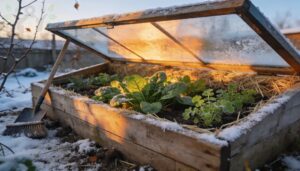
Cold frames are one of the most reliable Heat Retention Strategies you can use for Seasonal Crop Planning.
These simple boxes — sloped toward the sun, set south-facing — create a stable Microclimate Management zone that stays 10–20°F warmer than outside.
Use them for overwintering plants like spinach and mâche. Clear snow regularly for Snow Clearance, add straw for Ground Insulation, and vent on mild days.
Greenhouses for Winter Growing Support

A greenhouse takes what cold frames do and scales it up considerably. With Insulated Glazing — think twin-wall polycarbonate panels — you get real overnight warmth without hemorrhaging heat, like glass does.
Here’s what actually matters for winter success:
- Thermal Mass: Black water barrels absorb daytime sun and release heat after dark.
- Ventilation Automation: Automatic vent openers prevent mold without manual babysitting.
- Snow Load Design: Steep roof pitches shed snow before it buckles your frame.
- Heating Zoning: The SwSun WiFi Greenhouse Heater covers up to 150 ft² with smartphone alerts.
Seedling Heat Mats for Indoor Starts

seed germination stalls quickly when soil temps drop below 65°F — that’s where a seedling heat mat earns its keep. The VIVOSUN Seedling Heat Mat pairs digital controls with reliable thermostat calibration, holding your tray right in that 75–85°F sweet spot.
Mat size compatibility matters too; standard 10×20 options fit one tray cleanly. Efficient heat distribution and low energy consumption make indoor seed starting genuinely stress‑free.
Soil Thermometers for Temperature Monitoring
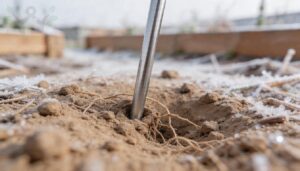
Guessing soil temperature is a gamble you can’t afford in winter. The REOTEMP Soil Thermometer takes the guesswork out of soil temperature monitoring with a stainless steel probe — excellent probe material for cold soil penetration.
Insert it 4–6 inches for accurate probe depth readings. Its wide temperature range and battery‑free reading design make it a reliable soil testing kit, with calibration accuracy within ±1°C.
Mulching Tools and Insulation Materials
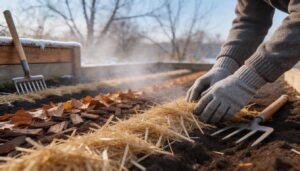
Once your soil temperature is logged, mulch is your next line of defense. The right mulch material properties and insulation thickness impact matter more than most gardeners realize—straw at 3 inches creates air pockets that cut soil temperature swings by 10–15°F. Use mulch forks and mulch rakes for clean, even application.
Straw mulch at just 3 inches deep can slash soil temperature swings by up to 15°F
Top natural mulch options for heat retention strategies and moisture management:
- Straw – 3 inches deep for vegetable beds; excellent frost protection and air-pocket insulation
- Wood chips – 3–4 inches for flower beds; long-lasting with strong weed suppression
- Shredded leaves – budget-friendly, slow-decomposing, and improves soil structure
- Compost – 2–3 inches adds nutrients while insulating before the ground freezes
- Pine straw – interlocks on slopes; ideal Seasonal Mulch Rotation for acid-loving plants
Always keep mulch 2–3 inches away from stems to prevent rot.
Row Covers and Hoop Tunnels for Extra Protection
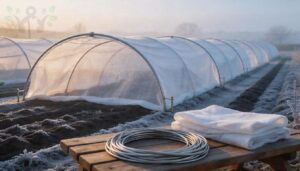
Mulch covers the ground, but row covers and hoop tunnels protect what’s above it. Lightweight frost cloth row covers — spun-bonded polypropylene — let light and water through while blocking frost.
Fabric Weight Selection matters: heavier fabric means stronger protection.
DIY Frame Materials like PVC or wire keep covers lifted.
Use smart Anchoring Techniques and Ventilation Strategies on warm days to avoid overheating.
Top 9 Winter Gardening Products
Knowing what to buy makes all the difference when winter is already knocking at the door. These nine products cover the essentials — from frost protection to seed-starting warmth — so your garden stays productive through the cold months.
Here’s what made the cut.
1. Hyxanons Plant Frost Cover
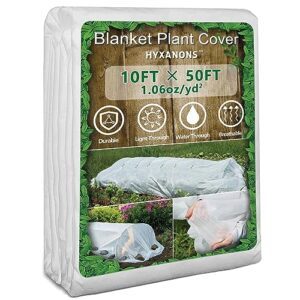
When a late frost threatens to undo weeks of work, the Hyxanons Plant Frost Cover gives you a fast, reliable safety net.
This 10 × 50 ft roll of spunbonded nonwoven fabric weighs just 1.06 oz per square foot — light enough to drape without crushing stems, yet dense enough to protect plants down to around 20°F.
It lets air, water, and about 70% of sunlight pass through. Cut it to fit any bed, anchor the edges well, and you’re done.
| Best For | Home gardeners and small-scale growers who want an affordable, easy-to-use way to protect plants from surprise frosts and garden pests. |
|---|---|
| Primary Use | Frost & season extension |
| Reusability | Reusable |
| Material | Non-woven fabric |
| Weather Resistance | Frost, wind, rain |
| Size / Coverage | 10 ft × 50 ft roll |
| Ease of Use | Cut to shape, pin or weight down |
| Additional Features |
|
- Big 10 × 50 ft roll gives you plenty of coverage, and you can trim it down to fit any shape or size bed.
- Light enough that it won’t crush delicate seedlings, but still holds heat well enough to keep plants safe down to around 20°F.
- Works for more than just frost — doubles as a barrier against birds, rabbits, and other critters without any extra gear.
- The fabric is thin, so edges can start to fray or tear after a few seasons, especially if wind is a regular issue in your area.
- Water pools on the surface during heavy rain, so you may need to check on drainage or add a second layer when a big storm rolls through.
- Wind can get under it pretty easily — you’ll need to anchor it well with stakes, stones, or clips or risk finding it across the yard in the morning.
2. Haxnicks Easy Fleece Plant Jacket
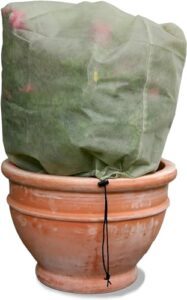
If a roll of fabric feels like overkill for a single potted palm or hanging basket, the Haxnicks Easy Fleece Plant Jacket is your answer.
Each jacket slips over individual plants and cinches tight at the base with a built-in drawstring — no fussing, no fumbling.
The 35gsm UV-stabilized fleece tolerates frost down to around 20°F while still letting light and moisture through.
Three sizes cover everything from small containers to large cordylines, and the whole thing folds back into a resealable bag when winter’s done.
| Best For | Gardeners who want a quick, fuss-free way to protect individual potted plants, hanging baskets, or small shrubs from frost without dealing with bulky row covers or fabric rolls. |
|---|---|
| Primary Use | Frost & plant protection |
| Reusability | Reusable |
| Material | Fleece |
| Weather Resistance | Frost, wind, light snow |
| Size / Coverage | 23.6 in × 31.5 in per jacket |
| Ease of Use | Drawstring cinch fit |
| Additional Features |
|
- The built-in drawstring makes putting it on and taking it off genuinely fast — no extra ties or clips needed.
- Breathable fleece lets light, air, and rain through, so you’re not cooking your plant or trapping moisture while it’s covered.
- Folds back into a resealable bag for clean, compact storage between seasons.
- Sharp branches or dense low-lying foliage can snag and tear the lightweight fleece, which shortens its lifespan over time.
- Only two sizes available, so plants like large sword ferns or anything without a defined trunk can be tricky to fit and cinch properly.
- Not built for prolonged extreme cold — if you’re dealing with a brutal Arctic stretch rather than the occasional frost night, this probably won’t cut it.
3. Vounot Plant Frost Protection Fleece
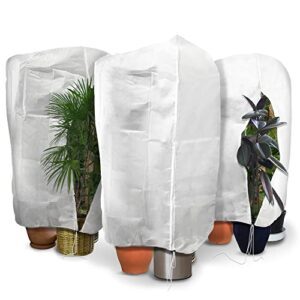
When a single-plant jacket isn’t quite enough, the Vounot Plant Frost Protection Fleece steps in for broader coverage. Each pack includes three jackets made from 80gsm non-woven polypropylene — heavier than most fleece on the market — so they hold heat around shrubs and young trees more effectively.
The breathable fabric still lets air, light, and water through, which means your plants won’t suffocate under cover.
An adjustable drawstring keeps it snug in wind, and the washable, reusable build makes it worth the investment season after season.
| Best For | Gardeners who need to protect multiple shrubs, young trees, or vegetable beds from frost and harsh weather across a whole season. |
|---|---|
| Primary Use | Frost & wind protection |
| Reusability | Reusable |
| Material | Polypropylene fleece |
| Weather Resistance | Frost, snow, wind, rain |
| Size / Coverage | 1.2 m × 1.8 m per cover |
| Ease of Use | Adjustable drawstring |
| Additional Features |
|
- Comes in a pack of three, so you can cover more plants without buying multiple products
- Heavy 80gsm fabric holds heat better than lighter fleece options
- Breathable, washable, and reusable — solid long-term value
- Won’t cut it in extreme cold where you need serious insulation
- Strong wind gusts can pull it loose if you rely on the drawstring alone
- Fixed size means very large shrubs or trees might need more than one piece to get full coverage
4. Garden Plant Cloche Dome Set
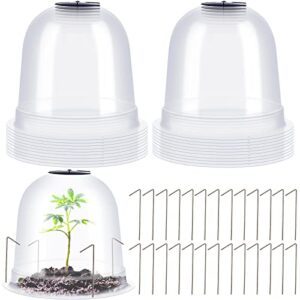
When frost threatens your smallest transplants, individual cloches are hard to beat.
This set gives you 20 reusable clear PVC domes — each about 7.7 inches wide and 6.7 inches tall — plus 80 metal pegs to lock them down.
Angle the pegs at 45° and they’ll hold through winds over 50 mph.
The transparent walls let sunlight in while trapping warmth around peppers, tomatoes, and young seedlings.
At $30.99 for the full set, that’s solid protection per plant.
| Best For | Home gardeners who want affordable, individual protection for small seedlings and transplants during cold snaps or rough weather. |
|---|---|
| Primary Use | Seedling & transplant protection |
| Reusability | Reusable |
| Material | Clear PVC |
| Weather Resistance | Wind, frost, rain, snow |
| Size / Coverage | 7.68 in diameter × 6.7 in height |
| Ease of Use | Peg-secured open-bottom dome |
| Additional Features |
|
- 20 cloches and 80 pegs for $30.99 is genuinely good value per plant
- Clear PVC lets sunlight through while keeping warmth and moisture locked in
- Pegs angle at 45° to hold firm in winds over 50 mph
- Seedlings outgrow the 6.7-inch height pretty fast, so you’ll need a backup plan
- The plastic can crack if you step on it or handle it roughly
- Getting the pegs angled just right takes a little patience — skip that step and wind resistance drops off
5. Cooljob Waterproof Gardening Gloves
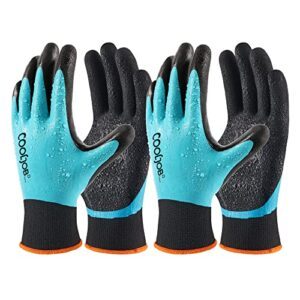
Cold, wet soil is where most gloves fail you — and that’s exactly where the Cooljob Waterproof Gardening Gloves hold up.
The fully waterproof latex coating keeps your hands dry through muddy digging and wet pruning sessions.
A double layer on the palm and fingers adds real durability where you need it most.
The sandy latex texture gives you a solid grip on tool shafts, even when everything’s soaking wet.
At $14.99 for two pairs, it’s practical protection that won’t drain your budget.
| Best For | Gardeners, landscapers, and hobby farmers who regularly work in wet or muddy conditions and need reliable hand protection that actually stays dry. |
|---|---|
| Primary Use | Wet & muddy conditions |
| Reusability | Reusable |
| Material | Latex-coated polyester |
| Weather Resistance | Water, mud, wet conditions |
| Size / Coverage | Adult hand size |
| Ease of Use | Machine washable, slip-on |
| Additional Features |
|
- Fully waterproof latex coating with a double layer on the palm and fingers keeps hands dry and holds up to real wear
- Sandy latex texture locks your grip on tools and handles even when everything’s wet and slippery
- Two pairs for $14.99 is solid value, and they’re machine-washable so they last longer
- The thick latex traps heat, so your hands can get pretty warm on sunny days or during long sessions
- Only comes in one color and adult sizing, which limits who can use them
- Some shoppers feel the price is a bit steep compared to basic gardening gloves in the same category
6. Acdyion Thorn Proof Leather Gardening Gloves

Acdyion gloves don’t forgive careless hands — and that’s where the Acdyion gloves earn their keep. The thickened cowhide leather resists punctures from roses, blackberry canes, and cacti without sacrificing grip on your pruning shears.
What really sets them apart is the elbow-length gauntlet cuff, which shields your forearms when you’re reaching deep into dense winter shrubs.
At $18.97, you get durable, breathable protection that fits a wide range of hand sizes. Just condition the leather occasionally to keep it supple.
| Best For | Gardeners, ranchers, and outdoor workers who regularly deal with thorny plants and need reliable forearm protection without spending a lot. |
|---|---|
| Primary Use | Thorny plant handling |
| Reusability | Reusable |
| Material | Cowhide leather |
| Weather Resistance | Abrasion, puncture resistant |
| Size / Coverage | XS–XL unisex |
| Ease of Use | Slip-on gauntlet glove |
| Additional Features |
|
- Thick cowhide leather handles roses, cacti, and brambles without letting thorns through on most tasks
- The long gauntlet cuff protects your forearms when you’re reaching into dense or overgrown shrubs
- At $18.97, you get solid all-season protection that works across gardening, barn work, and more
- Very sharp or dense vines can occasionally poke through — you might need a liner for serious thorn work
- The fit runs large, so people with smaller hands may find them a bit sloppy
- Leather needs occasional conditioning and isn’t waterproof, so wet conditions can be a problem
7. Vivosun Seedling Heat Mat
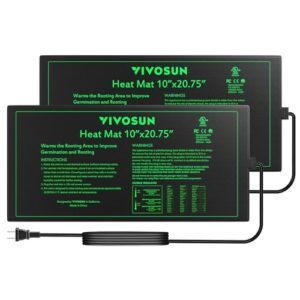
Germination is a waiting game — but the VIVOSUN Seedling Heat Mat shortens the wait. Its far-infrared heating film warms your root zone 10–20°F above ambient temperature, which is exactly what cold-season starts need.
The 10 × 20.75-inch mat fits standard 1020 trays perfectly, draws just 20 watts, and features an IP67-rated waterproof surface you can actually wipe clean.
You’ll need a separate thermostat for precise control, but at this price point, that’s a small ask.
| Best For | Home gardeners and indoor growers who want faster germination and seedling growth without spending a lot on heating equipment. |
|---|---|
| Primary Use | Seed germination heating |
| Reusability | Reusable |
| Material | PVC heating film |
| Weather Resistance | Water-resistant (IP67) |
| Size / Coverage | 10 in × 20.75 in mat |
| Ease of Use | Plug-in, lay flat under tray |
| Additional Features |
|
- Far-infrared film heats evenly across the whole mat — no hot spots that could stress young roots.
- Fits standard 1020 trays perfectly and only pulls 20 watts, so it runs cheap over long stretches.
- IP67-rated surface wipes down easily, which matters when you’re working with soil and water regularly.
- No built-in thermostat — you’ll need to buy a separate controller if you want precise temperature management.
- US 120V plug only, so international users will need a voltage converter to make it work.
- Lightweight build feels a bit flimsy to some users compared to thicker, more heavy-duty mats on the market.
8. AC Infinity Seedling Heat Mat
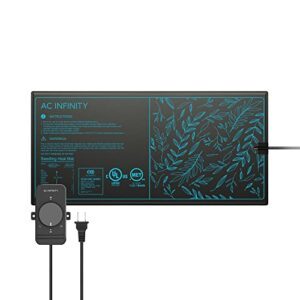
The AC Infinity SUNCORE takes a step up from basic mat designs. Its far-infrared film heats faster and more evenly than wire-coil mats, spreading gentle warmth across the entire surface without hot spots.
10 × 20.75-inch S3 model runs on just 20 watts and carries an IP67 waterproof rating, so humid propagation setups aren’t a problem.
You control heat output with a simple dial — no thermostat built in, so pair it with an external probe for precision.
At $21.99, it’s hard to argue with.
| Best For | Beginner gardeners and hobbyist growers who want an affordable, no-fuss heat mat for seed starting, clones, or cuttings in a typical indoor setup. |
|---|---|
| Primary Use | Seed germination heating |
| Reusability | Reusable |
| Material | PVC heating film |
| Weather Resistance | Waterproof (IP67) |
| Size / Coverage | 10 in × 20.75 in mat |
| Ease of Use | Plug-in manual dial control |
| Additional Features |
|
- Far-infrared film heats fast and evenly — no hot spots, just consistent warmth across the whole surface.
- IP67 waterproof rating means you can use it under humid domes or wet trays without worrying about damage.
- At $21.99, it punches well above its price point for everyday propagation needs.
- No built-in thermostat — you’ll need an external thermometer to keep a close eye on temps.
- The 70–90°F range might fall short in a cold basement or unheated greenhouse during winter.
- Doesn’t play nicely with AC Infinity’s 69PRO controller without adding a separate control unit.
9. MCombo Wooden Greenhouse Cold Frame
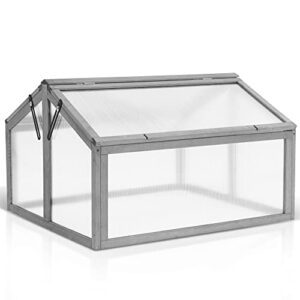
If you want something more permanent than a heat mat, the MCombo Wooden Greenhouse Cold Frame gives your seedlings a proper home.
The fir wood frame looks good on a patio and holds up to 44 pounds of pots and trays.
The Dual-walled polycarbonate panels let in light while keeping frost out. The hinged roof vents when temperatures climb.
At 35.4 × 31.5 × 22.8 inches, it’s compact but capable. Just stake it down — it’s light enough to catch wind.
| Best For | Gardeners who want a tidy, attractive cold frame for a patio or balcony to get a jump on spring seedlings or protect plants through fall. |
|---|---|
| Primary Use | Season extension shelter |
| Reusability | Reusable |
| Material | Fir wood & polycarbonate |
| Weather Resistance | Frost, wind, rain |
| Size / Coverage | 35.4 in × 31.5 in × 22.8 in |
| Ease of Use | Double-door top access |
| Additional Features |
|
- Polycarbonate panels let in plenty of light while keeping frost and cold winds off young plants
- The fir wood frame looks genuinely nice outside — not like a plastic tub you’re hiding in the corner
- Double hinged roof makes it easy to water, vent, and tend to your seedlings without awkward reaching
- Light enough to blow over in a stiff breeze, so you’ll want stakes or weights to keep it in place
- The paint is thin and the wood can absorb moisture over time — plan on sealing it yourself
- Some users report a strong chemical smell right out of the box that takes a while to air out
Tool Care and Winter Storage
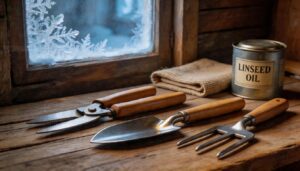
Good tools don’t take care of themselves, especially through a wet, freezing winter. A little maintenance after each use goes a long way toward keeping your gear sharp, rust-free, and ready when you need it.
Here’s what to do to protect your investment all season long.
Cleaning and Drying Tools After Use
After every session, an immediate wipe-down stops mud and sap from bonding to metal. Follow that with compressed air blowing moisture out of pivot joints and screw heads — spots a cloth just can’t reach.
Once dry, apply an oil coating method across all exposed metal.
Finish with a quick tool inspection checklist, then store tools with a desiccant pack to lock out winter humidity.
Sharpening Blades for Winter Efficiency
Once your tools are clean and dry, Don’t skip sharpening the edge. Bypass pruners cut best at a 20–25 degree blade angle — match that factory bevel and you’ll avoid chipping on frozen stems.
After sharpening, burr removal matters more than most gardeners realize. A few light back-strokes give you a truly sharp edge.
Test it on a small branch. Ragged cuts mean it’s not ready yet.
Oiling Metal Parts to Prevent Rust
Sharp blades need one more step before storage: oiling. Pre‑oil cleaning matters — wipe every metal surface dry so moisture can’t hide under the coat.
For oil type selection, a light machine oil or WD-40 works fine on most metal tools.
Application technique is simple:
- Use a cloth, not a spray can
- Apply a thin protective coat across the full blade
- Don’t leave bare spots — they’ll rust fast
- Follow a re‑oil schedule after every heavy use or wash
- Store indoors to help the film last longer
That thin barrier blocks air and moisture from touching the steel directly — which is exactly how rust prevention works in cold weather gardening.
Protecting Handles and Grips From Moisture Damage
Grips take a beating in winter — and the damage is quiet at first.
| Handle Type | Main Risk | Best Protection |
|---|---|---|
| Wood | Swelling, cracking | Linseed oil finish |
| Cork | Moisture absorption | Cork sealant use |
| Rubber | Peeling, hidden rot | Rubber grip maintenance |
| Fiberglass | Surface wear, cracks | Fiberglass handle inspection |
| Ergonomic/composite | Grip breakdown | Wipe dry; check seals |
Moisture barrier strategies keep weather-resistant grips performing longer — and your non-slip, comfortable grips reliable when cold hands need them most.
Indoor Storage for Longer Tool Lifespan
Where you store your tools matters as much as how you clean them.
- Keep tools on ventilated shelving — never on bare concrete, which transfers moisture straight into metal
- Use sealed containers with desiccant packets to maintain humidity control below 40%
- Add moisture barrier liners inside toolboxes for extra protection
- Choose dry, climate-stable indoor spaces for seasonal tool storage
- Apply light oil as a final maintenance step before storing winter gardening tools
Organizing Winter Tools for Quick Access
Once your tools are clean and oiled, keeping them reachable is half the battle. Organize by seasonal zones—pruning gear here, a frost-protection kit there. Utilize wall storage for long-handled tools and implement label systems on bins to ensure nothing gets buried.
| Strategy | What It Does |
|---|---|
| Seasonal zones | Groups tools by winter task |
| Wall storage | Frees floor space, improves reach |
| Label systems | Speeds up finding small items |
| Grab-go kits | Bundles tools for one job |
| Quick inventory | Shows gaps before winter hits |
For added efficiency, assemble grab-go kits tailored to specific tasks and conduct a quick inventory to identify shortages before winter arrives.
Frequently Asked Questions (FAQs)
What is the gardening 3 year rule?
Ironically, the best thing you can do in year one is almost nothing. The 3 year rule means perennials sleep, creep, then leap — roots first, patience second, rewards third.
What are the best garden tools?
The best garden tools balance tool weight, ergonomic tool design for cold climates, and multi-tool versatility.
Prioritize selecting durable winter gardening tools with solid warranty coverage, eco-friendly materials, and a trusted brand reputation for lasting value.
What tools do you need for professional garden maintenance?
Think of a professional gardener as a surgeon — the right tools make all the difference.
You’ll need heavy-duty wheelbarrows, an electric leaf vacuum, a compost aerator, and reliable snow removal equipment.
What is the most essential tool for beginner gardeners?
For most beginners, a hand trowel builds real confidence fast. It’s affordable, easy to carry, and manages planting, transplanting, and light weeding — a natural first step in skill development.
What tools do you need to harvest a garden?
You’ll need hand pruners, harvest baskets, sorting bins, a garden cart or wheelbarrow, a garden fork, shovel, hand rake, hand fork, knee pads, and gloves to harvest efficiently and protect both your crops and your body.
What tools do you need to grow a vegetable garden?
soil testing kit, seed tray system, compost bin, irrigation timer, and mulch spreader form your foundation.
Add a wheelbarrow, garden fork, shovel, cold frames, and row covers to handle every season confidently.
What tools do you use to rust a garden?
Rust doesn’t belong in your garden shed. After each use, dry your tools, apply an oil coating, and finish with protective wax.
Corrosion-resistant grips and rust inhibitor sprays keep everything garden-ready.
What month do you start a winter garden?
Most gardeners start in July or August, counting back 6–8 weeks from their first frost date.
Your USDA zone timing and microclimate adjustments matter — a sheltered yard can shift that window by weeks.
What is the most important tool every gardener should have?
A good pair of gloves is the one tool you can’t skip. They protect your hands, give you grip, and keep you working longer in cold, wet conditions.
What do you plant in your garden in the winter?
Hardy leafy greens like kale, spinach, and chard thrive with winter planting.
Root vegetables, winter herbs, and frost-blooming flowers also do well under row covers or plant insulation for cold-hardy results.
Conclusion
Ironically, winter’s chill can be a gardener’s best friend with the right gear. Investing in the best winter gardening tools and equipment can transform a dormant season into a thriving one.
You’ll find that frosty mornings become an opportunity to nurture your garden, using high-quality materials and clever designs to make the most of the cold weather, with the best winter gardening tools and equipment by your side.
- https://reagtools.co.uk/blogs/news/5-tools-and-supplies-you-need-for-a-successful-autumn-and-winter-of-growing-food
- https://www.gardenskill.com/more/gardenskill-blog/protecting-plants-from-frost-ultimate-guide/
- https://www.dripworks.com/blog/winter-garden-tips-and-maintenance-for-beginners
- https://www.sunset.com/home-garden/garden-basics/winter-gardening-tools
- https://www.vegogarden.com/blogs/academy/top-5-essential-tools-for-winter-gardening