This site is supported by our readers. We may earn a commission, at no cost to you, if you purchase through links.
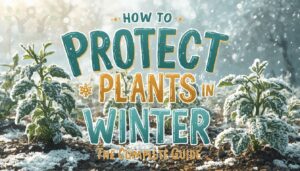
A single overnight frost can kill a tomato plant you’ve spent three months nurturing—not from prolonged cold, but from ice crystals forming inside leaf cells and tearing them apart. That’s the part most gardeners don’t realize: the damage isn’t from temperature alone, it’s from what happens at the cellular level when water freezes where it shouldn’t.
Knowing the difference between a light frost and a hard freeze changes everything about how you respond.
The right cover, applied at the right time, can mean the difference between a thriving winter garden and a bed of blackened stems come in the morning.
Table Of Contents
- Key Takeaways
- Why Winter Frost Damages Plants
- Cover Plants Before Frost Arrives
- Choose The Right Frost Protection
- Protect Roots, Soil, and Containers
- Know Which Plants Need Protection
- Tender Annuals Like Tomatoes and Basil
- Warm-season Crops Like Peppers and Cucumbers
- Tropical Ornamentals and Houseplants
- Seedlings and Newly Transplanted Plants
- Container Plants With Exposed Roots
- Cold-tolerant Crops Like Kale and Carrots
- Perennials, Bulbs, and Fruit Trees
- Using Frost Dates to Plan Protection
- Frequently Asked Questions (FAQs)
- Can you put sheets over plants to protect from frost?
- What is the best thing to cover plants from frost?
- Should I water my plants before I cover them for a freeze?
- What can I use instead of fleece to protect plants?
- What is the best material to cover plants from frost?
- What not to cover plants with for frost?
- Will plastic garbage bags protect plants from frost?
- Should I cover my plants at 32 degrees?
- At what temperature should you cover your plants at night?
- How do I prevent frost in my garden?
- Conclusion
Key Takeaways
- Frost kills plants not just from cold, but from ice crystals forming inside leaf cells — understanding this helps you act before damage starts, not after.
- Cover tender plants when temperatures approach 36°F, always before sunset, using breathable fabric like frost cloth — never plastic directly against leaves.
- Moist soil, mulch, and strategic container placement near south-facing walls do quiet but powerful work protecting roots through the night.
- Not all plants need the same defense — tomatoes and basil need cover at 32°F, while kale and carrots actually sweeten after a frost.
Why Winter Frost Damages Plants

Frost doesn’t just chill your plants — it can quietly destroy them from the inside out. Understanding exactly how that damage happens helps you protect the right plants at the right time.
Knowing your frost risks pairs well with winter soil prep strategies that keep both plants and ground structure intact through the coldest months.
Here’s what’s actually going on when winter cold moves in.
Frost Vs. Freeze Damage
Frost and freeze sound the same, but they hit your plants very differently.
Frost damage happens when leaf temperature thresholds dip to 32°F, forming ice on surfaces while air stays slightly warmer.
Freeze damage digs deeper — subzero soil impact ruptures cells internally, leaving dark, sunken lesions.
Recovery speed differs too: plants bounce back from frost quickly, but freeze damage causes lasting necrosis.
How Ice Crystals Harm Leaves
Ice crystals don’t just sit on your leaves — they actively pull water out of cells through extracellular dehydration, concentrating salts and stressing tissues.
Ice crystals don’t just coat leaves — they drain cells dry, concentrating salts until tissues collapse
As crystals grow, they block plasmodesmata, cutting off cellular communication. Membrane rupture follows, causing that familiar dark browning.
Ice nucleation sites on leaf surfaces trigger freezing fast, and recrystallization damage during thawing adds another layer of cellular damage your plants must survive.
Plants such as ginkgo can suffer severe leaf freeze injury.
Light Frost Vs. Hard Freeze
Not all cold nights hit your plants the same way. A light frost — temperatures hovering around 32°F — creates small, feathery ice crystals with limited tissue penetration depth. Most healthy plants recover quickly.
hard freeze, dropping to 28°F or below for hours, means larger crystals, deeper cellular damage, and slower recovery speed.
Duration impact matters: a brief dip forgives; a prolonged freeze doesn’t.
Clear, Calm Nights and Frost Risk
Clear, calm nights are where radiative cooling does its quiet work. Without cloud cover, heat escapes directly into the sky — sky clarity acts like an open window, letting warmth vanish fast. Atmospheric stability prevents cold air from mixing with warmer layers above, trapping chill near the surface.
A dew point drop signals frost is near. These conditions — clear skies, still air, and falling dew points — are critical markers in frost forecast monitoring.
They indicate a radiation freeze, distinct from an advection freeze driven by invading cold air masses.
Cold Air Pooling in Low Areas
Even when your thermometer reads 36°F, low spots in your garden can be several degrees colder. Cold air drainage pulls dense air downslope, pooling it in basins like water filling a bowl — that’s Basin Drainage Patterns working against you.
Inversion Detection and Cold Pocket Mapping reveal these frost traps. Smart garden microclimate management, including Low-Spot Windbreaks and Soil Heat Retention strategies, keeps microclimate variations from catching your plants off guard.
Cover Plants Before Frost Arrives

Timing is everything when frost is on the way. Getting your plants covered before temperatures drop — not after — is what separates a healthy garden from a damaged one.
Here’s exactly what to do to stay ahead of the cold.
Cover Plants When Lows Near 36°F
Don’t wait for a hard freeze to act — 36°F is your real trigger to cover plants. Once night lows approach that mark, reach for a breathable fabric cover or blankets for frost protection.
Good thermometer placement near ground level gives you an accurate read. Build a DIY frame to maintain air gap spacing, enabling layered fabric insulation without foliage contact.
Cover reuse strategies extend your investment across seasons.
Protect Frost-prone Spots Near 40°F
Some spots in your garden need protection even at 40°F. Low-lying areas experience cold air drainage, where chilly air settles into depressions and pockets.
Using microclimate windbreaks, south-facing walls, and elevated beds keeps vulnerable plants warmer. Reflective mulch bounces daytime heat back toward crowns overnight.
These microclimate adjustments for your garden can mean the difference between healthy plants and frost-damaged ones.
Install Covers Before Sunset

Timing is everything when you cover plants against frost. Install covers in the late afternoon — before sunset, not after.
Here’s your quick Installation Tool Kit checklist:
- Start Evening Wind Assessment at least two hours before dark
- Set your Sunset Coverage Radius to reach 6 inches past outer foliage
- Apply Weight Distribution Techniques: anchor edges every 12–18 inches
- Check Gap Management at corners where cold air sneaks in
- Use blankets for frost protection and secure them firmly
proper anchoring makes nearly impossible.
Use Breathable Frost Cloth or Sheets
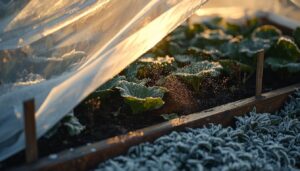
Not all covers are created equal — breathable frost cloth is your best friend here. Choose a 1–2 oz row cover fabric for light frosts, or a 4–6 oz frost fabric when temperatures dip toward 28°F.
Use the Clip Stake Method to keep protective plant coverings elevated off foliage. Build in a small Ventilation Gap Design at the base for Moisture Management and proper airflow.
Avoid Plastic Touching Foliage

Plastic is frost protection’s sneaky saboteur. When plastic bags cover plants or wrap foliage directly, they trap moisture and block airflow — creating condensation that freezes right on your leaves. That plastic-to-leaf contact damages delicate Leaf Surface Health fast.
Instead, choose Non-Plastic Fabrics like burlap, frost fabric, or old bed sheets.
Always maintain an Air Gap Maintenance buffer of 2–3 inches for proper Moisture Pocket Monitoring and breathable covers that actually protect.
Secure Cover Edges to Trap Soil Heat

Once your cover is in place, don’t let the edges flap loose. Tucking them snugly against the soil is where real soil temperature regulation happens.
Aim for a 2–4 inch Overlap Width Guidelines margin, then anchor edges with bricks, landscape pins every 12–18 inches, or a layer of mulch — that’s your Wind Resistant Edge.
A slight Tent Angle Installation at the center sheds moisture while keeping edge contact tight.
Remove Covers After Temperatures Rise

Once those edges are locked down, your next job is knowing when to let go. Don’t rush it — wait until nighttime lows stay reliably above 40°F before starting Gradual Cover Lifting.
Begin Sunlit Edge Uncovering each morning, letting Soil Heat Release work gradually. Keep Mulch Insulation Maintenance in place to support soil warmth.
Watch the forecast closely, and reapply covers if temperatures dip again.
Choose The Right Frost Protection

Not all frost protection works the same way, and the right choice depends on what you’re growing and how cold it’ll get.
Some options are quick and simple; others give you more control over longer stretches of cold weather.
Here’s what works best for each situation.
Use Blankets for Tender Garden Plants
Blankets are one of the simplest, most effective frost protection methods for tender plants like tomatoes, basil, and geraniums. Smart Blanket Material Choice matters — fleece and breathable frost fabric offer 2–4°C of protection without trapping damaging moisture.
For using blankets for frost protection, follow these steps:
- Choose blankets with 200–300 gsm for reliable Insulation Thickness
- Extend coverage 6–12 inches beyond plant edges
- Practice Edge Weighting with rocks or soil to seal out cold air
- Prioritize Breathability Management — avoid plastic touching foliage
- Follow Seasonal Rotation, inspecting and storing blankets dry after each use
Install Row Covers Over Vegetable Beds
Row covers take frost protection a step further than blankets. Drape lightweight spunbonded fabric—white or translucent for Fabric Color Selection—loosely over your beds, following Hoop Spacing Guidelines of 3–5 feet apart.
Secure edges firmly; cold air sneaks in through gaps fast. Follow Ventilation Timing by lifting covers when temperatures reach 50°F.
Practice Row Cover Repair and Seasonal Storage Tips to extend their life.
Build Hoop Tunnels for Longer Protection
When you need protection that lasts weeks rather than days, hoop tunnels are your best tool.
Hoop Tunnel Design is straightforward: space flexible PVC hoops 3–4 feet apart, stretch frost cloth over them, and anchor the edges.
This Insulation Layers approach raises interior temps by 4–8°F.
Use smart Ventilation Strategies by opening ends on warmer days.
Season Extension Timing and Tunnel Placement Tips make cold frames and grow tunnels, mini hoop tunnels, and popup greenhouses ideal for garden season extension.
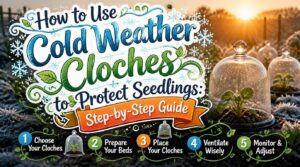
Place Cloches Over Seedlings
Think of a cloche as a tiny greenhouse for individual seedlings. Glass vs. Plastic options both work — glass holds heat longer, while plastic is lighter and cheaper.
Position each cloche with fit precision, keeping the base 1–2 inches from stems.
- Apply secure support stakes in windy spots
- Follow smart ventilation strategies — vent when temperatures exceed 60°F
- Practice gradual removal as nights warm
- DIY plant cloches from cut milk jugs work perfectly
Use Cold Frames for Winter Crops
Cold frames are one of the most reliable winter garden plant care strategies you can adopt. Place yours in a south-facing position to harness solar heat.
Open the lid on sunny days for controlled ventilation, then close it at dusk. Keep a thermometer inside for interior temperature monitoring.
Hardy, quick-turnover crops like spinach and arugula thrive in soil heat beds beneath the frame.
Add Double Covers During Hard Freezes
When temps drop below 28°F, a single frost cloth isn’t enough. That’s your Temperature Trigger to double up. Use fabric as your inner layer, then add a thermal blanket for plants on top — this Material Pairing traps a pocket of still air that slows heat loss.
- Set your Wind Shield Frame 6–12 inches above foliage for proper Air Pocket Height
- Install both layers before sunset for best Layer Installation Timing
- Avoid covering plants with fabric and plastic touching leaves directly
- Seal all edges to the ground with bricks or boards
Use Heat Lamps Safely When Necessary
Heat lamps can protect plants from frost when other frost protection methods fall short.
Position lamps 18–24 inches above foliage — your Angle and Distance Settings matter for avoiding scorching.
Follow Lamp Placement Guidelines and always plug into GFCI outlets for Cord and Power Safety.
Use a Timer and Thermostat setup to automate shut-off, and keep flammables clear for Fire Risk Mitigation.
Protect Roots, Soil, and Containers

Covering your plants helps, but the ground beneath them does a lot of the heavy lifting on cold nights. Roots, soil moisture, and container placement all play a bigger role in frost survival than most gardeners realize.
Here’s how to protect what’s happening below the leaves.
Water Soil Before Freezing Nights
Moist soil retains heat far better than dry soil — up to four times more. That’s why watering before freeze events matters so much.
Your goal is field capacity targets: soil damp at 60–80% saturation, not soggy. Water deeply the evening before, aiming for even moisture distribution throughout the root zone.
Good prefrost watering and soil moisture heat retention work together to buffer your plants through the night.
Mulch With Straw, Bark, or Leaves
Once your soil is watered, add a 2–3‑inch layer of organic mulch to lock that warmth in overnight.
Each type pulls its weight differently:
- Straf insulation limits soil temperature swings by up to 6°C
- Bark moisture retention keeps roots consistently hydrated
- Leaf decomposition slowly feeds soil structure through winter
- Mulch depth at 2–3 inches balances insulation without smothering crowns
Organic mulch benefits stack up fast.
Keep Mulch Away From Stems
Mulch is a great insulator — but placement matters.
Keep a 2–3 inch mulch gap around every stem. Direct contact traps moisture, invites fungal disease like Phytophthora, and can freeze against tissue during cold snaps.
Stem clearance also improves air circulation, which speeds recovery after frost.
Build an inspection routine: after rain or wind, check that mulch hasn’t shifted back toward stems.
Move Potted Plants Indoors
When temperatures are set to drop below 50°F consistently, it’s time to move potted plants indoors. Don’t rush the process; instead, follow an acclimation schedule by bringing plants indoors for a few hours daily over 3–7 days.
Before any temporary indoor relocation during a cold snap, conduct a pest check and wipe foliage clean. Set pots on a moisture barrier and position them near bright indirect light to ensure optimal conditions.
Keep up temperature monitoring to proactively move containers before damage starts.
Group Containers Near Warm Walls
Once your most tender pots are safely indoors, don’t forget the ones staying outside. Grouping containers near heat-absorbing walls is one of the smartest microclimate adjustments for garden frost prevention you can make.
A south-facing wall — especially brick or masonry — absorbs solar heat all day and radiates it overnight. Strategic planting near south-facing walls creates a warmer microclimate that can mean a few degrees of difference.
- Keep pots 6–12 inches from the wall for balanced airflow and heat gain.
- Prioritize sun-facing orientation to boost daytime thermal absorption.
- Use insulated pot bases like wood blocks to limit ground heat loss.
- Cluster smaller containers together — grouped pots retain warmth better than isolated ones.
- Practice seasonal plant rotation to give the most frost-tender plants prime wall spots.
Elevated pot placement and smart grouping are simple, effective container plant winter care strategies that cost nothing extra.
Raise Pots Above Frozen Pavement
Frozen pavement pulls heat straight out of your pots from below. Elevated platforms — vertical stands, concrete blocks, or non-slip pallets — lift containers 6–12 inches off the ground, cutting that cold transfer considerably.
Add foam board insulation layering underneath, and place drainage trays below to catch meltwater.
Run regular stability checks, especially when ice expands and shifts surfaces.
Smart microclimate placement near walls makes this even more effective.
Wrap Outdoor Containers With Fabric
Wrapping outdoor containers with fabric is one of the simplest frost protection methods for plants you can’t move indoors. Fabric choice matters — use breathable fleece or wool-blend, never plastic.
- Wrap Tension: Tie snugly but leave an edge air gap at the base for airflow.
- Reflective Fabric: White or reflective landscape fabric deflects cold and retains ground heat.
- Soil Drying: Always wrap dry containers — moisture trapped under plant coverings invites rot.
Know Which Plants Need Protection

Not every plant in your garden needs the same level of attention when frost rolls in. Some are surprisingly tough; others won’t survive even a light chill without your help.
Here’s how to tell which plants need protecting and which ones can handle the cold on their own.
Tender Annuals Like Tomatoes and Basil
Tomatoes and basil are frost’s easiest targets. Both perish near 32°F, and basil shows damage even at 50°F. That’s why Temperature Forecast Alerts matter — act before sunset, not after.
| Protection Method | When to Use | Benefit |
|---|---|---|
| Cloches as temporary greenhouse | Seedlings, light frost | Traps Nighttime Soil Warmth |
| Using mulch as insulation | Before freezing nights | Wind Chill Mitigation |
| Heat lamps for outdoor frost protection | Hard freeze warnings | Steady ambient warmth |
Seedling Hardening and Microclimate Positioning help tender plants survive late-season surprises. Protect seedlings from late frost early.
Warm-season Crops Like Peppers and Cucumbers
Peppers and cucumbers have surprisingly low heat tolerance once nights turn cold — both quit setting fruit and suffer cellular damage near 36°F. Their nutrient requirements and pollination strategies mean nothing if frost kills the plant first.
- Use cloches as a temporary greenhouse over individual plants
- Try heat lamps for outdoor frost protection during hard freezes
- Layer using mulch to insulate plants beneath fabric covers
Start covering warm-season vegetables before sunset when lows approach 36°F.
Tropical Ornamentals and Houseplants
Geraniums and gardenias look tough, but they start suffering below 40°F — damage that most gardeners don’t notice until it’s too late.
Move your containers indoors before temperatures drop, and focus on Temperature Stability, Light Levels, and Humidity Control once they’re inside.
Adjust your Watering Schedule and Fertilizer Timing for slower winter growth.
Cover any heat-loving outdoor plants that can’t move.
Seedlings and Newly Transplanted Plants
Seedlings and newly transplanted starts are the most fragile plants in your garden — their shallow roots and limited root-to-shoot ratio mean even a light frost can set them back weeks.
Follow a Transplant Acclimation Schedule and protect seedlings from late frost using:
- Breathable frost cloth for Seedling Dew Protection and Heat Accumulation overnight
- Cloches as temporary greenhouse shelters for individual starts
- Root Zone Insulation using straw or Reflective Mulch Use around bases
- Fabric covers — avoid covering plants with plastic directly on foliage
- Heat lamps for outdoor frost protection during hard freezes
Container Plants With Exposed Roots
Container plants face a double threat in cold weather: freezing temperatures and drying winds that affect unprotected roots quickly. Root Exposure Indicators include slow growth and yellowing leaves. Move planters to the garage before temperatures hit 32°F to mitigate these risks.
Group pots near warm walls using a Pot Positioning Strategy to maximize heat retention. Apply Thermal Soil Covers and mulch to insulate roots effectively. These measures create a protective barrier against harsh conditions.
Avoid plastic bags to cover plants directly against stems, as this can trap moisture and cause damage. Prioritize breathable alternatives for optimal plant health during cold spells.
Cold-tolerant Crops Like Kale and Carrots
Not every plant dreads a cold snap. Kale and carrots are cold-tolerant crops and vegetables that actually improve after frost — a process called vernalization benefits their flavor, triggering root sweetness development that makes carrots noticeably sweeter.
- Choose cold-hardy varieties like Savoy kale or Danvers carrots
- Use microclimate placement near sheltered beds to reduce wind chill
- Apply organic soil insulation with straw mulch around roots
- Use fabric row covers on nights below 20°F for extra safety
Perennials, Bulbs, and Fruit Trees
Unlike tender annuals, hardy perennials, bulbs, and fruit trees handle cold surprisingly well. Most tolerate lows in the low 30s°F without cover — especially plants rated for a colder USDA hardiness zone than yours.
| Plant Type | Key Protection Strategy |
|---|---|
| Perennial bulbs | Bulb Rotation + mulch insulation |
| Fruit trees | Rootstock Selection + southfacing walls |
| Hardy perennials | Dormancy Management + Winter Pruning |
| Container bulbs | Move indoors before hard freeze |
Using Frost Dates to Plan Protection
Knowing your frost dates is half the battle. Use a frost date calculator with your zip code to find your area’s historical frost trends — then build a seasonal protection schedule around them.
Track your first and last frost dates each year, and factor in microclimate adjustments for low spots on your property.
Regular weather forecast monitoring keeps you one step ahead.
Frequently Asked Questions (FAQs)
Can you put sheets over plants to protect from frost?
Yes, you can use sheets to cover plants from frost. Choose breathable cotton or linen, never plastic.
Drape loosely to maintain an air gap, anchor edges with weights, and remove by mid-morning.
What is the best thing to cover plants from frost?
Polyester fleece is your best bet. It breathes, holds warmth, and won’t scorch leaves.
Weighted burlap works too for sturdier plants. Both trap a microclimate tent of heat without smothering your garden.
Should I water my plants before I cover them for a freeze?
Water well the afternoon before a freeze. Moist soil retains heat overnight, protecting roots. Mind moisture timing — don’t overdo it. Soggy roots can rot. Lightly damp is the goal.
What can I use instead of fleece to protect plants?
Burlap wraps, old sheets, newspaper layers, or cardboard collars all work well. Even bubble wrap around containers helps.
Cold frames, hoop tunnels, and row cover material offer longer-term solutions for beds.
What is the best material to cover plants from frost?
Breathable frost cloth is your best bet. It balances thermal conductivity with vapor permeability, offering 4–8°F of protection without trapping moisture — and it’s reusable season after season.
What not to cover plants with for frost?
Skip plastic sheets, tarps, metal foil, cardboard boxes, and newspaper — they trap moisture, conduct cold, or collapse when wet.
Synthetic blankets, bedspreads, large towels, and any plastic barrier can damage foliage more than frost itself.
Will plastic garbage bags protect plants from frost?
Plastic garbage bags aren’t reliable frost covers. Poor breathability and heat transfer trap moisture buildup against foliage, often worsening the damage.
Choose alternative materials like frost cloth instead — while the bag’s placement matters, the material itself is the real problem.
Should I cover my plants at 32 degrees?
Yes — at 32°F, covering plants is your smartest move. Tender annuals hit their hardiness threshold right there.
Grab breathable cover material and get it down before sunset for real timing accuracy.
At what temperature should you cover your plants at night?
Cover your plants when night lows approach 36°F (2°C). Frost advisories signal a real risk.
Tender species need earlier action. Microclimate adjustments and species‑specific limits matter when humidity’s influence tips the threshold temperature lower.
How do I prevent frost in my garden?
Think of your garden as a living neighborhood — some plants need more shelter than others.
Microclimate monitoring, windbreak installation, thermal mass placement, frost forecast apps, and cold-resistant varieties form your core prevention toolkit.
Conclusion
You don’t need a greenhouse or expensive equipment to protect plants from frost in winter. A bedsheet, some mulch, and good timing do most of the work. The real skill lies in reading your garden before the temperature drops—spotting low spots, knowing which plants can’t handle a surprise freeze, and acting before sunset.
Do that consistently, and frost stops being a threat. It becomes just another thing you’re ready for.
- https://www.housedigest.com/1702344/will-garbage-bag-protect-plants-from-frost/
- https://greenyplace.com/will-a-plastic-bag-protect-plants-from-frost
- https://www.semanticscholar.org/paper/761646da3fe6be01ec0165213eae018e3013c274
- https://ieeexplore.ieee.org/document/10959346/
- https://bloomsprouts.com/plastic-bag-for-plants/