
This site is supported by our readers. We may earn a commission, at no cost to you, if you purchase through links.

A blueberry bush can produce fruit for 20 years or more, but only if you get the fundamentals right from day one. Most gardeners plant their bushes too shallow, skip the soil test, and wonder why their harvest never matches the promises on the nursery tag.
The difference between a struggling shrub and a prolific producer comes down to a handful of blueberry bush care tips that address what these acid-loving plants actually need. Your success starts with matching the right variety to your climate, then creating the acidic soil conditions these bushes demand.
Once you understand how blueberries grow and what they require at each stage, you’ll be equipped to grow healthy bushes that reward you with baskets of berries every summer.
Table Of Contents
- Key Takeaways
- Choosing The Best Blueberry Variety
- Preparing Soil and Planting Site
- Planting Blueberry Bushes Correctly
- Watering, Mulching, and Fertilizing Tips
- Pruning and Maintaining Healthy Bushes
- Harvesting and Protecting Your Blueberry Crop
- Frequently Asked Questions (FAQs)
- What is the best way to take care of blueberry bushes?
- Are coffee grounds good for blueberry bushes?
- How to prepare your blueberry bushes for winter?
- When do blueberry bushes start producing fruit?
- How long do blueberry plants typically live?
- Can blueberries tolerate frost or cold winters?
- What causes blueberry leaves to turn yellow?
- How do you winterize blueberry bushes?
- How long does it take for blueberry bushes to produce fruit?
- Can blueberry bushes grow in containers on a patio?
- Conclusion
Key Takeaways
- Blueberry bushes need acidic soil with a pH between 4.0 and 5.5, full sun for 6 to 8 hours, and proper spacing for healthy growth.
- Choosing the right blueberry variety for your climate and planting at least two compatible types boosts yield and disease resistance.
- Mulch with pine needles or bark, water consistently, and fertilize with ammonium sulfate at bud break for strong plants and bigger harvests.
- Prune annually in late winter, remove old canes, and protect ripe berries with netting to ensure long-term productivity and minimize pests.
Choosing The Best Blueberry Variety
Picking the right blueberry variety isn’t just about taste—it’s about matching the plant to your growing conditions so it actually thrives. Different types handle cold, heat, and soil differently, and some need a pollination partner to produce a heavy crop.
Once you’ve planted the right variety, follow proven easy fruit garden maintenance strategies to keep your bushes healthy and productive year after year.
Here’s what you need to know to choose varieties that’ll succeed in your garden.
Highbush Vs. Lowbush Vs. Rabbiteye
Blueberry comparison starts with understanding three main bush varieties. Northern highbush grows 4 to 8 feet tall and produces large, juicy berries in cooler climates. Lowbush stays knee-high with smaller, intensely sweet fruit and withstands harsh winters well. Rabbiteye reaches 6 to 12 feet, tolerates heat and drought, and shows excellent disease resistance.
Each type offers different growth habits, fruit quality, and climate tolerance for your blueberry plant care success. For gardeners seeking more details, reviewing the can help in choosing the right variety.
Selecting Varieties for Your Climate
Matching variety to your local weather shapes long-term success. Northern highbush thrives in regions with 500 to 1,200 chill hours, while southern highbush tolerates mild winters with fewer requirements. Climate zones determine which plant varieties fruit reliably in your yard.
Check your area’s chill hours and frost dates, then choose blueberry varieties bred for regional suitability.
Soil types also influence variety selection—some cultivars handle coastal conditions better than others.
Pollinator Pairings for Higher Yields
Once you’ve picked the right variety, think about pollinator diversity. Blueberry varieties that are cross-pollinated produce larger berries and higher crop yields. Planting two or more compatible varieties increases fruit set by up to 20 percent. Bee-friendly plants nearby extend flowering windows and keep pollinators active through peak bloom. Adding a wider range of will further improve pollination success and garden productivity.
Here are four pollination strategies for better blueberry plant care:
- Plant multiple varieties – Cross-pollinated bushes produce more fruit when compatible cultivars bloom at the same time.
- Add native flowering plants – Pollinator diversity rises 40 percent when you maintain hedgerows with early spring and late summer forage.
- Space bushes for pollinator access – Planting blueberry bushes with enough room between rows lets bees move easily from flower to flower.
- Provide nesting habitats – Bare ground patches and bee hotels support late-season pollinator supply, boosting yields as your bushes reach fruiting age.
Preparing Soil and Planting Site
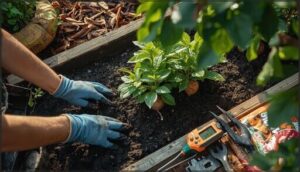
Getting the soil and site right is the foundation for healthy blueberry bushes. You can’t just plant them anywhere and expect great results—these shrubs have specific needs.
Let’s look at how to prep your soil and choose the best spot for your plants.
Amending Soil for Acidity and Drainage
Your blueberries won’t thrive without acidic soil between pH 4.0 and 5.0. Start with soil pH testing to know where you stand. If your readings are too high, work elemental sulfur into the bed several months before planting—it takes time to convert into sulfuric acid.
Once your soil is properly acidified, timing your annual pruning becomes the next key step in maximizing fruit size and long-term plant health.
Adding organic matter like compost improves drainage and soil health while supporting long-term soil management and fertilization techniques.
Sunlight and Spacing Considerations
Full sun for 6 to 8 hours drives maximum fruit production, so choose a south-facing site whenever possible. Proper spacing techniques and air circulation go hand in hand with light penetration and canopy management:
- Space bushes 4 to 6 feet apart to reduce fungal pressure.
- Allow wider rows for easier pruning access.
- Maintain an open canopy to reach interior branches.
- Remove crowded canes to improve sunlight distribution.
Planting Blueberry Bushes Correctly
Getting your blueberry bush in the ground the right way sets the stage for years of healthy growth and bountiful harvests. The planting process isn’t complicated, but a few key steps make all the difference between a struggling plant and a thriving one.
Here’s what you need to know to give your blueberries the best possible start.
Proper Planting Techniques
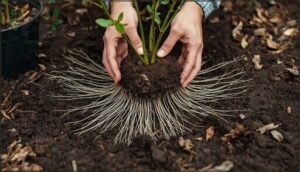
Your success starts with careful planting techniques that set the foundation for years of harvests. Begin with soil preparation to create acidic conditions between pH 4.5 and 5.5.
Set each bush at the same depth it grew in its nursery pot, keeping the crown just above soil level. Spread roots gently outward, then water thoroughly to eliminate air pockets and support strong root care from day one.
Spacing for Healthy Growth

Spacing your blueberry bushes 4 to 6 feet apart creates the breathing room they need for air circulation and root health. This plant density prevents crowding, improves soil structure, and fosters natural growth patterns.
When planning your garden layout, remember that adequate spacing is essential for blueberry plant care—it reduces disease risk while making soil preparation and maintenance much simpler over time.
Growing Blueberries in Containers

Container gardening lets you control soil acidity and grow blueberries anywhere, even on a patio. Choose compact varieties suited to pots, and follow these steps for blueberry plant care success:
- Use an acidic container soil mix with pH 4.5-5.5 for ideal blueberry root care
- Select pots at least 18-24 inches wide with drainage holes
- Apply acidic fertilizers at half-strength every 4-6 weeks
- Water when the top inch dries out
- Provide winter protection below -5°C by moving containers indoors
Watering, Mulching, and Fertilizing Tips

Once your blueberry bushes are in the ground, keeping them healthy comes down to three key tasks: watering, mulching, and feeding. Get these basics right and your plants will reward you with strong growth and plenty of fruit.
Here’s what you need to know about each one.
Water Needs at Different Growth Stages
Your blueberry bushes need different watering schedules as they grow. After planting, keep the top 1 to 2 inches of soil evenly moist with light, frequent irrigation methods.
During flowering and berry formation, soil moisture levels become critical—maintain 60 to 75 percent dampness to prevent drought stress and support root hydration.
Drip irrigation works best for plant care, delivering water directly without wetting foliage.
Mulching to Retain Moisture and Prevent Weeds
A 2 to 4 inch layer of pine needle or bark mulch acts like a protective blanket for your blueberry roots. Keep it 6 to 8 inches from the crown to prevent rot.
This organic mulching lowers soil temperature by 4 to 6 degrees, cuts evaporation by 20 percent, and blocks light to weed seeds—slashing weed emergence by up to 90 percent while boosting moisture retention.
Fertilizer Types and Application Timing
Once your mulch is down, soil testing becomes your next power move. Check pH levels before choosing fertilizers—target 4.5 to 5.5 for best nutrient uptake.
For fertilizing blueberries, timing matters:
- Apply ammonium sulfate at bud break for steady nitrogen timing
- Split applications across spring and midseason reduce burn risk
- Use organic options like feather meal for slow-release plant nutrition
Follow fertilizer rates on the label to avoid buildup.
Pruning and Maintaining Healthy Bushes

Pruning your blueberry bushes isn’t just about keeping them tidy—it’s the key to bigger harvests and healthier plants year after year. A well-maintained bush channels its energy into producing quality fruit instead of overcrowded, unproductive growth.
Here’s what you need to focus on to keep your bushes in top shape.
Annual Pruning for Productivity
Plan your pruning for late winter while the plants are still dormant—this timing helps wounds heal and builds more fruiting wood for the next harvest.
Each year, cut one or two of the oldest canes down to ground level to spark fresh growth. Keep four to eight strong canes per bush, and your blueberry bush care will reward you with bigger yields.
Managing Bush Shape and Canes
After you’ve trimmed away the old wood, shape your blueberry bushes to promote better airflow and sunlight. Train them to an open center by selecting one or two strong canes as your leader training foundation.
Here’s what to focus on:
- Use trellis systems or stakes to guide canes upward
- Keep the bush width at 2 to 4 feet
- Remove crossing branches that crowd the center
This cane renewal approach strengthens your pruning techniques and keeps your plant care routine simple.
Disease and Pest Prevention
Beyond shaping your bushes, watch for signs of fungal control issues and pest management challenges. Scout weekly for powdery mildew, blueberry maggot, and leaf spots.
Here’s your disease prevention checklist:
| Strategy | Action | Timing |
|---|---|---|
| Disease resistance | Plant certified stock | At purchase |
| Soil sanitation | Remove fallen debris | Twice per season |
| Pest control | Install netting | Early spring |
| Organic pesticides | Apply sulfur fungicides | When needed |
| Water management | Use drip irrigation | Growing season |
Sanitize your shears between cuts to stop the spread.
Harvesting and Protecting Your Blueberry Crop

After months of careful tending, your blueberry bushes are finally ready to reward you with plump, sweet fruit. But timing your harvest correctly and protecting those precious berries from hungry wildlife can make the difference between a bountiful crop and a disappointing season.
Let’s walk through how to know when your berries are ripe, keep birds at bay, and store your harvest properly.
Determining Ripeness and Harvest Timing
You’ll know your blueberries are ready when they turn uniformly deep blue with a whitish bloom and the flesh inside matches that rich color. Ripe berries feel firm but yield slightly to gentle pressure, and they detach easily from the stem.
Harvest during cool mornings every 2 to 3 days for 50 to 65 days after bloom to catch each berry at peak sugar content and firmness.
Bird and Pest Protection Strategies
Birds love ripe blueberries as much as you do, so protect your crop with netting options draped over bushes during peak ripening. Reflective tape and predator decoys work as effective scare tactics, but rotate these pest deterrents weekly to prevent habituation.
Combining bird deterrents with pest barriers creates a solid crop protection strategy, while removing fallen fruit and trimming nearby weeds enhances overall pest control strategies and garden maintenance.
Storing and Using Fresh Blueberries
Proper handling after harvesting blueberries protects quality and extends berry shelf life for weeks. Fresh storage tips begin with keeping unwashed fruit in breathable containers within your refrigerator, while freezing methods preserve blueberries up to 12 months.
- Store unwashed berries in original containers at 34 to 40 F
- Line containers with dry paper towels to absorb moisture
- Use firm, plump fruit with white bloom for best blueberry selection
- Freeze berries on parchment-lined trays before bagging
- Check stored berries daily and remove any showing mold
Frequently Asked Questions (FAQs)
What is the best way to take care of blueberry bushes?
An ounce of prevention is worth a pound of cure. Caring for blueberry bushes involves several key practices.
Maintain acidic soil pH around 5, provide consistent moisture, mulch heavily, fertilize with ammonium sulfate, and prune annually.
Are coffee grounds good for blueberry bushes?
Coffee grounds help blueberry bushes by gradually lowering soil pH to the acidic range they prefer.
Used grounds add nitrogen, improve drainage, and provide trace minerals while enriching organic matter for healthier growth.
How to prepare your blueberry bushes for winter?
Apply 2 to 4 inches of mulch in late fall for root care and soil insulation. Water deeply before the ground freezes.
Use frost protection like burlap for young plants. Prune only damaged wood to improve cold hardiness.
When do blueberry bushes start producing fruit?
Blueberry bushes usually start producing fruit in their second or third year, though young plants may offer a light crop earlier.
Full berry cultivation maturity arrives around year four, when harvest seasons bring abundant yields.
How long do blueberry plants typically live?
With proper plant care and growing blueberries in well-drained, acidic soil, your bushes can thrive for 25 to 50 years.
Regular pruning techniques and soil factors strongly influence blueberry lifespan and bush productivity.
Can blueberries tolerate frost or cold winters?
Yes, blueberry bushes handle frost and cold winters well. Highbush varieties tolerate temperatures down to -20°F when dormant. Cold hardiness varies by type, so choose varieties suited to your winter climate.
What causes blueberry leaves to turn yellow?
Yellowing leaves signal iron deficiency or nutrient deficits tied to high soil pH above 5, poor drainage, water stress, or chlorosis symptoms.
Test pH, adjust with sulfur, maintain proper watering, and apply balanced fertilizer to restore health.
How do you winterize blueberry bushes?
To protect your blueberry bushes through winter, apply 8 to 12 inches of mulch for root insulation, and water deeply before freezing.
Cover young plants with frost protection, and gently remove heavy snow from branches.
How long does it take for blueberry bushes to produce fruit?
Most blueberry bushes won’t reward your patience overnight—expect your first fruit in year two or three after planting, with full production arriving around year four once the bush reaches maturity.
Can blueberry bushes grow in containers on a patio?
Growing blueberries in containers works well on a sunny patio. Choose pots at least 18 inches wide with drainage holes, fill with acidic container soil, and select compact blueberry varieties suited for container gardening.
Conclusion
Your blueberry bushes won’t thrive on neglect—they need attention, but not constant fussing. These blueberry bush care tips give you the framework to grow strong, productive plants that deliver year after year.
Test your soil, match varieties to your zone, and stay consistent with watering and pruning. The payoff isn’t immediate, but once your bushes hit their stride, you’ll harvest more berries than you can eat fresh. That’s when the work becomes worth it.
- https://extension.umn.edu/fruit/growing-blueberries-home-garden
- https://extension.msstate.edu/publications/establishment-and-maintenance-blueberries
- https://resprout.com/blueberry-plant-care-prune-fertilize-soil-harvest-water-pests/
- https://www.burpee.com/garden-guide/edible-gardening/fruits/pruning-a-blueberry-bush-for-big-bountiful-harvests
- https://site.extension.uga.edu/colquitthomeowners/2022/01/pruning-blueberries/