This site is supported by our readers. We may earn a commission, at no cost to you, if you purchase through links.
You planted your tomatoes with care, watched them grow strong and green, then walked out one morning to find leaves covered in brown spots or fruit with strange sunken patches. Common tomato plant diseases strike fast, and they don’t announce themselves until the damage is visible.
The good news is that most diseases follow predictable patterns—specific leaf discolorations, stem lesions, or fruit abnormalities that tell you exactly what’s attacking your plants. Learning to recognize these signs early means you can take action before a small problem becomes a total crop loss.
Whether you’re dealing with fungal infections, bacterial invaders, viral diseases, or nutrient-related disorders, identifying the culprit is your first step toward protecting your harvest.
Table Of Contents
- Key Takeaways
- Key Signs of Tomato Plant Diseases
- Common Fungal Diseases in Tomatoes
- Bacterial and Viral Tomato Diseases
- Physiological Disorders and Soilborne Issues
- Prevention and Management Strategies
- Frequently Asked Questions (FAQs)
- How to treat a sick tomato plant?
- What are the most common tomato diseases?
- What do coffee grounds do for tomato plants?
- What is the most common disease in tomato plants?
- How can I tell what’s wrong with my tomato plants?
- What temperature conditions trigger most fungal diseases?
- How long do soil-borne pathogens survive?
- Can diseased tomatoes be safely eaten?
- Which diseases spread fastest between plants?
- Do greenhouse tomatoes get different diseases?
- Conclusion
Key Takeaways
- You can identify most tomato diseases early by recognizing specific patterns: fungal infections create brown spots with concentric rings or yellow halos, bacterial diseases produce water-soaked lesions that turn dark, and viral infections cause mottled leaves with yellow-green patches and distorted fruit.
- The most destructive fungal threats—early blight, late blight, and septoria leaf spot—all thrive in warm, humid conditions with wet foliage, so morning watering at soil level and proper plant spacing (18-24 inches apart) dramatically reduce disease pressure.
- Not every problem comes from pathogens: blossom end rot results from calcium deficiency triggered by inconsistent watering, while sunscald occurs when intense sun hits exposed fruit after heavy pruning, both requiring environmental adjustments rather than fungicides.
- Prevention through crop rotation (3-5 years between tomato plantings), disease-resistant varieties with VF or TMV resistance codes, and immediate removal of infected plant material within 24 hours stops pathogens before they spread and protects future harvests.
Key Signs of Tomato Plant Diseases
You can catch most tomato diseases early if you know what to look for. Each type of disease leaves behind its own calling card—whether that’s a pattern on the leaves, damage to the stems, or trouble with the fruit.
Spotting the telltale signs of common tomato plant blight can help you act fast before it spreads to your entire crop.
Let’s walk through the key warning signs that something’s wrong with your plants.
Leaf Spot Patterns and Yellowing
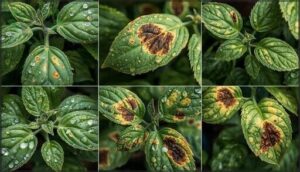
Leaf Spot Identification begins with recognizing distinct patterns on your tomato foliage. Fungal Infections like Septoria Leaf Spot produce small brown lesions ringed by yellow halos, while bacterial Leaf Spot creates water-soaked marks that turn darker. Here’s what to watch for:
- Circular brown spots with yellow halos on lower leaves
- Yellowing Patterns advancing from leaf margins inward
- Lesions coalescing into larger blotches causing Leaf Defoliation
- Gray Leaf Spot showing tan centers with darker borders
- Yellowing between spots before leaves drop
Early Spot Prevention through proper spacing reduces these issues significantly.
{{/output}}
Wilting and Stem Lesions
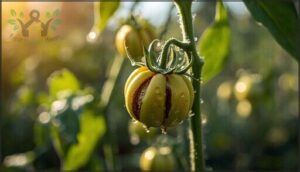
Wilting begins when pathogens invade the plant’s vascular tissue and create a Water Deficit in leaves.
Fusarium Wilt, Bacterial Wilt, and Verticillium Wilt all produce sudden drooping that starts on lower foliage and climbs upward. Cut the stem near the crown and you’ll see brown streaks—that’s Vascular Damage blocking water flow.
Stem Lesions from Tomato Pith Necrosis or Nematode Injury also trigger Wilting by girdling the stem and stopping nutrient transport.
Environmental stressors such as drought and high temperatures increase the risk of wilting and reduced crop yields.
Fruit Rot and Damage Signs
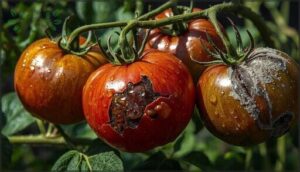
Your fruit tells the story of infection long before you harvest. Fruit Rot Causes range from Fungal Infection to physiological disorders like Blossom End Rot and Buckeye Rot.
Watch for these Damage Signs:
- Small water-soaked spots expanding rapidly under warm, humid conditions
- Fuzzy white, pink, or gray mold on lesion margins
- Sunken brown lesions with concentric rings
- Soft, discolored flesh beneath cracked skin
- Sour odor from rotting tissue
Harvest Management and Rot Prevention start with early detection. Common symptoms, causes, and prevention tips are explained in detail in this comprehensive fruit rot guide.
Visual Differences Among Disease Types
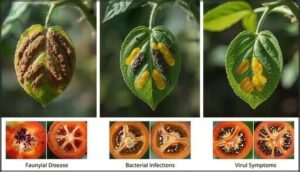
Distinguishing between Tomato Diseases requires you to look at the whole picture. Fungal Diseases like early blight create concentric rings on leaves, while Bacterial Diseases produce water-soaked lesions that dry dark. Pay attention to Color Patterns, Leaf Symptoms, and whether Stem Damage appears uniform or patchy.
| Disease Type | Leaf Symptoms | Fruit Lesions | Stem Damage |
|---|---|---|---|
| Fungal Signs | Brown spots with yellow halos | Sunken rings, corky texture | Purple-brown, rough patches |
| Bacterial Diseases | Water-soaked, then dark | Slimy rot, wet appearance | Dark streaks inside vascular tissue |
| Viral | Yellow mottling, distortion | Irregular color, stunting | Minimal visible damage |
Necrotic halos and lesion distribution help with Tomato Disease Identification across Plant Diseases categories.
These visual clues, combined with other diagnostic features, form the foundation of effective vegetable disease identification in home gardens and commercial settings.
Common Fungal Diseases in Tomatoes

Fungal diseases are the most common threats your tomato plants will face throughout the growing season. These pathogens thrive in warm, humid conditions and can quickly spread from plant to plant if you don’t catch them early.
Here’s what to watch for and how to identify each one before it takes over your garden.
Early Blight Symptoms and Spread
Early blight is one of the most common fungal infections you’ll encounter, caused by Alternaria species that thrive in warm, humid conditions. Understanding its disease cycle helps you catch it early and apply effective blight management before it spreads.
- Circular brown leaf lesions with yellow halos appear first on older, lower leaves
- Spots develop distinctive concentric rings creating a bullseye pattern
- Brown streaks form on stems where the fungal infection colonizes vascular tissue
- Fruit near the stem end shows sunken, dark lesions that may cause premature drop
The pathogen overwinters in crop debris, then disperses through wind and rain splash. Timely fungicide application and removing infected plant material are your best defenses for plant disease management and tomato disease identification.
Late Blight Identification
Late blight, caused by the water mold Phytophthora infestans, can devastate your crop in days under cool, wet conditions. Recognizing infection signs early is vital for disease identification and management.
| Infection Signs | Key Characteristics |
|---|---|
| Leaf Lesions | Irregular water-soaked spots with pale halos; white cottony spore production underneath in humid weather |
| Stem Damage | Brown to black longitudinal lesions that girdle stems and cause collapse |
| Fruit Symptoms | Dark, rapidly enlarging spots starting at blossom end; grayish mold under high humidity |
| Disease Cycle | Rain splash and wind spread spores; cool temps (50–70°F) accelerate infection |
| Differentiation | Affects all leaf ages unlike early blight; lighter tan lesions without concentric rings |
The pathogen thrives when leaves stay wet, so watch for blight symptoms after rain or heavy dew.
Septoria Leaf Spot Signs
Septoria Leaf Spot, caused by the fungus Septoria lycopersici, creates distinct leaf spot symptoms you can spot on lower foliage first. Watch for:
- Small circular lesions (1/8 inch) with gray centers and dark brown borders
- Tiny black specks (pycnidia) releasing spores in mature spots
- Yellow halos around spots before tissue dies
- Progressive leaf defoliation moving upward during warm, wet weather
This fungal infection thrives when humidity exceeds 85 percent.
Anthracnose on Fruit
Anthracnose attacks ripening fruit with water-soaked spots that sink into the flesh and develop target-like rings. Caused by Colletotrichum species, this fungal disease produces salmon-pink spore masses during humid conditions.
Fruit infection often begins on green tomatoes but stays hidden until ripening.
Control anthracnose through mulching, staking plants, rotating crops yearly, and applying preventive fungicides from first fruit set through harvest.
Powdery Mildew and Leaf Mold
Powdery mildew creates a white to gray film on leaf surfaces and stems, thriving in warm days with cool nights and high humidity. Leaf mold appears as olive-brown lesions with gray-green mold underneath, favoring poor air circulation. Both fungal diseases weaken your plants by reducing photosynthesis.
Prevent these fungal infections through proper plant spacing, soil-level watering, removing infected leaves, and applying preventive fungicides when needed.
Botrytis Gray Mold and Alternaria Stem Canker
When humidity climbs above 85 percent, Botrytis gray mold attacks flowers and fruit with fuzzy gray growth that spreads quickly. Alternaria stem canker creates dark, target-like lesions that girdle stems and block nutrient flow. Both fungal diseases thrive in poor air circulation.
Improve plant spacing, remove infected tissues promptly, maintain plant sanitation, and apply fungicide rotations to prevent these fungal infections from destroying your crop.
Bacterial and Viral Tomato Diseases
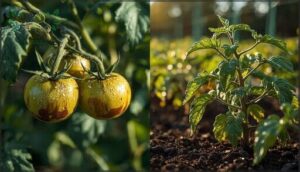
While fungi cause many tomato diseases, bacteria and viruses create some of the most challenging problems in your garden. These pathogens spread differently than fungal diseases and often require distinct management approaches.
You’ll need to recognize bacterial speck, bacterial spot, bacterial wilt, and several viral diseases to protect your tomato plants effectively.
Bacterial Speck and Bacterial Spot
Two sneaky bacterial diseases—bacterial speck and bacterial spot—create dark lesions on your tomato leaves and fruit. You’ll notice tiny specks (about 1/16 inch) with yellow halos from speck, while spot produces larger water-soaked patches.
Both thrive in wet conditions and spread through rain splash. Copper treatment and bactericides offer disease resistance when applied preventively, especially before rainy weather hits your garden.
Bacterial Wilt and Southern Blight
While bacterial spot and speck damage foliage, bacterial wilt invades your tomato’s vascular system and blocks water flow—causing sudden collapse even when soil stays moist. Cut an infected stem and you’ll see brown tissue, sometimes with slimy ooze.
Southern blight, caused by the soil fungus Sclerotium rolfsii, creates white webbing at the stem base with tan mustard-seed-like structures.
Both diseases demand immediate plant removal and thorough sanitation to protect neighboring tomatoes.
Tomato Mosaic Virus Effects
Unlike soil-borne threats, Tomato Mosaic Virus (ToMV) spreads through your hands, pruning shears, and even contaminated seeds—creating a systemic infection that can’t be cured once inside the plant. This viral disease reduces your harvest markedly when infection strikes early.
You’ll notice mottled leaves with light and dark green patches, leaf curling, and misshapen fruit with yellow blotches.
- Leaf symptoms appear as mosaic patterns with distorted younger foliage
- Fruit deformity includes uneven ripening and internal browning near the core
- Virus transmission occurs through mechanical contact during routine garden work
- Disease resistance varieties offer your best defense against this persistent pathogen
Tomato Spotted Wilt Virus
Thrips carry Tomato Spotted Wilt Virus (TSWV) from infected host plants straight to your tomatoes, injecting this devastating viral pathogen as they feed. You’ll see bronzed leaves, dark ringspots on fruit, and severe stunting—symptoms that worsen rapidly under thrips pressure.
Disease resistance varieties and reflective mulches reduce virus transmission, while aggressive thrips control through monitoring and targeted sprays protects vulnerable plants from this yield-destroying tomato plant disease.
Yellow Leaf Curl Virus
Whiteflies transmit Tomato Yellow Leaf Curl Virus (TYLCV) as they feed, causing severe leaf curling, yellowing margins, and stunted growth that devastates yields. You’ll notice crinkled upper leaves and reduced fruit set—symptoms confirmed by PCR testing.
Resistant varieties offer your best defense, while reflective mulches deter whitefly landings. Monitor populations closely and remove weed hosts to prevent virus transmission before this begomovirus spreads through your crop.
Physiological Disorders and Soilborne Issues
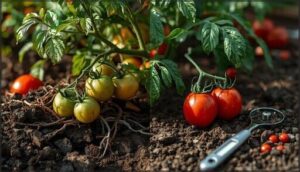
Not all tomato problems come from pathogens like fungi, bacteria, or viruses. Some of the most frustrating issues stem from environmental stress, nutrient imbalances, or organisms living in the soil.
Understanding these physiological disorders and soilborne threats will help you tackle the underlying issue and restore your plants to health.
Blossom End Rot Causes
Blossom End Rot isn’t caused by a pathogen—it’s a Physiological Disorder triggered by Calcium Deficiency during Fruit Expansion. Your Tomato Plant might’ve adequate soil calcium, but irregular Soil Moisture prevents uptake to developing fruits.
Root Damage from cultivation or Nutent Imbalance (excess nitrogen or competing magnesium) compounds the problem.
Consistent watering and balanced fertilization are essential Gardening Tips for Crop Protection against this frustrating condition.
Root Knot Nematodes
Root Knot Nematodes (Meloidogyne species) are microscopic soil parasites that inflict serious damage to your tomato roots. These roundworms create characteristic Root Galls that disrupt nutrient uptake, causing wilting and stunted growth despite adequate watering.
Your defense strategy includes:
- Crop rotation with non-host plants to break the Nematode Life cycle
- Soil Solarization using clear plastic mulch to kill eggs
- Planting varieties with Nematode Resistance genes
- Applying Biological Controls like beneficial microorganisms
- Maintaining healthy soil organic matter for natural suppression
Damping Off in Seedlings
Damping Off strikes your tomato seedlings before they’ve even had a chance to grow, caused by soil-borne pathogens like Pythium and Rhizoctonia that attack at the soil line.
Prevent this fungal disease through Soil Sterilization, using clean trays with sterile potting mix, and ensuring proper Germination Conditions—warm temperatures, adequate spacing, and controlled moisture.
Seed Treatment with fungicides provides additional protection for your vulnerable seedlings.
Buckeye Rot and Gray Wall
Buckeye Rot and Gray Wall develop when your tomato fruit touches moist soil, inviting Phytophthora species and physiological breakdown that can ruin your harvest.
Recognize these Tomato Plant Diseases by watching for:
- Brown to gray-green water-soaked spots on lower fruit surfaces
- Concentric ring patterns resembling buckeye markings
- Leathery gray or brown sunken areas where fruit contacts ground
- Rapid spread during warm, wet periods above 70°F
- Corky texture indicating late-stage Gray Wall damage
Protect your crop through Soil Management—mulch heavily, space plants properly, and improve drainage. Fungicide Treatment reduces pathogen pressure, while removing infected fruit stops Rot Prevention failures before disease spreads.
Sunscald and Environmental Stress
Sunscald strikes when intense sun and heat overwhelm exposed fruit, leaving white, papery patches that invite rot. You’ll see this Physiological Disorder during heat stress above 85°F, especially after pruning removes protective foliage.
Environmental Triggers include drought and transplant shock.
Sunscald Prevention requires shade cloth, consistent watering for Climate Resilience, and allowing leaf cover to shield developing fruit from Environmental Stress and Fruit Damage.
Prevention and Management Strategies

You don’t have to wait until disease strikes to take action. The best defense against tomato diseases starts before you even plant your first seedling.
Here are five practical strategies that will keep your tomato plants healthy all season long.
Crop Rotation and Soil Health
Rotating your tomato crops isn’t just gardening best practices—it’s one of the smartest moves for soil health and disease control. A three-to-five-year rotation breaks pathogen cycles while supporting soil microbes and nutrient cycling.
Rotating tomato crops every three to five years breaks disease cycles, feeds soil microbes, and builds lasting soil health
- Alternate crop families to disrupt soilborne disease buildup
- Include legumes to boost nitrogen naturally
- Vary root depth to improve soil porosity and structure
- Test soil annually to track organic matter and nutrient levels
Sanitation and Debris Removal
Good soil takes planning, but clean beds make all the difference. You’ll slash disease pressure by removing infected debris within 24 hours of spotting trouble.
Bag wilted leaves, rake fallen fruit, and sanitize pruners after each cut. Compost only healthy plant matter—diseased material goes straight to sealed disposal.
Field hygiene and waste management protect next season’s soil health and keep pathogens from cycling back.
Disease-Resistant Tomato Varieties
Beyond cleanup, you’ll build lasting protection by choosing disease-resistant tomato varieties. Hybrid varieties like Better Boy and Celebrity carry VF resistance codes—protecting against Verticillium and Fusarium wilts.
Regional adaptation matters: Southern growers need TMV tolerance, while Midwest gardeners benefit from resistance to clay-soil pathogens.
Resistant seeds reduce your need for chemical pest and disease control, and proper plant breeding traits guarantee longevity management across seasons.
Proper Watering and Plant Spacing
Water management and garden hygiene work together to reduce disease pressure. Water at the base of plants early in the morning using drip irrigation systems to keep foliage dry and support healthy root growth.
Maintain soil moisture at 1 to 1.5 inches weekly, checking water depth 2 to 4 inches below the surface. Space transplants 18 to 24 inches apart for proper air circulation and efficient irrigation management.
Organic and Chemical Disease Control Methods
Integrated pest management combines organic gardening practices with targeted fungicide application when disease prevention fails. You can apply organic sprays like Bacillus subtilis biofungicides or copper-based products to suppress fungal disease prevention while minimizing chemical resistance buildup.
- Rotate biofungicides with sulfur fungicides to protect beneficial microbes
- Apply neem oil early to reduce pathogen pressure
- Use soil remediation with compost to suppress soilborne diseases
- Reserve synthetic fungicides for severe outbreaks only
- Follow labeled rates to prevent leaf burn
Frequently Asked Questions (FAQs)
How to treat a sick tomato plant?
An ounce of prevention is worth a pound of cure. First, identify whether you’re battling bacterial spot, fusarium wilt, or another fungal infection—then prune affected areas, apply targeted fungicides or soil remedies, and guarantee proper spacing for plant recovery.
What are the most common tomato diseases?
Fungal infections like early blight, late blight, and septoria leaf spot top the list. Fusarium wilt, powdery mildew, and bacterial spot also threaten your crop, each showing distinct symptoms you’ll recognize with practice.
What do coffee grounds do for tomato plants?
Coffee grounds act like a slow-release fertilizer, delivering nitrogen and micronutrients to improve soil structure around your tomatoes.
They help with pH balance and may deter some pests when applied as a thin mulch layer.
What is the most common disease in tomato plants?
Early blight stands out as the most widespread tomato disease. Caused by Alternaria solani, this fungal infection thrives in warm, humid conditions and produces characteristic target-like spots with concentric rings on lower leaves.
How can I tell what’s wrong with my tomato plants?
Your plant’s distress signals aren’t a mystery. Check leaves for spots with yellow halos, stems for dark lesions, and fruit for sunken decay. Weekly inspection catches disease management issues early before they spread.
What temperature conditions trigger most fungal diseases?
Most fungi thrive when daytime temperatures reach 68 to 86°F with high humidity levels.
Prolonged leaf wetness for six hours or more at moderate temperatures creates ideal infection windows for early blight, septoria leaf spot, and botrytis.
How long do soil-borne pathogens survive?
Soil-borne pathogens persist one to five years through resting structures like chlamydospores and sclerotia.
Bacterial survival and fungal persistence depend on soil moisture, temperature, and pH, making crop rotation and solarization essential prevention strategies.
Can diseased tomatoes be safely eaten?
You can eat tomatoes from diseased plants if the fruit shows no rot, mold, or soft lesions.
Always inspect carefully, wash thoroughly, and cut away any damaged areas for food safety.
Which diseases spread fastest between plants?
Airborne diseases move most rapidly. Late blight spores ride wind currents between plants, while powdery mildew conidia drift through humid gardens.
Aphids and whiteflies accelerate virus transmission as they feed across multiple tomato plants.
Do greenhouse tomatoes get different diseases?
Yes, greenhouse tomatoes face distinct disease pressure. High humidity favors powdery mildew and Botrytis gray mold, while soilborne pathogens like Fusarium wilt thrive in enclosed conditions with limited air circulation.
Conclusion
Like checking your car’s dashboard for warning lights, watching your tomatoes for early disease signs keeps small problems from becoming total failures. You now know how to spot common tomato plant diseases, what causes them, and how to respond quickly.
Start with resistant varieties, practice good sanitation, and water at soil level. When you catch symptoms early and act decisively, you protect your harvest and grow healthier plants season after season.