This site is supported by our readers. We may earn a commission, at no cost to you, if you purchase through links.
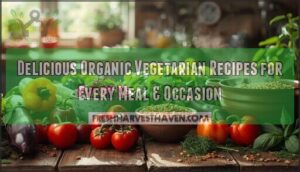
Your kitchen doesn’t need to choose between convenience and values. Delicious organic vegetarian recipes transform fresh, sustainably grown ingredients into meals that nourish your body while honoring the planet—no compromises required. The secret lies in working with seasonal produce at its peak, where a ripe heirloom tomato or bunch of just-picked basil does most of the heavy lifting.
Whether you’re craving a quick weeknight stir-fry, a warming lentil stew that simmers while you unwind, or globally inspired dishes that transport your taste buds across continents, plant-based cooking offers endless possibilities. These recipes prove that eating organically and vegetarian isn’t about restriction—it’s about discovering how vibrant, satisfying, and downright exciting food becomes when you let whole ingredients shine.
Table Of Contents
- Key Takeaways
- Quick and Easy Organic Vegetarian Recipes
- Hearty Plant-Based Main Courses
- Global Organic Vegetarian Cuisine
- Comforting Organic Soups and Stews
- Garden-to-Table Vegetarian Sides and Salads
- Frequently Asked Questions (FAQs)
- How do I store fresh organic produce properly?
- What are the best organic protein sources for vegetarians?
- Can I substitute conventional ingredients with organic alternatives?
- Where can I buy affordable organic ingredients locally?
- Are organic frozen vegetables as nutritious as fresh?
- How do I store fresh herbs longer?
- Can I freeze cooked vegetarian meals safely?
- What are good meat texture substitutes?
- How do I reduce bitterness in vegetables?
- Which spices pair best with organic produce?
- Conclusion
Key Takeaways
- You don’t need to sacrifice satisfaction or spend hours cooking when you embrace plant-based eating—simple techniques like one-pot meals, sheet pan dinners, and 30-minute recipes deliver bold flavors using seasonal organic produce at its peak.
- Protein-rich beans and lentils (15-20 grams per cup) anchor hearty main courses like vegetarian chili, stuffed peppers, and lasagna that rival any meat-based meal in both nutrition and filling power.
- Global cuisines from Mexico, India, Asia, and the Mediterranean offer endless inspiration for organic vegetarian cooking, each bringing authentic flavors through fresh ingredients like spiced lentils, stir-fry sauces, and herb-infused olive oil.
- Your kitchen becomes a canvas for nourishing meals that honor both your body and the planet when you pair whole ingredients with homemade dressings, roasted vegetables, and grain-based sides that transform simple produce into remarkable dishes.
Quick and Easy Organic Vegetarian Recipes
You don’t need to spend hours in the kitchen to create satisfying vegetarian meals that celebrate fresh, organic ingredients.
Simple techniques like exploring creative ways to use herbs can transform even basic dishes into flavorful, restaurant-quality meals.
The recipes ahead prove that simple techniques and minimal prep can deliver bold flavors and nourishing dishes any night of the week.
From quick weeknight dinners to grab-and-go lunches, these options make plant-based eating feel easy and uncomplicated.
30. Minute Weeknight Dinners

You don’t need hours to create a nourishing meal that breaks free from the usual routine.
Quick weeknight recipes rely on pantry staples like canned beans and pre-chopped vegetables, letting you embrace healthy vegetarian cooking without the stress.
With smart meal prep and time-saving techniques, dinner ideas transform into adventures—cozy lentil curries or vibrant stir-fries ready in minutes.
For additional inspiration, explore these affordable weeknight dinner ideas that make mealtime simple and budget-friendly.
One-Pot and Sheet Pan Meals
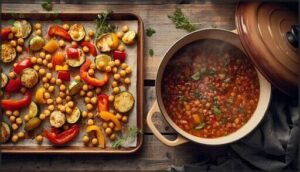
One pot wonders and sheet pan meals strip away the burden of endless dishes, freeing you to serve nourishing plant-based meals with ease.
Roast chickpeas alongside bell peppers and zucchini on a single pan, or simmer lentils with tomatoes in one pot—meal prep tips meet cooking efficiency. Easy cleanup lets you focus on what matters: gathering loved ones around honest, wholesome vegetarian cooking.
Simple Garden-Fresh Breakfast Ideas
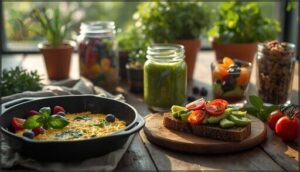
Ready to start your day wild and flavorful? Herb Scrambles and Veggie Smoothies make healthy eating almost hassle-free, with breakfast options pulled straight from the garden.
For bold, plant-based meals, try these five vegetarian recipes:
- Basil-swirled Herb Scrambles
- Layered Fruit Parfaits
- Garden Veggie Smoothies
- Tomato-avocado breakfast toast
- Spinach-and-mushroom egg bakes
For a nutrient-rich breakfast idea, explore these.
Minimal Prep Lunch Options
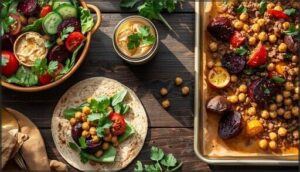
Midday meals don’t have to drain your energy or steal precious time from your day. Quick Wraps stuffed with hummus and crisp garden vegetables come together in five minutes, while Easy Salads layered in mason jars stay fresh for days. One Pot Meals like lentil curry simmer in 25 minutes, and Sheet Pan Options roast vegetables alongside chickpeas for hassle-free Grab Lunch solutions.
| Lunch Style | Key Benefits |
|---|---|
| Hummus Veggie Wraps | 5-minute assembly, travels well |
| Mason Jar Salads | Stays fresh 2 days, no toss needed |
| Mediterranean Lentil Pot | Ready in 20 minutes, minimal cleanup |
| Roasted Veggie Traybake | Single pan, customizable portions |
| Cottage Cheese Cups | High protein, no cooking required |
Hearty Plant-Based Main Courses
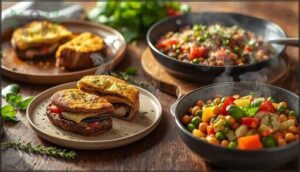
You don’t need to sacrifice satisfaction when you embrace plant-based eating. The recipes ahead prove that vegetarian main courses can be just as filling and flavorful as anything you’d find at a traditional table.
Start with simple recipes for garden vegetable soup that layer fresh produce and aromatic herbs for maximum flavor.
From protein-packed legumes to layered pasta bakes, these dishes stand on their own as complete meals that’ll keep everyone coming back for seconds.
Protein-Rich Bean and Lentil Dishes
Beans and lentils turn meatless recipes into nutrient-dense powerhouses that rival any meat-based meal. These protein sources deliver 15 to 20 grams per cooked cup, making them essential for plant-based meals that truly satisfy.
- Vegetarian chili simmers black beans with smoky spices and fire-roasted tomatoes
- One-pot lentil curry combines red lentils with turmeric and coconut milk
- Bean and grain bowls pair chickpeas with quinoa for complete protein
- Lentil shepherd’s pie layers savory brown lentils under creamy mashed potatoes
- Spiced dal transforms yellow lentils into comfort food with ginger and cumin
Bean benefits extend beyond protein—you’re getting fiber, iron, and folate with every satisfying spoonful.
Vegetarian Lasagna and Pasta Bakes
Lasagna layering transforms simple pasta into a masterpiece—you’re stacking noodles with ricotta, marinara, and roasted zucchini or peppers.
Italian recipes like eggplant parmesan and baked ziti prove vegetarian casseroles can feed a crowd without meat.
These pasta bake methods let you prep ahead, freeze portions, and reheat for weeknight liberation from constant cooking.
Stuffed Peppers and Vegetables
Colorful bell peppers become edible bowls when you hollow them out and pack them with quinoa, lentils, or rice mixed with sautéed mushrooms and spinach. These vegetarian recipes honor global inspirations—try Mexican black beans with corn, Mediterranean feta with olives, or Indian spiced fillings for nutrient-rich plant-based meals.
- Prebake peppers 5-10 minutes so they soften evenly
- Mix moist fillings with fresh herbs for cohesive texture
- Top with cheese before uncovering to create golden edges
- Pair pepper varieties with colorful vegetable fillings for visual appeal
Flavorful Veggie Burgers and Tacos
Transform mushrooms, walnuts, and brown rice into veggie burgers that deliver smoky, meaty flavor profiles—your meal planning just got easier.
For taco fillings, try spiced lentils or chipotle-glazed tofu alongside fresh slaw and avocado. These vegetarian recipes offer food inspiration beyond basic meat alternatives, letting you customize burger toppings and vegan burger builds with pickled onions, tahini sauce, or roasted peppers for adventurous weeknight dinners.
Global Organic Vegetarian Cuisine
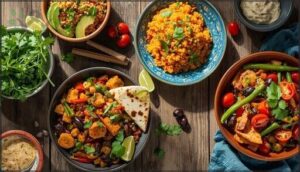
You don’t need a passport to enjoy flavors from around the world in your own kitchen. These global recipes bring authentic tastes from Mexico, India, Asia, and the Mediterranean straight to your table using organic ingredients you can feel good about.
Each region offers its own approach to creating satisfying vegetarian meals that honor tradition while celebrating fresh, seasonal produce.
Mexican-Inspired Recipes With Fresh Produce
Mexican flavors come alive when you pair corn and black beans with fresh salsa and creamy avocado salsa. Build Veggie Tacos with roasted peppers and cilantro, or layer Spicy Quesadillas with seasonal vegetables.
These PlantBased Meals showcase authentic Mexican Salsas and Fresh Guacamole that transform simple Vegetarian Recipes into bold, satisfying Healthy Recipes worth adding to your Meal Planning rotation.
Indian Dal and Spiced Curries
Indian Lentils simmered with turmeric and salt create a creamy base you can finish with Tadka Techniques—heat cumin and mustard seeds in ghee, then pour the fragrant tempering over your dal.
These Vegetarian Recipes deliver Dal Nutrition with about 15–18 grams of protein per cup, while Curry Spices like coriander and garam masala build Spiced Gravies that turn PlantBased Meals into Healthy Recipes you’ll crave all week.
Asian Stir-Fries and Buddha Bowls
Wok Cooking at high heat keeps vegetables crisp while Stir Fry Sauces—soy, ginger, garlic—coat every bite.
Your Buddha Bowl starts with a Grain Bowls base of quinoa or brown rice, then you pile on:
- Sesame Tofu cubes for plant protein
- Quick-pickled carrots and cucumber
- Steamed edamame or Vegan Dumplings
- Drizzle of tahini or peanut sauce
These Plantbased Asian Noodles and Vegan Recipes turn weeknight cooking into an adventure.
Mediterranean and Middle Eastern Favorites
Swing south to sun-soaked shores where the Mediterranean Diet meets Middle Eastern Spices in every bite. You’ll find crispy Falafel Recipes paired with creamy Hummus Variations—think roasted red pepper or garlic-lemon swirls.
Shawarma Options load spiced vegetables into warm flatbreads, while lentil stews simmer with cumin and sumac. Olive oil, fresh herbs, and citrus brighten these Vegetarian Recipes, turning simple ingredients into bold, nourishing meals.
Comforting Organic Soups and Stews

Nothing beats a steaming bowl of soup or stew when you want something that fills both your stomach and your spirit.
Nothing satisfies like a steaming bowl of soup or stew that nourishes both body and soul
These recipes turn simple organic vegetables into deeply satisfying meals that warm you from the inside out. Whether you’re craving something spicy, creamy, or packed with chunky vegetables, you’ll find exactly what your body needs.
Chunky Vegetarian Chili Variations
A steaming bowl of chunky vegetarian chili transforms simple pantry staples into a rebellious feast that nourishes both body and soul. You’ll discover endless ways to customize this comforting dish using bean blends, lentils, and chickpeas, while spice profiles and flavor enhancers bring depth to every spoonful.
Five Vegetarian Chili Variations Worth Trying:
- Three-Bean Smokehouse – Combine kidney beans, black beans, and pinto beans with fire-roasted tomatoes, smoked paprika, and a touch of cocoa powder for rich, earthy depth
- Lentil-Quinoa Power Bowl – Add red lentils and quinoa during the last 15 minutes of simmering to create a protein-packed, texture-rich chili that satisfies completely
- Sweet Heat Garden Blend – Toss in bell peppers, corn kernels, zucchini, and jalapeños with cumin and chili powder for a vegetable mix that balances gentle fire with natural sweetness
- White Bean Verde – Use cannellini beans, green chilies, and cilantro with a squeeze of lime to create a lighter, brighter take on traditional chili
- Chickpea Chipotle Fusion – Feature chickpeas as the star alongside chipotle peppers and espresso powder for a vegan-friendly option with smoky, complex flavor
Each variation develops its signature chili texture through one-pot simmering or slow cooker magic. Top with avocado, fresh cilantro, or a dollop of Greek yogurt, then serve alongside warm cornbread to complete your compassionate, flavor-forward meal.
Creamy Plant-Based Soups
You’ll create restaurant-quality creamy texture without dairy by blending cashews, white beans, or silken tofu into your silky broth. Plant milks like oat or almond pair beautifully with roasted cauliflower or butternut squash, while pureed potatoes thicken naturally.
These dairy alternatives transform simple vegan soups into luxurious bowls that celebrate healthy eating and compassionate plant-based choices.
| Base Ingredient | Creaminess Technique |
|---|---|
| Cashews | Soak overnight, blend smooth |
| White beans | Puree with broth |
| Silken tofu | Whisk in at finish |
| Plant milks | Add near end of cooking |
| Roasted vegetables | Blend until velvety |
Seasonal Vegetable Stews
You build outstanding seasonal vegetable stews by layering root vegetables like carrots and potatoes with whatever’s thriving in your garden right now.
Start with onions and garlic in olive oil, then simmer everything in rich vegetable broth for 25 to 45 minutes. Toss in lentils or mushrooms for protein, finish with fresh herbs, and you’ve got a nutrient-packed vegan bowl that honors nature’s rhythm.
Tomato-Based Shakshuka and Minestrone
You poach eggs in spiced tomato sauce for shakshuka, spiking it with cumin, paprika, and chili peppers for warmth. Italian minestrone swaps the eggs for beans and pasta, letting crushed tomatoes deepen into a rustic broth.
Both deliver vitamin C and lycopene, especially when you cook tomatoes with olive oil. Serve shakshuka with crusty bread, minestrone with grated parmesan—each one breaks free from boring vegetarian recipes.
Garden-to-Table Vegetarian Sides and Salads
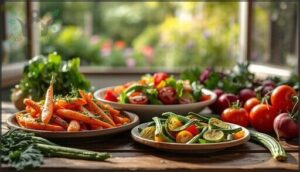
Your main course might steal the show, but it’s the sides that bring everything together.
Fresh vegetables from your garden or farmers market can transform into showstopping dishes that are anything but afterthoughts.
Here’s how to make the supporting players shine just as bright.
Roasted Seasonal Vegetables
Roasting seasonal vegetables transforms humble roots into caramelized magic you can taste with every bite. This vegetarian cooking method brings out natural sweetness while keeping things simple and nourishing.
Try these essential roasting techniques:
- Preheat your oven to 425°F for crispy edges and tender centers
- Cut vegetables into uniform pieces for even browning
- Toss with olive oil, fresh herbs, and garlic for flavor enhancement
- Spread in a single layer to avoid steaming
- Flip halfway through for perfect texture variation across every piece
Fresh Salads With Homegrown Greens
Homegrown greens put you in control of what lands on your plate, breaking free from packaged supermarket options while nurturing your body with every crisp leaf.
Mix spinach with peppery arugula for Green Salad Basics, then layer in fresh herb combinations like dill and basil. Add crunchy texture options through toasted walnuts or roasted chickpeas, finish with homemade vinaigrettes, and celebrate seasonal ingredient pairings that make vegetarian salad recipes sing with garden-fresh flavor.
Homemade Sauces and Dressings
You’ll never buy bottled dressings again once you taste the bright, alive flavors your own kitchen can conjure. Start with these core techniques:
- Whisk up classic Vinaigrette Recipes using three parts oil to one part acid
- Blend avocado or cashew cream for silky Creamy Dressings and Dairy-Free Alternatives
- Simmer San Marzano tomatoes into rich Tomato Sauces
- Infuse olive oil with fresh garlic, basil, and parsley for Herb Infusions
- Mix tahini with lemon for Middle Eastern-inspired drizzles
These Recipe Ideas transform simple greens into unforgettable Vegan Recipes.
Grain-Based Side Dishes
Whole grains like quinoa, farro, and bulgur anchor your plate with fiber and a satisfying chew. Try Mediterranean quinoa tossed with lemon, parsley, and cherry tomatoes—it’s ready in 15 minutes and packs 8 grams of protein per cup.
Rice varieties from nutty brown to aromatic wild blends pair beautifully with seasonal vegetables, creating grain bowls that nourish body and spirit.
Frequently Asked Questions (FAQs)
How do I store fresh organic produce properly?
Keep your leafy greens fresh by storing them in perforated bags inside the crisper drawer, maintaining high humidity around 90 percent.
Wash produce just before use to prevent moisture-related spoilage and extend shelf life.
What are the best organic protein sources for vegetarians?
Think of protein as your kitchen’s secret weapon—organic legumes like lentils and chickpeas pack 15-18 grams per cup, while tofu and tempeh deliver complete amino acids that fuel your body beautifully.
Can I substitute conventional ingredients with organic alternatives?
You can swap conventional ingredients with organic alternatives in any vegetarian recipe.
Organic produce, grains, and dairy offer farm-fresh flavor while supporting sustainable eating practices, making your plant-based meals both eco-friendly and nutritious.
Where can I buy affordable organic ingredients locally?
Your local farmers market offers seasonal organic stands where you can compare vendor prices each week.
Check out discount grocers like Aldi for affordable organic staples, or join a food co-op for member pricing on bulk items.
Are organic frozen vegetables as nutritious as fresh?
You won’t lose sleep over nutrition when you stock organic frozen veggies—they lock in vitamins at harvest, matching fresh produce’s nutrient retention while offering year-round convenience and extended shelf life for your healthy eating routine.
How do I store fresh herbs longer?
You can extend fresh herb storage by placing stems in a jar with water, covering loosely with plastic, and refrigerating.
Freezing techniques using ice cube trays or dehydration methods also preserve herbs for vegetarian recipes beautifully.
Can I freeze cooked vegetarian meals safely?
Think beyond the takeout menu—your freezer holds real potential for weeknight freedom.
Yes, you can freeze cooked vegetarian meals safely for up to three months by cooling them quickly and using airtight containers for proper food storage.
What are good meat texture substitutes?
You can swap in tofu, tempeh, or seitan for chewy, protein-rich bites.
Mushroom proteins and texturized soy deliver meaty depth, while coconut oil and marinades boost juiciness in plant-based and meatless dishes.
How do I reduce bitterness in vegetables?
A quick ice bath mellows harsh bitterness in greens while brightening their color—then finish with a splash of lemon juice and quality olive oil to balance flavors beautifully.
Which spices pair best with organic produce?
Gentle warmth from cumin and coriander lifts legume dishes, while basil brightens tomatoes beautifully.
These aromatic pairings intensify organic seasoning in plant-based cooking, creating rich flavor profiles that transform simple vegetarian cuisine into something memorable.
Conclusion
Think of your kitchen as a canvas where every organic ingredient becomes a brushstroke of flavor and purpose. These delicious organic vegetarian recipes don’t just fill plates—they rewrite the story of what nourishing yourself can mean.
You’ve got the techniques, the inspiration, and the power to cook meals that honor your body, the earth, and everyone you feed. Now grab those fresh vegetables and start creating something remarkable.