This site is supported by our readers. We may earn a commission, at no cost to you, if you purchase through links.
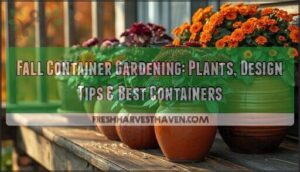
Summer’s peak blooms don’t have to mark the end of your container displays. Fall container gardening extends your growing season by six to eight weeks, transforming patios and doorsteps with chrysanthemums (Chrysanthemum morifolium), ornamental kale (Brassica oleracea), and frost-tolerant pansies (Viola × wittrockiana) that thrive in cooler temperatures.
Cooler air slows plant metabolism, reducing watering demands while hardy selections withstand light frosts that would devastate summer annuals. Strategic placement, well-draining potting mixes, and weather-resistant containers create displays that carry vibrant color from September through early winter, giving you control over your outdoor spaces when traditional gardens fade.
Table Of Contents
- Key Takeaways
- Essential Tips for Fall Container Gardening
- Best Plants for Fall Containers
- Designing Stunning Fall Container Arrangements
- Maintenance and Care for Fall Planters
- Top 7 Containers for Fall Gardening
- Frequently Asked Questions (FAQs)
- What to plant in containers for fall?
- What can I plant in pots in October?
- What to put in planters in August?
- What to grow in pots in the fall?
- What plants are good for pots in autumn?
- What potted plants are good in the fall?
- What plants are good for fall outdoor pots?
- How often to rotate container gardens?
- Can fall plants thrive in shade?
- What soil works best for fall containers?
- Conclusion
Key Takeaways
- Fall container gardening extends your growing season by six to eight weeks using cold-hardy plants like chrysanthemums, ornamental kale, and pansies that thrive in cooler temperatures and tolerate light frosts.
- Success depends on positioning containers to receive 4-6 hours of direct sunlight daily, using well-draining potting mix blended with 20-30% compost, and ensuring drainage holes at least 0.75 inches wide to prevent root rot.
- Design stunning arrangements by layering plants according to height—tall grasses at the back, mid-height mums in the center, and trailing plants at the edges—while combining warm autumn colors with contrasting textures for visual impact.
- Maintain vibrant displays through November by watering only when soil feels dry one inch deep, applying half-strength fertilizer every two to four weeks, and protecting containers from frost with burlap wraps or bubble wrap during cold snaps.
Essential Tips for Fall Container Gardening
Fall container gardening opens up fresh possibilities for your outdoor spaces when summer annuals fade.
These fall gardening in containers ideas help you choose the right plants and adapt your watering schedule as temperatures drop.
Success starts with understanding a few key principles that’ll set your planters up to thrive through cooler weather. Master these essentials, and you’ll create displays that stay vibrant from September straight through the first hard freeze.
Benefits of Container Gardening in Fall
Fall container gardening delivers season extension that pushes color six to eight weeks past summer’s peak. You’ll enjoy visual interest without heavy watering demands, since cooler air slows plant metabolism and reduces maintenance.
Climate resilience comes naturally—hardy fall color choices like mums and pansies thrive in dropping temps while soil efficiency improves with well-draining mixes that combat damp autumn conditions.
Choosing The Right Location and Light
Position your containers where they’ll catch 4 to 6 hours of direct sun exposure daily—south-facing sites accelerate color development in mums (Chrysanthemum × morifolium) and pansies (Viola × wittrockiana), while morning light with afternoon shade management prevents leaf scorch.
North-facing patios deliver milder light intensity for heat-sensitive plants. Master container placement by tracking fall’s shifting sun to enhance your climate considerations and extend autumn displays.
Selecting Soil and Drainage Solutions
Build your foundation with a high-quality potting mix blended with 20 to 30 percent compost—this soil composition delivers container gardening tips pros swear by.
Make certain drainage systems include holes at least 0.75 inches wide, then layer 1 to 2 inches of expanded clay at the bottom. This soil aeration prevents root rot while balancing water retention for your fall container gardening success.
For long-term plant health, it’s also essential to understand proper soil drainage principles to prevent waterlogging and promote healthy root systems.
Planning for Fall-to-winter Transitions
Your seasonal plant combinations won’t last forever—that’s where cold snap strategies come in. Wrap frost protection like burlap around containers when temperatures drop below freezing, then add winter accents such as pine branches or berries to extend your fall container garden design.
Layer evergreen fillers (Hedera helix) beneath fading blooms, creating container insulation that keeps cold hardy plant options thriving through early winter’s arrival.
Best Plants for Fall Containers
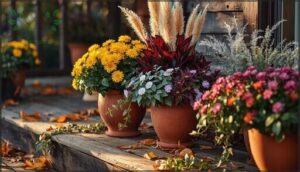
Select plants that thrive in cooler temperatures and tolerate light frosts to create containers that last well into autumn.
Your best choices combine reliable bloomers like chrysanthemums (Chrysanthemum spp.) and pansies (Viola × wittrockiana) with textural grasses and cold-hardy foliage plants. Here are the top plant categories to build stunning fall container gardens.
Classic Fall Annuals (mums, Pansies, Violas)
You can’t beat the staying power of classic fall annuals when temperatures drop and summer blooms fade. Mums (Chrysanthemum morifolium) anchor your container garden design with bold blooms in yellow, orange, red, and burgundy, while pansies and violas introduce cool-season color through fall and beyond.
- Pinch mum tips early to encourage bushier growth and enhance fall blooms
- Choose pansy varieties for large facial flowers or violas for smaller, denser trailing displays
- Combine mum varieties with viola colors in blues, purples, and creams for striking contrast
- Maintain regular fertilization every 2 to 3 weeks for continuous blooms through frost
Ornamental Grasses for Texture and Height
Ornamental grasses inject dramatic height variation and texture options into your fall container garden, transforming static planters into vibrant displays.
Select fountain grass (Pennisetum setaceum rubrum) for 2 to 4-foot elegance, or maiden grass (Miscanthus sinensis) cultivars reaching 4 to 6 feet for bold vertical accents.
Their rooting systems stay manageable in 12 to 16-inch pots, while seasonal interest builds through autumn plumes and winter structure.
Colorful Foliage and Frost-tolerant Options
You’ll push fall colors beyond flowers when you embrace foliage combinations and frost-tolerant options that intensify as temperatures drop.
Choose ornamental kale varieties displaying crinkled purple leaves with pink edges, or coral bells (Heuchera) cultivars offering burgundy, silver, and lime tones persisting through light frost. These cold hardy plants transform your container garden with varied leaf textures, maintaining vibrant displays when frost threatens traditional blooms.
Edible Plants and Herbs for Autumn Displays
Transform your fall container garden into a working display by pairing edible plants with autumn outdoor decor for seasonal blooms you can harvest.
Combine these practical choices for autumn harvest color:
- Leafy greens like kale and Swiss chard (producing colorful foliage between 40 and 70 degrees Fahrenheit)
- Aromatic herbs including thyme and oregano (tolerating light frosts)
- Edible flowers such as nasturtium and calendula (brightening containers with peppery, golden petals)
You’ll maintain continuous herb gardening interest through fall foliage transitions.
Designing Stunning Fall Container Arrangements
Build your fall container like you’re composing a painting—start with a strong foundation of color harmony, then layer in contrasting textures and varying heights to create depth.
Compose your fall container like a painting: start with color harmony, then layer contrasting textures and varying heights to create depth
The real magic happens when you combine plants that won’t just coexist but actually complement each other’s best features. Here’s how to design arrangements that look professionally crafted from day one.
Combining Colors, Textures, and Heights
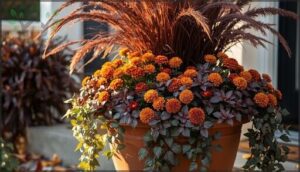
Build your fall container gardening masterpiece by clustering warm tones—orange, red, and yellow—to create cozy harvest color harmony. Pair smooth foliage with spiky grasses for texture mixing that delivers visual balance.
Achieve height variation by placing tall ornamental grasses at the back, mid-height mums in the center, and trailing plants along the edge. These plant combinations showcase fall colors while mastering container garden designs through careful attention to color, texture, and form.
Layering Plants for Visual Impact
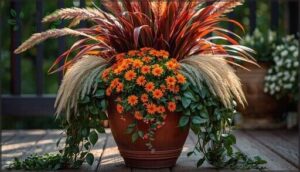
Create layered arrangements by anchoring tall grasses or asters (6 to 12 inches apart) at the back, placing mid-height fillers like calibrachoa in the center, and positioning trailing groundcovers at the front edge.
This plant height progression establishes your focal point while texture mixing—glossy leaves against feathery grasses—guides the eye through fall colors. Repeat key hues across layers for color gradation that unifies your container garden designs.
Using Gourds, Pumpkins, and Seasonal Accessories
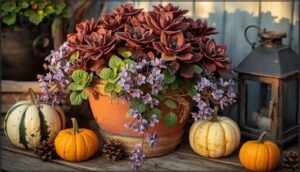
Once you’ve layered your plants, tuck mini pumpkins (upright for 6 weeks on sturdy stems) or small decorative gourds along container edges for instant autumn decor.
Pair warm-toned pumpkin decor with mums (Chrysanthemum) and violas for cohesive fall textures.
Add burlap ribbons, pinecones, or wooden lanterns as seasonal accents that soften hard container themes without overwhelming your fall planters’ living elements.
Creative Container Groupings and Repurposing Ideas
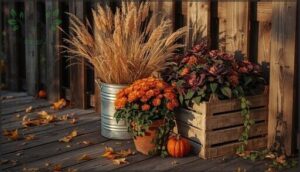
Beyond single-pot arrangements, you’ll discover richer container garden designs by grouping three to five planters in varied heights.
Repeat accent colors across pots—russet ornamental grasses (Pennisetum) paired with burnt-orange mums—to unify multi-level displays.
Repurpose vintage metal trough planters or wooden crates (drill drainage holes first) for unconventional autumn plant arrangements that add character to porches and patios.
Maintenance and Care for Fall Planters
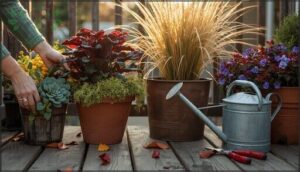
Your fall containers won’t thrive on their own—they need consistent attention to stay vibrant through changing weather.
Proper watering, timely pruning, and strategic frost protection keep your displays looking their best as temperatures drop.
Master these essential maintenance techniques to extend your container garden’s beauty well into the season.
Proper Watering and Fertilizing Techniques
Successfully managing watering frequency and fertilizer timing transforms your fall containers from adequate to remarkable. Check soil moisture by pressing your finger one inch deep—water only when the top feels dry. Apply a high-quality potting mix enriched with compost, then feed with half-strength balanced fertilizer every two to four weeks during active growth.
These essential gardening tips for fall guarantee vibrant autumn gardening displays:
- Water early morning to minimize evaporation and allow foliage drying before nightfall
- Switch to low-nitrogen formulas in late fall promoting root hardiness without tender growth
- Monitor nutrient needs adjusting for cooler temperatures and reduced plant metabolism
Deadheading, Pruning, and Plant Health
Beyond moisture and nutrients, your fall container garden thrives when you actively manage spent blooms and leggy stems. Deadheading diverts energy from seed production toward fresh flowers, helping extend bloom period through early winter. Pinch or snip just above buds using clean, sharp pruners—this simple pruning for density encourages bushier growth while reducing disease management concerns and pest prevention challenges in your autumn planting tips repertoire.
Many autumn bloomers will benefit greatly from to encourage more abundant and longer-lasting flowers.
| Maintenance Task | Timing & Technique |
|---|---|
| Deadheading | Remove wilted flowers before seed set; promotes continuous bloom |
| Light Pruning | Prune after main flush to encourage second wave and improve airflow |
| Health Inspection | Check weekly for aphids, mildew; remove diseased leaves promptly |
Protecting Containers From Frost and Weather
As nighttime temperatures drop, frost protection becomes your primary concern for preserving vibrant fall container garden displays. Lift planters on feet or risers to improve air circulation and reduce ground moisture contact—a simple weatherproofing strategy that prevents freeze-thaw damage.
Wrap vulnerable containers with bubble wrap or reflective blankets during cold snaps, providing essential container insulation. These winterization tips safeguard both cold hardy plant options and your investment through unpredictable seasonal gardening conditions.
Extending Displays Into Early Winter
Strategic winter plant care keeps your fall container garden ideas vibrant well past Thanksgiving. Deploy cold weather strategies that pair frost protection with seasonal color renewal:
- Replace fading annuals with frost-tolerant heuchera or ornamental kale (Brassica oleracea) to maintain visual interest through December
- Apply 2 to 3 inches of shredded bark mulch for container insulation against freezing nights
- Position planters near south-facing walls where microclimates gain 5 to 10 degrees of warmth
These cold hardy plant options transform seasonal gardening into an extended showcase.
Top 7 Containers for Fall Gardening
Your choice of container shapes the entire look and feel of your fall display. The right planter complements your plant selections while withstanding seasonal temperature swings and moisture changes.
Here are seven exceptional containers that deliver both visual appeal and practical performance for autumn gardening.
1. Arcadia Garden Plastic Urn Planter
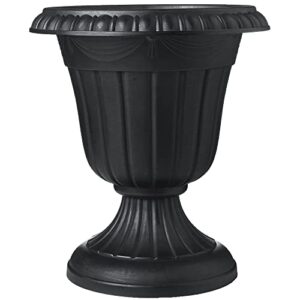
Transform your autumn displays with the Arcadia Garden Plastic Urn Planter, a 16-inch round vessel that combines traditional pedestal styling with practical durability. You’ll appreciate its weather-resistant plastic construction that won’t fade or crack through seasonal temperature swings, while weighing just 1.6 pounds for easy repositioning.
The 13.5-inch opening accommodates generous plantings of chrysanthemums (Chrysanthemum spp.), ornamental kale (Brassica oleracea), and variegated fountain grass (Pennisetum setaceum ‘Fireworks’). Drill drainage holes before planting to prevent waterlogged roots—essential for fall container success.
| Best For | Homeowners and gardeners looking for an affordable, lightweight urn planter to create traditional fall displays on porches, patios, or entryways without the weight and expense of stone or ceramic alternatives. |
|---|---|
| Material | Plastic |
| Dimensions | 16″ round x 18″ tall |
| Weight | Lightweight |
| Use Location | Indoor/Outdoor |
| Drainage | Drillable, no holes |
| Style | Traditional |
| Additional Features |
|
- Weather-resistant plastic won’t crack or fade through temperature changes, making it reliable for year-round outdoor use
- Lightweight design (1.6 lbs) makes it easy to move and reposition for seasonal decorating
- Classic pedestal urn style adds elegant curb appeal at a fraction of the cost of traditional materials
- Requires drilling your own drainage holes, which adds an extra step before planting
- May tip over in windy conditions unless weighted with rocks or heavy soil
- 16-inch size might feel smaller than expected if you’re used to larger statement planters
2. Crescent Garden Delano Planter Bowl
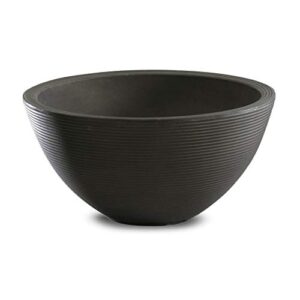
Anchor your fall plantings in the Crescent Garden Delano Planter Bowl, a 19.88-inch round vessel engineered from double-wall polyethylene that won’t crack through autumn’s temperature shifts. You’ll benefit from its pre-drilled drainage hole—critical for preventing root rot in cool-season crops like flowering kale (Brassica oleracea) and ornamental cabbage.
The lightweight 4.54-pound design lets you reposition arrangements effortlessly, while the UV-resistant Old Bronze finish complements burgundy coral bells (Heuchera spp.) and chartreuse foamy bells (×Heucherella). Pair with matching saucers to protect deck surfaces during watering.
| Best For | Gardeners who want a durable, stylish planter that can handle both indoor and outdoor use without worrying about weather damage or cracking. |
|---|---|
| Material | High Density Polyethylene |
| Dimensions | 19.88″D x 19.88″W x 10.04″H |
| Weight | 4.54 pounds |
| Use Location | Indoor/Outdoor |
| Drainage | Pre-drilled hole |
| Style | Old Bronze |
| Additional Features |
|
- Double-wall polyethylene construction resists cracking through temperature changes and comes with a 10-year warranty
- Pre-drilled drainage hole promotes healthy root growth and prevents waterlogging
- Lightweight at 4.54 pounds, making it easy to move and rearrange your plants
- Drainage hole doesn’t include a plug, so you’ll need to buy one separately if you want to use it indoors
- Higher price point compared to basic plastic planters
- Matching saucers sold separately, adding to the total cost
3. Arcadia Garden Plastic Window Box Planter
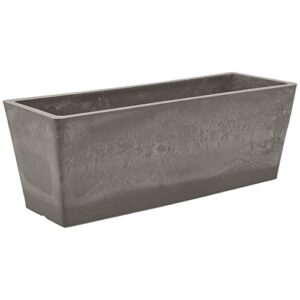
Make the most of your railing space with the Arcadia Garden Plastic Window Box Planter, a 17.5-inch rectangular container blending recycled plastic with stone powder for a concrete-like aesthetic. You’ll appreciate the lightweight construction—easy to mount and reposition—while predrilled drainage holes prevent waterlogged roots in fall mums (Chrysanthemum spp.) and pansies (Viola × wittrockiana).
The shallow 6-inch depth suits compact herbs like thyme (Thymus vulgaris) and trailing calibrachoa, creating layered displays. UV stabilizers resist fading through autumn’s variable light.
| Best For | Gardeners who want an eco-friendly, lightweight planter for railings or window ledges that can handle compact herbs, flowers, and trailing plants in covered outdoor spaces. |
|---|---|
| Material | Plastic/Stone/Wood Composite |
| Dimensions | 17.5″ x 7″ x 6″ |
| Weight | Lightweight |
| Use Location | Indoor/Outdoor |
| Drainage | No hole, drillable |
| Style | Modern/Transitional |
| Additional Features |
|
- Lightweight recycled material makes mounting and moving easy without sacrificing durability
- Predrilled drainage holes prevent root rot and overwatering issues
- Weather-resistant construction with UV stabilizers keeps the planter looking fresh through seasonal changes
- Shallow 6-inch depth limits root growth for larger plants
- Texture can feel rough or uneven in some areas
- May not hold up well in extreme weather or direct, intense sunlight
4. Veradek Corten Steel Cube Planter
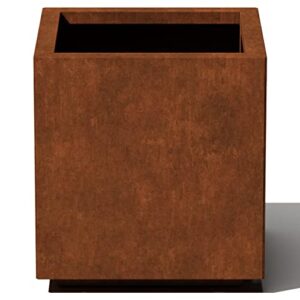
Transform bare corners into bold focal points with the Veradek Corten Steel Cube Planter, a 17-by-17-by-18-inch container crafted from thick-gauge corten steel. You’ll watch raw metal evolve into a warm rust patina—a weathered backdrop for ornamental kale (Brassica oleracea) and fountain grass (Pennisetum setaceum ‘Rubrum’).
Drainage holes prevent root rot, while foam insulation moderates soil temperature through frost cycles. At 26 pounds, the small model anchors windswept patios, pairing geometric lines with the season’s changing foliage.
| Best For | Gardeners who want a durable, sculptural planter that develops character over time and can handle year-round weather exposure. |
|---|---|
| Material | Corten Steel |
| Dimensions | 17″D x 17″W x 18″H |
| Weight | 26 pounds |
| Use Location | Outdoor |
| Drainage | Drainage holes included |
| Style | Modern Rustic |
| Additional Features |
|
- Thick corten steel withstands harsh weather while developing a protective rust patina that adds visual warmth
- Drainage holes and foam insulation protect plant roots from waterlogging and temperature swings
- Clean geometric design creates a modern focal point that complements both ornamental grasses and seasonal plantings
- 26-pound weight makes repositioning difficult once planted
- Rust patina can stain decks, concrete, or pavers if not placed on protective pads
- Uneven rusting may occur without regular watering and exposure to the elements
5. Arcadia Garden Classical Urn Planter
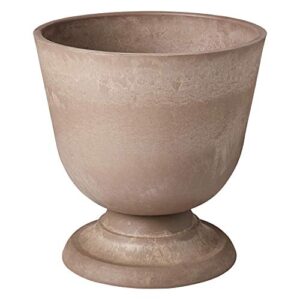
Classic proportions meet practical design in the Arcadia Garden Classical Urn Planter, a 15-by-15-inch vessel molded from PSW plastic blended with stone powder. You’ll assemble the pedestal base in minutes without tools, creating an elevated stage for fall mums (Chrysanthemum × morifolium) and ornamental cabbage (Brassica oleracea var. acephala).
UV-stabilized taupe or gray finishes resist fading through autumn’s changing light. At three pounds empty, the planter moves easily between doorways and patios while maintaining stability once filled with soil and seasonal plantings.
| Best For | Gardeners who want a lightweight, easy-to-move planter with classical styling that can handle seasonal rotations and outdoor conditions without breaking the bank. |
|---|---|
| Material | Plastic |
| Dimensions | 15″D x 15″W x 15″H |
| Weight | 3 pounds |
| Use Location | Outdoor |
| Drainage | Optional, drillable |
| Style | Contemporary |
| Additional Features |
|
- Weighs just 3 pounds empty, making it simple to rearrange or bring indoors for winter
- UV-resistant finish holds up against sun exposure and weather without fading
- Tool-free assembly gets you planting in minutes
- Actual color and texture may differ from product photos due to recycled material variations
- No pre-drilled drainage hole—you’ll need to add one yourself for proper water flow
- Plastic blend can look plain or rubbery compared to stone or ceramic alternatives
6. EPFamily Ceramic Plant Pot
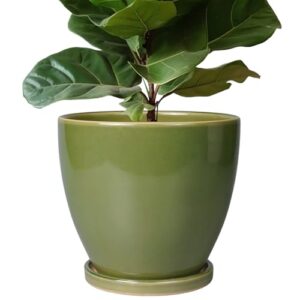
If you want both style and substance on the patio, choose the EPFamily Ceramic Plant Pot. Its glossy green glaze catches sunlight and enhances the foliage of autumn crops like kale (Brassica oleracea) or ornamental peppers (Capsicum annuum).
The drainage hole and matching saucer guard against overwatering, all while keeping tabletops tidy. Fired at high temperatures, this ceramic vessel resists chipping and fading, making it suitable for sheltered outdoor spots or brightened indoor corners as fall’s daylight shifts.
| Best For | Plant lovers who want a durable, good-looking pot that handles both indoor and outdoor settings without sacrificing drainage or style. |
|---|---|
| Material | Ceramic |
| Dimensions | 10″D x 10″W x 8.7″H |
| Weight | 7.5 pounds |
| Use Location | Indoor/Outdoor |
| Drainage | Drainage hole included |
| Style | Vintage/Modern |
| Additional Features |
|
- Drainage hole and saucer combo prevents root rot and keeps surfaces clean
- High-temperature fired ceramic resists chipping and fading over time
- Glossy green glaze adds visual appeal to any room or patio
- Saucer might overflow if you’re not careful with watering
- Heavier than plastic options at 7.5 pounds, so moving it around takes effort
- Price point may feel steep if you’re just looking for a basic planter
7. Whitewashed Wooden Planter Box
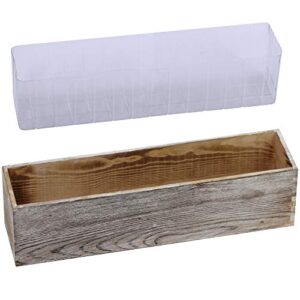
For rustic charm that still shows the wood grain, try the Whitewashed Wooden Planter Box. Its pine construction features a distressed white finish that pairs beautifully with ornamental kale (Brassica oleracea) and pansies (Viola × wittrockiana).
At approximately 24 inches long by 12 inches wide, it holds 6 to 8 gallons of soil—enough for herbs and small fall annuals. Pre-drilled drainage holes prevent root rot, while the water-resistant interior sealant extends its lifespan through multiple autumns.
| Best For | Anyone wanting a lightweight rustic centerpiece for succulents, air plants, or seasonal floral displays at weddings, parties, or around the home. |
|---|---|
| Material | Pine Wood |
| Dimensions | 17.3″L x 3.9″W x 3.9″H |
| Weight | Lightweight |
| Use Location | Indoor/Outdoor |
| Drainage | No drain holes |
| Style | Rustic Country |
| Additional Features |
|
- Natural aged pine with a distressed white finish adds charming farmhouse style to any space
- Removable plastic liner makes it easy to swap out plants or clean without damaging the wood
- Lightweight yet sturdy construction works well for both indoor and outdoor decorating
- No drainage holes in the liner means you’ll need to be careful not to overwater plants
- Not waterproof, so the wood can deteriorate if exposed to too much moisture over time
- Smaller size (17.3″ long) may not work if you’re looking for a statement piece or larger arrangement
Frequently Asked Questions (FAQs)
What to plant in containers for fall?
Fill your containers with mums (Chrysanthemum morifolium) for six to eight weeks of blooms, pansies and violas that tolerate light frost, plus ornamental grasses like fountain grass for textural contrast.
What can I plant in pots in October?
Plant pansies (Viola × wittrockiana), ornamental kale (Brassica oleracea), and violas in October for lasting autumn color. Add chrysanthemums (Chrysanthemum morifolium) for bold blooms, or try cool-season edibles like spinach and arugula.
What to put in planters in August?
Looking to extend your summer display into early autumn? Choose heat-tolerant chrysanthemums (Chrysanthemum × morifolium), ornamental kale (Brassica oleracea), and drought-resistant calibrachoa (Calibrachoa hybrida) for vibrant August containers.
What to grow in pots in the fall?
You can grow chrysanthemums, pansies, violas, ornamental kale, Swiss chard, cool-season herbs like thyme and oregano, and ornamental grasses that thrive through cooler temperatures and shorter days.
What plants are good for pots in autumn?
Choose cool-season champions like pansies and violas, which flourish when daytime temperatures hover in the 50s to 60s Fahrenheit, alongside ornamental kale, mums, and frost-tolerant asters for lasting autumn color.
What potted plants are good in the fall?
Select chrysanthemums (Chrysanthemum spp.), pansies (Viola × wittrockiana), ornamental kale (Brassica oleracea), and fountain grass (Pennisetum setaceum) for reliable autumn color.
These varieties thrive in cooler temperatures while delivering vibrant foliage and blooms through frost.
What plants are good for fall outdoor pots?
Mums (Chrysanthemum spp.) deliver dense blooms in yellow, orange, red, and purple from late summer to hard frost.
Pair them with ornamental kale, pansies, violas, sedums, and ornamental grasses for texture and cold tolerance.
How often to rotate container gardens?
While fast-growing annuals demand weekly turns, your fall containers need rotation every two to three weeks.
Cooler temperatures slow phototropism, so you won’t see that telltale lean toward light as quickly.
Can fall plants thrive in shade?
Yes, fall plants thrive in shade when you select species that tolerate low light—coral bells (Heuchera), ferns, kale, and Swiss chard perform beautifully in dappled or bright indirect conditions throughout autumn.
What soil works best for fall containers?
You’ll want a premium potting mix blended with 20 to 40 percent finished compost. This combination drains well while holding moisture, giving cool-season plants the nutrients and root support they need.
Conclusion
Your patio possibilities persist past summer’s final sundown when you master fall container gardening techniques. Choose cold-hardy chrysanthemums, ornamental kale, and pansies that flourish in September’s chill, then arrange them in weather-resistant planters with proper drainage.
Position containers where morning sun warms foliage, water sparingly as temperatures drop, and protect displays from early frosts with lightweight fabric covers. These strategic choices transform bare outdoor spaces into vibrant showcases that outlast your neighbors’ wilted summer gardens by weeks.