This site is supported by our readers. We may earn a commission, at no cost to you, if you purchase through links.

Most yards go quiet the second summer fades, but yours doesn’t have to. Swap in mustard mums, deep burgundy kale, and grasses that catch the low autumn light, and your yard turns into the neighborhood showstopper right through Halloween.
Fall gardens work harder than people give them credit for. The right mix of blooms, foliage, and texture can carry color from September clear into the first hard frost, no greenhouse required.
That’s where good fall garden design ideas come in — pairing hardy plants with smart layout choices so your beds and containers stay bursting with color long after the last tomato comes in.
Table Of Contents
- Key Takeaways
- Best Plants for Fall Color
- Layered Fall Garden Design
- Fall Container Garden Ideas
- Harvest-Inspired Outdoor Displays
- Seasonal Care for Lasting Beauty
- Frequently Asked Questions (FAQs)
- What are the best Fall Garden ideas?
- How do you dress up a garden for fall?
- What plants are a good fall color?
- What are some easy landscaping ideas?
- What month do you plant a fall garden?
- How do you make a fall garden look more beautiful?
- What can you put in a fall garden?
- What plants are a good fall flower?
- What month do you start a fall garden?
- What should you plant in your garden in the fall?
- Conclusion
Key Takeaways
- Layer plants by height—hardy mums and asters, ornamental kale, native wildflowers, berry shrubs, and frost-tolerant foliage—to keep color going from September through the first hard frost.
- Design with intention by balancing warm color palettes, a 1-to-3 height ratio between tallest and shortest plants, and grasses placed behind blooms for movement and texture.
- Containers, pumpkin planters, and window boxes need good drainage and thoughtful plant pairing (like mums, pansies, and peppers) to bring the same fall charm as garden beds.
- Prepping for winter—mulching, watering before frost, planting spring bulbs, composting leaves, and covering tender edibles—protects your garden’s health and sets up next season’s growth.
Best Plants for Fall Color
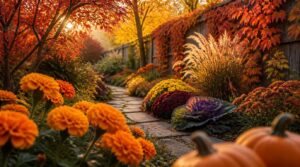
Fall doesn’t have to mean the end of a colorful yard. With the right picks, your garden can stay bursting with color clear through the season. Check out these plants to build your best autumn palette yet.
For inspiration, browse this guide to the best fall flowers by color and find the perfect combinations for your own backyard.
Hardy Mums and Asters
Two fall favorites, garden mums and asters, form the backbone of any autumn landscaping plan. Mums bring dense, compact blooms in reds and golds; asters offer looser, starry flowers in blues and purples, drawing in bees and butterflies right up until frost.
Both plants belong to the Asteraceae plant family. Pinch both back in spring for sturdier growth, and mulch well for overwintering success in colder zones.
Ornamental Kale and Cabbage
Once mums and asters fade, ornamental kale and cabbage step in with rosette varieties in white, pink, and burgundy. Cold weather triggers real color intensification—centers deepen after frost.
Plant in full sun with soil pH near 6.0-7.0. Pair frilly and broad-leaf textures for contrast in borders, edging, or containers bursting with cool-season color.
Late-Blooming Native Wildflowers
Kale brings cool color, but native wildflowers bring the buzz. Purple coneflower, New England aster, and goldenrod stretch autumn nectar availability for bees and butterflies.
- Milkweed hosts monarch caterpillars
- Joe Pye Weed’s pink clusters tower over beds
- Goldenrod’s yellow plumes glow through October
Plant in native wildflower drifts near moist, sunny spots for lasting pollinator support.
Berry Shrubs for Texture
Once the wildflowers fade, berry shrubs pick up the texture game. Blueberry leaves turn a rich red-purple, while beautyberry shows off magenta clusters against bare stems.
Look for exfoliating bark on ninebark, or contrast spiny gooseberries with soft-leafed neighbors nearby.
These deciduous shrubs build winter silhouette structure long after leaves drop, keeping your autumn landscaping textured and alive.
Frost-Tolerant Foliage Plants
Don’t let frost fool you into thinking your garden’s done for. Heuchera color palettes run from silver to deep burgundy, staying evergreen through zones 4-9.
Tuck Helleborus into Helleborus shade placement spots for glossy winter leaves. Echinacea offers Echinacea structural interest, while Perovskia brings Perovskia sensory textures—brush it and smell that aroma.
Match hardiness zone selection carefully for lasting fall foliage.
Layered Fall Garden Design
Picking pretty plants is only half the job. The real magic happens when you layer them with a plan, mixing heights, textures, and colors like you’re building a picture. Here’s how to put it all together, piece by piece.
Warm Autumn Color Palettes
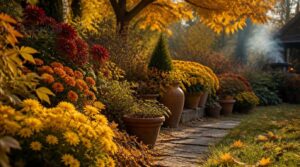
Think of your yard as a painter’s palette dipped in cider and woodsmoke. Mustard yellow pairings with olive green ease the eye between brighter blooms, while burnt orange accents and burgundy depth ground the whole scheme.
Layer in a generous mulch blanket to lock in that warmth, and pair it with tips from this fall planting guide for beginners to keep your color scheme thriving through the season.
Your yard is a painter’s palette dipped in cider and woodsmoke, where mustard yellow eases the eye toward burnt orange and burgundy
Echo it in your pots: terracotta pot balance ties planters to foliage. This seasonal color palette isn’t fussy — just fall flowers working together for real landscape inspiration and a vibrant, unified look.
Height, Texture, and Movement
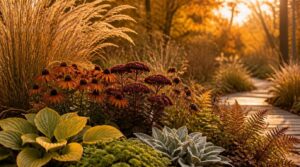
Good garden design plays with all your senses, not just color. Vertical garden ratios matter here — aim for a 1-to-3 balance between your tallest and shortest plants so nothing feels lopsided.
Mix smooth, broad leaves with fuzzy or finely-cut foliage for real foliage texture contrast. Add flexible-stemmed perennials for gentle swaying grass movement, creating visual depth layering that turns any bed into a vibrant landscape.
Grasses Behind Seasonal Blooms
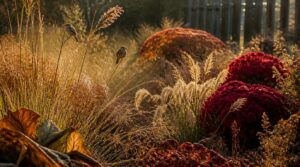
Picture morning sun hitting switchgrass plumes behind your mums — that’s backlit seedhead glow at its best. Ornamental grasses add vertical accent without stealing the spotlight, their seed heads shifting from green to tan as temps drop.
They mask fading foliage, extend winter interest for weeks, and feed birds too. Simple grass color transitions, real garden texture.
Low Edging With Sedum
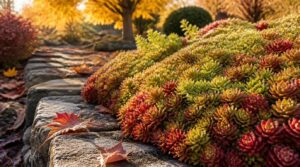
Want a border that basically takes care of itself? Sedum fits the bill. Most edging varieties stay 2 to 6 inches tall, spreading into tidy mats with drought tolerant roots that shrug off dry spells once established.
Colors run blue-green to chartreuse, blushing red in fall. Good soil drainage keeps crowns healthy, and the dense mat helps with pathway weed suppression while looking sharp. Propagate easily from cuttings—free plants for next season’s beds.
Cozy Seating Garden Corners
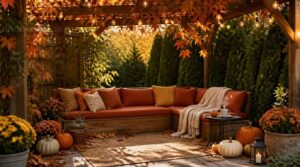
Every great fall garden needs a place to actually sit and enjoy it. A built-in bench tucked into an L-shaped corner seats four to six friends comfortably.
Layer in weatherproof cushions, wool throws, and a jute rug for warmth underfoot. Add a pergola for climbing plants, string lights for evening glow, and evergreen shrubs for privacy—your cozy outdoor living area is complete.
Fall Container Garden Ideas
Not every fall garden needs a big flower bed to shine. With over 800 combinations to choose from, pots, window boxes, and porch displays can carry just as much color and charm. Check out these container ideas to find the perfect fit for your space.
Mums, Pansies, and Peppers
Three superstars, one pot: mums, pansies, and ornamental peppers make an unbeatable trio for autumn containers.
Place taller peppers in back, mid-height mums in the middle, and trailing pansies up front for a layered, textured look.
Pinch young mum growth for bushier blooms, and space pansies 7–12 inches apart. Always choose pots with good drainage to avoid soggy roots.
Pumpkin and Gourd Planters
Ready for something a little wilder than a plastic pot? Hollow out a sturdy pumpkin, drill drainage holes in the base, and layer in gravel before adding potting mix.
Pair with compact Jack Be Little gourds and mini asters for proportion.
Choose flat-bottomed pumpkins for stable placement, seal exteriors for longevity, and enjoy that unbeatable natural planter aesthetic all season long.
Window Boxes and Porch Pots
Not into carving pumpkins? Window boxes and porch pots give you the same autumn charm with less mess.
Look for durable box materials like fiber cement or powder-coated metal, then add self-watering liners for easy care.
Mount securely using proper mounting bracket safety, check drainage hole maintenance monthly, and choose cascading plant selection like trailing pansies for that bursting-with-color look.
Gohearin Ceramic Flower Pot Drainage
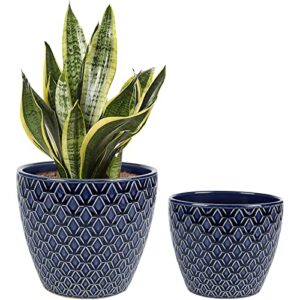
Speaking of drainage, let’s talk pots. Gohearin ceramic planters come with a bottom drainage hole built right in, so extra water escapes instead of pooling around roots.
They also include a removable drain plug, which is handy if you’re moving a pot indoors for winter and want to switch things up. The ceramic body resists fading and cracking, holds moisture well, and works beautifully whether it’s sitting on your porch or your living room windowsill.
- Built-in drainage hole keeps roots from sitting in excess water
- Removable drain plug adds flexibility for indoor and outdoor use
- Durable ceramic construction resists fading and deformation over time
- Plants are not included with purchase
- Drain plug must be manually adjusted when switching between indoor and outdoor settings
- Only available in two sizes, which may limit options for larger plants
Neutral Pots for Bright Plants
Not every pot needs to steal the show. When you’re growing crotons, coleus, or bougainvillea, let neutral pots do the quiet work—sand, taupe, or soft gray shades reflect sunlight instead of trapping heat, keeping roots happier.
- Enhances color contrast
- Reflects sunlight, reduces stress
- Layers textures beautifully
- Easy container cleaning
- Elevates garden design aesthetics
Choose stone or matte ceramic for lasting fall containers that let bright foliage shine.
Harvest-Inspired Outdoor Displays
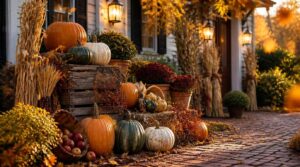
Fall isn’t just about flowers, it’s about celebrating the season’s bounty. Your yard can pull double duty as both garden and harvest showcase with a few simple touches. Check out these ideas to bring that cozy, gathered-from-the-field feeling right to your front door.
Cornstalks and Hay Bales
Nothing frames a fall entryway like a good stalk bundle standing tall against the sky. Stack cornstalks 5 to 8 feet high for vertical stalk bundles with rustic pathway framing, then anchor them with hay bales below.
Mind hay bale geometry—standard bales run 14x18x32 inches, sturdy enough for seating or low walls.
Add mums for autumn color contrast. Keep straw away from flames; straw fire safety matters.
Lanterns and String Lights
Once dusk settles in, string lights and lanterns turn your yard into a cozy autumn scene. Drape warm-white strings above seating for a starry canopy, then add amber lanterns along pathways for layered lighting ambiance.
Choose solar or electric—solar charges by day, no cords needed. Check weatherproof IP ratings before buying, and don’t worry: LED options sip energy while glowing bright.
Rustic Branches and Birch Logs
Birch logs bring instant texture to autumn vignettes. That pale, papery bark with dark horizontal streaks pairs beautifully with pumpkins and greenery on any tabletop.
Stack a few bundled branches or stand one tall as a vertical accent. Kiln-dried logs resist warping indoors, and a light wax coat keeps bark intact for seasons of reuse—simple, sturdy, naturally striking.
Entryway Pumpkin Arrangements
Your front door deserves more than a single pumpkin plopped on the mat. Try visual rhythm grouping—odd numbers like three or five—with larger pumpkins in back, smaller ones up front.
- Mix smooth and warty pumpkin texture variety
- Pair orange with cream for color contrast
- Add grasses for vertical movement
- Frame the threshold, not the hardware
- Keep pots neutral-toned
Simple, welcoming, done.
Garden-To-Table Herb Displays
Bring the harvest indoors with Countertop Herb Care—basil, cilantro, and parsley in shallow water double as decor.
Try Vertical Herb Planters or a Patterned Herb Arrangement for edible gardening that doubles as garden design aesthetics.
| Display Type | Best Herbs |
|---|---|
| Countertop Jars | Mint, thyme (propagating cuttings) |
| Indoor Herb Towers | Basil, oregano, chives |
Seasonal Care for Lasting Beauty
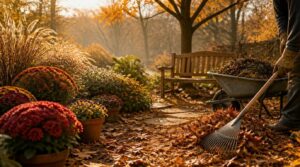
A beautiful fall garden doesn’t stop needing you once the leaves change. A few smart habits now will keep your yard healthy and ready for whatever winter brings. Here’s what to check off your list before the cold really settles in.
Mulching Fall Garden Beds
Tucking your beds in with mulch is one of the kindest things you can do before winter hits. It locks in soil temperature regulation, feeds soil as it breaks down, and stops weeds fast.
- Leaf or compost mulch: 1–3 inches for veggies
- Bark mulch: 2–4 inches around shrubs
- Keep mulch away from stems to prevent rot
Watering Before Frost Arrives
Once your mulch is down, give beds a good drink. Water 12 to 24 hours before frost hits—moist soil holds heat better than dry, protecting roots overnight.
Soak slowly so moisture reaches 4 to 6 inches deep. Sandy soil may need extra time; clay holds moisture longer. Skip watering once temps near freezing, and always aim at the soil, not leaves.
Planting Spring-Blooming Bulbs
While your beds soak up that pre-frost drink, tuck spring bulbs into the ground too. Plant tulips and daffodils two to three times their height deep, in well-draining soil.
Group them in natural drifts rather than rows for that "bursting with color" look come spring. Mark your spots now, so you don’t disturb them later.
Composting Leaves and Trimmings
All those bulbs need cover, and fallen leaves are the answer. Shred them first—shredding speeds decomposition threefold and boosts airflow. Skip diseased material entirely. Build a simple bin, layering:
- Shredded browns (carbon)
- Grass clippings (nitrogen)
- Small sticks for aeration
- Occasional water
Aim for a 25:1 carbon-nitrogen ratio. Come spring, spread that finished compost across beds for lasting soil fertility.
Protecting Edibles With Covers
Tucking in your tender greens matters as much as feeding them. Insulated row covers trap heat near the soil, keeping roots 5-10°F warmer during frost snaps.
| Cover Type | Best For | Key Benefit |
|---|---|---|
| Fine mesh | Pest exclusion | Blocks bugs, lets pollinators through |
| UV blocking fabric | Sunlight control | Preserves flavor and color |
| Permeable fabric | Rain management | Keeps leaves dry, roots watered |
Cold frames extend harvests weeks longer. Don’t skip this step!
Frequently Asked Questions (FAQs)
What are the best Fall Garden ideas?
Think pollinator-friendly blooms like asters and mums, layer grasses for vertical garden drama, and tuck herbs into edible fall crops. Mix warm seasonal color palettes with pumpkin planters for a autumn landscape that’s bursting with charm.
How do you dress up a garden for fall?
Less can be more, yet fall’s best displays layer generously. Mix warm color palettes with rustic props like birch logs and hay bales, add mums and kale for texture, then finish with lanterns for cozy autumn lighting accents.
What plants are a good fall color?
Vivid Maple Varieties like sugar and Amur maple bring gold-to-crimson color, while Autumnal Shrub Foliage (burning bush, smoke bush) and asters, mums, and sedum add reliable Perennial Bloom Colors to any seasonal palette.
What are some easy landscaping ideas?
Every gardener dreams of a yard that practically tends itself. Group plants by sun exposure, add native asters and sedges, install low-mow groundcovers and gravel paths, then finish with evergreen accents for structure once autumn color fades.
What month do you plant a fall garden?
Aim for 6 to 12 weeks before your first frost date, usually late summer through early fall depending on your climate zone. Check soil temperature too—50 to 65°F is ideal for germination, so cooler mornings mean it’s planting time.
How do you make a fall garden look more beautiful?
Think of your yard as a painter’s canvas: layer warm autumn color palettes, add vertical garden drama with tall grasses, tuck in spooky themed plants for fun, and finish with biodegradable planters like hollowed pumpkins for easy charm.
What can you put in a fall garden?
Load it up with hardy mums, ornamental kale, and berry shrubs like winterberry for color, plus edible fall crops like kale and garlic. Toss in spooky pumpkins, decorative cut branches, and seasonal herbs like rosemary for a garden that’s both pretty and practical.
What plants are a good fall flower?
Mums, asters, and Helenium bring gold, purple, and bronze tones to your beds. Add Sedum Autumn Joy for rosy color, Russian sage for texture, and ornamental kale for frost-resistant foliage that keeps your autumn landscaping bursting with color.
What month do you start a fall garden?
Most fall gardens start 6 to 8 weeks before your first frost date, often late July through September in cooler climates, or into October where winters arrive later. Check regional frost calendars and plan around each crop’s maturity window for best results.
What should you plant in your garden in the fall?
Go for fall-blooming perennials and shrubs, ornamental kale, and frost-resistant greens like spinach and kale. Plant garlic now for summer bulbs, harvest root vegetables, and dry herbs before frost settles in for good.
Conclusion
Autumn doesn’t fade your yard; it sets it ablaze, one mustard mum and burgundy leaf at a time. You’ve got the plants, the layout tricks, and the finishing touches to make every corner glow.
These fall garden design ideas aren’t just for looks; they’re your roadmap to a yard that holds its own against October’s chill. Plant with purpose, layer with confidence, and let your beds carry warmth clear into the frost. Your best autumn yard is already taking root.