This site is supported by our readers. We may earn a commission, at no cost to you, if you purchase through links.
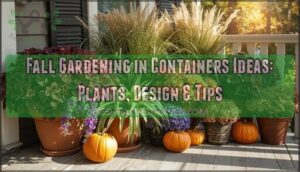
Most gardeners shut down their container game when summer fades, but autumn’s cooler temperatures actually reveal some of the most striking plant combinations you’ll grow all year. While your neighbors are hauling pots to the garage, you can layer fiery foliage, architectural grasses, and cold-hardy blooms that laugh at the first frost.
The secret lies in breaking free from summer’s playbook—fall container gardening demands a completely different strategy, one that embraces bold contrasts, unexpected textures, and plants that hit their visual peak when the thermometer drops.
From mixing burgundy heucheras with chartreuse sedges to tucking ornamental peppers alongside trailing pansies, you’re about to discover combinations that turn porches and patios into autumn showstoppers.
Table Of Contents
- Key Takeaways
- Creative Fall Container Gardening Ideas
- Choosing The Best Fall Container Plants
- Designing Eye-Catching Autumn Planters
- Essential Fall Container Gardening Tips
- Top Products for Fall Container Gardens
- Frequently Asked Questions (FAQs)
- What can you plant in a fall container garden?
- What are some ideas for a fall container garden?
- What can I put in a fall container?
- Should you plant a container garden in the fall?
- What is a good fall container thriller?
- What colors go well with a fall container garden?
- What to plant in containers for fall?
- What to put in pots for autumn?
- What is the most common mistake made with container plants?
- What are the three rules for planters?
- Conclusion
Key Takeaways
- Fall container gardening thrives on cool-season plants like frost-tolerant pansies, ornamental kale, and architectural grasses that peak visually when temperatures drop below 60°F, outperforming traditional summer flowers.
- The “thriller, filler, spiller” framework creates dynamic container designs by layering tall focal plants (ornamental grasses, dwarf shrubs) with mid-height fillers (mums, peppers) and trailing spillers (violas, sedum) in containers at least 18 inches deep.
- Monochromatic color schemes using varied shades of one hue—like burgundy pansies with blush sedum or golden calibrachoa with butter-yellow mums—deliver 10-15% higher visual impact than scattered multi-color combinations.
- Fall containers demand adjusted care: deep watering every 7-10 days instead of daily, soil mix with 20-30% compost for drainage, and strategic placement for 4-10 hours of sunlight depending on whether you’re growing fruiting plants or leafy greens.
Creative Fall Container Gardening Ideas
You don’t need to settle for summer’s leftovers when fall rolls around. Container gardening in autumn opens up a whole new playbook of textures, colors, and combinations that thrive in cooler weather.
Here are six creative approaches that’ll transform your porch or patio into a seasonal showstopper.
Mixing Foliage Colors for Autumn Interest
Break free from flower-only containers this fall—foliage color theory delivers bolder autumn displays. Layer dark Heuchera against chartreuse varieties for high-contrast plant combinations that pop on shaded porches. Ornamental cabbage intensifies its purple core below 60°F, while bronze-toned foliage harmonizes with rust and gold seasonal palettes.
Mix shade-tolerant plants with silver accents to heighten surrounding colors, creating striking fall container gardening arrangements that outshine traditional mums. By incorporating a fall color combo into your design, you can create a unique and visually appealing container garden.
Adding Height With Ornamental Grasses
Ornamental grasses inject dramatic vertical accent into fall container gardening, with species ranging from 24 to 60 inches at maturity. Match container size to three-quarters of the grass’s expected height—a 16-inch blue fescue thrives in a 12-inch pot, while towering feather reed grass demands deep, spacious planters.
Your grass selection determines whether you’re creating intimate balcony fall texture or a bold 7-foot privacy screen that grabs focus. For ideal growth, consider the container care tips to keep in mind when selecting and maintaining your ornamental grasses.
Evoking Harvest Season With Gourds and Pumpkins
Grasses set the stage—now bring in the harvest’s iconic symbols. Pumpkins ranging from 6 to 12 pounds fit standard 14- to 20-inch containers without stressing the pot, while miniature varieties under one pound let you cluster 5 to 10 fruits around base plantings. Decorative hard-shelled gourds remain display-ready for three to four months when kept dry.
Four bold moves for authentic autumn decor:
- Stack warted, striped gourds around smooth orange pumpkin varieties to boost textural contrast in harvest displays
- Treat pumpkin surfaces with a 10:1 water-vinegar soak for 20 minutes to suppress rot and extend your seasonal planters through early winter
- Position medium Charisma pumpkins—10 to 20 pounds each—as focal anchors in large fall planters, then layer ornamental kale at their base
- Pair container-grown compact pumpkin vines with trailing edges so mature fruits rest on adjacent surfaces, integrating living elements into your harvest porch setup
Combining Foliage, Flowers, and Fruit
You’ve mastered the harvest vignette—now layer living elements for a vibrant show. Combining foliage, flowers, and fruit in one container pushes ornamental impact beyond what any single category delivers. Trials pairing Heuchera foliage with pansies extended visual interest 4–6 weeks past the first frost, while ornamental peppers alongside alyssum maintained blooms for 8–10 weeks when planted by early September.
| Layer | Plant Example | Role in Design |
|---|---|---|
| Foliage | Sedum, ornamental kale | Textural anchor and color base |
| Flowers | Pansies, asters | Seasonal blooms for continuous interest |
| Fruit | Ornamental peppers | Mid-height thriller with 60–90 day display |
Container designs using three structural roles—upright, mounding, and trailing—score 0.5–1.0 points higher on aesthetic scales than simpler arrangements. Place taller foliage or grass elements in the back, position fruiting plants mid-stage, and let flowering spillers tumble over the rim. This three-tier approach transforms ordinary fall planters into commanding garden textures that hold attention through fluctuating autumn temperatures.
Creating Cohesive Looks With Similar Hues
A unified fall palette anchors attention better than a color riot. Research on small urban green spaces shows analogous schemes—warm reds with oranges or cool purples beside burgundies—boost attractiveness ratings 10–15% over high-contrast mixes.
Visual cohesion matters: use color harmony and hue selection to guide plant combinations. Pair bronze mums with copper-toned kale for container arrangements that read as one commanding statement, not a jumbled afterthought.
Using Different Shades of One Color
Monochromatic schemes deliver surprising punch when you layer light and dark versions of one hue. In 2023, single-color fall containers topped design challenges for visual impact, proving that shade variation beats a scattered rainbow every time.
Layering light and dark shades of one color creates more visual punch than mixing multiple hues in fall containers
For tonal contrast that grabs focus, try:
- Deep burgundy pansies with blush-pink sedum for layered fall colors
- Golden calibrachoa paired with butter-yellow mums in sun-drenched spots
- Purple violas anchoring silver-leafed dusty miller for cool-season drama
- Wine-red croton beside pale coral begonias in shade groupings
- Bronze ornamental grasses fronting rust-toned chrysanthemums
Color harmony through a single hue simplifies container garden design without sacrificing sophistication.
Choosing The Best Fall Container Plants
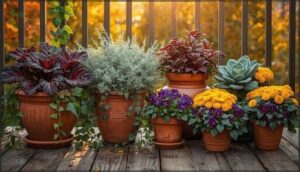
Picking the right plants transforms your fall containers from generic to genuinely striking. You’re not limited to the same tired mums everyone else grabs—cool-season performers thrive when temperatures drop, giving you options that actually look better as autumn rolls in.
Here’s your lineup of plants that won’t just survive the season but own it.
Cool-Weather Annuals: Pansies and Violets
You can’t go wrong with pansies and violets when you’re building fall containers—they’re the rebels of cool-season crops, blooming right through light freezes down to 25°F.
These hardy annuals thrive in that sweet spot of 45–65°F, delivering continuous fall blooms well into winter in milder zones.
Space them 6–10 inches apart in your container arrangements, give them morning sun, and watch them perform when everything else quits.
Fall Perennials: Mums and Oakleaf Hydrangea
Fall perennials anchor your containers with serious staying power—mums and oakleaf hydrangea don’t just show up for a weekend.
Here’s what makes these perennials essential for fall container ideas:
- Hardy garden mums tolerate zones 5–9 and bloom for weeks when you maintain consistent moisture and 60–70°F temps
- Container mums need 250–350 ppm nitrogen early, then regular feeding every 2–3 weeks
- Oakleaf hydrangea reaches 2–6 feet with lobed foliage turning burgundy by October
- Both survive −15°F with mulch and cold frame protection in harsh winters
These fall plants combine garden hardiness with bold fall color theory.
Ornamental Grasses for Texture and Height
Ornamental grasses inject movement and drama into fall containers like nothing else. Dwarf fountain grass (Pennisetum alopecuroides ‘Hameln’) hits 60–90 cm with persistent tan plumes, while pink muhly grass (Muhlenbergia capillaris) delivers airy pink panicles at 90 cm—both create stunning vertical accents and texture contrast when paired with bold fall foliage.
You’ll need containers at least 25–30 cm deep for dwarf grasses, 35–45 cm for medium varieties like feather reed grass ‘Karl Foerster’.
Foliage Stars: Japanese Maple and Ilex ‘Sky Pencil’
When you want foliage plants that command attention through winter, Japanese Maple and Ilex ‘Sky Pencil’ deliver unparalleled architectural impact. Dwarf maples in 45 cm cubes shift from spring greens to blazing red-orange fall foliage combinations, while ‘Sky Pencil’ maintains a 3:1 height-to-width columnar evergreen backdrop.
Both thrive in well-drained container soil mix with slightly acidic pH. Ilex pruning tips recommend minimal shearing to preserve the natural pencil form, and Japanese Maple care requires consistent moisture during fall container establishment.
Edible Options: Peppers and Decorative Kale
Beyond striking foliage, edible plants pack double duty in fall containers. Ornamental peppers reach 10-20 inches tall in 3-5 gallon pots, producing colorful fruits through the first frost—bell varieties yield 10-12 peppers per plant. Kale thrives in 8-inch-deep containers, with decorative rosettes spanning 14 inches.
Both tolerate cooler temperatures while delivering nutrition and visual punch, making edible landscaping practical for autumn harvests.
Frost-Tolerant Picks: Conifers and Black-Eyed Susan Vine
When frost threatens your container display, conifers emerge as reliable anchors. Dwarf varieties handle cold in pots two zones less hardy than their ground rating—so your Zone 5 specimens need Zone 7 protection through mulching and sheltered placement. Black-eyed Susan vine, meanwhile, won’t survive freezing and demands indoor relocation before temperatures hit 32°F.
- Position containers against warm walls to buffer temperature swings and reduce wind exposure
- Wrap pots with burlap or bubble wrap for container insulation against freeze-thaw cycles
- Pair conifers with late-blooming mums, pansies, or ornamental grasses for extended color
- Apply anti-desiccant spray to evergreen foliage when roots freeze and can’t replace moisture
- Swap frost-sensitive vines for cold-hardy sedum or trailing evergreens after first warning frost
Designing Eye-Catching Autumn Planters
You’ve picked your plants—now it’s time to make them shine. The real magic happens when you arrange varieties with intention, choosing containers that command attention and layering elements that create depth.
Let’s break down the design moves that transform a simple pot into a statement piece worth stopping for.
Layering Heights and Textures
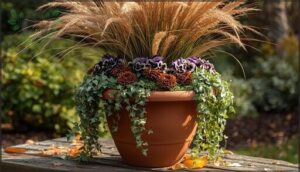
Break free from flat, forgettable planters by mastering vertical layering. You’ll want a container at least 18 inches deep to let ornamental grasses or dwarf shrubs rise as your thriller, surrounded by filler plants like pansies at one-third to two-thirds that height.
Add spillers along the rim for texture contrast. This thriller filler spiller framework transforms fall containers into vibrant, sculptural displays.
Stylish Container Choices and Unique Vessels
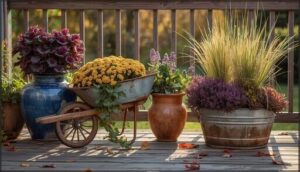
Your planter is the stage, so choose a vessel that steals the show. Eco-friendly planters made from bamboo or recycled plastics let you garden with a conscience, while vintage containers and repurposed vessels—think old wheelbarrows or hand-thrown ceramics—bring rebellious charm to fall container ideas. Tailored planters in cobalt blue or terracotta finishes turn decorative containers into garden art.
- Select sustainable materials like bamboo or biodegradable composites
- Hunt for vintage terracotta or rustic hand-painted ceramics
- Repurpose bathtubs, baskets, or wagons with drainage holes
- Choose bold metallic finishes or textured surfaces
- Tailor with DIY paint or modular configurations
Incorporating Garden Ornaments and Artistic Accents
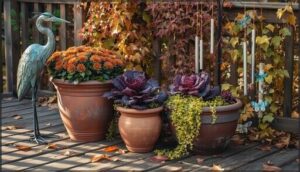
Around your containers, garden sculptures, and wind chimes transform planters into gallery pieces. The global garden decor market will reach $7.12 billion by 2032, proving ornaments aren’t optional—they’re essential elements of landscape design for a fall revolution. DIY accents from recycled materials cut waste by 90%, while eco-ornaments like bee hotels boost native pollinators in autumn yard care. Community art turns decorative container gardening into a shared rebellion against boring outdoor decor.
| Ornament Type | Visual Impact | Functional Benefit |
|---|---|---|
| Garden sculptures | Focal point drama | Year-round structure |
| Wind chimes | Sound and movement | Ambient relaxation |
| Bee hotels | Textured interest | Pollinator support |
| Recycled art | Bold personality | Waste reduction |
| Ceramic stakes | Vertical accents | Plant identification |
Adding Fragrant Plants Like Rosemary
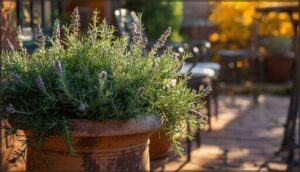
Scent transforms good planters into unforgettable ones. Rosemary—packed with 27–53% eucalyptus-like 1,8-cineole and 10–18% pine-note α-pinene—delivers pungent, energizing fragrance when foliage is brushed near patios or entryways. Position pots in partial sun for concentrated essential oils, then watch the aroma work double duty.
- Camphor-rich chemotypes release sharp, medicinal notes detectable several feet away
- Terracotta containers improve root aeration and boost aromatic foliage density
- Indoor overwintering at 60–75°F sustains fragrance near windows through frost season
- Mosquito and spider deterrence from volatile oils reduces pests around seating areas
- Pairing with conifers layers evergreen resin against herb tang for fall depth
Arranging for Focal Points and Curb Appeal
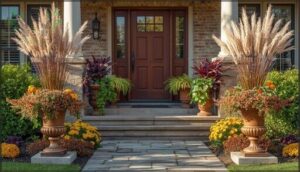
Curb appeal hinges on strategic container placement. Position your front door planters 3–5 feet from entryways to create an instant focal point design. Group 3–5 pots at pathways for visual balance visible from 50 feet, or pair them symmetrically for a 40% stronger impact. Raise thriller plants 24–36 inches on pedestals, and let fall container ideas guide newcomers mastering container gardening for beginners.
| Strategy | Impact |
|---|---|
| Symmetrical pairing at paths | 40% boost in perceived balance |
| Raised pedestal placement | 24–36 inch height gain for curb appeal tips |
| Grouped clusters (3–5 pots) | Focal points visible from 50 feet |
| Thriller plants at 1/3 height | Proportional dominance in fall decor inspiration |
Essential Fall Container Gardening Tips
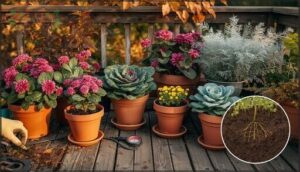
Your containers won’t thrive on enthusiasm alone—they need the right fundamentals to carry you through the season. Fall growing conditions shift dramatically from summer’s heat, so you’ll need to adjust your approach to soil, water, and light.
Here’s how to set up your containers for success and keep them performing until the first hard freeze hits.
Soil Selection and Fertilizing for Fall
You don’t need fancy store-bought blends to build your fall containers from scratch.
Mix equal parts peat moss, compost (capped at 20–30% to control salinity), and perlite for a balanced organic potting soil that drains well yet holds moisture.
Incorporate about half a cup of dolomitic lime per five gallons to buffer acidity—pH management keeps nutrient uptake strong as temperatures drop.
Watering Techniques for Cooler Temperatures
As temps drop, your watering needs shift dramatically—fall container gardening means stepping back from the hose. Check soil moisture 5–8 cm deep before watering; if it’s dry, give plants a thorough soak every 7–10 days rather than daily sprinkles.
Deep watering builds sturdy root health and prevents rot in cool, damp conditions. These seasonal plant care tweaks let your fall container ideas thrive without the summer fuss.
Maximizing Sunlight and Providing Shade
Light is your secret weapon for fall container success. Position fruiting plants where they’ll soak up 6–10 hours of direct sun—south-facing spots deliver consistently—while leafy greens thrive with just 4–6 hours.
Use 30% shade cloth to tame midday heat on peppers or tomatoes, and raise containers on stands to dodge railing shadows.
Seasonal adjustment matters: as fall sun angles shift, scoot planters toward edges to keep light levels steady.
Harvesting Produce From Edible Containers
Once light’s dialed in, you’re ready to harvest. Snip leafy greens when they hit 4–6 inches, leaving stubble for regrowth—crop rotation in miniature. Pick peppers at glossy color, tomatoes at peak firmness. Morning cuts lock in hydration and nutrient preservation.
Handle fruit gently to dodge bruising, rinse with potable water, then eat fast: spinach sheds 90% of vitamin C within 24 hours, so postharvest care means speed, not storage.
Maintenance for Long-Lasting Displays
Beyond harvesting, keep displays sharp through autumn by yanking spent blooms and dead foliage—deadheading methods redirect energy toward fresh buds, stretching color weeks longer.
Fall container ideas lean on deep, infrequent watering as temps drop, cutting frequency by 30–50%. Hold fertilizer timing once growth stalls; late feeds spawn frost-prone shoots.
Pruning techniques and soil management? Strip diseased stems fast, maintain drainage, and your plant care for fall containers stays rebel-proof through November.
Top Products for Fall Container Gardens
You’ve nailed the basics of fall container gardening, but the right products can take your setup from functional to thriving.
Beyond plants and pots, a few strategic additions support pollinators and extend your garden’s ecological reach.
Here are three standout products that improve any autumn container display while giving back to the environment.
1. Bee Watering Station Feeder Set
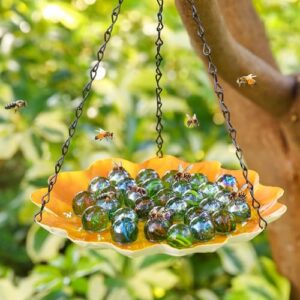
You’re not just growing plants—you’re creating habitat. A bee watering station with glass marbles transforms your fall container setup into a pollinator refuge.
Position this shallow feeder near your mums and ornamental grasses so bees can safely hydrate while foraging. The marbles give them stable landing spots, preventing drowning while you support vital garden ecology.
Refill every few days to keep water fresh and mosquito-free. It’s a small addition that amplifies your container gardening impact, turning your patio into a functional pollinator hub this autumn.
Best For: Gardeners who want to support bees and butterflies in their outdoor spaces while adding a decorative touch to patios or container gardens.
- Shallow dish with glass marbles provides safe landing spots that prevent bees from drowning while they drink
- Weather-resistant metal construction with vibrant flower design doubles as garden decor
- Helps attract pollinators to your garden while reducing their exposure to contaminated water sources
- May need to be refilled every few days to keep water fresh and prevent mosquitoes
- Some users found the base unstable or leaning when not enough marbles are used
- Shallow design means it holds less water than deeper dishes, requiring more frequent maintenance
2. Monarch Butterfly Wildflower Seed Mix
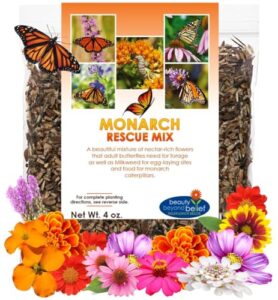
Transform your fall container gardening into a monarch habitat with a specialized butterfly seed mixture. You’ll get 15 wildflower species in one package—coneflower, black-eyed Susan, and milkweed varieties that layer heights from 8 to 72 inches.
These pollinator seeds cover roughly 50 square feet when broadcast into container soil, creating dense autumn displays. Plant in full sun with a well-drained potting mix, and you’ll support migrating monarchs through their shifting seasonal patterns.
It’s butterfly gardening that breaks the mold, delivering wildflower care instructions and genuine ecological impact right on your balcony.
Best For: Urban gardeners who want to create pollinator-friendly container displays on balconies or patios while supporting monarch butterfly conservation efforts.
- Includes 15 wildflower species with varying heights (8-72 inches) that create layered visual interest and provide nectar sources from spring through fall for monarchs and other pollinators.
- Simple establishment process—just broadcast seed into prepared container soil, press lightly, and water once to start germination.
- 100% pure, non-GMO, open-pollinated seed that’s pesticide-free, reducing chemical exposure risks for visiting butterflies and bees.
- Some customers report the mix lacks milkweed, which is the essential host plant monarch caterpillars need to survive and grow.
- Results can be inconsistent depending on soil quality, sunlight exposure, and watering habits—you might get unexpected plants like basil instead of advertised wildflowers.
- May need regular watering and maintenance to keep container plantings thriving, especially during dry periods when potting mix dries out faster than garden beds.
3. Wildflower Seeds Garden Mix Packet
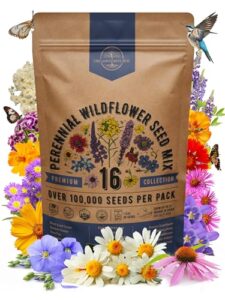
A 16-variety wildflower packet covers 250 to 500 square feet at standard densities—enough for multiple fall containers or one sprawling balcony garden. You’ll find purple coneflower, white yarrow, and columbine among the heirloom, non-GMO seeds designed for indoor and outdoor use.
Packet contents blend annuals for quick color with perennials that bloom in year two, extending your container garden across multiple seasons.
Sow in full sun with consistent moisture, and you’ll create pollinator havens that defy urban constraints. It’s seed selection and garden planning merged into one rebellious wildflower care strategy for adventurous fall gardening.
Best For: Gardeners who want a diverse, pollinator-friendly wildflower mix for containers or small garden beds, with a blend of annuals for quick color and perennials for long-term blooms.
- Covers 250 to 500 square feet with 16 heirloom, non-GMO varieties including purple coneflower, white yarrow, and columbine
- Annuals provide first-season color while perennials establish for year-two blooms, extending visual interest across multiple seasons
- Attracts bees, butterflies, and birds, creating pollinator havens in urban or balcony gardens
- Mixed customer reviews report inconsistent germination rates and fewer varieties than expected in some packets
- Perennials require a full growing season before flowering, so immediate results depend solely on annuals
- Some users find the packet overpriced and note that seeds may not sprout or develop past the bud stage without proper care
Frequently Asked Questions (FAQs)
What can you plant in a fall container garden?
Your fall containers thrive with frost-tolerant pansies, ornamental kale, and upright rosemary.
Layer these seasonal greens with compact mums for fall blooms, then add trailing violas to create winter interest that outlasts summer’s potted plants.
What are some ideas for a fall container garden?
Start with bold foliage in warm tones—burgundy heuchera, copper coleus—then add grasses for height.
Tuck in mini pumpkins and frost-hardy pansies.
Mix textures, layer colors, and let your container design break the rules.
What can I put in a fall container?
Pack your fall planters with pansy blossoms that laugh through frost, ornamental kale leaves twisting like sculpture, peppers fruiting boldly, and grasses swaying tall.
Seasonal plants combine garden accents, container greens, and fall blooms into rebellious plant combinations for fall.
Should you plant a container garden in the fall?
Yes, you should absolutely plant containers in fall. Cool-season crops mature quickly, ornamentals thrive in moderate temperatures, and your gardening timeline extends months beyond summer while requiring less frequent watering and minimal soil preparation.
What is a good fall container thriller?
About 68–83% of urban gardeners rely on containers, so choosing the right fall thriller matters.
Ornamental grasses like purple fountain grass, flowering mums, or bold foliage coleus create dramatic vertical focal points in autumn planters.
What colors go well with a fall container garden?
Warm tones like rust, copper, and amber echo autumn foliage beautifully. Complementary colors—purple with gold or blue with orange—create dramatic focal points, while analogous schemes using red-orange-yellow deliver cohesive, harmonious fall container arrangements.
What to plant in containers for fall?
Choose cold-hardy mums, ornamental kale, and frost-tolerant pansies for fall blooms.
Add container greens like sedum, seasonal herbs such as rosemary, and textural grasses to create vibrant fall planters that thrive through cooler temperatures.
What to put in pots for autumn?
Autumn foliage stars like ornamental kale and pansies anchor fall planters, while decorative gourds and textured grasses add seasonal drama—proving that container design ideas don’t need flowers to steal the show through winter-hardy appeal.
What is the most common mistake made with container plants?
Overwatering tops the list of container gardening mistakes, especially when poor drainage traps water around roots.
Many beginners also misjudge watering frequency or select inadequate media that compacts and suffocates root systems.
What are the three rules for planters?
Container gardening for beginners relies on three essential rules: combine thriller plants, filler choices, and spiller options for visual balance; establish proper drainage systems; and maintain container stability by matching pot size to plant needs.
Conclusion
Don’t let your creativity fall by the wayside when temperatures drop—autumn containers thrive on bold contrasts and unexpected plant marriages that summer gardeners never explore.
You’ve learned the mechanics of fall gardening in containers ideas, from frost-defying pansies to architectural grasses that anchor your designs.
Now break the rules: pair ornamental peppers with trailing evergreens, stack heights without apology, and watch your porch outshine every pumpkin-spice cliché on the block. Your containers, your rebellion.
- https://bluestem.ca/uncategorized/urban-gardens-are-thriving-despite-city-pollution-new-research/
- https://hta.org.uk/news/hta-market-update-steady-september-for-garden-centres-as-autumn-planting-begins/
- https://thegardendiaries.blog/2013/11/01/creative-fall-containers-start-with-foliage-plants/
- https://www.calloways.com/blog/container-gardens-for-the-fall/
- https://plants.ces.ncsu.edu/plants/vinca-major/