This site is supported by our readers. We may earn a commission, at no cost to you, if you purchase through links.
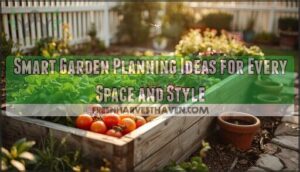
A single raised bed can feed a family of four all summer—if you plan it right. Most gardeners underestimate how much a little structure changes everything.
Without a clear layout, even a generous patch of ground turns into a tangle of competing plants, wasted space, and missed harvests.
The good news? You don’t need acres or a landscape degree to grow something beautiful and productive. Whether you’re working with a sunny backyard, a shaded balcony, or a strip of soil along a fence, smart garden planning ideas can transform what you have into exactly what you want.
Table Of Contents
- Key Takeaways
- Space-Saving Vegetable Garden Planning Ideas
- Creative Flower and Sensory Garden Designs
- Smart Strategies for Small and Urban Gardens
- Companion and Succession Planting Techniques
- Sustainable and Eco-Friendly Garden Planning
- Functional Garden Layouts for Every Lifestyle
- Top 5 Products for Garden Planning Success
- Frequently Asked Questions (FAQs)
- What is the best way to layout a garden?
- How do I start a garden from scratch?
- What is the best soil mix for vegetables?
- How can I prevent common garden pests naturally?
- Which tools are essential for beginner gardeners?
- How do I plan crop rotation in my garden?
- How do I test and improve garden soil?
- What’s the best mulch for vegetable gardens?
- How often should I water new seedlings?
- Which plants deter common garden pests naturally?
- Conclusion
Key Takeaways
- A raised bed, planned with square-foot grids and vertical trellises, can produce enough food to feed a family of four all summer long.
- Companion plants — like basil with tomatoes or marigolds with peppers — cuts pest pressure naturally while boosting flavor and soil health.
- Drip irrigation paired with mulch uses up to 50% less water than sprinklers, making it the smartest upgrade for any eco‑conscious garden.
- Succession planting every 7–21 days, combined with annual crop rotation, keeps your beds producing all season and your soil healthy year after year.
Space-Saving Vegetable Garden Planning Ideas
You don’t need a sprawling backyard to grow your own food — you just need a smarter plan. Whether you’re working with a narrow side yard or a small raised bed, the right layout makes all the difference.
Even a few square feet can feed you well — get started with sustainable food growing tips for small spaces that show you exactly what’s possible.
Here are a few proven approaches that help you get more out of every square foot.
Square-Foot Gardening for Small Yards
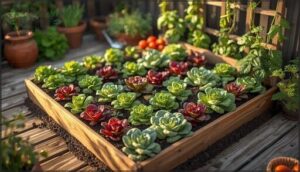
A 4×4 square-foot garden fits into corners most people write off as wasted space. With grid planning and the right soil mix — think compost, coco coir, and vermiculite — you achieve serious yield optimization in just 16 squares.
- Plant lettuce 4–6 per square for a full harvest
- Use trellis integration on the north edge for climbers
- Apply seasonal rotation to keep soil healthy year after year
- Try small space gardening with raised beds on patios or decks
- Combine with a container garden for a complete vertical garden setup
For detailed planning, see the square foot gardening guide.
Raised Bed Layouts for Easy Access
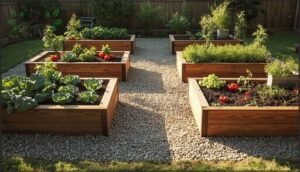
Grid planning gets you organized — but the right raised bed layout gets you into the garden and actually working comfortably.
A three-foot width lets you reach the center from either side without straining. Wheelchair-height beds (24–30 inches) and low-edge seating built into sturdy lumber frames make gardening easier on your back and knees.
| Feature | Recommended Spec | Why It Matters |
|---|---|---|
| Bed Width | 3–4 feet | Reach center without stepping in |
| Bed Height | 24–30 inches | Reduces bending and back strain |
| Path Width | 3–4 feet | Fits wheelchairs and wheelbarrows |
| Edge Style | Smooth, sittable cap | Doubles as a rest spot |
| Path Shape | U-shaped paths | Keeps every section within arm’s reach |
Adjustable pathways between beds support smooth movement for carts and mobility aids alike. Your garden planner should map these access points early — especially in small space gardening, where every inch counts. Good garden planning turns a tight backyard into a raised bed setup that works for everyone.
Choosing a four-foot width recommendation ensures best access from both sides.
Vertical Gardening to Maximize Space
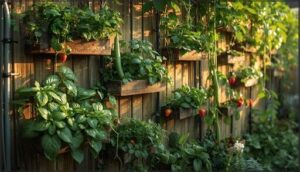
Once your beds are in place, look up. Vertical gardening turns fences, walls, and bare air into growing space.
Trellis systems support climbing crops like cucumbers and pole beans, keeping fruit off the soil. Pocket planters and tower gardens work beautifully for small space gardening ideas — herbs, greens, and strawberries thrive in them. Pair any vertical garden with drip-based vertical irrigation, and you won’t waste a drop.
Block Planting Vs. Traditional Rows
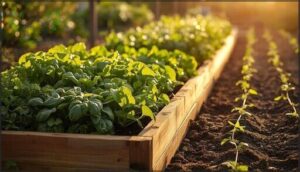
Block planting beats traditional rows on almost every front. Dense spacing boosts yield efficiency fivefold, while plants growing shoulder-to-shoulder handle weed suppression naturally — no endless hoeing is required.
A 3-to-4-foot raised bed keeps soil compaction out of the picture, since you never need to step inside. Harvest access stays easy from the edges, and drip lines spaced evenly support water conservation across the whole bed.
Creative Flower and Sensory Garden Designs

Flowers do more than look pretty — they shape how a garden feels, sounds, and even smells. The right design can turn a plain yard into something that stops you in your tracks every single morning.
The right garden design transforms a plain yard into a sensory experience that stops you every morning
Here are some creative ways to make that happen.
Perennial Cutting Garden Plans
Want fresh flowers on your table every week? perennial cut flower garden makes that possible.
Smart bloom sequence timing — starting with peonies in late May, bridging into phlox and yarrow mid-season, then extending through sea holly in September — keeps your vases full. Cut stems early morning and recut underwater for real vase life extension. Sustainable and urban gardening has never looked this beautiful.
Fragrant Plant Combinations
Scent turns a good garden into an unforgettable one.
Lavender-Rosemary Blend repels mosquitoes while filling the air with a clean, herbal calm — perfect for anchoring your Herb Garden or Perennial Garden border.
Try a Rose-Thyme Mix along pathways, or a Lilac-Sage Pairing near seating.
For evenings, Night-Bloom Aromas from moonflower or night phlox transform your Flower Garden into something magical.
Pollinator-Friendly Garden Layouts
Designing a Pollinator Garden starts with five fundamentals of smart Garden Planning and Design:
- Sunny Site Selection — pick a spot with 6+ hours of sun
- Layered Plant Heights — stack canopy, shrubs, and perennials
- Bloom Succession Timing — overlap flowering periods spring through fall
- Bee Cluster Grouping — plant five to seven same‑species clusters
- Nesting Habitat Zones — leave bare soil patches for ground‑nesting bees
Sustainable Gardening with Native Plants makes this nearly simple.
Incorporating Native Wildflowers
Native wildflowers triple duty in your Garden Planning and Design — they build Pollinator Habitat, handle Soil Enrichment, and ask almost nothing in return.
Plants like Borage and Purple Prairie Clover fix nitrogen and feed pollinators across a Seasonal Bloom Sequencing from spring to fall. That’s Low-Maintenance Planting at its best.
Native Plant Communities thrive without chemicals, making Sustainable Gardening in your Pollinator Garden genuinely easy.
Smart Strategies for Small and Urban Gardens
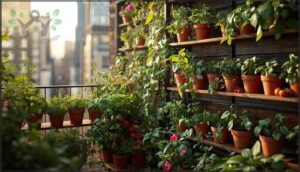
Small spaces don’t have to mean small harvests.
Whether you’re working with a balcony, a shadowy corner, or just a few square feet of patio, the right approach makes all the difference.
Here’s how to get the most out of every inch you’ve got.
Container Gardening for Patios and Balconies
Even a tiny balcony can become a thriving container garden. For patio ideas that actually work, choose lightweight plastic or fiberglass pots to protect your balcony’s load limit.
Cherry tomatoes love 5-gallon pots, while herbs fill 1-gallon containers beautifully. Balcony gardens and small space urban gardening thrive when you match each plant to the right container selection — sun exposure included.
Multi-Layered Planting Systems
Think of your garden as a living high-rise. Multi-layered planting systems stack plants by height — from groundcovers to tall climbers — turning one raised bed or square foot garden into three or four productive tiers.
- Vertical Light Management places sun lovers up top, shade‑tolerant greens below.
- Root Zone Partitioning pairs shallow onions with deep carrots — no competition.
- Microclimate Creation keeps soil cooler and moisture locked in.
- Layered Harvest Timing means something’s always ready to pick.
Optimizing Partial-Shade Spaces
Not every corner of your yard gets full sun — and that’s okay. Light mapping helps you track sun patterns every hour or two, so you know exactly what you’re working with.
| Spot Type | Best Crops | Care Tips |
|---|---|---|
| 3–4 hrs sun | Shade-tolerant herbs, lettuce | Keep soil moisture consistent |
| 4–6 hrs sun | Kale, beets, peas | Mulch strategies reduce stress |
| Dappled light | Ferns, chives, arugula | Add compost for vigor |
Microclimate positioning — like tucking containers near pale walls — reflects extra brightness right where plants need it.
Efficient Balcony Garden Arrangements
A balcony is basically a vertical garden waiting to happen.
Railing Planter Integration adds 1–2 meters of growing space without touching your floor.
Pair that with hanging pots and tiered corner racks for a true Vertical Garden setup.
Weight Load Management matters too — keep heavier containers near walls.
A simple Zone Watering Schedule and Compact Pot Mix keep your Container Garden thriving with minimal daily effort.
Companion and Succession Planting Techniques
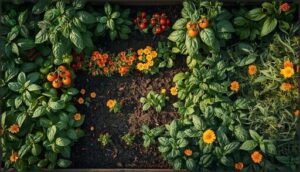
Growing more food doesn’t always mean growing more space — sometimes it’s about growing smarter.
A few simple techniques can help you get bigger harvests, fewer pests, and healthier soil without extra effort.
Here are the planting strategies that make the biggest difference.
Companion Planting for Pest Control
Pairing the right plants is one of the most effective organic gardening methods in your toolkit. Here’s where to start:
- Basil-Tomato Pairing deters hornworms and masks host scents.
- Allium-Carrot Barrier confuses rust flies with pungent rows.
- Marigold-Nematode Trap draws soil pests into roots where they die.
Sweet alyssum attractors and komatsuna trap crops round out a smart, sustainable vegetable and flower gardening companion planting system.
Succession Planting for Continuous Harvests
Once companion planting locks in your pest control, succession planting keeps your raised bed producing all season.
Space sowings 7–21 days apart using a simple succession calendar. Variety sequencing — plant 63-day and 85-day corn together for staggered maturity.
Smart bed turnover timing and season extension tools like frost cloth stretch your vegetable garden plans well into fall without extra effort.
Crop Rotation in Home Gardens
Think of crop rotation as your vegetable garden’s reset button. Each year, shift plant families — brassicas, legumes, fruiting crops, roots — to a fresh bed. This simple family grouping strategy delivers real results:
- Soil nutrient balance stays even as legumes replenish nitrogen naturally
- Pest cycle disruption breaks disease patterns by 40–60%
- Seasonal rotation planning prevents soil fatigue over time
- Yield optimization follows automatically
Interplanting Herbs and Vegetables
Tucking herbs between your vegetables does more than save space — it quietly transforms how your whole bed functions.
Flavor boosting combos like basil near tomatoes sharpen taste and root health.
Pest repellent herbs such as rosemary and marigolds guard your crops naturally.
Use this guide for yield maximizing interplanting across any setup:
| Herb | Vegetable Companion | Benefit |
|---|---|---|
| Basil | Tomatoes | Flavor boost + soil health pairing |
| Marigolds | Peppers | Pest repellent herbs, nematode defense |
| Dill | Cabbage, Kale | Attracts pest-killing wasps |
| Thyme | Any bed edge | Microclimate shading, moisture retention |
Smart sustainable gardening practices like these work in container gardening, urban gardening setups, and open garden design equally well.
Sustainable and Eco-Friendly Garden Planning
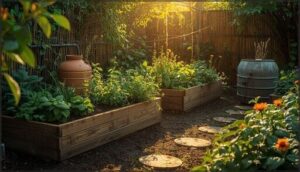
Gardening sustainably isn’t just a trend — it’s a smarter way to work with nature instead of against it.
Small choices, like how you water or what you plant, add up to a garden that’s healthier for your yard and the world around it.
Here are four practical ways to make your garden more eco‑friendly from the ground up.
Water-Efficient Drip Irrigation Setups
Drip irrigation is one of the smartest moves you can make for your garden — it uses up to 50% less water than sprinklers by delivering moisture right to the root zone.
- Emitter Placement: Match flow rates to plant size — 0.5 L/hr for herbs, 2 L/hr for tomatoes
- Pressure Regulation: Keep lines at 8–30 psi for even, consistent watering
- Mulch Integration: Lay mulch over drip lines to cut evaporation by up to 60%
- Greywater Compatibility: Use specialized subsurface tubing with strong filtration for safe reuse
Choosing Drought-Resistant Plants
Picking the right plants is half the battle in an eco-friendly garden. Native plants win here — their deep root depth pulls moisture from far below, so dry spells don’t faze them.
Check sun mapping before planting, since coneflower and salvia need six-plus hours of light. Silver leaf texture on lavender and Russian sage signals natural drought defense.
Match soil drainage and hardiness zone first, and your outdoor space practically takes care of itself.
Using Recycled Materials in Garden Design
Your next garden upgrade might already be sitting in the garage. Recycled materials bring instant character to any eco-friendly garden — no budget required.
- Stack HT-marked Pallet Planters for vertical growing or upcycled wood benches for seating.
- Line beds with Bottle Edging or Reclaimed Brick Paths for rustic definition.
- Punch holes in tin cans for charming Tin Lanterns after dark.
Sustainable and ecological gardening has never looked this good.
Supporting Beneficial Insects and Wildlife
Your garden can be a lifeline for local wildlife — not just a pretty space.
| Feature | Purpose |
|---|---|
| Insect Hotels | Shelter solitary bees year-round |
| Water Baths | Safe drinking spots for birds and pollinators |
| Hedgerow Corridors | Connect feeding areas for birds and mammals |
| Compost Habitat | Warm refuge for beneficial insects |
| Seed Head Overwinter | Winter food for finches and sparrows |
Native plants anchor any Pollinator Garden, supporting Wildlife and Conservation without much effort. Sustainable and Ecological Gardening means leaving seed heads standing, skipping pesticides, and letting your EcoFriendly Garden breathe through every season.
Functional Garden Layouts for Every Lifestyle

Your garden should work for your life, not the other way around.
Whether you’re raising kids, caring for pets, hosting dinners outside, or making the space accessible for everyone, layout you choose makes all the difference.
Here are a few ways to design a garden that fits how you actually live.
Creating Relaxation and Play Areas
Designing your yard into zones transforms it from one big open space into a place people actually use.
A hammock nook tucked between trees, a fire pit ringed with garden furniture, or sensory pathways leading past water features all invite you to slow down.
Add a shade pergola overhead and a play kitchen nearby, and your outdoor space decoration works for everyone — kids and adults alike.
Garden Barriers for Pet and Child Safety
Once your play zones are set, keeping kids and pets safe comes down to smart boundaries.
Fence height standards suggest 1.2 to 1.8 metres for most backyard garden spaces.
Pet-proof gate latches — think magnetic closers or double‑latch systems — stop clever dogs from nudging their way out.
Low‑mesh bed edging protects raised beds, while natural hedge barriers soften your outdoor space management without sacrificing that welcoming garden design.
Accessible Gardens for All Abilities
Safe boundaries set the stage — but a truly welcoming outdoor space works for everyone who steps into it.
Paths with wheelchair path width of at least 36 inches and low‑slope path design keep movement easy. Raised beds at 24 inches high suit seated gardeners perfectly.
Add adaptive garden tools, sensory touch elements, and inclusive seating areas, and your garden architecture enhances every ability beautifully.
Integrating Outdoor Dining or Kitchen Spaces
outdoor kitchen works best when it grows out of your garden design, not just bolted on.
Keep grill clearance at least 4 feet from walls, plan ventilation design for smoke flow, and choose weatherproof countertops that handle rain without fading.
ambient lighting, sort out utility hookups early, and your kitchen garden becomes the heart of your entire patio design.
Top 5 Products for Garden Planning Success
The right tools can make all the difference between a garden that struggles and one that thrives. Whether you’re just getting started or ready to level up your space, a few smart picks go a long way.
Here are five products worth adding to your setup.
1. Sustainable Garden Projects and Advice
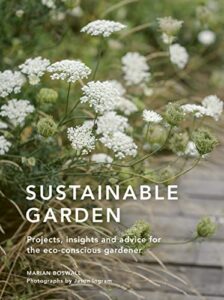
This 160-page guide from Frances Lincoln is the kind of book you’ll keep coming back to. It covers everything from sourcing sustainable materials to planting edible hedges and building compost systems — all in plain, practical language.
Whether you’re brand new to gardening or ready to level up, it meets you where you are. The projects are hands-on and genuinely doable, not just pretty ideas on paper.
If you want your garden to work with nature, this is a solid starting point.
| Best For | Anyone who wants to garden more sustainably — whether you’re just starting out or looking to make your existing space more eco-friendly. |
|---|---|
| Primary Use | Garden guidance |
| Eco-Friendly | Sustainability focus |
| Skill Level | All skill levels |
| Outdoor Use | Yes |
| Material | Paper/Print |
| Product Weight | 2.31 pounds |
| Additional Features |
|
- Covers a wide range of topics, from biodiversity to ethical sourcing, so you get a well-rounded picture of sustainable gardening
- Projects are hands-on and practical, not just theoretical — things like edible hedges and lawn spirals you can actually build
- Works for beginners and experienced gardeners alike, so it doesn’t talk down to you or go over your head
- Light on scientific detail, so if you want the deeper "why" behind the methods, you may need to look elsewhere
- Sustainability is the whole focus, which is great — but if that’s not your priority, a lot of it won’t feel relevant
- At 2.3 pounds it’s a bit chunky to toss in a bag, so it’s more of a coffee table reference than a take-to-the-garden guide
2. Mountain Valley Wildflower Seed Mix
Want a wildflower patch that practically runs itself? The Mountain Valley Wildflower Seed Mix gives you over 100,000 heirloom, non‑GMO seeds — 13 species chosen specifically to feed monarch butterflies, hummingbirds, and pollinators all season long.
It’s drought‑tolerant, works in zones 1–10, and one pound covers up to 2,000 square feet.
Sow in early spring after the last frost, give it full sun, and let nature do the heavy lifting.
| Best For | Anyone who wants a low-maintenance wildflower garden that supports monarchs, hummingbirds, and pollinators — especially beginners or people with large outdoor spaces to fill. |
|---|---|
| Primary Use | Pollinator support |
| Eco-Friendly | Non-GMO heirloom seeds |
| Skill Level | Beginner-friendly |
| Outdoor Use | Yes |
| Material | Seeds |
| Product Weight | 3.34 ounces |
| Additional Features |
|
- 100,000 heirloom, non-GMO seeds covering 13 wildflower species — solid variety in one bag
- Works in zones 1–10 and handles drought and heat well, so it’s forgiving if you forget to water
- Supports monarch conservation while making your yard genuinely beautiful all season
- Some seeds can be aggressive growers and may crowd out other plants if you’re not careful
- A few species might be toxic to pets or kids, so placement matters
- Germination can be patchy — some reviewers had to be patient before seeing full results
3. Daoeny Antique Bronze Metal Bird Bath
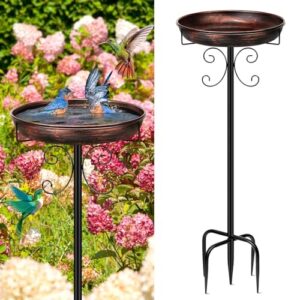
Every garden deserves a living focal point, and the Daoeny Antique Bronze Metal Bird Bath delivers exactly that.
Standing 35 inches tall, it sits above your low perennials so birds can spot it easily.
The five-pronged base keeps it steady, and the wide bowl gives several birds room to bathe at once.
At just over three pounds, you can reposition it as your garden evolves.
The antique bronze finish blends naturally with classic beds and traditional plantings.
| Best For | Bird lovers and garden enthusiasts who want a classic, low-maintenance bath that doubles as a backyard centerpiece. |
|---|---|
| Primary Use | Bird attraction |
| Eco-Friendly | Wildlife-friendly metal |
| Skill Level | Easy assembly |
| Outdoor Use | Yes |
| Material | Metal |
| Product Weight | 3.27 pounds |
| Additional Features |
|
- The five-pronged base adds real stability, so it’s not tipping over every time the wind picks up
- That antique bronze finish looks great alongside traditional garden beds without trying too hard
- The bowl detaches, which makes cleaning it out way less of a chore
- A few users have run into wobbling issues, so you may need to add some extra weight at the base
- The metal can rust over time, especially if you’re in a wet or humid climate
- Getting it fully assembled can be a bit tricky, particularly the last piece
4. Herb Seed Starter Kit Indoor Outdoor
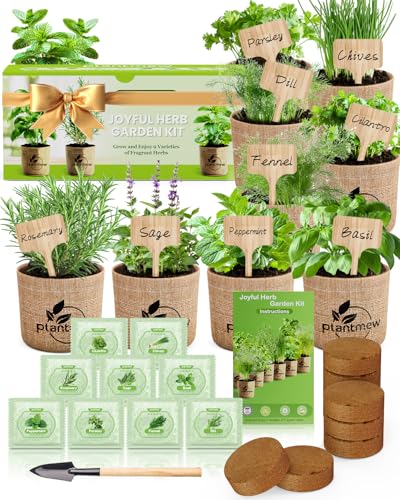
Fresh herbs straight from your windowsill — that’s the quiet joy this kit makes possible.
The PLANTMEW Herb Seed Starter Kit comes with nine non‑GMO, heirloom seed varieties, biodegradable pots, coconut coir soil discs, pruning shears, and labeled markers.
Basil sprouts in as little as seven days.
Cilantro is ready in three to four weeks.
It works indoors or out, and it’s genuinely beginner‑friendly.
Whether you’re cooking more or just starting your garden journey, this kit gets you growing fast.
| Best For | Beginners, home cooks, and anyone who wants fresh herbs on the counter without needing a green thumb. |
|---|---|
| Primary Use | Herb growing |
| Eco-Friendly | Non-GMO heirloom seeds |
| Skill Level | Beginner-friendly |
| Outdoor Use | Yes |
| Material | Mixed materials |
| Product Weight | 15.5 ounces |
| Additional Features |
|
- Comes with everything you need out of the box — seeds, soil, pots, shears, and markers
- Non-GMO heirloom seeds with solid germination rates, and some herbs sprout in just a week
- Works indoors or outdoors, so it fits almost any living situation
- The biodegradable pots have a plastic lining that can cause drainage issues — and feels a bit contradictory for an "eco-friendly" product
- Some buyers received incomplete kits or ran into germination problems
- The pots run small, which might be frustrating once your herbs really start growing
5. Land Guard Galvanized Raised Garden Bed
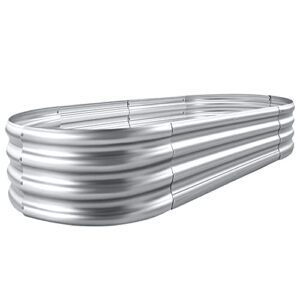
Land Guard Galvanized Raised Garden Bed? a raised bed that actually lasts? That’s where the Land Guard Galvanized Raised Garden Bed earns its place. Made from Q195 galvanized steel with double-layer rust protection, it holds its shape season after season. The oval design distributes soil pressure evenly — no bulging, no bowing.
Assembly takes about five minutes, and the open base keeps roots breathing and drainage flowing. At 48"×24"×12", it’s compact enough for a patio but roomy enough for real harvests.
| Best For | Gardeners who want a low-maintenance, rust-resistant bed for vegetables or herbs in a small backyard or patio space. |
|---|---|
| Primary Use | Raised bed gardening |
| Eco-Friendly | Open-base drainage design |
| Skill Level | Easy assembly |
| Outdoor Use | Yes |
| Material | Galvanized metal |
| Product Weight | 5 pounds |
| Additional Features |
|
- Double-layer galvanized steel fights rust and holds up season after season
- Sets up in about five minutes and easy to move if you need to
- Open base keeps roots healthy with good drainage and airflow
- Not ideal for large, heavy plants that need deeper or sturdier support
- A few buyers have run into faulty hardware like bad coupling nuts
- Only comes in silver, so no options if you want something that blends in
Frequently Asked Questions (FAQs)
What is the best way to layout a garden?
Measure twice, cut once.
Start by mapping your sun and shade zones.
Then group plants by their needs, keep paths at least 18 inches wide, and place daily-use herbs closest to your door.
How do I start a garden from scratch?
Start small — a sunny spot, good soil, and a few easy crops like lettuce or beans.
Clear the area, add compost, and water consistently. You’ll be harvesting before you know it.
What is the best soil mix for vegetables?
The best mix blends equal parts compost, coarse vermiculite, and peat moss or coco coir — this is Mel’s Mix.
It’s lightweight, drains well, and keeps vegetables growing strong without yearly amendments.
How can I prevent common garden pests naturally?
Think of your garden as a tiny ecosystem — keep it balanced, and pests rarely win.
Marigolds deter aphids, basil shields tomatoes, and nasturtiums lure pests away from your main crops naturally.
Which tools are essential for beginner gardeners?
A hand trowel, a bypass pruners, and sturdy gloves are your foundation.
Add a hori hori knife for planting and weeding, and you’re ready for almost anything the garden throws at you.
How do I plan crop rotation in my garden?
each plant family to a different bed every year.
Keep brassicas, legumes, tomatoes, and root crops in separate zones, and don’t let any family return to the same spot for three to four years.
How do I test and improve garden soil?
Good soil is the secret most gardeners overlook. Test pH with vinegar or baking soda, then work in 2–3 inches of compost yearly. Healthy soil means stronger plants and bigger harvests.
What’s the best mulch for vegetable gardens?
Straw works great for tomatoes and peppers — it holds moisture and keeps fruit off wet soil. Grass clippings break down fast and feed your plants.
Wood chips are best for paths and perennials.
How often should I water new seedlings?
Most new seedlings need water every day or every other day.
Check the top inch of soil first — if it feels dry, it’s time to water.
Keep moisture consistent until true leaves appear.
Which plants deter common garden pests naturally?
Some plants are nature’s own pest repellents. Marigolds deter aphids and nematodes, basil confuses tomato hornworms, and lavender drives off moths and mosquitoes — all while making your garden look and smell wonderful.
Conclusion
Like a seed that only needs the right conditions to flourish, your garden just needs a solid plan to reach its full potential. The garden planning ideas in this guide give you exactly that—a practical framework for any space, any style, any goal.
Start small if you need to. Choose one strategy, put it into action, and build from there.
Your garden won’t grow itself, but with the right plan in hand, it’s closer than you think.
- https://www.summerwindsnursery.com/az/inspire/blog/guide-to-mapping-garden-sun-exposure/
- https://www.finegardening.com/project-guides/gardening-basics/sun-shade
- https://www.elmdirt.com/blogs/news/succession-planting-calendar
- https://www.azurefarmlife.com/farm-blog/companion-planting-chart-for-a-healthier-happier-garden
- https://www.dripworks.com/blog/rainwater-harvesting-using-rain-barrels-for-drip-irrigation