
This site is supported by our readers. We may earn a commission, at no cost to you, if you purchase through links.
Your first cut through a rose cane with dull, bargain-bin shears teaches you an expensive lesson—you’ve just crushed the stem instead of slicing it clean, leaving your plant vulnerable to disease and slow death. Most beginners don’t realize that garden pruning shears for beginners aren’t just about cutting; they’re about making wounds that heal.
The difference between bypass blades that slice like surgical scissors and anvil pruners that crush like a tiny guillotine determines whether your hydrangeas thrive or struggle through recovery.
Choosing your first pair means understanding which cutting mechanism matches your plants, how ergonomic grips prevent hand fatigue during rose deadheading marathons, and why that $15 impulse buy will cost you more in damaged plants than a quality tool ever would.
Table Of Contents
- Best Pruning Shears for Beginners
- 1. Felco Pruning Shears For Garden Use
- 2. Fiskars PowerGear Pruning Shears
- 3. EZ Kut Ratcheting Hand Pruner
- 4. Swiss Made Garden Pruning Shears
- 5. Gonicc Titanium Pruning Shears
- 6. Gonicc Professional Pruning Shears
- 7. Felco Left Handed Pruning Shears
- 8. EZ Kut Heavy Duty Pruning Shears
- 9. Gardena Heavy Duty Pruning Shears
- 10. Corona Forged Bypass Pruner
- Essential Features in Beginner Shears
- Types of Pruning Shears Explained
- How to Choose The Right Pruning Shear
- Maintenance Tips for Long-Lasting Shears
- Frequently Asked Questions (FAQs)
- Conclusion
Best Pruning Shears for Beginners
You don’t need professional-grade equipment to start pruning like a pro. The right shears will feel comfortable in your hand, make clean cuts without crushing stems, and last through seasons of steady use.
Here are ten beginner-friendly options that balance quality, ease of use, and price.
1. Felco Pruning Shears For Garden Use
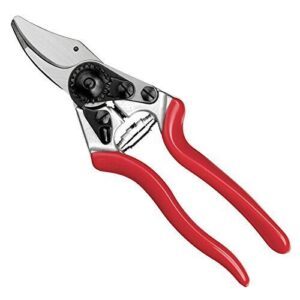
Felco Models set the benchmark for beginner gardeners, and you’ll find the Felco F2 (or Felco 2) leading the pack. These bypass pruning shears combine forged aluminum grips with hardened steel blades that stay sharp through countless pruning sessions.
You can handle branches up to 1 inch thick with clean cuts that keep your plants healthy. The ergonomic grip reduces hand strain during extended work, and when parts wear out, you simply replace them rather than buying new garden tools. That’s smart gardening that respects both your budget and your hands.
Smart gardening means choosing tools that respect your budget and hands through clean cuts and replaceable parts
| Best For | Gardeners with medium-sized hands who want professional-grade pruning shears that’ll last for years through regular maintenance and part replacements. |
|---|---|
| Weight | 0.46 lbs |
| Blade Material | Hardened steel |
| Handle Design | Revolving ergonomic |
| Cutting Capacity | 0.79 inches |
| Brand | FELCO |
| Pruner Type | Bypass |
| Additional Features |
|
- Forged aluminum handles and hardened steel blades create a durable tool that holds its edge through heavy use
- Ergonomic design with cushioned grip reduces hand fatigue during long pruning sessions
- Replaceable parts mean you can keep these shears running indefinitely instead of buying new ones
- Higher price point compared to basic pruning shears you’d find at most garden centers
- Requires regular cleaning and sharpening to maintain peak performance
- Not ideal if you have larger hands or need to tackle branches over 1 inch thick
2. Fiskars PowerGear Pruning Shears
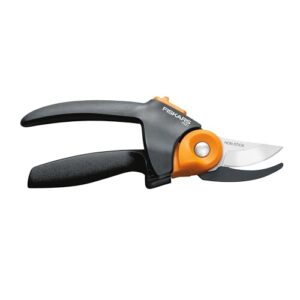
When you need muscle without the strain, the Fiskars PowerGear 2 Pruner delivers cutting efficiency through its advanced PowerGear Technology that reduces effort by about 60 percent. You’ll slice through stems up to 3/4 inch thick with hardened steel blades that maintain sharpness through heavy use.
The contoured, rolling handle fits comfortably in your grip during extended pruning sessions, making these bypass pruning shears ideal for beginners mastering proper pruning techniques.
Just know that consistent shear maintenance—cleaning sap buildup and occasional blade sharpening—keeps these gardening tools performing at their best.
| Best For | Gardeners who want to tackle thick branches and extended pruning sessions without wearing out their hands, especially if you’re new to pruning or deal with hand fatigue. |
|---|---|
| Weight | 8.8 oz |
| Blade Material | Alloy steel |
| Handle Design | Contoured rolling |
| Cutting Capacity | 0.75 inches |
| Brand | Fiskars |
| Pruner Type | Bypass |
| Additional Features |
|
- PowerGear technology cuts effort by roughly 60% compared to standard pruners, so you can work longer without straining your hands
- Hardened steel blades stay sharp through heavy use and slice cleanly through stems up to 3/4 inch thick
- Contoured, rolling handle design reduces hand fatigue and fits comfortably during long pruning jobs
- Some users report the gear mechanism can jam or wear out over time, which undermines the main selling point
- Blades need occasional sharpening and regular cleaning to prevent sap buildup and maintain peak performance
- Not ideal for very thick branches beyond the 3/4 inch capacity—you’ll need loppers or other tools for bigger cuts
3. EZ Kut Ratcheting Hand Pruner

If you’re prone to hand fatigue or dealing with arthritis, the EZ Kut Ratcheting Hand Pruner offers a different approach through its progressive cutting action. You’ll squeeze multiple times to complete each cut on stems up to 3/4 inch, which distributes the effort across several motions instead of one forceful grip.
The ergonomic design with cushioned grips aims to reduce wrist strain, though you should know that some gardeners find the ratcheting mechanism less straightforward than traditional bypass pruners. Blade sharpness can decline with heavy use, requiring occasional replacement.
| Best For | Gardeners with arthritis, carpal tunnel, or hand fatigue who need to make multiple cuts without straining their grip. |
|---|---|
| Weight | 7 oz |
| Blade Material | SK5 carbon steel |
| Handle Design | Anti-slip cushioned |
| Cutting Capacity | 1.5 inches |
| Brand | EZ Kut |
| Pruner Type | Ratcheting anvil |
| Additional Features |
|
- Ratcheting mechanism spreads cutting effort across several squeezes, reducing the force needed per motion
- Lightweight at 7 ounces with cushioned grips and shock-absorbing pads for comfort during extended use
- Handles branches up to 1.5 inches with less hand strength than traditional pruners
- Ratcheting action can feel less intuitive and slower than standard bypass pruners for quick cuts
- Durability concerns with reports of breakage and blades dulling faster than expected
- Some users find it requires two hands to operate, limiting the ergonomic benefit
4. Swiss Made Garden Pruning Shears
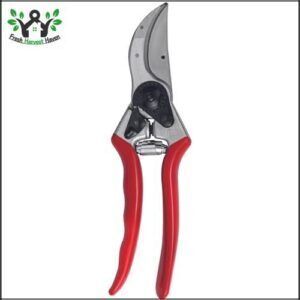
When you’re ready to invest in precision engineering, Swiss-made garden tools bring legendary reliability to your pruning techniques. These pruning shears feature hardened steel blades with outstanding blade durability, often lasting decades with proper shear maintenance.
Swiss precision means bypass pruners that cut cleanly through live stems without crushing plant tissue—a skill every gardener appreciates.
You’ll pay more upfront compared to standard gardening tools, but the replaceable parts and corrosion-resistant construction make them worthwhile for serious gardeners committed to long-term pruning success.
| Best For | Serious gardeners and professionals who want precision-engineered pruning shears that’ll last decades with proper maintenance and don’t mind paying more upfront for Swiss quality. |
|---|---|
| Weight | 8.8 oz |
| Blade Material | Hardened steel |
| Handle Design | Ergonomic forged aluminum |
| Cutting Capacity | Not specified |
| Brand | FELCO |
| Pruner Type | Bypass |
| Additional Features |
|
- Hardened steel blades deliver clean cuts without crushing plant tissue, which keeps your plants healthier
- Replaceable parts mean you can fix rather than replace, making these shears a long-term investment
- Corrosion-resistant construction holds up in wet conditions and requires minimal maintenance
- Higher price point puts these out of reach for casual gardeners or those on a tight budget
- Heavier weight (8.8 ounces) can cause fatigue during extended pruning sessions
- Large handle size doesn’t work well for users with smaller hands
5. Gonicc Titanium Pruning Shears
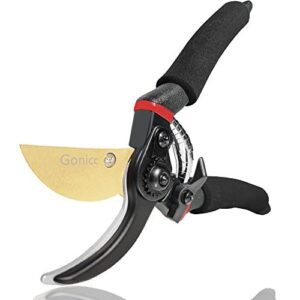
Budget-conscious beginners can grab Gonicc Titanium Pruning Shears for reliable cutting efficiency without draining your wallet. These bypass pruners feature titanium-coated blades that slice through live stems up to 6 mm thick, making them ideal gardening tools for flowers and small branches.
The non-slip cushioned grips feel comfortable during extended pruning sessions, and the corrosion-resistant coating simplifies shear maintenance—just wipe clean after use.
While some users report durability concerns with heavy-duty tasks, they’re solid performers for gardening for beginners learning proper pruning techniques on roses, herbs, and ornamental shrubs.
| Best For | Budget-conscious beginners who need reliable pruning shears for light gardening tasks like trimming flowers, herbs, and small ornamental branches. |
|---|---|
| Weight | 6.4 oz |
| Blade Material | Titanium steel |
| Handle Design | Non-slip ergonomic |
| Cutting Capacity | Not specified |
| Brand | gonicc |
| Pruner Type | Bypass |
| Additional Features |
|
- Titanium-coated blades resist corrosion and cut smoothly through stems up to 6 mm thick
- Comfortable non-slip grips reduce hand fatigue during extended pruning sessions
- Affordable price point makes them accessible for gardeners just starting out
- Durability issues reported by some users, with shears breaking under heavy-duty use
- Foam grips may tear or break down over time with regular handling
- Not suitable for thick branches or long-term professional gardening work
6. Gonicc Professional Pruning Shears
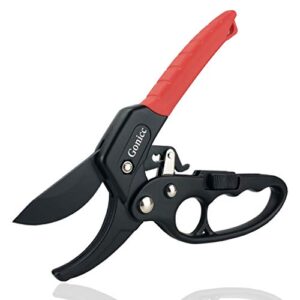
You can tackle thicker branches with confidence using Gonicc Professional Pruning Shears, which combine SK-5 steel blades with a ratcheting mechanism for enhanced cutting power. These bypass pruners handle stems up to 1 inch diameter, perfect for rose bushes and shrubs in your garden tools collection.
The chrome vanadium steel grips provide durability, while anti-slip cushioning ensures a comfortable grip during extended pruning sessions.
Ideal for gardening for beginners mastering pruning techniques, though proper shear maintenance prevents rust and maintains blade sharpness for reliable plant care and effective gardening tips application.
| Best For | Gardeners who need extra cutting power for thicker branches and those with hand strength limitations who’d benefit from a ratcheting mechanism. |
|---|---|
| Weight | 8.1 oz |
| Blade Material | SK-5 steel |
| Handle Design | Anti-slip cushioned |
| Cutting Capacity | Not specified |
| Brand | gonicc |
| Pruner Type | Ratcheting anvil |
| Additional Features |
|
- Ratcheting mechanism makes cutting thicker branches much easier with less hand strain
- Sharp SK-5 steel blades combined with durable chrome vanadium handles built to last
- Comfortable anti-slip grip works well for both left and right-handed users
- Handle size may be too large for people with smaller hands
- Some users reported quality control issues with latches and overall durability
- Not the best choice for cutting live green plants since it’s an anvil-style pruner
7. Felco Left Handed Pruning Shears
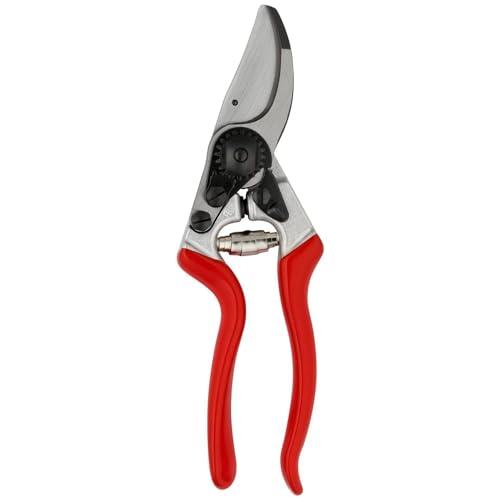
Felco 2 left-handed models mirror the legendary right-handed design, giving left-handed gardeners proper blade alignment and a rotating handle positioned for natural cutting motion—no more awkward wrist angles.
You’ll find the same forged aluminum body and hardened steel bypass pruners that handle up to 1-inch branches with precision. The ergonomic shock absorbers reduce fatigue during extended pruning sessions, while the sap groove and wire-cutting notch demonstrate Felco Product Comparison quality.
Regular Pruning Shear Maintenance keeps these handheld pruning techniques sharp. Left Handed Ergonomics finally meets professional-grade Gardening Tool Innovation.
| Best For | Left-handed gardeners who want professional-grade pruning shears with proper blade alignment and ergonomic design that matches their natural cutting motion. |
|---|---|
| Weight | 0.54 lbs |
| Blade Material | Hardened steel |
| Handle Design | Rotating ergonomic |
| Cutting Capacity | 1 inch |
| Brand | FELCO |
| Pruner Type | Bypass |
| Additional Features |
|
- Forged aluminum handles with rotating grips and shock absorbers reduce hand fatigue during long pruning sessions
- Hardened steel bypass blades cut cleanly through branches up to 1 inch with sap grooves that prevent sticking
- Built to Felco’s professional standards with replaceable parts and long-lasting durability
- Premium pricing puts these well above budget pruning shears on the market
- Requires regular sharpening and maintenance to keep blades performing at their best
- Limited availability since you’ll need to find retailers that stock left-handed Felco models
8. EZ Kut Heavy Duty Pruning Shears
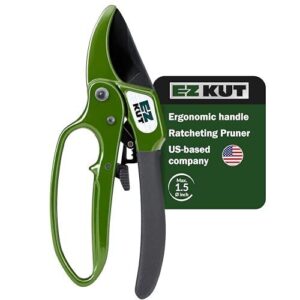
The EZ Kut Heavy Duty Pruning Shears bring serious Cutting Efficiency through a clever Ratcheting Mechanism that multiplies your hand strength—three clicks through branches up to 1.5 inches thick. You’ll appreciate the SK5 carbon steel Heavy Duty Blades with non-stick coating, designed to power through Pruning tasks that challenge standard Bypass Pruners.
The Ergonomic Design features cushioned grips and a safety lock, though some Durability Tests in user reviews flag occasional rivet issues.
For budget-conscious Gardening, these Garden Shears deliver solid performance when maintained properly.
| Best For | Home gardeners and landscapers who need affordable, leverage-boosting shears for branches up to 1.5 inches, especially if you have weaker grip strength or arthritis. |
|---|---|
| Weight | 7 oz |
| Blade Material | SK5 carbon steel |
| Handle Design | Cushioned ergonomic |
| Cutting Capacity | 1.5 inches |
| Brand | EZ Kut |
| Pruner Type | Ratcheting |
| Additional Features |
|
- Ratcheting mechanism gives you three clicks of extra cutting power, making thick branches much easier to handle
- SK5 carbon steel blade with non-stick coating cuts cleanly through live wood without gumming up
- Cushioned, ergonomic grip reduces hand fatigue during longer pruning sessions
- Durability concerns pop up in reviews, with some users reporting broken rivets over time
- The safety lock can be awkward and difficult to engage or release smoothly
- Mixed feedback on long-term performance suggests quality may not match the price point
9. Gardena Heavy Duty Pruning Shears
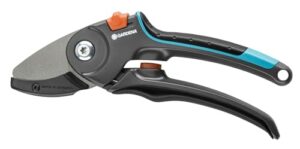
When your Gardena Heavy Duty Pruning Shears tackle branches up to 23mm thick, you’re seeing Gardena Quality meet practical Pruning Techniques. These anvil-style Garden Shears feature a precision-ground blade with non-slip coating for clean cuts on woody stems, though the Heavy Duty label deserves scrutiny—some gardeners report Blade Sharpness declining faster than expected.
The integrated spring and fiberglass-reinforced handle support one-handed Pruning, but watch for quality control issues like loose parts. For basic Gardening tasks, they’re serviceable when paired with diligent Pruner Maintenance.
| Best For | Home gardeners and landscapers who need a budget-friendly pruner for light to moderate trimming of branches up to 23mm, as long as they’re okay with potentially needing replacements sooner than premium models. |
|---|---|
| Weight | 0.01 kg |
| Blade Material | Precision ground blade |
| Handle Design | Soft ergonomic grip |
| Cutting Capacity | 0.91 inches |
| Brand | Gardena |
| Pruner Type | Anvil |
| Additional Features |
|
- Ergonomic soft-grip handle and spring mechanism reduce hand fatigue during longer pruning sessions
- Non-slip coated blade and 23mm cutting capacity handle most garden branches and woody stems
- Lightweight fiberglass construction makes it easy to maneuver for quick cuts
- Blade sharpness deteriorates faster than expected, with users reporting dullness after limited use
- Quality control issues include loose parts like the bottom lip falling off or missing screws
- Durability concerns with reports of bent or broken components despite the “heavy duty” label
10. Corona Forged Bypass Pruner
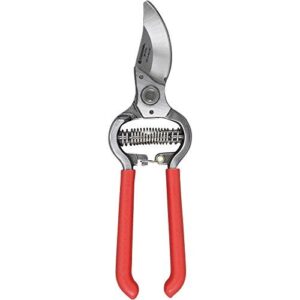
When you’re learning Bypass Pruners for live stems, the Corona Forged Bypass Pruner (BP 3180D) delivers the Blade Sharpness and Pruner Durability beginners need to build solid Pruning Techniques.
Its Forged Steel construction manages branches up to 1 inch—ideal for everyday Garden Pruning on shrubs and small fruiting plants. The self-cleaning sap groove and resharpenable blade mean you’ll maintain clean cuts as your Gardening Tools and Equipment skills grow.
At 13.6 ounces, it’s heavier than some models, so test the grip if you have joint concerns.
| Best For | Beginner gardeners who want a durable, forged steel pruner that handles everyday shrub and small branch work up to 1 inch while learning proper cutting technique. |
|---|---|
| Weight | 13.6 oz |
| Blade Material | Maxforged steel |
| Handle Design | Non-slip comfortable |
| Cutting Capacity | 1 inch |
| Brand | Corona |
| Pruner Type | Bypass |
| Additional Features |
|
- Forged steel blade stays sharp longer and can be resharpened, saving money over time
- Self-cleaning sap groove keeps cuts smooth without constant wiping between branches
- Hand-matched blade and hook deliver clean cuts that help plants heal faster
- Heavier than some models at 13.6 ounces, which may strain hands during long sessions
- Stiffer spring requires more grip strength to open and close repeatedly
- Weight and balance might be tough for users dealing with arthritis or carpal tunnel
Essential Features in Beginner Shears
Not all pruning shears are created equal, and the right features can make your first gardening experience smooth instead of frustrating. You’ll want shears that feel natural in your hand, cut cleanly without a fight, and won’t leave you struggling with confusing mechanisms.
Here are the five essential features that’ll set you up for success from day one.
Blade Material and Sharpness
Sharp blades are your secret weapon for clean cuts. High-carbon steel offers outstanding edge retention and sharpness, holding up through countless snips, while stainless steel resists rust in damp conditions—ideal if you garden in humid climates. Look for bypass pruners with titanium-coated blades for cutting efficiency and blade durability.
Quality metal alloys make all the difference in your pruning shears’ performance during real-world sharpness tests. When evaluating pruning tools, consider the importance of clear science information.
Handle Comfort and Ergonomics
Comfortable ergonomic grips transform hours of pruning from painful to pleasurable. Contoured grips with soft, non-slip materials cushion your palm and reduce forearm strain by up to 20%, even in damp conditions. Balanced weight distribution keeps your wrist aligned naturally, so you won’t feel the burn.
Key ergonomic design features to prioritize:
- Textured grip materials like TPE or rubber for secure, slip-resistant handling
- Palm swell configurations that distribute pressure evenly across your hand
- Lightweight construction in alloy or composite to minimize fatigue
- Ambidextrous handle shapes accommodating both right- and left-handed gardeners
Safety Locks and Mechanisms
A locking mechanism prevents accidental blade closure during transport or storage, reducing cuts by up to 90%. Look for pruning shears with lever, sliding latch, or button-style safety locks that engage securely with one hand.
Quality pruners feature blade guards and secure grips with anti-slip grips, ensuring accident prevention while you work. Clear tactile indicators confirm your pruners are safely locked before tucking them away.
When evaluating tools, consider the importance of research methodology in ensuring effective design and functionality.
Adjustable Blade Tension
Tension adjustment directly impacts cutting efficiency. Too loose and your blades skip; too tight and you’ll tire quickly.
Quality models like the Gonicc Bypass Pruning Shears and Fiskars PowerGear 2 Pruner let you calibrate blade contact with a simple screw turn, optimizing sharpness and tool maintenance.
Proper tension prevents stem crushing during pruning, keeping your gardening sessions smooth and your cuts clean.
Size and Weight Considerations
Weight matters more than you’d think when you’re pruning for hours. A lighter tool—around 6 to 9 ounces—reduces hand fatigue and keeps your cuts accurate.
Choose pruning shears that fit your palm completely without excessive finger overlap.
- Ergonomic Design with cushioned grips prevents pressure hotspots during extended gardening sessions
- Weight Distribution between handle and blade improves control and reduces wrist strain
- Handle Balance combined with proper Grip Comfort maintains precision for gardeners with smaller hands
Types of Pruning Shears Explained
Walking into a garden center and facing a wall of pruning shears can feel overwhelming, but understanding the basic types makes choosing much simpler. Each style of pruner is designed for specific cutting tasks, from trimming delicate flowers to tackling thick, woody branches.
Let’s break down the five main types you’ll encounter, so you can match the right tool to your garden’s needs.
Bypass Pruners for Live Plants
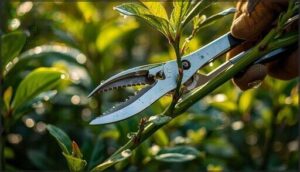
When you’re working with live plants, bypass pruners are your go-to tool—they slice cleanly through green wood without crushing delicate tissue. Think of them like scissors: two sharp blades passing each other create the precise cuts your plants need for fast healing and healthy plant recovery.
Models like the Gonicc Bypass Pruning Shears excel at live stem care, making pruning techniques straightforward for beginners tackling fresh growth.
Anvil Pruners for Dead Wood
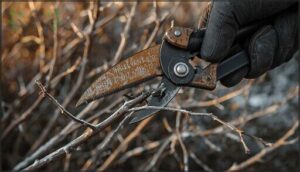
Dead wood cuts differently than live tissue—it’s tougher, drier, and demands a blade that crushes instead of slices. Anvil pruners use a single sharp edge meeting a flat metal surface, perfect for dead wood cutting without dulling quickly.
Here’s what makes them reliable for gardeners tackling dry branches:
- Hardened steel blades resist chipping on knotty wood
- Flat anvil mechanism distributes force evenly for clean cuts
- Heavy construction reduces hand fatigue during repetitive pruning
- Sturdy safety locks prevent accidental opening
- Easy anvil blade care with simple oiling after use
Ratchet Pruners for Easy Cutting
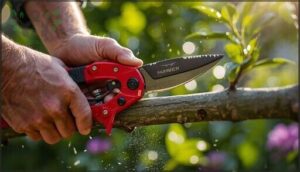
If thick branches feel like too much work, ratchet pruners can change your gardening experience. The ratchet mechanism lets you cut in stages—applying pressure, releasing, then squeezing again—so each bite through wood needs less grip strength.
You’ll appreciate the cutting efficiency on branches up to 1 inch thick, especially with ergonomic design features like cushioned grips and safety features that lock the blade closed between tasks.
Garden Snips for Delicate Stems
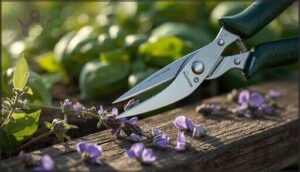
For delicate pruning on soft new growth and tender herbs, you’ll want garden snips with fine tips—usually 1.0 to 1.5 mm—that cleanly sever fragile stems without crushing.
These micro-snips use bypass blades to protect living tissue during plant trimming. Stainless steel construction with spring-loaded grips makes stem cutting easier on your hands, especially when deadheading flowers or snip maintenance becomes a daily gardening ritual.
Power Pruners for Minimal Effort
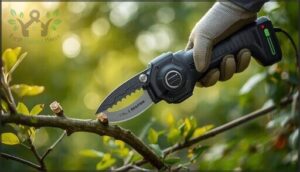
When your hands tire after half an hour of pruning, power pruners can cut your effort by 40–50% through ratcheting or battery-assisted mechanisms. You’ll tackle branches up to 1.5 inches with minimal grip strength, making gardening sessions more comfortable.
- Ergonomic grips with balanced weight reduce strain during extended use
- Battery life determines how many cuts you’ll complete before recharging
- Safety features like blade locks prevent accidental cuts during storage
How to Choose The Right Pruning Shear
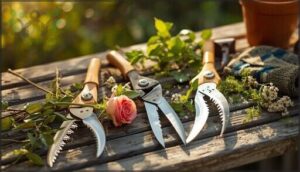
Choosing the right pruning shear isn’t about finding the most expensive model—it’s about matching the tool to your specific garden tasks and physical comfort. You’ll want to think about what you’re actually cutting, how the shear feels in your hand, and whether the brand delivers on durability.
Let’s walk through the key factors that’ll help you make a confident decision.
Matching Shear Type to Plant Needs
Your garden’s personality should drive your shear type comparison. For live stems under half an inch, bypass pruners deliver the clean cuts that keep plants thriving—no crushing, no tearing. Dead wood? That’s anvil pruner territory. If you’re tackling tougher branches or your hands tire easily, ratchet pruners give you that multi-step advantage. Match the tool to what you’re actually pruning, and you’ll see the difference immediately.
Assessing Your Hand Size and Strength
Before you pick up any pruners, measure your hand length from wrist to middle fingertip—most adult hands fall between 7.6 and 7.9 inches. Next, assess your grip strength honestly. Can you comfortably squeeze 20–40 pounds for a few minutes?
Here’s your hand measurement and grip strength checklist:
- Measure grip circumference at your knuckles (usually 3.0–4.5 inches)
- Test handle diameter against your palm—around 4 inches suits most gardeners
- Consider ergonomic grips if your grip weakens after age 50
- Try ratcheting models if standard pruning shears feel too stiff
Pruner sizing isn’t one-size-fits-all, so matching your cutting technique to your actual hand capacity prevents fatigue and improves your gardening tool selection dramatically.
Considering Cutting Capacity
Once you know your hand fits the tool, check how thick a branch it can actually cut. Most beginner pruning shears handle stems between 1/2 and 5/8 inch, while premium pruners tackle up to 3/4 inch. Ratchet models give you extra leverage for tree pruning around 1 inch thick.
Match your cutting capacity to your garden maintenance needs—oversized branches dull blade sharpness fast and compromise tool durability.
Evaluating Brand Reputation and Price
Brand loyalty matters when you’re comparing pruning shears—Felco commands premium prices but backs it with 5–7 year warranty terms, while Fiskars offers beginner-friendly affordability.
Check customer reviews on major retailer sites for real-world performance, and watch for seasonal sales that flip typical price comparisons.
Professional gardeners often choose models with replacement parts available, lowering your long-term tool selection costs.
Maintenance Tips for Long-Lasting Shears
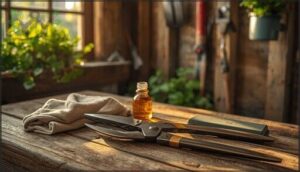
Your pruning shears can last for years, even decades, if you give them a little attention after each use. Think of maintenance as an investment that pays off in sharper cuts, smoother operation, and fewer trips to the garden store.
Here’s what you need to do to keep your shears in peak condition.
Cleaning and Sanitizing After Use
After each pruning session, you’ll want to grab a sponge with soapy water to remove plant sap and debris from your blades—this simple cleaning solution prevents corrosion. Rinse thoroughly, then dry completely for rust prevention.
Disinfection techniques like alcohol-based wipes between plants stop disease spread, keeping your gardening equipment safe. Light oiling after sanitizing methods maintains smooth blade maintenance and extends your tool’s life.
Sharpening Blades Regularly
Every 6 to 12 months, you’ll need to sharpen your pruning shears to maintain cutting efficiency and plant health. Dull blades crush stems rather than slice cleanly, stressing your plants and making each cut harder on your hands.
Essential blade sharpening and pruner care practices:
- Use a diamond-coated file or pruner-specific stone on the beveled edge only
- Maintain the original angle to preserve cutting efficiency and prevent chipping
- Remove metal burrs with a light pass for smooth edge maintenance
- Apply mineral oil after sharpening for rust protection and tool care
Storing Shears to Prevent Rust
After all your hard work sharpening, rust prevention starts with proper storage tips. Wipe your pruners completely dry after each use, removing any moisture that invites corrosion. Apply a thin coat of mineral oil to the blades for blade care and protection.
Store your gardening equipment in a dry, well-ventilated spot, ideally with blade covers to shield cutting edges from humidity.
Inspecting and Replacing Parts
Your pruners won’t last forever, but you’ll catch problems early with monthly pivot bolt inspection and lever maintenance. Check for loose bolts, cracks in grips, or sticky locking mechanisms that signal trouble.
A quick corrosion check reveals rust spots before they spread. When parts fail, most quality brands offer part replacement options, extending tool durability without buying new pruning shears entirely.
Frequently Asked Questions (FAQs)
How often should I prune my plants?
Your garden’s rhythm dictates the pace. Most plants thrive with annual pruning during dormancy, while fast-growers need light trimming throughout the season.
Watch your plants—they’ll show you when they’re ready.
Whats the best season for pruning?
Late winter dormant pruning works best for most woody plants before bud break.
Spring bloom shrubs need trimming right after flowering.
Summer trimming controls vigorous growth, while autumn care should stay light in cold climates.
Can pruning shears cut through thorny stems?
Yes, quality bypass pruners slice cleanly through most thorny stems up to 5 cm diameter. Blade sharpness matters most—sharp edges reduce force and prevent crushing.
Proper cutting techniques and garden protection gloves improve pruner safety when handling roses.
Should I wear gloves while using pruning shears?
Better safe than sorry—gloves reduce pruning hazards like blade slips and cut resistance issues while protecting against skin irritation from plant sap.
Choose cut-resistant materials with breathable fabrics for maximum hand protection and gardening safety.
What angle should I cut stems at?
You’ll want a clean, slanted cut at about 45 degrees for most live stems. This angle promotes faster wound healing and prevents water from pooling on the cut surface, which helps your plants recover more efficiently.
Conclusion
The right garden pruning shears for beginners will outlive most of your perennials—and save twice as many. Your plants can’t tell you when a cut damages them, but their stunted growth and blackened stems will show the consequences of cheap tools months later.
Start with bypass pruners that match your hand size, maintain them like the investment they’re, and you’ll prune confidently for decades. Clean cuts today mean thriving gardens tomorrow.
- https://healthyhouseplants.com/
- https://link.nbcnews.com/join/5cj/nbc-news-select-signup-pd
- https://www.instagram.com/the.mocha.gardener/?hl=en
- https://academichelpexpress.blog/2024/08/please-use-the-bulleted-points-and-the-rubric-below-to-guide-your-work-your-pa/
- https://x.com/godofprompt/status/1990526288063324577